


Salkantay Trek vs Inca Trail
Choose the Salkantay Trek if you want higher mountain scenery, glaciers, more booking flexibility and usually a lower standard group-tour price. Choose the Inca Trail if original Inca roads, archaeological sites and entering the Machu Picchu sector through Inti Punku are central to your dream. Most comparisons use the 5-day Salkantay Trek vs the Classic 4-day Inca Trail; if you have exactly four days, compare the 4-day Salkantay route directly with the Classic Inca Trail before deciding.
Table of Contents
Both treks finish with Machu Picchu, but they build anticipation in completely different ways. On the Inca Trail, the route becomes more archaeological as you approach the citadel. On Salkantay, the drama comes earlier: glaciers, thin air and a pass around 15,190 ft (4,630 m), followed by a long descent into warmer cloud forest. The useful question is not which trek is “better,” but which experience you would regret missing.
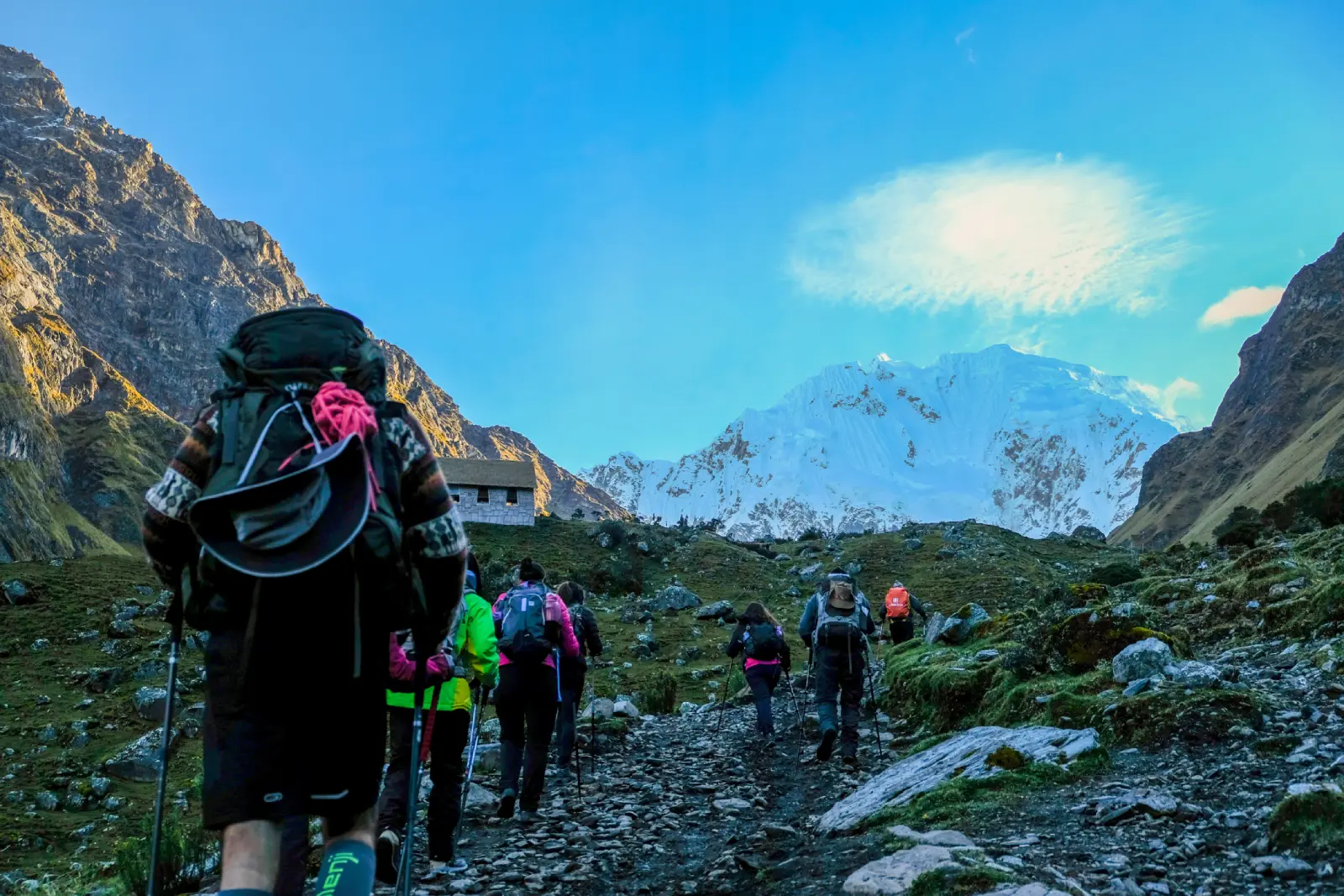
Hikers approaching Salkantay Mountain.
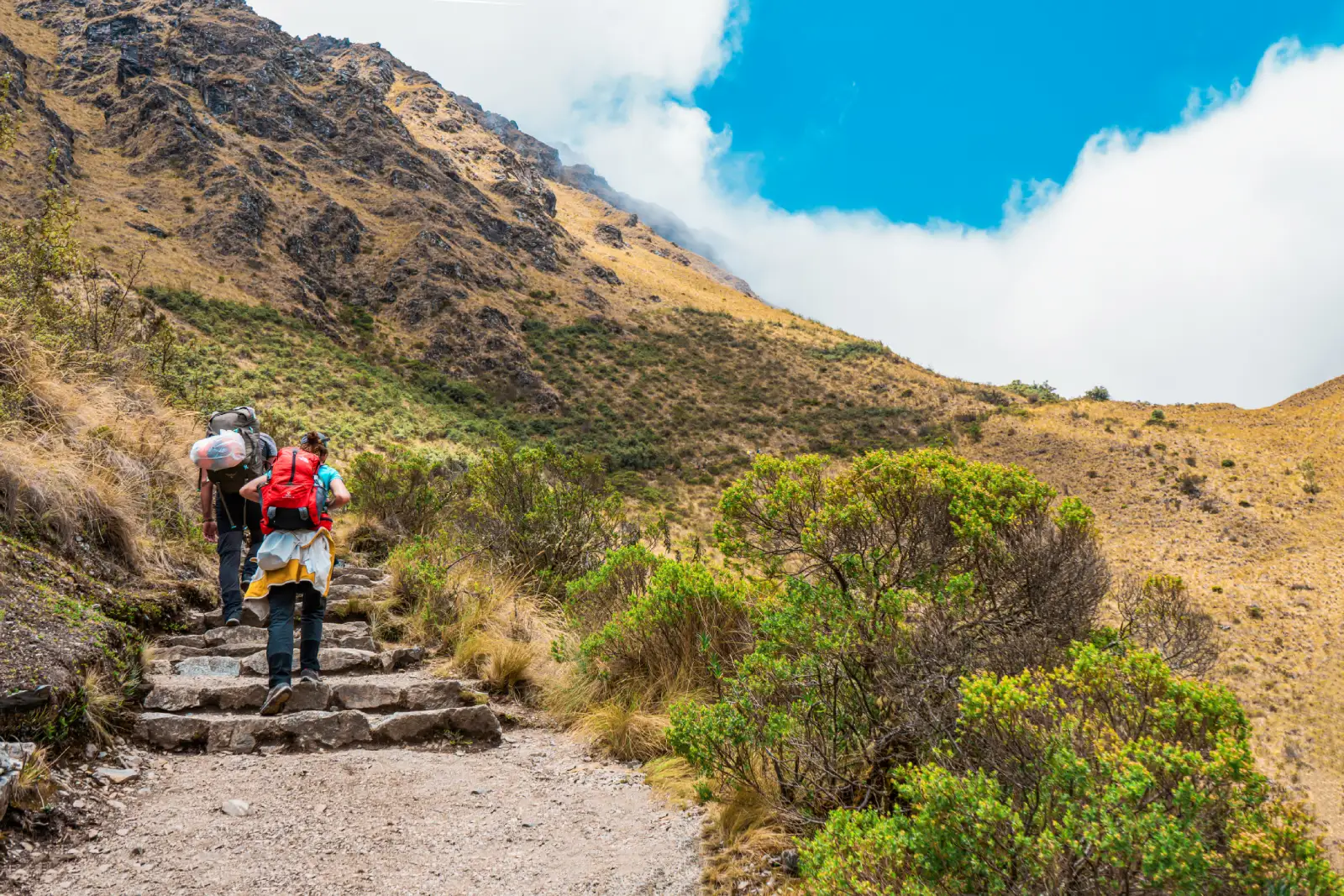
High puna section near Warmiwañusca.
- You need more booking flexibility or the Classic Inca Trail is already sold out.
- Glaciers, Humantay Lake and high-mountain scenery matter more than ruins throughout the trek.
- You are comfortable with a higher pass and more total mileage on the 5-day version.
- You prefer more variation in camps, lodging styles and route design.
- A lower standard group-tour budget is important to your decision.
- You can plan several months ahead and secure a limited permit.
- You want original Inca pathways and archaeological sites woven into the trek itself.
- Walking through Inti Punku is part of your Machu Picchu dream.
- You value a regulated historic corridor more than route flexibility.
- The cultural and archaeological experience matters more than the higher mountain scenery.
Salkantay Trek vs Inca Trail at a Glance
| Decision factor | Salkantay Trek | Classic Inca Trail |
| Reference route | 5 days / 4 nights | 4 days / 3 nights |
| Main trekking distance | About 42.9 mi (69 km) on Inkayni’s 5-day walking line | About 26–27 mi (42–43 km) on the Classic Inca Trail |
| Highest point | Salkantay Pass: about 15,190 ft (4,630 m) | Warmiwañusca / Dead Woman’s Pass: about 13,829 ft (4,215 m) |
| Main physical challenge | Higher altitude, longer total mileage and a long pass-day descent | Stone stairs, repeated elevation changes and sustained leg fatigue |
| Trekking permit | No Inca Trail-style limited trekking permit; Machu Picchu entry still requires advance planning | Limited permit + authorized operator required |
| Booking flexibility | Much more flexible, although Machu Picchu tickets and trains can constrain fixed dates | Low flexibility after permits sell out; peak-season dates often need months of lead time |
| Useful 2026 group budget | US$500–750 (S/1,675–2,515) | US$700–1,200 (S/2,345–4,020) |
| Signature experience | Glaciers, Humantay Lake, high pass and cloud-forest transition | Original Inca road, archaeology, stone stairways and Inti Punku / Sun Gate |
| How you reach Machu Picchu | The standard 5-day route reaches Aguas Calientes; Machu Picchu is normally visited the next morning | The trek reaches the Machu Picchu sector directly on foot through Inti Punku |
| Best fit | Mountain scenery, flexibility, photographers and mid-range budgets | Archaeology, historic-route experience and travelers willing to plan early |
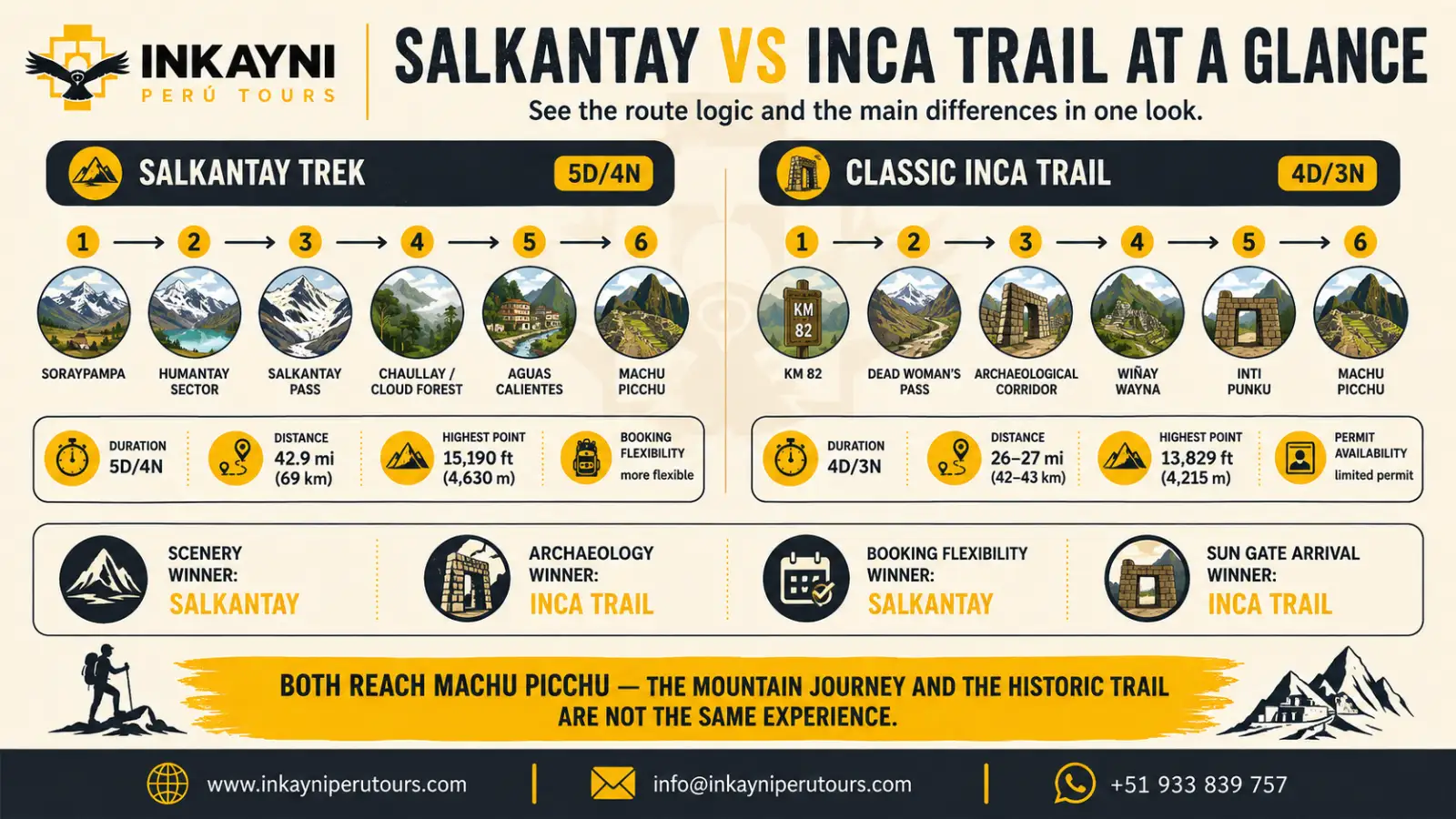
A quick route comparison between Salkantay and the Classic Inca Trail.
Pro tip:
Choose Salkantay if mountain landscapes, flexibility and price matter more than a historic trail entrance. Choose the Inca Trail if original Inca roads, archaeological sites and entering through the Sun Gate are central to the experience you want.
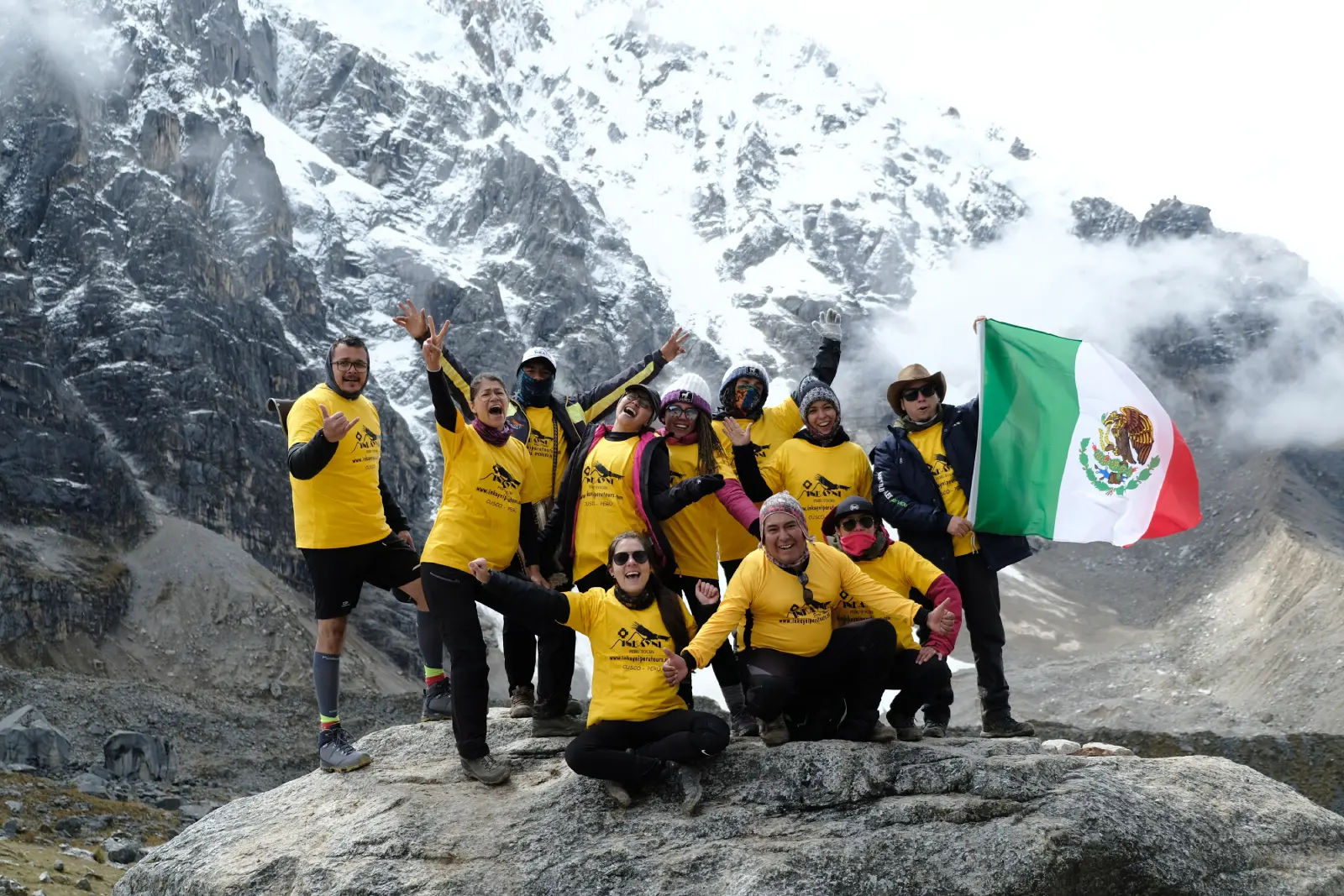
Trekkers celebrating in front of Salkantay mountain.
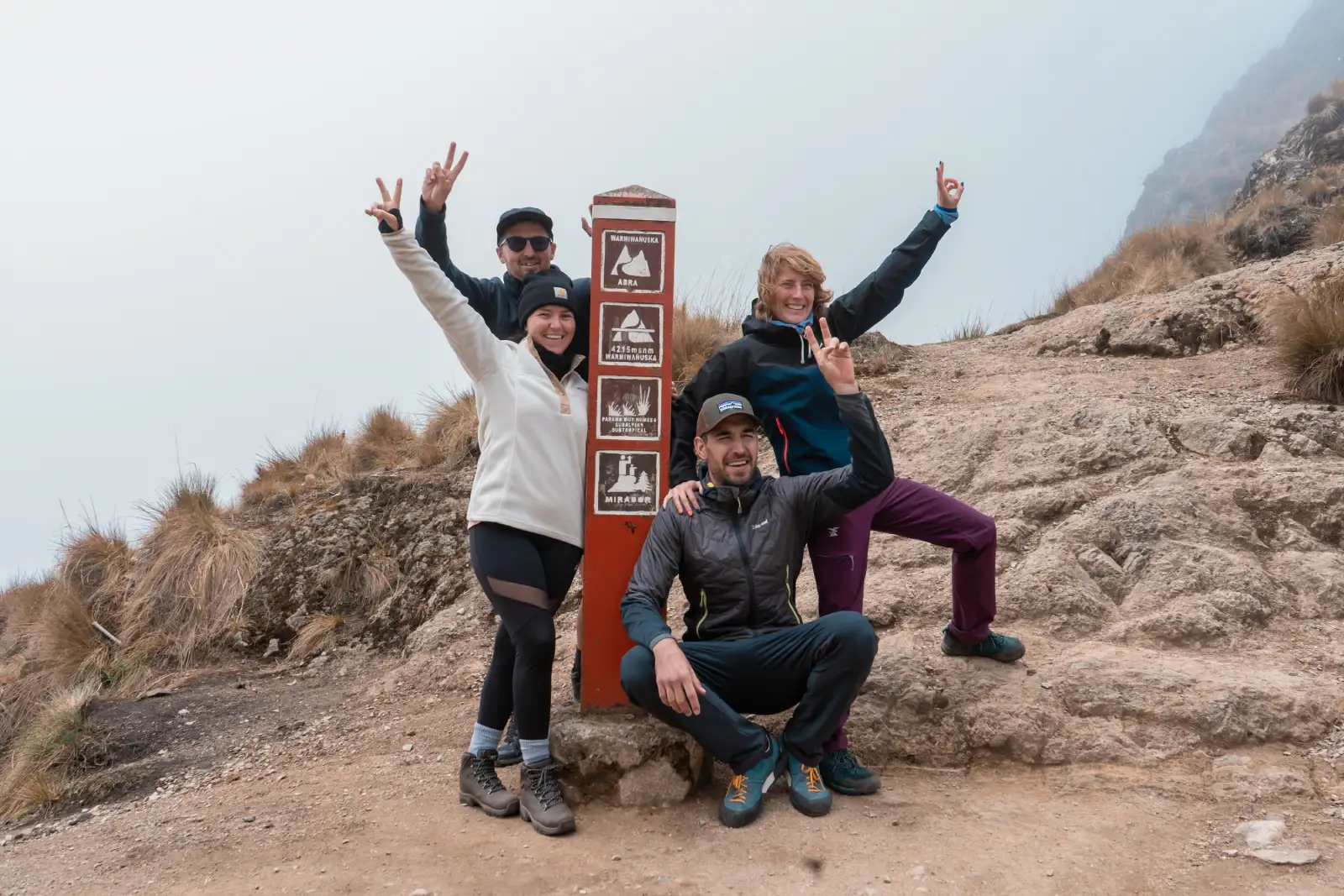
Warmiwañusca, the highest trail pass.
Which Salkantay and Inca Trail Itinerary Are You Comparing?
Most Salkantay Trek vs Inca Trail comparisons use the 5-day Salkantay Trek and Classic 4-day Inca Trail as the main reference versions. Shorter, slower and combined itineraries change the experience, so your available days matter.
| Route version | What changes | Choose it if… |
| Salkantay 3 Days | A highly compressed Salkantay-to-Machu-Picchu format with more transfers and less flexibility for Humantay Lake or the lower valley. | You only have three days and can handle two demanding trekking days. |
| Salkantay 4 Days | Keeps Salkantay Pass and the main mountain route while compressing part of Day 1, the lower valley or both. | You have four days but still want the essential Salkantay experience. |
| Salkantay 5 Days | The fuller reference route, with more time for the high mountains, cloud forest and lower approach to Aguas Calientes. | You want the most complete standard Salkantay experience. |
| Short Inca Trail 2 Days | Starts around Km 104 and keeps Wiñay Wayna and the Inti Punku approach without the Classic Trail’s three camping nights. | The Sun Gate and Inca archaeology matter, but you only have two days. |
| Classic Inca Trail 4 Days | The standard full route from Km 82 through the regulated archaeological corridor to Inti Punku. | You want the classic Inca Trail experience in its usual four-day format. |
| Inca Trail 5 Days | Uses essentially the same Classic route, but spreads Days 3–4 more gently, camps at Phuyupatamarca and adds a second Machu Picchu visit on Day 5. | You want a less compressed Classic Trail and two Machu Picchu visits—not a longer trail. |
| Salkantay + Inca Trail 7 Days | A true hybrid route linking the Salkantay wilderness with the regulated Inca Trail, reaching about 17,060 ft (5,200 m) near Incachiriaska before finishing through Inti Punku. | You want both experiences and have seven days, strong acclimatization and Inca Trail permits. |
Want both instead of choosing? The 7-day Salkantay + Inca Trail guide explains how the two route families connect, while Inkayni’s live 7-day Salkantay Trek & Inca Trail to Machu Picchu shows the current itinerary. It is a true hybrid route—not the standard 5-day Salkantay followed by four additional Inca Trail days.
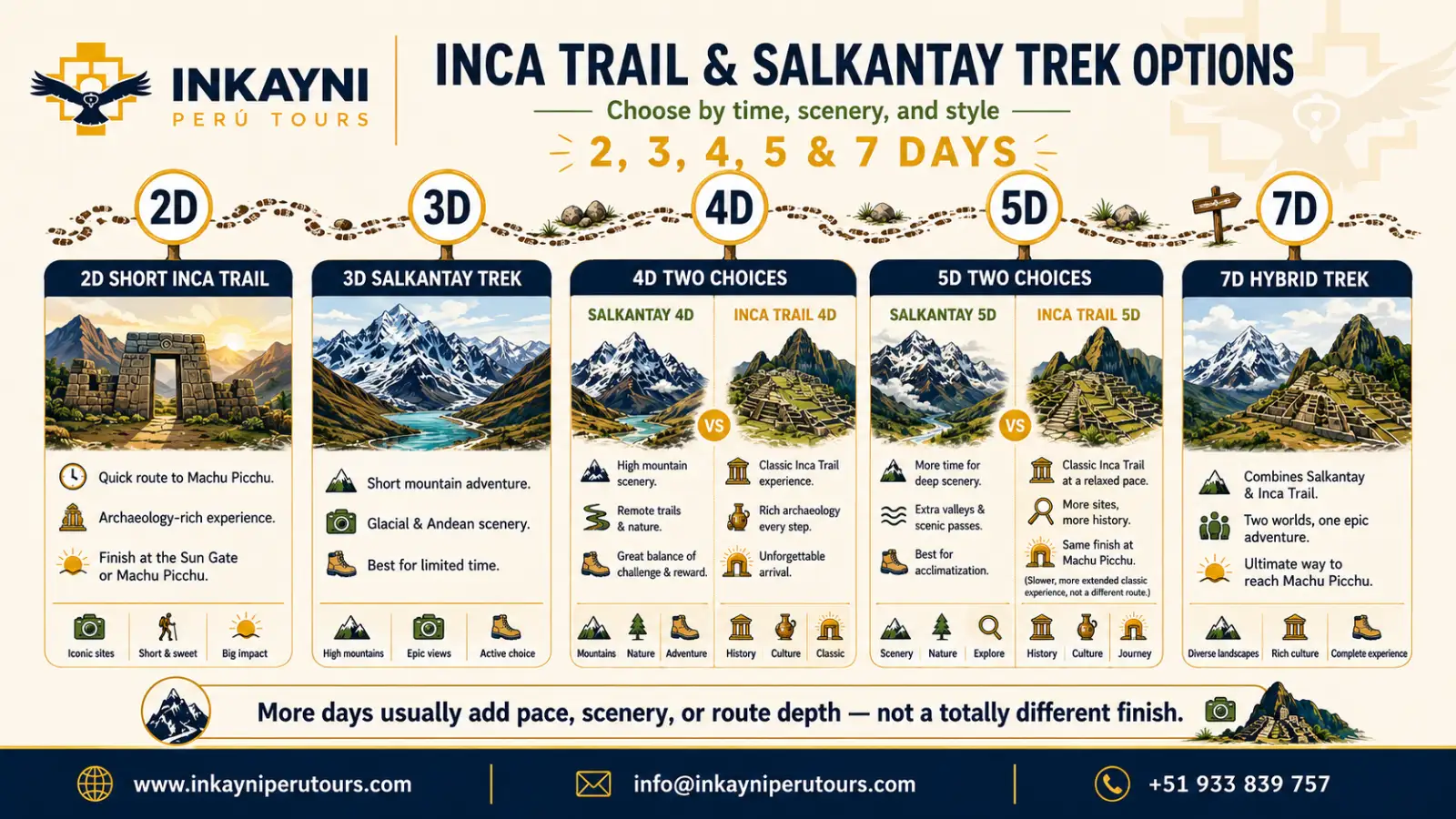
Salkantay for scenery, Inca Trail for archaeology.
One important 4-day vs 5-day Inca Trail distinction: Inkayni’s 5-day version follows essentially the same Classic corridor as the 4-day route. The extra calendar day redistributes Days 3–4, uses Phuyupatamarca as a camp, reaches Machu Picchu on Day 4 and returns for a second Machu Picchu visit on Day 5; it does not add another day of trail mileage.
Important note:
If you have exactly four days, the most useful same-duration comparison is the 4-day Salkantay Trek vs. the Classic 4-day Inca Trail. Salkantay uses those four days to preserve the high-mountain crossing while compressing part of the lower route; the Inca Trail uses them for the regulated archaeological corridor and its Sun Gate approach.
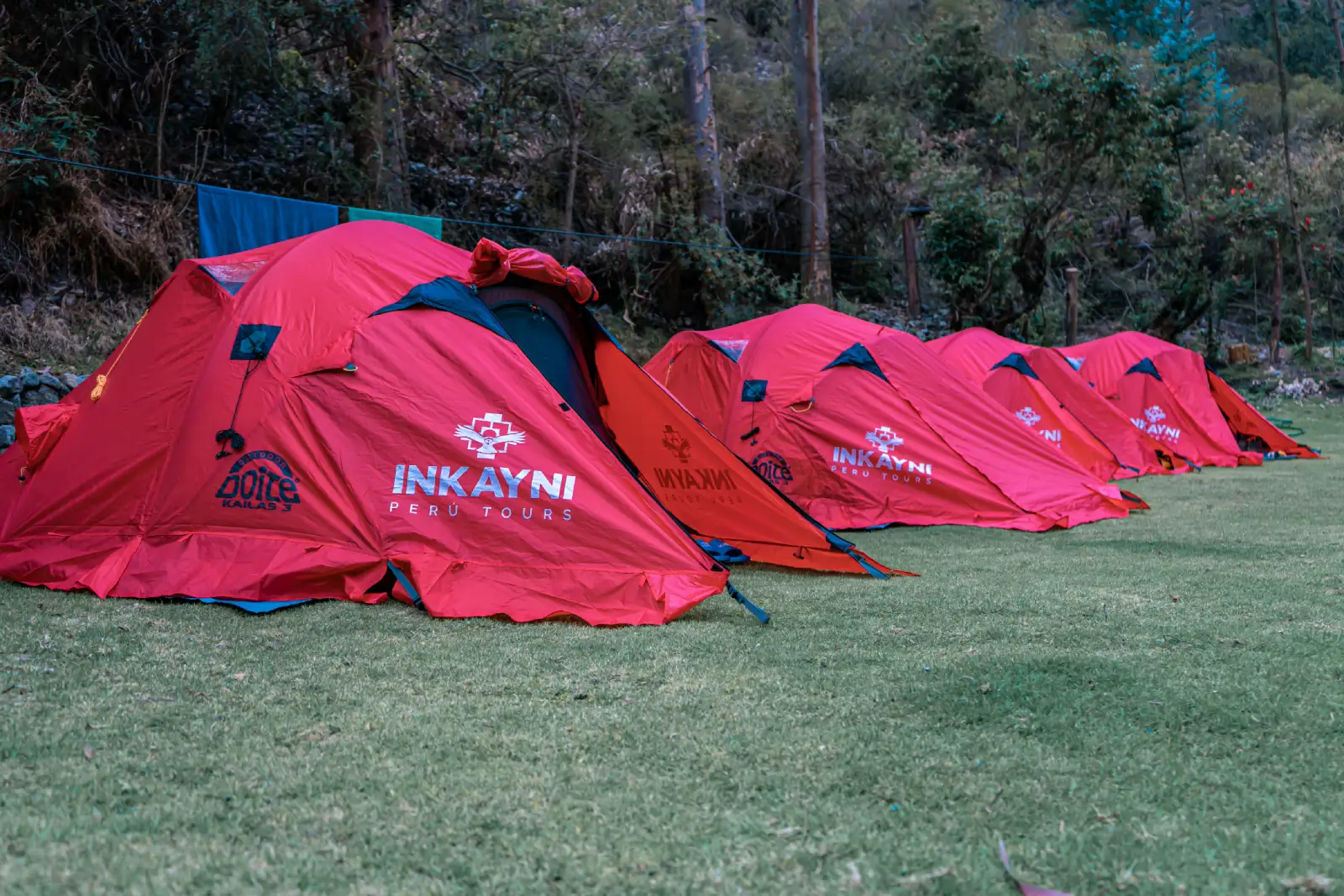
Ayapata campsite on the route.
Quick Route Example: Salkantay 5 Days vs Classic Inca Trail 4 Days
The day-by-day rhythm helps explain why these two treks feel so different, but a comparison page does not need to reproduce two full itineraries. These quick sketches show the progression; the linked route guides carry the detail.
5-Day Salkantay Trek: Quick Route Example
- Day 1: Enter the high-Andean Salkantay corridor around Soraypampa and, on the fuller route, use the day to experience the Humantay Lake sector.
- Day 2: Cross Salkantay Pass at about 15,190 ft (4,630 m), then descend toward Chaullay and the cloud forest.
- Day 3: Continue through warmer valleys and agricultural areas as the route leaves the high alpine environment behind.
- Day 4: Walk through the Llactapata/Hidroeléctrica sector and finish the trekking approach in Aguas Calientes.
- Day 5: Visit Machu Picchu and return toward Cusco.
For the complete walking line, camps and daily distances, use the Salkantay Trek 5 days guide.
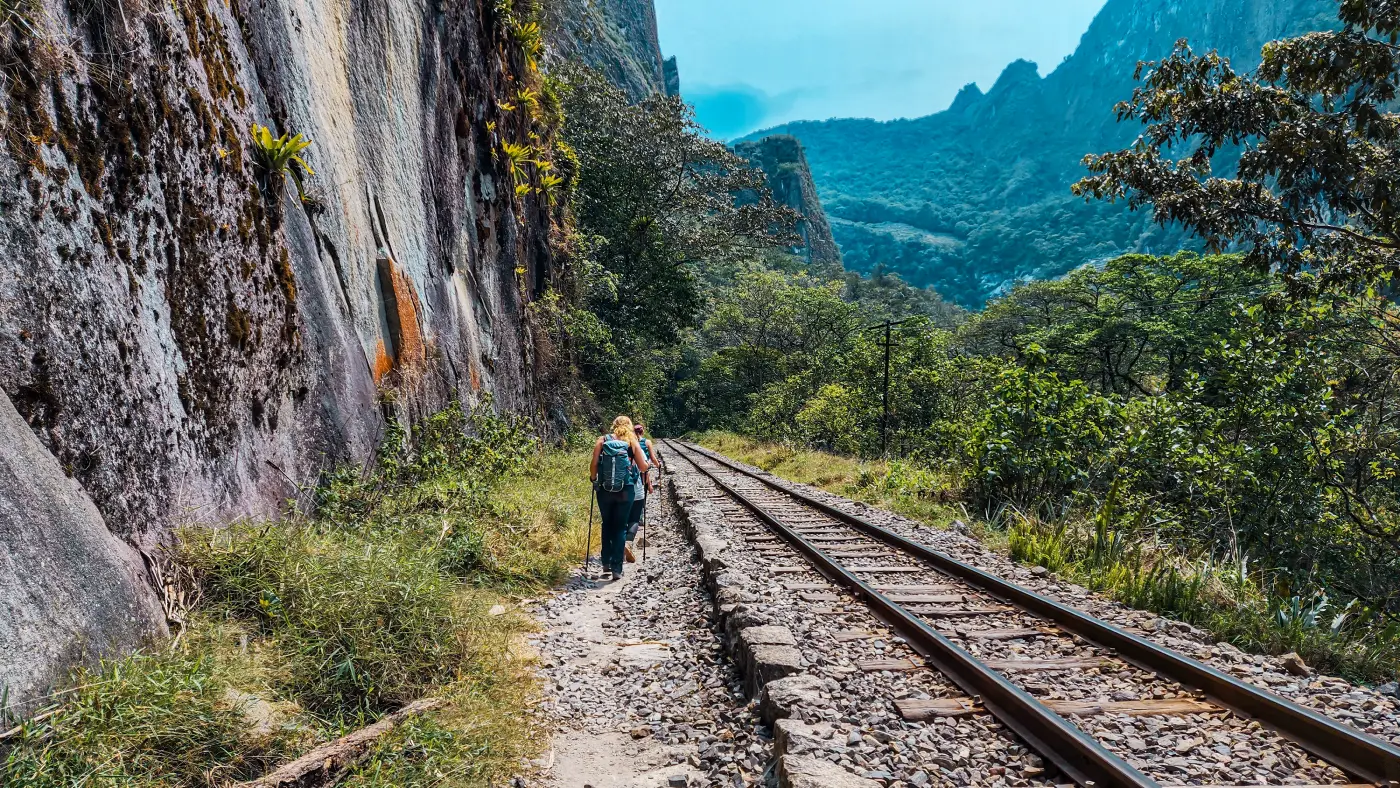
Railway section on the lower Salkantay, Hidroelectrica route.
Classic Inca Trail 4 Days: Quick Route Example
- Day 1: Enter the regulated trail at Km 82 and follow the historic route toward the first camping sector.
- Day 2: Cross Warmiwañusca / Dead Woman’s Pass at about 13,829 ft (4,215 m), the highest point of the Classic route.
- Day 3: Continue through the archaeological corridor, including sites such as Runkurakay, Sayacmarca and Phuyupatamarca.
- Day 4: Pass Wiñay Wayna and approach the Machu Picchu sector through Inti Punku / Sun Gate.
For the complete archaeological sequence, camps and route logistics, use the Classic Inca Trail to Machu Picchu guide.

Final Stretch to Machu Picchu through short Inca Trail.
Which Route Should You Choose?
| If this matters most… | Stronger fit |
| Original Inca pathways and archaeological sites throughout the trek | Inca Trail |
| Glaciers, high-Andean scenery and major ecosystem changes | Salkantay |
| Entering the Machu Picchu sector through Inti Punku | Inca Trail |
| Booking after Classic Inca Trail permits have sold out | Salkantay |
| Lower standard group-service price | Salkantay |
| A regulated historic trekking corridor | Inca Trail |
| More flexibility in camps and accommodation style | Salkantay |
| The classic first-time trekking approach to Machu Picchu | Inca Trail, if permits and budget fit |
Neither choice is a consolation prize. Salkantay is not merely what you do when the Inca Trail is sold out, and the Inca Trail is not automatically better because it is more famous. They create different memories for different reasons.
Inca Trail vs. Salkantay Trek: A Closer Comparison
The quick tables above tell you which route wins individual categories. This section explains why. The same themes repeatedly decide the Salkantay Trek vs Inca Trail choice: cost, physical effort, scenery, permits, crowd flow, season and comfort. Each comparison stays focused on the decision itself; the linked specialist guides handle the deeper route-specific details.
Salkantay Trek vs Inca Trail Cost
Use Inkayni’s live 5-day Salkantay service and Classic Inca Trail service to confirm the current quote for your dates. Inkayni also offers an Inca Trail 5-day service for travelers who want essentially the same Classic corridor with a less compressed Day 3, a Phuyupatamarca camp and a second Machu Picchu visit on Day 5—not a longer trekking route.
Which Is Harder: Salkantay Trek or Inca Trail?
Good acclimatization in Cusco matters for both. If Salkantay is your likely choice, the Salkantay training and preparation guide covers training, packing and pre-trek altitude planning.
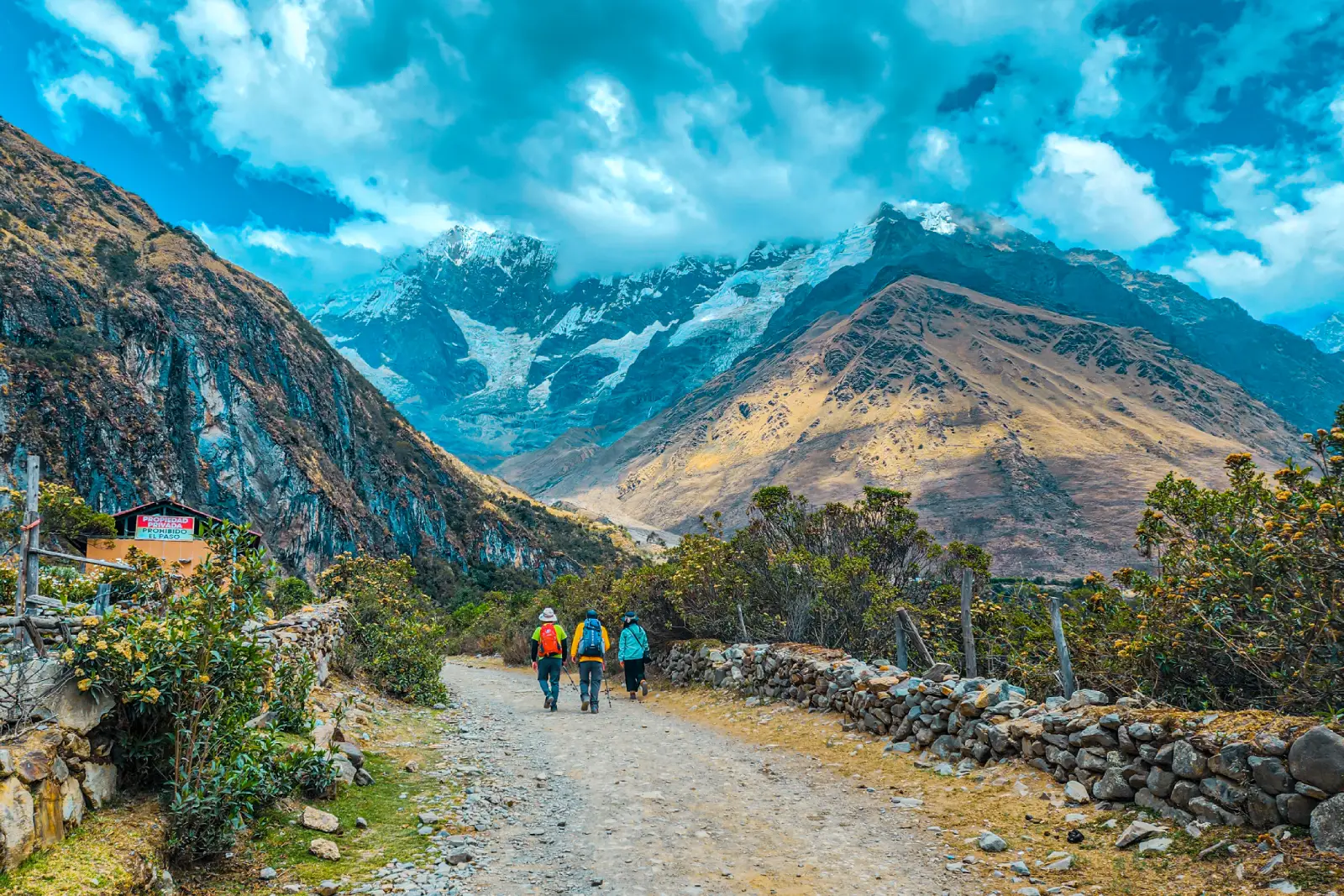
Hiking toward the glacier mountains during Salkantay trek.
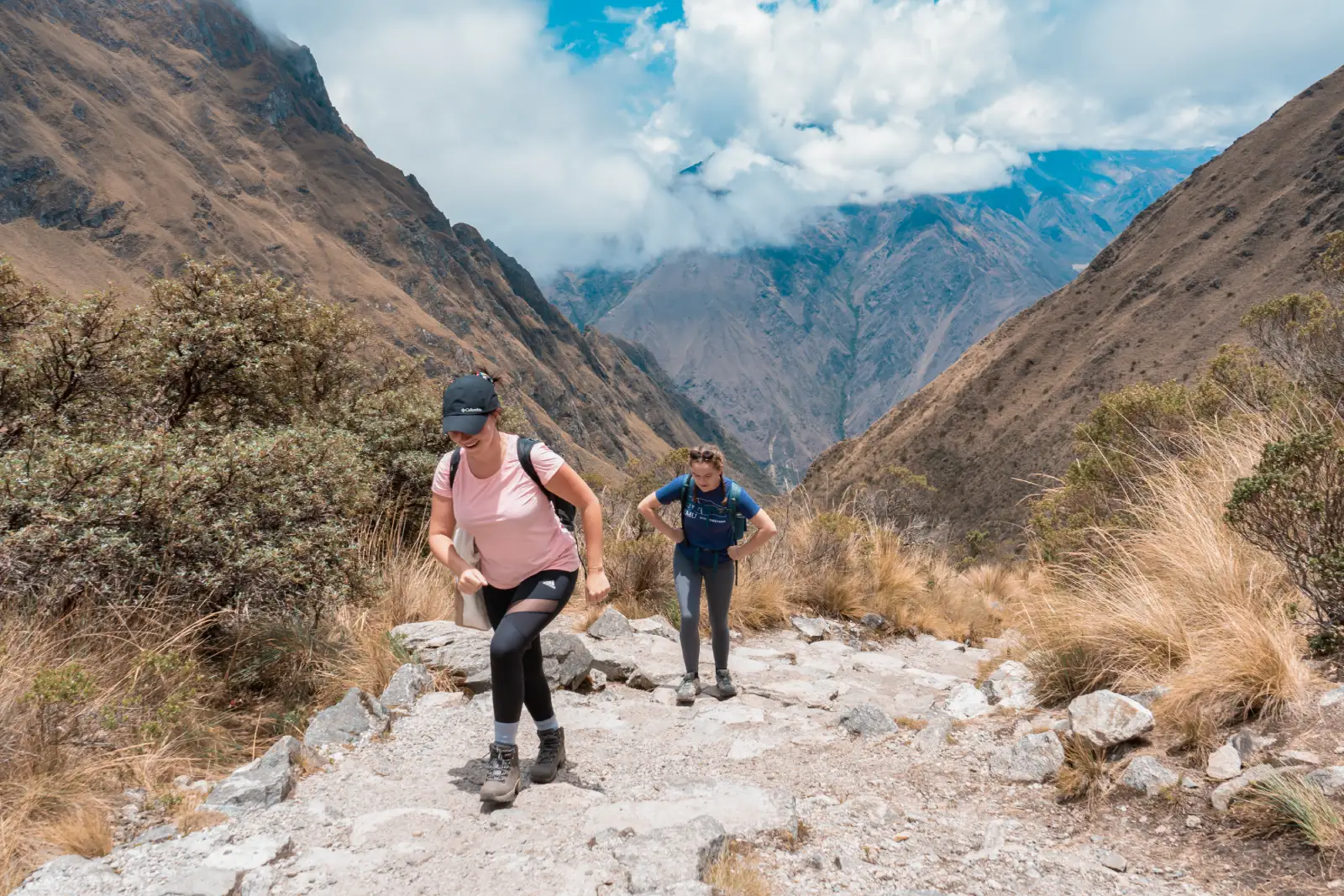
Climbing toward Dead Woman’s Pass.
Scenery: Salkantay Mountains vs Inca Trail Archaeology
Fun fact:
Salkantay Mountain rises to about 20,574 ft (6,271 m) and is an important apu, or sacred mountain, in the Andean landscape. The standard trek crosses the pass below the massif; it is not a summit climb.

Soraypamapa, Salkantay trek Cusco

Porter logistics are part of the regulated Classic Inca Trail operation.
Permits and Booking: Which Trek Requires More Planning?
The Inca Trail also closes every February for annual conservation and maintenance. The 2026 SERNANP notice confirms the February closure and reopening from March 1.
Which Trek Feels Less Crowded?
Best Time for Salkantay and the Inca Trail
For month-by-month weather rather than another broad comparison, use the Cusco weather by month guide.
Accommodation and Load Support
If you are considering carrying more of your own logistics on Salkantay, use the self-guided Salkantay analysis. The Classic Inca Trail cannot be trekked independently.
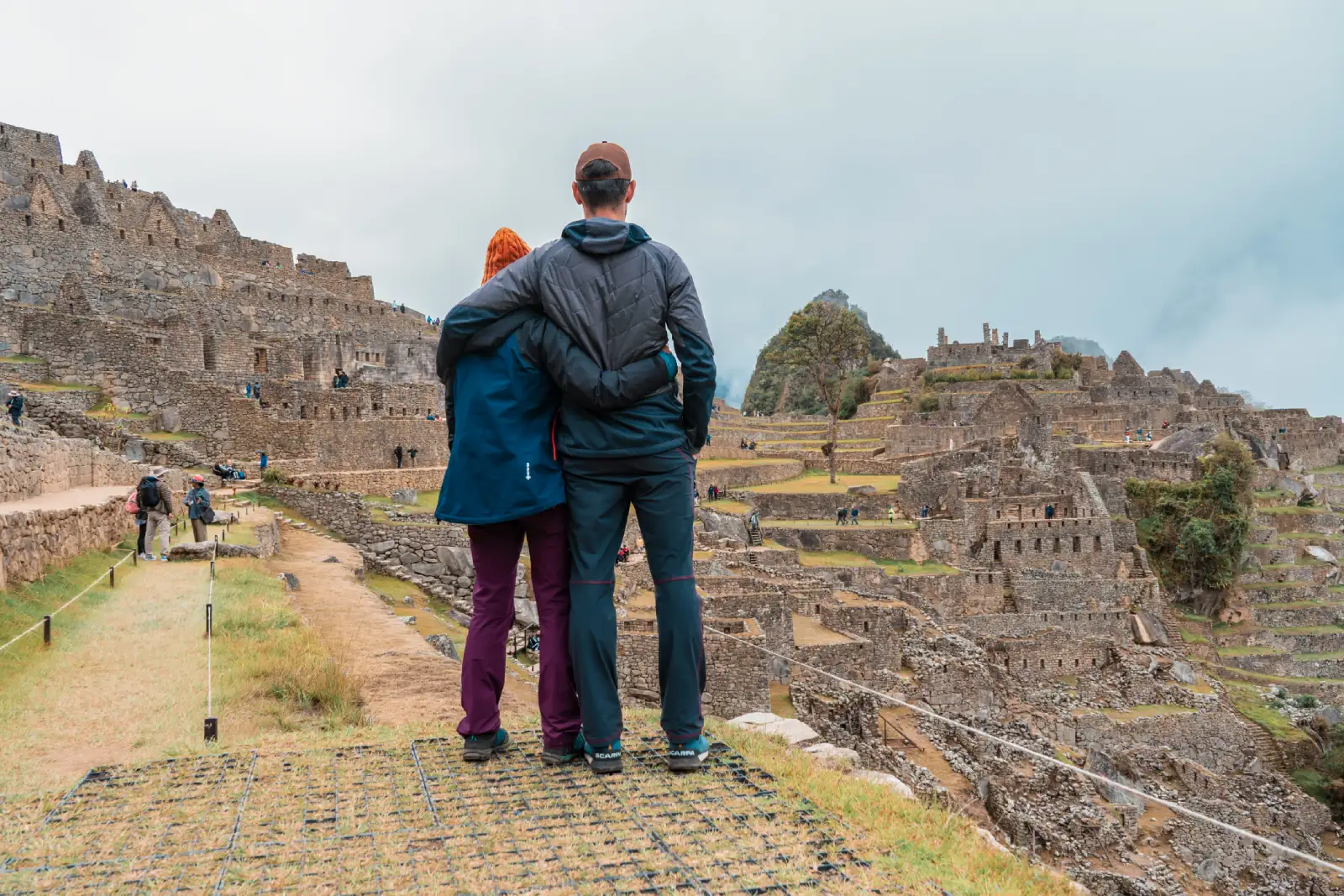
Final day at Machu Picchu.
Salkantay Trek vs Inca Trail Map: How the Routes Differ
The maps make the Salkantay Trail vs Inca Trail contrast easier to understand. Salkantay uses a high-mountain corridor below the massif before dropping through warmer valleys toward Aguas Calientes. The Classic Inca Trail begins around Km 82 and follows a regulated archaeological corridor toward Inti Punku and Machu Picchu.


The Classic Inca Trail follows the historic route toward Inti Punku.
The map difference also explains why mileage alone can mislead. Salkantay distance varies more with itinerary design and lower-valley transfers, while the Classic Inca Trail follows a much more standardized route from Km 82.
How Each Trek Actually Reaches Machu Picchu
The Classic Inca Trail reaches the Machu Picchu sector directly on foot through Inti Punku, the Sun Gate. That historic approach is one of the strongest reasons to choose it.
The standard Salkantay route works differently. On the current 5-day format, Day 4 reaches Aguas Calientes after the lower approach through Llactapata and Hidroeléctrica. Machu Picchu is normally visited the following morning, often using the bus from Aguas Calientes to Machu Picchu.
If your dream specifically involves walking into the Machu Picchu sector through the Sun Gate as the culmination of the trek, the Inca Trail has the decisive advantage. If the high Salkantay corridor matters more than the exact entrance sequence, Salkantay remains the stronger landscape-focused choice.
Compare the Route That Matches Your Time and Priority
Choose the Trek You Want to Remember
Choose the Inca Trail if the route itself is part of your Machu Picchu dream: original stone roads, archaeological sites, regulated camping and the arrival through Inti Punku. Choose Salkantay if you want the higher mountain, broader natural scenery, more booking flexibility and a lower standard group-tour budget.
If both still fit, compare the live 5-day Salkantay Trek with the 4-day Classic Inca Trail. If your dates, fitness or permit situation make the choice less obvious, talk to a travel specialist with your dates and trekking experience.
Frequently Asked Questions About Salkantay Trek vs Inca Trail
Which Salkantay and Inca Trail versions are compared here?
The main comparison uses the 5-day Salkantay Trek and Classic 4-day Inca Trail because they are the fuller reference versions. If you have exactly four days, compare the 4-day Salkantay Trek directly with the Classic Inca Trail. Travelers with less time can also consider the 3-day Salkantay or 2-day Short Inca Trail.
Which is better, Salkantay Trek or Inca Trail?
Neither route is universally better. Choose the Inca Trail for archaeology, original Inca pathways and the Sun Gate approach. Choose Salkantay for higher mountain scenery, more booking flexibility and usually lower standard group prices.
Which is harder: Salkantay Trek or Inca Trail?
Salkantay usually feels harder because of altitude and total mileage; its pass reaches about 15,190 ft (4,630 m). The Inca Trail peaks lower at about 13,829 ft (4,215 m) but can be harder on the legs because of stone stairs and repeated elevation changes.
Which is cheaper: Salkantay or the Inca Trail?
Salkantay is generally cheaper. A useful 2026 group planning range is about US$500–750 (S/1,675–2,515) for a 5-day Salkantay service and approximately US$700–1,200 (S/2,345–4,020) for the Classic Inca Trail. Compare inclusions rather than headline price alone.
Which trek needs to be booked earlier?
The Inca Trail. Its limited capacity can sell out months before departure, so roughly 5–6 months is a useful general benchmark and 6–8 months is safer for popular peak-season dates. Salkantay has more trail availability, but Machu Picchu tickets and trains still reward early planning.
Does Salkantay enter Machu Picchu through the Sun Gate?
The standard 5-day Salkantay route does not. It normally finishes the trekking approach in Aguas Calientes and visits Machu Picchu the next morning. The Classic Inca Trail reaches the Machu Picchu sector directly through Inti Punku, the Sun Gate.
Which trek has better scenery?
Choose Salkantay if you mean dramatic mountain scenery: glaciers, Humantay Lake, the high pass and the cloud-forest transition. Choose the Inca Trail if your ideal landscape includes archaeological sites, original stone roads and architecture integrated into the mountains.
Which trek feels less crowded?
Salkantay often feels more spread out because operators can use different camps and route variations. The Inca Trail has a regulated flow and everyone follows the same core corridor. Salkantay can still be busy around Soraypampa, the pass and the Hidroeléctrica approach.
Can I hike either route without an agency?
The Classic Inca Trail cannot be hiked independently; access requires an authorized operator and valid trail arrangements. Salkantay can be organized independently, although its altitude, transfers, camps and Machu Picchu logistics make an organized service simpler for many travelers.
What if the Classic Inca Trail is sold out?
Salkantay is the strongest multi-day mountain alternative for many travelers, but it is not the only option. If the Sun Gate experience matters more than camping four days, check the regulated Short Inca Trail before assuming the entire Inca Trail experience is unavailable.
Autor

Shared:


If you liked this article and the information you found, give us 5 stars!
 (1 votos, promedio: 5.00 de 5)
 Loading...