


Humantay Lake Peru: what to know before you go
Humantay Lake is a glacial lake sitting at 13,780 ft (4,200 m) above sea level, in Soraypampa, Mollepata district, Anta province, Cusco region. Its turquoise color is related primarily to very fine glacial sediment suspended in the water, combined with water transparency and the way light enters and scatters depending on the time of day, cloud cover, and sun angle. The most common hike from Soraypampa takes between 1.5 and 2 hours each way. The trail is not technically demanding, but the altitude registers from the very first minutes.
Table of Contents
Before booking, it is worth looking at Humantay Lake with a little more calm than a photo or short video usually conveys. The lake is genuinely striking, but the day begins earlier: in the pre-dawn departure from Cusco, in the ascent from Soraypampa, and in how the body responds above 13,000 ft (4,000 m).
For many travelers, Humantay works as an honest first reading of how the body responds in the high Andes before committing to bigger plans such as the Salkantay Trek, the Classic Inca Trail, or even a tighter Machu Picchu itinerary from Cusco.
| 13,780 ftLake altitude (4,200 m) | ~79 miFrom Cusco by road (127 km) | ModerateDifficulty (altitude-driven) | May–SepMost stable window |
Reading further helps you understand where the real effort lies, how much margin to give yourself, and how to avoid simple mistakes that, at altitude, carry a much heavier cost than they would at sea level.
Did you know…?
Humantay Lake is one of the most searched day trips from Cusco because it brings together three things that matter in the decision: a glacial lake with intense color, a setting surrounded by glaciers, and a relatively short hike. The figure that matters most is not the distance but the altitude. Travelers who arrive without acclimatization typically feel the ascent much harder than expected. Giving yourself at least one full day in Cusco before going up remains the most sensible approach.
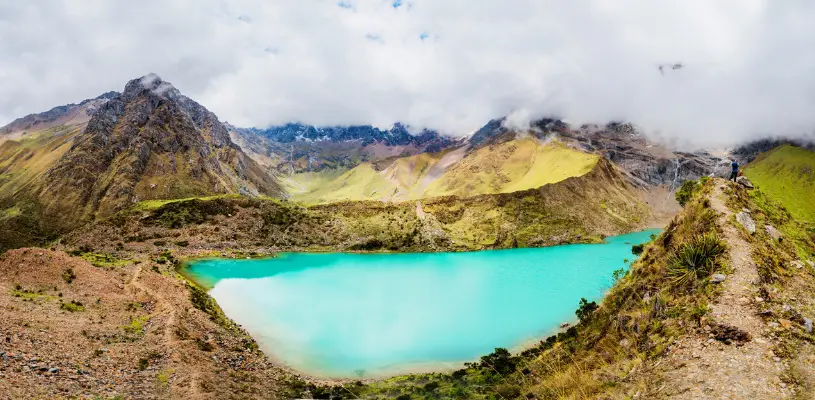
Humantay Lake at 13,780 ft (4,200 m), with the Humantay glacier rising above a high-mountain environment that feels colder and more open than the photographs suggest
What makes Humantay Lake worth the trip
The appeal of Humantay comes from a complete combination: a glacial lake at the foot of a glacier, an open landscape where wind and altitude are felt immediately, and an Andean geography that still carries a ritual and communal dimension. The turquoise color of the lake shifts depending on light, cloud cover, water transparency, and the amount of fine mineral particles reaching it from glacial melt. On clear mornings it tends to appear more intense. With flat sky or diffuse light, it becomes more subdued and less saturated. That is why Humantay Lake does not always look the same.
The gap between a heavily edited photograph and the actual experience can be significant. Even so, travelers who arrive understanding they are standing in front of a high-altitude glacial lake tend to leave with a considerably more complete impression of the place.
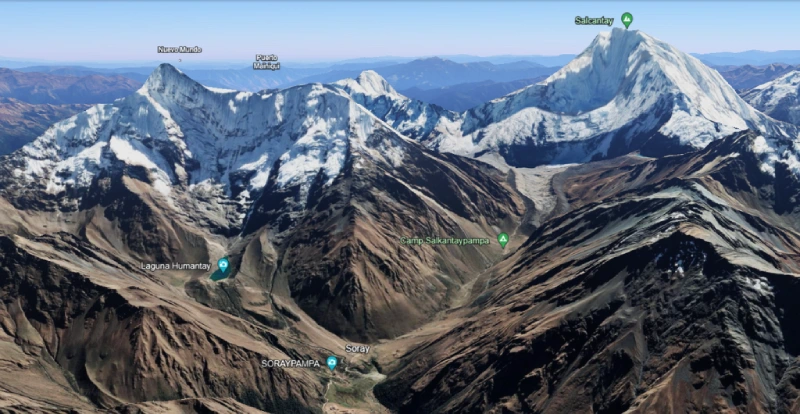
The lake sits directly at the base of the Humantay glacier, in one of the most visited high-mountain settings from Cusco
Did you know?
The lake is also part of an important symbolic space for Andean communities. The mountains in this area are still seen as apus (sacred mountain presences linked to water, climate, and communal life). That is why apachetas (small stone cairns placed as offerings) appear along the trail, along with small gestures of respect that still carry meaning within this landscape.
PERU’S LEGENDARY HIKEInca Trail to Machu Picchu
Follow the historic trail through mountain passes, Inca sites, and cloud forest paths to Machu Picchu.
Location, altitude, and access from Cusco
Humantay Lake is in the Cusco region, within the Vilcabamba mountain range, in the Mollepata district, Anta province, in the same high-mountain environment that connects with the Salkantay glacier. From Cusco, the road passes through Limatambo and Mollepata before reaching Soraypampa, where the hike begins. The transfer typically takes between 2.5 and 3 hours, depending on departure time, road conditions, and traffic.
Soraypampa also matters because it is part of the wider Salkantay corridor, the same mountain environment many travelers later associate with the Salkantay Trek to Machu Picchu. Soraypampa is already at around 12,713 ft (3,875 to 3,900 m) and the lake rises to 13,780 ft (4,200 m). That means the body is working at altitude from the start.
| Key fact | Reference |
|---|---|
| Region | Cusco, Peru |
| Mountain range | Vilcabamba |
| Lake altitude | 13,780 ft (4,200 m) above sea level |
| Humantay glacier altitude | 17,956 ft (5,473 m) |
| Distance from Cusco | Approx. 77 to 79 mi (124 to 127 km) by road |
| Trailhead | Soraypampa, around 12,795 ft (3,900 m) |
| Cusco altitude | 11,152 ft (3,399 m) |
Distance from Cusco and from Lima
- From Cusco, Humantay Lake is approximately 77 to 79 miles (124 to 127 km) by road to Soraypampa. In practice, that means an early pre-dawn departure and several hours of transfer before the hike begins. Mollepata is the most important stop along the way, both for basic services and for access logistics.
- From Lima, the most reasonable way to organize the visit is to fly to Cusco first and arrange the excursion from there. Attempting it almost immediately after landing is generally not a good idea. The altitude weighs more than the logistics. That same margin also matters if Humantay is only one part of a broader Cusco plan that later includes Machu Picchu, the Classic Inca Trail, or another high-altitude route.
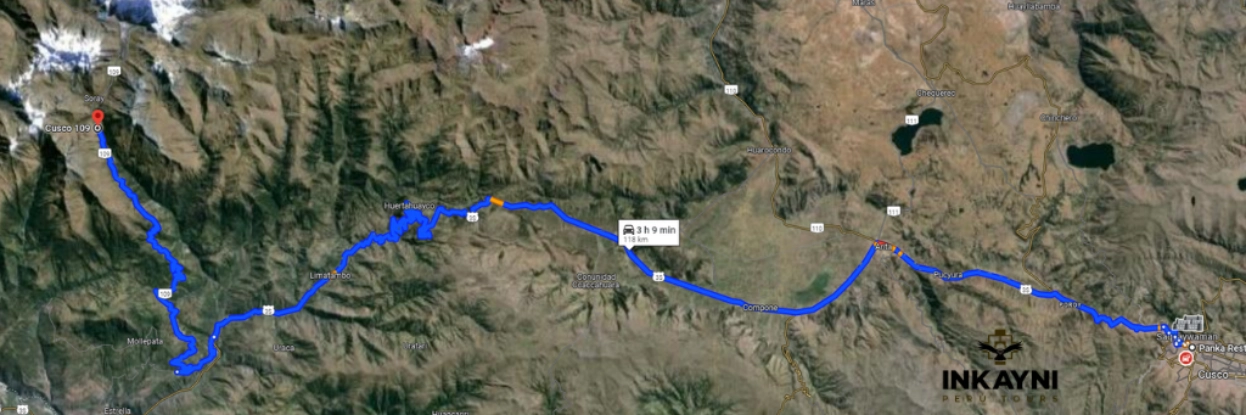
The road from Cusco passes through Limatambo and Mollepata before reaching Soraypampa, the trailhead for the Humantay Lake hike
How to get to Humantay Lake from Cusco
There are two ways to organize the visit: with a tour or independently. Both lead to the same starting point at Soraypampa, and the main difference is the logistical load. Going independently means handling transport, schedules, the entrance fee, return, and margin for unexpected changes. On an excursion where energy is better saved for the altitude, that difference matters.
| With an operator | Independently | |
|---|---|---|
| Departure point | Hotel or coordinated meeting point in Cusco | Route Cusco to Mollepata to Soraypampa |
| Departure time | Between 4:00 and 5:00 a.m. depending on service type and operator | Very early to preserve margin |
| Entrance fee | Sometimes included, sometimes separate | Paid along the route |
| Meals | Breakfast and lunch generally included | Arranged independently |
Important note:
Going independently is feasible for experienced travelers comfortable navigating on their own and coordinating multiple steps. For most people doing this excursion for the first time, a well-organized humantay lake tour handles the day more efficiently and leaves more energy available for what actually matters: the hike, the altitude, and the experience itself.

2 Day Humantay Lake & Salkantay Mountain
The hike and the real difficulty of the trail
The elevation gain between Soraypampa at 12,713 ft (3,875 to 3,900 m) and Humantay Lake at 13,780 ft (4,200 m) is roughly 1,050 to 1,070 ft (300 to 325 m), but that figure feels considerably more demanding than it reads because the hike already starts at altitude and climbs further within a short stretch. The trail combines packed earth, rocky sections, loose gravel, and several zigzag ascents.

Apachetas and simple offerings along the trail: part of the Andean way of inhabiting and respecting this high-altitude landscape
At the beginning the body is still finding its rhythm; then the gradient becomes more sustained, and the final section concentrates the clearest physical effort of the route. Most people take between 1.5 and 2 hours to reach the lake, and somewhat less on the descent back to Soraypampa. The technical difficulty is low, but that does not make the hike light.
| Factor | Data | What it means in practice |
|---|---|---|
| Trailhead altitude | 12,713 ft (3,875 to 3,900 m) | The hike already starts at altitude. Breathing is shorter from the very first steps. |
| Lake altitude | 13,780 ft (4,200 m) | The elevation gain looks short on paper but feels considerably more because of the altitude. |
| Hiking time | 1.5 to 2 hours each way | Worth allowing more time if this is your first high-altitude outing in Cusco. |
| Technical difficulty | Low | The real demand comes from thinner air and pacing, not from any complex maneuvers. |
| Recommended acclimatization | 1 to 2 days | One day is a reasonable minimum. Two days leave a noticeably better margin. |
GLACIER MOUNTAIN TREKSalkantay Trek
Discover one of Peru’s most scenic treks beneath snowy peaks and changing landscapes.
Acclimatization, altitude sickness, and sensible decisions
Humantay Lake is often presented as a short excursion, and that framing leads many travelers to underestimate it. The hike is short relative to a multi-day trek and it takes place at significant altitude. That combination reshapes the entire experience. With insufficient acclimatization, headache, fatigue, loss of appetite, mild nausea, and the feeling that the air is not quite enough come on quickly.
- Spend at least one full day in Cusco before attempting the excursion.
- Stay well hydrated the day before and the morning of departure.
- Avoid alcohol, heavy meals, and insufficient sleep.
- Walk at a steady pace. The most useful rhythm is usually the most unhurried one.
- Consult a doctor if you are considering altitude medication or have relevant health history.
Remember, this guide does not replace a doctor’s advice.

Coca tea is a common resource during acclimatization in Cusco, though it does not replace rest or medical judgment
Pro tip:
Mate de coca (coca leaf tea) may ease symptoms in some people. Even so, acclimatization and medical evaluation remain the primary criteria for anyone with respiratory or cardiovascular history.
Other Guides That Help Before Booking Humantay Lake
Best time to visit Humantay Lake
The lake can be visited year-round, but the experience varies considerably depending on the season.
| Period | Conditions | Practical read |
|---|---|---|
| May and Sep | Dry, stable, and less pressured than peak season | Very good window for most travelers |
| Jun to Aug | Dry season with the most demand | Excellent conditions, more people on the trail |
| Oct and Nov | Transition toward the rainy season | Still viable but with more weather variability |
| Dec to Apr | Rainy season: mud, cloud cover, possible temporary access closure | More uncertain experience. Confirm route and conditions before departing. |

Costs and useful price ranges
There is considerable variation between operators and platforms for Humantay Lake tours: some sell very basic group services, others work with smaller groups and tighter logistics, and private options vary quite a bit depending on the final number of travelers, meals, and service level.
Basic group
$23–$60 USD
The most common range on mass platforms and standard service operators.
Small or premium group
$70–$100 USD
Typically includes smaller groups, better departure timing, or more careful logistics.
Private full day
$120–$200+ USD
Final traveler count, meal type, and service level drive the price considerably here.
| Item | Reference | Useful note |
|---|---|---|
| Local entrance fee | Variable | Different sources show different amounts. Worth confirming the day before or when booking. |
| Horse support | Approx. S/80 (~$22 USD) | Usually paid directly to the handler and does not cover the final section on foot. |
| Basic bathroom at Soraypampa | Approx. S/2 (~$0.50 USD) | Worth carrying small change and not counting on additional services along the trail. |
| Inkayni private service | From $149 USD | A clear reference point for full day private service. |
| 2 days with Soraypampa overnight | From $149 to $280+ USD | Rises quickly when adding overnight accommodation, glamping, or smaller group size. |
Below certain price ranges it is worth checking carefully what is being left out: the entrance fee, trekking poles, actual time at the lake, group size, or logistical margin. On this type of excursion, a very low price typically moves something important into the extras column or reduces service quality somewhere along the day.
Service formats and tour options
Group full day
The most practical option for most travelers. Works well for those who want logistics handled and can focus on the pace of the hike. Worth verifying clearly whether the entrance fee is included, the group size, and how much actual time you get at the lake.
Private full day
Better for couples, families, or travelers who want more control over timing, pace, and stops. Usually the most comfortable option when there are acclimatization concerns or when you do not want to depend on a larger group’s rhythm.
2 days with Soraypampa
A good fit for those who want more time in the high-mountain environment. Allows the Humantay experience without rushing and adds a broader connection toward the Salkantay corridor.

Horses help reduce part of the effort, but the final section to the lake is still done on foot
What a good service should include
- Pickup and return in Cusco.
- Full transport to Soraypampa.
- Professional bilingual guide.
- Breakfast and lunch.
- Entrance fee included, or a clear statement if it is paid separately.
- Trekking poles.
- First aid kit and oxygen for basic emergencies.
Before booking, it is worth confirming each point in writing. On this type of excursion, a very low price often hides something: the entrance fee left out, less time at the top, larger groups, poles not included, or less clarity in the logistics.

Soraypampa offers domes and high-altitude accommodation for those who prefer a more unhurried experience than the standard full day
Humantay Lake or Rainbow Mountain?
Both are day trips from Cusco and both involve significant altitude. The main difference is how much each one demands physically and the type of landscape you are looking for. Humantay Lake offers a glacial lake below a glacier and a lower maximum altitude. Vinicunca climbs higher, reaching or exceeding 16,400 ft (5,000 m), and tends to hit harder for travelers who are not well acclimatized. If you have spent only a few days in Cusco or want to start with a more manageable high-altitude excursion, Humantay Lake is generally the easier entry point.
| Factor | Humantay Lake | Rainbow Mountain |
|---|---|---|
| Maximum altitude | 13,780 ft (4,200 m) | 16,400 to 17,060 ft (5,000 to 5,200 m) |
| Hiking time | 3 to 4 hours round trip | 4 to 5 hours round trip |
| Main landscape | Turquoise glacial lake below a glacier | Multicolored mineral mountain slope |
| Best suited for | Travelers with 1 or 2 acclimatization days | Travelers better adapted to higher altitude |
What to pack for the Humantay Lake hike
The excursion starts before dawn and the trail is cold and exposed until the sun is well up. The gear should be simple and well considered. On an outing like this, a poor choice weighs much more than it normally would.
- Personal ID and some cash in soles.
- Hiking boots or trail shoes with solid grip, ideally waterproof.
- Waterproof jacket or rain poncho.
- Layered clothing for cold and wind.
- Hat, gloves, and UV-protective sunglasses.
- Trekking poles if they help you on ascent and descent.
- Enough water for the hike.
- SPF 50+ sunscreen.
- Light, easy-to-digest snacks.
- Personal medications.
- Phone or camera with enough battery.

Basic gear for a short high-altitude hike: low weight, solid protection, and practical thinking
Humantay Lake is better when you arrive prepared
The lasting impression of Humantay also runs through the early departure, the cold at Soraypampa, the breathing that forces a slower pace, the final gradient, and the way the lake appears below the glacier once the body has already felt the altitude. That combination gives the excursion a density that goes well beyond a photo stop.
Travelers who arrive acclimatized, with realistic expectations and solid logistics, tend to get considerably more out of the experience. Those who underestimate the altitude, the weather, or the timing feel the cost of that misread quickly. Before booking, it is worth reviewing the route carefully, confirming what the service includes, and honestly assessing how your acclimatization is going. If you prefer to work that out with local support from Cusco, Inkayni Peru Tours can help you put together a better-planned departure from the start.
Frequently asked questions about Humantay Lake Peru
Where is Humantay Lake?
Humantay Lake is in the Cusco region of Peru, within the Vilcabamba mountain range, in the Mollepata district, Anta province, in the same high-altitude environment as the Salkantay glacier. It is reached by road to Soraypampa, where the hike begins.
What is the Humantay Lake elevation?
Humantay Lake sits at 13,780 ft (4,200 m) above sea level. The trailhead at Soraypampa is already at around 12,713 ft (3,875 to 3,900 m).
How difficult is the Humantay Lake hike?
The Humantay Lake hike difficulty is moderate, driven primarily by altitude. The trail is not technically demanding, but the thinner air and the sustained gradient on the final section make the effort feel considerably more than the distance suggests.
How many acclimatization days are recommended before going?
Spending at least one full day in Cusco before attempting the excursion is the most sensible minimum. Two days leave a noticeably better margin.
What is the best time to visit Humantay Lake?
Between May and September conditions are generally better, with less rain and a firmer trail. June, July, and August are the most stable months, though also the most visited.
Can you reach the lake without hiking?
Only partially. A horse can reduce most of the effort, but the final section to the lake is still done on foot.
How much does the entrance fee cost?
The published fee varies across different sources and operators. It is worth confirming before departing or when booking, and carrying cash in soles in case it is paid along the route.
Can you swim in Humantay Lake?
It is not advisable. Beyond the extreme cold of the water, this is a natural and culturally significant environment that requires care and respect.
Is there phone reception or internet on the trail?
Coverage is very limited or nonexistent for most of the route. It is best not to count on reliable signal during the excursion.
Are there restrooms on the trail?
Basic facilities are available at Soraypampa, but it is not safe to assume you will find amenities throughout the hike.
Humantay Lake or Rainbow Mountain?
If you have spent only a few days in Cusco, Humantay Lake is generally more manageable because of the lower altitude. If you are already better acclimatized and want a more demanding outing, Rainbow Mountain (Vinicunca) may be the better fit.
Autor

Shared:


TOP-MUST READINGS


If you liked this article and the information you found, give us 5 stars!
 (Ninguna valoración todavía)
 Loading...