A 5-day Salkantay Trek to Machu Picchu gives you four substantial hiking days before the final archaeological visit. The extra day is useful because a fuller itinerary can keep more of the lower route on foot, continuing through Lucmabamba and Llactapata before the approach via Hidroeléctrica to Aguas Calientes.
| 5D / 4Ncurrent itinerary | 42.9 mimain trek (69 km) | 15,190 fthighest point (4,630 m) | US$609current group price |
Not every Salkantay Trek 5 days itinerary follows that exact line. Trailheads, camps, Llactapata, lower-valley transfers and the return by train or car can all change the mileage, comfort and price. Five days tells you the calendar length; the day-by-day itinerary tells you how much of Salkantay you will actually walk.
PERU’S LEGENDARY HIKEInca Trail to Machu Picchu
Follow the historic trail through mountain passes, Inca sites, and cloud forest paths to Machu Picchu.
Salkantay Trek 5 Days at a Glance
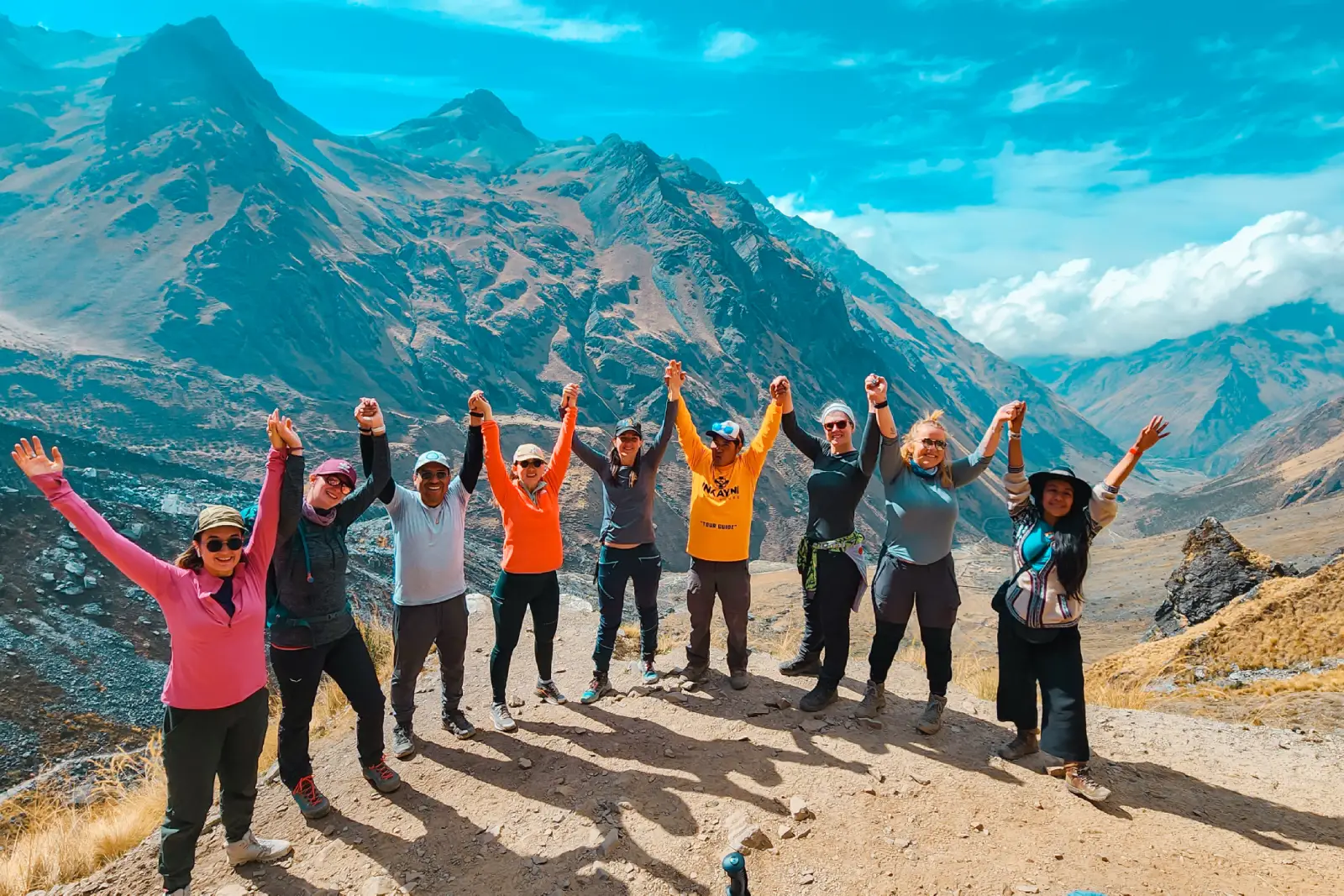
Hikers before Salkantay Pass.
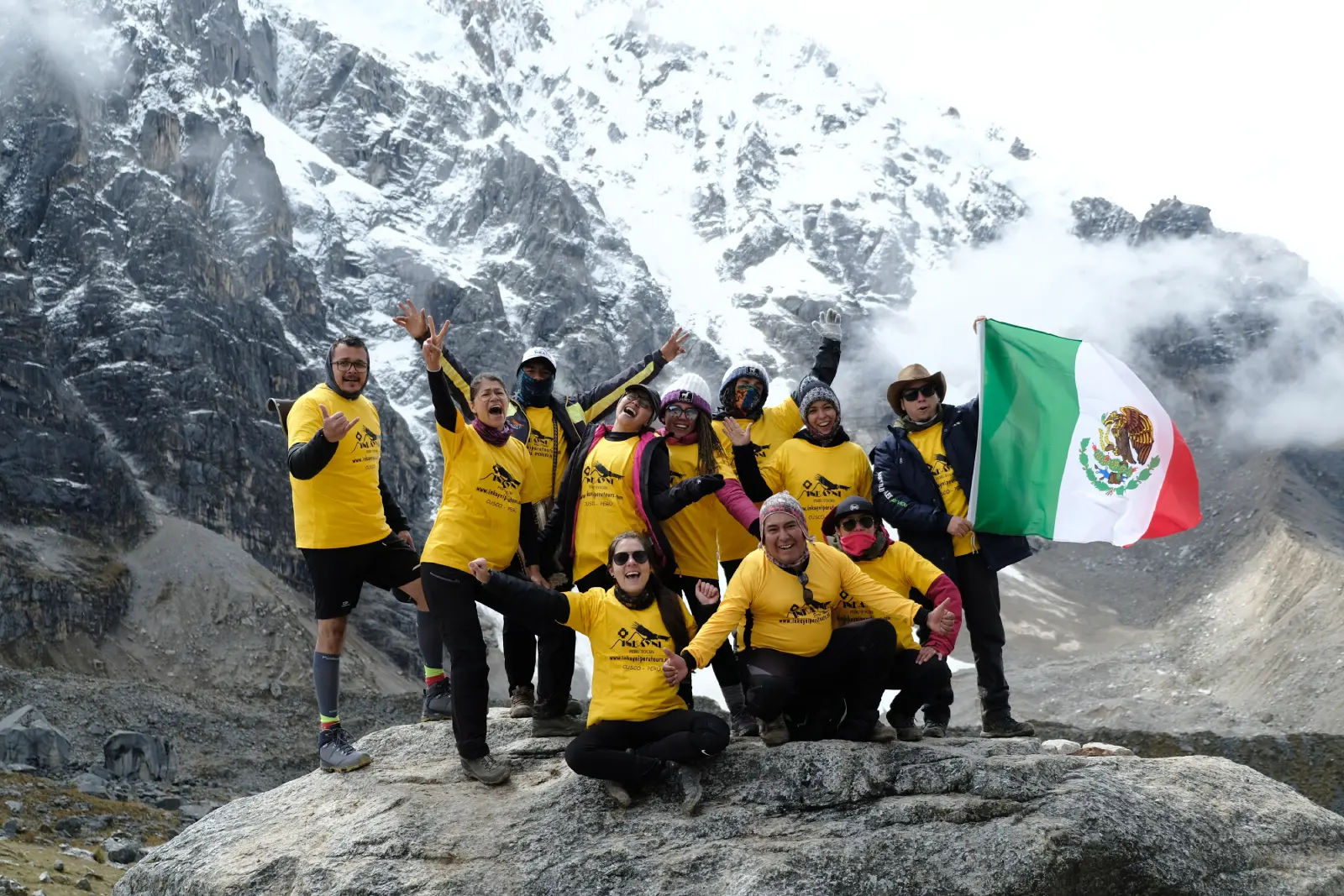
Trekkers celebrating in front of Salkantay mountain.
Inkayni’s current Salkantay Trek 5 days / 4 nights route covers about 42.9 mi (69 km) across the four main trekking days. Day 5 is primarily the Machu Picchu visit and return journey. The product separately lists about 1.25 mi (2 km) of activity on the final day, so it is more useful to treat 42.9 mi (69 km) as the main trekking distance and the Machu Picchu visit separately. For broader route-length comparisons, see the Salkantay distance and duration guide.
| Day | Main route | Distance | Walking time | Night |
| 1 | Challacancha → Soraypampa → Humantay Lake area | 7.5 mi (12 km) | ~6 h | Soraypampa camp |
| 2 | Soraypampa → Salkantay Pass → Huayracmachay → Chaullay | 13.7 mi (22 km) | ~9 h | Chaullay camp |
| 3 | Chaullay → La Playa → Lucmabamba | 11.2 mi (18 km) | ~6 h | Lucmabamba camp |
| 4 | Lucmabamba → Llactapata → Hidroeléctrica → Aguas Calientes | 10.6 mi (17 km) | ~7 h | 3-star hotel |
| 5 | Aguas Calientes → Machu Picchu → Ollantaytambo → Cusco | Product lists ~1.25 mi (2 km) of visit activity | ~2 h guided visit | Return to Cusco |
What those numbers mean in practice: Day 2 is the heaviest workload at 13.7 mi (22 km) and about 9 hours; Day 4 still requires about 10.6 mi (17 km) and 7 hours before you reach the hotel in Aguas Calientes. The route is five calendar days, but four of them involve substantial time on foot.
Important note:
The 42.9 mi (69 km) figure is the sum of the four main trekking days before the Machu Picchu visit. If another operator advertises 37, 40 or 46 miles for a five-day tour, compare the actual walking line before assuming one figure is wrong.
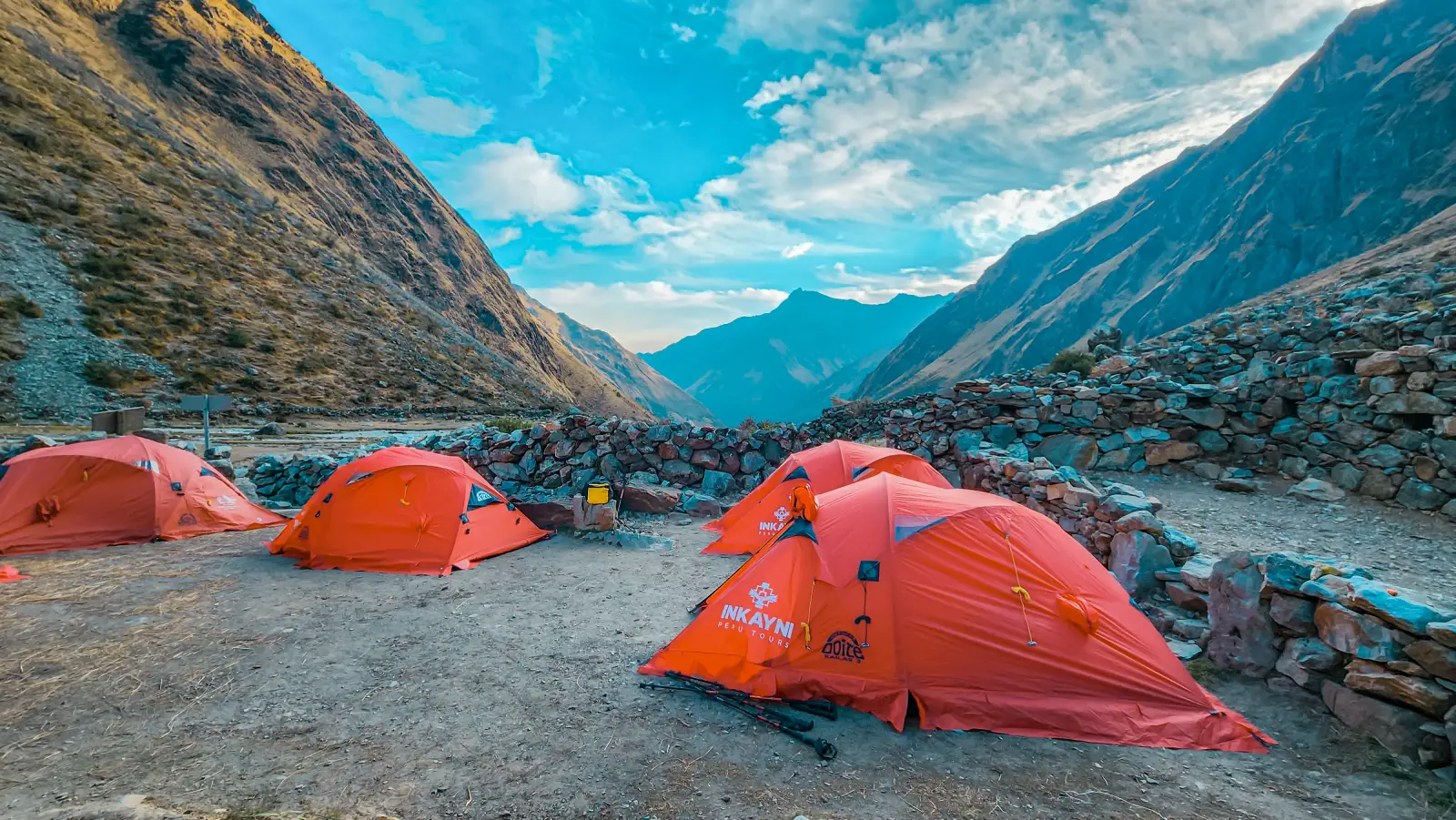
Mountain campsite on the Salkantay Trek.
5-Day Salkantay Trek Itinerary: Day by Day
This is how the current Salkantay Trek 5 days itinerary unfolds on foot. Departure times, breaks and camp logistics can shift with Cusco weather patterns and group pace, but the distances and walking times below give you a practical picture of each day.
Day 1: Cusco, Challacancha, Soraypampa and Humantay Lake
The trip starts early in Cusco and travels by road through Mollepata toward Challacancha, where the trekking team and mule support prepare for the trail. From there the walking begins toward Soraypampa, the first high-altitude base of the journey.
After reaching camp and eating lunch, the day continues into the Humantay Lake sector. The turquoise lake sits at about 13,780 ft (4,200 m), which makes the first day more demanding than its mileage alone suggests. You cover about 7.5 mi (12 km) in roughly six hours and sleep at Soraypampa around 12,795 ft (3,900 m).
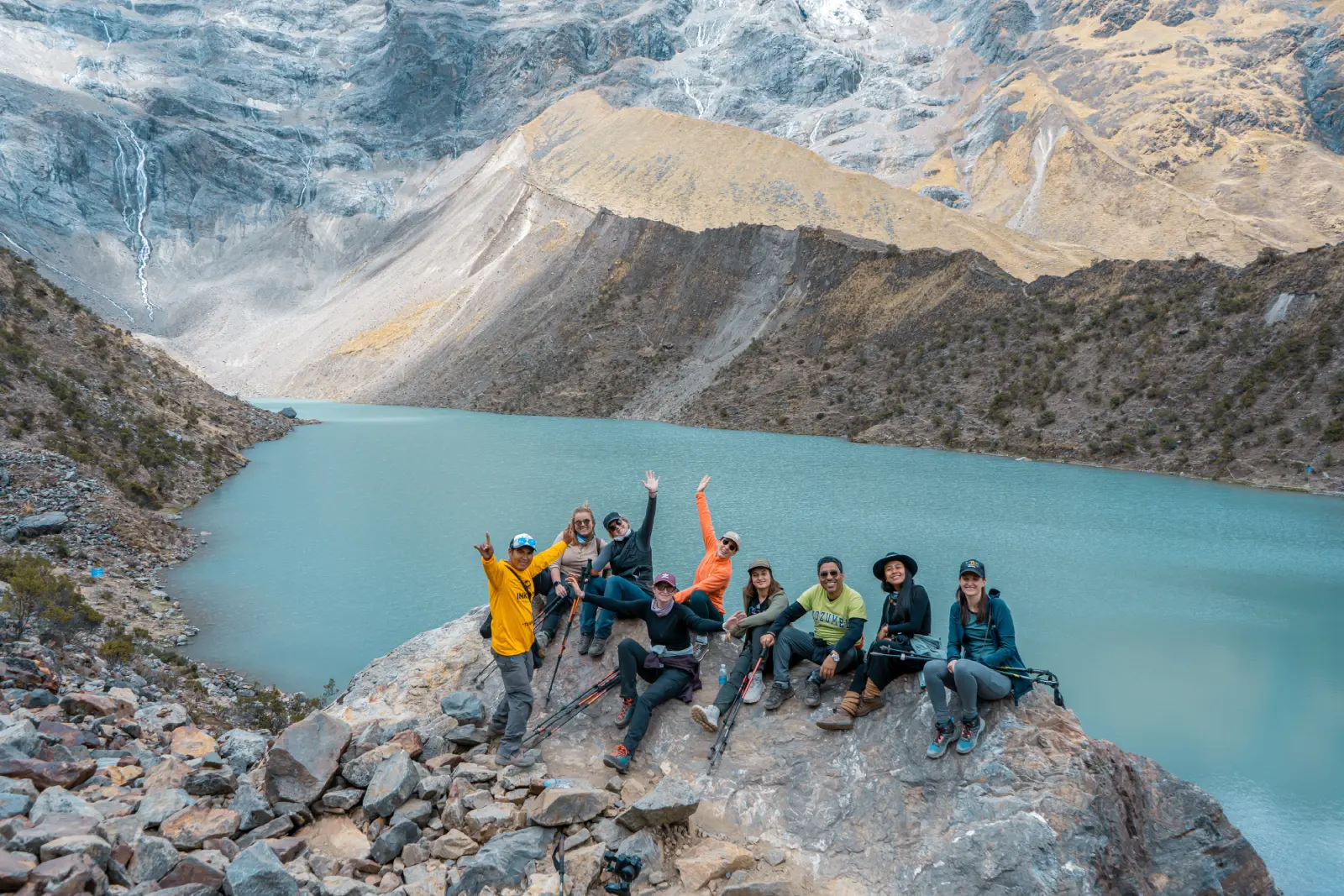
Humantay Lake adds a high-altitude side hike to the first trekking day.
For first-time high-altitude hikers, this is where arriving acclimatized in Cusco matters. Day 1 is already a real trekking day, not simply a transfer to camp. For acclimatization, training and what to do before departure, use the Salkantay preparation guide.
Day 2: Soraypampa, Salkantay Pass and Chaullay
Day 2 is the defining stage of the five-day route. The trail leaves Soraypampa, climbs through Salkantaypampa and the upper glacial valley, then reaches Salkantay Pass at 15,190 ft (4,630 m) below Salkantay Mountain. This is the highest point of the trekking route and the moment when altitude, cold and climbing effort overlap.
The day totals about 13.7 mi (22 km) and roughly nine hours of walking. From Salkantay Pass to Chaullay, the route drops about 5,610 ft (1,710 m), finishing near 9,580 ft (2,920 m). That descent explains the rapid change in conditions: the air gets warmer, vegetation returns and the trail leaves the exposed alpine environment behind.
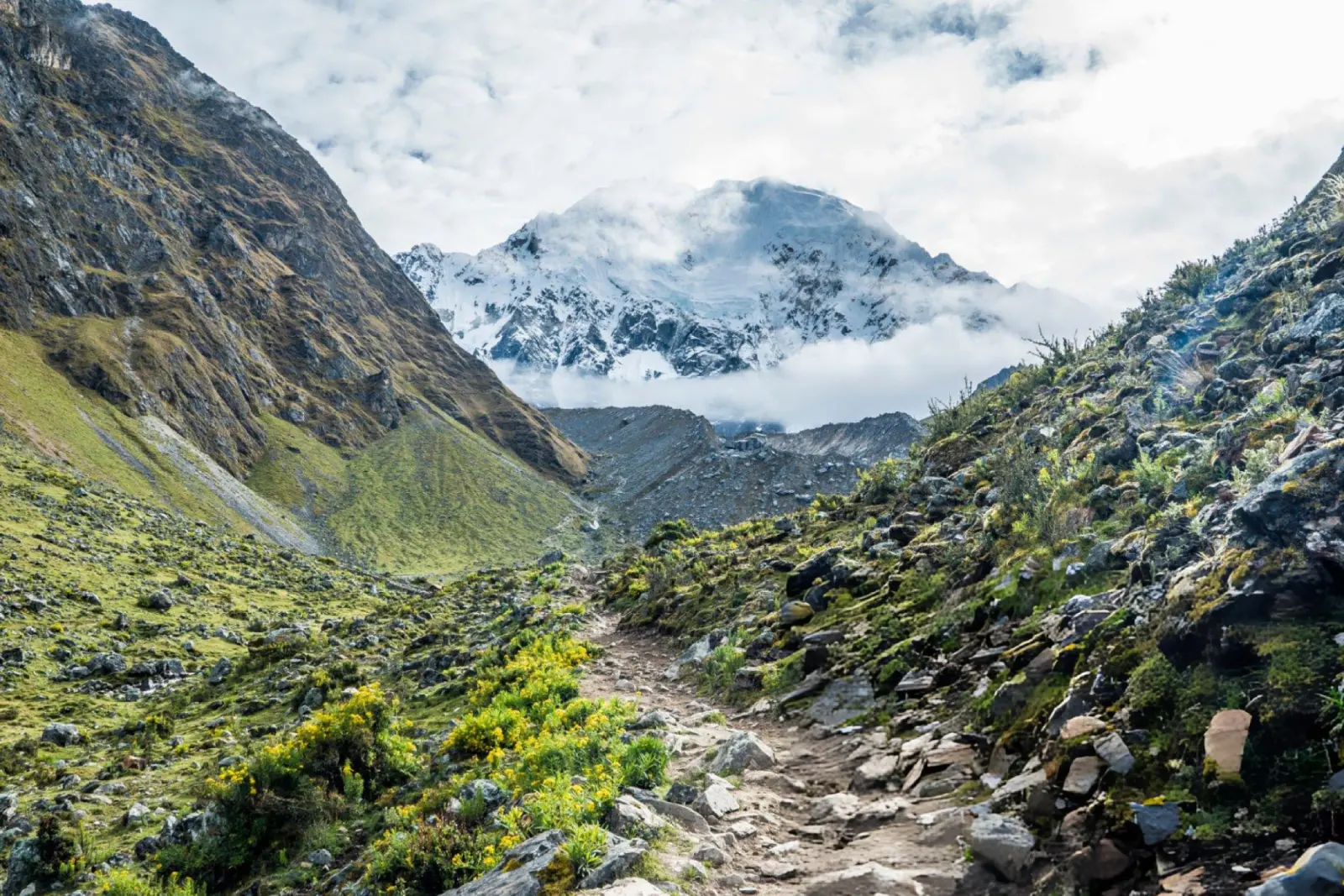
By the lower route, the glacial landscape has given way to greener and warmer terrain.
Warning:
Day 2 is not technical climbing, but it is the hardest day for most travelers because the route combines the longest distance with the highest altitude. If the pass is your main concern, use the dedicated Salkantay Trek difficulty guide for acclimatization, altitude effects and physical preparation.
Day 3: Chaullay, La Playa and Lucmabamba
The third day changes the character of the trip. Instead of open high-altitude terrain, you walk through warmer valleys, waterfalls, fruit-growing areas and increasingly dense vegetation. Day 3 covers about 11.2 mi (18 km) in roughly six hours from Chaullay through the La Playa/Sahuayaco sector toward Lucmabamba.
The cloud-forest transition is more than a change of scenery. The route passes through habitat associated with orchids and Andean-Amazonian birdlife, including the Andean cock-of-the-rock, although wildlife sightings are never guaranteed.
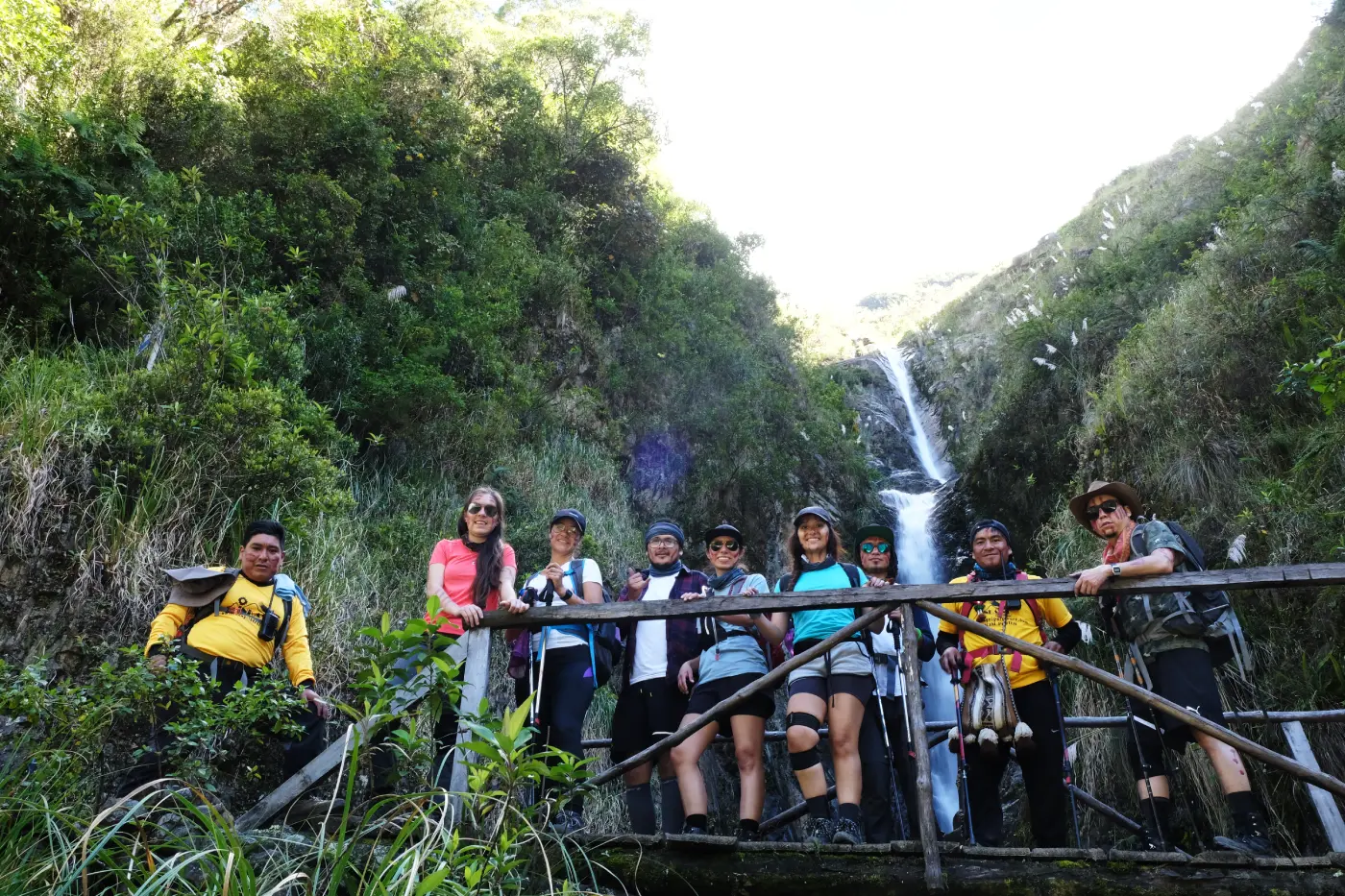
Waterfall stop along the Salkantay mountain route.
Lucmabamba sits around 6,562 ft (2,000 m), almost 6,230 ft (1,900 m) below the first camp at Soraypampa. By the end of Day 3, the itinerary has already covered roughly 32.4 mi (52 km) on foot, so the lower sleeping altitude is welcome even though the legs are carrying three full trekking days.
Day 4: Lucmabamba, Llactapata, Hidroeléctrica and Aguas Calientes
Day 4 explains one of the biggest differences between five-day itineraries. This itinerary keeps the lower approach on foot: you climb from Lucmabamba toward Llactapata at about 8,860 ft (2,702 m), where the route gives a distant perspective toward Machu Picchu, then descend to Hidroeléctrica and continue beside the railway toward Aguas Calientes.
The stage is about 10.6 mi (17 km) and roughly seven hours of walking. In this itinerary, that entire Day 4 distance remains part of the trek before the hotel night in Aguas Calientes. A five-day route that transfers part of the Lucmabamba–Hidroeléctrica corridor can therefore remove several miles and hours from the final hiking day without changing the “5 days” label.
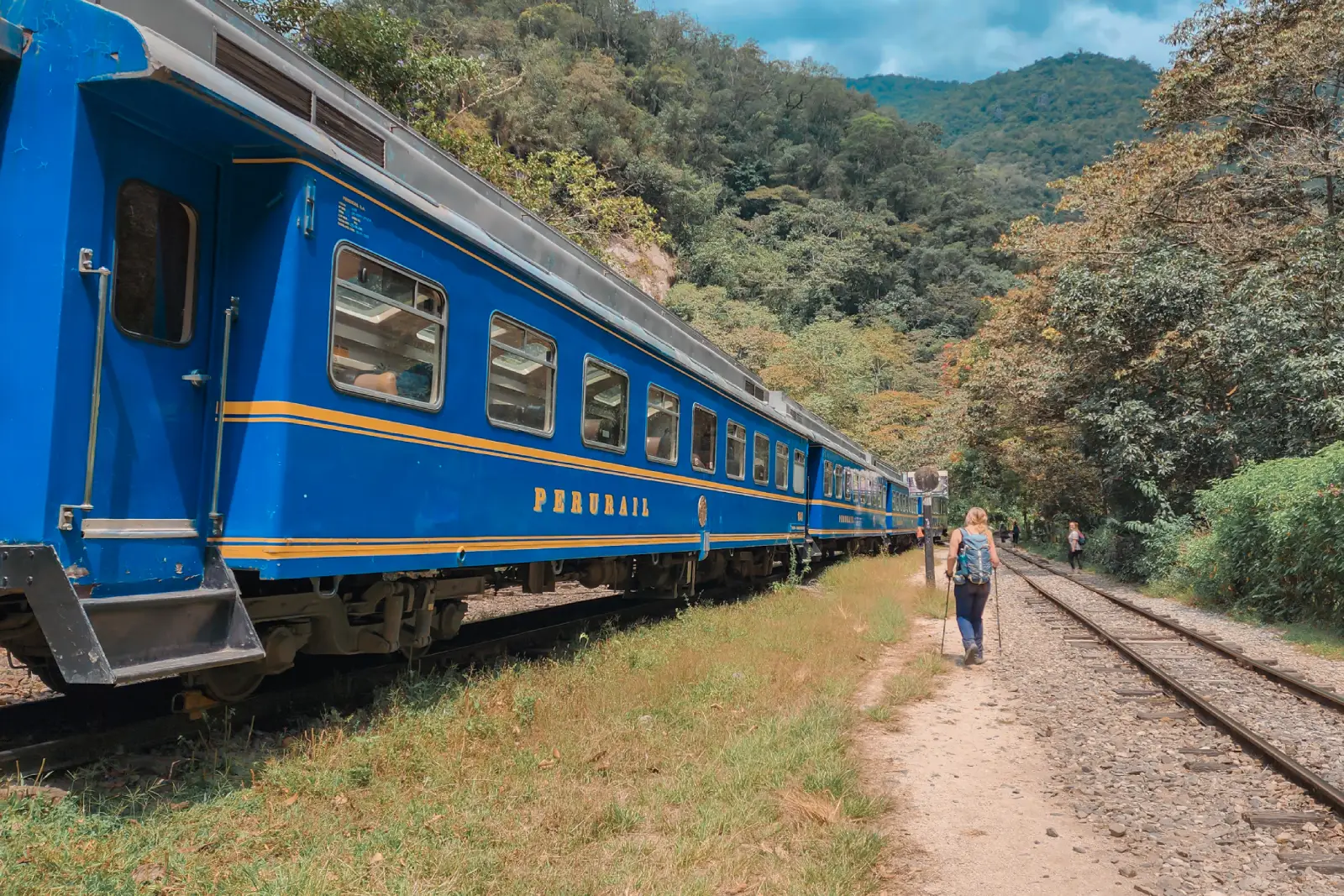
Hidrolectrica train near Aguas Calientes.
The night is in a three-star hotel in Aguas Calientes rather than another campsite. That change matters after four trekking days, and it is also one of the inclusions worth checking when two five-day tours have very different prices.
Day 5: Machu Picchu and Return to Cusco
The fifth day is primarily about Machu Picchu rather than trekking mileage. After breakfast, the current service uses the Consettur bus from Aguas Calientes to Machu Picchu for a guided visit of roughly two hours. Machu Picchu sits at about 7,972 ft (2,430 m), well below Salkantay Pass.
After the visit, the normal return is by bus to Aguas Calientes, train to Ollantaytambo and ground transport to Cusco. Machu Picchu tickets and circuits are route-specific, so “entrance included” is not enough information by itself. The product currently lists Circuit 2, but the exact route should still be confirmed for your departure because ticket availability can change.
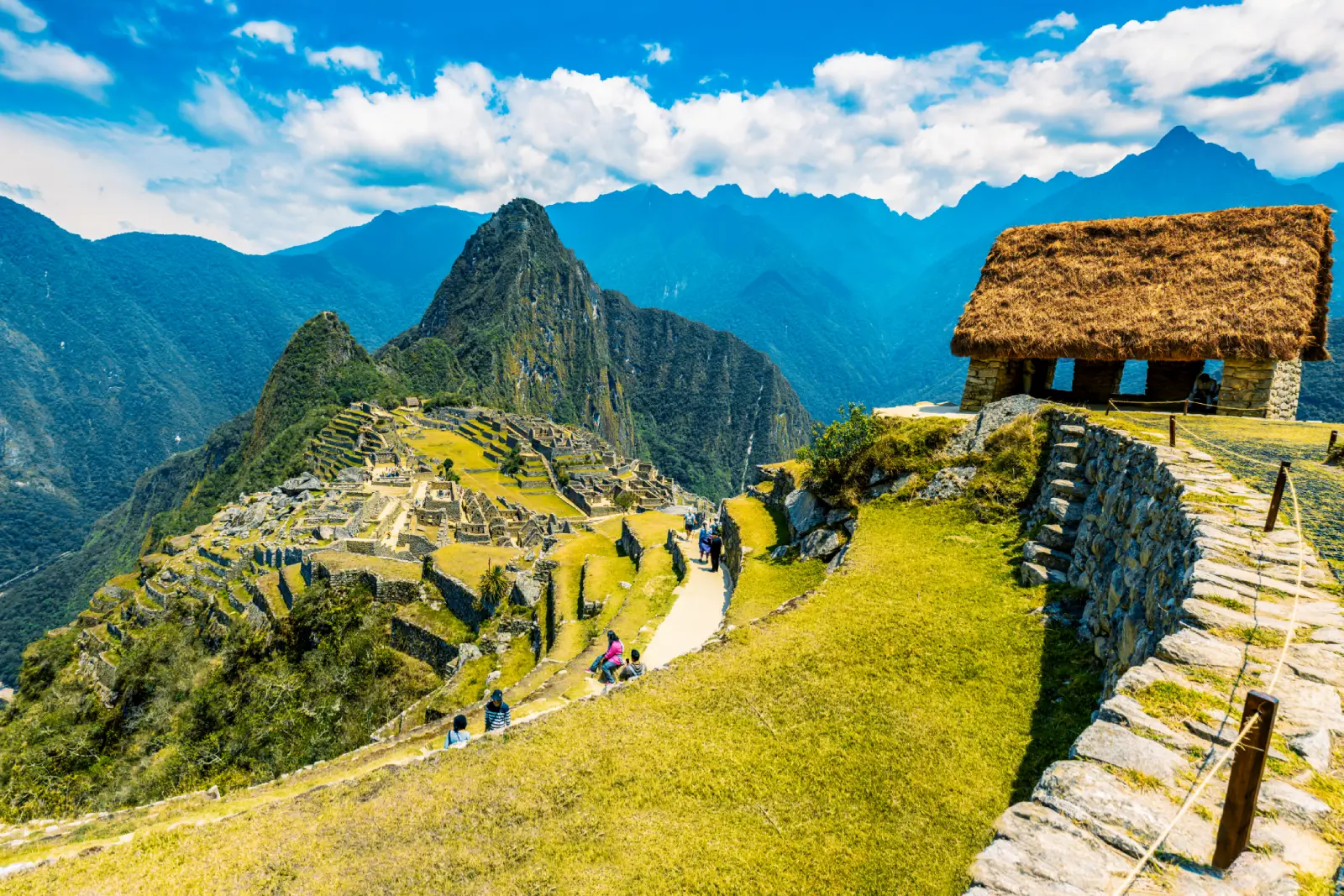
Machu Picchu at the end of Salkantay.
If you want to understand the archaeological visit separately from the trek, continue with our Machu Picchu travel guide.
What Does the 42.9-Mile 5-Day Distance Actually Include?
For the current route, the arithmetic is straightforward:
| Stage | Distance | Why it matters |
| Day 1 | 7.5 mi (12 km) | Includes the high-altitude Humantay sector. |
| Day 2 | 13.7 mi (22 km) | Includes the climb to Salkantay Pass and descent toward Chaullay. |
| Day 3 | 11.2 mi (18 km) | Keeps the cloud-forest transition on foot to Lucmabamba. |
| Day 4 | 10.6 mi (17 km) | Includes Llactapata and the Hidroeléctrica–Aguas Calientes approach. |
| Main trek total | 42.9 mi (69 km) | Four principal trekking days before the final Machu Picchu visit. |
The product separately lists roughly 1.25 mi (2 km) of activity on Day 5. Adding it brings the published trip activity to about 44.1 mi (71 km), but that mixes the archaeological visit with the continuous trekking mileage. For planning the hike itself, 42.9 mi (69 km) is the cleaner figure.
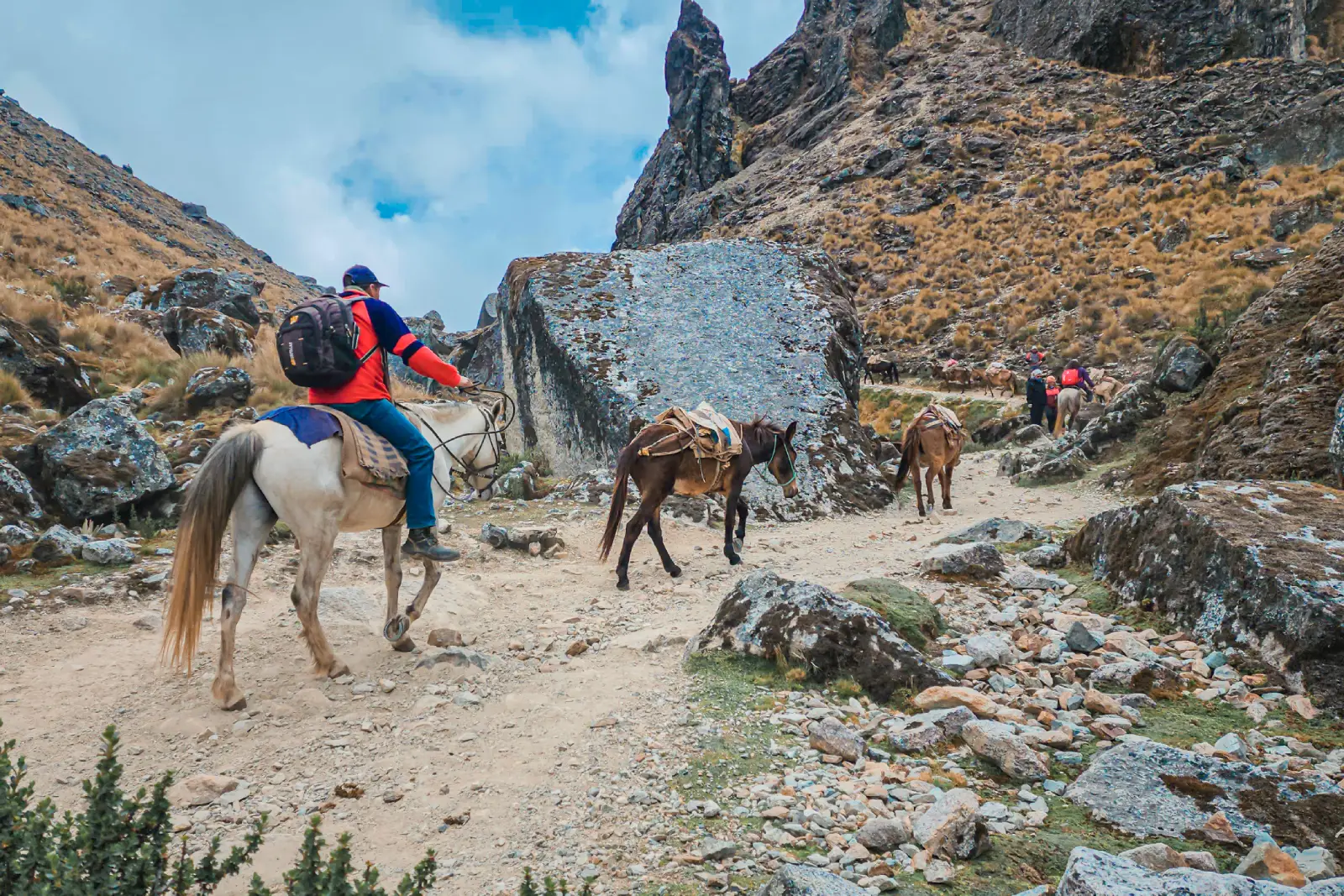
Mules supporting the Salkantay route.
If you are comparing this route with 3-day, 4-day or 7-day versions, use the Salkantay Trek length and duration guide.
How 5-Day Salkantay Itineraries Vary Between Operators
The biggest differences are not hidden in the tour name; they appear in the walking line, Day 4, accommodation and return transport. These are the details that materially change a five-day trip:
| What can vary | Typical 5-day difference | Why it matters |
| Total walking distance | Fuller 5-day routes commonly sit around 43–49 mi (69–79 km). | A lower total usually means a trailhead, lower-valley section or final approach has been shortened or transferred. |
| Llactapata + lower approach | Inkayni keeps about 10.6 mi (17 km) on foot on Day 4 from Lucmabamba through Llactapata and Hidroeléctrica to Aguas Calientes. | Replacing part of this corridor with a vehicle can cut several walking hours from the itinerary. |
| Machu Picchu day | Some totals stop at Aguas Calientes; Inkayni separately lists about 1.25 mi (2 km) on Day 5. | This is why two published “total distances” may differ even when the main trek is similar. |
| Fourth night | Hotel in Aguas Calientes vs. another campsite or simpler lodging. | A bed, shower and hotel night after roughly four trekking days materially changes comfort and price. |
| Return to Cusco | Train + ground transfer vs. a cheaper car-based return. | This can create a large price difference even when both tours advertise the same five-day duration. |
Keep this in mind:
Compare what is walked, where you sleep and how you return before comparing headline prices. Those three details explain much of the difference between five-day Salkantay packages.
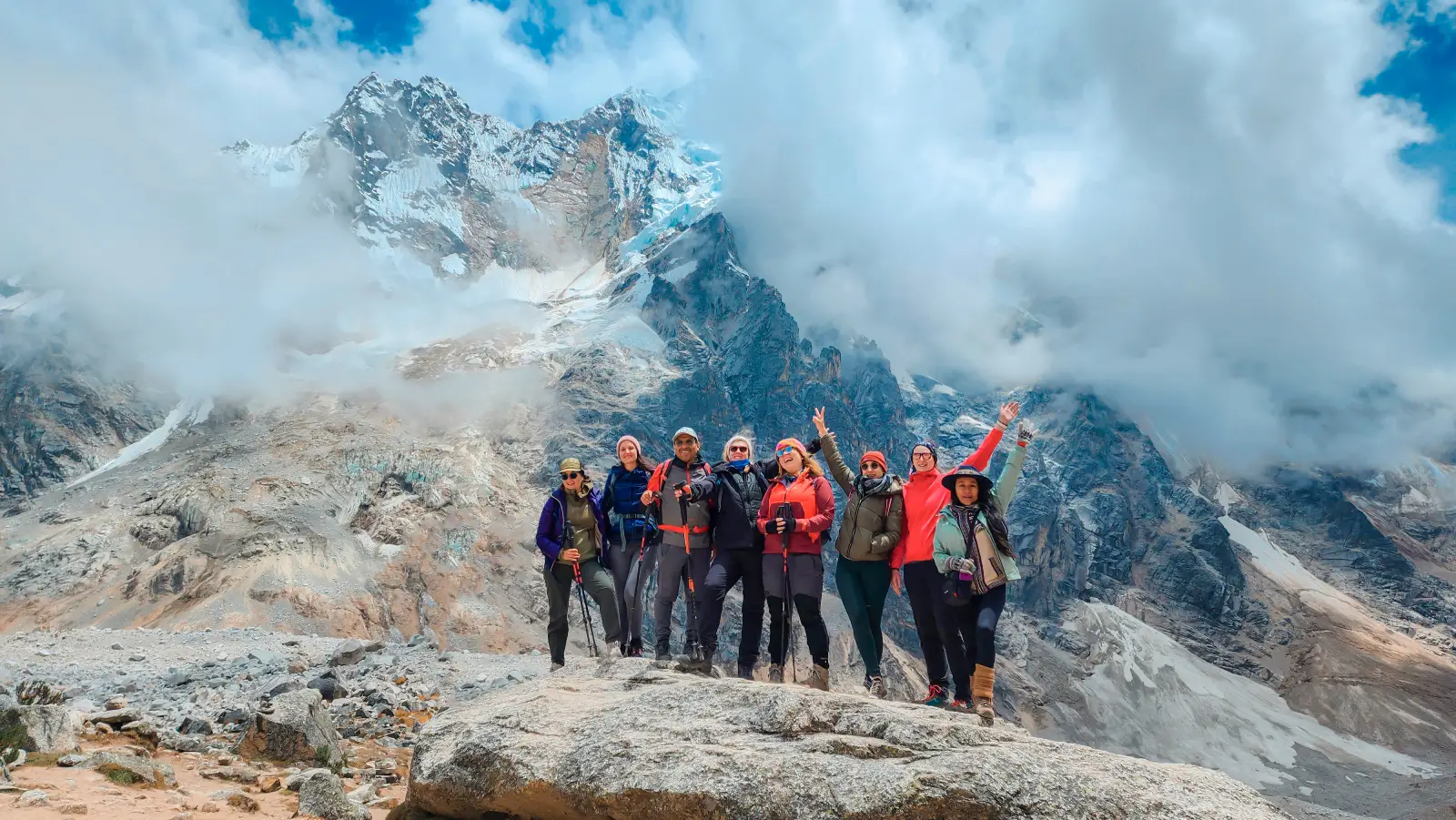
Hikers below Salkantay glacier peaks.
How Much Does a 5-Day Salkantay Trek Cost?
For a 5-day Salkantay Trek to Machu Picchu, two price bands are more useful than a long list of package labels. Current full-service group trips cluster around the mid-hundreds, while premium or private services move into four figures.
| Service level | Useful price range | What is usually included |
| Standard full-service group | About US$500–750 per person | Guide, cook, trail meals, camping equipment, mule/duffel support, several nights on the route, Machu Picchu logistics and some form of return transport. Better packages in this band often include the entrance ticket, hotel night in Aguas Calientes and train return. |
| Premium / private | About US$1,000–2,500+ per person | Smaller or private groups, upgraded camps or lodges, more luggage/support, higher-comfort equipment, upgraded meals, hotel or train categories and more flexible logistics. Price rises sharply for very small private groups. |
Inkayni’s current group price of US$609 per person sits inside the standard full-service range. The quote includes the Machu Picchu ticket, hotel night, bus, return train or car, luggage allowance and the same walking sections.
What the Current 5-Day Price Includes
The product page should be checked again before payment, but the main inclusions help explain where the US$609 price sits in the market. They also show what you would need to organize yourself on an independent trek; for that comparison, see the Salkantay Trek on your own guide.
| Included in the current service | Why it affects the trip |
| Professional guide, cook and muleteer support | Covers guiding, meal preparation and pack-animal logistics across four main trekking days rather than leaving those tasks to the traveler. |
| Up to 15 lb (7 kg) of personal gear carried by mule support | Lets you hike with a lighter daypack; the allowance includes sleeping equipment weight when applicable. |
| Three camping nights + one 3-star hotel night in Aguas Calientes | After roughly 42.9 mi (69 km) of main trekking, the fourth night provides a bed and shower before the Machu Picchu visit. |
| Four breakfasts, four lunches, four afternoon snacks and four dinners | Most trail meals are organized; breakfast on Day 1 and lunch/dinner on Day 5 are not included. |
| First-aid kit and oxygen | Relevant support on Day 2, when the route reaches 15,190 ft (4,630 m) and requires about nine hours of walking. |
| Machu Picchu entrance, round-trip Consettur bus, return train and transport to Cusco | These are exactly the items that can make a low headline price misleading if they are sold separately. |
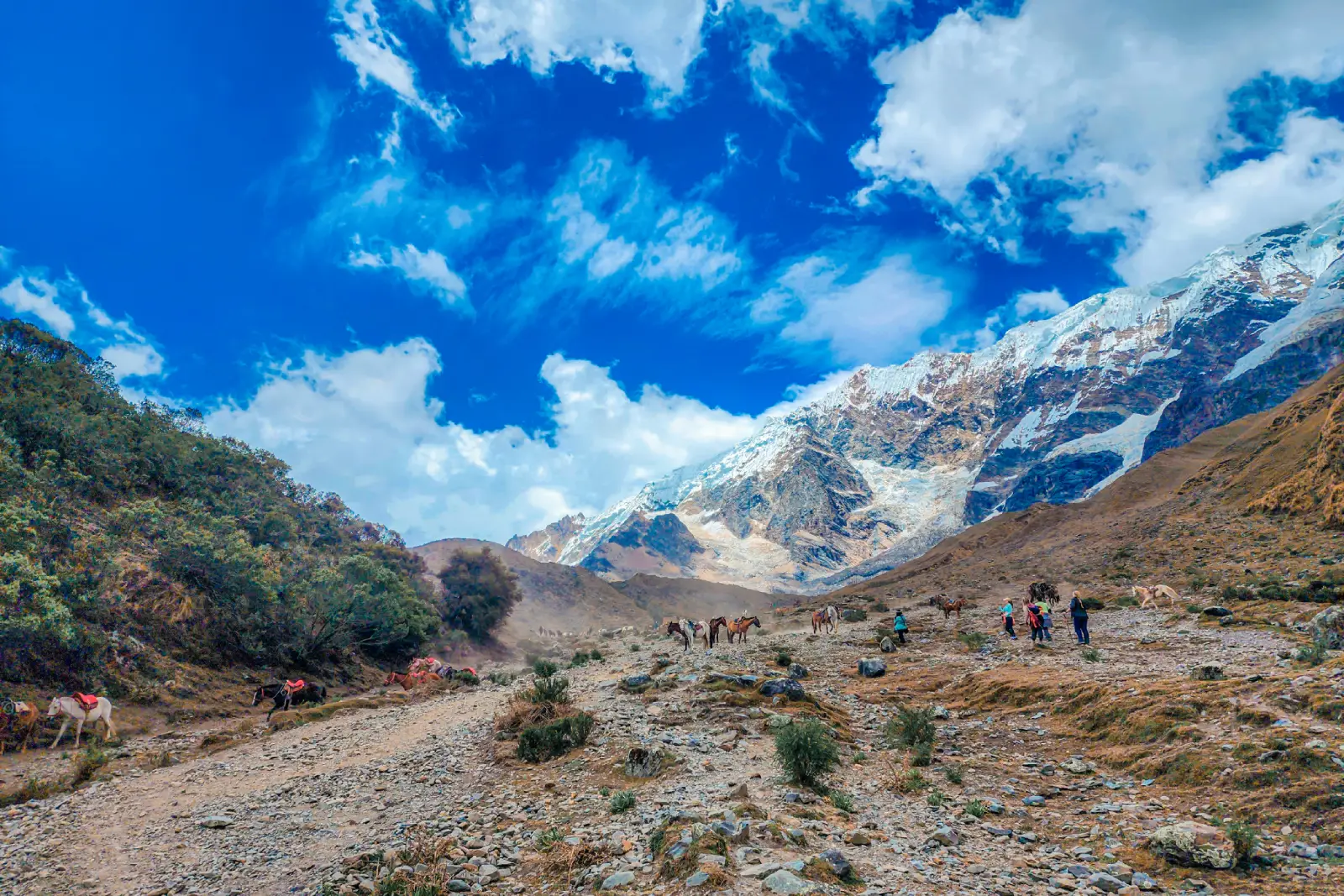
Upper valley with horses and glaciers.
Sleeping bags and trekking poles are currently rental extras at US$25 and US$15, respectively. Huayna Picchu is also an additional ticket. Before paying, review the current 5-day Salkantay Trek product because prices, ticket routes and operational inclusions can change.
Is the 5-Day Salkantay Trek Better Than the 4-Day Version?
The practical difference is about 10.6 mi (17 km) in the current Inkayni references: roughly 42.9 mi (69 km) of main trekking in 5 days versus 32.3 mi (52 km) in 4 days. Much of that difference comes from keeping more of the lower Lucmabamba–Llactapata–Hidroeléctrica approach on foot.
- Choose the 5-day version if you have the extra calendar day, want the Lucmabamba–Llactapata–Hidroeléctrica approach to remain part of the hiking experience and prefer four principal trekking days before Machu Picchu.
- Choose the 4-day Salkantay Trek if four days is a hard limit and you are comfortable with a more compressed route. For a direct look at how 3-, 4-, 5- and 7-day formats differ, use the Salkantay duration comparison.
Continue Planning Your Salkantay Trek
Booking the 5-Day Route: What to Confirm Before You Pay
The Salkantay route itself does not use the limited Inca Trail permit system, but the Machu Picchu entrance is still tied to a specific date and route.
- Confirm the exact Machu Picchu route: do not settle for “ticket included.” Ask which circuit and route are being reserved.
- Confirm the return transport: ask specifically whether the quote includes the train from Aguas Calientes/Ollantaytambo and ground transport to Cusco, or a car-based return.
- Confirm the walking line: ask whether the full 10.6 mi (17 km) Day 4-style approach through Llactapata and Hidroeléctrica is walked or partly transferred.
- Confirm accommodation: ask for the exact first three camp types and whether Night 4 is a hotel in Aguas Calientes or another form of lodging.
- Confirm luggage allowance: Inkayni currently allows up to 15 lb (7 kg) of personal gear with mule support, subject to the product conditions.
- Confirm rentals: sleeping bags and trekking poles may be separate charges.
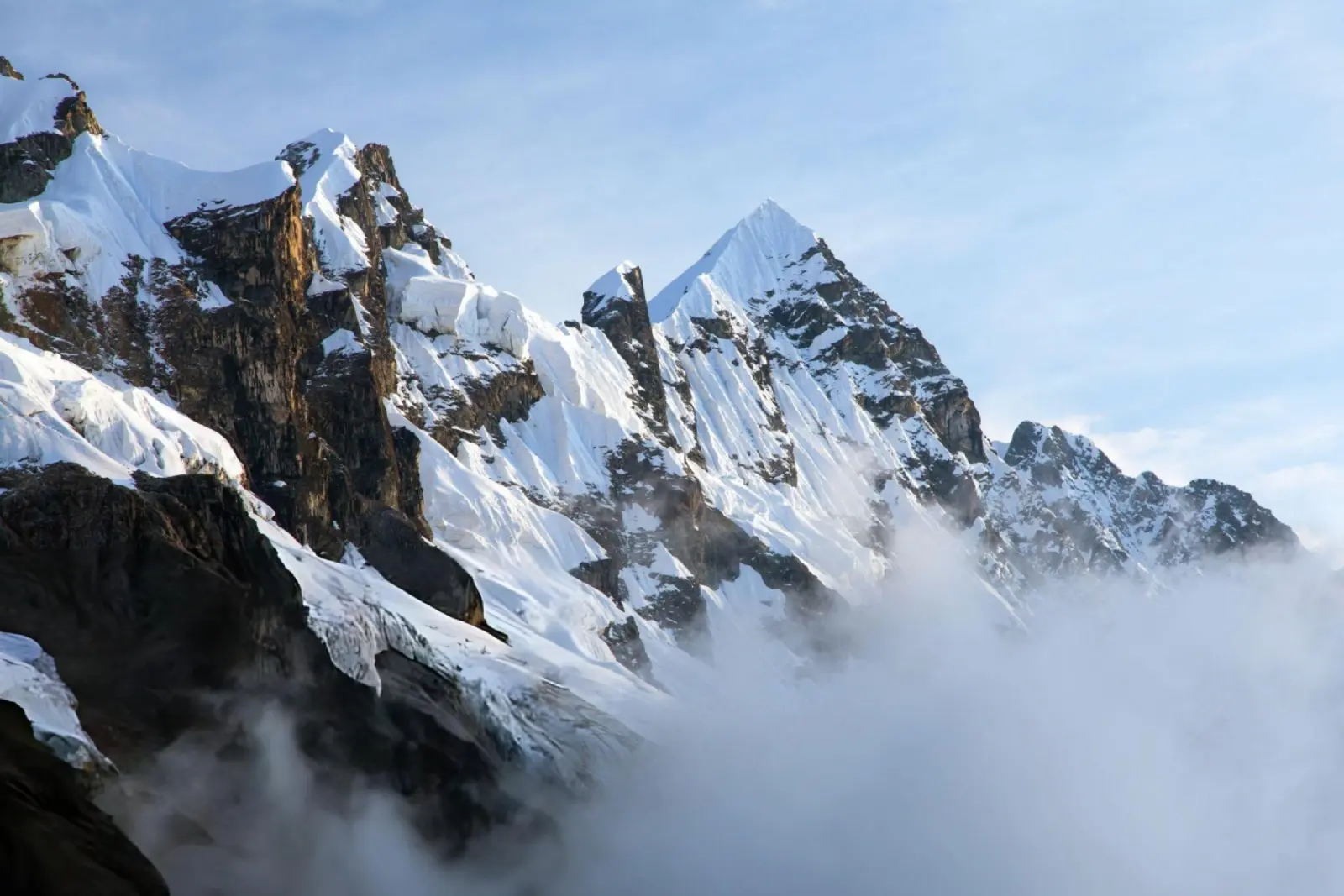
Close-up of Salkantay Mountain’s snow-covered ridges.
Check official ticket information on the Ministry of Culture’s Machu Picchu ticket page. For the trek itself, the written itinerary is more useful than the tour name alone.
Quick summary:
For this five-day route, plan around 42.9 mi (69 km) of main trekking and roughly 28 scheduled walking hours across Days 1–4. Day 2 is the hardest at 13.7 mi (22 km) and about nine hours; the route reaches 15,190 ft (4,630 m), uses three camping nights, one hotel night and visits Machu Picchu on Day 5. The current group price is US$609.
Choose the 5-Day Salkantay Trek for the Route, Not Just the Extra Night
The best reason to choose five days is not simply to add another night. A well-built route can preserve more of the mountain-to-cloud-forest journey before Machu Picchu: Salkantay Pass, the descent to Chaullay, Lucmabamba, Llactapata and the final walking approach to Aguas Calientes all remain part of the experience.
For travelers comparing trekking routes in Cusco, a 5-day Machu Picchu hike with a genuine high-Andean crossing should be judged by its walking line as carefully as its price. Review Inkayni’s current 5-day Salkantay Trek to Machu Picchu, or talk to a travel specialist to confirm the route, Machu Picchu ticket and departure conditions for your dates.
Frequently Asked Questions About the Salkantay Trek 5 Days
How long is the 5-day Salkantay Trek?
The itinerary lasts 5 days / 4 nights. The first four days are the main trekking stages, followed by Machu Picchu and the return to Cusco on Day 5.
How many miles is the Salkantay Trek 5 days?
The four main trekking days in the current itinerary total about 42.9 mi (69 km). Day 5 separately lists about 1.25 mi (2 km) of activity for the Machu Picchu visit.
What is the hardest day of the 5-day Salkantay Trek?
Day 2 is usually the hardest. It covers about 13.7 mi (22 km), takes roughly nine hours and crosses Salkantay Pass at 15,190 ft (4,630 m), the highest point of the route.
What does the Salkantay Trek 5 days itinerary include?
The current route includes Humantay Lake, Salkantay Pass, Chaullay, the cloud-forest descent, Lucmabamba, Llactapata, Hidroeléctrica, Aguas Calientes and a guided Machu Picchu visit on Day 5.
Where do you sleep on the 5-day Salkantay Trek?
The current group service uses three camping nights—Soraypampa, Chaullay and Lucmabamba—followed by one night in a 3-star hotel in Aguas Calientes.
How much does the 5-day Salkantay Trek cost?
For 2026, a useful planning range is about US$500–750 per person for a standard full-service five-day group trek and roughly US$1,000–2,500+ for premium or private services. Inkayni’s current group price is US$609 per person. Compare the Machu Picchu ticket, hotel, return transport, luggage support and walking line before comparing the headline price.
Does the five-day route include Machu Picchu?
Yes. Inkayni’s current service includes a Machu Picchu entrance ticket and guided visit on Day 5, plus the bus connection and return train/ground transport listed in the product. Confirm the exact Machu Picchu circuit and route when booking because official tickets are route-specific.
Is Humantay Lake included in the 5-day Salkantay Trek?
Yes. On the current itinerary, the Humantay Lake sector is part of Day 1. The lake reaches about 13,780 ft (4,200 m), so the first day already includes meaningful altitude exposure.
Is the 5-day Salkantay Trek easier than the 4-day route?
Not automatically. The five-day route adds another calendar day, but it can also keep more total mileage on foot: about 42.9 mi (69 km) in the current 5-day itinerary versus about 32.3 mi (52 km) in the current 4-day itinerary.
Do all 5-day Salkantay tours follow the same itinerary?
No. Five-day routes differ in trailhead, camps, Llactapata, lower-valley transfers, accommodation and return transport. A practical distance range for fuller versions is roughly 43–49 mi (69–79 km); routes that transfer part of the lower approach can publish less walking.