


Choosing the Right Season for the Inca Trail
The best time to hike Inca Trail is during the dry season (April to October). These months typically offer clearer skies, less rainfall, and more stable trail conditions. The driest and busiest period for permits is usually June through August. April and October can be considered transition months with more variable weather, while November to March is wetter overall (the Inca Trail is closed in February)
Table of Contents
The Inca Trail is one of the world’s most iconic routes, not only for its physical challenge but also for the opportunity to immerse yourself in Andean history and nature. Before deciding when to embark on this trek, it’s crucial to understand how climate influences the experience.
Besides planning the best time to hike Inca Trail, you need to consider other factors such as permit availability, acclimatization times, and necessary gear. Are you ready to organize your trip and make the most of your experience? Keep reading to clarify everything you need to know and avoid surprises.
| Apr–OctDry season | Jun–AugDriest and busiest | Nov–MarRainy season | FebTrail closed | 0°CCold campsite nights | 5–7 mo.Peak booking window |
The Classic 4 Day Inca Trail is the clearest reference because it combines cold camps, high passes, and several days of exposure, while the Short Inca Trail usually feels warmer and more humid. The Salkantay Trek and Ausangate Trek demand more weather margin because altitude weighs more, while the Inca Jungle Trek and the Lares Trek shift the balance toward rain, road conditions, or cultural highland exposure. In other words, the calendar only becomes useful once you know which route you actually want.
Understanding the Climate on the Inca Trail
The climate in the Andes mountain range, including the city of Cusco and the Inca Trail to Machu Picchu, is famous for experiencing drastic changes throughout the day due to a phenomenon known as thermal amplitude. Due to the mountainous topography and altitude, temperatures can rise significantly when the sun shines intensely, resulting in relatively warm maximum temperatures.
- During the first days of the trek, especially at higher elevations (Wayllabamba, Warmiwañusca, Pacaymayu, Runkuracay, or Phuyupatamarca), temperatures typically drop dramatically at night, becoming much colder.
- During the descent toward the cloud forest of Cusco (Wiñay Wayna and Machu Picchu), the temperature increases and nights also become warmer.
| Season | Months | What to Expect |
| Dry | April–October | Firm trail, more sun; cold nights at altitude; June to August are typically the driest. |
| Rainy | November–March | More moisture and mud; greener landscape (February closed) |
Dry Season (April to October)
Generally, the weather during this period is dry, especially between June, July, and August. Days are usually sunny with good visibility, with a maximum temperature around 21°C (70°F). In contrast, nights drop considerably at campsites and high-altitude areas, and sometimes the minimum can approach 0°C (32°F).
Although the dry season is usually considered the best time of year to hike the Inca Trail and visit Cusco, it’s also the busiest time of year.

Panoramic view of the Inca Trail during the dry season
Rainy Season (November to March)
During this season, Cusco receives more precipitation. In practice, rain usually intensifies from late November, with a more pronounced stretch between December and March. Daytime temperatures typically hover around 18°C (64°F), while at night they can drop close to 9°C (48°F).
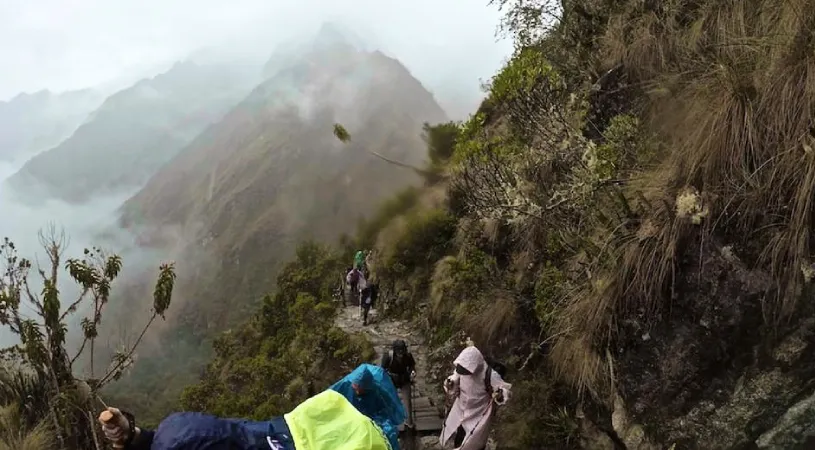
Inca Trail during rainy season
If you don’t mind getting wet, you can travel during these months because there’s less foot traffic and it’s usually easier to find availability. Keep in mind that rain makes the trail wetter and sometimes muddy, which makes the hike more demanding. On the positive side, the landscape looks greener and local life in Cusco remains active despite the rain.
Remember this:
The dry season (April to October) usually brings sunnier days and firmer trails, but nights at higher campsites can be very cold. As you descend toward Machu Picchu, the air becomes warmer and more humid. The rainy season (November to March) brings wet stretches with some mud, but valleys and mountains turn intensely green.
Weather Considerations for Traveling to Cusco and the Inca Trail
The Inca Trail presents microclimates by section. At high altitude, the night cold is real, and toward the cloud forest, humidity feels stronger, especially near Machu Picchu.
- Dry days, cold nights: During the dry season (April to October), days usually have good visibility and lower probability of rain. At campsites and high passes, nights drop significantly and can approach 0°C, especially between June and August. Warmiwañusca reaches 4,215 m, and that altitude is noticeable in the cold and thin air.
- Humid and slippery: During the rainy season (November to March), precipitation and humidity increase. The trail can become slippery and slower to traverse, especially in cloud forest areas. January and February usually concentrate the heaviest rains, and the Inca Trail closes in February.
- Transition: April and October usually feel like mixed months. On the same day, you can have strong sun and brief rain. The choice here depends on your tolerance for rapid changes and permit availability.

So, When Is the Best Time to Do the Inca Trail?
The best time to do the Inca Trail usually falls within the dry months. During these dates, you’re more likely to hike with less rain and better trail continuity. At high altitude, nights are cold, so it’s advisable to plan thermal gear for camp.

The best time for the Inca Trail
In summary, this period is usually more comfortable for hiking due to the lower probability of rain. However, the Inca Trail closes for maintenance during the month of February. Therefore, access is not permitted during that month, both for safety and for conservation of the trail and heritage.
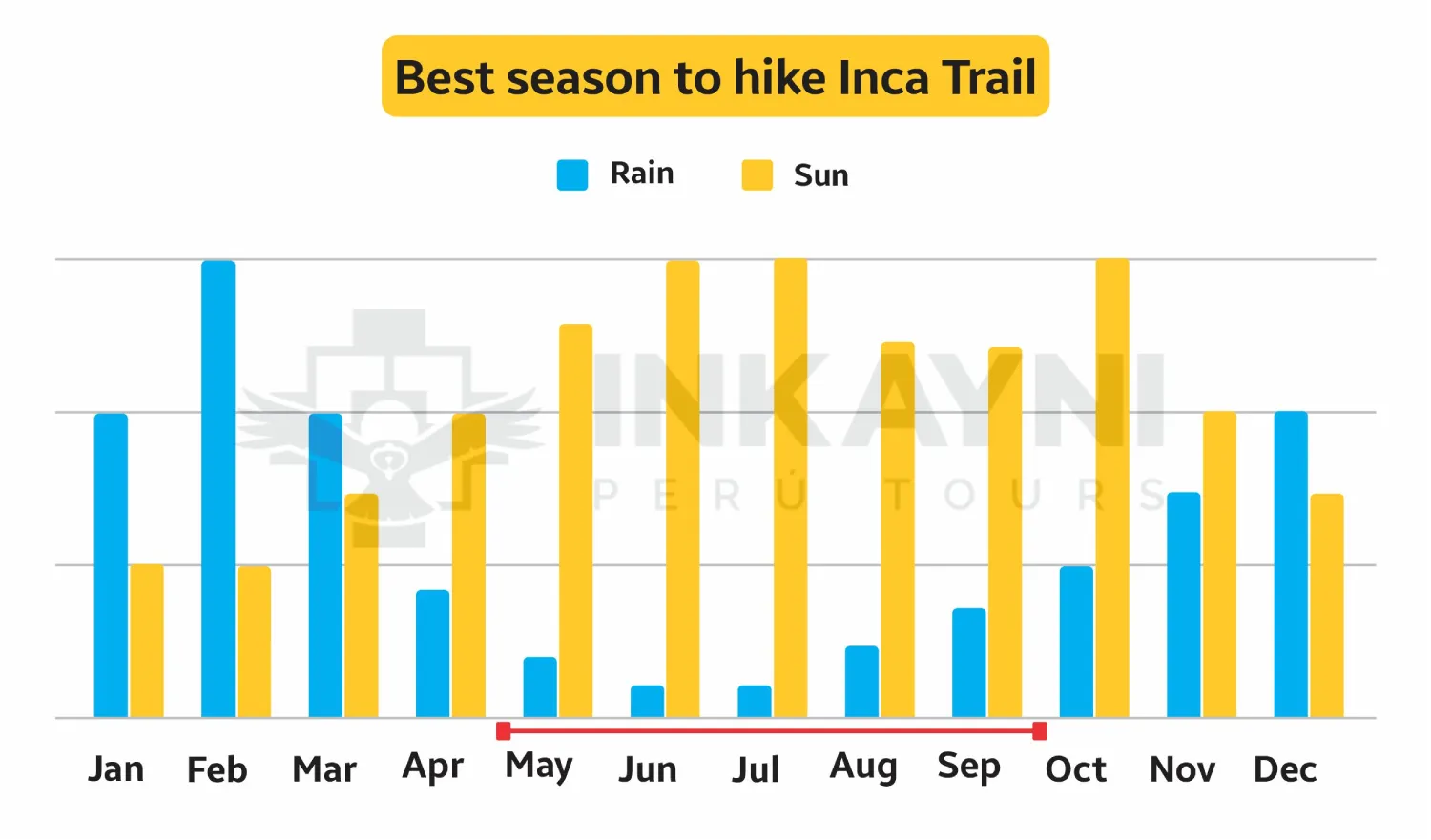
Best season to hike the Inca Trail to Machu Picchu
It’s important to note that the high season for the Inca Trail usually concentrates between June, July, and August. During those months, there’s more demand and many services can fill up. If you’re looking for less foot traffic, April, May, September, and October usually provide more availability, and the weather changes more rapidly.

Panoramic view of Machu Picchu
In summary:
- The best months to visit the Inca Trail: Dry season (April to October), especially the driest stretch from June to August.
- Rainy season months: November to March (wetter trails, higher humidity, greener landscapes)
- Campsite temperatures: nights can drop close to 0°C / 32°F at higher elevations
Remember that:
Throughout much of the Andes, especially in high and dry areas, the day can feel mild or warm with strong sun, but at night the temperature drops quickly. This “jump” between day and night is called thermal amplitude. That’s why, even during the dry season, it’s advisable to dress in layers.
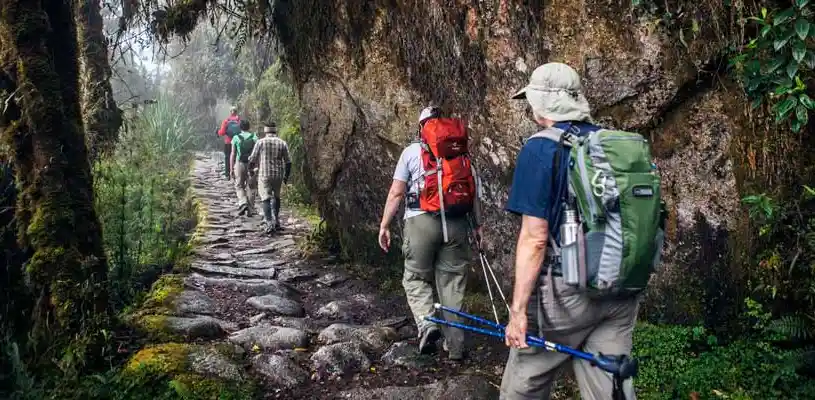
Dry Season vs. Rainy Season on the Inca Trail to Machu Picchu
| Season | Main Advantages | Main Disadvantages | Best For |
| Dry Season April to October |
More stable weather, clearer views, little rain, and better trail conditions. | Higher demand, more hikers, stronger sun, and permits sell out faster. | Travelers who want the best chance of clear views and a more predictable trek. |
| Rainy Season November to March |
Greener landscapes, fewer hikers, lower demand, and easier permit availability. | Unpredictable weather, mud, fog, reduced visibility, and heavier trail conditions. | Travelers who accept rain in exchange for quieter trails and lush scenery. |
Dry Season on the Inca Trail
The advantages
- During this time of year, days are mostly sunny, with average temperatures ranging between 18°C (65°F) and 25°C (77°F).
- There’s little to no rain, allowing you to travel normally without the risk of slipping.
- It’s generally easier to see landscapes and points of interest along the route, allowing for panoramic views of the scenery.
The disadvantages
- It’s during this season, especially during the months of June, July, and August, that there’s greater tourist flow.
- To ensure you can do the Inca Trail on your preferred date, you must book in advance.
- Many hikers find the weather quite hot and sunny, which can be exhausting for them.
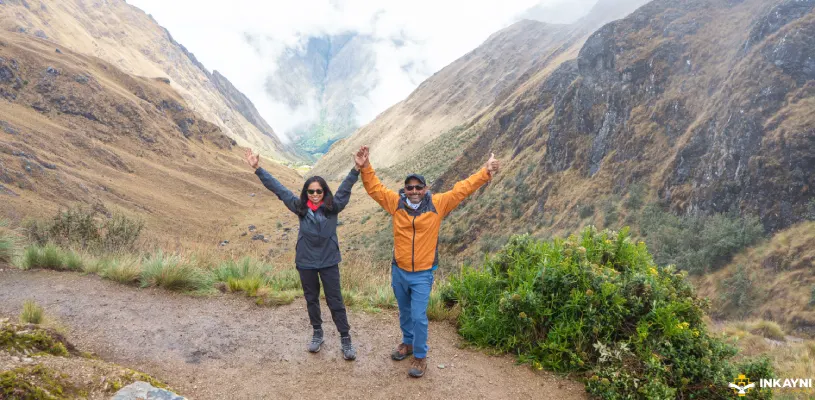
Embarking on the Inca Trail is an unforgettable experience that transcends the seasons.
Rainy Season on the Inca Trail
The advantages
- Due to the abundance of rain during this season, the surrounding e
- nvironment is lush and green.
- There will be fewer tourists on the trail during this season compared to the dry season.
- It’s generally easier to purchase tickets during this time of year, as demand for the Inca Trail tends to be lower.
The disadvantages
- During this rainy season, weather can be unpredictable, with rapid changes between heavy rain and sunny periods.
- Rain and fog can reduce visibility of landscapes and landmarks along the hike.
- Heavy and frequent rain may fall, which can make the hike more challenging.

Inca Trail temperature and rainfall chart
Climate on the Short Inca Trail
In the Amazon rainforest, the Short Inca Trail has a tropical and humid climate. Most of the year, the temperature is pleasant and warm, averaging between 20°C/68°F and 28°C/82°F. However, it can also experience frequent rains, particularly between the months of November and March during the rainy season.
- Heavy and prolonged rain is possible, which can occasionally result in slippery trails, but the journey will be much fresher as a result.
- To fully enjoy the experience in the lush environment, it’s important to bring appropriate rain gear, waterproof footwear, and insect repellent.
When Is the Best Time to Do the Short Inca Trail/2-Day Inca Trail?
Because the Short Inca Trail passes through a tropical and humid climate, it’s a hike that’s possible to do almost year-round. However, the Short Inca Trail closes to the public in February due to adverse weather conditions and maintenance and conservation activities carried out at the site during this month.
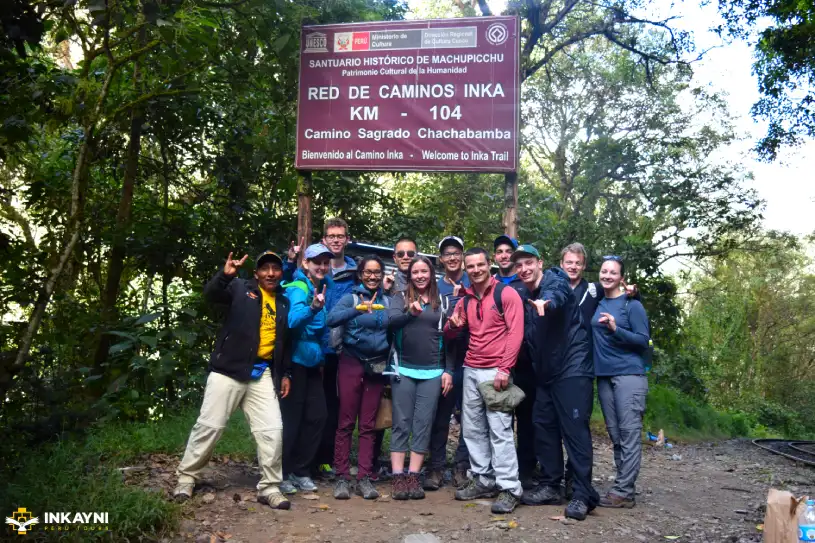
Kilometer 104, Chachabamba (starting point of the Short Inca Trail).
Inca Trail Weather by Month
Inca Trail in January
It has a higher number of rainy days; however, it remains a beautiful experience. After the Christmas and New Year festivities, some visitors choose to hike in January, providing the opportunity to share the adventure with other trekkers.
- Advantages: Rains tend to occur in the afternoon for a few hours and then the sun comes out. At this time of year, you can see orchids, rainbows, and stunning landscapes with mist and clouds. Average temperature ranges from 19°C during the day to 7°C at night.
- Disadvantages: There’s risk of landslides that can affect the trail, as well as possible delays in trains and flights.
Inca Trail in February
The Inca Trail is closed for maintenance because it’s the peak of the rainy season.
- Advantages: Opportunity to do alternative treks like Lares Trek, Quarry Trail, Salkantay, or Huchuy Qosqo Trek. Fewer crowds at Machu Picchu.
- Disadvantages: Inca Trail closed for maintenance, heavy rains, and possible landslides.
Inca Trail in March
The Inca Trail reopens and many travelers choose this time to hike to Machu Picchu. Although it’s still the rainy season, weather improves as rainfall decreases.
- Advantages: Reopening of the Inca Trail after maintenance, repair, and cleaning of campsites, trails, bridges, and bathrooms.
- Disadvantages: Still rainy season, risk of landslides and wet trails.
Inca Trail in April
Trails are less crowded and vegetation remains lush due to the rainy season, offering magnificent views. Before winter arrives, April is considered the best time for the Inca Trail hike to Machu Picchu.
- Advantages: End of rainy season, fewer crowds at Machu Picchu and less crowded trails. Lush vegetation due to rains.
- Disadvantages: Possible occasional rains and wet campsites.
Inca Trail in May
This month marks the beginning of the dry season and is also peak tourist season at Machu Picchu.
- Advantages: Beginning of dry season, excellent mountain views.
- Disadvantages: Larger crowds, need to book in advance.
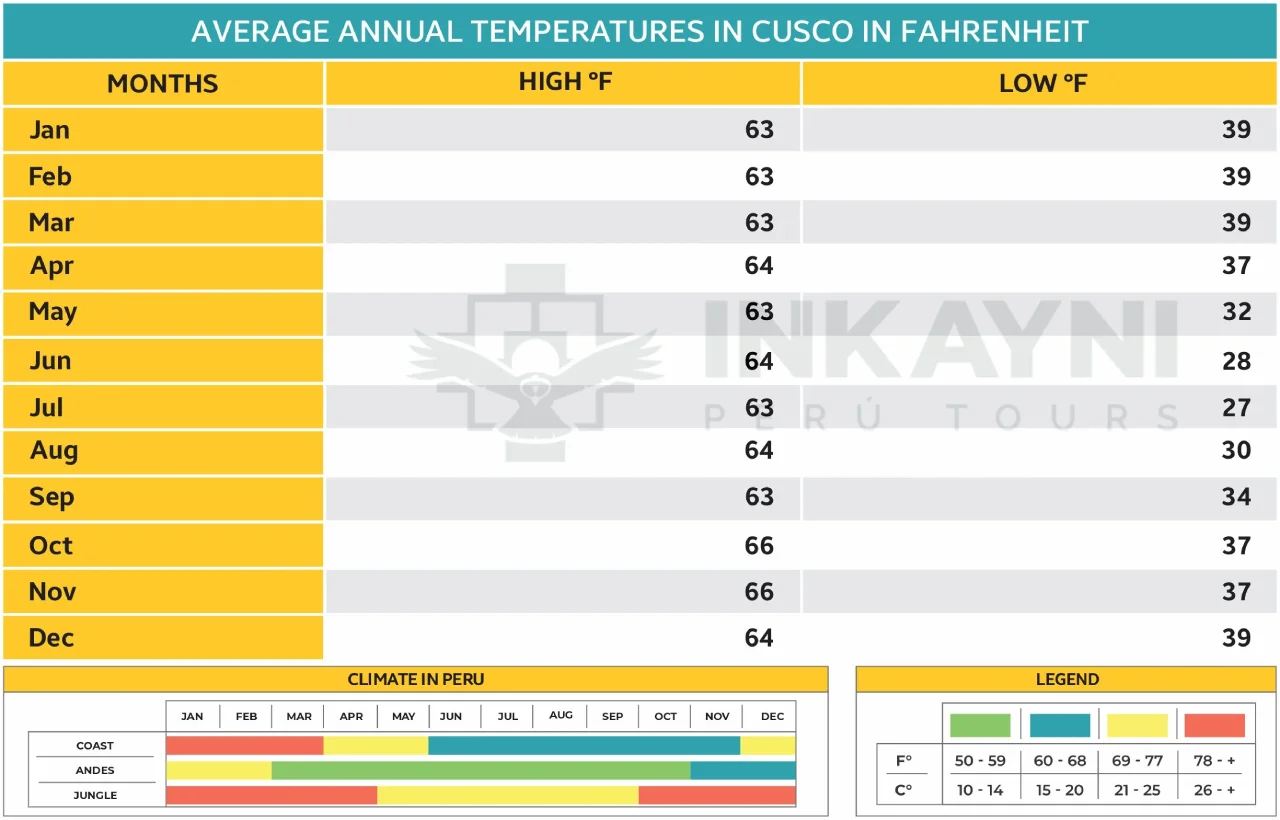
Annual Inca Trail temperatures at Machu Picchu.
Inca Trail in June
It’s considered one of the best months to visit Cusco and Machu Picchu. It’s high season accompanied by Cusco’s biggest festival, the “Inti Raymi Festival.”
- Advantages: Sunny days with clear blue skies, magnificent hiking views. Inti Raymi Festival in Cusco.
- Disadvantages: High crowds, need to book in advance.
Inca Trail in July
It’s a very busy month in Cusco and Machu Picchu, as it coincides with high season and maximum visitor flow. The weather is dry and sunny, and you can enjoy magnificent landscape views.
- Advantages: Sunny days with blue skies, magnificent hiking views.
- Disadvantages: Maximum daily visitor flow, long lines, and need to book in advance.
Inca Trail in August
High season is coming to an end, but there’s still a large visitor flow, especially from Europe and North America due to holidays in the northern hemisphere. The weather continues to be sunny during the day, but unexpected rains can occur during the Inca Trail.
- Advantages: Sunny days with clear nights, magnificent hiking views.
- Disadvantages: Considerable crowds, need to book in advance.
Inca Trail in September
Chances of rain increase as we approach the end of the dry season. It’s necessary to be prepared for rain and have the right gear.
- Advantages: Flow decreases slightly on the Inca Trail and Machu Picchu, last month before rainy season.
- Disadvantages: Possible rains, wet trails and campsites.
Inca Trail in October
Offers sunny days with fewer visitors, making it an ideal time to enjoy the tranquility of Machu Picchu and the Inca Trail.
- Advantages: Sunny days with fewer visitors, excellent views and tranquility at Machu Picchu and the Inca Trail.
- Disadvantages: Beginning of rainy season, possible afternoon rains.
Inca Trail November
Inca Trail November can be a wet and muddy month due to the rainy season, but the rains don’t last all day. The weather starts to warm up and landscapes become green and lush.
- Advantages: Fewer visitors, spectacular mountain views and green landscapes.
- Disadvantages: Possible rains, wet and muddy trails and campsites.
Inca Trail in December
Begins with fewer visitors but becomes more crowded as the end of the year approaches. Despite possible rains and fog, the Inca Trail offers stunning views and a mysterious atmosphere. In Cusco, Christmas is celebrated with craft fairs like Santuranticuy.
- Advantages: Stunning views due to flourishing vegetation, warm weather.
- Disadvantages: Possible rains, muddy trails and campsites, visitor flow at year’s end.

Good visibility provides stunning landscape views
Other Guides That Help You Choose the Best Inca Trail Dates
Plan Your Inca Trail With the Right Timing
Choosing the best time for the Inca Trail depends on weather, permits, crowds, and how comfortable you feel hiking in changing Andean conditions. If you want clearer views and firmer trails, book early for the dry season; if you prefer greener landscapes and fewer hikers, consider the rainy months outside February.
Inkayni Peru Tours can help you choose the right date, check permit availability, and organize a safe route to Machu Picchu according to your travel style.
Frequently Asked Questions
How far in advance should I book the Inca Trail?
What is the best month to hike the Inca Trail?
When is the worst time to go to the Inca Trail?
When does the Inca Trail close?
Can you hike the Inca Trail during rainy season?
What months are the best balance between good weather and fewer people?
What are the busiest months on the Inca Trail?
How cold does it get on the Inca Trail at night?
What is the coldest month on the Inca Trail?
Does the Inca Trail feel “crowded” if there’s a daily quota?
What alternatives are there if I travel in February?
What is the best time of year to hike inca trail?
What is the temperature in Machu Picchu during the dry season?
When is the best time to hike to Machu Picchu for photography?
What month is best if I want fewer crowds without risking heavy rain?
If you want an even “drier feel” while still avoiding the peak crowds of mid-winter, May and September often strike a good balance. Just remember: weather in the Andes can change fast, even in dry months, so waterproof layers still matter.
How do permits affect the “best month” decision?
- June–August: plan to book 5–7 months ahead, sometimes more depending on demand.
- April, May, September, October: you typically have a bit more flexibility, but it’s still smart to book 3–5 months ahead.
- November–March, except February: demand is usually lower, so you may find openings with a shorter margin, but conditions are wetter.
Bottom line: choose your ideal month first, then work backwards from it so permits don’t force you into a season you didn’t want.
What changes in weather between the Classic Inca Trail and the Short Inca Trail?
| Classic Inca Trail (4 days) | Higher passes and colder nights. Dry-season days feel crisp, but camps can get close to freezing. |
| Short Inca Trail (2 days) | More time in the cloud forest environment: warmer and more humid, with a higher chance of light rain and mist, even in dry season. |
In both cases, February closure affects access, so plan an alternative trek or a train-based Machu Picchu visit if you travel then.
What exact clothing should I pack by season?
- Dry season (April–October): breathable base layer + hiking shirt, mid-layer, windproof jacket, and a warm layer for camp. Always carry light rain protection.
- Driest/coldest nights (June–August): add thermal base layers for evenings, a warmer insulating jacket, beanie, and gloves.
- Rainy season (November–March): real waterproof jacket, quick-dry layers, dry bags, waterproof pack cover, and shoes with strong traction.
A simple rule: sun protection for daytime + insulation for nights + waterproof shell for surprises.
Autor

Shared:



If you liked this article and the information you found, give us 5 stars!
 (3 votos, promedio: 5.00 de 5)
 Loading...