


If you are wondering about Machu Picchu altitude, the practical question is simple: how high is the citadel, and will that elevation affect your visit? The answer is reassuring for many travelers. Machu Picchu is high compared with sea-level destinations, but it is not as high as Cusco, Rainbow Mountain, Humantay Lake or the main trekking passes in the Andes.
This guide explains the altitude of Machu Picchu in feet and meters, how it compares with Cusco and Aguas Calientes, how high Huayna Picchu and Machu Picchu Mountain are, and what travelers should know about altitude sickness before visiting the Peruvian Andes.
| 7,972 ftMachu Picchu altitude | 2,430 mabove sea level | Lowerthan Cusco city | Acclimatizebefore high treks |

Classic view of Machu Picchu, located at 7,972 ft / 2,430 m above sea level.
WORLD WONDER IN THE ANDESMachu Picchu
Discover the history, landscapes, and essential tips for visiting this world wonder.
Machu Picchu Altitude in Feet and Meters
The altitude of Machu Picchu is usually given as 7,972 ft / 2,430 m above sea level. In travel guides, this same idea may appear as Machu Picchu elevation, Machu Picchu height or height above sea level. For travelers, these terms usually answer the same practical question: how high the citadel sits and whether that altitude may affect the visit.
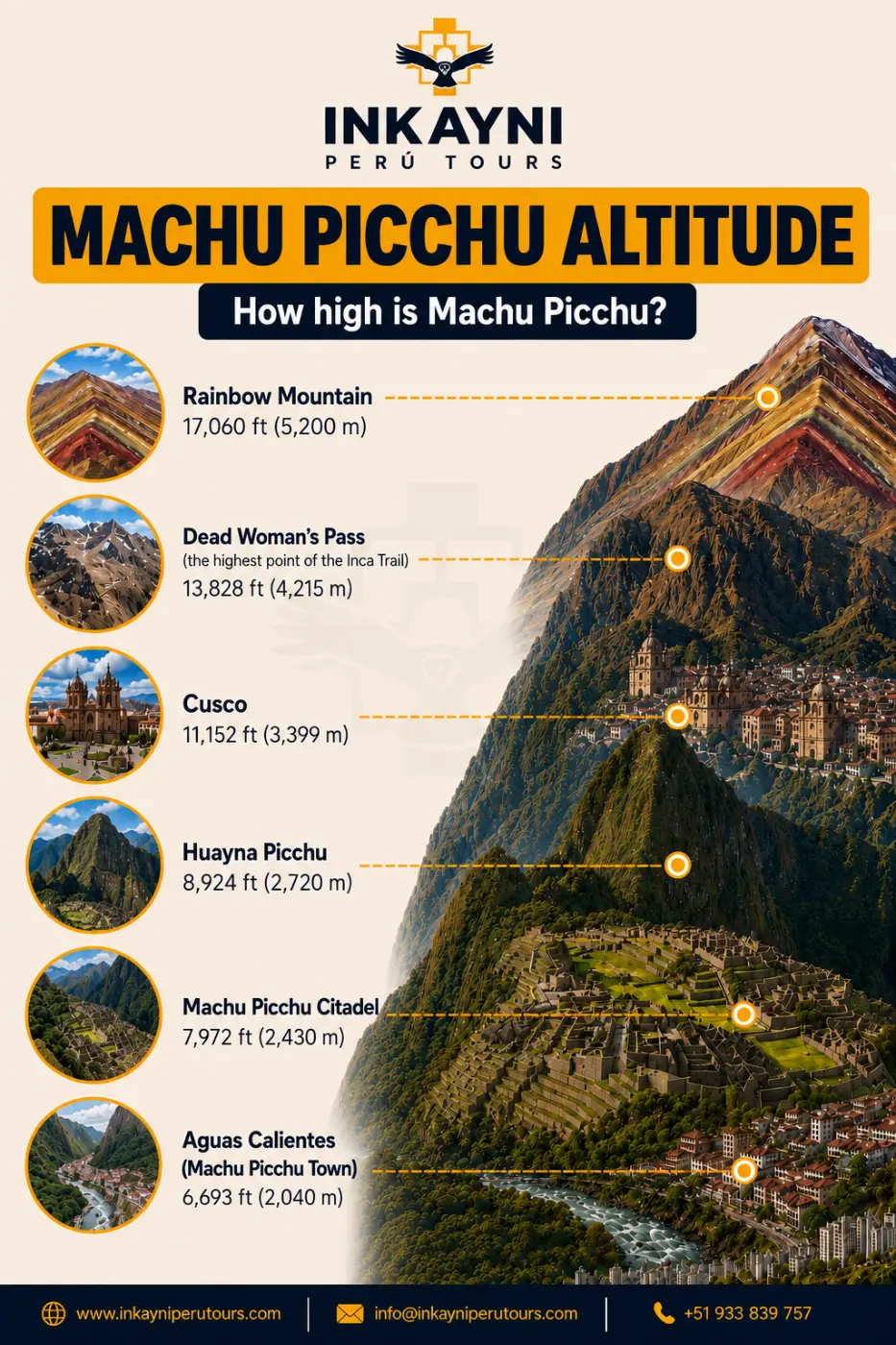
Visual altitude guide for Machu Picchu and nearby destinations.
Some sources may round the number slightly depending on the measurement point inside the archaeological area. For trip planning, 7,972 ft / 2,430 m is the clearest reference for the main Machu Picchu citadel.
| Place or route | Approx. altitude | Why it matters for travelers |
| Machu Picchu citadel | 7,972 ft / 2,430 m | Main archaeological site. Lower than Cusco, but still high enough to walk at a steady pace. |
| Aguas Calientes | 6,692 ft / 2,040 m | Gateway town below Machu Picchu, where many travelers sleep before entry. |
| Cusco city | 11,155 ft / 3,400 m | Common arrival point. Travelers often feel altitude effects here first. |
| Huayna Picchu | Approx. 8,835 ft / 2,693 m | Steep mountain hike above the citadel. Requires a specific ticket and good physical condition. |
| Machu Picchu Mountain | 10,111 ft / 3,082 m | Higher panoramic hike. Longer and more physically demanding than the standard citadel visit. |
| Huchuy Picchu | Approx. 8,192 ft / 2,497 m | Shorter mountain option, usually easier than Huayna Picchu or Machu Picchu Mountain. |
The citadel itself sits lower than Cusco and far below the main trekking passes, whether you visit through the Inca Trail, the Salkantay Trek, the Lares Trek, the Inca Jungle Trek, or the Choquequirao Hike. Even inside the sanctuary, Huayna Picchu and Machu Picchu Mountain change the effort far more than the citadel altitude alone.
Where Is Machu Picchu Located and How High Is It?
Machu Picchu is located in southern Peru, in the province of Urubamba within the Cusco region. The archaeological site stands above the Urubamba River valley, near Machu Picchu Pueblo, the town most travelers still call Aguas Calientes.
Its location between Andean mountains and cloud forest helps explain the difference between Machu Picchu altitude and the altitude of Cusco. Cusco feels colder, drier and higher. Machu Picchu feels warmer, more humid and lower, although stone paths, stairs and mountain routes still demand careful movement.
If you are still organizing transport, trains and entry timing, review our guide on how to get to Machu Picchu before choosing your final itinerary.
Machu Picchu Altitude vs Cusco Altitude
The altitude of Cusco is about 11,155 ft / 3,400 m above sea level. This makes Cusco around 3,183 ft / 970 m higher than Machu Picchu. Many travelers arrive in Cusco first, feel the altitude during the first 24 to 48 hours, and then feel physically better when they descend toward the Sacred Valley, Aguas Calientes and Machu Picchu.
This does not mean altitude can be ignored. If you are coming from sea level and your itinerary includes Cusco, Rainbow Mountain, Humantay Lake, the Inca Trail, Salkantay or Choquequirao, your body still needs time to adapt.

Cusco is located higher than Machu Picchu and is often where travelers first feel altitude effects.
Altitude of Aguas Calientes or Machu Picchu Pueblo
Aguas Calientes, also known as Machu Picchu Pueblo, sits at about 6,692 ft / 2,040 m above sea level. This is lower than the citadel and much lower than Cusco. Most travelers arrive here by train, spend the night, and take the bus to Machu Picchu the next morning.

Sleeping in Aguas Calientes can make the final approach to Machu Picchu more comfortable, especially for travelers who want an early entry time without starting from Cusco before dawn. It also gives you more margin if your visit depends on train timing, bus lines or a specific Machu Picchu circuit.
Pro tip:
If altitude worries you, consider spending time in Cusco or the Sacred Valley before visiting Machu Picchu. Aguas Calientes is lower and can be a practical overnight base before your entry to the citadel.
Huayna Picchu, Machu Picchu Mountain and Huchuy Picchu Altitude
The standard Machu Picchu visit is different from hiking the surrounding mountains. Huayna Picchu, Machu Picchu Mountain and Huchuy Picchu require specific tickets and different levels of physical effort. Altitude matters, but stairs, exposure, route length and your entry time matter just as much.

Huchuy Picchu is the shortest of the main mountain hikes inside the Machu Picchu visit system.
| Mountain | Approx. altitude | Practical note |
| Huayna Picchu | Approx. 8,835 ft / 2,693 m | Steep, narrow and highly demanded. Best for travelers comfortable with stairs and exposure. |
| Machu Picchu Mountain | 10,111 ft / 3,082 m | Higher and longer. Panoramic views, more physical effort and more time needed. |
| Huchuy Picchu | Approx. 8,192 ft / 2,497 m | Shorter route with less effort. Useful for travelers who want a mountain view with a lighter climb. |
If you want different Machu Picchu photos, remember that altitude changes the viewpoint. The upper terraces, Huayna Picchu, Machu Picchu Mountain and Huchuy Picchu offer different angles, effort levels and elevation gains. For choosing between the two classic mountain options, compare Huayna Picchu and Machu Picchu Mountain before buying your ticket.

View from Machu Picchu Mountain, one of the highest visitor routes above the sanctuary.

Huayna Picchu rises behind the classic postcard view of Machu Picchu.
Can You Get Altitude Sickness at Machu Picchu?
Yes, it is possible, but many travelers feel altitude symptoms more strongly in Cusco than at Machu Picchu because Cusco is much higher. The risk depends on your body, how fast you ascend, your previous altitude exposure, hydration, sleep, alcohol intake and whether you are adding high-elevation hikes.
Common mild symptoms can include headache, tiredness, nausea, poor appetite, dizziness or sleep problems. Severe symptoms require attention. If symptoms worsen, the safest response is to stop ascending, seek medical advice and descend to a lower altitude when needed.

Altitude sickness quick guide for trekking in the Andes.
Warning:
This article is for travel planning, not medical diagnosis. If you have heart, lung, blood pressure, pregnancy-related concerns or a history of severe altitude problems, speak with a qualified healthcare professional before traveling to high altitude. If symptoms become severe, seek medical help and descend when advised.
How to Reduce Altitude Sickness Risk Before Machu Picchu
Good acclimatization is simple but important. Travelers who arrive directly from low altitude should avoid loading the first day with intense activity. A slow first day in Cusco, a night in the Sacred Valley, light meals and enough water can make the Machu Picchu visit feel much better.
- Ascend gradually when possible. Give your body time before doing high-altitude treks.
- Rest during the first day in Cusco. Avoid intense walks, alcohol and heavy meals.
- Hydrate steadily. Drink water throughout the day and pay attention to how your body responds.
- Eat light but enough. Choose meals that are easy to digest before long walks or early departures.
- Plan treks after acclimatization. Inca Trail, Salkantay, Lares and Rainbow Mountain should not be your first activity after landing.
- Ask a doctor about medication. Acetazolamide may be used by some travelers, but it should be discussed with a healthcare professional, especially if you have medical conditions, allergies or take other medications.
Altitude of the Main Treks to Machu Picchu

The Lares Trek crosses high Andean landscapes before connecting with the Machu Picchu travel route.

Huchuy Qosqo sits high above the Sacred Valley, with broad views of the surrounding Andes.
If you reach Machu Picchu by train, altitude is usually easier to manage. If you arrive through a trek, the highest point of your route matters more than the altitude of Machu Picchu itself. Many treks cross high passes before descending toward the cloud forest and Aguas Calientes.
| Route | Approx. altitude range or high point | Traveler meaning |
| Classic Inca Trail | Highest point around 13,828 ft / 4,215 m | Dead Woman’s Pass is much higher than Machu Picchu and requires proper acclimatization. |
| Salkantay Trek | High point around 15,092 ft / 4,600 m | More demanding for altitude because it crosses a high Andean pass. |
| Lares Trek | Often reaches around 13,780 ft / 4,200 m or more, depending on route | High mountain route with Andean communities and changing climates. |
| Inca Jungle | High point around 14,272 ft / 4,350 m at Málaga Pass | Adventure route with biking, walking and lower jungle sections after the pass. |
| Choquequirao Trek | Site around 10,007 ft / 3,050 m | Lower than some high passes, but physically demanding because of long ascents and descents. |
| Huchuy Qosqo Trek | Site around 12,041 ft / 3,670 m | Shorter route, but still higher than Machu Picchu and similar to Cusco in altitude demand. |
PERU’S LEGENDARY HIKEInca Trail to Machu Picchu
Follow the historic trail through mountain passes, Inca sites, and cloud forest paths to Machu Picchu.
Other Guides That Help You Understand Machu Picchu


Choquequirao is higher than Machu Picchu and physically demanding because of canyon terrain.
Altitude Comparison With Other Places in Cusco
Machu Picchu is high compared with sea-level destinations, but it is moderate compared with many mountain attractions in Cusco. Rainbow Mountain, Humantay Lake, Salkantay Pass and parts of the Inca Trail are much higher and usually require more careful acclimatization.
| Place or route | Approx. altitude | How to read it |
| Aguas Calientes | 6,692 ft / 2,040 m | Lower gateway town below Machu Picchu and a practical overnight base. |
| Machu Picchu | 7,972 ft / 2,430 m | Lower than Cusco, but still above sea level. |
| Ollantaytambo | Approx. 9,160 ft / 2,792 m | Useful Sacred Valley base before Machu Picchu. |
| Cusco | 11,155 ft / 3,400 m | Common place where travelers first notice altitude. |
| Choquequirao | Approx. 10,007 ft / 3,050 m | Higher than Machu Picchu and physically demanding because of canyon terrain. |
| Humantay Lake | Approx. 13,780 ft / 4,200 m | Much higher than Machu Picchu. Better after acclimatizing in Cusco or the Sacred Valley. |
| Dead Woman’s Pass | 13,828 ft / 4,215 m | Highest point of the Classic Inca Trail; requires preparation. |
| Salkantay Pass | Approx. 15,092 ft / 4,600 m | High point of the Salkantay Trek; more demanding than the standard Machu Picchu visit. |
| Rainbow Mountain | Approx. 17,060 ft / 5,200 m | Very high. Should be planned after acclimatization, not as a first activity after arrival. |

Many attractions around Cusco are higher than Machu Picchu and require more acclimatization.
Altitude of Other Cities and Attractions in Peru
This comparison helps if your Peru itinerary includes more than Machu Picchu. The coast is near sea level; Machu Picchu is moderate compared with the Andes; Cusco, Puno, Rainbow Mountain, Humantay Lake and several trekking routes are much higher.
| City or attraction | Approx. altitude | Traveler meaning |
| Lima | Near sea level | Easy arrival point for most travelers; no acclimatization needed for altitude. |
| Paracas | Near sea level | Coastal destination with no altitude concern. |
| Arequipa | Approx. 7,661 ft / 2,335 m | Similar altitude range to Machu Picchu, but drier and more urban. |
| Machu Picchu | 7,972 ft / 2,430 m | Useful reference point for comparing the rest of your Peru route. |
| Puno / Lake Titicaca | Approx. 12,507 ft / 3,812 m | Higher than Cusco; acclimatization becomes more important. |
| Humantay Lake | Approx. 13,780 ft / 4,200 m | High day trip from Cusco; better after at least some acclimatization. |
| Rainbow Mountain | Approx. 17,060 ft / 5,200 m | One of the highest popular day trips from Cusco; physically demanding for many travelers. |

Peru has coastal destinations near sea level and Andean attractions that rise far above Machu Picchu.
Quick summary:
If your itinerary only includes Cusco, the Sacred Valley, Aguas Calientes and Machu Picchu, altitude is usually manageable with basic acclimatization. If you add Rainbow Mountain, Humantay Lake, Salkantay or the Inca Trail, altitude becomes a central planning factor.
How to Plan Your Machu Picchu Altitude Route
Machu Picchu is one of the more manageable highland visits in the Cusco region, but altitude still shapes the trip. Your route, sleeping location, entry time, mountain ticket and trek choice can make the visit feel easier or more demanding.
A practical sequence for many travelers is: arrive in Cusco, rest, spend time in the Sacred Valley if possible, sleep in Aguas Calientes before entry, then visit Machu Picchu with the right circuit and pace. If your itinerary includes Rainbow Mountain, Humantay Lake, Salkantay or the Inca Trail, place those higher routes after some acclimatization.


