


Inca Jungle Trek to Machu Picchu
The Inca Jungle Trek is a 3- or 4-day multi-activity route from Cusco to Machu Picchu that combines downhill biking from Abra Malaga, hiking through warmer valleys and, depending on the itinerary, rafting or ziplining. It does not require the classic Inca Trail trekking permit, but you still need a confirmed Machu Picchu ticket, circuit, accommodation and return transport. Choose the 4-day route for the fuller experience and better pacing, or the 3-day route if you have less time.
Table of Contents
The Inca Jungle Trek is not one continuous hike. It mixes a high-altitude bike descent, warm-valley walking and, depending on the service, rafting or ziplining before the final approach to Machu Picchu. The main choices are practical: three or four days, how much hiking you want, how comfortable you are on a downhill bike, which activities are actually included, and how your Machu Picchu ticket and return are arranged.
What Is the Inca Jungle Trek?
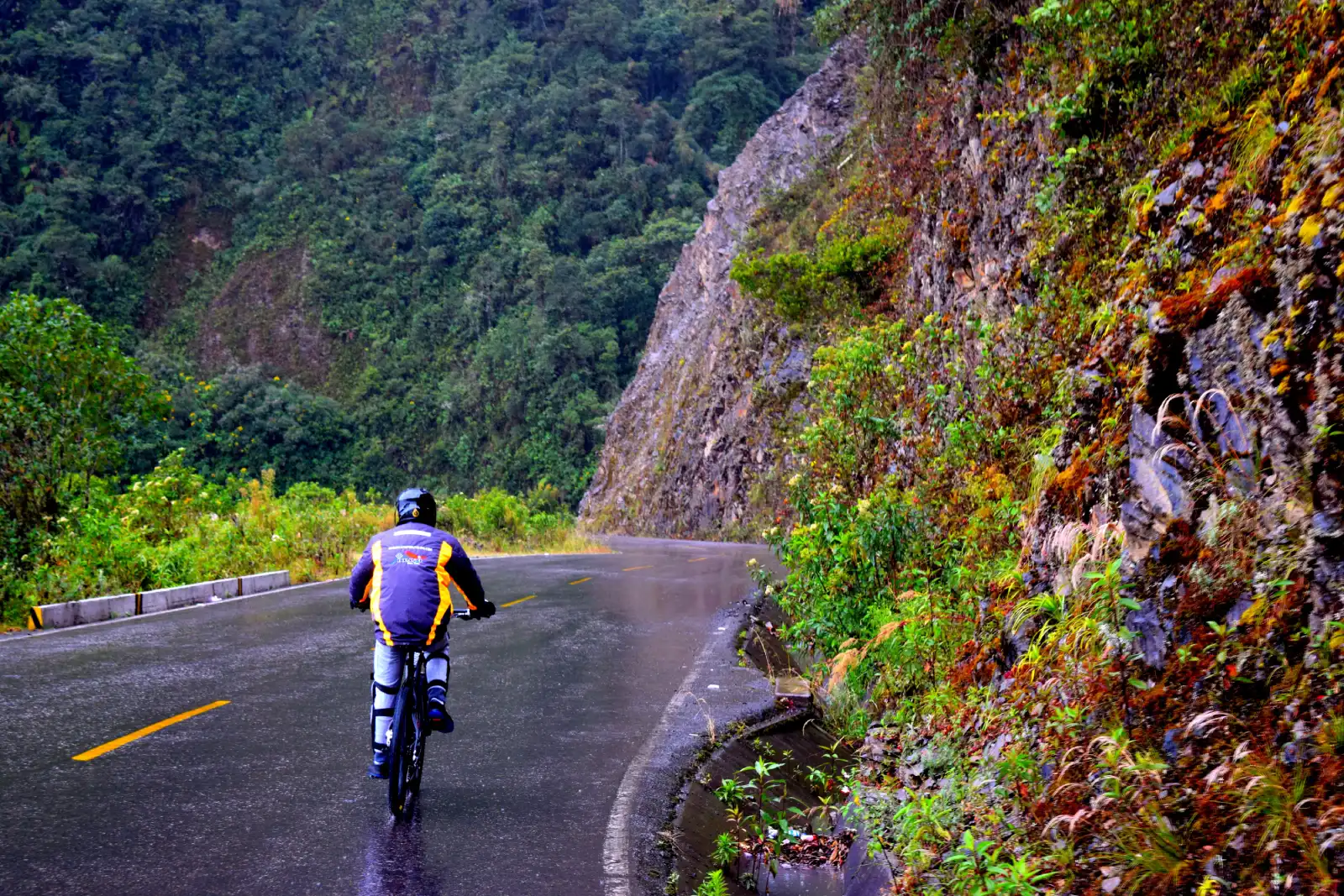
Downhill biking through mountain roads.
The Inca Jungle Trek, also known as the Inca Jungle Trail, Inka Jungle or Inka Jungle Trek, is a multi-activity route from Cusco to Machu Picchu. Instead of spending every day trekking, you begin with a long downhill bike ride from Abra Malaga, move through warmer subtropical valleys on foot, and may add rafting or ziplining along the way. If you are comparing ways to reach the citadel, how to get to Machu Picchu puts Inca Jungle alongside the other main access options.
Unlike the regulated Inca Trail to Machu Picchu, Inca Jungle does not use the same limited trekking-permit quota. It is therefore more flexible to organize, but it is not permit-free in the broader sense: you still need a confirmed Machu Picchu entrance, circuit, accommodation and return transport.
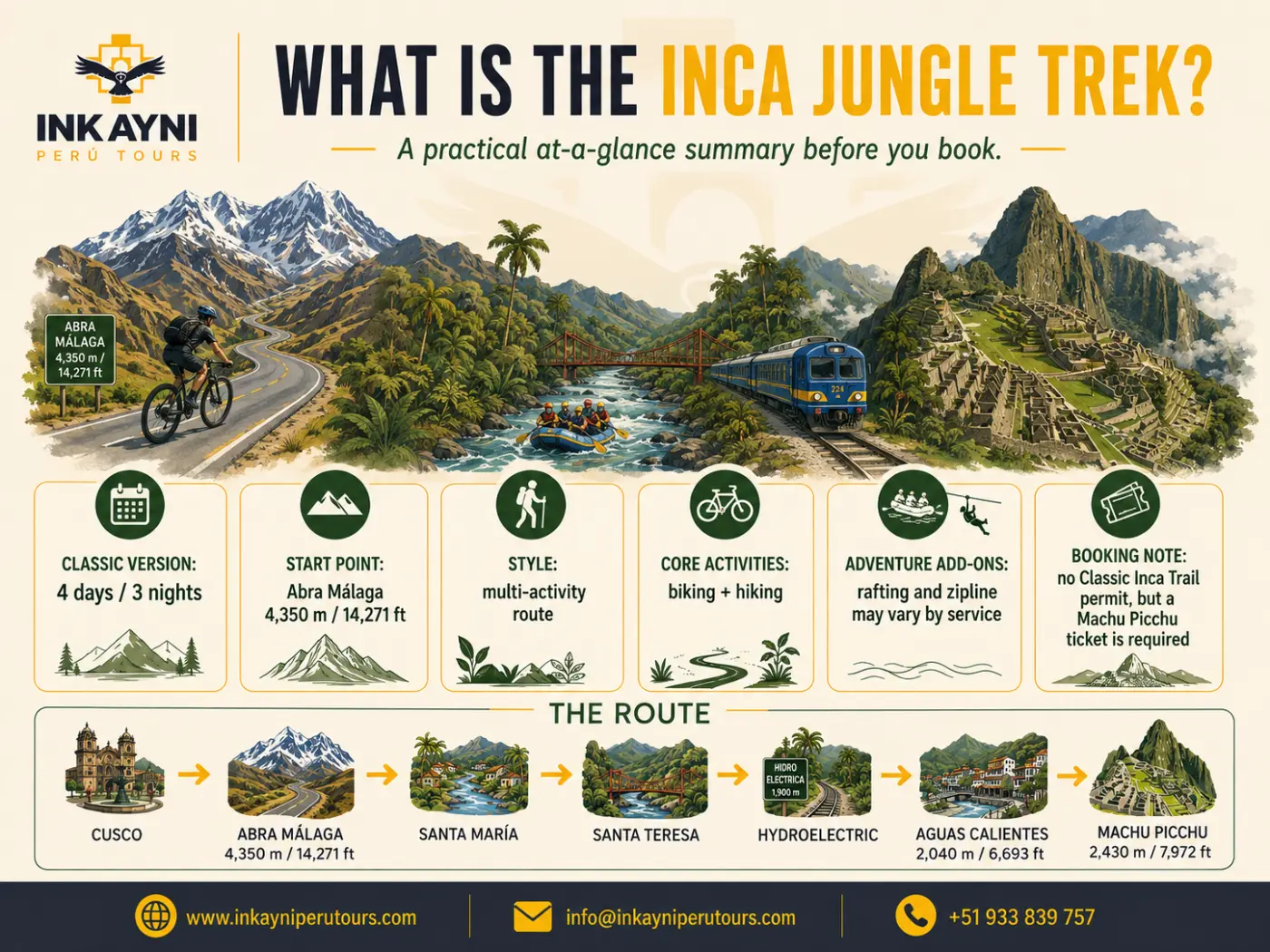
Inca Jungle Trek overview.
Did you know…?
Part of the longer route follows historic paths through the Vilcabamba corridor and passes agricultural landscapes where coffee, cacao and tropical crops are still part of daily life.
3-Day or 4-Day? Choose the Right Version
The 3-day and 4-day versions follow the same general corridor to Machu Picchu, but they do not feel identical. The shorter trip saves time by removing the full Santa Maria–Santa Teresa hiking day, while the 4-day route keeps that section and spreads the journey out more gradually.
If three days fit your schedule better, the full 3-day Inca Jungle Trek shows exactly how the shorter route is compressed. If your decision comes down to walking time and distance, how long the Inca Jungle Trek takes breaks those differences down without turning duration into a simple “shorter is easier” choice.
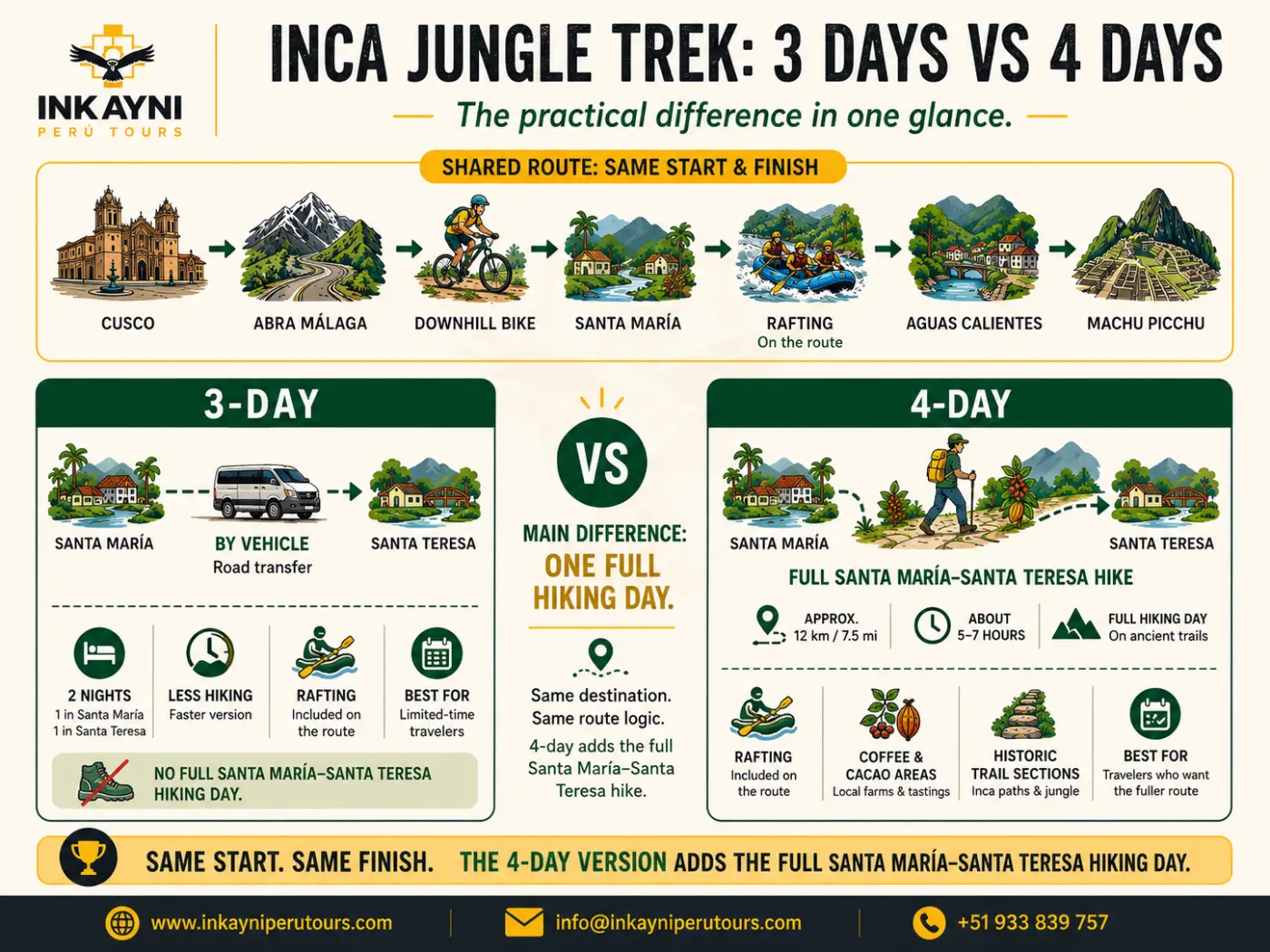
3 day vs 4 day Inca Jungle at a glance.
Important note:
The prices shown above are the current listed Inkayni group rates at the time of this update: US$ 479 for the 3-day option and US$ 559 for the 4-day option, for two or more travelers. Prices, discounts and inclusions can change, so use the linked product pages as the live reference before booking.

Mountain trail section of the Inca Jungle Trek.
The 4-Day Inca Jungle Route: What Happens Each Day
The classic 4-day itinerary shows the rhythm of Inca Jungle best: high-altitude biking first, a full warm-valley hiking day, the approach to Aguas Calientes, and Machu Picchu at the end. The sequence is typical rather than universal, because exact timing and optional activities can vary by operator and departure.
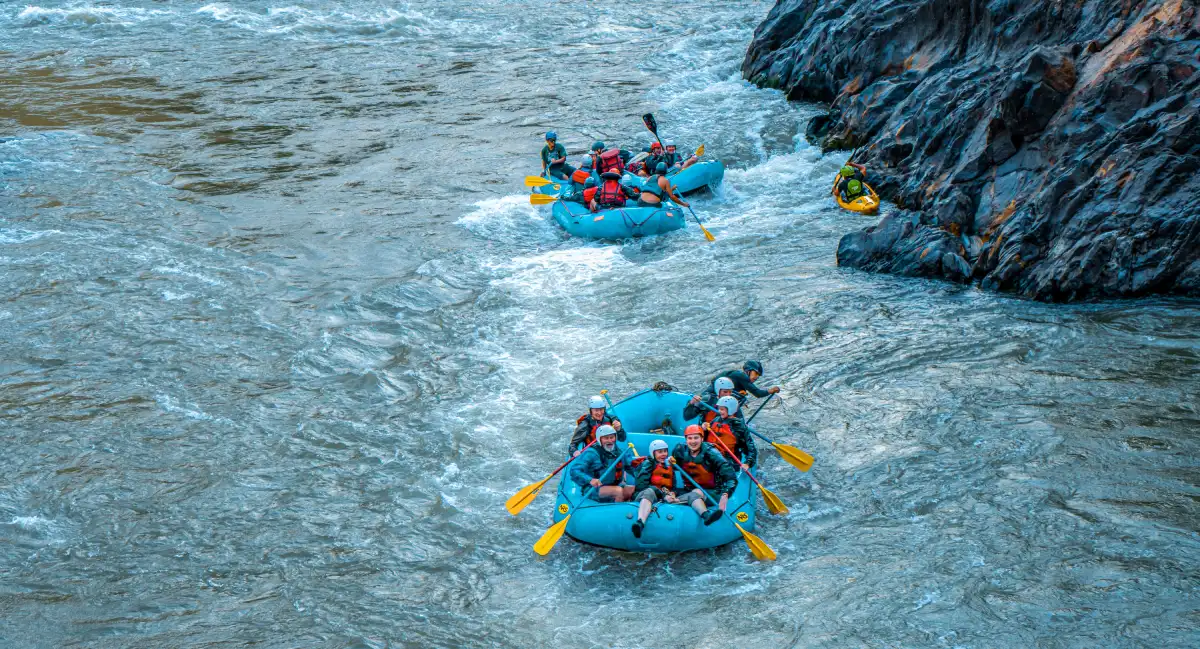
Rafting is commonly added after the Day 1 bike descent when it is included in the itinerary.
Day 1 · Cusco to Santa Maria — Downhill Biking from Abra Malaga
Day 1 · Cusco to Santa Maria
The Big Descent
Abra Malaga start
Altitude profile
An early transfer from Cusco reaches Abra Malaga at about 4,350 m (14,271 ft), where the biking section begins after a safety briefing and equipment check. The descent lasts several hours and moves quickly from cold Andean terrain into warmer valleys. On Inkayni’s current 4-day itinerary, the biking section is listed at about 21 km (13 mi), with a support vehicle for travelers who prefer not to complete the full ride. Rafting can follow later in the day when it is part of the booked service and river conditions allow it.
Day 2 · Santa Maria to Santa Teresa — The Main Hiking Day
Day 2 · Santa Maria to Santa Teresa
Heart of the Route
Main hiking day
Coffee and tropical crops
Historic trail sections
Santa Teresa and hot springs area
This is the day the 3-day version gives up. The trail moves through warmer vegetation, cultivated areas, canyon scenery and local stops on the way from Santa Maria to Santa Teresa. Some itineraries also make room for Cocalmayo later in the day, although transport, entrance and timing vary by service.
Day 3 · Santa Teresa to Aguas Calientes — Zipline and the Final Walk
Day 3 · Santa Teresa to Aguas Calientes
Zipline and Final Walk
Hydroelectric corridor
Day 3 links the Santa Teresa area with Aguas Calientes. Ziplining may come first when it is included, followed by the connection to Hydroelectric Station and the final walk beside the rail corridor. Some operators use route variations around Llactapata or adjust the day’s logistics, so this is one section worth checking on the itinerary you are actually booking.
Warning:
The Hydroelectric–Aguas Calientes walk is not technically difficult, but it comes late in the itinerary after several active days. Keep water, a snack and rain protection accessible instead of packing everything at the bottom of your daypack.
Day 4 · Machu Picchu — Timed Entry and Return to Cusco
Day 4 · Machu Picchu
Timed Entry and Guided Visit
Return via Ollantaytambo
The final morning revolves around the Machu Picchu ticket already secured for your booking. Entry now follows a specific time and circuit, while bus arrangements, optional mountain access and the return train depend on the service and availability. For the visit itself, the Machu Picchu travel guide covers tickets, circuits and site planning in more detail.
Important note:
Confirm your Machu Picchu circuit, entry time, any optional mountain ticket and the return transport before the trek begins. Those details are more important than a generic promise of extra time inside the site.
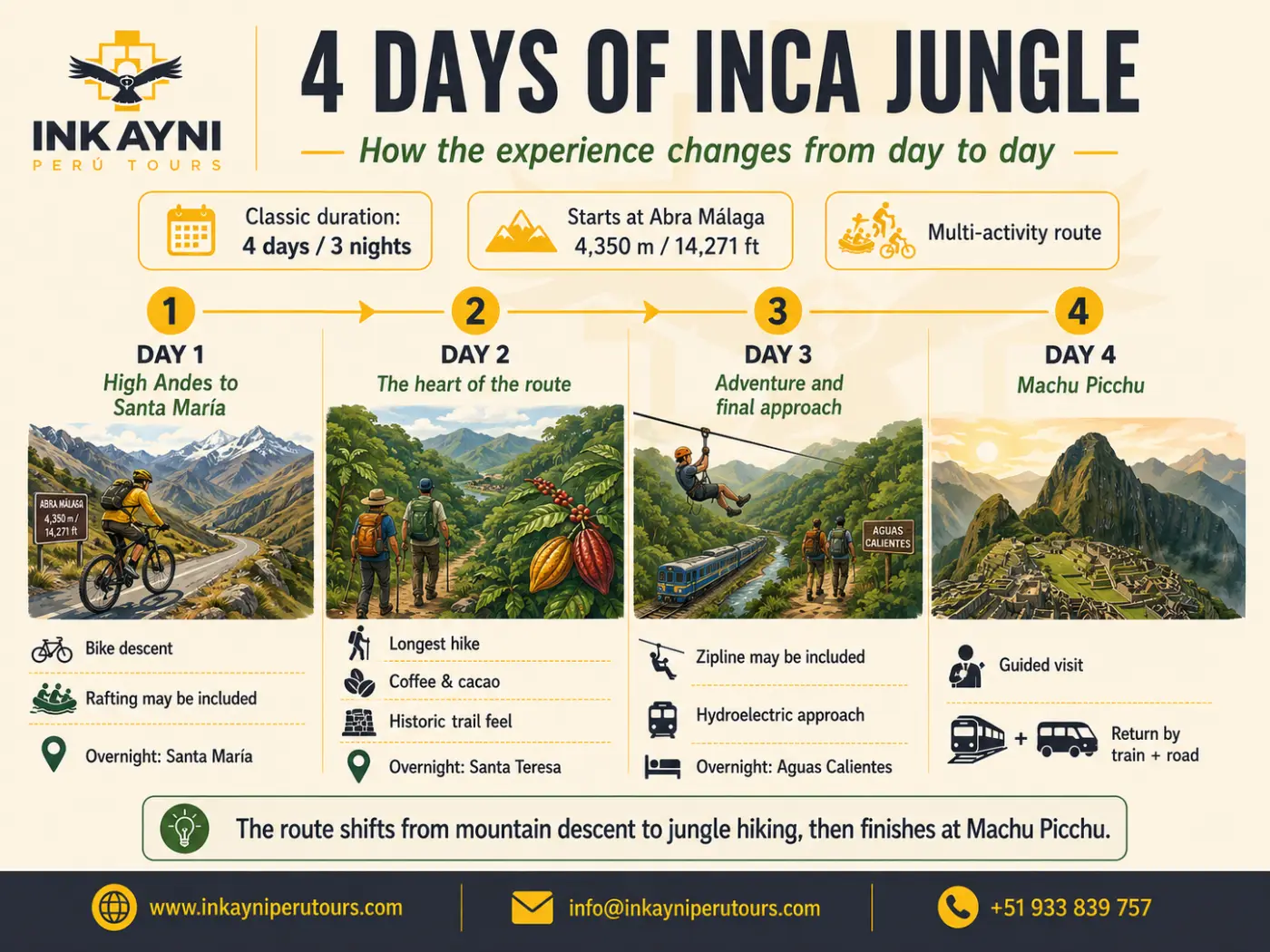
How the 4 day Inca Jungle route unfolds.
Plan the Inca Jungle Trek by the Decision You Need to Make
Inca Jungle Activities: What Is Core and What Can Vary?
Downhill biking is the activity that most clearly distinguishes Inca Jungle from a conventional trek. Rafting and ziplining are also closely associated with the route, but they are not identical across every package: inclusion, timing and operating conditions vary. That is why two tours with the same “Inca Jungle Trek” name can still offer noticeably different days.
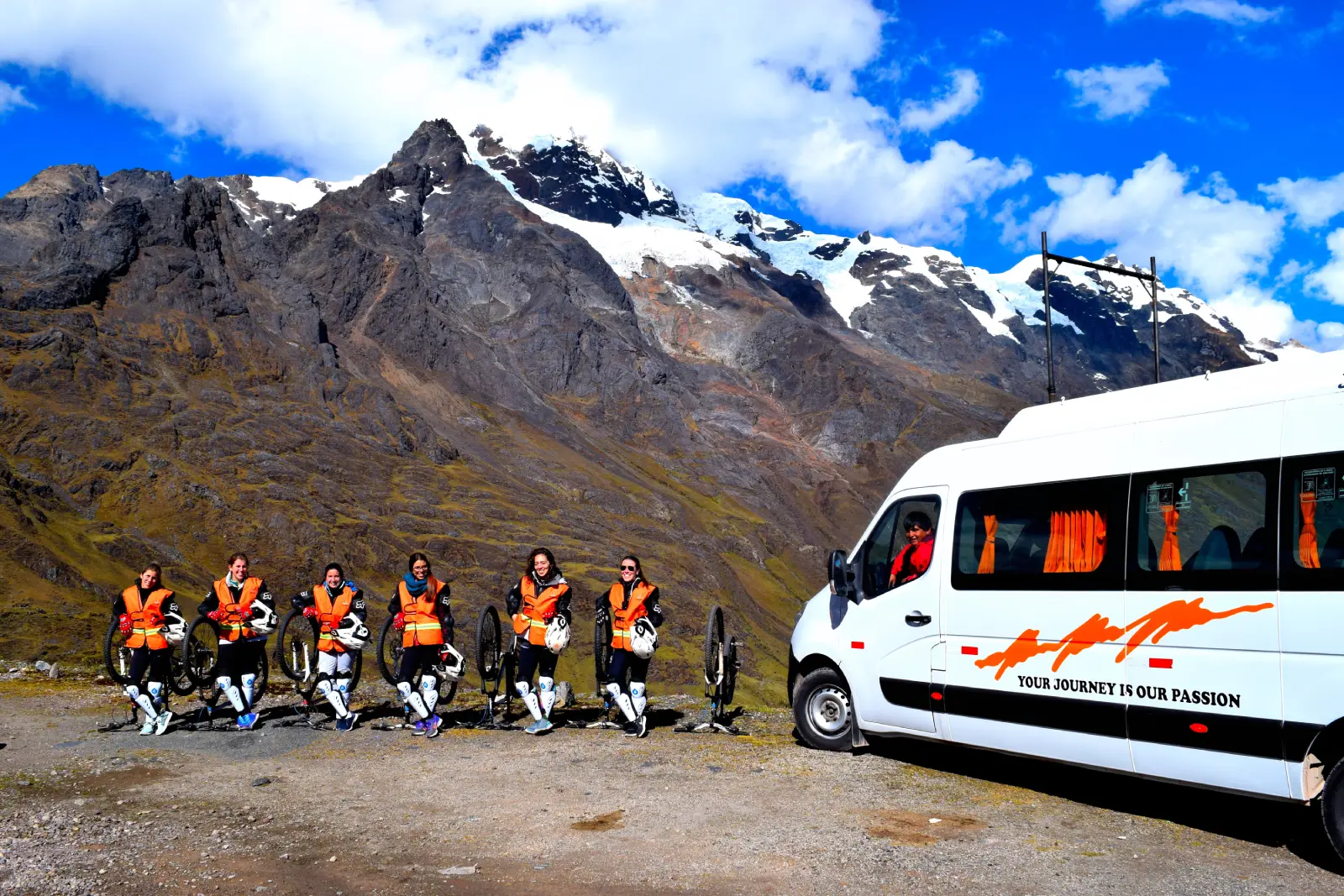
Biking starts high at Abra Málaga.
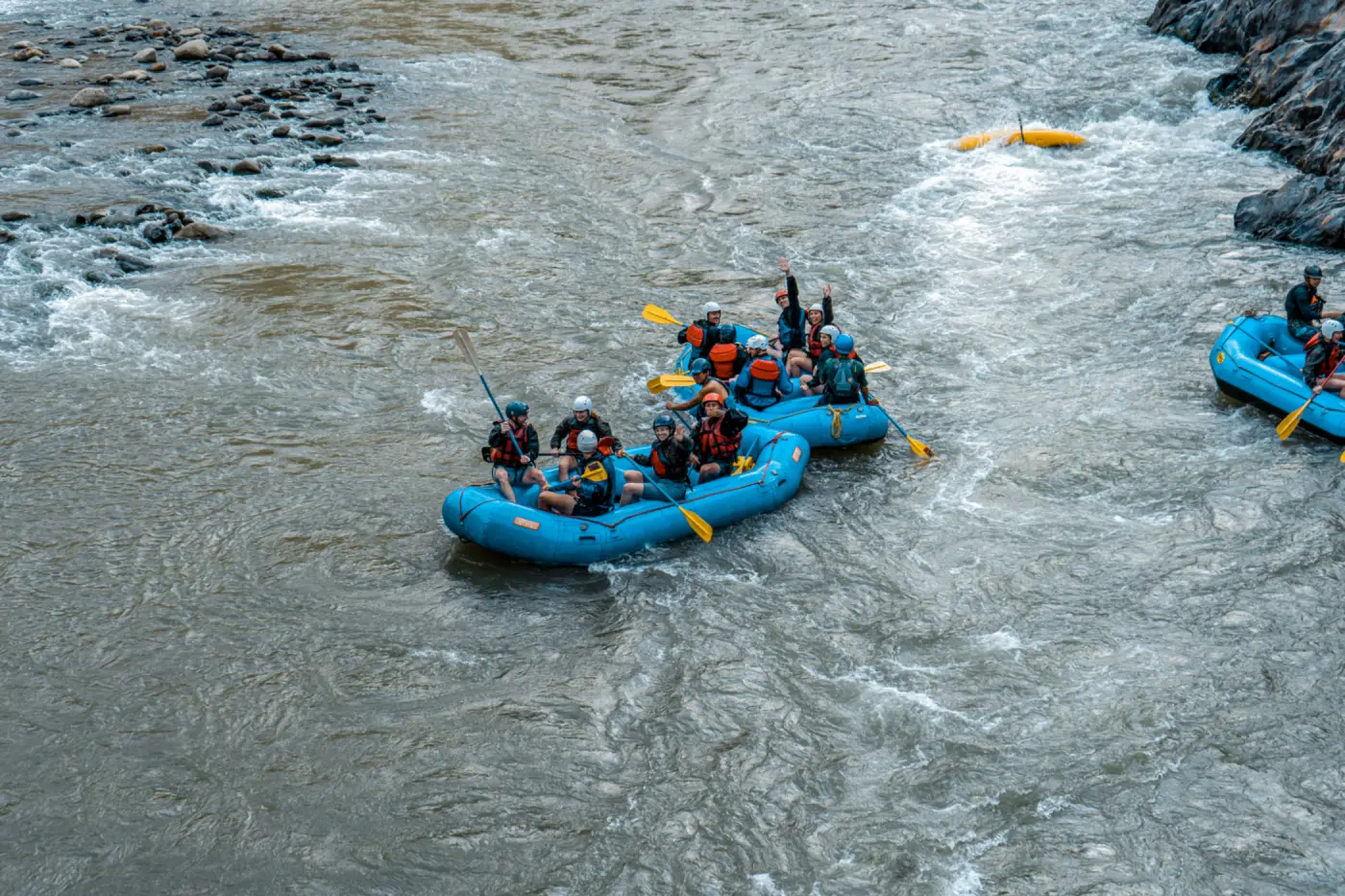
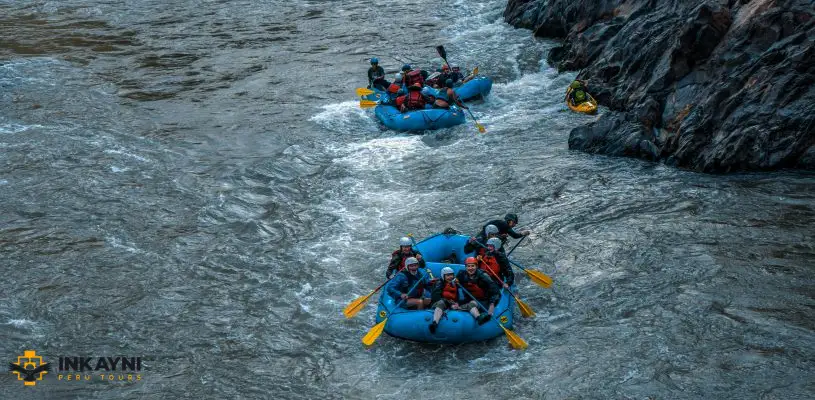
Rafting near Santa María is one of the route’s main adventure highlights.
Pro tip:
Ask for the activity inclusions in writing before paying a deposit. The current linked 4-day service lists biking equipment, rafting and ziplining as included; other Inca Jungle packages may bundle those activities differently.
How Hard Is the Inca Jungle Trek?
The Inca Jungle Trek does not require technical mountaineering. For many normally active travelers, it is manageable; what changes from person to person is which part feels hardest. Some notice the bike descent, others the longer walking sections, heat or simply being active again the next day. The guide to how difficult the Inca Jungle Trek is goes deeper into fitness, biking confidence and day-by-day effort.
| Traveler profile | Practical expectation |
| Regularly active | Usually manageable with steady pacing; the cumulative effort matters more than technical hiking skill. |
| Average fitness / first multi-day route | Achievable for many travelers; expect several hours of walking and consecutive active days rather than technical trekking. |
| Low activity level or altitude concerns | Prepare more deliberately and compare pace as well as distance; the 3-day version has less hiking but a more compressed rhythm. |
Keep this in mind:
The bike descent gets most of the attention, but tired legs often show up later, after the longer walking sections. Comfortable footwear, a light daypack and a steady pace usually matter more than moving quickly.
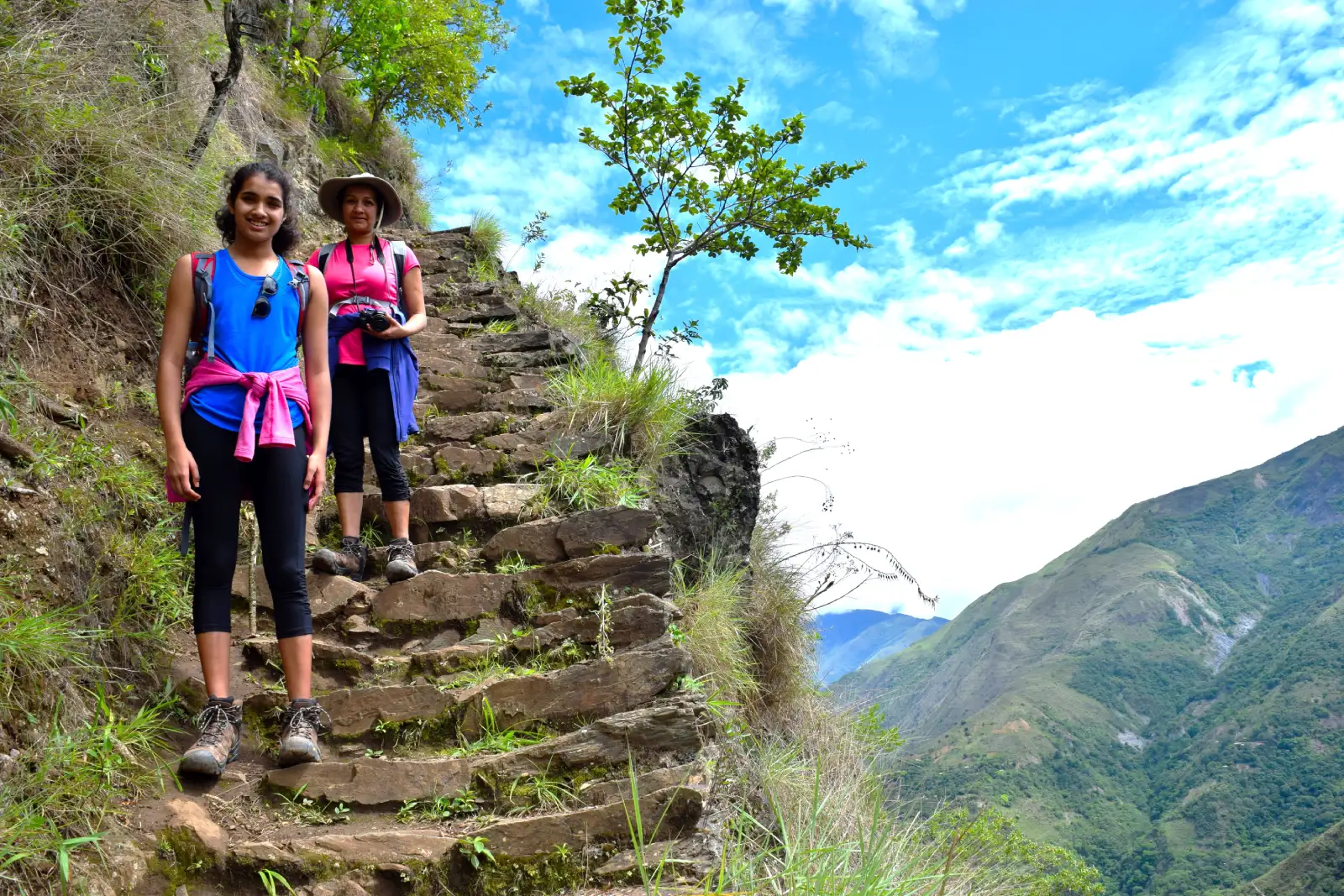
Hiking through the warm valley section during Inca Jungle trek.
Altitude and Acclimatization
Abra Malaga reaches about 4,350 m (14,271 ft), although you arrive by vehicle and descend quickly from there. If you have just come from low elevation, that brief exposure can still be noticeable. The Cusco altitude and acclimatization guide covers symptoms and risk, while preparing for the Inca Jungle Trek explains the practical steps to take before departure.
Best Time for the Inca Jungle Trek
Inca Jungle crosses several microclimates, so the season changes more than your chance of rain. It affects trail grip, heat, visibility, river conditions and demand around Machu Picchu. For a month-by-month look, the best time for the Inca Jungle Trek guide goes into more detail.
| Period | Typical conditions | Planning trade-off |
| May to September | Drier and generally more predictable trekking conditions. | Best overall weather window, but also the period of highest demand around Cusco and Machu Picchu. |
| April and October | Transition months with a mix of clearer periods and increasing weather variability. | Useful compromise for travelers who want to avoid the busiest core months. |
| November to March | Wetter, greener and more variable, with a greater chance of rain affecting trail or river activities. | More flexibility can be possible, but the itinerary needs closer attention to operating conditions. |
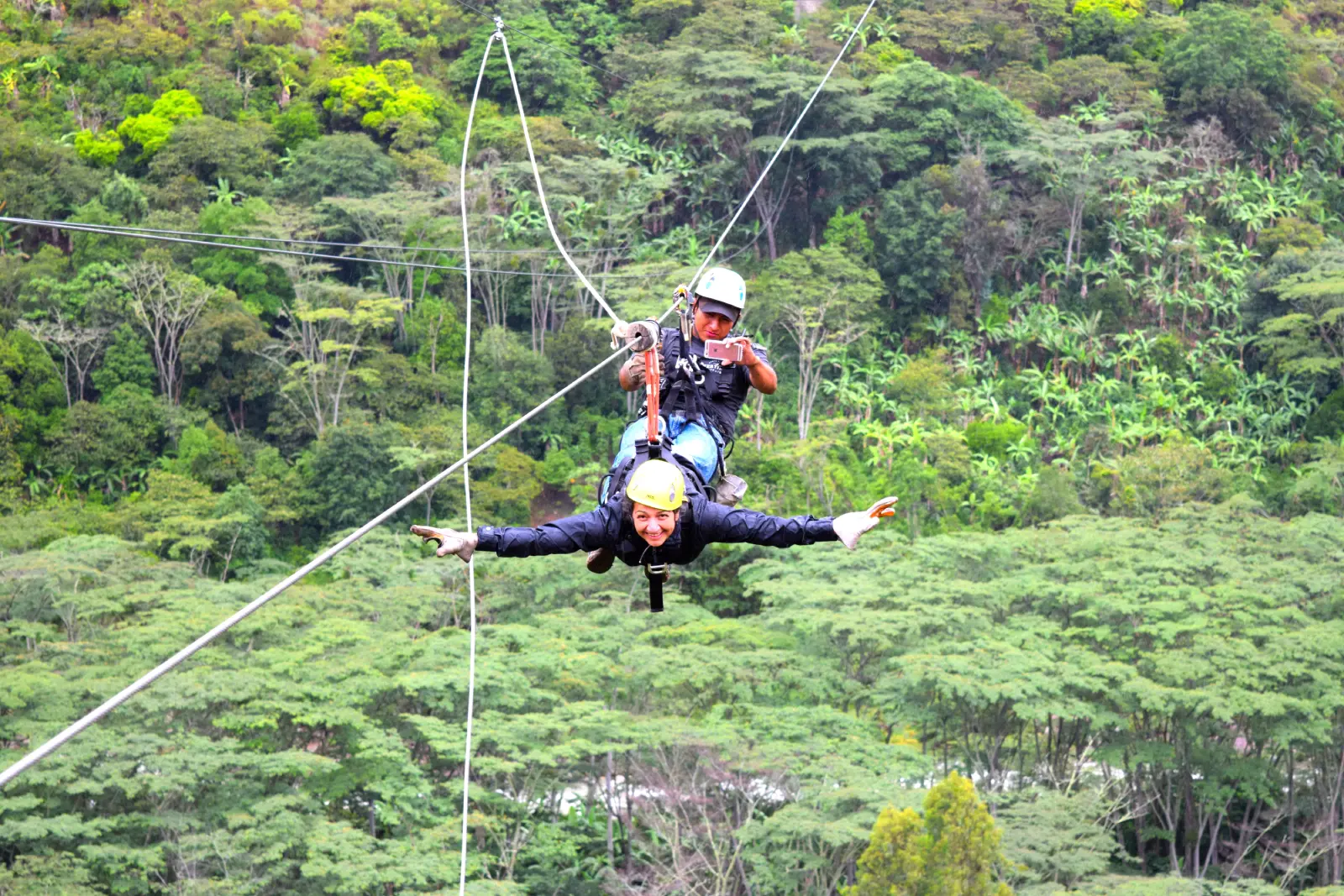
Zipline adventure near Santa Teresa.
What Is Included in an Inca Jungle Tour?
The name “Inca Jungle Trek” does not tell you exactly what is included. Compare the written service list before comparing prices. The current linked 4-day service includes biking equipment, rafting, ziplining, a Machu Picchu entrance ticket, accommodation, specified meals, return train service and ground transport. Optional mountain entrances, some bus segments, Cocalmayo costs, travel insurance and meals outside the itinerary can still be separate.
Warning:
Do not assume that two packages called “Inca Jungle Trek” include the same activities, Machu Picchu circuit, hotel standard or transport. Confirm the exact service list in writing before paying a deposit.
Inca Jungle Trek Cost and When to Book
A price only makes sense beside the inclusion list. A cheaper package may leave rafting, ziplining, ticket segments, hotel standards or transport for you to pay separately. At the time of this update, Inkayni lists the 3-day service at US$479 and the 4-day group service at US$559; use the live product pages for the final rate because promotions and inclusions can change.
| Inca Jungle service | 2026 reference range | Inkayni current rate | What usually changes the price |
| 3D/2N shared service | About US$350–520 per person | US$479 per person | Hotel level, return transport, included activities, Machu Picchu entry and group size. |
| 4D/3N budget or basic shared service | About US$310–400 per person | — | Lower-cost lodging, road vs train return and activities or transport that may be optional. |
| 4D/3N fuller shared service | About US$450–560 per person | US$559 per person | More complete activity package, train logistics, Machu Picchu entry and accommodation. |
| Private or upgraded 4D service | About US$550–850+ per person | Ask for a current quote | Private guide and transport, group size, hotel category, train upgrades and premium inclusions. |
Price reference: Ranges are based on publicly listed 2026 Inca Jungle rates reviewed in August 2026. They are not standardized packages, so compare the inclusion list before comparing prices. Live rates, promotions and Machu Picchu ticket availability can change.
Important note:
Inca Jungle does not have the same trekking-permit bottleneck as the Classic Inca Trail, but your Machu Picchu ticket still creates a real booking deadline. Lock the ticket and route logistics before assuming the trek can be organized at any time.
Inca Jungle Trek vs. Classic Inca Trail
Both routes end at Machu Picchu, but the experience on the way is very different. Inca Jungle mixes biking, hiking and optional adventure activities; the Classic Inca Trail is a regulated archaeological trek with sustained mountain walking. If those differences are central to your decision, the full Inca Trail vs. Inca Jungle Trek comparison goes further.
| Factor | Inca Jungle Trek | Classic Inca Trail |
| Experience | Multi-activity route combining biking and hiking, with rafting and ziplining depending on the booked service and conditions. | Continuous trekking on a regulated historic route with original Inca paths and major archaeological sites. |
| Booking | No Classic Inca Trail trekking-permit quota, although Machu Picchu entry and route logistics still require advance planning. | Official Inca Trail permit required through an authorized operator, with limited daily spaces. |
| Physical style | Mixed activities; the highest point is reached by vehicle before downhill biking and hiking through warmer valleys. | More sustained mountain hiking with high passes, stone steps, long descents and camping. |
| Best for | Travelers who want variety, biking and adventure activities on the way to Machu Picchu. | Travelers who prioritize historic trekking, archaeology and the classic Inca road experience. |
If that regulated trekking experience sounds closer to what you want, compare the available Inca Trail hikes before choosing by price or trip length alone.
Compare Other Trekking Routes to Machu Picchu
What to Pack for the Inca Jungle Trek
Pack for a cold start at altitude, warm lower valleys, possible rain and several active days without carrying more than you need. The basics are broken-in hiking shoes with good grip, quick-dry clothing, a waterproof layer, sun protection, insect repellent, water, a swimsuit when rafting or Cocalmayo is part of the itinerary, your original passport and some Peruvian soles. A 25–40 L daypack is enough for many travelers who leave unnecessary luggage in Cusco.
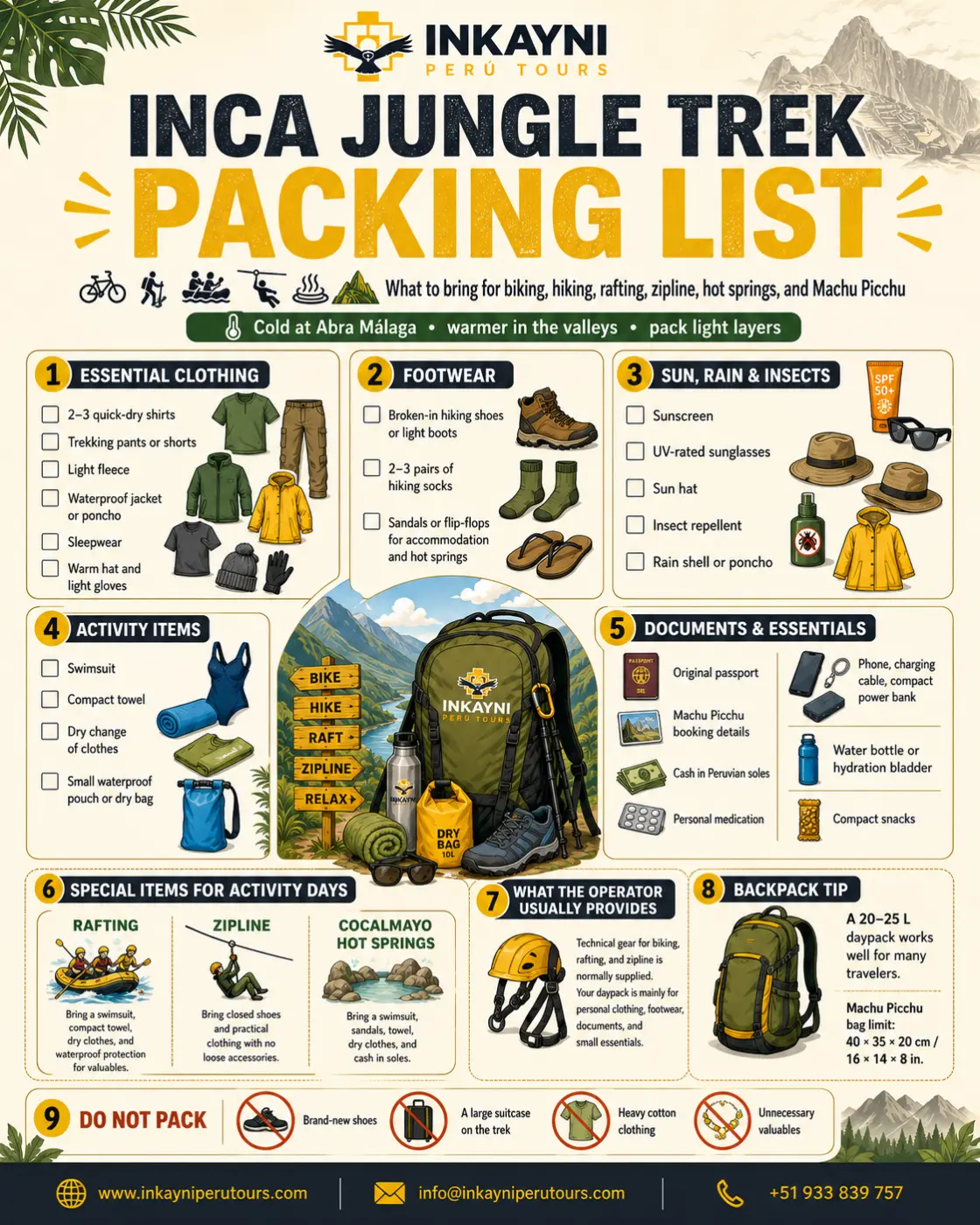
Inca Jungle Trek packing list with clothing, footwear, documents, and key essentials for adventure activities.
For clothing quantities, documents and activity-specific gear, use the full Inca Jungle Trek packing list.
Plan the Inca Jungle Route That Fits Your Trip
Once the route makes sense, the final choice comes down to dates, pace, activities and the Machu Picchu ticket available for your trip. You can review the current options with Inkayni Peru Tours, and if Inca Jungle is only one part of a wider Cusco itinerary, the Sacred Valley fits naturally before or after it. If you still cannot tell which version suits you, talk to a travel specialist before locking in the itinerary.
Frequently Asked Questions About the Inca Jungle Trek
Are Inca Jungle Trek, Inca Jungle Trail, Inka Jungle and Inka Jungle Trek the same route?
Usually, yes. Those names are commonly used for the same broad multi-activity route from the Cusco region toward Machu Picchu, although the exact number of days and included activities can vary by itinerary.
How many days does the Inca Jungle Trek take?
The classic version is 4 days and 3 nights, while the 3-day version removes the full Santa Maria–Santa Teresa hiking day to save time. The Inca Jungle Trek duration guide compares walking time and distance in more detail.
Where does the Inca Jungle Trek start from Cusco?
The trip normally begins with an early road transfer from Cusco toward Abra Malaga. The pass, at about 4,350 m (14,271 ft), is where the downhill biking section begins before the route descends toward the warmer valleys.
Do I need a permit for the Inca Jungle Trek?
No special Inca Trail trekking permit is required for Inca Jungle. You still need a valid Machu Picchu entrance ticket, assigned entry details and the transport and accommodation that connect the route correctly.
How difficult is the Inca Jungle Trek for a first-time traveler?
For many normally active first-time travelers, the route is manageable. It is not technically difficult, but the combination of biking, walking, heat and consecutive active days can still be tiring. If fitness or bike confidence is your main concern, see the Inca Jungle difficulty guide.
Do I need previous mountain biking experience?
You should at least be comfortable riding a bicycle, braking and controlling your speed on a long descent. A proper safety briefing, suitable protective equipment, a well-maintained bike and vehicle support are more important than advanced mountain-biking technique.
Are rafting and ziplining included in the Inca Jungle Trek?
It depends on the service. Inkayni’s current 4-day group itinerary lists both activities as included, while other operators may sell them separately or change them because of operating conditions. If either activity is important to you, confirm the exact rafting and zipline arrangements before paying.
What should I pack for the Inca Jungle Trek?
Bring broken-in hiking footwear, quick-dry layers, rain protection, sun protection, insect repellent, enough water capacity, your passport and some cash in soles. The Inca Jungle packing list has the complete checklist.
What happens if bad weather affects the route?
Rain can change trail conditions and can affect river or adventure activities. The operator may need to adjust an activity or transport decision according to conditions, so travelers in wetter months should treat the daily plan as operationally flexible.
Which Machu Picchu ticket or circuit is used with an Inca Jungle Trek?
The answer depends on the ticket secured for your booking and current availability. Confirm the exact circuit and entry time before departure rather than assuming that every Inca Jungle package uses the same Machu Picchu route.
Autor

Shared:


If you liked this article and the information you found, give us 5 stars!
 (1 votos, promedio: 5.00 de 5)
 Loading...