


Quick Answer
To get to Machu Picchu, most travelers first arrive in Cusco, continue to Ollantaytambo in the Sacred Valley, take the train to Aguas Calientes, and then ride the official Consettur bus to the entrance. From Cusco, the full route usually takes 3.5 to 4.5 hours, depending on the transfer, train schedule, and bus line.
The most important step is booking in the right order: secure your Machu Picchu ticket first, because the entry time and circuit determine which train, bus, and transfer make sense. There is no direct road to the citadel; if you do not take the train, the main overland alternative is the Hydroelectric Route, which requires more time and a walk to Aguas Calientes.
Table of Contents
Planning how to get to Machu Picchu sounds simple until you begin fitting the pieces together. The route is not built around one vehicle or one ticket, but around a sequence: your arrival in Cusco, your transfer toward the Sacred Valley, the train or road approach to Aguas Calientes, the entrance time printed on your Machu Picchu ticket, and the final bus or walk up to the gate.
This guide focuses on the route itself: train, bus, Hydroelectric road and trekking options. For a broader destination overview, use our Machu Picchu travel guide. For what you can see once you enter, compare the current Machu Picchu circuits before choosing a ticket.
Quick summary:
The easiest way to get to Machu Picchu is to travel from Cusco or the Sacred Valley to Ollantaytambo, take the train to Aguas Calientes, and then ride the official bus to the entrance. The cheapest route is usually the Hydroelectric option, but it takes much longer. Treks such as the Inca Trail, Salkantay, Lares or Inca Jungle are better when the journey matters as much as the citadel.
| 7,972 ftMachu Picchu altitude | 3.5–4.5 htrain + bus from Cusco | 2train operators | 3main access styles |
Before You Book: The Correct Order Matters
A common mistake is buying the train first and then discovering that the desired Machu Picchu entry time or circuit is no longer available. The safer order is to confirm the entrance ticket and route first, then build transport around it.
| Booking step | Why it should come in this order |
| Machu Picchu ticket and route | Your entry time and circuit decide how early you must reach Aguas Calientes and what train schedule makes sense. |
| Train or Hydroelectric route | Transport must fit the entry time, not the other way around. |
| Bus from Aguas Calientes | The bus line can affect arrival time at the gate, especially for early entries. |
| Hotel or transfer | A night in Aguas Calientes or Ollantaytambo can reduce pressure on the visit day. |
| Guide or tour service | A guide helps more when the meeting point, entry time and circuit are already clear. |
Keep this in mind:
The train takes you to Aguas Calientes, not to the archaeological site. From there, you still need the official bus or the uphill walk to reach the Machu Picchu entrance.
WORLD WONDER IN THE ANDESMachu Picchu
Discover the history, landscapes, and essential tips for visiting this world wonder.
Where Is Machu Picchu Located?
Machu Picchu is in Cusco, Peru, within the province of Urubamba and the district of Machupicchu. The citadel sits on a narrow Andean ridge between Machu Picchu Mountain and Huayna Picchu, above a deep bend of the Urubamba River. It stands at 7,972 feet (2,430 m) above sea level, lower than Cusco but still high enough to matter if you arrived in Peru recently and have not acclimatized well.
The broader Historic Sanctuary of Machu Picchu is both a cultural monument and a protected natural area. That dual condition explains a lot about how the visit works today: controlled entry times, fixed circuits, protected paths and strict movement inside the site.
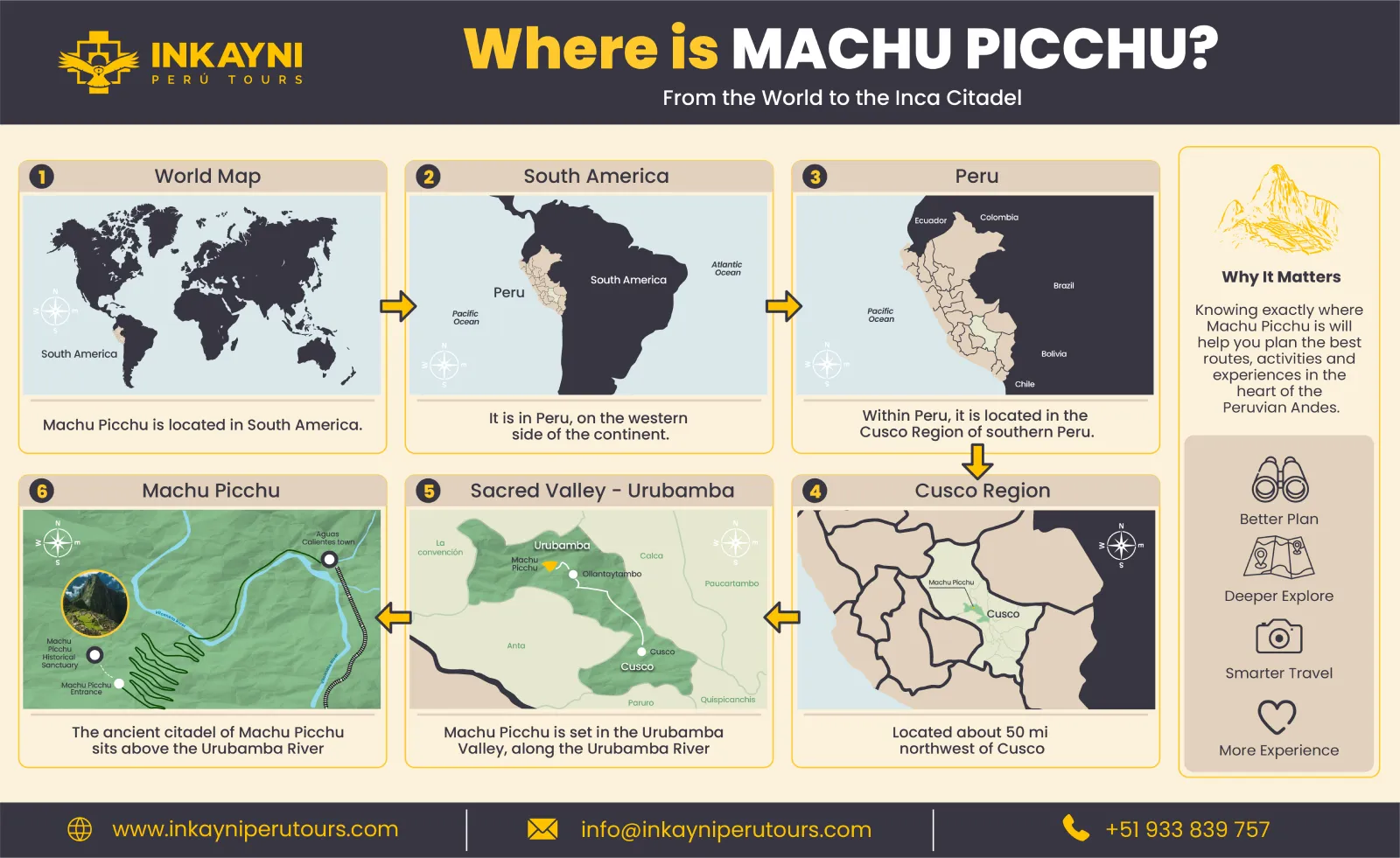
Where Machu Picchu is located from the world map to the Inca citadel?
Best Way to Get to Machu Picchu Based on Your Travel Style
There is no single ideal route for everyone. The best option depends on your time, budget, fitness level, tolerance for fatigue and the kind of travel experience you want.
| Traveler type | Best option | Why it makes sense |
| First time in Machu Picchu | Train + bus | It is the simplest, most organized route and fits well with fixed entry times. |
| Tighter budget | Hydroelectric Route | It saves money, but requires more time, a long road journey and a walk to Aguas Calientes. |
| Comfort or family trip | Train from Ollantaytambo + night in Aguas Calientes | It reduces pressure, early starts and the risk of missing your entry time. |
| Historical trekking experience | Inca Trail | It is the classic multi-day route that reaches Machu Picchu on foot through Inti Punku. |
| Mountain and adventure | Salkantay or Inca Jungle | They work better if you want scenery, physical effort or varied activities before reaching Machu Picchu. |
How to Get to Machu Picchu: All Options at a Glance
All routes to Machu Picchu pass through Cusco in logistical terms, even if your previous stop was Lima, Puno, Arequipa or the Amazon side of the country. From there, you choose one of three broad approaches: the train route, the Hydroelectric road with a walk, or a multi-day trek.
Practical note:
If this is your first visit and you have limited time, the train plus bus route is usually the best balance of comfort and reliability. Choose Hydroelectric for budget, and choose a trek only if you want several days of walking before Machu Picchu.
| Route | Duration | Difficulty | Cost logic | Best for |
| Train + bus PeruRail / Inca Rail |
3.5–4.5 h from Cusco | Easy | Variable | Most travelers. It is the fastest, most flexible and simplest option. |
| Hiram Bingham train | 4–5 h depending on service | Luxury | Premium | Travelers who want comfort, dining and a high-end rail experience. |
| Hydroelectric Route | 9–10 h | Easy, but long | Lower-cost | Budget travelers who accept a long road journey and a walk to Aguas Calientes. |
| Huchuy Qosqo | 3 days | Easy–moderate | Varies by operator | Travelers who want a short trek with archaeology and Sacred Valley scenery. |
| Inca Jungle Trek | 4 days | Easy–moderate | Varies by operator | Travelers who want biking, hiking, hot springs and varied adventure. |
| Lares Trek | 4 days | Moderate | Varies by operator | Cultural immersion, Andean communities and a less crowded route. |
| Classic Inca Trail | 4 days | Moderate | Varies by permit and operator | Historic route with a required permit and arrival through Inti Punku. |
| Salkantay Trek | 4–5 days | Moderate–challenging | Varies by operator | Glacier scenery, high mountain landscapes and a strong alternative to the Inca Trail. |
| Choquequirao to Machu Picchu | 8–9 days | Challenging | Varies by itinerary | Experienced trekkers looking for a long, remote, archaeological route. |
Option 1: How to Get to Machu Picchu by Train
For most travelers, the train is the most efficient route. It avoids the long road segment to the Hydroelectric station, reduces physical fatigue before the visit and fits better with fixed entry windows at Machu Picchu. In operational terms, the usual sequence is Cusco to Ollantaytambo, Ollantaytambo to Aguas Calientes, Aguas Calientes to Machu Picchu. If you are comparing train categories, keep our Expedition vs Vistadome guide open before paying.

The important detail is this: trains generally do not leave from Cusco’s historic center. Most travelers depart from Ollantaytambo, while some services are sold as bimodal connections from Cusco, meaning a bus segment plus the train. If you do not notice that difference when booking, you can miscalculate your morning badly.
Important note:
Ollantaytambo is the main rail hub for reaching Machu Picchu. From Cusco, the road transfer usually takes around 1.5 to 2 hours, depending on traffic, weather and where in the city you start.
PeruRail
PeruRail is the larger of the two operators and runs several services on this route. Its products differ mainly in window design, onboard atmosphere, level of service and price.

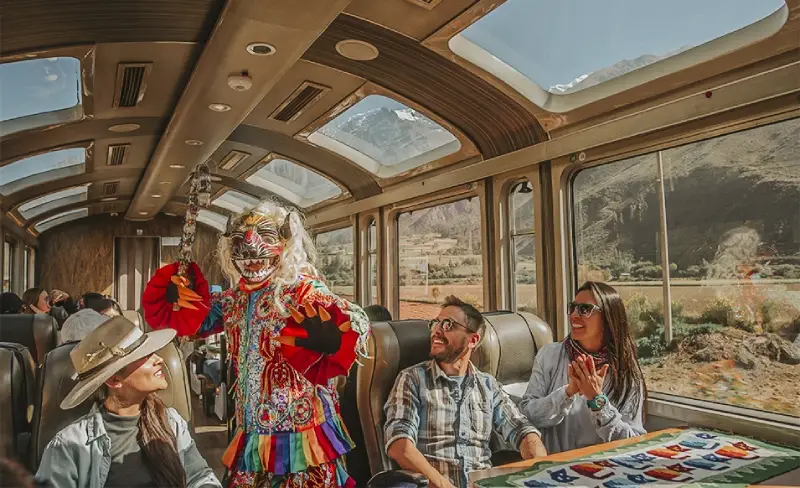
- Expedition: practical and usually the most economical PeruRail option for travelers focused on the route.
- Vistadome: panoramic windows and a more polished onboard atmosphere; a common upgrade for the Sacred Valley scenery.
- Vistadome Observatory: a more experiential service, useful when the train ride itself matters as part of the trip.
- Hiram Bingham: PeruRail’s luxury train, with a more ceremonial style of travel. Compare it separately in our Hiram Bingham train guide.

PeruRail services operating on the Ollantaytambo – Aguas Calientes route
Inca Rail
Inca Rail operates with a more boutique profile, but the logic is similar: different comfort levels on the same corridor between the Sacred Valley and Aguas Calientes.
- Voyager: a direct, standard option for travelers who do not need premium service.
- The 360°: a panoramic service with wider windows and more emphasis on the landscape.
- The Prime: an upgraded experience with a calmer atmosphere and more service.
- First Class: the highest Inca Rail tier, built around comfort and exclusivity.

Inca Rail services connecting Ollantaytambo and Aguas Calientes
How to Get to Machu Picchu from Aguas Calientes
Once you reach Aguas Calientes, also called Machu Picchu Pueblo, the route narrows to two final options: the official bus or the uphill walk. The town sits in a humid river valley. The citadel is above it, on a steep mountainside reached by a switchback road and an old stair route through the forest. At this point, the decision has less to do with transportation and more to do with energy management.
CONSETTUR Bus Service
Consettur operates the authorized bus service between Aguas Calientes and the Machu Picchu entrance. The ride usually takes 25 to 30 minutes. Buses run continuously, but the real variable is the line. If your entry time is early, the queue in town can begin forming before dawn, especially in the dry season and on weekends.
| Detail | Practical reference |
| Round-trip fare | Often around $24 USD for a foreign adult round trip, but fares can change. Confirm the current price before traveling. |
| Ride time | 25 to 30 minutes on a steep switchback road. |
| First departures | Usually from early morning, often around 5:30 a.m., depending on operation and queue volume. |
| Frequency | Continuous departures when demand is high, but the line can still take time. |
| Boarding point | Av. Hermanos Ayar, the main bus terminal in Aguas Calientes. |
Timing tip:
Your Machu Picchu ticket allows entry within a specific time window, and the bus line can move slower than expected during peak hours. Be at the bus stop at least 1 hour before your entrance time. If your ticket is for one of the earliest circuits of the day, give yourself even more margin.
Walking from Aguas Calientes to Machu Picchu
Walking up from Aguas Calientes is free, but the route is steep and feels harder if you slept poorly, arrived late or are still adjusting to altitude from Cusco. The climb usually takes 1.5 to 2 hours. In rain, the steps can be slippery. In humid heat, the effort weighs more than the map suggests. Many travelers prefer to take the bus up and walk down after the visit, when time pressure is lower.
Option 2: Route by Car to Machu Picchu — Hydroelectric Route
The Hydroelectric Route to Machu Picchu is the most economical way to reach Machu Picchu without taking the full train route. It is also the longest and least comfortable option for most travelers. You trade money for time, and often for physical freshness on the day before the visit.

The road leaves Cusco, crosses the high cold zone near Abra Malaga, and then descends toward warmer cloud forest through Santa Maria and Santa Teresa. After the road ends at Hydroelectric station, you still have to walk beside the railway to Aguas Calientes.
| Step | Section | Practical read |
| 1 | Cusco to Santa Maria | About 4 hours by shared vehicle, crossing high mountain terrain before descending toward the cloud forest. |
| 2 | Santa Maria to Santa Teresa | Approximately 1 to 1.5 hours, with a warmer and more humid environment as you lose altitude. |
| 3 | Santa Teresa to Hydroelectric station | About 30 minutes. This is where the road section ends. |
| 4 | Hydroelectric station to Aguas Calientes on foot | A mostly flat 6-mile (10 km) walk beside the railway. Allow 2 to 2.5 hours. |
| 5 | Aguas Calientes to Machu Picchu | By bus in 25 to 30 minutes, or on foot in 1.5 to 2 hours. |
Warning:
The Hydroelectric route may look easy on paper because the final walk is mostly flat, but the full day is long. Road delays, rain, landslides or a late start can make the route stressful if your Machu Picchu ticket is for the next morning.
Option 3: Trekking Routes to Machu Picchu
For some travelers, reaching Machu Picchu after several days on foot changes the meaning of the place. The citadel stops feeling like an isolated stop and becomes the final point of a wider corridor of mountains, forest, water, stone architecture and controlled effort. Trekking also changes the demands of the trip: you need more preparation, more recovery, more margin for weather and a realistic reading of your body.
Seven main trekking routes are commonly associated with Machu Picchu. They differ in altitude, scenery, remoteness and the balance between archaeology and physical challenge. If your priority is the historical route, start with the Inca Trail to Machu Picchu; if your priority is mountain scenery, compare Salkantay before choosing.
PERU’S LEGENDARY HIKEInca Trail to Machu Picchu
Follow the historic trail through mountain passes, Inca sites, and cloud forest paths to Machu Picchu.
Inca Trail to Machu Picchu
The Inca Trail remains the most recognized trekking route to Machu Picchu. The classic version covers about 26 miles (42 km) in 4 days, crossing high mountain passes, cloud forest and a chain of Inca sites before reaching the citadel through the Sun Gate, Inti Punku. Permits are limited, the route must be booked through an authorized operator, and the trail closes every February for maintenance.

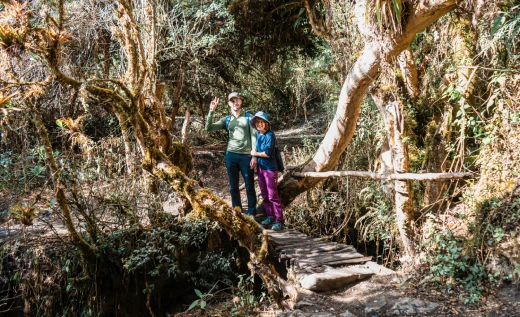

The Classic Inca Trail crosses high mountain passes before descending toward the Sun Gate
Salkantay Trek to Machu Picchu
The Salkantay Trek is the strongest alternative for travelers who want a harder, more expansive mountain route without the same permit pressure as the Inca Trail. It usually lasts 4 to 5 days, passes below the glaciated Salkantay peak and descends toward warmer cloud forest before connecting with the Machu Picchu route.

Hikers crossing the high pass below Salkantay glacier
Inca Jungle Trek to Machu Picchu
The Inca Jungle Trek combines mountain biking, hiking, optional zipline, hot springs and the final approach through the Hydroelectric corridor. It is not a continuous classic Inca road in the same sense as the Inca Trail. Its appeal lies in contrast: a high start near Abra Malaga, a rapid descent into warmer terrain and a varied rhythm.

Cachicata Quarry Trek to Machu Picchu
The Cachicata Quarry Trek, also called the Inca Quarry Trail, follows a quieter route through high Andean terrain and the ancient quarry that supplied stone for major Inca constructions in the Sacred Valley. It works well for travelers interested in labor, engineering and how monumental landscapes were actually built.

The three chullpas of Cachicata, above the quarry zone of the Sacred Valley
Choquequirao Trek to Machu Picchu
Choquequirao is a large-scale Inca center reached through a demanding canyon route in the Apurimac region. The Choquequirao Trek can be extended toward Machu Picchu over 8 to 9 days, creating one of the longest and most demanding routes in the Peruvian Andes.

Panoramic view of Choquequirao, often considered the remote sister site of Machu Picchu
Lares Trek to Machu Picchu
The Lares Trek is a mountain route that connects with Andean communities near the Sacred Valley. It crosses high passes, lagoons, farming areas and villages where textile traditions are still part of daily life. The trek finishes in Ollantaytambo, where travelers take the train to Aguas Calientes for the Machu Picchu visit.
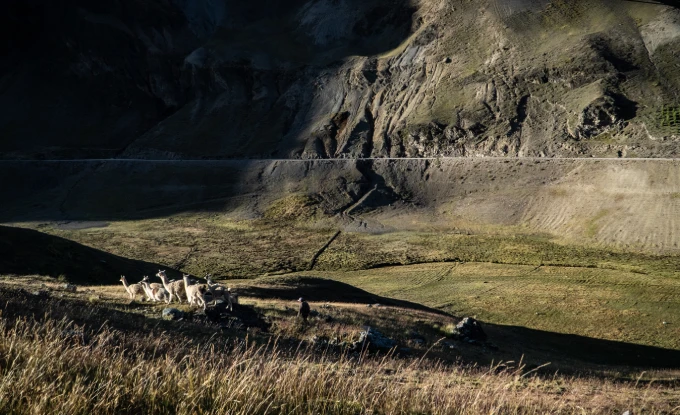

Huchuy Qosqo Trek to Machu Picchu
The Huchuy Qosqo Trek is shorter and more accessible than the major multi-day treks. It is usually done in 3 days: it starts above Cusco, passes the cliffside site of Huchuy Qosqo, descends into the Sacred Valley and then continues by train to Aguas Calientes.

Huchuy Qosqo, above the Sacred Valley on a dry high slope
Related guides for choosing a trekking route
How to Get to Machu Picchu from Different Regions of Peru
Wherever you begin inside Peru, the operating logic is the same: first connect to Cusco, then continue toward the Sacred Valley rail corridor or one of the overland alternatives. Below are the most practical sequences from the main origin cities.
How to Get to Machu Picchu from Lima
From Lima, the fastest route is by air to Cusco and then onward by train. For most international travelers, this is the standard gateway into a Machu Picchu itinerary.
| Step | Route from Lima |
| 1 | Flight from Lima to Cusco, around 1 hour 20 to 1 hour 30 minutes, depending on airline and schedule. |
| 2 | Transfer from Cusco to Ollantaytambo, around 1.5 to 2 hours through the Sacred Valley corridor. |
| 3 | Train from Ollantaytambo to Aguas Calientes, usually 1.5 to 2 hours. |
| 4 | Bus to the entrance, 25 to 30 minutes, or uphill walk in 1.5 to 2 hours. |
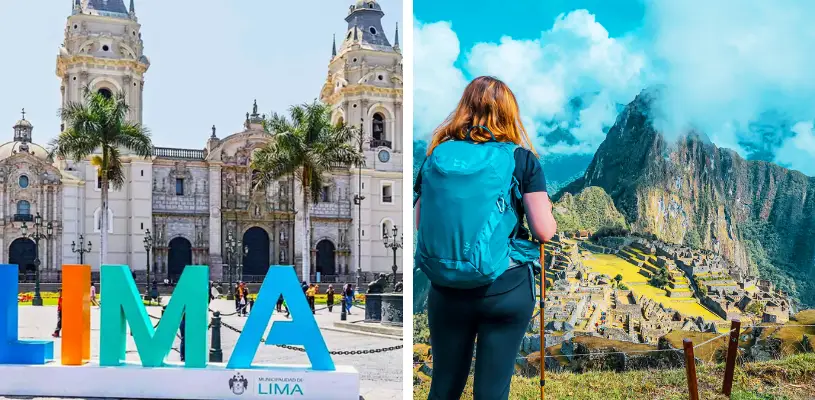
Lima is the main air gateway into the Cusco-Machu Picchu route
How to Get to Machu Picchu from Puno
From Puno, the most common route is a long overland connection to Cusco, followed by the standard rail corridor. Because both Puno and Cusco are at altitude, this segment can feel physically draining if you are already tired or sleeping poorly.
| Step | Route from Puno |
| 1 | Bus from Puno to Cusco, around 7 to 8 hours on the direct route, longer with tourist stops. |
| 2 | Transfer from Cusco to Ollantaytambo, approximately 1.5 to 2 hours. |
| 3 | Train to Aguas Calientes, then bus or walk to Machu Picchu. |

The Puno to Cusco route crosses long stretches of the Andean high plateau
How to Get to Machu Picchu from Arequipa
From Arequipa, the cleanest option is usually a flight to Cusco and then the standard rail sequence. Overland travel is possible, but considerably longer.
| Step | Route from Arequipa |
| 1 | Flight from Arequipa to Cusco, around 1 hour on direct service. |
| 2 | Cusco to Ollantaytambo to Aguas Calientes to Machu Picchu, following the same rail route described above. |

Arequipa connects well with Cusco by air, making same-day onward travel possible
How to Get to Machu Picchu from Tacna
From Tacna, the trip is longer and normally requires at least one connection before reaching Cusco. It is workable, but it demands more careful planning.
| Step | Route from Tacna |
| 1 | Tacna to Arequipa, by bus or flight depending on budget and schedule. |
| 2 | Arequipa to Cusco, by flight or long-distance bus. |
| 3 | Cusco to Ollantaytambo to Aguas Calientes to Machu Picchu. |

Travelers from Tacna usually connect through Arequipa before continuing to Cusco
How to Get to Machu Picchu from Puerto Maldonado
From Puerto Maldonado, the cleanest route is a flight to Cusco and then the standard Sacred Valley rail sequence. This combination works well for travelers linking the Amazon forest with the Andes in the same itinerary.
| Step | Route from Puerto Maldonado |
| 1 | Flight from Puerto Maldonado to Cusco, approximately 1 hour. |
| 2 | Cusco to Ollantaytambo to Aguas Calientes to Machu Picchu. |

Puerto Maldonado connects naturally with Cusco for itineraries that combine Amazon and Andes
Related guides for planning Machu Picchu logistics
Reach Machu Picchu Ready to Enjoy It, Not to Solve Logistics
Getting to Machu Picchu becomes much clearer when you organize the route in parts: Cusco, Sacred Valley, train or overland route, entry time, and the final ascent from Aguas Calientes. The best option depends on your time, budget, fitness level and travel style.
If you want to avoid mistakes with tickets, transfers, schedules and connections, Inkayni Peru Tours can help you organize the route, train, bus, entry time and guided visit so the day feels planned instead of improvised.
Frequently Asked Questions About How to Get to Machu Picchu
How long does it take to get to Machu Picchu from Cusco?
Can you visit Machu Picchu in one day from Cusco?
What is the easiest way to get to Machu Picchu?
Is there a direct road to Machu Picchu?
Should I book the Machu Picchu ticket before the train?
Where do you buy official Machu Picchu tickets?
How far in advance should I buy train and bus tickets?
Is the walk from Aguas Calientes to Machu Picchu difficult?
How many circuits does Machu Picchu have now?
What is the best route for travelers on a tighter budget?
Is it better to sleep in Cusco, Ollantaytambo or Aguas Calientes before Machu Picchu?
Autor

Shared:




If you liked this article and the information you found, give us 5 stars!


 (3 votos, promedio: 3.67 de 5)
 Loading...