


Choquequirao Hike in Peru
The Choquequirao Hike is a remote 4- to 5-day trek in southern Peru that leads to a large Inca archaeological site above the Apurímac Canyon. The classic route is about 37 miles (60 km) round trip and is demanding because of steep canyon descents, long climbs, heat and basic camps, not technical climbing.
Table of Contents
The Choquequirao hike is not the easiest trek in Peru, and it is not as accessible or structured as Machu Picchu. That is why many hikers choose it. Choquequirao rewards travelers who want a quieter Inca site, wide canyon views and a route that still feels remote.
This page gives you the main planning framework: what Choquequirao is, where it is located, how hard the trail feels, how to get there from Cusco, what you see at the ruins, when to go, what to pack and when a guided trek makes more sense than going alone.
| 37 miround trip (60 km) | 4-5 daysclassic trek | 10,335 ftruins altitude (3,150 m) | No permitadvance system |
What Is Choquequirao?
Choquequirao is a large Inca archaeological complex in the Vilcabamba range, above the Apurimac River canyon. It is often compared with Machu Picchu because both sites combine stone architecture, terraces, sacred spaces and mountain scenery. The experience is different: Choquequirao is quieter, harder to reach and still closely tied to the trail that leads there.
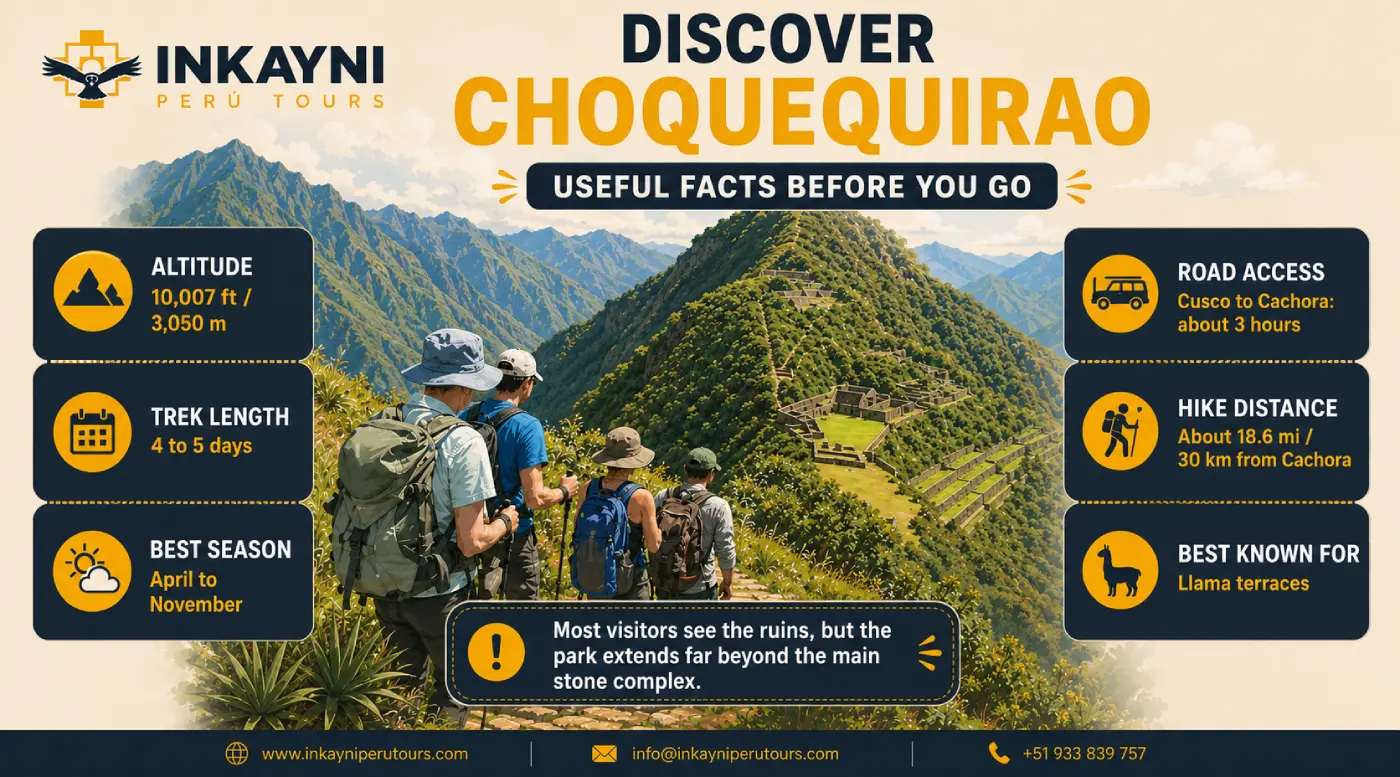
Key Choquequirao facts for planning the trek.
The name is commonly translated as Cradle of Gold. A careful reading connects it with chuqi or choqe, associated with gold or something valuable, and k’iraw, meaning cradle. Spellings vary because Quechua and Aymara sounds have been written in different ways over time. The modern spelling Choquequirao is the most useful for travelers, but Choquequirau, Choqek’iraw and Chokekirao may appear in older books, maps or search queries.
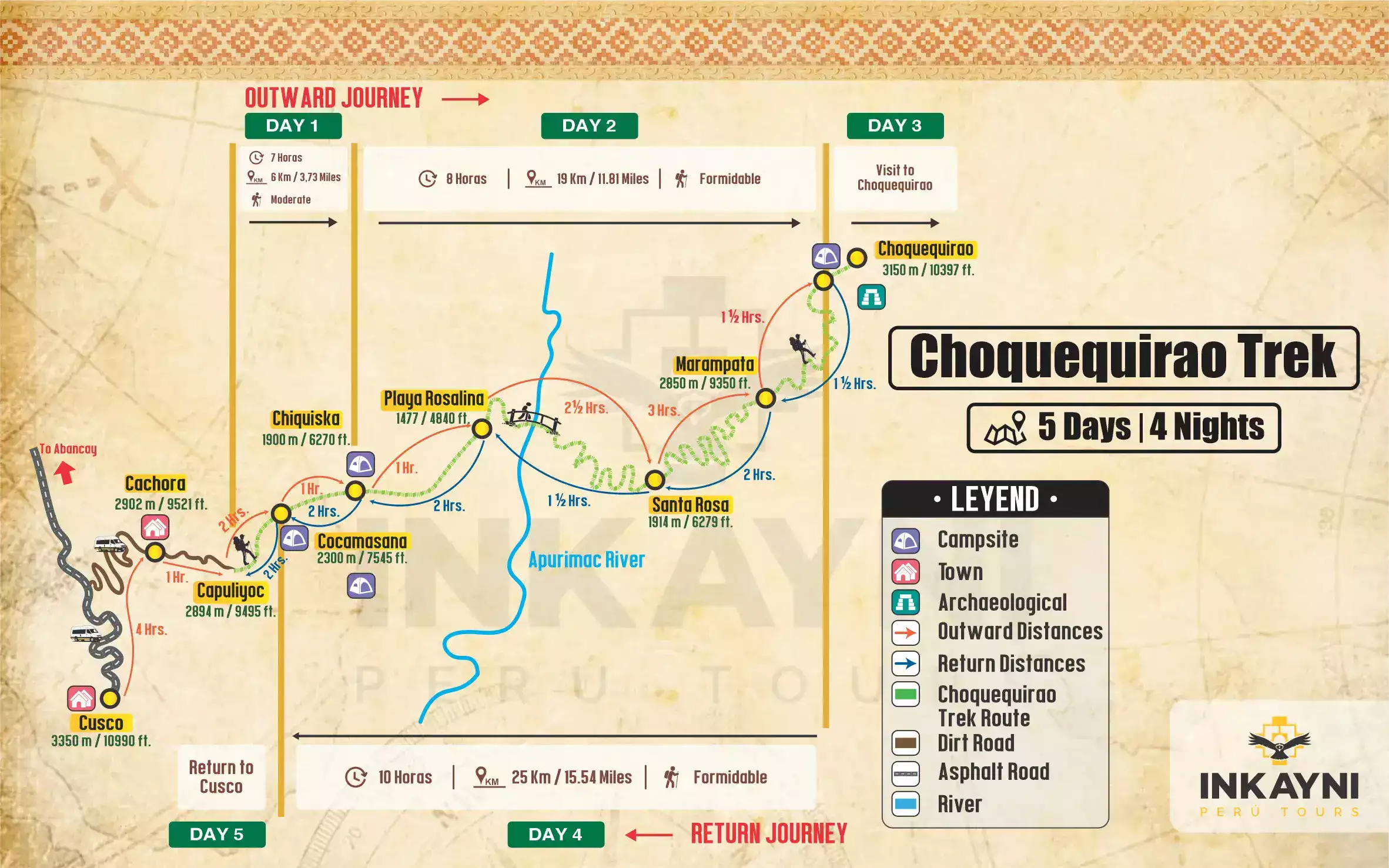
Route map for the 5-day Choquequirao Trek.
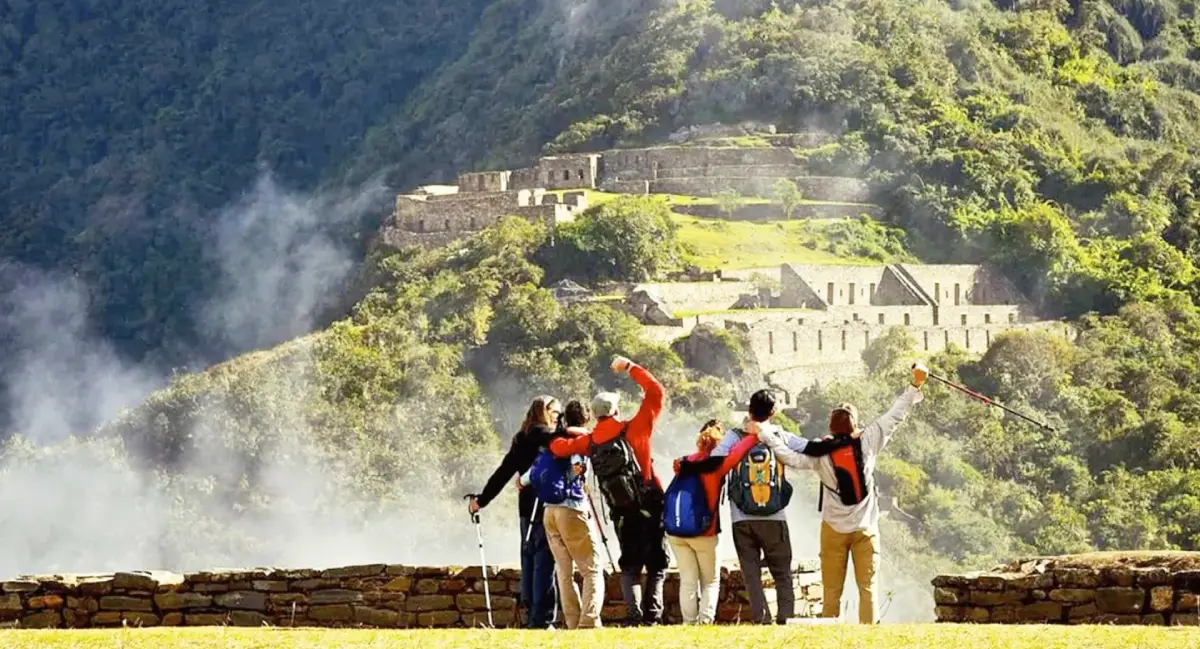
Hikers celebrating their arrival at Choquequirao, Peru.

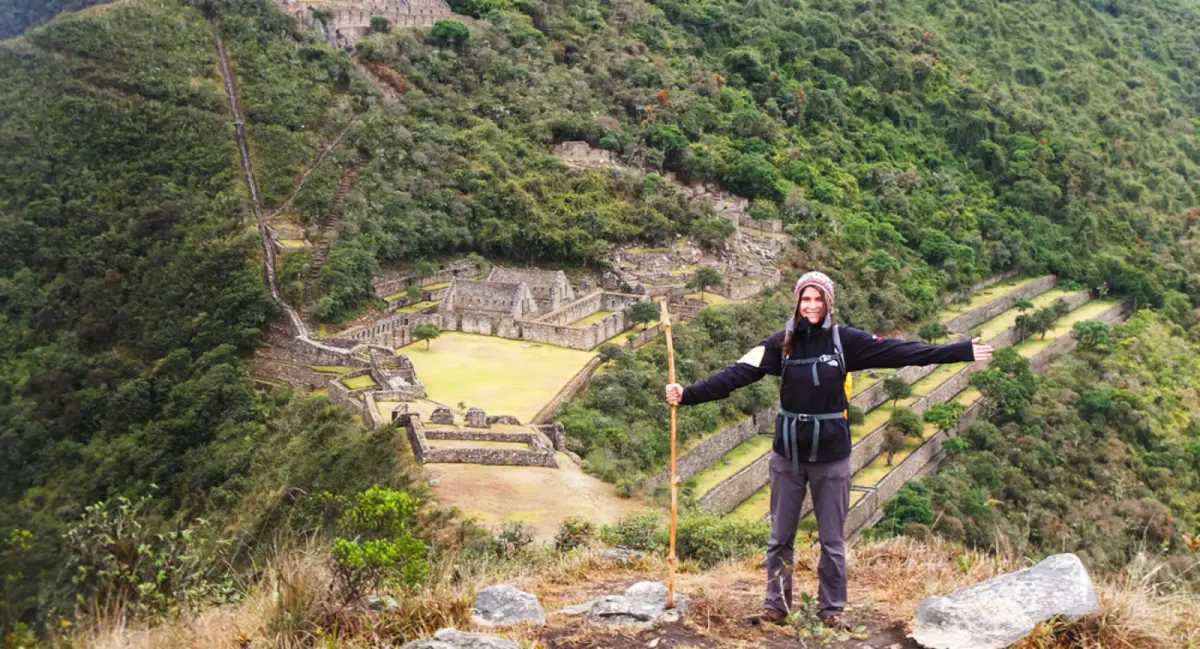
Hikers overlooking Choquequirao in southern Peru.
Did you know?
Choquequirao was not only a set of ruins at the end of a trail. It was an Inca center with ceremonial, administrative, agricultural and strategic functions.
Is the Choquequirao Hike Worth It?
Yes, the Choquequirao hike is worth it if you want remote Inca ruins, fewer visitors and a strong trekking experience before reaching the site. It is not the best choice if you want an easy day trip, hotel comfort or a quick archaeological visit. The value of Choquequirao is the combination of effort, silence, canyon scenery and a large Inca complex that still feels far from mass tourism.
| Traveler type | Good fit? | Why |
| Fit hiker looking for solitude | Yes | The route is quiet, remote and physically rewarding. |
| First-time Peru traveler with limited time | Maybe not | Machu Picchu or the Short Inca Trail may fit better into a short itinerary. |
| Traveler focused on archaeology | Yes | Choquequirao is one of the strongest remote Inca sites in Peru. |
| Beginner with no trekking experience | Only with preparation | The route is not technical, but the canyon climbs and descents are demanding. |
| Traveler who wants comfort | No | Expect camps, basic services and limited infrastructure. |
Where Is Choquequirao Located?
Choquequirao is in the Cusco region of southern Peru, in the Vilcabamba mountain range, above the Apurimac River canyon. The archaeological site is often described in relation to Santa Teresa district and La Convencion province, while the classic trek usually begins from the Cachora or Capuliyoc side in Apurimac. This is why travelers often see both Cusco and Apurimac mentioned when researching the Choquequirao trail.
| Detail | Planning reference |
| Mountain range | Vilcabamba range, southern Peruvian Andes. |
| Main trekking approach | Cusco to Cachora or Capuliyoc area, then on foot toward the Apurimac canyon and Marampata. |
| Ruins altitude | About 10,010-10,335 ft (3,050-3,150 m), depending on the reference point used. |
| Main river | Apurimac River, far below the archaeological ridge. |
| Nearby mountain context | Vilcabamba and Salkantay landscapes shape the broader trekking region. |
How Hard Is the Choquequirao Trek?
The Choquequirao trek is challenging to very challenging. It is not technical climbing, but it is physically demanding because the route drops into the Apurimac canyon and climbs back out on steep, exposed trail. The difficulty comes less from altitude and more from heat, elevation loss, elevation gain, long days and the need to recover overnight in basic camps.
The hardest part usually comes between the Apurimac River, Santa Rosa and Marampata. That section can feel intense because you descend, cross lower canyon terrain and then climb back toward the village area before reaching the archaeological site. If you want a deeper breakdown, the Choquequirao Trek difficulty depends mostly on canyon profile, weather and pacing.

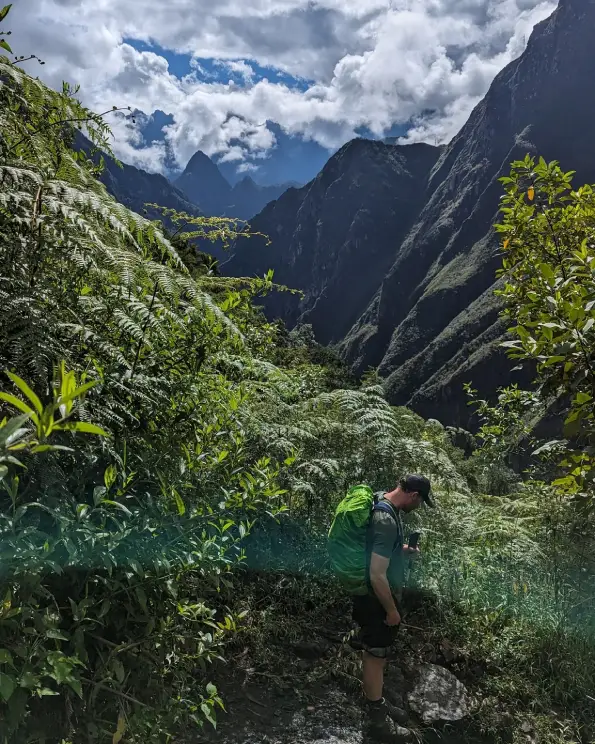
Choquequirao, the remote Inca city reached by a demanding canyon trek.
| Factor | What to expect |
| Distance | About 37 miles (60 km) round trip on the classic route. |
| Duration | Usually 4 to 5 days, depending on pace and itinerary. |
| Hardest part | The steep canyon descent and climb between the Apurimac River, Santa Rosa and Marampata. |
| Fitness level | Good cardio fitness and previous hiking experience are strongly recommended. |
| Trail comfort | Basic camps, heat during the day, cold nights at higher points and limited services. |
Choquequirao planning essentials
PERU’S LEGENDARY HIKEInca Trail to Machu Picchu
Follow the historic trail through mountain passes, Inca sites, and cloud forest paths to Machu Picchu.
Did you know…?
The name is usually written Choquequirao, but you may also see older or alternative spellings such as Choquequirau, Choqequiraw, Choqek’iraw or Chokekirao. They all refer to the same Inca archaeological site.
How to Get to Choquequirao from Cusco
There is no train, bus road or operating cable car that takes visitors directly to Choquequirao. The classic route begins with a road transfer from Cusco toward the Cachora or Capuliyoc area, then continues on foot through the Apurimac canyon toward Marampata and the archaeological site.
Important note:
There is no operating cable car to Choquequirao today. The classic experience still requires a multi-day trek from the Cachora or Capuliyoc side.


Option 1: Independent Hiking from Cachora or Capuliyoc
Independent hiking is possible for experienced trekkers who can manage transportation, route finding, food, water, camping gear, cash and emergency decisions. The route is remote, hot in lower sections and physically demanding. Mule support can often be arranged locally, but availability and conditions can vary. Planning Choquequirao without a guide requires more than downloading a map.
Option 2: Guided Choquequirao Tour with a Licensed Operator
A guided Choquequirao tour reduces the hardest logistical problems. A guided Choquequirao tour can include transport, camps, meals, guide service, mule support, pacing and emergency response. This matters because small mistakes on the Choquequirao trail become heavier when you are far from services.
Keep this in mind:
Choquequirao does not require an Inca Trail-style advance permit, but that does not make it a casual walk. You still need an entrance ticket, camping plan, water strategy, weather awareness and enough physical margin to climb out of the canyon safely.
Inca ruins of Choquequirao on a remote mountain slope in the Andes.
Choquequirao Trek: 4 Days or 5 Days?
Most travelers choose between a 4-day and 5-day itinerary. The difference is not only one extra night. It changes how much time you have at the ruins, how hard each day feels and how much recovery your body gets.
| Itinerary | Best for | Tradeoff |
| 4-day Choquequirao trek | Fit hikers with limited time and strong recovery. | More compressed; less margin for fatigue, weather or long exploration. |
| 5-day Choquequirao trek | Most travelers who want a better pace and more time at the site. | Requires one more day, but usually feels more balanced. |
| Choquequirao to Machu Picchu | Experienced trekkers looking for a long expedition. | Much harder; usually 8-9+ days and not ideal for a first Peru trek. |

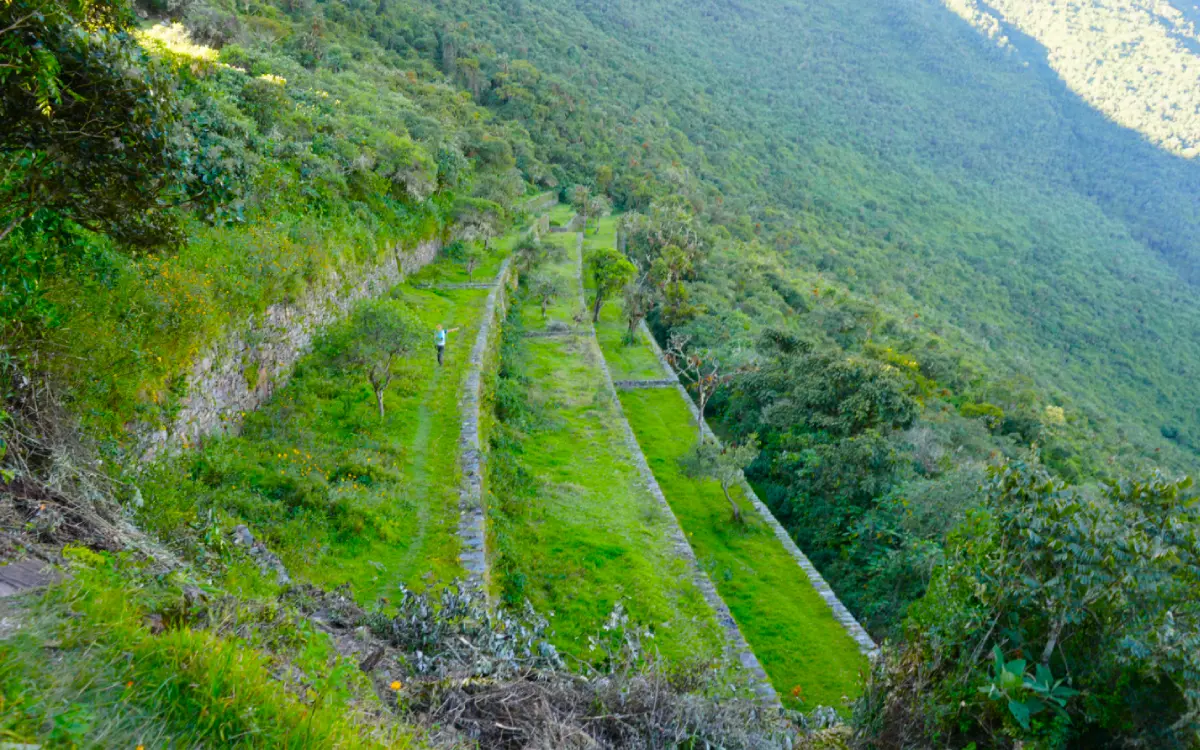
Stone paths and canyon scenery on the route to Choquequirao.
5-Day Choquequirao Trek Itinerary
This is a planning outline, not a fixed promise. Camps, distances and route order can vary by operator, weather, trail conditions and group pace.
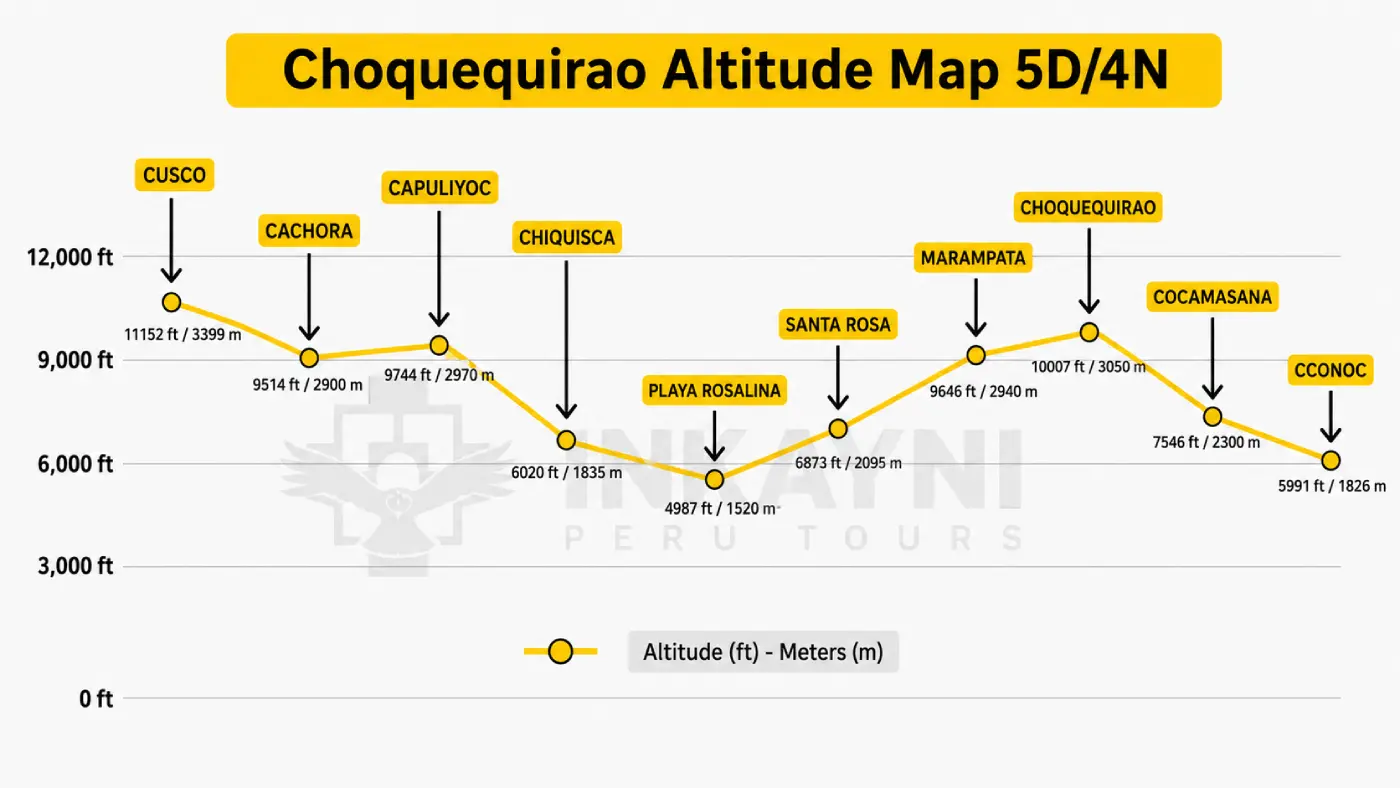
Altitude profile for the 5 day Choquequirao trek
| Day | Route logic | What to expect |
| Day 1 | Cusco to Capuliyoc or Cachora, then hike toward Chiquisca. | Drive from Cusco, first canyon views, descent into warmer terrain. |
| Day 2 | Chiquisca to Santa Rosa and Marampata. | River crossing and the hardest climb of the classic trek. |
| Day 3 | Explore Choquequirao archaeological site. | Main plaza, terraces, llama sector, ceremonial spaces and broad views. |
| Day 4 | Return from Marampata toward Chiquisca or similar camp. | Long descent and climb; trekking poles help protect knees. |
| Day 5 | Final hike out and drive back to Cusco. | Last ascent, road transfer and evening arrival in Cusco. |
The Choquequirao Ruins: What You Will Find
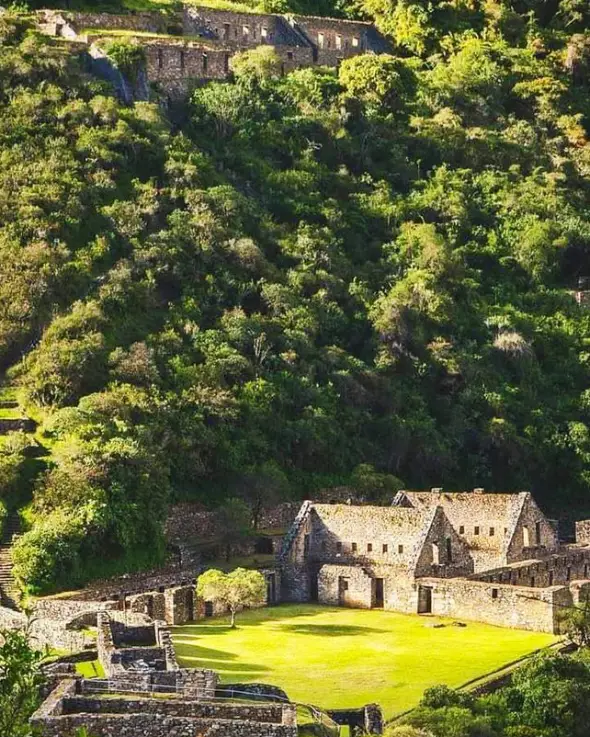
The Choquequirao ruins are large, spread out and still partly covered by vegetation. Do not expect a fully restored site with the same visitor structure as Machu Picchu. The reward is different: space, silence, wide terraces, stone buildings, llama figures and the feeling that the mountain is still holding part of the city back.
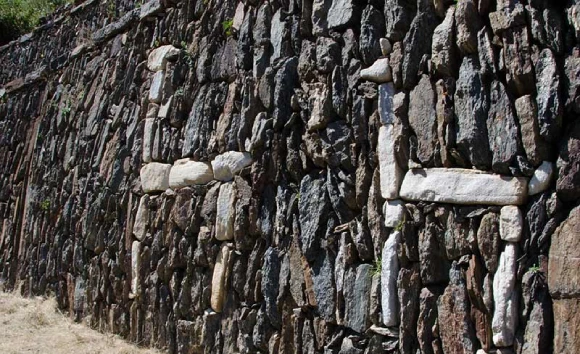
Main Plaza
The central gathering space of the complex gives the first real sense of scale and helps visitors understand Choquequirao as a planned Inca settlement rather than a single viewpoint.
Terraces and Llama Sector
The agricultural terraces are among the most memorable parts of the site. Some walls include white stone llama figures, one of Choquequirao’s strongest visual markers. The stone llamas of Choquequirao are easy to miss if your visit is rushed.
Colcas and Residential Areas
Storage buildings, houses and administrative spaces show that Choquequirao was not only ceremonial. It was also connected to production, control, movement and daily life.
Ushnu and Ceremonial Spaces
Elevated platforms and ritual areas connect Choquequirao with broader Inca planning. For more site detail, the Choquequirao ruins deserve more than a quick stop at the main plaza.


Best Photo Spots on the Choquequirao Hike
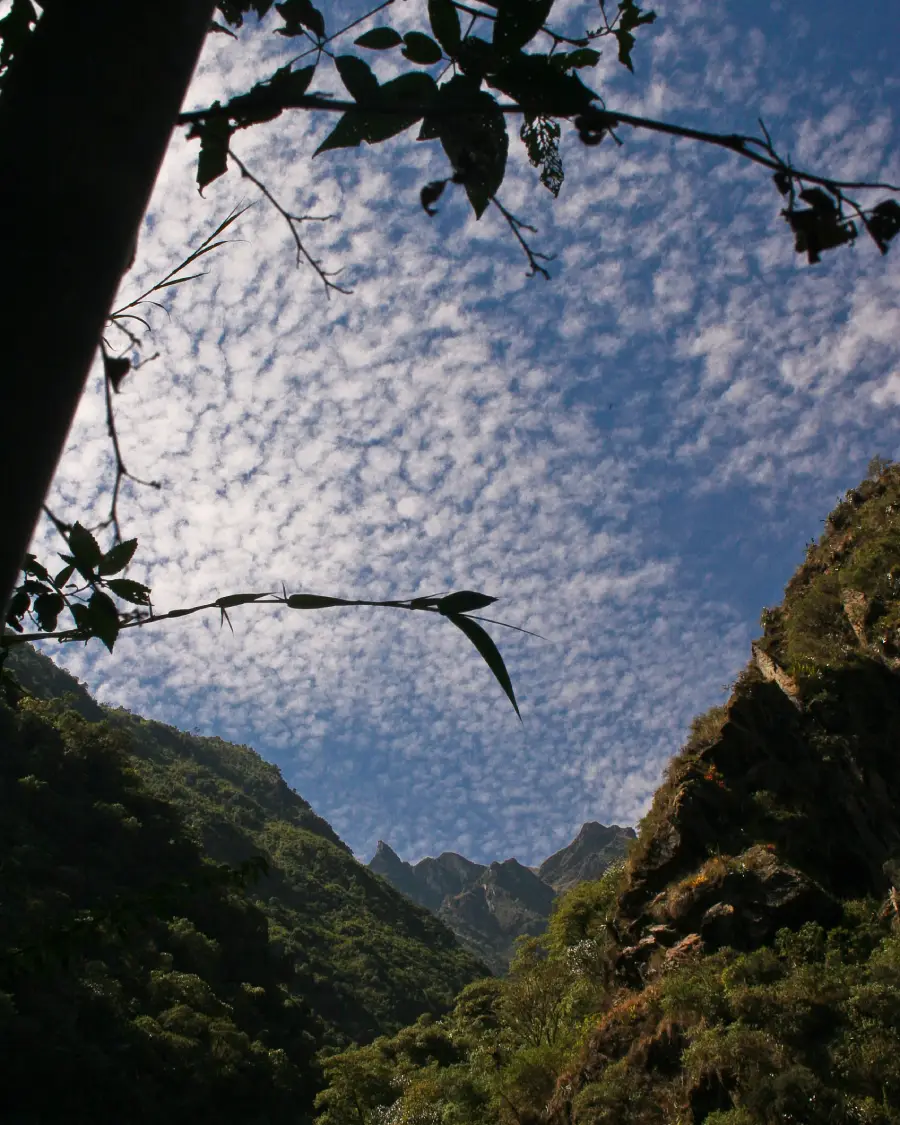
Choquequirao is strong for photos because the route gives you canyon views, trail scenes, terraces, stone architecture and quiet archaeological spaces. The best images usually come from a few key moments rather than from rushing through every sector.
| Photo spot | What you can capture |
| Capuliyoc viewpoint | First wide views of the Apurimac Canyon and the descent ahead. |
| Trail to Marampata | Steep canyon scenery, mule paths and mountain layers. |
| Marampata area | Approach views toward Choquequirao and the surrounding slopes. |
| Main archaeological sector | Stone buildings, plazas, terraces and mountain background. |
| Llama terraces | Stone llama figures built into the terrace walls. |
| Return trail | Changing light over the canyon, especially early morning or late afternoon. |
Choquequirao Trek vs Machu Picchu: Why the Experience Feels Different
Both Choquequirao and Machu Picchu are major Inca sites, but the way you reach them changes the entire visit. Machu Picchu is managed through trains, buses, timed tickets and official circuits. Choquequirao still asks you to walk into the landscape first.
| Feature | Choquequirao | Machu Picchu |
| Access | Mainly by multi-day hike. | Train, bus, walking route or trekking route depending on the plan. |
| Visitor feel | Remote, quiet and physically demanding. | More structured, regulated and crowded. |
| Advance permit | No Inca Trail-style permit, but entrance logistics still matter. | Timed ticket and official circuit are essential. |
| Best for | Trekkers who want solitude and effort. | Most first-time Peru travelers and shorter itineraries. |
| Planning risk | Underestimating difficulty, heat, water, camps and logistics. | Buying the wrong ticket, circuit or train schedule. |
For a classic citadel visit, getting to Machu Picchu follows a very different logic from the Choquequirao trail. The route here stays more physical, remote and dependent on trekking logistics.

Choquequirao, Machu Picchu and Salkantay offer very different Peru travel experiences.
Main Machu Picchu and Peru trekking guides
Best Time to Hike Choquequirao
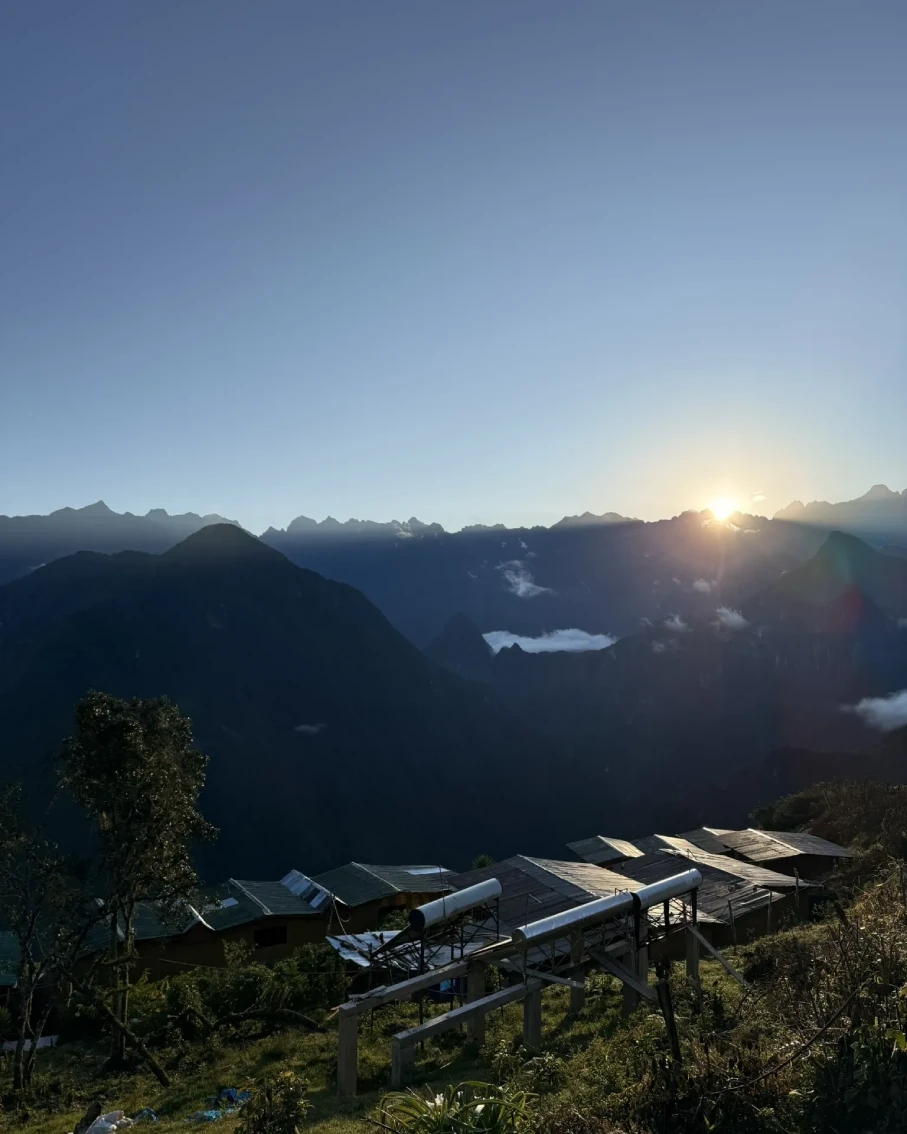
The best time for the Choquequirao hike is usually the dry season, from April to October. The most reliable months are often May through September, when the trail is drier and views are clearer. The rainy season can still be possible, but rain makes steep sections slippery and turns already hard climbs into a slower experience.

| Season | Months | What it means on the trail |
| Dry season | April to October | Better footing, clearer views and colder nights. Best window for most hikers. |
| Peak dry months | June to August | Strong visibility and dry trail, but colder nights and more demand for services. |
| Rainy season | November to March | Muddy sections, slippery descents, more cloud and a higher need for waterproof gear. |
If you are deciding by weather, trail condition and photography, the best time to visit Choquequirao depends on how much rain risk you are willing to accept. Trekking Choquequirao in the rainy season needs more caution with footwear, timing and waterproof gear.
Warning:
Do not underestimate the canyon heat. Many hikers focus only on altitude, but dehydration, sun exposure and long climbs are often the bigger problem on the Choquequirao trail.

What to Pack for the Choquequirao Hike
Packing for Choquequirao is about range. You need sun protection for hot canyon sections, warm layers for cold nights and rain protection even during shoulder months. Keep your gear practical because every unnecessary item makes the climbs harder.
| Item | Why it matters |
| Broken-in hiking boots | Steep descents and long climbs punish weak footwear. |
| Trekking poles | Very helpful for knees on the descent and for rhythm on climbs. |
| Sun hat, sunscreen and sunglasses | The canyon can be hot and exposed. |
| Rain layer | Weather changes quickly and wet trail makes the hike harder. |
| Headlamp | Useful at camp and for early starts. |
| Cash in soles | Small payments, mule support, local purchases and emergencies may require cash. |
Use a Choquequirao Trek packing list before you pack, especially if you are deciding between a light guided daypack and carrying more of your own camping gear.
Important note:
The trail crosses dry canyon slopes, warmer valleys, cloud forest sections and high Andean landscapes. Wildlife is never guaranteed, but the broader Choquequirao landscape is associated with condors, hummingbirds, butterflies, foxes, viscachas and, in more remote areas, species such as the spectacled bear. The wildlife in Choquequirao changes with season, altitude and trail section.
Should You Do Choquequirao Independently or with a Guide?
Independent trekking can work for experienced hikers who are comfortable with remote routes, basic camps and self-supported logistics. For many travelers, a guided Choquequirao tour is the safer and more enjoyable choice because the hardest part of the route is not only walking. It is also food, water, camps, transport, route timing and emergency judgment.
The total Choquequirao Trek cost changes depending on whether you go independently, join a guided service or choose a private trek. Independent travel may look cheaper at first, but transport, food, camp fees, mule support, entrance tickets and backup money still matter.
| Option | Best for | Main responsibility |
| Independent hike | Experienced trekkers with gear, route confidence and Spanish basics. | Food, camps, route, water, cash, safety and transport. |
| Guided tour | Travelers who want a safer, smoother and more interpretive experience. | Operator handles logistics, guide, meals, camps and mule support. |
| Private guided tour | Travelers who want better pacing, flexibility and personal attention. | Higher cost, but more comfort and control over rhythm. |

Plan the Choquequirao Hike with Inkayni Peru Tours
Choquequirao is the kind of trek where planning changes the experience. The trail is remote, the climbs are real and the ruins deserve more than a rushed visit. If you want the route handled properly, Inkayni Peru Tours can organize transport from Cusco, licensed guiding, meals, camps, mule support and a realistic pace for the classic route.
The 5-day Choquequirao Trek is usually the most balanced option for travelers who want enough time for the route and the archaeological site without compressing every day.
Frequently Asked Questions About the Choquequirao Hike
How long is the Choquequirao hike?
How many days do you need for Choquequirao?
Is Choquequirao good for first-time trekkers?
How should you train for the Choquequirao hike?
Should you acclimatize before the Choquequirao hike?
What does Choquequirao mean?
How do you get to Choquequirao from Cusco?
Can you spend the night in Cachora before starting the Choquequirao hike?
Which route is better for Choquequirao: Cachora, Capuliyoc or Huanipaca?
Do you need a permit for the Choquequirao hike?
Is there a cable car to Choquequirao?
Can you hike Choquequirao without a guide?
Is Choquequirao harder than the Inca Trail?
Can you hike from Choquequirao to Machu Picchu?
Is Choquequirao worth it if I am also visiting Machu Picchu?
Autor
Shared:


If you liked this article and the information you found, give us 5 stars!
 (1 votos, promedio: 5.00 de 5)
 Loading...