


Huayna Picchu or Machu Picchu Mountain?
Choose Huayna Picchu if you want the more famous and more intense climb: shorter in total hiking time, steeper underfoot, narrower in feel, and more exposed in several sections. Choose Machu Picchu Mountain if you want the broader panorama, the classic wide view over the citadel, and a route that feels less exposed but asks more from your legs and your schedule. The practical difference is not only the view but the whole ticket logic: Huayna Picchu runs through Route 3-A and rewards balance and nerve, while Machu Picchu Mountain runs through Route 1-A and rewards stamina, timing, and a longer day. If your main priority is the citadel itself, neither is automatically the best first ticket.
Table of Contents
When purchasing your Machu Picchu entrance ticket, one question comes up constantly: should you climb Huayna Picchu or Machu Picchu Mountain? The names sound similar, both promise strong views, and both sit within the Machu Picchu Historical Sanctuary. But the choice changes the experience. It changes the circuit, the type of hike, the time you need, and even the angle from which you will see the Inca citadel.
| Route 3-AHuayna Picchu | Route 1-AMachu Picchu Mountain | 400 / 350Daily spots | 6 hrs / 7 hrsMaximum stay |
A poor choice can leave you on a route that is too demanding, a view that differs from what you expected, or a schedule that is hard to coordinate with your train and bus. Here you will see which route fits you better, what alternatives exist when spots sell out, and which ticket makes the most sense for your type of trip.
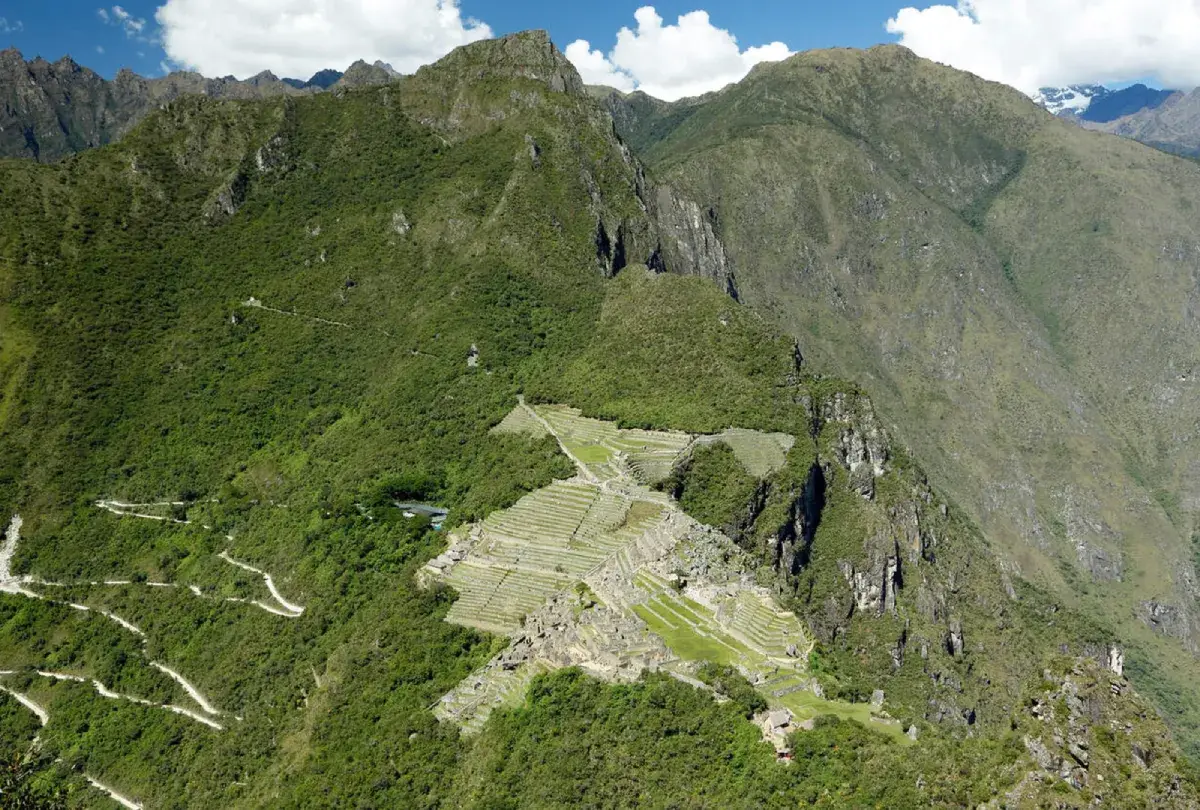
View from Huayna Picchu toward Machu Picchu Mountain and the archaeological site.
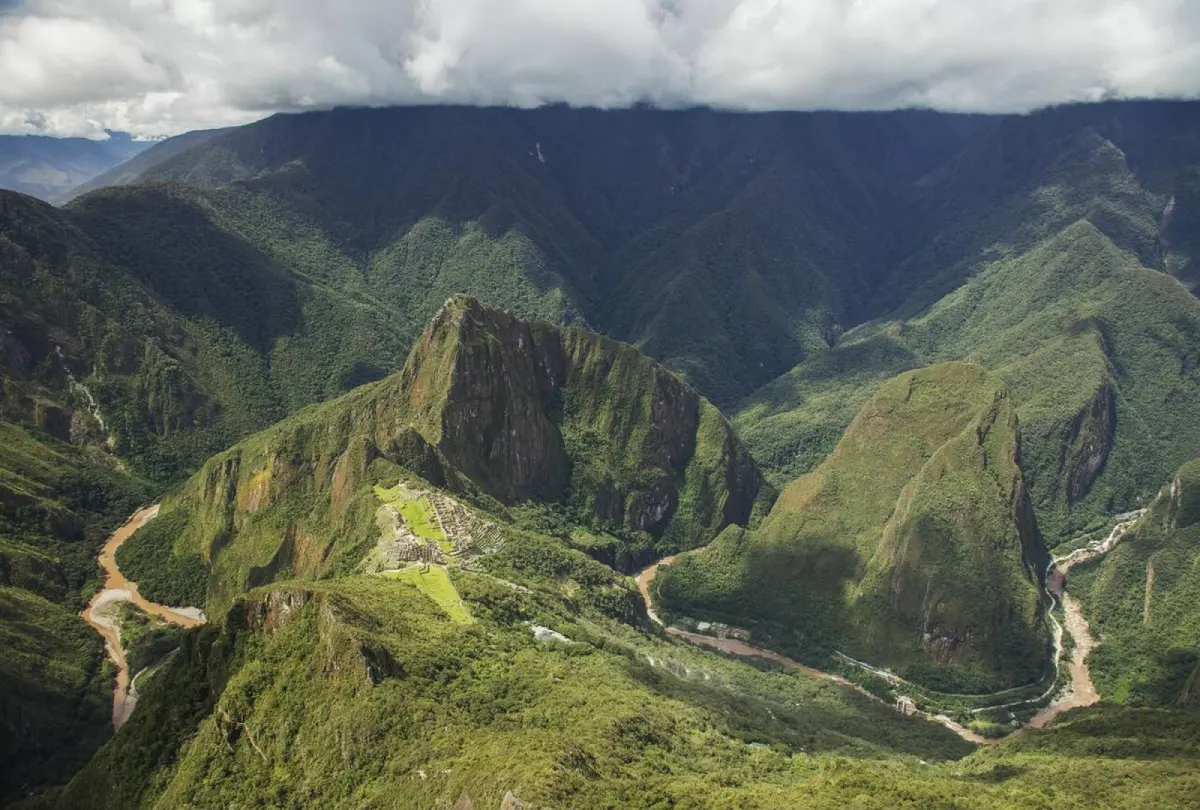
View from Machu Picchu Mountain toward the Inca site, with Huayna Picchu visible in the background.
WORLD WONDER IN THE ANDESMachu Picchu
Discover the history, landscapes, and essential tips for visiting this world wonder.
Comparison table: Huayna Picchu vs Machu Picchu Mountain
This table summarizes the differences that affect your ticket purchase and the experience on the day.
| Feature | Huayna Picchu | Machu Picchu Mountain |
| Official ticket | Circuit 3, Route 3-A: Montaña Waynapicchu | Circuit 1, Route 1-A: Montaña Machupicchu |
| Approximate altitude | 8,835 ft (2,693 m) approx. | 10,111 ft (3,082 m) |
| Daily spots 2026 | 400 spots, two windows of 200. | 350 spots, two windows of 175. |
| Main schedules | Circuit 3 at 7:00 or 9:00 a.m.; mountain checkpoint 8:00 to 9:00 or 10:00 to 11:00 a.m. | 7:00 a.m. and 9:00 a.m. |
| Maximum stay | 6 hours | 7 hours |
| Hiking time | 2 to 3 hours round trip, depending on pace and congestion. | 3 to 4 hours round trip, depending on pace and weather. |
| Type of effort | Steep gradient, narrow sections, and concentration. | Stamina, duration, and prolonged staircases. |
| Feeling of exposure | Greater. There are narrow passages and visually exposed sections. | Less. The trail tends to feel wider. |
| Main view | Close aerial view of the citadel and the river wrapping around the mountain. | Wide panorama of the citadel, valley, river, and surrounding mountains. |
| Classic photograph | Different aerial view from the mountain. Its strength is in the verticality. | Yes. Circuit 1 works better for that elevated classic shot. |
| Recommended profile | Active travelers with good balance and a taste for steeper routes. | Travelers with good stamina, interest in a wider landscape, and lower tolerance for exposure. |
Which ticket to buy based on your type of visit
The difference in the Machu Picchu circuits
- Huayna Picchu, also written Waynapicchu, belongs to Circuit 3, Route 3-A: Ruta Montaña Waynapicchu. This circuit focuses on the lower sectors of the llaqta and connects to a narrower, steeper mountain that sits very close to the citadel. The visual and physical experience shifts considerably from the very first section.
- Machu Picchu Mountain belongs to Circuit 1, Route 1-A: Ruta Montaña Machupicchu. This circuit belongs to the panoramic axis of the sanctuary. Its route is associated with the upper platforms, high viewpoints, and the classic image of Machu Picchu before continuing toward the mountain.
Keep this in mind:
The classic photograph from the upper terraces fits better with Circuit 1. The Huayna Picchu experience centers on the climb itself, the close aerial view, and the lower sectors of Circuit 3.
For many travelers, the real decision is not only Huayna Picchu or Machu Picchu Mountain, but which broader route makes either climb realistic on the final day. The clearest fit is usually the Short Inca Trail or a clean train-and-bus arrival, while longer options such as the 4 Day Inca Trail, the Salkantay Trek, the Lares Trek, or the Inca Jungle Trek only make sense here when the final visit to Machu Picchu still leaves real margin for the mountain route you choose.
PERU’S LEGENDARY HIKEInca Trail to Machu Picchu
Follow the historic trail through mountain passes, Inca sites, and cloud forest paths to Machu Picchu.

Map of Machu Picchu Circuit 3-A with Huayna Picchu.
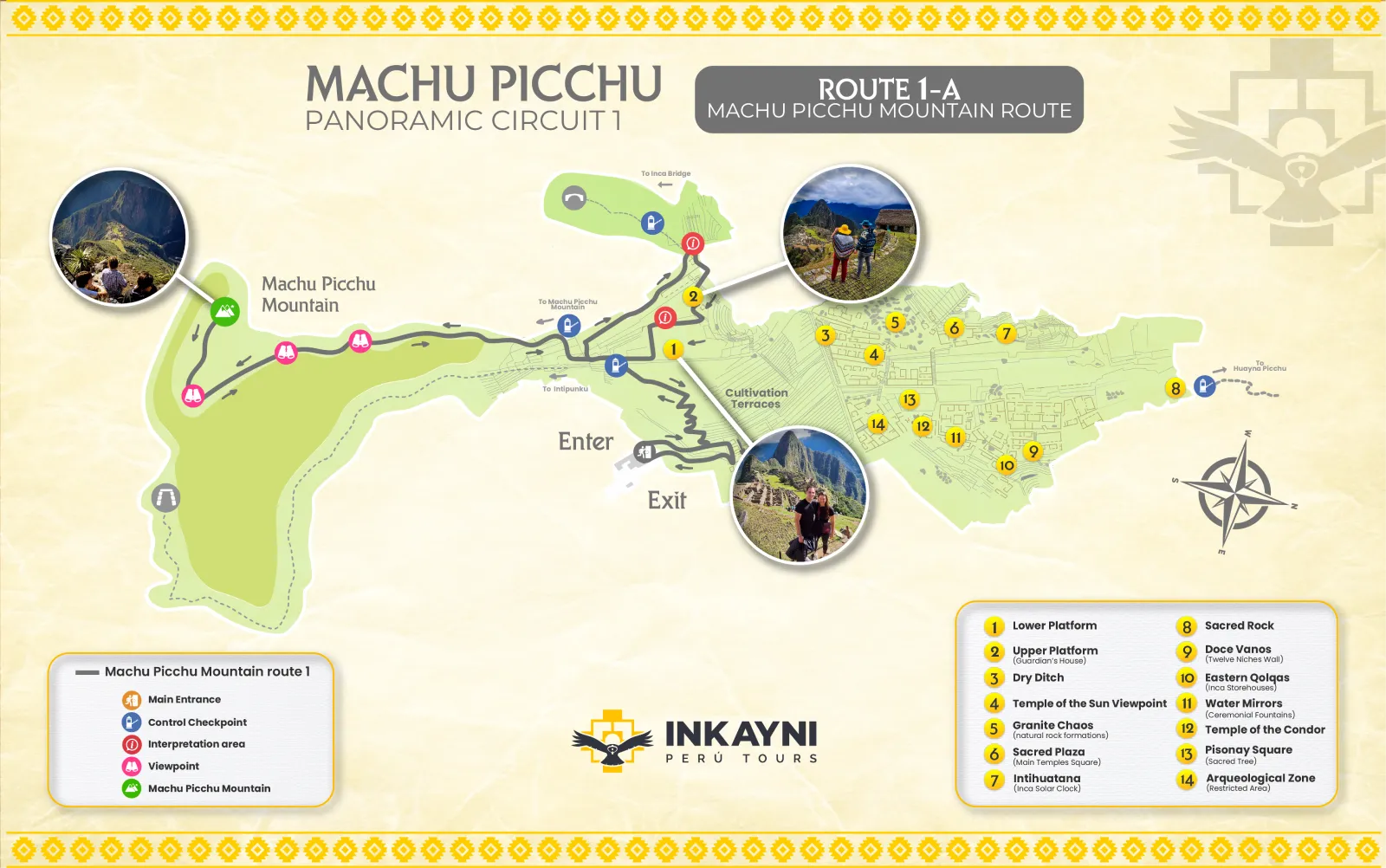
Map of Machu Picchu Circuit 1-A with the route to Machu Picchu Mountain.
Expert tip:
For a more intense, famous, and vertical climb, choose Huayna Picchu. For panorama, the classic photograph, and a longer hike, choose Machu Picchu Mountain. For a first visit focused on the citadel itself, check Circuit 2 first.
Tickets for each route
The ticket names can look similar. Check the exact route before paying: Route 3-A for Huayna Picchu and Route 1-A for Machu Picchu Mountain. The booking system defines circuit, route, date, and time slot. That combination organizes the entire visit.
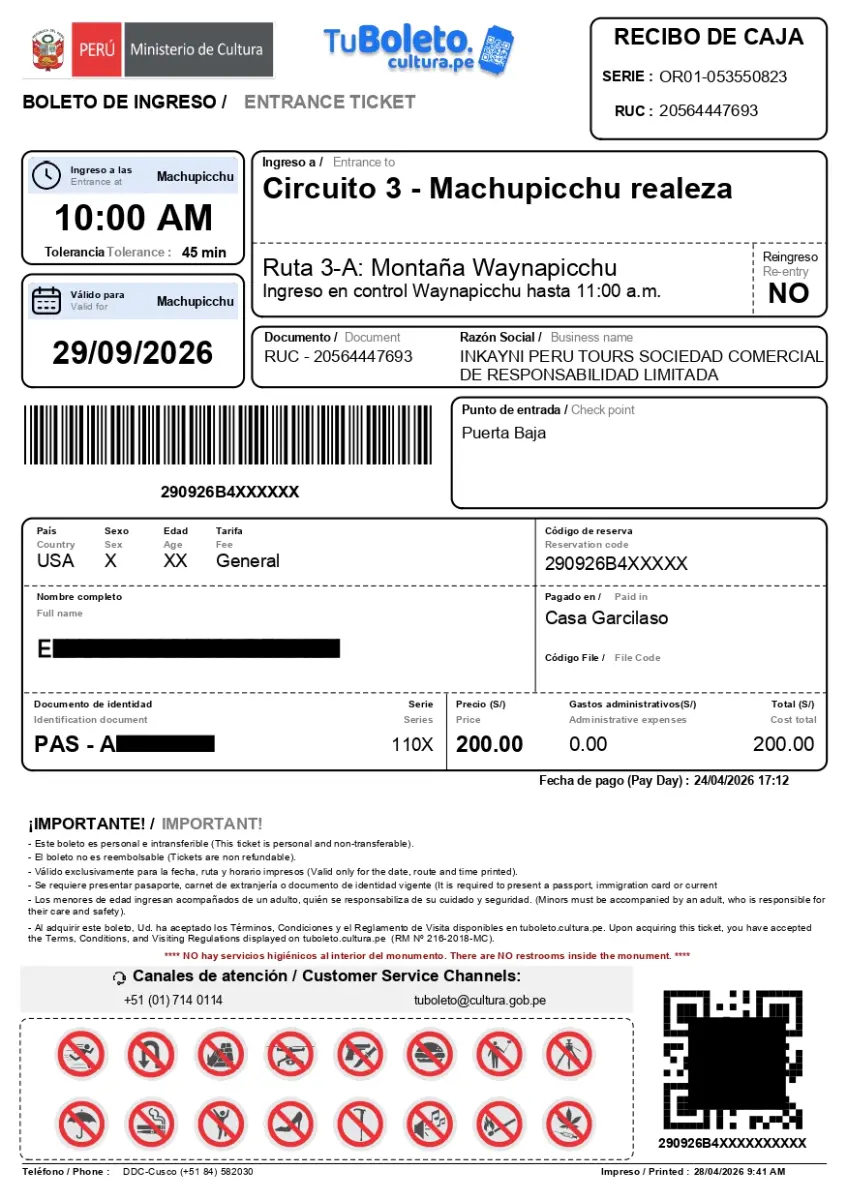
Official ticket for Route 3-A: Montaña Waynapicchu.
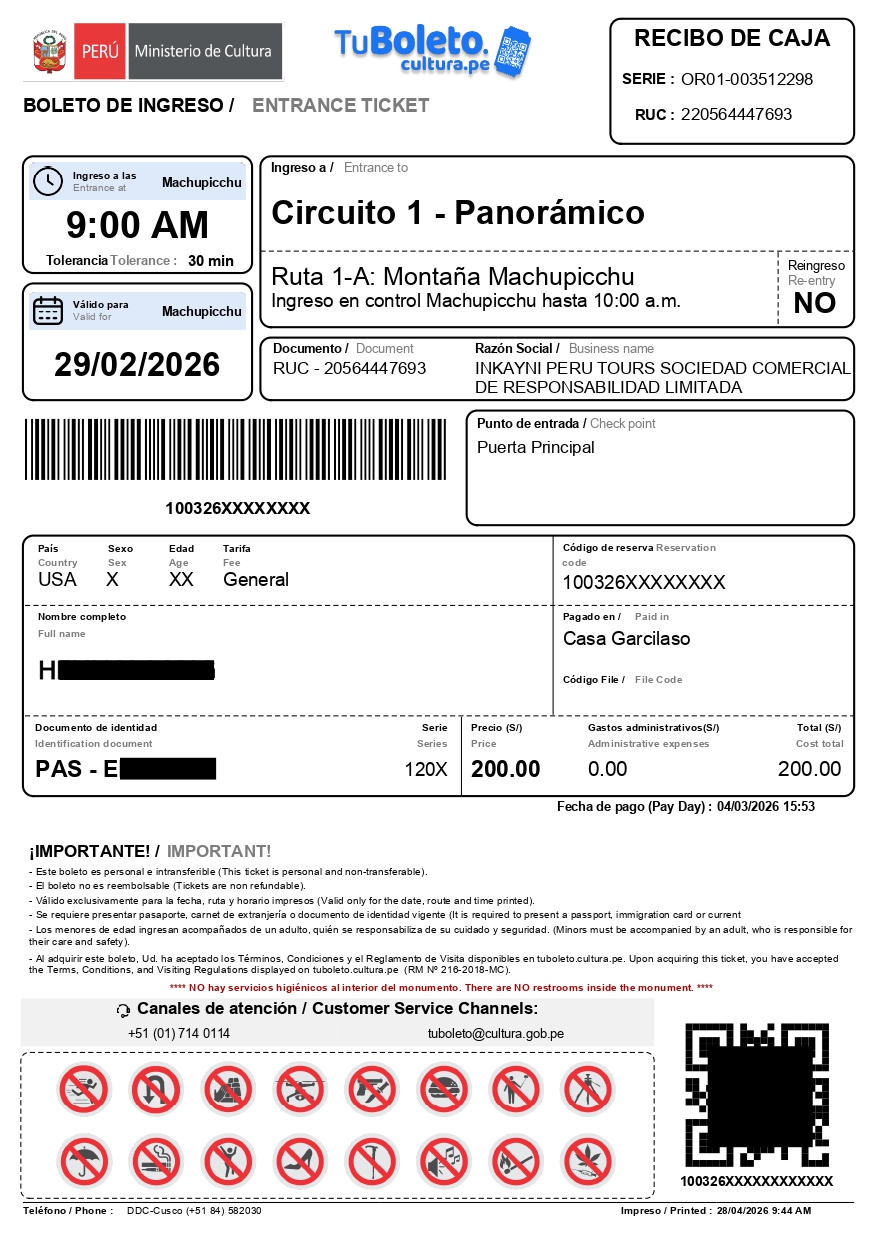
Official ticket for Route 1-A: Montaña Machupicchu.
What each trail feels like
- Huayna Picchu concentrates the effort into a shorter window. The gradient is steep, the trail narrows at several points, and some sections require careful footing. The so-called “death stairs” have a more dramatic name than technical description, but they do require attention, free hands, and firm steps.
- Machu Picchu Mountain climbs steadily along stone staircases and stretches of vegetation. The fatigue comes from accumulation: more time walking, more elevation gain, and a higher summit. The trail tends to feel more open than Huayna Picchu, with the main demand falling on the legs and breathing.


Other Guides That Help Before Choosing
Which route suits your type of trip
The choice becomes clearer when you cross view, effort, and time. Use this table as a filter before purchasing.
Other Machu Picchu routes compared
Huayna Picchu and Machu Picchu Mountain are part of a wider ticket system. Some routes are designed for hiking, others for viewing the citadel from elevated sectors, and others for visiting less-trafficked archaeological zones. This table helps when the main tickets are sold out, when time is limited, or when your body calls for a lighter route.
Mountain routes and special viewpoints at Machu Picchu
Beyond Huayna Picchu and Machu Picchu Mountain, the current ticket system includes short routes, historical viewpoints, and special access points that only operate in high season. This table helps compare what experience each ticket offers, how much effort it requires, and when it makes sense to choose it.
| Ticket | Experience | Circuit included | Availability | Watch out for |
| Huayna Picchu Mountain Route 3A |
Short, steep hike in very high demand, with a close aerial view of Machu Picchu and a more vertical feel than other routes.
See detailBest suited if you want an intense experience, have good balance, and are comfortable with narrow passages. The Great Cavern is not included in this ticket. |
Circuit 3 – Royal Route | Year-round 400 daily spots in 2026 |
Vertigo, narrow steps, and high demand. |
| Machu Picchu Mountain Route 1A |
Long hike to the highest peak in the immediate surroundings of the citadel. Offers a wide view of the sanctuary, a better read of the full landscape, and access to the panoramic circuit.
See detailBest suited if you want the classic photograph, a wide panorama, and a demanding hike that feels less exposed than Huayna Picchu. Requires time, leg strength, and a well-calculated return. |
Circuit 1 – Panoramic Route | Year-round 350 daily spots in 2026 |
Long hike, accumulated fatigue, and a tight return train. |
| Huchuy Picchu Mountain Route 3D |
Brief hike to a small summit in the Machu Picchu area. A lighter option if you want to add a climb without spending too much energy.
See detailWorks well when Huayna Picchu feels too demanding or when you want a short route within Circuit 3. |
Circuit 3 – Royal Route | High season 40 daily spots in high season |
Seasonal availability and very limited spots. |
| Temple of the Moon / Great Cavern Route 3C |
Long route to one of the most distinctive archaeological sectors in the Waynapicchu area, with forest, stone, and far fewer visitors.
See detailBest suited if you have time, stamina, and a particular interest in less crowded Inca architecture. Not included in the Huayna Picchu ticket. |
Circuit 3 – Royal Route | High season 50 daily spots in high season |
Long route, minimal capacity, and a specific ticket. |
| Sun Gate Route (Inti Punku) 1C |
Path toward the ancient entrance gate to Machu Picchu from the Inca Trail. Offers an open, historical, and highly photographic view.
See detailA good alternative for travelers who want a historically meaningful hike and a wide view without climbing to a more demanding summit. |
Circuit 1 – Panoramic Route | High season 130 daily spots in high season |
High season only, and requires additional time. |
| Inca Bridge Route 1D |
Short route to a structure linked to the ancient Inca road system, with an edge landscape and a different read of territorial control.
See detailBest suited if you want to walk less, add historical context, and keep the visit lighter within Circuit 1. |
Circuit 1 – Panoramic Route | High season 80 daily spots in high season |
Edge sections and possible discomfort with vertigo. |
WORLD WONDER IN THE ANDESMachu Picchu
Discover the history, landscapes, and essential tips for visiting this world wonder.
Season and weather
The dry season, from May through September, generally offers better hiking conditions: more open skies, less rain, and better visibility. It also concentrates more demand, especially between June and August. The rainy season, from November through March, brings a greener and less crowded landscape, but increases humidity, slippery stone, and the likelihood of mist.
April and October work as transition months. They can offer an interesting balance between weather and demand, though Machu Picchu maintains cloud forest behavior throughout. Bring a light rain layer even in the dry months.
Reference prices for mountain routes
Huayna Picchu and Machu Picchu Mountain carry similar fares as special routes. For foreign tourists, the reference price is around S/ 200 (~$54 USD). For Peruvian nationals, residents, or Andean Community citizens, the general promotional rate is around S/ 112 (~$30 USD), with discounts for students and minors where applicable. Verify the current price at the time of purchase.
| Visitor type | Reference fare | What to verify |
| Foreign adult | S/ 200 approx. (~$54 USD) | Route, date, ID, and time slot. |
| Foreign student or minor | S/ 118 approx. (~$32 USD) | Valid student card or document. |
| Peruvian adult or Andean Community | S/ 112 approx. (~$30 USD) | National ID, residency, or applicable document. |
| Peruvian student or minor | S/ 80 approx. (~$22 USD) | Age or student status validation. |
Amounts are reference figures. The final fare must be confirmed on the official platform or with the agency before payment.
Traveling with an agency when choosing mountain routes
Mountain routes require coordination. The ticket must match the correct circuit, the schedule must align with the train and bus, and the itinerary needs margin to hike without pressure. In an organized package, an agency can coordinate the entrance ticket, train, bus, guide, entry time, and return in a single sequence.
The advantage shows most clearly when spots are limited or when routes are high-season only. An agency can help you choose between Huayna Picchu, Machu Picchu Mountain, Huchuy Picchu, Sun Gate (Inti Punku), Inca Bridge, Great Cavern, or Circuit 2 based on your date, physical condition, and the type of experience you are looking for.
Keep this in mind:
Confirm in writing which route your package includes: Route 3-A Waynapicchu, Route 1-A Montaña Machupicchu, Circuit 2, Huchuy Picchu, Sun Gate, Inca Bridge, or Great Cavern. The names sound similar, but the routes, views, and schedules differ considerably.


The right choice organizes the whole day
Huayna Picchu is the better choice when you want a vertical, famous, and more concentrated route, with a close aerial view from above. Machu Picchu Mountain is the better choice when you want a long hike, a wide panoramic view, and the classic photograph via Circuit 1. Huchuy Picchu, Sun Gate (Inti Punku), Inca Bridge, Great Cavern, and Circuit 2 complete the decision map when time, weather, vertigo, or availability change the plan.
At Inkayni Peru Tours, we can help you choose the correct ticket and coordinate it with the train, bus, guide, entry time, and return. At Machu Picchu, a good route decision improves the entire visit.
Frequently asked questions about Huayna Picchu or Machu Picchu Mountain
What is the main difference between Huayna Picchu and Machu Picchu Mountain?
Huayna Picchu belongs to Circuit 3, Route 3-A, and offers a steeper, narrower, and more vertical hike. Machu Picchu Mountain belongs to Circuit 1, Route 1-A, and offers a longer and more panoramic experience.
Which has more spots in 2026?
Huayna Picchu has 400 daily spots, split across two windows of 200. Machu Picchu Mountain has 350 daily spots, split across two windows of 175.
Which one includes the classic Machu Picchu photograph better?
Machu Picchu Mountain fits better with the classic photograph because it belongs to Circuit 1, associated with the elevated panoramic sectors. Huayna Picchu offers a different aerial view from a closer mountain.
Which demands more effort?
Machu Picchu Mountain demands more stamina due to its duration, altitude, and long staircases. Huayna Picchu demands more balance and focus due to its steep gradient, narrow sections, and feeling of exposure.
Which is better if I have vertigo?
Machu Picchu Mountain tends to be more manageable for moderate vertigo because the trail feels wider. With strong vertigo, Circuit 2, Upper Terrace, Huchuy Picchu, or a route without a demanding ascent are better options.
Can both mountains be done on the same day?
Planning them on separate days is the most sensible approach. Each mountain requires a specific ticket, circuit, and time slot, along with enough time to hike, exit, and reorganize the return.
Is Huchuy Picchu a good alternative?
Yes, especially for a short and less demanding hike. Huchuy Picchu corresponds to Circuit 3, Route 3-D, has 40 daily spots in high season, and does not operate in regular season.
Do Sun Gate or Inca Bridge replace the mountains?
They work as panoramic alternatives in high season. Sun Gate (Inti Punku) offers a historical view from the ancient solar gateway. Inca Bridge is a short route with an edge landscape and historical value.
Which route is best for a first visit to Machu Picchu?
To get to know the citadel well, Circuit 2 tends to be a more balanced option. To add a mountain and a panoramic view, Machu Picchu Mountain works better. For an intense and vertical experience, Huayna Picchu is the most direct choice.
Which circuit includes the Great Cavern or Temple of the Moon?
The Great Cavern, also known as the Temple of the Moon, corresponds to Circuit 3, Route 3-C. It is available only in high season and requires a specific ticket.
Is it worth booking with an agency?
Yes, especially if you choose a mountain route or a high-season route. An agency helps coordinate the ticket, train, bus, guide, entry time, and return, reducing the risk of buying the wrong route or arriving late to the checkpoint.
Escrito por


Shared:



If you liked this article and the information you found, give us 5 stars!
 (Ninguna valoración todavía)
 Loading...