


Which is better: Inca Trail or Inca Jungle Trek?
The Inca Trail is better if Machu Picchu’s historic approach matters most to you: permits, stone paths, campsites, high passes and archaeological sites along the route. The Inca Jungle Trek is better if you want a more varied and flexible trip with biking, hiking, warmer landscapes and adventure activities. If Inca Trail permits are sold out or you do not want to camp, Inca Jungle is usually the more practical choice.
Table of Contents
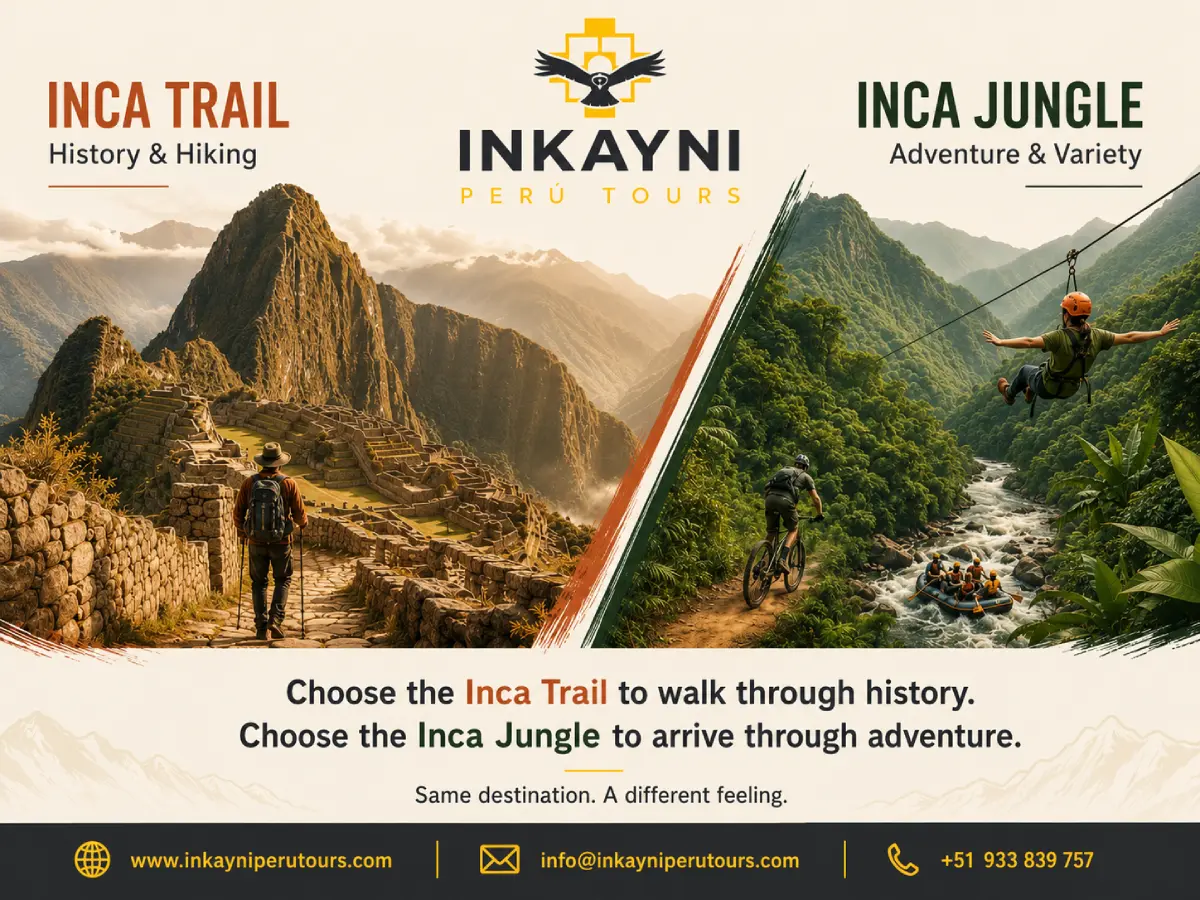
If you’re comparing the Inca Trail vs Inca Jungle Trek, you are choosing between two very different journeys to Machu Picchu: a regulated historic trek along original Inca paths, or a multi-activity adventure through Andean passes, cloud forest, river valleys, and warmer jungle landscapes.
Both finish at the same destination, but the journey is very different. The Inca Trail centers on history, archaeology, regulated permits, campsites, and several days of continuous trekking. The Inca Jungle Trek combines more variety and flexibility, with biking, warmer valleys, optional adventure activities, and a less formal trail structure.
| 4D/3NClassic Inca Trail | 4D/3NInca Jungle standard | 13,828 ftDead Woman’s Pass (4,215 m) | 14,271 ftAbra Málaga approx. (4,350 m) | PermitsStrict for Inca Trail |
PERU’S LEGENDARY HIKEInca Trail to Machu Picchu
Follow the historic trail through mountain passes, Inca sites, and cloud forest paths to Machu Picchu.
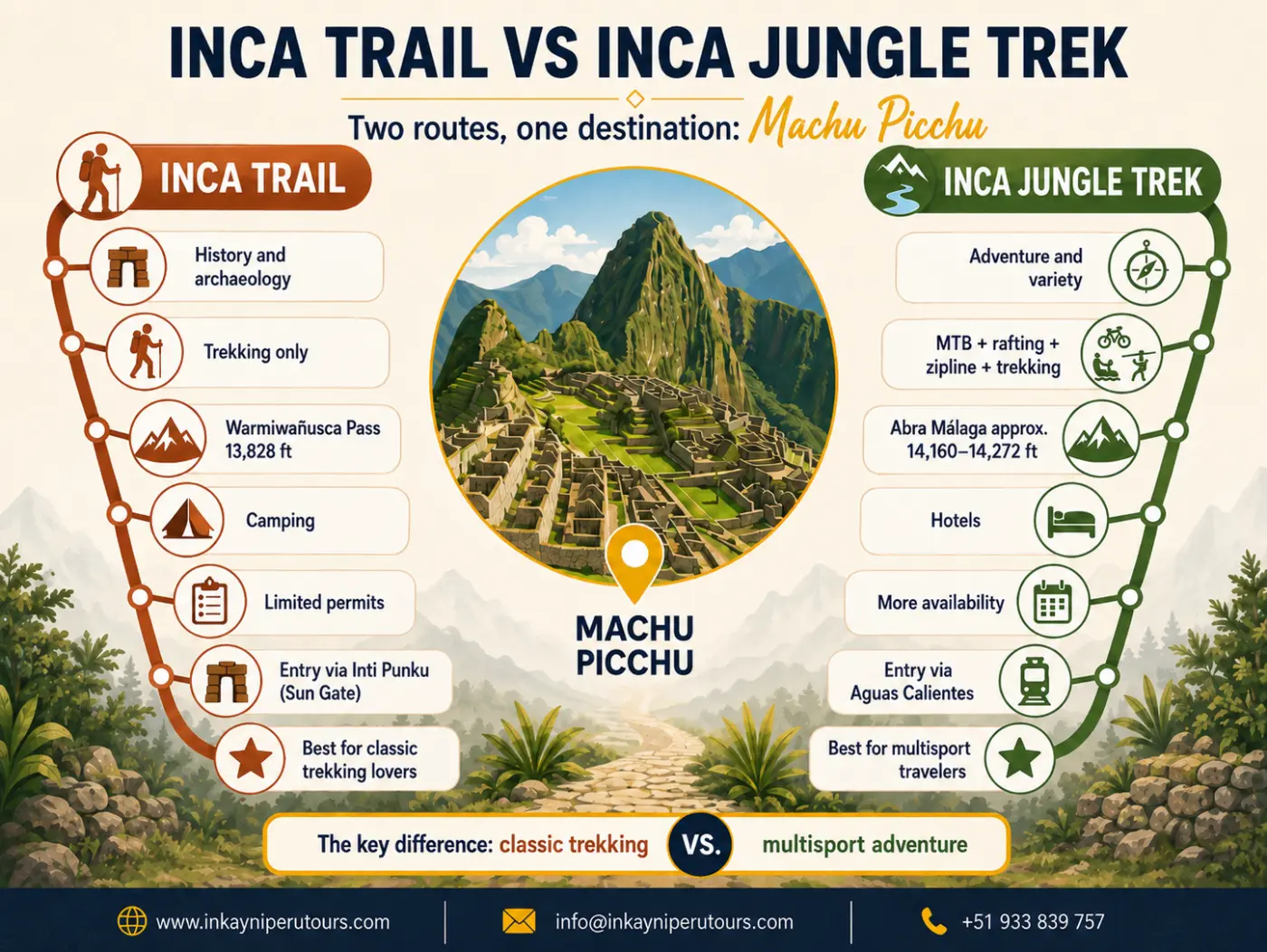
Inca Trail vs Inca Jungle Trek: the main difference
The Inca Trail usually makes more sense if the historical route is your priority: original stone paths, archaeological sites visited only along the trail, campsites, regulated permits, and the classic walking approach to Machu Picchu through the Inca road network.
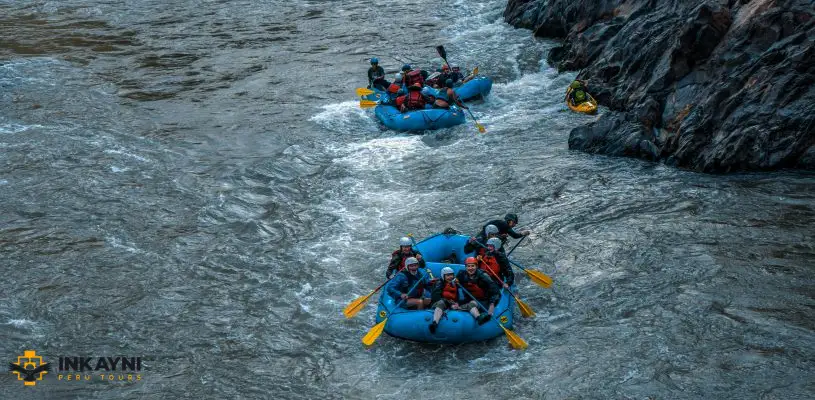
The Inca Jungle Trek is better suited to travelers looking for a more varied adventure: mountain biking from the high Andes, hiking through warmer valleys, optional rafting or zipline depending on the operator, hot springs, coffee-growing areas, and hotel-style nights instead of campsites.
| Decision point | Choose the Inca Trail if… | Choose the Inca Jungle Trek if… |
| Main experience | You want the classic archaeological trekking route to Machu Picchu. | You want a more adventurous route with biking, hiking, and optional activities. |
| Logistics | You can plan far enough ahead to secure official Inca Trail permits. | You need more flexible availability or Inca Trail permits are no longer available. |
| Accommodation | You are comfortable camping on the route. | You prefer simple hotels or lodges along the way. |
| Travel style | You care most about history, stone paths, and archaeological continuity. | You care most about variety, adrenaline, warmer landscapes, and active days. |
What is the Inca Trail?
The term Qhapaq Ñan refers to the vast Inca road network that once connected much of the Andes across South America. Today, when travelers say the Inca Trail, they usually mean the regulated route to Machu Picchu, especially the Classic 4 Day Inca Trail starting near Km 82.
This classic route is about 43 km (27 miles) and links the trailhead near Km 82 / Piscacucho with Machu Picchu. Along the way, hikers pass important archaeological sites, camp in designated areas, cross high mountain passes, and finish with one of the most symbolic approaches to the citadel.
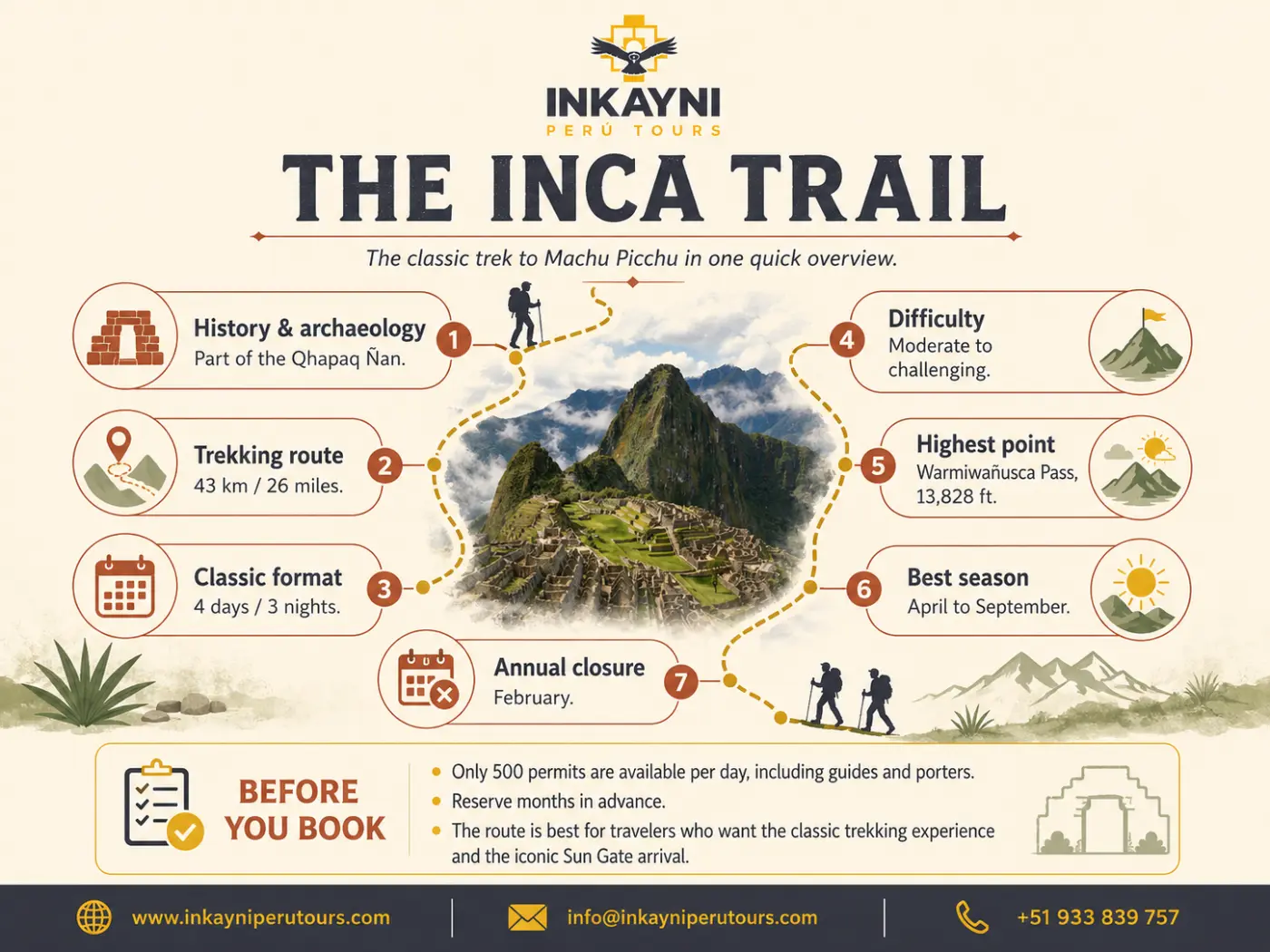
Practical read:
There is less flexibility with the Inca Trail because permits are limited and the route closes in February. In return, hikers follow original sections of the Inca road, camp along the route, and visit archaeological sites that regular Machu Picchu visitors do not see.
What is the Inca Jungle Trek?
The Inca Jungle Trek is an adventure-focused way to reach Machu Picchu from Cusco. Rather than several days of continuous trekking, most programs combine mountain biking from the high Andes, hiking through cloud forest and warm valleys, optional rafting or zipline depending on the season and operator, and a final approach toward Aguas Calientes before visiting Machu Picchu.
Most itineraries pass through areas such as Abra Málaga, Santa María, Santa Teresa, Cocalmayo Hot Springs, Hidroelectrica, and Aguas Calientes. This style of trip tends to suit travelers who want varied, active days without the archaeological density or tightly regulated structure of the Classic Inca Trail.
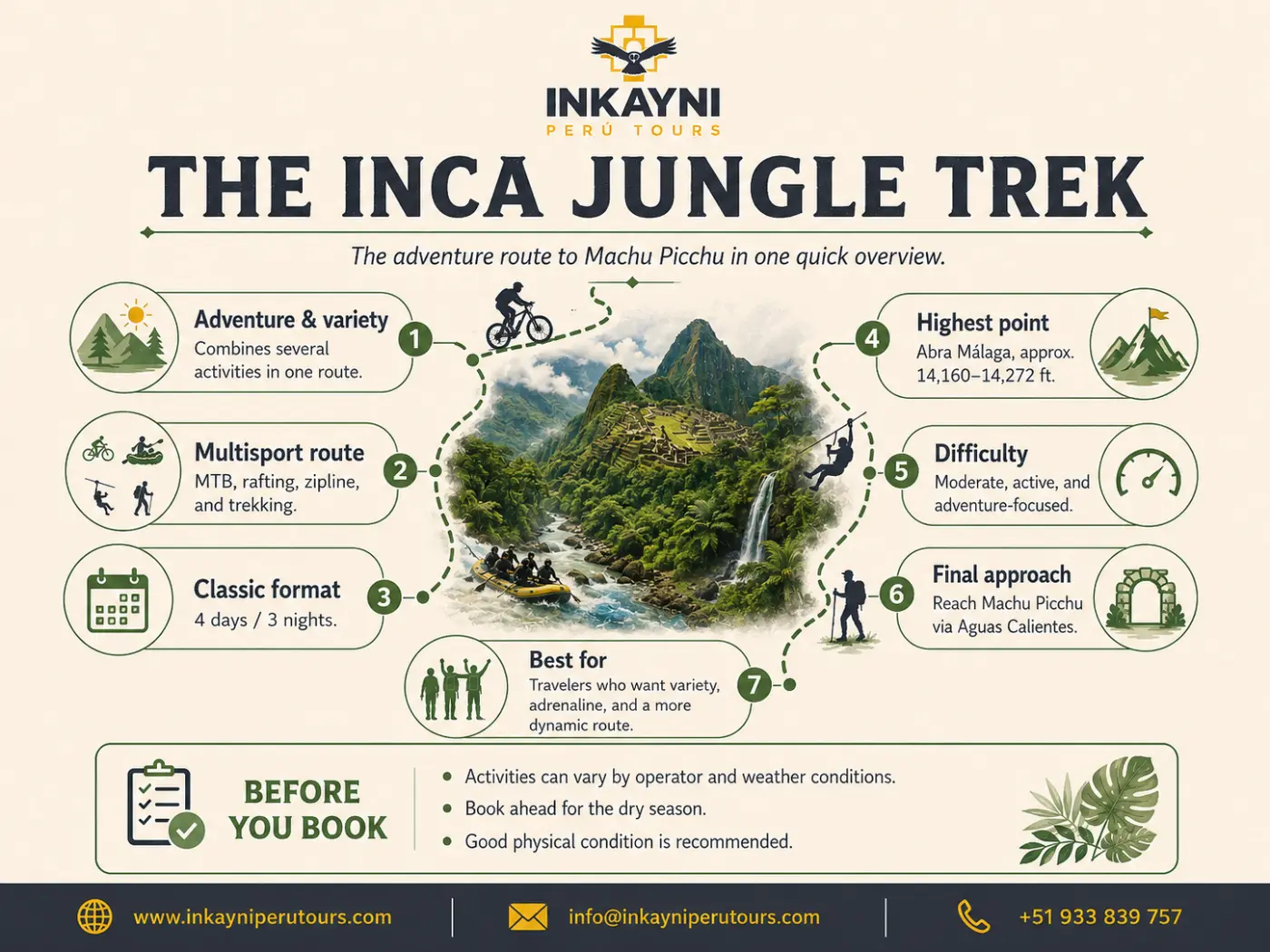
MULTI-ADVENTURE ROUTEInca Jungle Trek
Bike, raft, and hike through tropical valleys on an adventurous route to Machu Picchu.
Tourist attractions: Inca Trail vs Inca Jungle Trek
Booking and permits: which route is easier to secure?
Booking the Inca Trail involves stricter rules. An official permit is required, only authorized agencies can operate the trek, and the daily quota includes both travelers and support staff. In high season, permits can sell out well in advance, and the route closes in February for maintenance. If your travel dates are fixed, the Inca Trail permits and availability guide is worth checking before you consider the route confirmed.
The Inca Jungle Trek does not use the same permit system. You still need to coordinate Machu Picchu entrance tickets, transport, accommodation and, where applicable, activity providers, but availability is usually more flexible than for the Classic Inca Trail.
| Booking factor | Inca Trail | Inca Jungle Trek |
| Permit pressure | High. Official Inca Trail permit is mandatory. | Lower. Machu Picchu ticket and logistics still matter. |
| Best lead time | Several months ahead for dry season; earlier for peak dates. | A few weeks to a few months, depending on season and group size. |
| February | Closed for Inca Trail maintenance. | Some operators reduce or adjust departures due to heavier rain and road conditions. |
| Main risk | Permit sold out. | Weather, road conditions, activity availability, and Machu Picchu ticket timing. |
Best time: Inca Trail vs Inca Jungle Trek
Travel conditions are generally more predictable on both routes during the dry season, especially from April or May through September. The main difference is February: the Inca Trail closes formally, while Inca Jungle departures may continue with changes, cancellations, or reduced frequency depending on weather, road conditions, and the operator’s safety assessment.
| Season | Inca Trail | Inca Jungle Trek |
| April to September | Usually the most stable window: clearer skies, drier paths, and high demand. | Also a favorable window, with generally better conditions for biking, hiking, and optional activities. |
| June to August | High season. Early booking matters because permits are the limiting factor. | Often the driest period, although road and activity conditions still need to be checked. |
| November to March | More rain, slippery stone, muddy campsites, and lower visibility. | Warmer and greener, but rain can affect biking, rafting, roads, and trail sections. |
| February | Closed for maintenance. | There is no equivalent formal closure, although many operators reduce or modify departures when conditions require it. |
For a broader month-by-month view, the Cusco weather by month and best time to hike the Inca Trail guides cover the seasonal pattern in more detail. On the Inca Jungle side, the seasonal overview in the complete Inca Jungle Trek guide explains how rain, road conditions and activity availability change through the year.
Altitude: Inca Trail vs Inca Jungle Trek
For many travelers, the Inca Trail is more demanding at altitude because the effort builds over several hiking days and nights at campsites. The Inca Jungle Trek reaches a higher point at Abra Málaga, but travelers normally arrive there by vehicle before descending by bike, so they are not climbing to that elevation on foot.
| Altitude point | Inca Trail | Inca Jungle Trek |
| Start reference | Km 82 / Piscacucho area, about 8,923 ft (2,720 m). | Usually departs from Cusco by road toward Abra Málaga. |
| Highest point | Warmiwañusqa / Dead Woman’s Pass, about 13,828 ft (4,215 m). | Abra Málaga, usually cited around 14,271 ft (4,350 m). |
| How altitude feels | Harder during the climb to Dead Woman’s Pass and campsite recovery. | Highest point is brief; the route quickly descends into warmer valleys. |
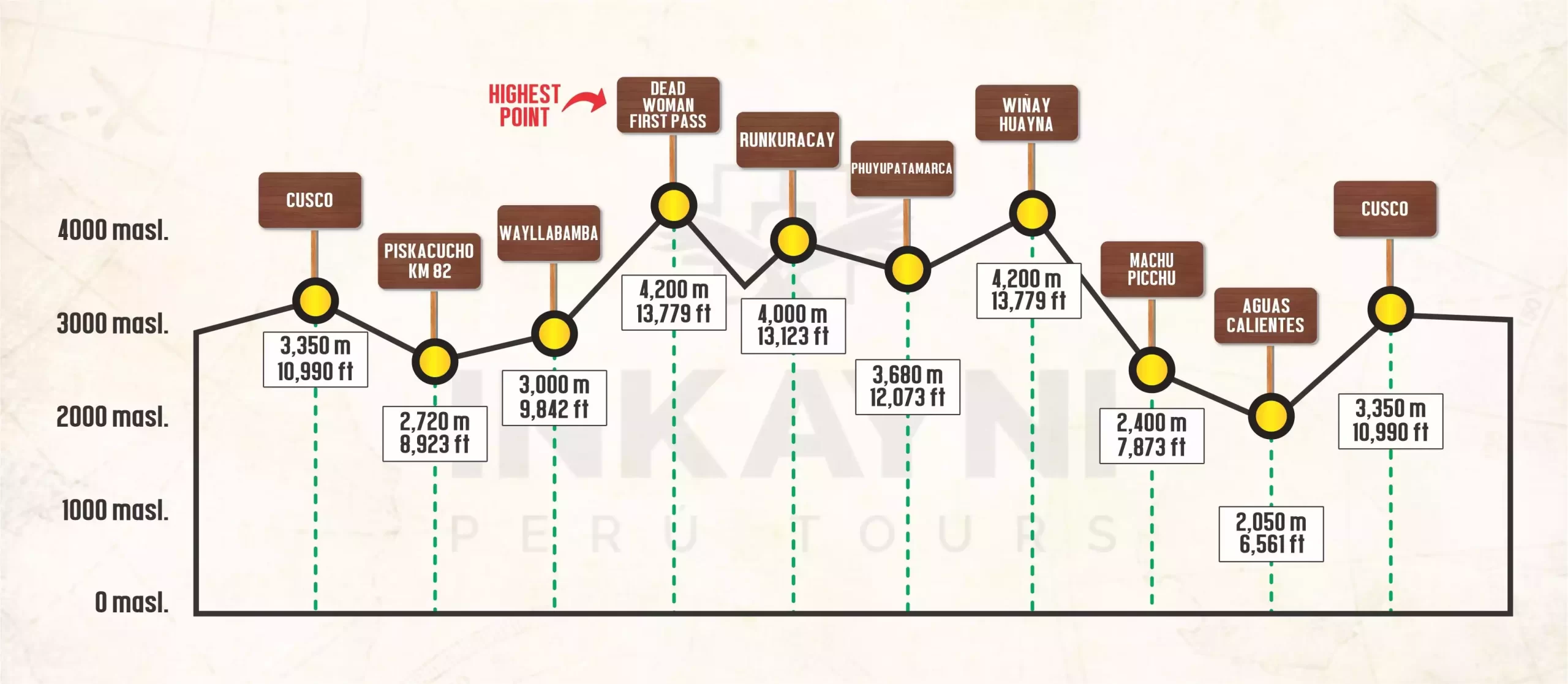
Inca Trail altitude profile.

Inca Jungle Trek altitude profile.
Keep this in mind:
Fitness helps, but it does not replace altitude adaptation. If you arrive in Cusco from sea level, allowing at least 2 days for acclimatization in Cusco before a demanding route is a sensible precaution.
Distance and daily structure
On the Inca Trail, most of the journey is continuous trekking. The Inca Jungle Trek mixes road transfers, biking, hiking, optional adventure activities, and the walk toward Aguas Calientes. For that reason, total distance alone does not tell you which route will feel harder; the type of effort matters too.
Inca Trail versions
| Route | Day 1 | Day 2 | Day 3 | Day 4 |
| Classic Inca Trail 4D/3N | 12 km / 7.45 mi | 11 km / 6.84 mi | 16 km / 9.94 mi | 5 km / 3.11 mi |
| Short Inca Trail 2D/1N | 10–12 km / 6.2–7.5 mi | Machu Picchu visit | — | — |

Illustrative map of the Classic Inca Trail.

Illustrative map of the Short Inca Trail.
Inca Jungle Trek versions
| Route | Day 1 | Day 2 | Day 3 | Day 4 |
| Inca Jungle Trek 4D/3N | Biking + optional rafting | Hiking section | Hiking / optional zipline / route to Aguas Calientes | Machu Picchu visit |
| Inca Jungle Trek 3D/2N | Biking and transfers packed into a shorter itinerary | Hiking / Aguas Calientes approach | Machu Picchu visit | — |
If the shorter option is the one you are considering, the 3-day Inca Jungle Trek guide explains what changes, who it tends to suit, and how it differs from the classic 4-day version.

Illustrative map of the Inca Jungle Trek 4D/3N.

Illustrative map of the Inca Jungle Trek 3D/2N.
Trekking time and difficulty
The Classic Inca Trail is usually more demanding because several consecutive hiking days, high-altitude passes, nights at campsites, and long descents add up. On the Inca Jungle Trek, the type of effort changes from day to day as biking, hiking, transfers, and optional activities are combined.
If difficulty is one of your main deciding factors, the dedicated guides explain how difficult the Inca Trail is and how difficult the Inca Jungle Trek is in more detail.
| Route | Typical effort | Difficulty logic |
| Classic Inca Trail 4D/3N | 4 consecutive hiking days | More demanding as altitude, stone stairs, camping, and fatigue accumulate over several days. |
| Short Inca Trail 2D/1N | 1 main hiking day + Machu Picchu visit | Moderate, with stairs, humidity, and a compact route. |
| Inca Jungle Trek 4D/3N | Biking + hiking + optional activities | Moderate to active, with varied effort rather than pure trekking. |
| Inca Jungle Trek 3D/2N | Compressed active itinerary | Can feel harder than the 4D version because the active sections are packed into less time. |
Accommodation: campsites vs hotels
Where you sleep changes the rhythm of the trip. The Classic Inca Trail involves camping, while the Inca Jungle Trek usually uses simple hotels or lodges in towns along the way.
| Route | Accommodation style |
| Classic Inca Trail | Camping on designated campsites such as Wayllabamba, Pacaymayu, or Wiñay Wayna, depending on the operator and permit assignment. |
| Short Inca Trail | Usually a hotel in Aguas Calientes after the hiking day. |
| Inca Jungle Trek | Simple hotels or lodges in places such as Santa María, Santa Teresa, and Aguas Calientes. |
Prices: Inca Trail vs Inca Jungle Trek
Prices vary with the season, group size, type of service, hotel level, train option, and what each operator includes. The Inca Trail usually costs more because permits, porters, cooks, camping logistics, and regulated access all add to the cost. The Inca Jungle Trek is often more affordable, although optional activities can change the final price.
| Tour | Reference price | Practical note |
| Short Inca Trail 2D/1N Group | From $539 USD | Compact Inca Trail experience with hotel night in Aguas Calientes. |
| Classic Inca Trail 4D/3N Group | From $805 USD | Full regulated trekking route with campsites and support staff. |
| Inca Jungle Trek 4D/3N | From $559 USD | Adventure route with biking, hiking, and optional activities depending on service. |
| Inca Jungle Trek 3D/2N | From $479 USD | More compressed version; activity details should be confirmed before booking. |
Expert tip:
The headline price only tells part of the story. It is worth checking whether Machu Picchu entrance, train and bus tickets, meals, accommodation, activities, safety equipment, and guide service are included, because a cheaper tour may simply include less.
Advantages and disadvantages
Inca Trail
| Advantages | Disadvantages |
|
|
Inca Jungle Trek
| Advantages | Disadvantages |
|
|
Compare the Two Routes in More Detail
The detailed guides below are useful when one part of the comparison matters more than the rest.
Which route should you choose?
The Inca Trail makes more sense if your priorities are history, archaeology, original Inca road sections, camping, and a classic trekking journey. The Inca Jungle Trek is likely to suit you better if you prefer variety, adventure activities, warmer valleys, hotel nights, and more flexibility on the way to Machu Picchu.
Plan the route that matches your travel style
For a classic archaeological trek, Inca Trail availability is the first thing to verify. If you prefer a more flexible route with biking and hiking, the main differences between Inca Jungle Trek options are the itinerary and the activities included.
Inkayni Peru Tours can help you compare permits, route availability, Machu Picchu tickets, and the best itinerary for your dates.
Frequently Asked Questions About Inca Trail vs Inca Jungle Trek
Can I do the Inca Trail or Inca Jungle Trek without an agency?
The Inca Trail cannot be done independently; an authorized operator, official permit, and guide are required. The Inca Jungle route does not use the same regulated permit system, but most travelers still book through an agency because the trip involves coordinating transport, biking equipment, optional activities, hotels, Machu Picchu tickets, and safety arrangements.
Which route is better if Inca Trail permits are sold out?
The Inca Jungle Trek is a practical alternative when Classic Inca Trail permits are sold out, especially if you still want an active journey to Machu Picchu. The Salkantay Trek and Lares Trek are other options, depending on your time, fitness, preferred landscapes, and travel style.
Which route is better for beginners?
The Inca Jungle Trek can suit active beginners who are comfortable with biking and varied activities but do not want several consecutive camping days. The Short Inca Trail is another beginner-friendly option for travelers who want an authentic section of the Inca road system. The Classic Inca Trail usually requires more preparation because of its consecutive hiking days, high passes, stone steps, camping, and accumulated fatigue.
Does the Inca Jungle Trek include rafting and zipline?
It depends on the service, season, weather, river conditions, and operator. Rafting and zipline may be included or optional rather than guaranteed on every departure. If either activity matters to your decision, the dedicated guides to rafting on the Inca Jungle Trek and ziplining on the Inca Jungle Tour explain what to expect; the exact inclusions should still be confirmed before booking.
Which route gives a better arrival to Machu Picchu?
Hikers on the Inca Trail have the more iconic walking arrival, approaching Machu Picchu through Inti Punku, the Sun Gate. The Inca Jungle Trek usually reaches Aguas Calientes through the Hidroelectrica area, with the Machu Picchu visit the following day. The destination is the same, but the way you arrive is one of the clearest differences between the two routes.
Which route is better if I only have 2 or 3 days?
For a two-day historical trek, the Short Inca Trail usually makes more sense. With three days, travelers who prefer biking, hiking, warmer valleys, and a faster adventure format may find the 3-day Inca Jungle Trek more suitable. The choice comes down to whether you value original Inca paths or a multi-activity route more.
Autor

¿Planeando tu viaje a Machu Picchu?
Ahorre tiempo, estrés y dinero con un itinerario de viaje perfectamente planificado para usted por un experto en rutas de caminatas a Machu Picchu.
¡Quiero saber más!Shared:


Top Must-Read Articles!


If you liked this article and the information you found, give us 5 stars!
 (Ninguna valoración todavía)
 Loading...