


Is the Inca Jungle Trek hard?
The Inca Jungle Trek is not extremely hard, but it can feel challenging if you are inactive, nervous on a bicycle or arriving in Cusco without time to adapt to altitude. The hiking is not technical, but the route combines biking, walking, weather changes and several active days in a row. For many travelers, bike confidence matters as much as trekking fitness.
Table of Contents
A strong hiker may find the bike descent more demanding than the walking, while someone who is comfortable on a bicycle may notice the altitude, humidity or cumulative effort more. If you first want to understand the complete route, logistics and overall structure of the journey, the Inca Jungle Trek to Machu Picchu guide covers the broader experience.
How difficult is Inca Jungle Trek?
For most generally active travelers, the Inca Jungle Trek is a manageable adventure rather than a technically difficult trek. You do not need mountaineering skills or extensive trekking experience. What matters more is being comfortable with several hours of activity and with switching between very different types of effort.
MULTI-ADVENTURE ROUTEInca Jungle Trek
Bike, raft, and hike through tropical valleys on an adventurous route to Machu Picchu.
Inkayni’s current itineraries also show why one difficulty label does not tell the whole story. The 3-day service is currently classified as Moderate, while the 4-day service is classified as Mild. Those ratings are useful as a starting point, but how difficult the trek feels will also depend on your fitness, bike handling, response to altitude, weather conditions and the activities you take part in.
| Difficulty factor | Typical impact | Who usually notices it most |
| Hiking endurance | Moderate | Travelers who do little regular walking or cardiovascular activity |
| Mountain-bike control | Moderate to high if inexperienced | Travelers who are not comfortable braking and controlling a bike on a long descent |
| Altitude | Variable | Travelers who arrive in the Cusco region without enough time to adapt |
| Heat and humidity | Variable | Travelers who are more accustomed to cool or dry climates |
| Rafting and zip-lining | More psychological than aerobic for many travelers | Travelers uncomfortable with moving water, speed or heights |
| Consecutive active days | Moderate | Travelers who recover slowly after prolonged activity |
Important note:
The highest point is not automatically the hardest hiking point. Abra Málaga reaches approximately 4,350 m / 14,271 ft, but travelers reach the pass by vehicle before beginning the mountain-bike descent. Altitude still matters, but you are not hiking uphill to 4,350 m.

Hiking is one part of the Inca Jungle challenge rather than the only source of physical effort.
What makes the Inca Jungle Trek difficult?
The difficulty comes from the combination of activities and environments, rather than one extreme obstacle. Mountain biking, several hours of walking, altitude, changing weather and optional adventure activities can affect travelers differently.
Mountain biking from Abra Málaga
For many first-time travelers, the cycling section deserves more attention than the hiking. The challenge is not pedaling uphill, but controlling your speed and braking comfortably during the long descent from the high Andes toward warmer valleys.
Inkayni currently recommends previous bicycle-handling experience for the 3-day itinerary. Safety instructions and equipment are provided before the descent, but basic bike control remains important.
On the 4-day itinerary, travelers who prefer not to cycle can currently remain in the support vehicle behind the biking group. This arrangement should be confirmed before booking, as operating conditions may change.

Bike confidence can influence perceived difficulty more than previous trekking experience for some travelers.
Pro tip:
If you rarely ride a bicycle, practicing braking, turning and controlling speed before the trip can help. Competitive cycling fitness is unnecessary, but basic bike handling can make the first day considerably more comfortable.
Hiking and cumulative effort
The hiking is not technical, but fatigue can build after several active days. The route combines natural trails with easier sections toward Aguas Calientes, while the 4-day itinerary spreads more walking across the journey.
The current 4-day route includes approximately 12 km / 7.5 mi of trekking on Day 2 and another 16 km / 10 mi on Day 3. These distances give a better indication of the physical demand than a simple “easy” or “hard” label, especially if you are not accustomed to walking for several hours on consecutive days.
Altitude at Abra Málaga
Abra Málaga is the highest point associated with the standard Inca Jungle route, at approximately 4,350 m / 14,271 ft on the current 4-day itinerary. The 3-day service reaches a very similar elevation before the biking descent.
Travelers reach the pass by vehicle rather than hiking uphill to this altitude. The route then descends toward much lower and warmer terrain, reducing the physical effort required at high elevation. Even so, some travelers may still notice the effects of altitude, particularly if they have recently arrived from sea level.
Spending some time in the Cusco region before the trek can therefore make the transition easier.
Important note:
Altitude affects people differently. If you have a history of significant altitude illness or a medical condition that may affect strenuous activity at elevation, seek appropriate professional medical advice before the trip rather than relying on general travel recommendations or self-prescribing medication.
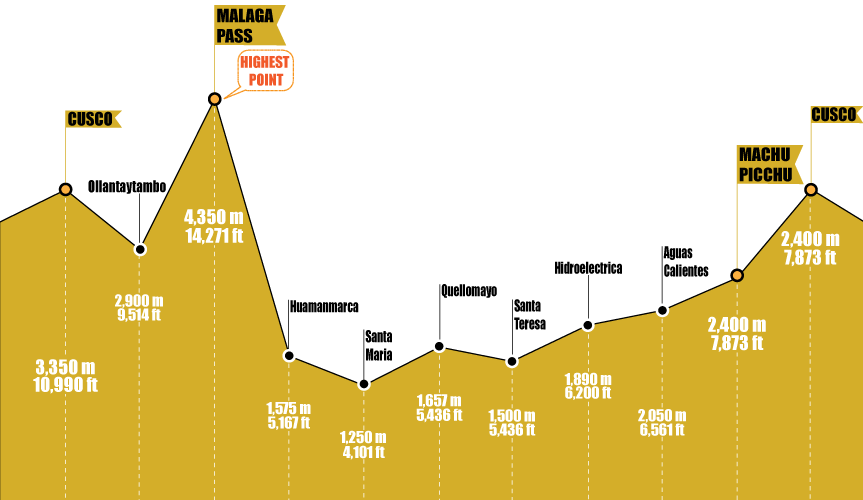
The route starts high at Abra Málaga and then descends quickly toward the warmer valleys of the Inca Jungle.
Weather, rain and humidity
Weather can noticeably change how demanding the Inca Jungle feels. Rain makes walking and cycling surfaces more slippery, while the warmer, humid conditions at lower elevations can increase fatigue during several hours of activity.
Heavy rain may also affect mountain biking or rafting operations. If weather is an important factor in your decision, the best time for the Inca Jungle Trek explains the seasonal differences in more detail.
Rafting and zip-lining
Rafting and zip-lining involve a different type of challenge. They generally require less endurance than the longer walking sections, but confidence around moving water, speed or heights becomes more important.
Participation and operating conditions depend on the activity and circumstances on the day. If rafting is one of your main concerns, the guide to rafting on the Inca Jungle route explains that part of the experience in more detail.
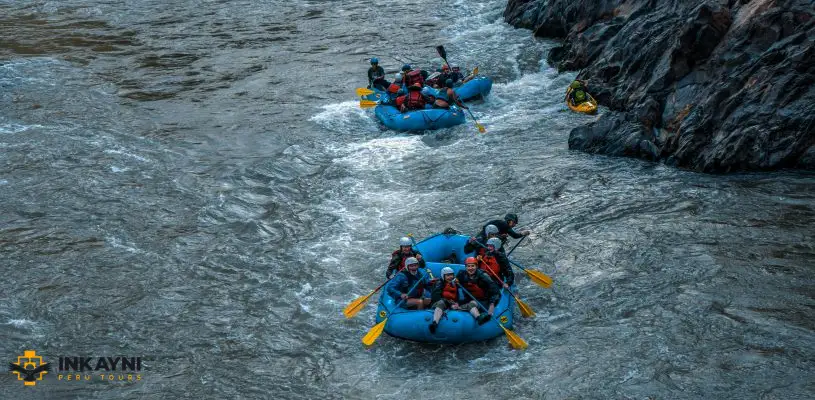
Rafting adds an adventure challenge that is different from hiking endurance.
Explore Our Main Trekking Guides to Machu Picchu
How fit do you need to be for the Inca Jungle Trek?
You do not need to train like a mountaineer or long-distance runner. A more useful benchmark is whether you can walk for several hours, handle ordinary hills or stairs and remain active on consecutive days without unusual exhaustion.
Regular walking, hiking or cardiovascular activity before traveling will usually make the trek more comfortable. If cycling is your weaker point, spending some time practicing basic bicycle control may help more on this particular route than simply adding extra hiking mileage.
Physical difficulty and trip preparation are closely related, but they are not the same question. This article focuses on how demanding the route is; the dedicated guide to preparing for the Inca Jungle Trek goes further into conditioning before your trip.
Who may find the Inca Jungle Trek more difficult?
The Inca Jungle is likely to feel more demanding if you:
- do very little regular physical activity;
- are uncomfortable controlling a bicycle on descents;
- arrive in the Cusco region directly from low elevation without time to adapt;
- have knee, ankle or mobility limitations that become noticeable after several hours of activity;
- recover slowly after consecutive active days;
- find warm and humid conditions particularly tiring;
- are very uncomfortable with water, heights or adventure activities;
- try to follow a pace that is faster than your normal ability.
None of these factors automatically rules out the route. They are simply worth considering before you choose an itinerary, because the trek is much more enjoyable when its pace and activities match what you can comfortably handle.
Can children and older travelers do the Inca Jungle Trek?
Age by itself is not a very useful way to judge trekking ability. Fitness, health, bike confidence and comfort with the included activities usually matter more.
Under Inkayni’s current operating conditions, 12 years is the minimum or recommended minimum age for the Inca Jungle itineraries, and minors must travel with the required adult supervision and responsibility. For older travelers, there is no universal age cutoff that can reliably predict whether the trek will feel easy or difficult.
An active traveler over 60 may be better prepared than someone much younger who rarely exercises. Health, mobility and previous activity experience are therefore more useful factors to consider than age alone.
Is the 3-day or 4-day Inca Jungle Trek more difficult?
The shorter itinerary is not automatically the easier one. Inkayni currently classifies the 3-day route as Moderate and the 4-day route as Mild. That difference becomes easier to understand when you look at how the activities and walking are distributed across each itinerary.

3-day Inca Jungle Trek toward Machu Picchu.

The 4-day version spreads the Inca Jungle experience across a longer progression toward Machu Picchu.
| Difficulty question | 3-day route | 4-day route |
| Current Inkayni level | Moderate | Mild |
| Trip rhythm | More compressed | More gradual progression |
| Mountain biking | Bike-handling experience is especially important | Bike descent included; current service also offers a support-vehicle alternative |
| Walking | Less total trekking emphasis | More walking distributed across the route |
| Best fit | Traveler with limited time who is comfortable with the active pace | Traveler who prefers a fuller route with effort spread across more days |
Keep this in mind:
The better choice between 3 and 4 days depends more on pace and activity confidence than on the number of days alone. A shorter itinerary may feel harder if its rhythm does not match your abilities.
Choose the Inca Jungle Route That Matches Your Fitness
The right Inca Jungle itinerary is not simply the shortest, longest or easiest-looking option. What matters is whether the pace, biking demands and activity mix fit your fitness and confidence.
If you prefer a shorter itinerary, you can compare the current 3-day Inca Jungle route. If you would rather spread the activities across more days and want greater flexibility around the biking section, the 4-day Inca Jungle route may be the better fit. If you are still unsure which version matches your fitness, altitude experience or cycling confidence, talk to a travel specialist before you finalize the route.
Frequently Asked Questions About Inca Jungle Trek Difficulty
Is the Inca Jungle Trek suitable for beginners?
Yes, it can suit active beginners. You do not need technical trekking or mountaineering experience, but basic fitness and realistic expectations about biking, walking and several active days in a row will make the route more comfortable.
Do I need previous trekking experience for the Inca Jungle?
Previous multi-day trekking experience is not essential. Much of the difficulty comes from combining different activities and environments rather than from technically demanding hiking.
What if I am not confident riding a mountain bike?
It is important to discuss that before departure because bike control is one of the main difficulty factors on this route. On Inkayni’s current 4-day itinerary, travelers who prefer not to cycle can remain in the support vehicle. For the 3-day service, Inkayni specifically recommends previous bicycle-handling experience.
Does altitude make the Inca Jungle Trek difficult?
Altitude can affect some travelers, but the highest pass is reached by vehicle before the bike descent. Abra Málaga is around 4,350 m / 14,271 ft on the current 4-day route, so acclimatization still matters even though you are not hiking to that elevation.
Is the 3-day or 4-day Inca Jungle harder?
Neither version is universally harder for everyone. Inkayni currently labels the 3-day service Moderate and the 4-day service Mild. The shorter route has a more compressed pace, while the 4-day route distributes more walking across additional days.
Can weather make the Inca Jungle more difficult?
Yes. Rain can make surfaces more slippery and may affect adventure activities, while heat and humidity at lower elevations can increase fatigue. Exact operating decisions depend on current conditions and safety assessments.
Autor
Shared:


If you liked this article and the information you found, give us 5 stars!
 (1 votos, promedio: 5.00 de 5)
 Loading...