


The Difference Between Expedition and Vistadome trains
Expedition and Vistadome reach the same station in Aguas Calientes and usually take a similar amount of time, so the real decision is not about access to Machu Picchu but about how much value you place on the train ride itself. Expedition makes more sense when your priority is keeping the trip practical and protecting budget. Vistadome starts to justify the extra cost when you want the rail segment to feel more scenic and relaxed, especially on the return.
Table of Contents
The train to Machu Picchu concentrates several decisions into a relatively short stretch: which station to depart from, what time to arrive, how much luggage to carry, which service to choose, and how much it is worth paying for a more comfortable onboard experience. In that context, the choice between the Expedition vs Vistadome is one of the most frequent comparisons among travelers. Understanding that difference clearly allows you to book with more confidence, avoid overpaying for something unnecessary, and recognize when spending a little more genuinely makes sense.
| ~1.5 to 2 hrsOllantaytambo to Aguas Calientes | From ~$60 USDBudget train range | 17.6 lbs (8 kg)Standard carry-on limit | 2 operatorsPeruRail and Inca Rail |
The Train to Machu Picchu
Machu Picchu has no direct road access for travelers. The train goes as far as Aguas Calientes, also known as Machu Picchu Pueblo. From there, visitors continue to the entrance of the archaeological site by bus, which takes around 25 to 30 minutes, or by walking uphill for approximately 1 to 2 hours depending on pace, fitness, and weather.
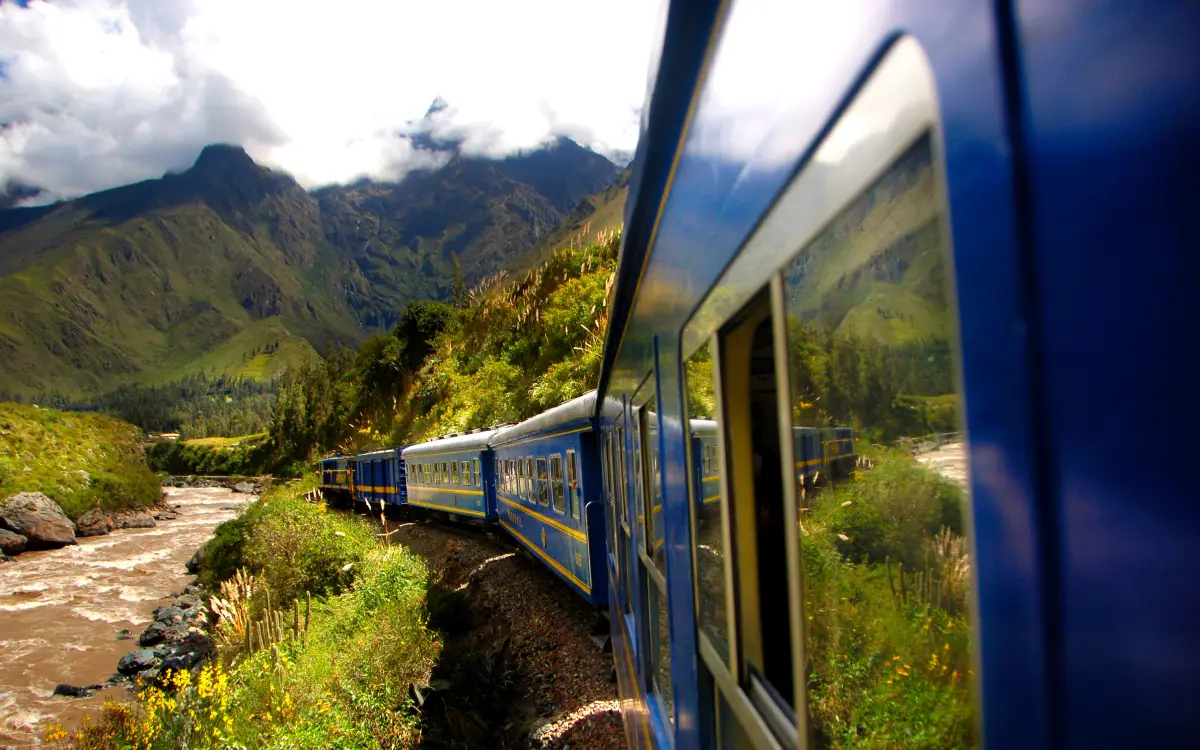
Expedition train from Ollantaytambo to Machu Picchu
The most commonly used station is Ollantaytambo, in the Sacred Valley, because it concentrates more frequent departures and reduces the rail journey to roughly 1.5 to 2 hours to Aguas Calientes. It is not the only option, however. Depending on the season, departures are also available from Poroy station, along with bimodal services from Wanchaq station in Cusco city, where the operator combines bus and train in a single booking. The Hidroeléctrica route also exists, used mainly by budget-conscious travelers.
WORLD WONDER IN THE ANDESMachu Picchu
Discover the history, landscapes, and essential tips for visiting this world wonder.
| Route / station | Location | Usual travel time | Reference price range |
| Ollantaytambo to Aguas Calientes | Sacred Valley, roughly 1.5 to 2 hours by road from Cusco. | ~1.5 to 2 hours by train. | Expedition from ~$60 to $85 USD per leg. Vistadome from ~$90 to $130 USD per leg. |
| Poroy to Aguas Calientes | District near Cusco, typically 25 to 40 minutes from the historic center depending on traffic. | ~3 to 3.5 hours by train, depending on schedule. | $80 to $150+ USD per leg depending on service. |
| Wanchaq, bimodal service | Cusco. The journey starts by bus and then connects with the train. | ~4 to 5 hours total, depending on schedule and connection. | General reference: ~$70 to $150+ USD per leg, depending on train and schedule. |
| Hidroeléctrica to Aguas Calientes | Santa Teresa area, reached after a long road journey from Cusco. | ~30 to 45 minutes by train, or ~2 to 2.5 hours walking alongside the rail track. | $37 to $40+ USD |
Important note:
Train fares to Machu Picchu vary by date, demand, schedule, departure station, operator, and promotions. Luxury train services can exceed these ranges considerably.
The train is the fastest and most reliable way for most visitors to reach Machu Picchu Pueblo. The Hidroeléctrica route can cost less, but involves a long road journey and a walk alongside the rail track from Hidroeléctrica to Aguas Calientes. Multi-day treks such as the Inca Trail, the Salkantay Trek, the Inca Jungle Trek, or the Lares Trek offer a deeper mountain experience, but require more time, physical preparation, and planning.

Expert tip:
For a first visit with limited days, the train is usually the cleanest logistical decision.
PERU’S LEGENDARY HIKEInca Trail to Machu Picchu
Follow the historic trail through mountain passes, Inca sites, and cloud forest paths to Machu Picchu.
Expedition or Vistadome?
Both trains arrive at the same station in Aguas Calientes. Both follow the same rail corridor through the Sacred Valley and then along the Urubamba River. The real difference lies in the onboard experience.
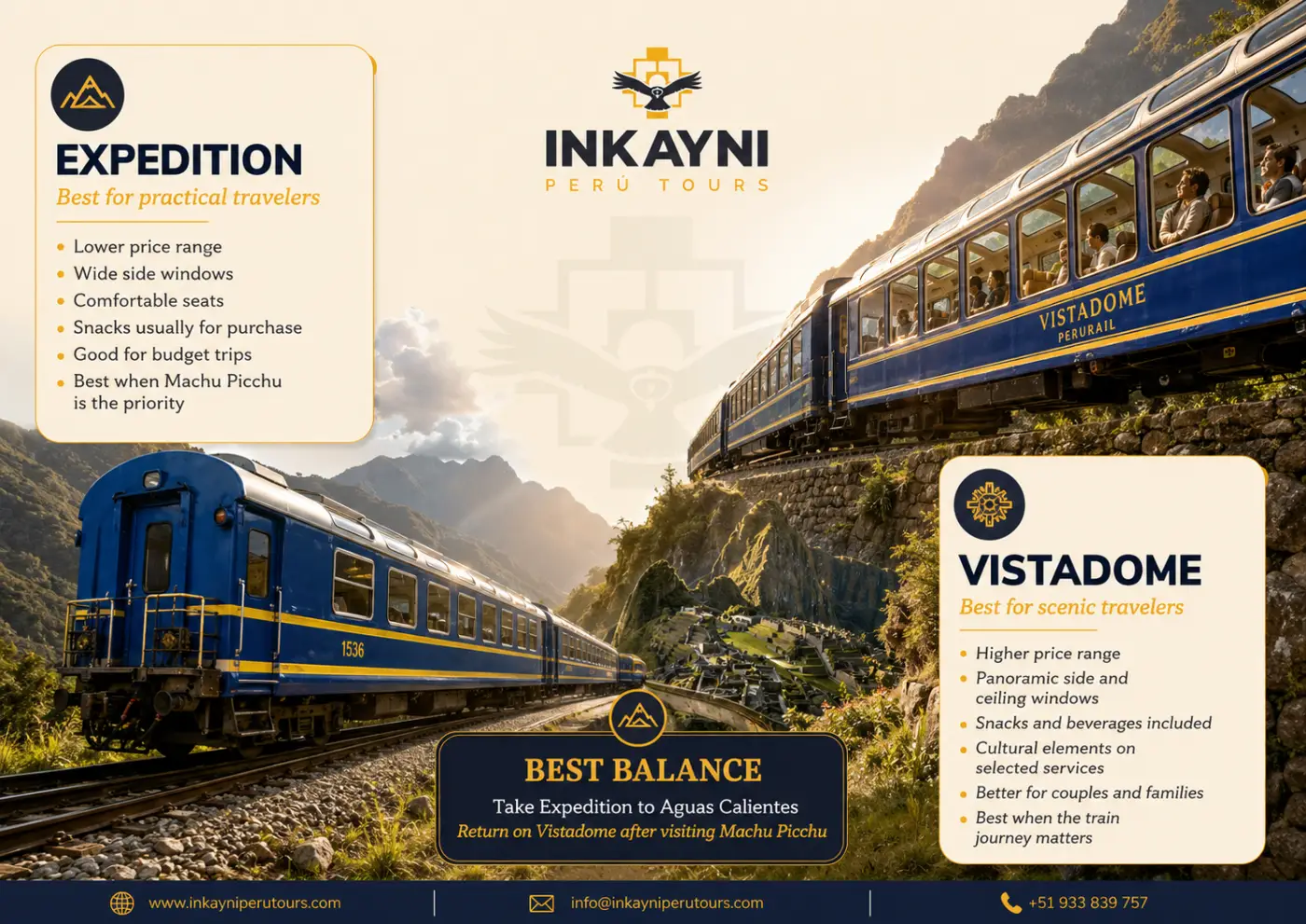
Visual comparison between Expedition and Vistadome.
| Feature | PeruRail Expedition | PeruRail Vistadome |
| Price level | ~$60 to $85 USD per leg. | ~$90 to $130 USD per leg. |
| Windows | Wide side windows for viewing the valley, the Urubamba River, and the transition toward cloud forest. | Panoramic side and ceiling windows, designed for a more immersive view of the landscape. |
| Food and drinks | Snack not included as part of the standard service. Onboard purchase may be available. | Snack and beverages included, with Andean-inspired ingredients depending on the service. |
| Onboard experience | Functional environment, comfortable seats, and ambient music. | More scenic atmosphere, audio tour, Andean music, included snack, and a more considered experience for the journey. |
| Cultural elements | Andean-inspired interior design. | Baby alpaca garment presentation on selected return services. |
| Shared amenities | Both services include standard tourist train amenities: onboard restrooms, climate control, and seats designed for the journey to Machu Picchu. | |
| Travel time | Similar time on the same route. From Ollantaytambo to Aguas Calientes the journey typically takes around 1.5 hours. From Poroy, San Pedro, or bimodal services from Cusco, total time is longer. | |
| Luggage | Travel with a small backpack of up to 17.6 lbs (8 kg). PeruRail applies specific limits for backpacks, carry-ons, and excess luggage depending on route and ticket type. | |
| Best suited for | Budget travelers, solo visitors, practical itineraries, and those focused primarily on the Machu Picchu experience itself. | Couples, families, first-time visitors, photography-minded travelers, and those who want the journey to feel like a visible part of the experience. |
Expedition to Aguas Calientes and Vistadome on the Return
On the way in, most travelers are focused on arriving, checking schedules, and getting ready for Machu Picchu. On the return, the body is tired and the mind tends to be more available to take in the landscape. That is when the added comfort of the Vistadome, the snack, and the cultural presentation tend to feel most valuable.
Other Guides That Help Before Booking the Train to Machu Picchu
The Expedition Train
Expedition at a glance: budget tourist service, wide side windows, comfortable seats, ambient music, interpretive audio on route, frequent schedules, and snacks or beverages generally available for purchase. Reference range: from approximately $60 to $85 USD per leg, depending on date and availability.
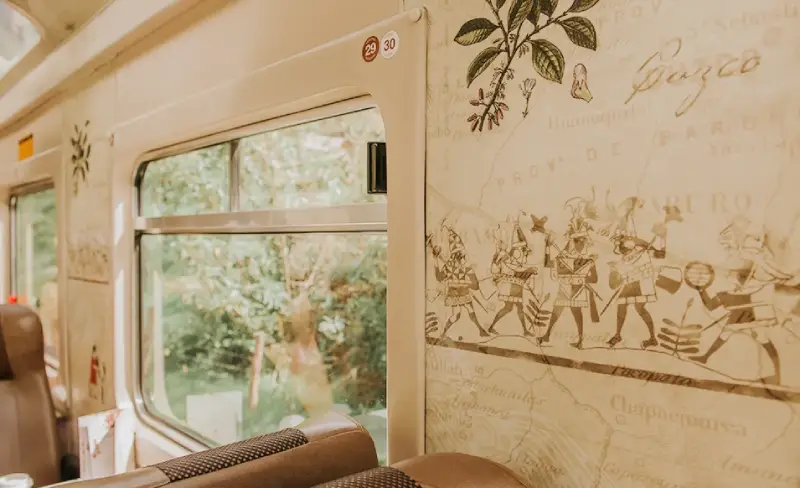
The PeruRail Expedition is the practical entry-level option for traveling by train to Machu Picchu. It is designed for travelers who want to reach Aguas Calientes efficiently, without paying for the additional details of a panoramic or luxury service. Its cars have wide windows, comfortable seats, ambient music, and interiors inspired by Inca motifs. For a journey of approximately 1.5 to 2 hours from Ollantaytambo, that combination is more than sufficient for many visitors.

The Expedition makes most sense when your priority is the site itself: the Machu Picchu entrance, the guide, the bus, the circuit, the schedules, and the overall flow of the day. If you are traveling solo, watching your budget, or building a broader Peru itinerary with several paid experiences, this service tends to protect the budget without making the transfer uncomfortable.
What the Expedition typically includes
- Comfortable seats for a short panoramic journey.
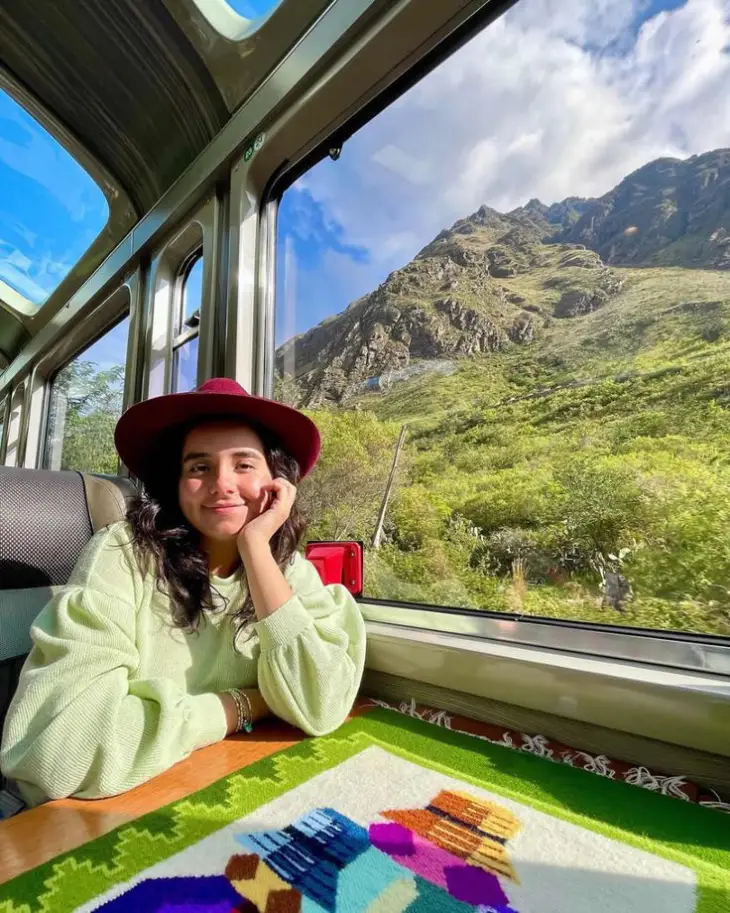
- Wide side windows for viewing the Sacred Valley, the Urubamba River, and the transition toward cloud forest.
- Interior details inspired by Andean and Inca visual motifs.
- Ambient music and route information depending on the car and schedule.
- Onboard restroom.
- Snacks and beverages generally available for purchase, subject to service conditions.
Warning:
PeruRail tourist services typically apply a carry-on luggage limit of 17.6 lbs (8 kg) and 45 in (115 cm) combined dimensions. Bring a day pack and leave large bags in Cusco, Ollantaytambo, or at your hotel storage.

The Vistadome Train
Vistadome at a glance: panoramic side and ceiling windows, included onboard snack, hot or cold beverages depending on service, route audio, Andean music, cultural presentation, and baby alpaca garment show on selected return services. Reference range: approximately $90 to $130 USD per leg, with occasional promotions and variable fares by schedule.
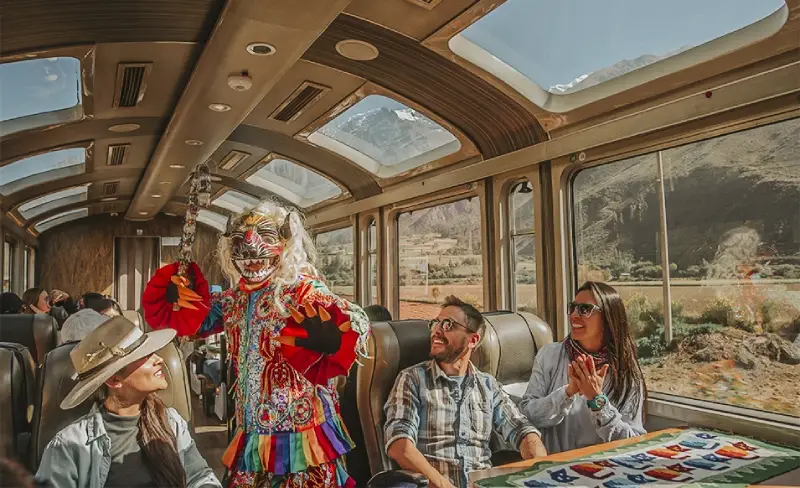
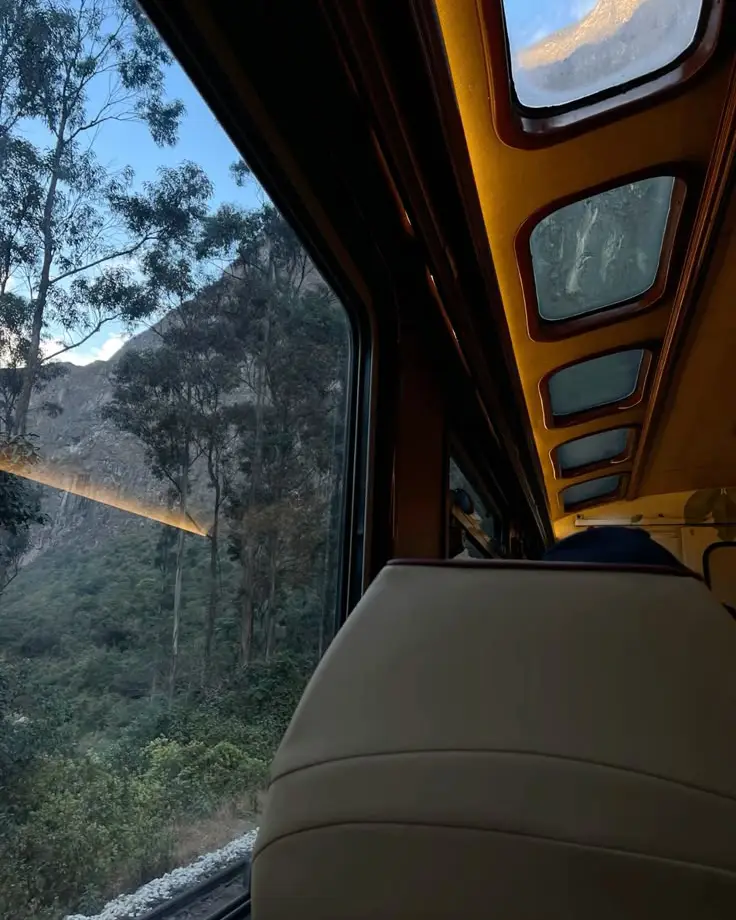
The PeruRail Vistadome is the mid-range panoramic service. Its main distinction is visual: the cars have side and ceiling windows that open the view upward, useful along the narrow gorge of the Urubamba where the mountains rise close to the track. The service also adds a snack, route audio, Andean music, and cultural presentations on selected journeys, particularly on returns from Machu Picchu Pueblo.
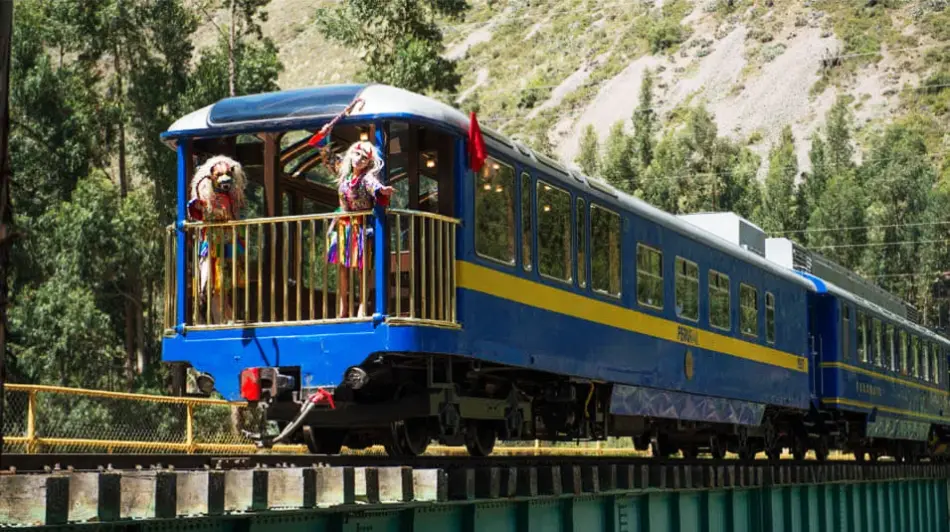
Onboard experience on the Vistadome with cultural presentations en route.
This train works best when the journey is part of the memory you want to keep from the trip. Couples, families, first-time visitors to Machu Picchu, and photography-minded travelers often value the Vistadome because it makes the rail section feel less like a transfer and more like a scenic chapter of the day. The additional cost makes more sense once you have the essentials of the visit sorted: a good Machu Picchu entry time, the right circuit, clear transfers, and enough time in Aguas Calientes.
What the Vistadome typically includes
- Panoramic side and ceiling windows for a wider view of the valley and gorge.
- Comfortable seats within a more scenic layout.
- Included snack and beverages as part of the experience.
- Informative audio about the route and surrounding points of interest.
- Andean music and cultural presentation, most visible on return services.
- Baby alpaca garment presentation on selected departures from Machu Picchu Pueblo.
- Onboard restroom.


Is it worth paying more for the Vistadome?
- The Vistadome is worth it when the train journey matters within the overall memory of Machu Picchu. The upgrade is especially reasonable for couples, families, and travelers who may only visit Machu Picchu once.
- The Expedition is the better decision when the train primarily serves a transport function. You will still see the valley, arrive at the same station, and can direct the price difference toward another part of the experience.
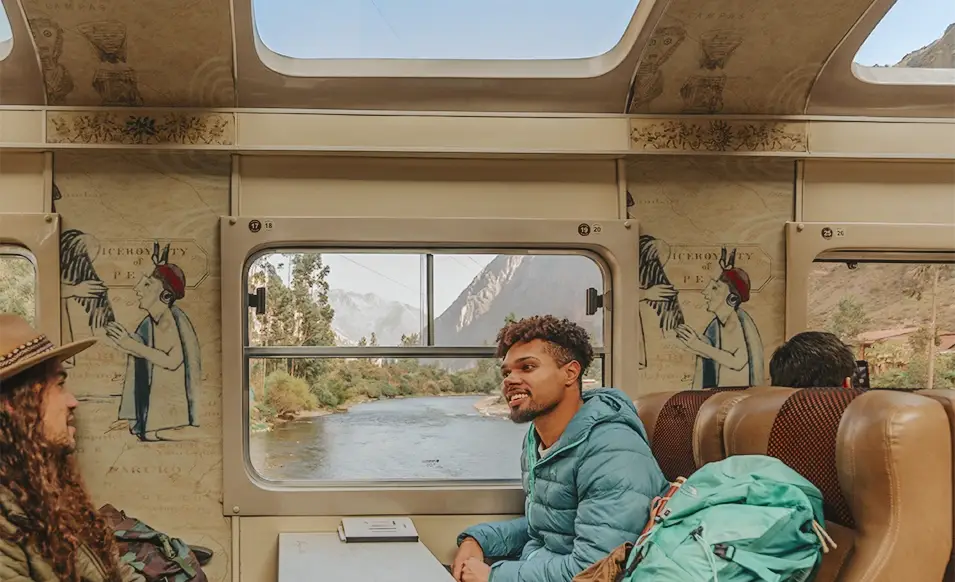

All trains to Machu Picchu
PeruRail and Inca Rail operate tourist trains to Machu Picchu Pueblo. The Expedition and Vistadome are the two PeruRail services most frequently compared, but they are part of a broader range. Budget services get you there comfortably. Mid-range panoramic trains improve the visual experience. Premium and luxury services add gastronomy, observatory cars, lounge spaces, live music, or a more exclusive atmosphere.
| Service | Operator | Category | Reference range | Main value |
| Expedition | PeruRail | Budget | From ~$60 to $75 USD | Practical service with side windows and frequent schedules. |
| The Voyager | Inca Rail | Budget | From ~$60 to $75 USD | Comparable budget option with wide windows, ambient music, and onboard snack sales. |
| Vistadome | PeruRail | Mid-range | ~$90 to $130 USD | Side and ceiling windows, included snack, route audio, and cultural elements. |
| The 360° | Inca Rail | Mid-range | ~$90 to $130 USD | Observatory car, panoramic windows, snack, and live music depending on service. |
| Vistadome Observatory | PeruRail | Mid-range+ | ~$120 to $160+ USD | Observatory car with open-air balcony, live cultural presentation, snacks, and beverages. |
| The Prime / First Class | Inca Rail | Premium | Variable | Dining car, lounge bar, or superior gastronomic service depending on category. |
| Hiram Bingham | PeruRail / Belmond | Luxury | Frequently $400+ USD | Luxury rail experience with gastronomy, bar car, live music, and premium service. |
| The Private | Inca Rail | Exclusive | On request | Private car for a fully personalized rail experience. |
Hiram Bingham and Inca Rail in the decision
- Hiram Bingham belongs to a different category from the Expedition and Vistadome. It is a luxury rail experience associated with Belmond, featuring gastronomy, a bar car, live music, and a more exclusive atmosphere. It works well for travelers who want the train itself to be one of the central luxuries of the trip, and can suit honeymoons, significant celebrations, or premium itineraries where comfort and service weigh as much as logistics.
- Inca Rail is the other main operator on the route to Machu Picchu. Its Voyager competes with budget services like the Expedition, while The 360° competes more directly with panoramic services like the Vistadome and Vistadome Observatory. Inca Rail also offers higher categories including Prime, First Class, and Private.
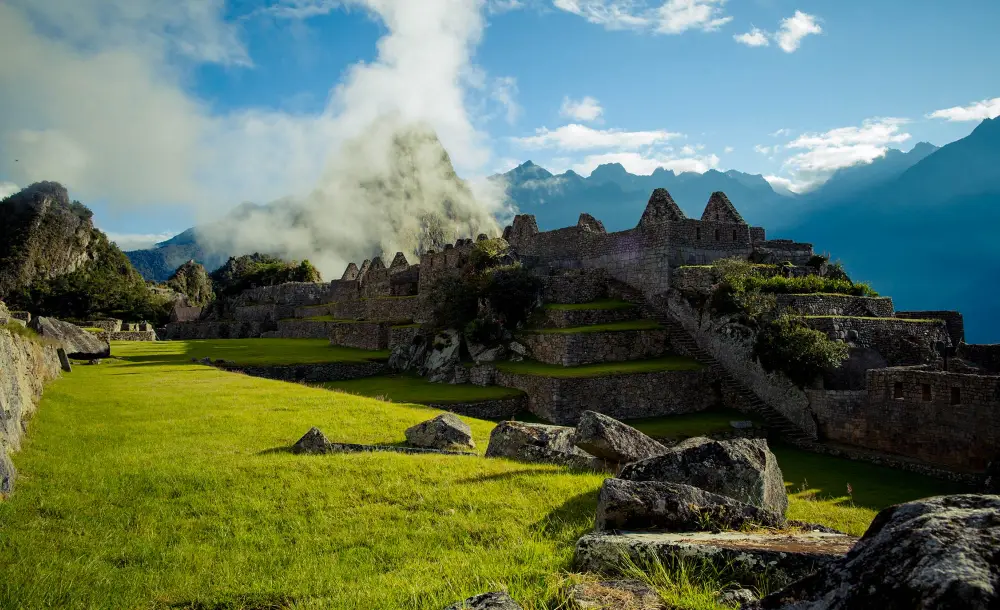

Which train to choose based on your travel style
| Traveler profile | Best option | Why it works |
| Solo traveler or backpacker | Expedition or Voyager | The route is short enough that the budget service is more than adequate. |
| Couple on their first trip to Peru | Vistadome or The 360° | The journey feels more scenic, relaxed, and memorable without reaching luxury pricing. |
| Family with children | Vistadome on the return | The cultural elements and the snack can make the return journey easier after a long day. |
| Photography-minded traveler | Vistadome Observatory or The 360° | The open or panoramic spaces offer more visual freedom than standard side windows. |
| Luxury traveler or honeymoon | Hiram Bingham or Inca Rail premium categories | Gastronomy, a bar car, live music, and a premium atmosphere are part of the journey design. |
| Best overall balance | Expedition outbound + Vistadome return | Lower cost going to Machu Picchu; more comfort on the way back when the body is tired. |
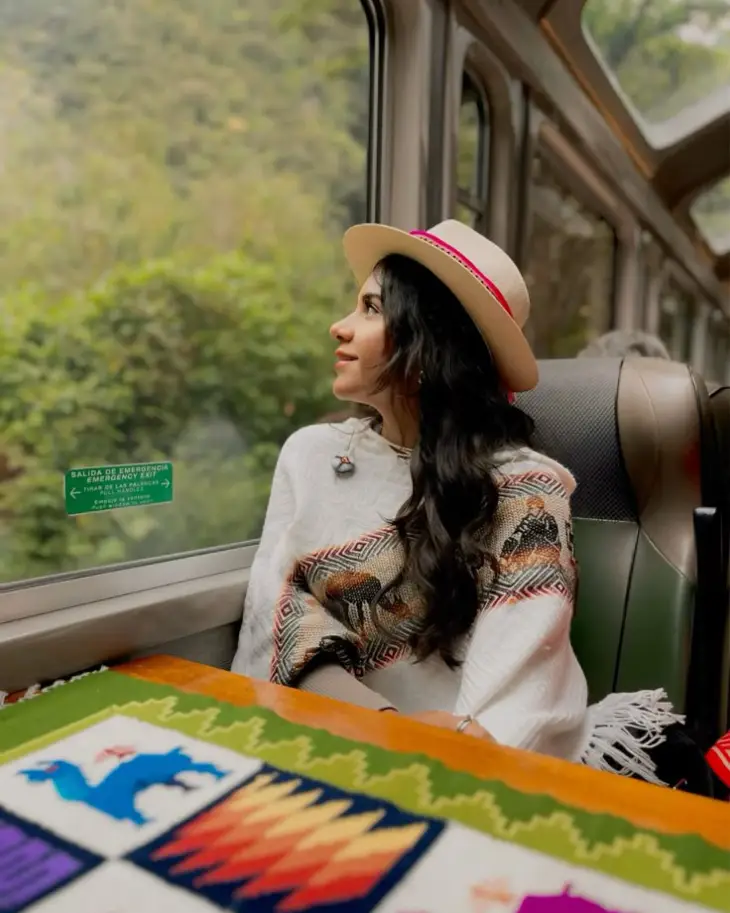

How to book the train without complicating your itinerary
- Confirm your Machu Picchu entry time first. The train must fit around that entrance slot, the bus from Aguas Calientes, and the time you need to move without pressure. If your visit starts very early, staying in Aguas Calientes the night before is usually more comfortable than leaving Cusco before dawn.
- Then choose your departure station. Ollantaytambo is usually the most practical option for frequency and connection with the Sacred Valley. Poroy, San Pedro, and bimodal services from Wanchaq may work better depending on the season and availability.
Expert tip:
From May to October, book earlier. Morning trains and afternoon returns sell out first, especially in June, July, and August.
Choose comfort after resolving the logistics
The Expedition is the most solid option for travelers who want a clear, practical, budget-conscious way to reach Machu Picchu Pueblo. It gives you the route, the window, the seat, and the reliability you need. The Vistadome is better when you want the train journey to feel more scenic and considered, especially on the return. The route is short, but the environment is strong: river, stone walls, terraces, cloud forest, and the gradual descent toward the warm edge of the Andes.
At Inkayni Peru Tours, we coordinate train bookings as part of our Machu Picchu itineraries and help choose the right category, schedule, and operator for your dates, route, and travel style.
PERU’S LEGENDARY HIKEInca Trail to Machu Picchu
Follow the historic trail through mountain passes, Inca sites, and cloud forest paths to Machu Picchu.
Frequently asked questions about Expedition vs Vistadome
Which is better, Expedition or Vistadome?
The Expedition is better if you are looking for PeruRail’s most practical and affordable service to Aguas Calientes. The Vistadome is better if you want a more scenic and comfortable journey, with ceiling windows, an included snack, and cultural elements on selected return services. Both arrive at the same station and follow the same rail corridor.
Is it worth paying more for the Vistadome?
It is worth it if the train journey is part of the experience you want to remember. The panoramic windows, the snack, and the cultural presentation make the trip feel more complete. If your priority is reaching Machu Picchu efficiently, the Expedition usually offers better value.
What is the best strategy for comfort without overspending?
A common approach is booking the Expedition for the outbound journey to Aguas Calientes and the Vistadome for the return. On the way in, the journey tends to be more functional because attention is focused on arriving. On the return, the extra comfort, the snack, and the cultural presentation are more appreciated.
Do the Expedition and Vistadome take the same amount of time?
Yes. On the same route, both services have similar travel times. From Ollantaytambo to Aguas Calientes the journey typically takes around 1.5 to 2 hours. Total time from Cusco is longer because you need to add the road transfer or the bimodal bus connection.
Do the trains go directly to Machu Picchu?
No. The train goes to Aguas Calientes, also called Machu Picchu Pueblo. From there, travelers continue to the Machu Picchu entrance by official bus or on foot uphill. The bus typically takes around 25 to 30 minutes.
Can I bring a large suitcase on the train?
No. Tourist trains to Machu Picchu have strict luggage limits. PeruRail typically applies a limit of 17.6 lbs (8 kg) and 45 in (115 cm) combined dimensions. Inca Rail also restricts passengers to one small carry-on piece with a similar 17.6 lb (8 kg) limit. Large bags must be left at your hotel or in storage before boarding.
Which train has the best views?
The Vistadome has a better visual design because it includes both side and ceiling windows. The difference is most noticeable along the narrow sections of the Urubamba gorge, where the rock walls and vegetation rise close to the train. The Expedition also offers good lateral views of the valley and the river.
Is Inca Rail better than PeruRail?
Neither operator is automatically better for all travelers. PeruRail has well-known services including the Expedition, Vistadome, Vistadome Observatory, and Hiram Bingham. Inca Rail offers alternatives like The Voyager, The 360°, The Prime, The First Class, and The Private. Compare schedules, fares, luggage policies, and your Machu Picchu entry time before deciding.
What is the difference between the Vistadome and the Vistadome Observatory?
The Vistadome is the classic mid-range panoramic service, with ceiling and side windows, a snack, and cultural elements on selected journeys. The Vistadome Observatory adds an observatory car with an open-air balcony, more space for photography, and a more elevated onboard experience.
Is the Hiram Bingham necessary to visit Machu Picchu?
No. The Hiram Bingham is a luxury rail experience, not a logistical requirement. It can be excellent for premium trips, honeymoons, or travelers who want gastronomy, a bar car, and live music as part of the journey. For most visitors, the Expedition, Vistadome, Vistadome Observatory, Voyager, or The 360° are more practical options.
Should I book the train before or after buying the Machu Picchu entrance ticket?
Ideally, plan both together. The train schedule must align with your Machu Picchu entry time, the bus from Aguas Calientes, and your return plan. A good fare can become inconvenient if it forces you to rush or arrive late to your assigned circuit.
How far in advance should I book the trains?
For June, July, and August, booking 2 to 3 months in advance is a safer window, especially for morning departures and afternoon returns. For April, May, September, and October, booking several weeks ahead is advisable. From November to March there may be more flexibility, though rain and schedule changes make organized planning important.
Escrito por


Shared:


If you liked this article and the information you found, give us 5 stars!
 (Ninguna valoración todavía)
 Loading...