


How to See Sunrise at Machu Picchu
For most travelers, the best way to see sunrise at Machu Picchu is to sleep in Aguas Calientes, book the 6:00 a.m. entry, and be in the bus line around 4:30 a.m. so you can reach the site close to opening time. The sunrise experience depends less on a magical guarantee of clear skies and more on practical preparation: the right circuit, an early bus, and enough flexibility for mist or delayed visibility. If your priority is the classic sunrise view, choose a route that includes the upper panoramic sector or classic viewpoint area, not just the earliest ticket available.
Table of Contents
There is a particular kind of light at Machu Picchu in the early morning. It moves through the cloud forest mist, reaches the terraces slowly, and changes the stone before the site begins to fill with visitors. On clear mornings, the light arrives sharp and golden. On misty mornings, the city appears in fragments, as if the mountain were revealing it in stages.
Planning a Machu Picchu sunrise visit takes more preparation than a standard day trip. The key decisions are simple: sleep in Aguas Calientes, choose the earliest entry, understand your Machu Picchu circuit, and keep enough flexibility for mist, rain, or delayed visibility.
| 6:00 a.m.First entry shift | 4:30 a.m.Suggested bus line time | 1 nightStay in Aguas Calientes | May–OctBest weather odds |
For travelers building a larger Peru itinerary, the sunrise often works best as the final moment of a route that already ends near Machu Picchu. That can be the classic arrival through the Inca Trail, a shorter approach with the Short Inca Trail, or a trek that finishes through Aguas Calientes, such as Salkantay, Lares, or Inca Jungle. The sunrise plan remains the same once you sleep in town: early bus, correct ticket, and a realistic circuit.
Quick Facts: Sunrise at Machu Picchu
| Actual sunrise time | Usually around 5:15 a.m. to 6:15 a.m., depending on the month. In November, December, and January, the sun often rises before visitors can enter the site. |
| First accessible light inside Machu Picchu | From 6:00 a.m. onward, once the site opens. Mist, mountains, and cloud cover can delay clear views of the citadel. |
| Best entry shift | 6:00 a.m. Select the earliest entry when buying your Machu Picchu ticket. |
| Bus line timing | Around 4:30 a.m. in high season if you want one of the first buses from Aguas Calientes. In quieter months, 4:45 to 5:00 a.m. may be enough, but early is safer. |
| First buses | Usually from around 5:30 a.m. The ride to the Machu Picchu entrance takes about 25 to 30 minutes. |
| Best viewpoints | Upper panoramic sectors, Guardian’s House area, or upper terraces, depending on the route included in your ticket. |
| Ticket platform | Buy through TuBoleto or confirm ticket handling with your operator. |
| Best visibility odds | May through October usually gives better odds for drier mornings. May, September, and October often balance weather, light, and softer crowds. |
| Altitude | 7,972 ft (2,430 m) above sea level. |
Important note:
The Machu Picchu entry ticket does not include the bus from Aguas Calientes to the entrance gate. Buy the bus ticket separately through Consettur or in person in Aguas Calientes. The bus is not mandatory, but it is the most practical option for most sunrise visitors.
WORLD WONDER IN THE ANDESMachu Picchu
Discover the history, landscapes, and essential tips for visiting this world wonder.
Why a Machu Picchu Sunrise Is Worth the Early Start
- The practical reason comes first. The 6:00 a.m. entry gives you the earliest legal access to the archaeological site. You will not be alone, especially in high season, but the first minutes of the day usually feel calmer than the mid-morning rush. If your goal is photography, silence, or atmosphere, that early window matters.
- The other reason is the light itself. A Machu Picchu sunrise in the dry season can mean a clean golden line over the terraces. On other mornings, the cloud forest does its own work: mist rolls through the stone walls, thins, and sometimes lifts slowly enough to make the city feel as if it were appearing from inside the mountain.
- There is also a cultural layer. Inti Raymi, the Festival of the Sun, is still celebrated every June in Cusco, and the old Inca world gave solar cycles great ritual importance. A sunrise visit lets you feel that relationship between stone, mountain, and light without turning the experience into a cliché.

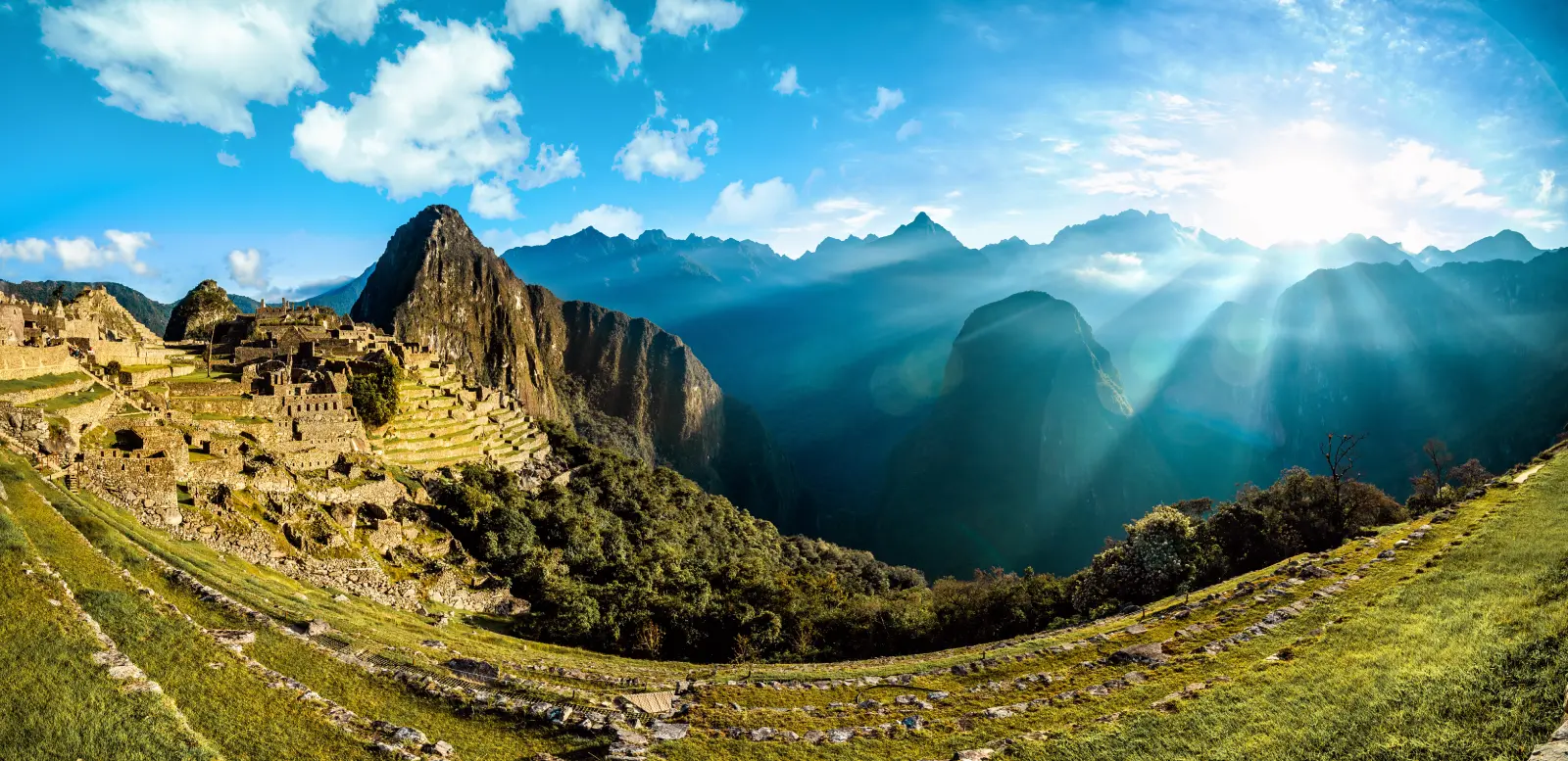
Machu Picchu at sunrise in bright conditions.
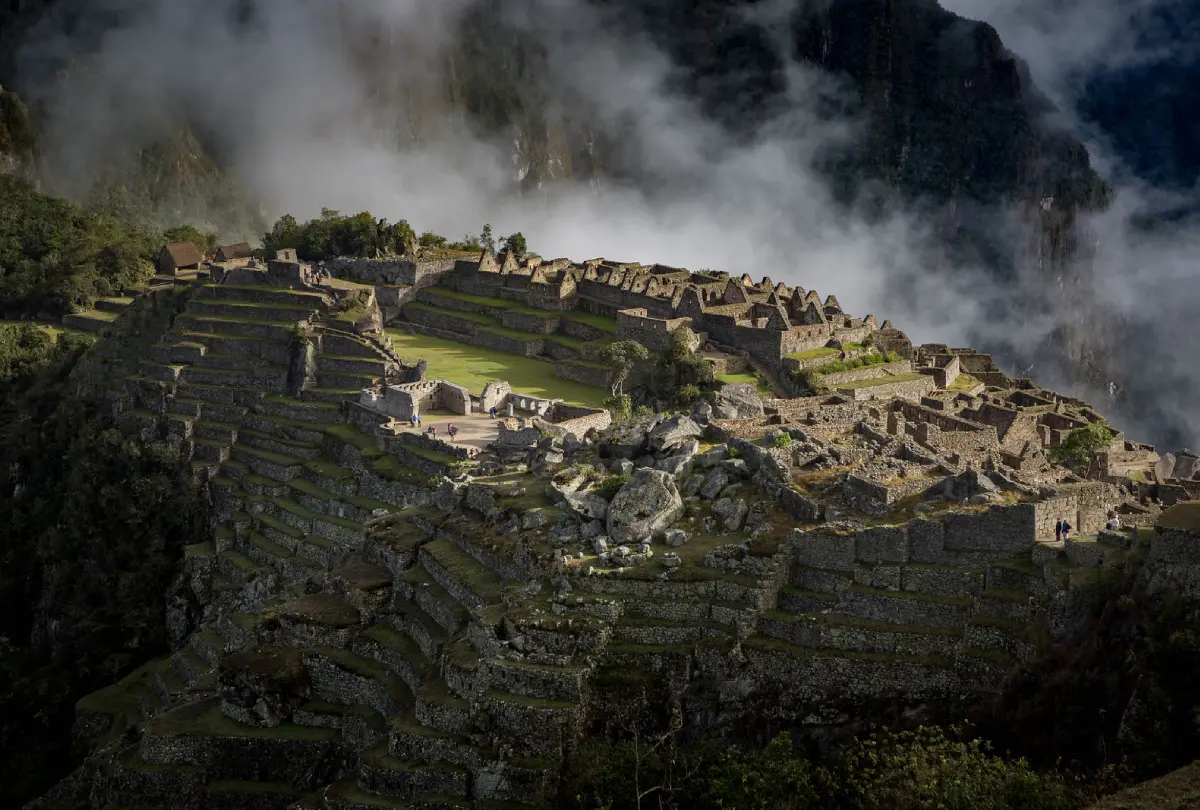
Misty morning at Machu Picchu showing ancient stone structures.
Did you know?
The Inca Trail reaches Machu Picchu through Inti Punku, the Sun Gate, which gives hikers a different kind of first view from the standard entrance. A regular sunrise visit starts in Aguas Calientes and enters through the main gate, so both experiences should be planned separately.
How to See the Sunrise at Machu Picchu
A sunrise visit requires planning the night before. There is no regular train from Cusco or Ollantaytambo early enough to place most travelers inside Machu Picchu for the 6:00 a.m. entry. For that reason, the most reliable plan is to sleep in Aguas Calientes and organize your bus, ticket, documents, and clothing before you go to bed.
The important detail is that “sunrise at Machu Picchu” does not always mean watching the exact astronomical sunrise from inside the ruins. In some months, especially around November, December, and January, the sun rises before the first visitors enter. What you are really planning for is the earliest accessible light inside Machu Picchu: mist lifting, terraces brightening, and the first clear views from the route allowed by your ticket.
Night before
Sleep in Aguas Calientes
Stay in Machu Picchu Pueblo so you can reach the bus stop before dawn. Keep your passport, Machu Picchu ticket, bus ticket, warm layer, and rain protection ready before sleeping.
4:30 a.m.
Join the bus line in high season
The line for the bus to Machu Picchu forms early during busy months. Around 4:30 a.m. is a safe reference if you want one of the first buses.
5:30 a.m.
Take one of the first buses
The ride usually takes about 25 to 30 minutes. Buying the bus ticket in advance through Consettur can reduce stress on the morning of your visit.
6:00 a.m.
Enter and move to your viewpoint
Once inside, avoid stopping at the entrance area. Move toward the viewpoint allowed by your ticket and route. Use the restrooms before entering because there are no restrooms inside the archaeological site.
Pro tip:
The train to Machu Picchu gets you to Machu Picchu Pueblo, not directly into the archaeological site. From there, the final section is either the bus ride or the uphill walk from town to the gate. For a detailed town-to-gate plan, use the Aguas Calientes to Machu Picchu route guide.

Light beginning over the mountains. Photo by: Inkayni Peru Tours.

A cloudy morning before the site opens. Photo by: Inkayni Peru Tours.
Planning the route around Machu Picchu
Entry Shifts and Circuits for Sunrise
For a sunrise visit to Machu Picchu, the best ticket depends on what you want from the morning. If your priority is the classic panoramic photo, choose a route with access to the upper terrace or classic viewpoint area. If you want a fuller first visit through temples, plazas and internal sectors, choose a classic circuit instead of focusing only on the first light.

Machu Picchu circuits map displaying Circuit 1, Circuit 2 and Circuit 3.
A 6:00 a.m. ticket gives you the earliest entry, but it does not guarantee the exact viewpoint you have in mind. Your circuit controls where you can walk, how much of the citadel you can see, and whether your morning is more focused on photography, archaeology or hiking.
| Ticket or route | Best for sunrise | What you get | Decision note |
| Route 1-A Machu Picchu Mountain | Sunrise plus a demanding mountain hike. | Panoramic sector and access to Machu Picchu Mountain. | Choose it only if the hike is part of your plan. It is not the simplest option for a short sunrise visit. |
| Route 1-B Upper Terrace | Classic panoramic sunrise photo. | Upper terrace views over the citadel, terraces, mountains and Huayna Picchu. | Best choice if your main goal is the iconic Machu Picchu photo from above. It is more panoramic than archaeological. |
| Route 1-C Inti Punku | High-angle sunrise atmosphere in high season. | Access toward the Sun Gate area when this seasonal route is available. | Better for travelers interested in the Inca Trail approach. Keep it separate from the standard sunrise plan from Aguas Calientes. |
| Route 2-A Classic Designed Route | Best balance for most first-time visitors. | Classic viewpoint plus a fuller walk through important internal sectors of the citadel. | Choose this if you want sunrise atmosphere and a more complete Machu Picchu visit with one ticket. |
| Route 2-B Lower Terrace | Classic visit with a slightly different photo angle. | Lower terrace viewpoint and access through the classic Machu Picchu route. | Good alternative if Route 2-A is unavailable or if you prefer the classic circuit over a purely panoramic ticket. |
| Route 3-A Huayna Picchu | Adventure-focused morning. | Lower royal-sector route plus the climb to Huayna Picchu. | Excellent for hikers, but weaker if your main goal is the classic sunrise postcard from the upper terraces. |
| Route 3-B Royalty Designed Route | Temples and lower urban sectors. | Important lower areas such as royal and ceremonial sectors. | Useful for archaeology-focused visitors, but limited for travelers who mainly want sunrise views from above. |
Keep this in mind
For most first-time visitors, Route 2-A or 2-B is the safest choice because it combines a classic view with a fuller visit. Choose Route 1-B if the photo is your main priority. Choose Huayna Picchu or Machu Picchu Mountain only if you really want the hike.
If you are still deciding, review our full guide to Machu Picchu circuits and routes before buying your ticket. For mountain routes, compare Huayna Picchu and Machu Picchu Mountain before choosing a sunrise schedule.
PERU’S LEGENDARY HIKEInca Trail to Machu Picchu
Follow the historic trail through mountain passes, Inca sites, and cloud forest paths to Machu Picchu.
Best Months and When First Light Hits the Citadel
The cloud forest climate at Machu Picchu means clear skies are never guaranteed. The goal in choosing a travel month is to reduce the odds of heavy rain or thick cloud cover blocking the view entirely. A Machu Picchu sunrise seen through gentle mist is one thing; heavy rain before dawn is another.
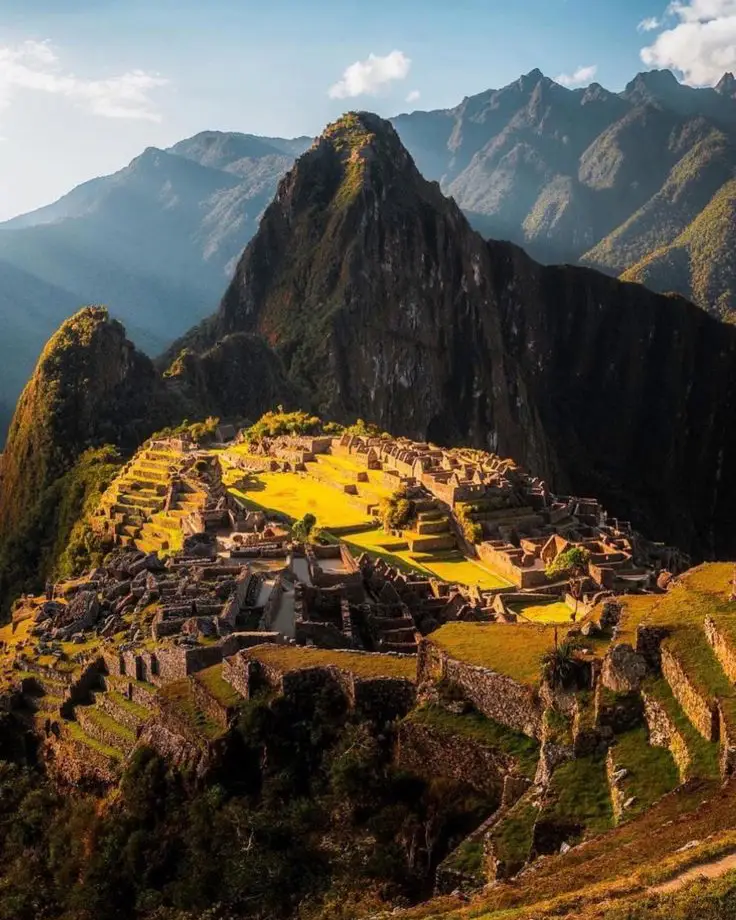
The citadel under afternoon light. Photo by: JJ Trailwalker.
| Period | Sunrise conditions | Planning advice |
| May and September | Good balance of drier weather, softer crowds, and atmospheric mist. | Strong months for travelers who want better visibility without the heaviest peak-season pressure. |
| June through August | Usually the clearest skies of the year, with cold early mornings. | Book tickets, trains, hotels, and guides early. Demand rises sharply during these months. |
| April and October | Transition months with mixed sun, mist, and occasional rain. | Good if you accept weather variation and want softer light across the mountains. |
| November through March | Wet-season mornings can bring dense cloud cover, rain, and delayed visibility. | Choose sunrise mainly if you enjoy misty landscapes and understand that the view may be blocked. |
The month matters more than many travelers expect. Dry-season mornings usually give better odds for open views, while wet-season mornings can still be beautiful if you are comfortable with cloud forest mist. Around November, December, and January, the astronomical sunrise can happen well before the 6:00 a.m. entry, so plan for early morning light inside the site rather than the exact sunrise moment. Weather changes month by month around Machu Picchu, and the best time of day to visit also depends on whether you value light, crowds, or easier logistics.
Did you know?
Inti Raymi, the Inca Festival of the Sun, is celebrated every June 24 in Cusco. If you are planning a June trip, combine the festival with a sunrise visit only if you book early, because hotels, trains, buses, and Machu Picchu tickets are in high demand.

The site in golden morning light. Views like this are most consistent between May and September.
What to Bring for a 6:00 a.m. Visit
The cloud forest at Machu Picchu is cold and damp at dawn even during the dry season. The temperature at the entrance can feel chilly before sunrise and warms quickly once the sun is out. The key is layering rather than packing heavy, and having your documents immediately accessible before you get in line. If you are coming from Cusco after several high-altitude days, a basic acclimatization plan also helps you enjoy the morning with more energy.
Clothing
Use layers: light base layer, thin fleece or jacket, and rain protection during wet or transition months. A hat can help during the pre-dawn bus line.
Footwear
Wear comfortable walking shoes or light trekking shoes with grip. Stone paths can be wet from mist, especially early in the morning.
Documents
Bring the original passport or ID used for your booking, your Machu Picchu entry ticket, your bus ticket, and your train ticket if you travel the same day.
Small backpack
Use a small daypack within the official limit of 16 x 14 x 8 in (40 x 35 x 20 cm). Bring water, sunscreen, insect repellent, a small flashlight, and only what you need.
Warning:
Machu Picchu rules prohibit oversized backpacks, food or kitchenware, tripods, selfie sticks, drones, umbrellas, and leaving the marked circuits. Re-entry is not allowed after you exit, so use the restrooms at the entrance before going in.
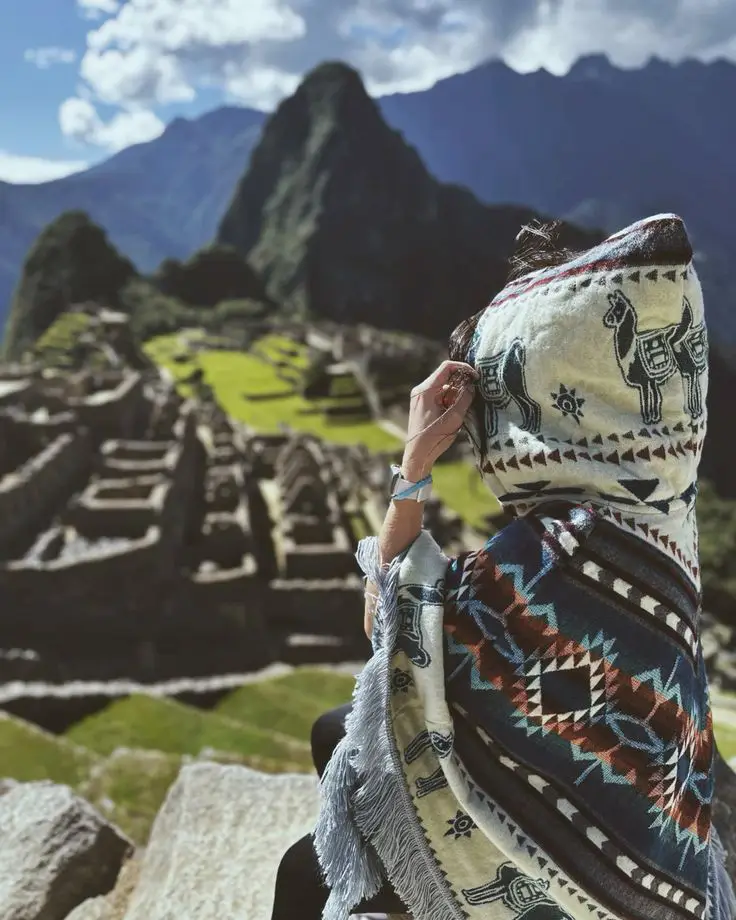
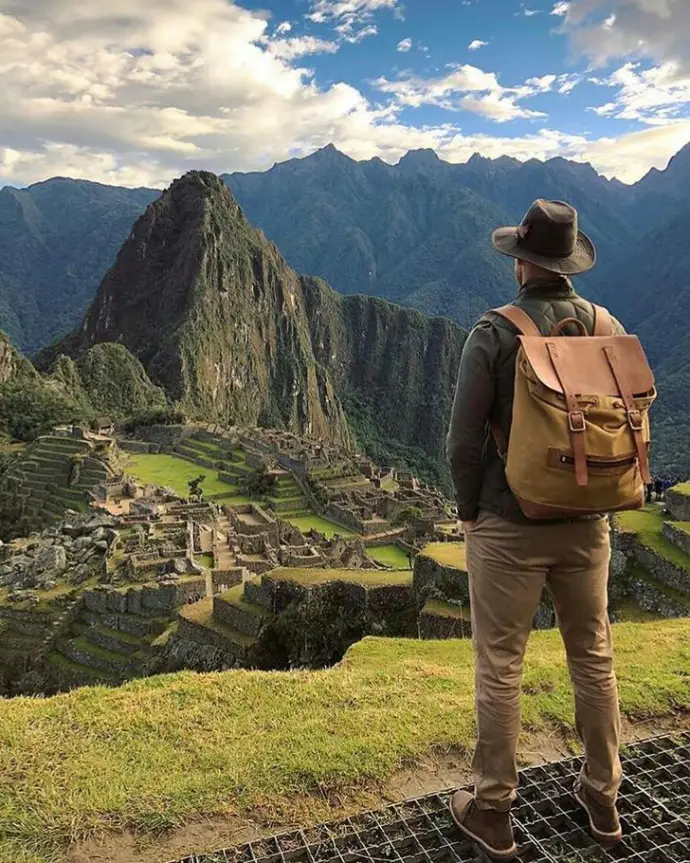
A traveler watching the first light at Machu Picchu. Photo by: Malu Grossi.
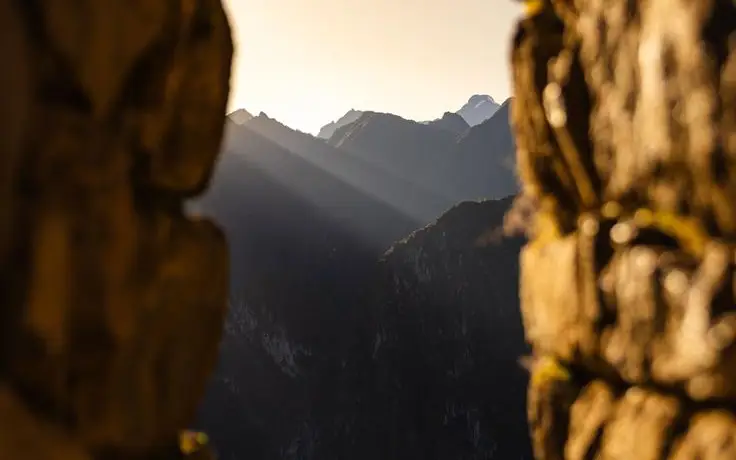
Morning light over the mountains near Machu Picchu. Photo by: Artsy Jasmina.
Sunrise or Afternoon: Which Works Better for You?
Both options can be excellent. Sunrise gives you the earliest access, cooler air, and the strongest atmosphere if mist and light move well. An afternoon visit can feel more relaxed, with warmer tones and a schedule that is easier for travelers coming from Cusco on the same day. The right choice depends on what matters more to you: early light and mood, or easier logistics and late-day calm.
| Sunrise 6:00 a.m. entry | Afternoon 2:00 p.m. or later | |
| Light | Soft, cool, misty, and sometimes golden when skies are clear. | Warmer late-afternoon tones, longer shadows, and softer contrast on the stone. |
| Crowds | Usually calmer at opening, then busier as the morning advances. | Can feel calmer after many morning visitors leave, but it is not guaranteed to be empty. |
| Logistics | Usually requires sleeping in Aguas Calientes and waking around 4:00 a.m. | More realistic for a same-day visit from Cusco or Ollantaytambo. |
| Weather | Morning mist is common. Heavy rain is possible during the wet season. | Afternoon showers can be more frequent, especially from November to March. |
| Viewpoints | Best for upper panoramic sectors when your route allows them. | Some routes and viewpoints may not match the classic postcard angle. Verify your circuit before buying. |
| Best for | Photography, atmosphere, early light, and first-time visitors who want the strongest morning mood. | Travelers who prefer easier logistics, warmer light, and a less rushed visit from Cusco or Ollantaytambo. |
A sunrise visit makes more sense when you want the earliest atmosphere and do not mind sleeping in Aguas Calientes. A late-afternoon visit can work better when your itinerary depends on the train schedule, when you prefer a slower morning in Cusco, or when you are comparing train options such as Expedition and Vistadome. Travelers looking for a more premium rail experience can also consider the Hiram Bingham train.
Light filtering through stone. Photo by: Pinterest.
A sunrise visit makes more sense when you want the earliest atmosphere and do not mind sleeping in Aguas Calientes. A late-day visit can work better when your itinerary depends on the train schedule, when you prefer a slower morning in Cusco, or when you are comparing train options such as Expedition and Vistadome. Travelers looking for a more premium rail experience can also consider the Hiram Bingham train.
Useful guides for the Machu Picchu portion of your trip
Important note:
The sunrise is the reward, but the route is the decision. A beautiful morning can still feel rushed when your ticket, bus, circuit, train, and return schedule do not fit together.
Make Your Machu Picchu Sunrise Worth the Early Start
A Machu Picchu sunrise visit works best when the important details are settled before you arrive. The mountain, mist, and morning light shape the view. Your preparation shapes the experience. Sleep in Aguas Calientes, choose the right 6:00 a.m. entry, confirm your Machu Picchu circuit, buy the bus ticket to Machu Picchu, and check the weather by month before building your final schedule.
For most travelers, the best plan is to arrive in Machu Picchu Pueblo the day before, keep documents ready, sleep early, line up before dawn, and enter with a ticket that matches the viewpoint or route they really want. A sunrise visit feels much better when the ticket, circuit, bus, train, and return schedule already fit together.
Frequently Asked Questions About Sunrise at Machu Picchu
What time is sunrise at Machu Picchu?
For travel planning, choose the 6:00 a.m. entry and move directly toward your assigned viewpoint. What most travelers experience is the first accessible morning light inside Machu Picchu, with mist, clouds, and mountain shadows affecting how quickly the citadel becomes visible.
What time should I be at the bus stop in Aguas Calientes?
The first buses usually leave around 5:30 a.m., and the ride to the Machu Picchu entrance takes about 25 to 30 minutes. Have your passport, Machu Picchu ticket, and bus ticket ready before you reach the line.
Do I need to sleep in Aguas Calientes to see sunrise?
What is the best month to see sunrise at Machu Picchu?
November through March can still be beautiful, but heavy mist and rain are more likely. For a more detailed month-by-month view, use the Machu Picchu weather by month guide.
Where is the best place to watch sunrise at Machu Picchu?
Inti Punku can be meaningful for Inca Trail context, but it should not be treated as the default sunrise viewpoint for every traveler.
Is sunrise at Machu Picchu always visible?
Is sunrise better than afternoon at Machu Picchu?
An afternoon entry can feel calmer once many morning visitors begin to leave, but it is not guaranteed to be empty on high-demand dates.
Can I visit Machu Picchu at sunrise without taking the bus?
Can Inca Trail hikers see sunrise from Inti Punku?
Which trek works best if I want sunrise at Machu Picchu?
What should I bring for sunrise at Machu Picchu?
What happens if the weather is bad on the morning of my visit?
Escrito por


Shared:


If you liked this article and the information you found, give us 5 stars!
 (1 votos, promedio: 5.00 de 5)
 Loading...