


Best Time of Day to Visit Machu Picchu
For most travelers, the best time of day to visit Machu Picchu is between 7:00 a.m. and 10:00 a.m., when you still get cool temperatures, enough margin for the visit, and usually better visibility than the earliest fog-prone entry. That is the safest choice for a first visit, especially with Circuit 2 or any route that needs more time and energy, such as Huayna Picchu or Machu Picchu Mountain. Afternoon can be better if you care more about fewer crowds and a calmer atmosphere, but it leaves less room for bus delays, weather changes, and return-train logistics. In practice, the right hour is the one that fits your circuit, your transport, and the kind of visit you actually want.
Table of Contents
The first light of dawn can make Machu Picchu feel almost unreal. Mist moves through the mountains, the stone walls slowly appear, and the first visitors enter with the hope of seeing the citadel before the day becomes crowded. But the best time of day to visit Machu Picchu is not always the earliest hour. It depends on your ticket, your circuit, your tolerance for crowds, your train schedule, the weather, and whether you care more about photography, calm, or a complete visit.
This guide focuses only on the best time of day to visit Machu Picchu. Seasonal travel matters too, but that is a different decision. Here, the key question is simpler: should you enter in the morning, around midday, or in the afternoon?
| 7–10 a.m.best balanced window | 12–2 p.m.can feel calmer | Circuit 2best first visit | Plan togetherticket, bus, train |

Morning light over Machu Picchu and the surrounding mountains. Photo by: Adam Harbst.
Best Time of Day to Visit Machu Picchu
Use this table before choosing your ticket time. The best hour is not only about beauty. It must work with your circuit, the bus from Aguas Calientes, train times, and how much energy you want to spend inside the sanctuary.
| Time of day | Best for | Practical reality |
| 6:00–8:00 a.m. | Atmosphere, mist, early light, travelers staying in Aguas Calientes | Beautiful if the sky clears, but fog can block the classic view. You need an early bus and strong logistics. |
| 8:00–10:00 a.m. | First-time visitors, balanced light, easier timing | Usually the best compromise: better visibility than sunrise, enough time for the visit, and reasonable return planning. |
| 10:00 a.m.–12:00 p.m. | Clearer light, travelers arriving from Cusco very early | Often brighter and warmer, but crowd pressure can be stronger. Good for visibility, less ideal for solitude. |
| 12:00–2:00 p.m. | Slower pace, warmer light, travelers with flexible return logistics | Can feel calmer than peak morning flow, but it is not guaranteed. Coordinate your return bus and train carefully. |
| 2:00 p.m. onward | Soft afternoon light, less rushed atmosphere, second-time visitors | Can feel peaceful, but there is less margin if weather changes, the bus line is slow, or your return schedule is tight. |
Practical rule:
If this is your first time at Machu Picchu and you want a balanced visit, choose a morning slot after the earliest fog risk but before the strongest midday flow. If you already know the site or care more about atmosphere than covering every sector, the afternoon can work well, but only with careful bus, circuit and return-train planning.
PERU’S LEGENDARY HIKEInca Trail to Machu Picchu
Follow the historic trail through mountain passes, Inca sites, and cloud forest paths to Machu Picchu.
Why the Time of Day Matters at Machu Picchu
Choosing the right hour changes the whole experience. It affects the light in your photos, how much fog you may find, how crowded the viewpoints feel, how hot the stone paths become, and how much pressure you feel when coordinating the bus to Machu Picchu and your return train.
It also affects how your route feels. The same place can feel mysterious at 6:30 a.m., busier at 10:30 a.m., and calmer again in parts of the afternoon. That does not mean one hour is perfect for everyone. It means your entry time should match your travel style.
- For classic photos: morning after the fog clears or late afternoon light can work better than the first minutes after opening.
- For a slower pace: afternoon slots can feel calmer than peak morning flow, depending on date, circuit and visitor movement.
- For a complete first visit: Circuit 2 with a morning slot is usually the safest choice.
- For mountain routes: morning is usually better because you need more time and energy.
- For logistics: your entry time must match your train, bus, hotel, guide and return schedule.
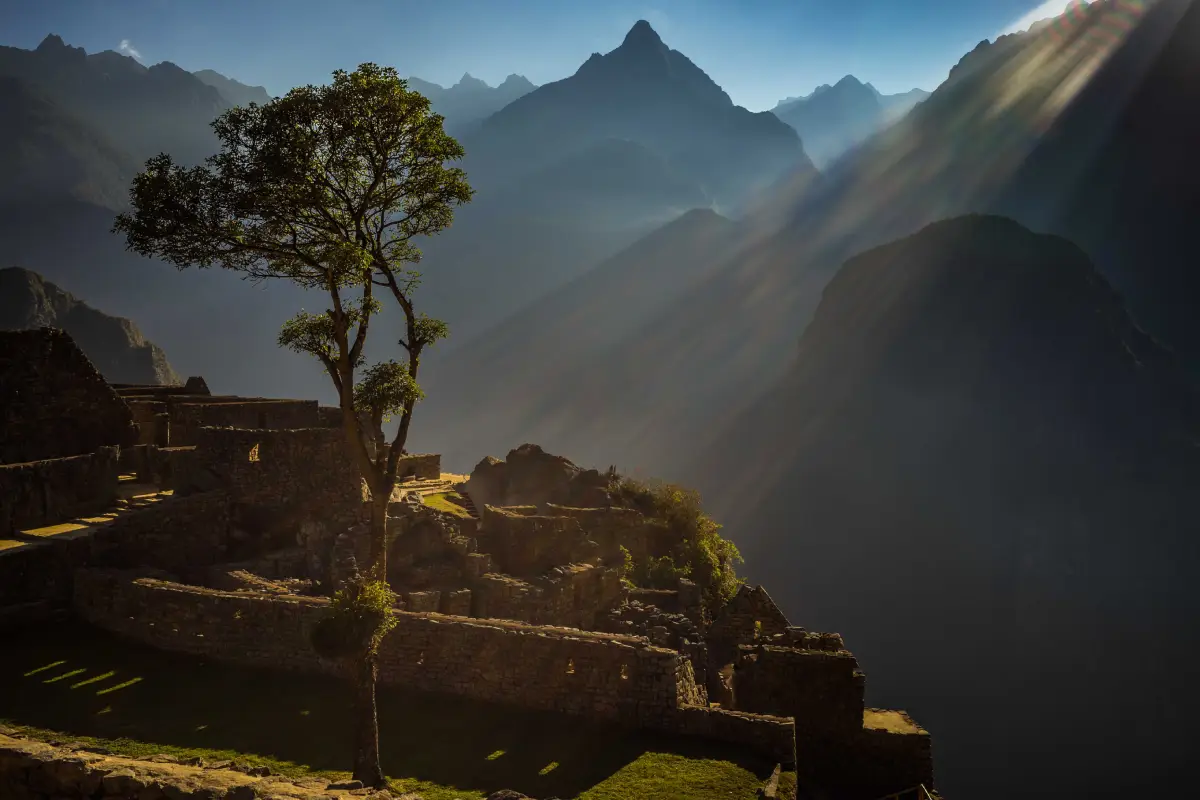
Morning light on Machu Picchu’s terraces and mountain landscape. Photo by: Gabriel Photo.
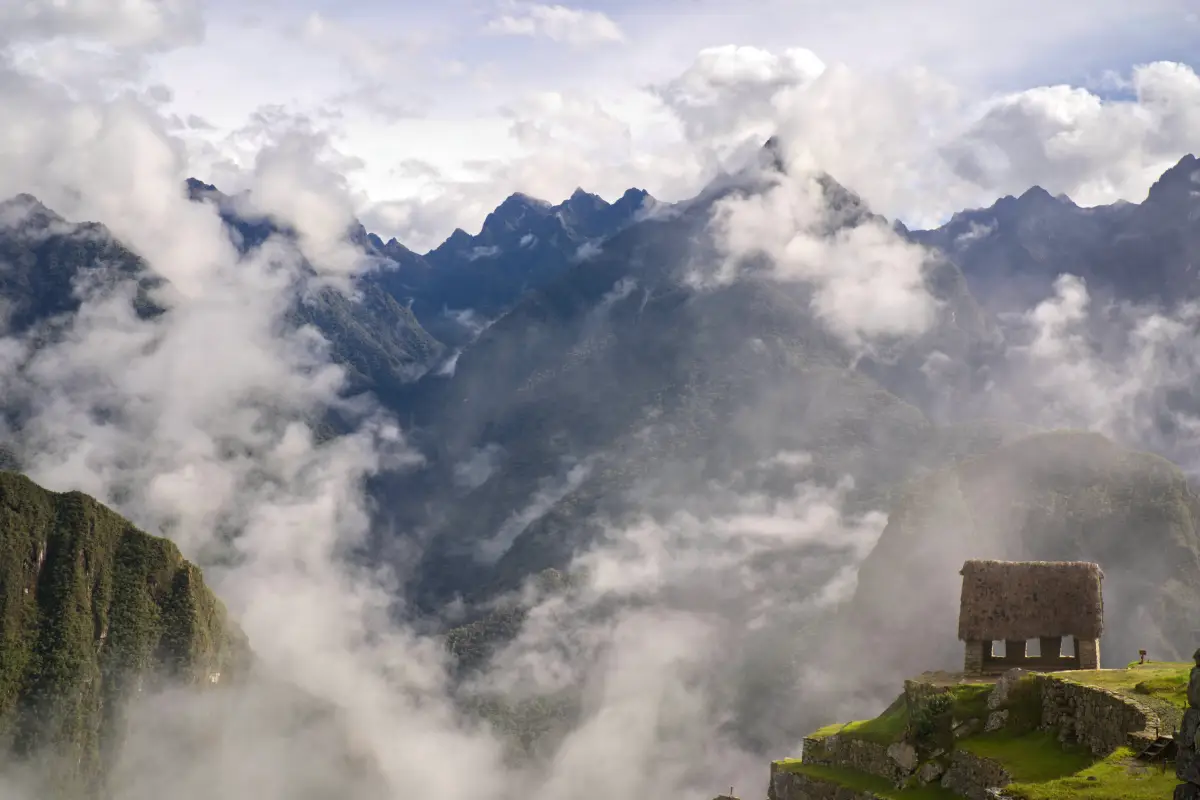
Clouds and mountain vegetation around Machu Picchu. Photo by: Brant Copen.
Machu Picchu Entry Times and Circuits
Machu Picchu works with official circuits, routes, entry times, and controlled visitor flow. Since June 2024, the official system has grouped the visit into 3 circuits and 10 routes. That matters because your ticket does not simply say “Machu Picchu”; it defines what you are allowed to see.
If you are still choosing your route, read our complete guide to Machu Picchu circuits. If that page is not yet published, prioritize the official circuit information before buying and use this blog only to decide the best hour of the day.

Machu Picchu routes with Circuit 1, Circuit 2 and Circuit 3.
| Route type | Best time of day | Why |
| Classic Circuit 2 | Morning or early afternoon | Best for first-time visitors who want a more complete archaeological experience. |
| Panoramic Circuit 1 | Morning after fog clears or afternoon light | Good for classic views and upper terraces, but visibility matters. |
| Huayna Picchu | Morning | The climb is demanding and should not be left for a rushed return schedule. |
| Machu Picchu Mountain | Morning | This route takes more time and energy, so early planning is safer. |
| Shorter royal routes | Morning or afternoon | Useful if you want a more focused visit through the lower sectors. |
Related guides for choosing your Machu Picchu visit
Visiting Machu Picchu in the Morning
Morning is the most desired time because it feels symbolic: first light, cool air, mist, and the sense of entering a sacred place before the full day begins. It is also the best practical option for travelers who want to add Huayna Picchu, Machu Picchu Mountain, or a longer route.
Morning is not automatically perfect. Fog can hide the view, especially during the rainy season. The earliest slots can also feel busy because many travelers want sunrise. For that reason, the best morning strategy is not always the first possible entry. A slot between 7:00 a.m. and 10:00 a.m. often gives a better balance between atmosphere, visibility, and logistics.
Advantages of a Morning Visit
- Cooler temperatures for walking through stone paths and stairs.
- Better timing for mountain routes and physically demanding circuits.
- More margin for return buses, trains and delays.
- Strong atmosphere if mist moves through the citadel.
- Good option for first-time travelers using Circuit 2.
Disadvantages of a Morning Visit
- Fog can block the classic view at the earliest hours.
- Early bus lines from Aguas Calientes can be crowded.
- Peak visitor flow often builds between mid-morning and noon.
- You may need to sleep in Aguas Calientes the night before to avoid rushing.
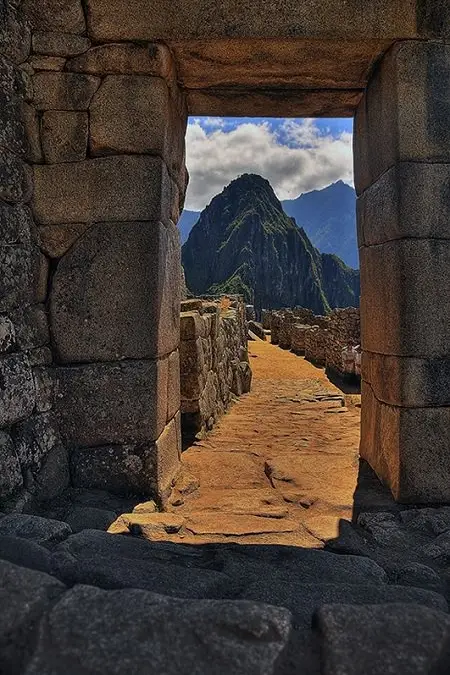
Stone paths and mountain light inside Machu Picchu. Photo by: Martine Rudee.
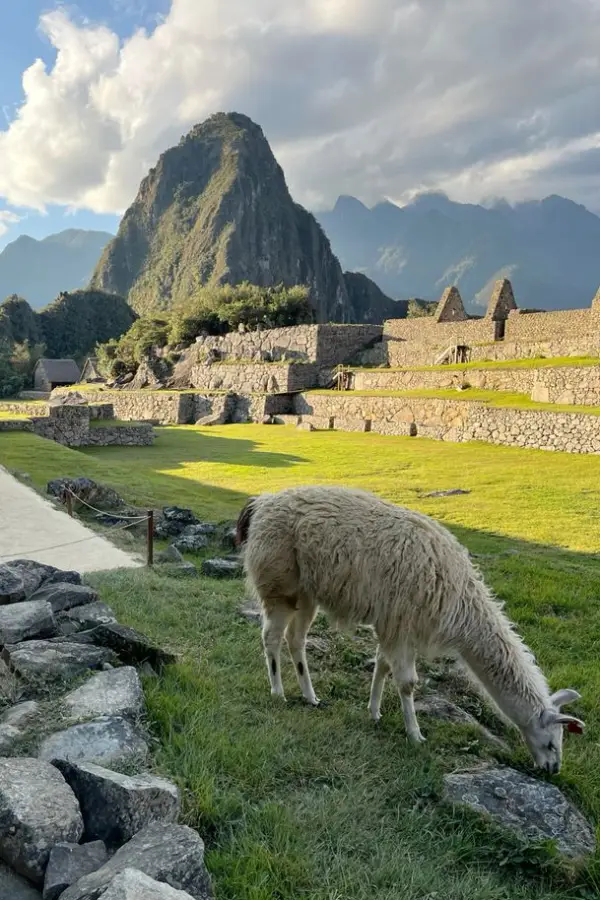
Light, stone paths and mountain scenery at Machu Picchu. Photo by: Beatriz Antonb.
Visiting Machu Picchu at Midday
Midday is usually the brightest part of the day. If the sky is clear, the stonework, terraces and mountain shapes are easier to see. For photos, this can help with visibility, although the light is often harsher than in the morning or afternoon.
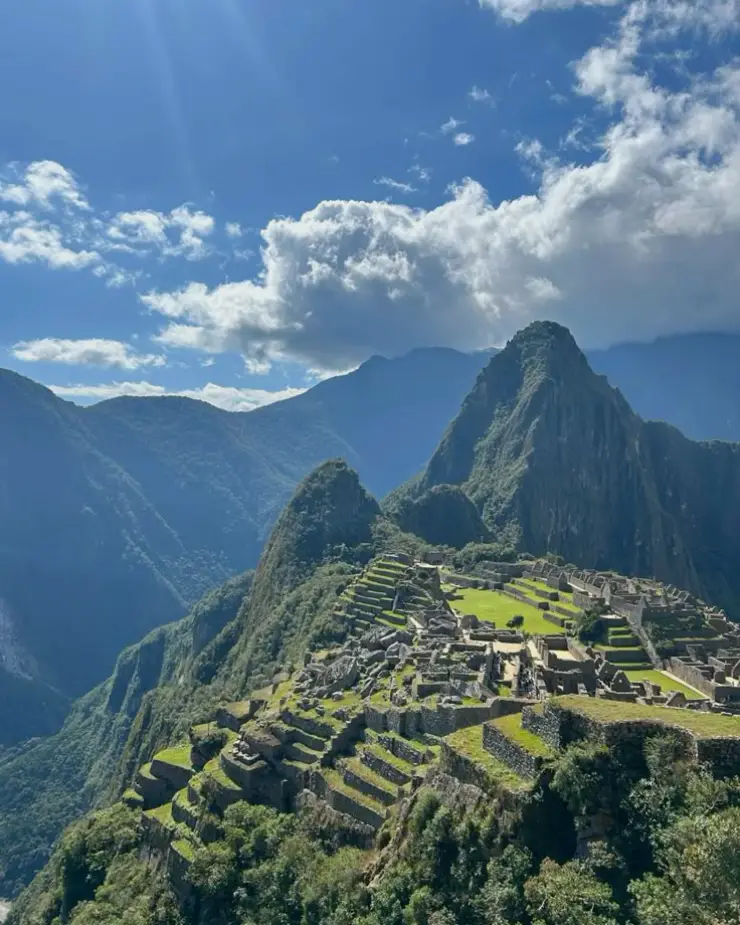
Midday at Machu Picchu.
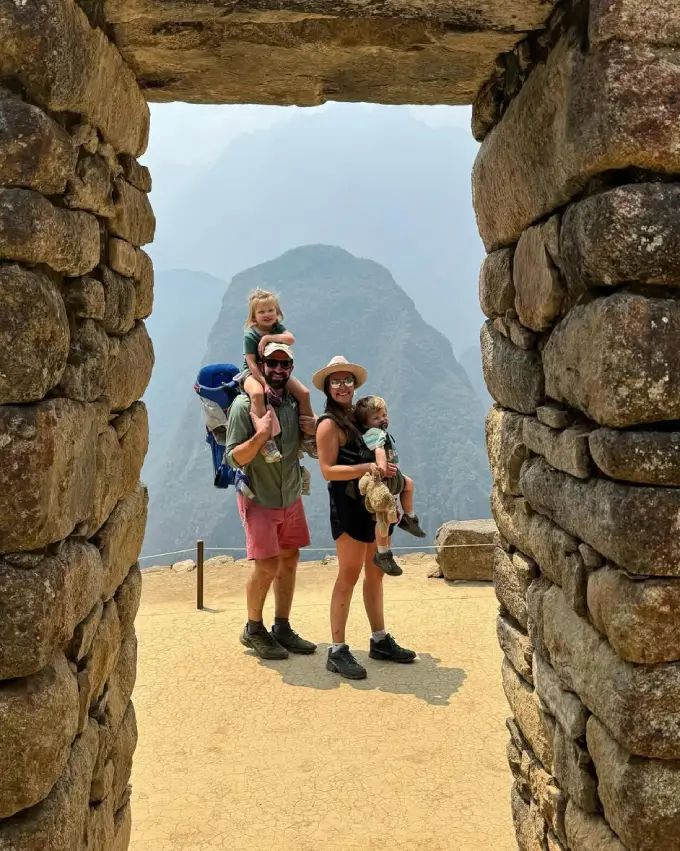
The main challenge is crowd pressure. Many travelers who enter in the morning are still moving through the site, while others are arriving for later entries. Midday can be practical if your train timing requires it, but it is rarely the most peaceful option.
| Midday works if… | Midday is less ideal if… |
| You want clearer light and less fog risk. | You want quiet viewpoints or a contemplative visit. |
| Your train and bus schedule fit this window. | You are sensitive to heat, sun exposure or crowd pressure. |
| You are doing a shorter route without a mountain climb. | You need a long route such as Huayna Picchu or Machu Picchu Mountain. |
WORLD WONDER IN THE ANDESMachu Picchu
Discover the history, landscapes, and essential tips for visiting this world wonder.
Visiting Machu Picchu in the Afternoon
Afternoon visits are useful, but they should be described carefully. They are not automatically empty, and the official ticket system does not mean that every afternoon slot will feel quiet. Still, an afternoon entry can feel less rushed on some dates because many early visitors and organized morning groups have already moved through the site.
The trade-off is time. You have less margin if there is rain, if the bus line is slow, or if your train departs soon after. Afternoon entry works best if you sleep in Aguas Calientes the night before, choose a realistic circuit, and coordinate your return logistics before buying the ticket.
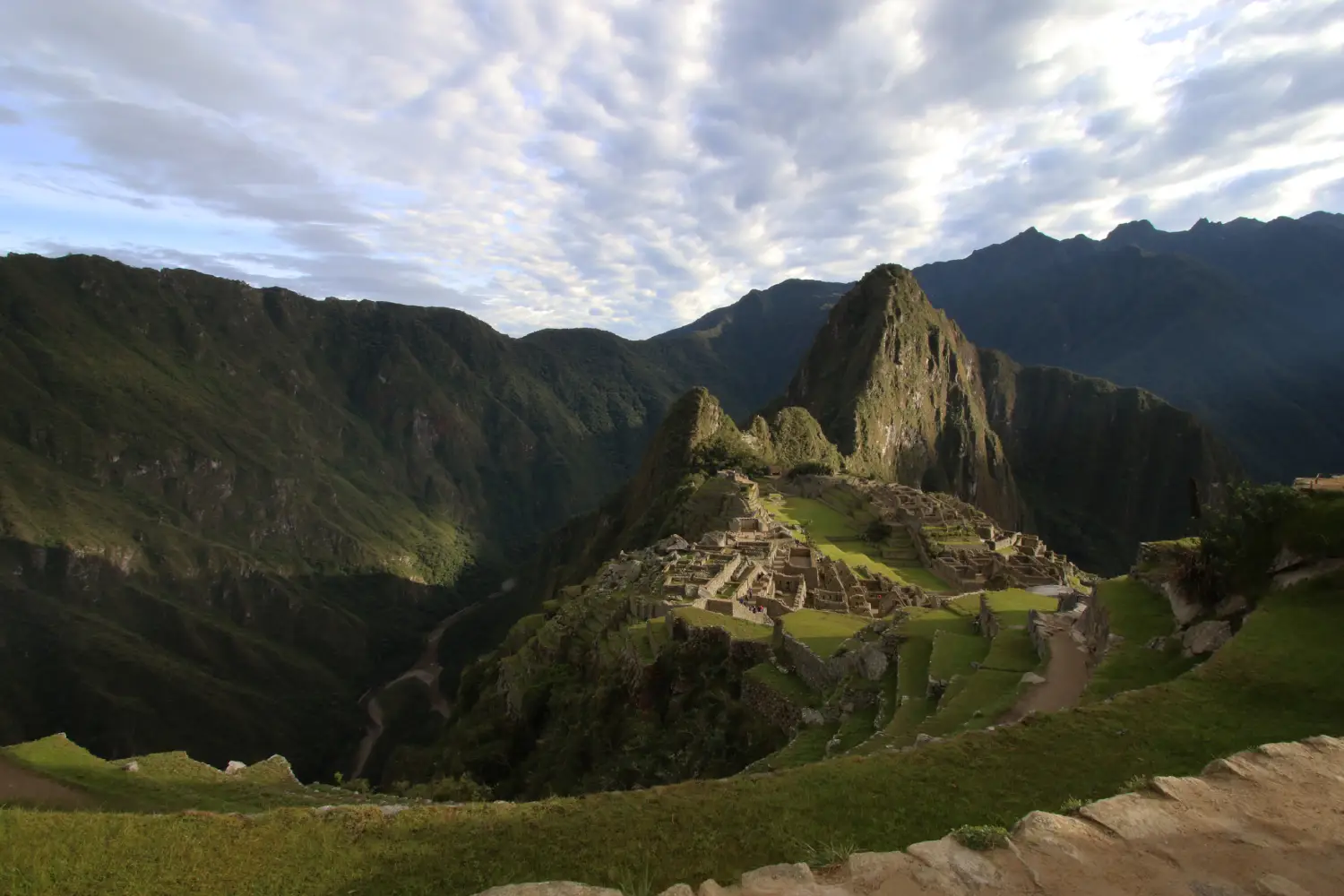
Panoramic afternoon view of Machu Picchu with Huayna Picchu
Advantages of an Afternoon Visit
- It can feel less rushed after many early visitors have started to leave.
- Warmer, softer light late in the day.
- A slower pace in some sectors, depending on date, route and visitor flow.
- Good option for travelers who do not want to wake up extremely early.
Disadvantages of an Afternoon Visit
- It is not guaranteed to be crowd-free, especially in high season.
- Less total time inside the sanctuary.
- Greater risk of afternoon rain during wet months.
- Tighter connection with the return bus and train.
- Less suitable for long mountain routes.
Weather, Fog and Visibility by Time of Day
Weather at Machu Picchu changes quickly because the site sits between Andean slopes and high jungle. A clear morning can become cloudy, and a misty sunrise can open into a bright view. That is why the best time of day also depends on season.
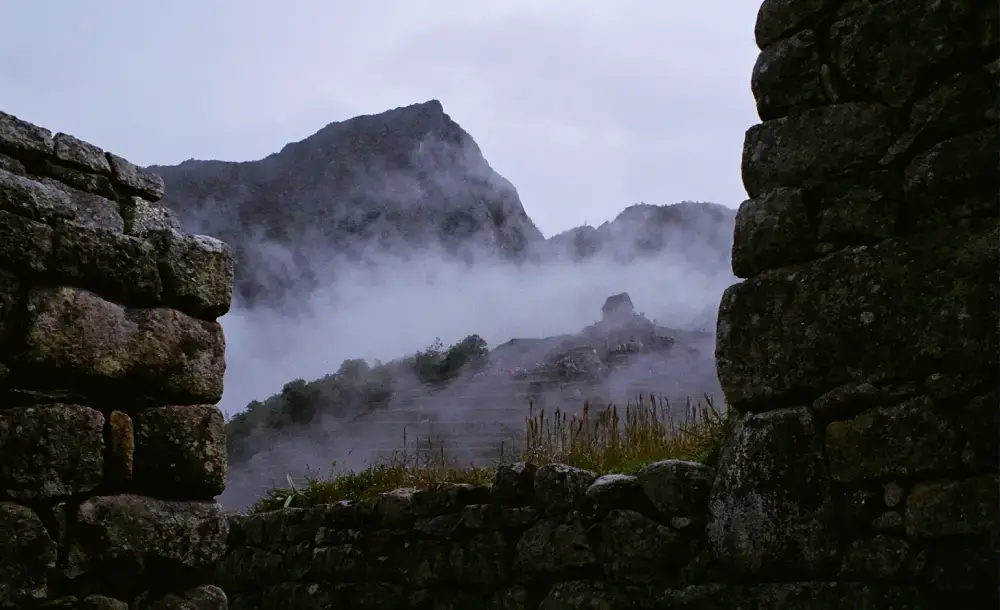
For a month-by-month view, use our Cusco weather guide and remember that Machu Picchu’s cloud forest can feel more humid than Cusco city.
| Time | Weather pattern | Travel advice |
| Early morning | Cooler air, more chance of fog or low clouds. | Good for atmosphere, but not guaranteed for clear photos. |
| Late morning | Often brighter, warmer and more visible. | Best balance for many first-time visitors. |
| Midday | Strong sun when clear, hotter stone paths. | Use hat, sunscreen and water. Photos can be bright but harsh. |
| Afternoon | Warmer light, possible showers in rainy months. | Can feel calmer on some dates, but plan your return carefully. |
How Long Do You Need Inside Machu Picchu?
For a standard visit, plan around 2 to 3 hours inside Machu Picchu, depending on your route, guide, pace and photo stops. Some mountain tickets can require much more time. If you add Huayna Picchu or Machu Picchu Mountain, your day becomes more physically demanding and your entry time matters more.
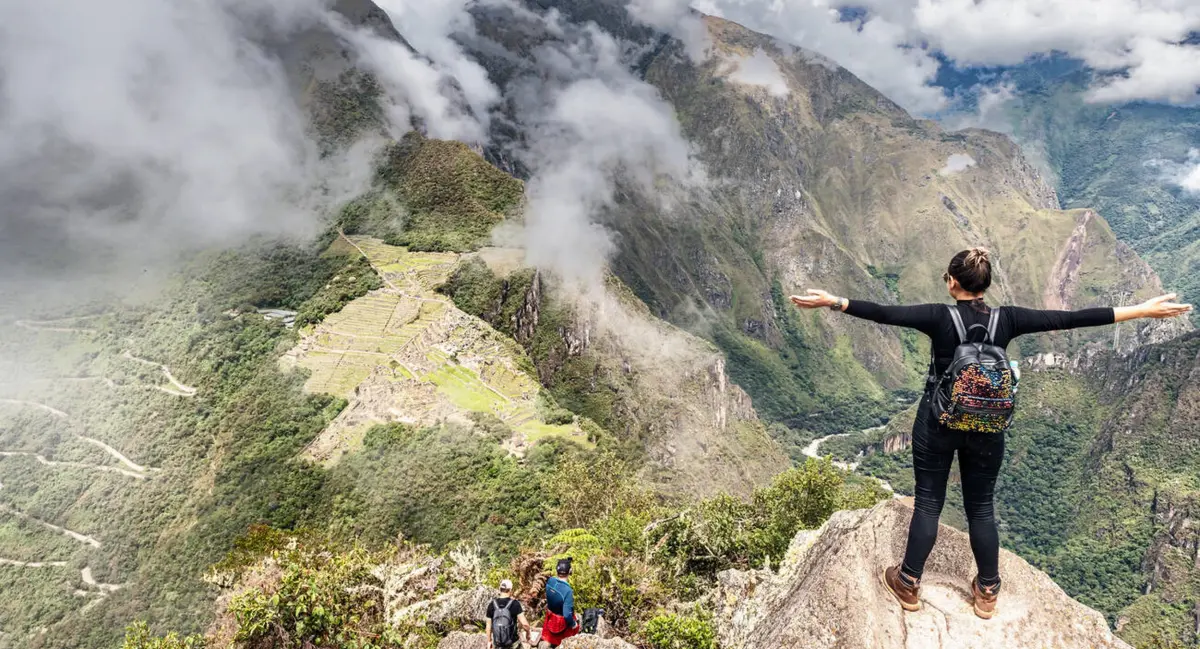
Panoramic view of Machu Picchu surrounded by Andean mountains and cloud forest.
| Visit type | Time to plan | Best entry logic |
| Classic first visit | 2–3 hours | Morning or early afternoon, depending on train and bus logistics. |
| Panoramic route only | 1.5–2.5 hours | Morning for visibility; afternoon if you prefer a slower pace and have flexible logistics. |
| Huayna Picchu | 4–6 hours total | Morning is safer for energy and return timing. |
| Machu Picchu Mountain | 4–6+ hours total | Morning is strongly recommended. |
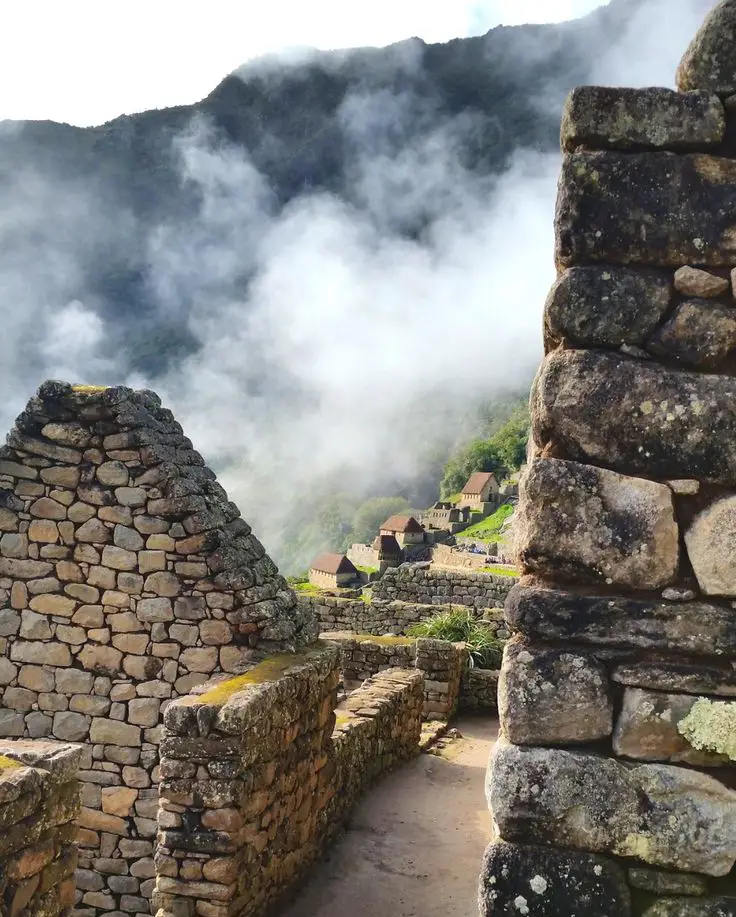
Mist and stone walls during a quiet moment at Machu Picchu. Photo by: Inka Time.
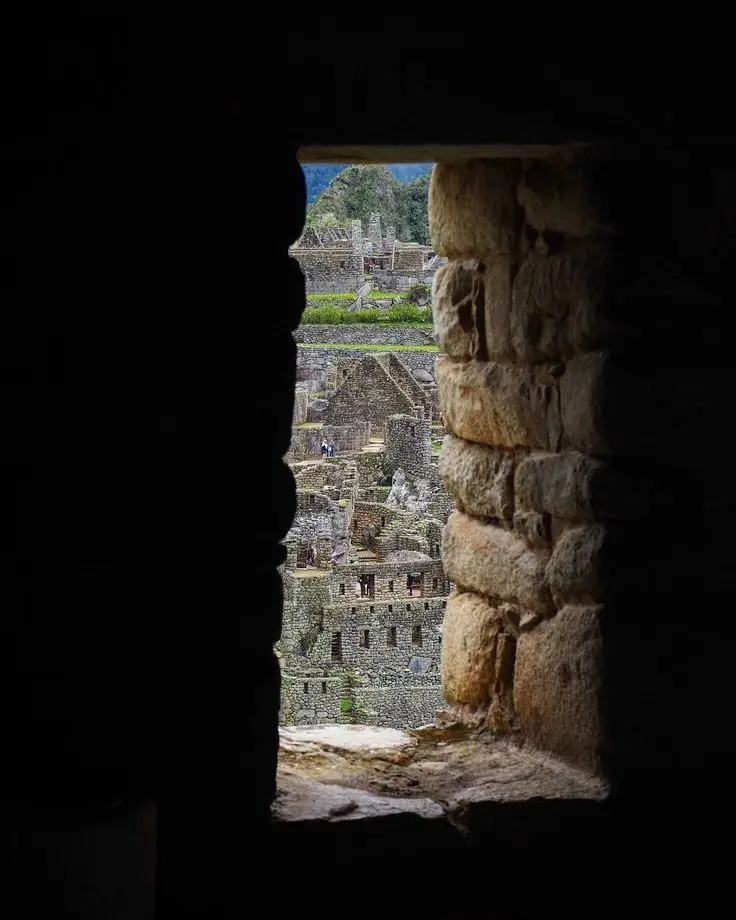
Light and shadow through a stone window at Machu Picchu. Photo by: Perú Destinations.
Morning or Afternoon: Which One Should You Choose?
The best time of day to visit Machu Picchu depends on what you value most. Choose the morning if you want more time, cooler temperatures, and better conditions for long routes. Choose the afternoon if you prefer a slower rhythm and can coordinate the return without pressure.
| Choose morning if… | Choose afternoon if… |
| You are visiting Machu Picchu for the first time. | You prefer a slower pace and can accept that it may still be busy. |
| You will hike Huayna Picchu or Machu Picchu Mountain. | You already have flexible return logistics. |
| You want more margin for buses, trains and delays. | You care more about calm than seeing every sector. |
| You are traveling with a guide and want a full explanation. | You are staying overnight in Aguas Calientes and can plan calmly. |
Plan Your Machu Picchu Visit With the Right Timing
For most travelers, the best time to enter Machu Picchu is between 7:00 a.m. and 10:00 a.m., when the morning fog often begins to clear and the visit still feels manageable. If you prefer a slower pace, an afternoon entry can work well, but it is not a guarantee of empty viewpoints. Your bus, circuit, guide and return train must be coordinated carefully. If you want help choosing the right schedule, route and logistics, contact Inkayni Peru Tours and plan your visit with local support before booking.
Frequently Asked Questions About the Best Time of Day to Visit Machu Picchu
What is the best time of day to visit Machu Picchu?
Is sunrise at Machu Picchu worth it?
Is Machu Picchu better in the morning or afternoon?
When is Machu Picchu least crowded during the day?
What is the best time to take photos at Machu Picchu?
How much time do you need for Machu Picchu?
What time should I take the bus to Machu Picchu?
Can I visit Machu Picchu from Cusco in one day?
What is the best time to climb Huayna Picchu or Machu Picchu Mountain?
Is the best time of day the same as the best time of year?
Escrito por


Shared:



If you liked this article and the information you found, give us 5 stars!

 (2 votos, promedio: 4.50 de 5)
 Loading...