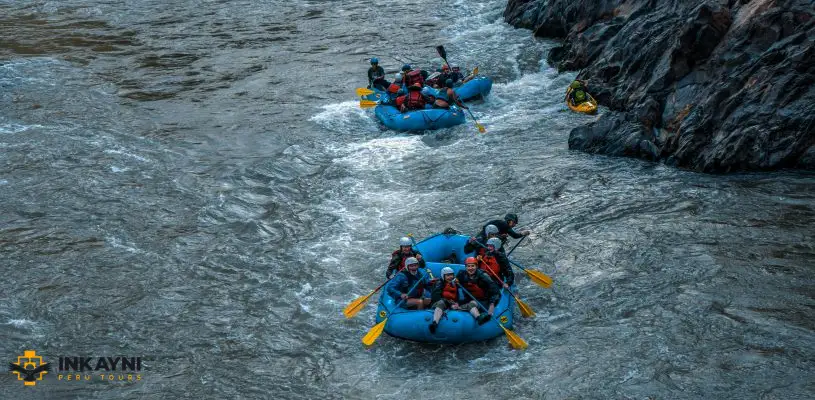
Two days sounds short until you look at the altitude. On Day 2 you can stand at essentially the same Salkantay Pass used by the longer 4- and 5-day routes, above 15,000 ft, after already hiking to Humantay Lake the day before. That makes this less of a “mini Salkantay” and more of a concentrated high-Andes experience for travelers who want the lake and the pass without continuing all the way to Machu Picchu.
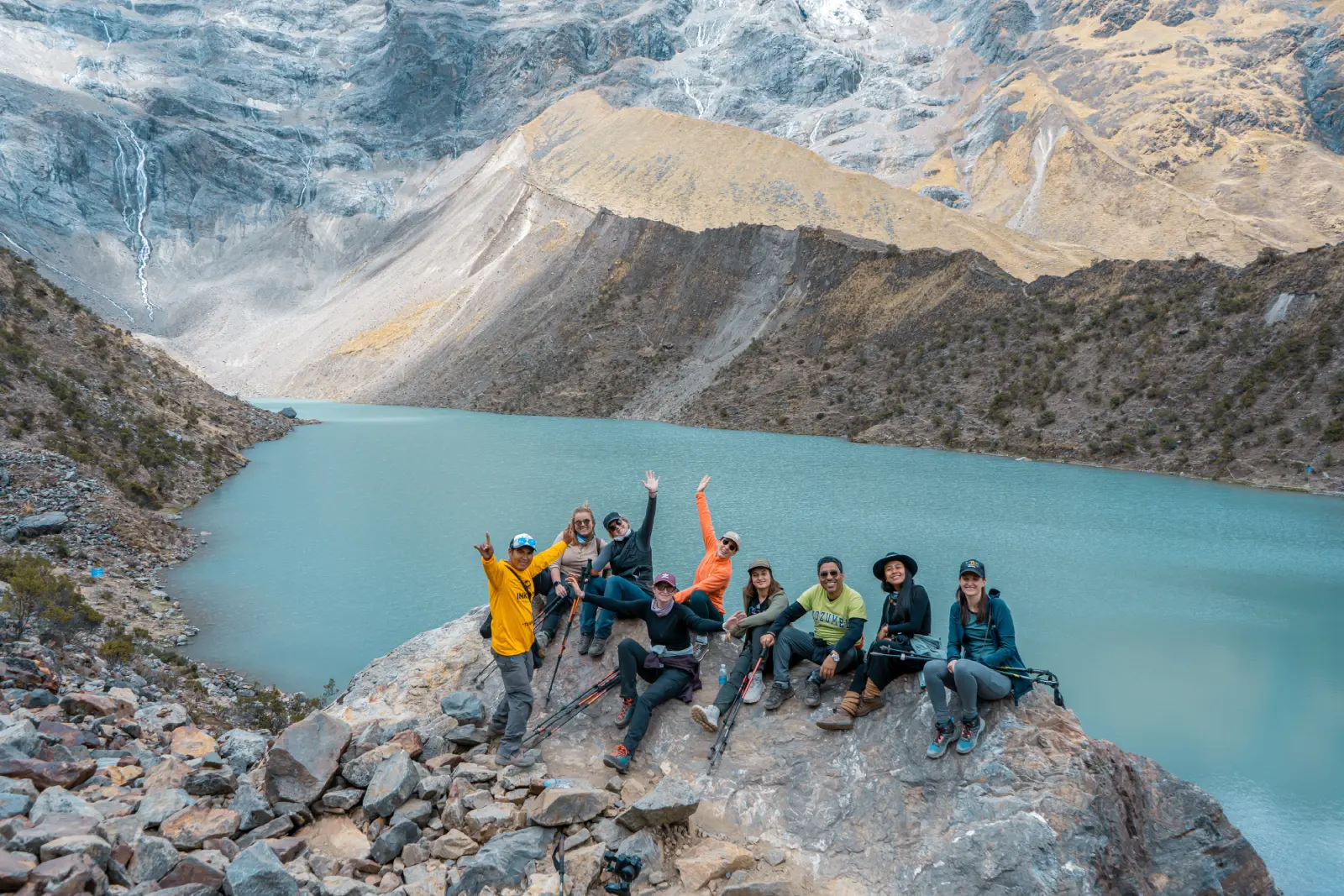
Hikers at Humantay Lake.
2-Day Salkantay Trek at a Glance
| Planning point | Useful 2-day reference |
| Route type | Humantay Lake + Salkantay Pass high-mountain circuit |
| Duration | 2 days / 1 night |
| Typical hiking distance | About 13–16 mi (21–26 km), depending on trailhead and campsite |
| Humantay Lake | About 13,780 ft (4,200 m) |
| Highest point | Salkantay Pass — about 15,190 ft (4,630 m) |
| Difficulty | Moderate to challenging; altitude is the main difficulty rather than technical terrain |
| Overnight | Soraypampa / Soyroccocha sector; exact camp and sleeping altitude vary |
| Machu Picchu | Not included. This circuit returns to Cusco after the pass. |
| 2026 planning price | About US$180–320 (S/600–1,070) for standard group service; private and premium departures vary more widely. |
Keep this in mind:
Published two-day routes do not all measure the same walking line. Current operators use different trailheads and camps, with totals ranging from roughly the low 20s to the mid-20s in kilometers. Compare the actual trailhead, campsite and Day 2 return line before treating one exact mileage figure as universal.
GLACIER MOUNTAIN TREKSalkantay Trek
Discover one of Peru’s most scenic treks beneath snowy peaks and changing landscapes.
2-Day Humantay Lake & Salkantay Pass Itinerary
The route is fairly recognizable even though the camp and daily mileage can vary: Humantay Lake on Day 1, one high-altitude overnight, then Salkantay Pass on Day 2 before returning to Cusco.
Tour names are not fully standardized. Some companies also use “2-day Salkantay” for other short routes around the upper mountain corridor, so the itinerary below refers specifically to the Humantay Lake + Salkantay Pass out-and-back format. If a tour does not clearly list both places, do not assume the name alone guarantees this walking line.
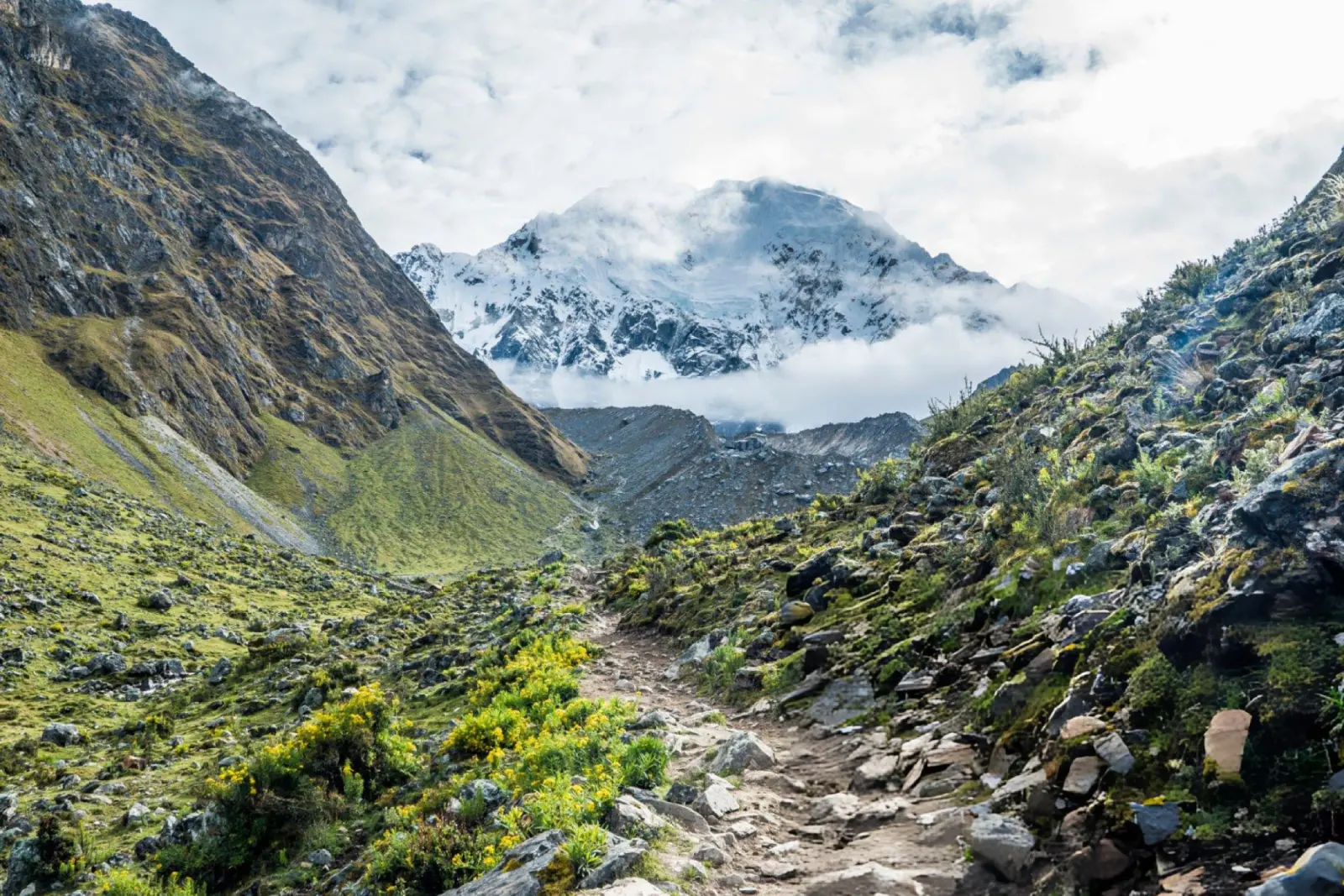
Trail views toward Salkantay Mountain on the route.
Day 1 — Cusco → Soraypampa → Humantay Lake → High Camp
The day begins with an early road transfer from Cusco through the Mollepata area toward Soraypampa, the main access point for Humantay Lake and the upper Salkantay trekking corridor.
Soraypampa sits at roughly 12,795 ft (3,900 m). From there, the familiar Humantay hike climbs to the lake at about 13,780 ft (4,200 m). The common ascent takes roughly 1.5–2 hours; the challenge comes mostly from altitude and gradient rather than technical terrain.
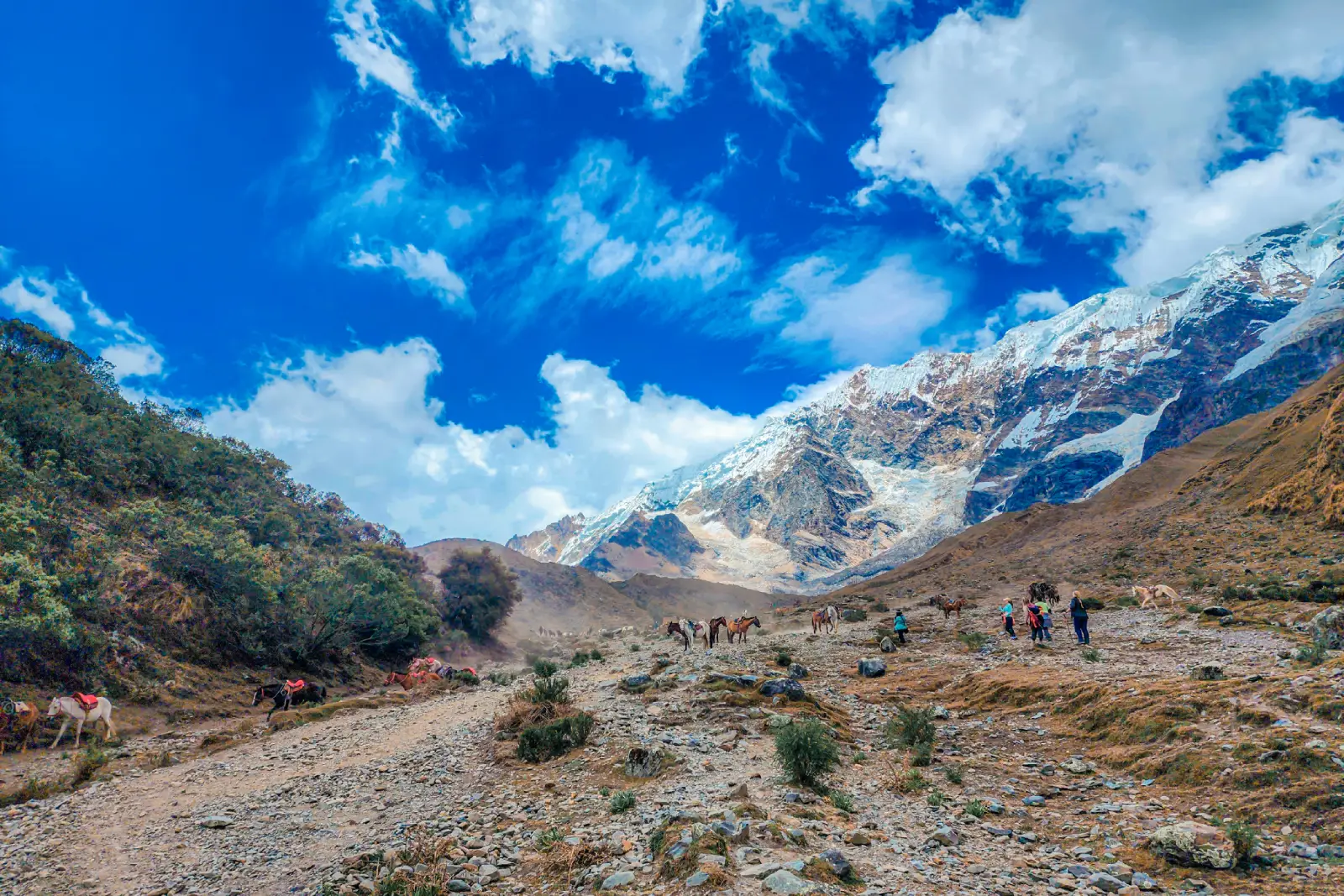
Upper valley with horses and glaciers.
After the lake, the itinerary continues to the overnight camp. Some current versions sleep near Soraypampa around 12,795 ft (3,900 m); others continue toward a higher Soyroccocha-sector camp. That is not a cosmetic difference: sleeping several hundred feet higher changes both the first night’s acclimatization load and how much climbing remains for Day 2.
- Soraypampa-level camp: lower sleeping altitude and a gentler first night, but more climbing remains before the pass.
- Higher Salkantaypampa / Soyroccocha-sector camp: more effort moves into Day 1, leaving less climbing for the following morning.
- Dome or glamping setup: the hiking line can be similar, while private bathrooms, smaller groups or upgraded camp comfort raise the price.
A practical Day 1 hiking range is around 6–7.5 mi (10–12 km), depending on where the trek begins and where the group sleeps.
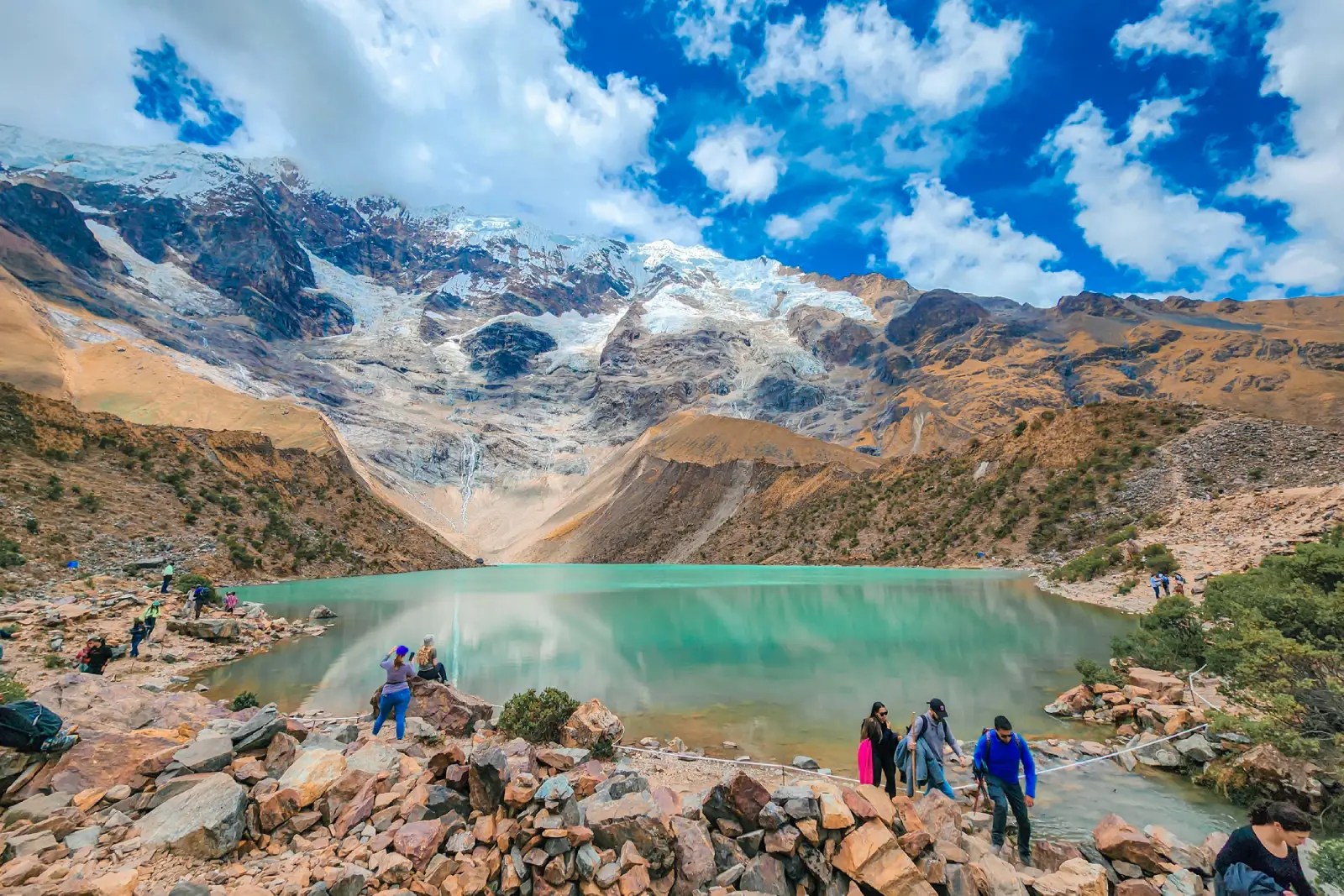
Humantay Lake below snowy peaks.
Day 2 — High Camp → Salkantay Pass → Soraypampa → Cusco
Day 2 is what turns this into a genuine short Salkantay route rather than an overnight Humantay excursion. The trail continues beneath Salkantay Mountain and climbs to Salkantay Pass at about 15,190 ft (4,630 m).
The trekking route does not climb Salkantay’s summit. You cross the pass below the glaciated massif, where thin air, wind and cold exposure can make an ordinary walking pace feel disproportionately hard.
Current comparable itineraries commonly publish roughly 7.5–8.7 mi (12–14 km) for Day 2, normally including the ascent to the pass and the descent back toward Soraypampa or another transport point. From there, the trip returns by road to Cusco.
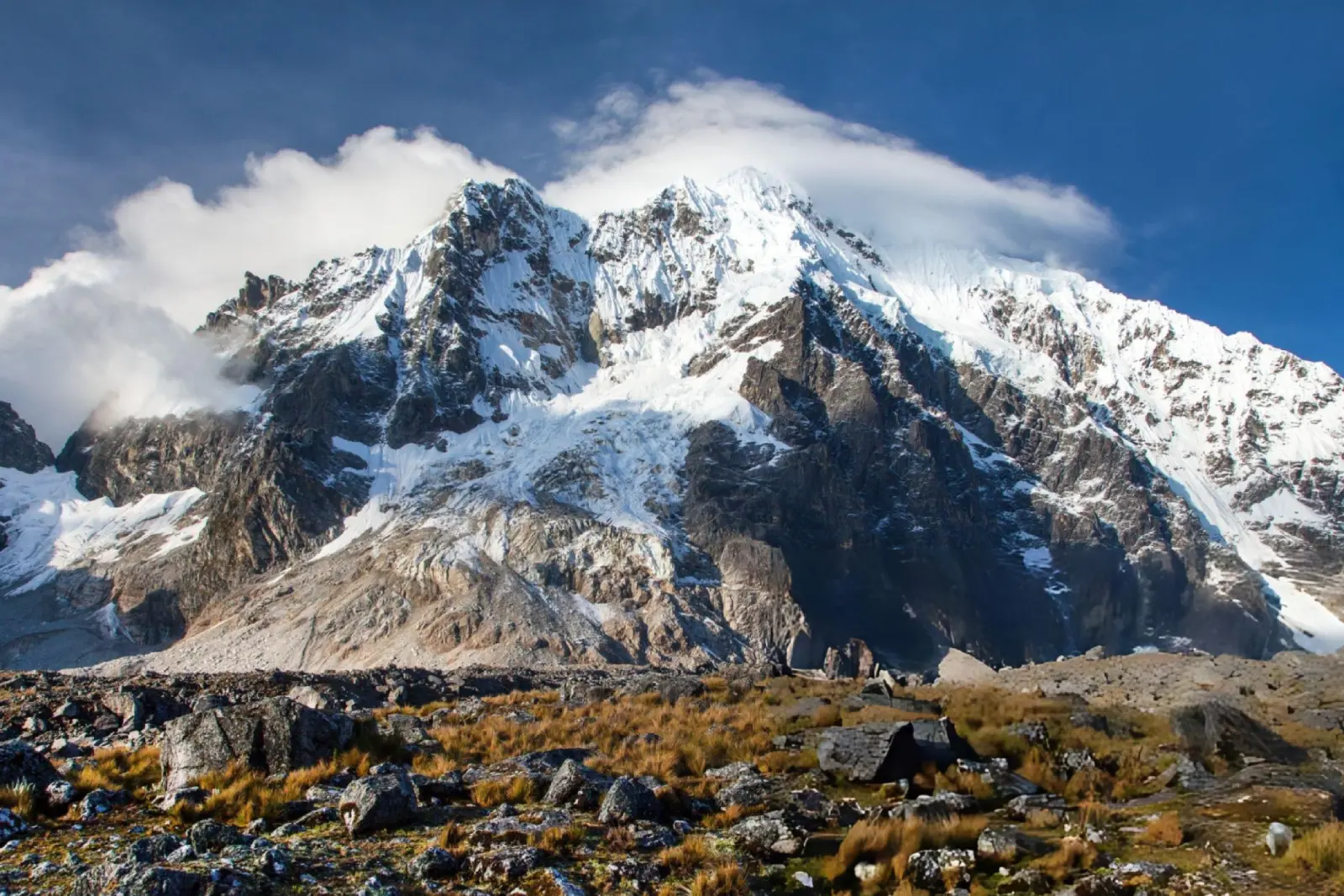
Salkantay Mountain dominating the high-Andean landscape in Salkantay pass.
How Difficult Is the 2-Day Salkantay Trek?
The 2-day Salkantay Trek is moderate to challenging, primarily because of altitude rather than technical hiking. You do not need ropes, climbing skills or mountaineering experience, but the route reaches the same pass used by longer Salkantay itineraries at about 15,190 ft (4,630 m).
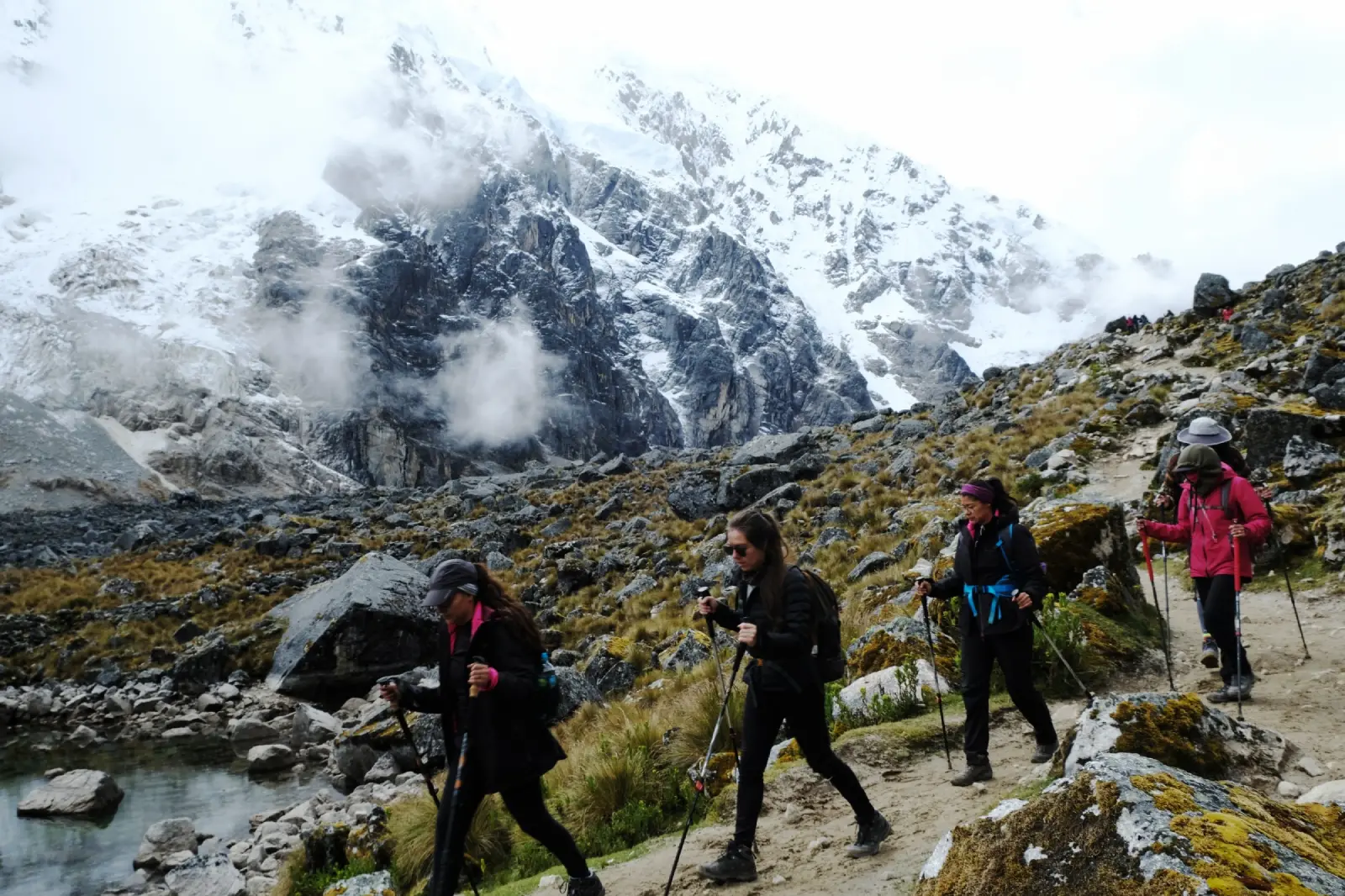
Hiking the alpine trail below Salkantay mountain.
A traveler who can comfortably walk 8 mi at home may still move slowly above 14,000 ft. Arriving acclimatized matters more here than the short calendar suggests. The Cusco altitude guide explains acclimatization, while the Salkantay Trek difficulty guide puts the pass in the context of the longer route.
Elevation gain depends on where you sleep
There is no single reliable whole-route elevation-gain figure for every two-day itinerary because the first trailhead and overnight camp can change. One stable section is the Humantay Lake climb: from Soraypampa around 12,795 ft (3,900 m) to the lake at 13,780 ft (4,200 m), the net gain is roughly 985 ft (300 m).
The second day’s climbing load changes much more. A Soraypampa-level camp leaves significantly more ascent to Salkantay Pass than a higher Soyroccocha-sector camp. Ask for the campsite altitude rather than relying on one generic elevation-gain number.
Important:
Fitness and acclimatization solve different problems. Strong cardio helps you handle the workload, but it does not guarantee that your body will respond well above 15,000 ft.
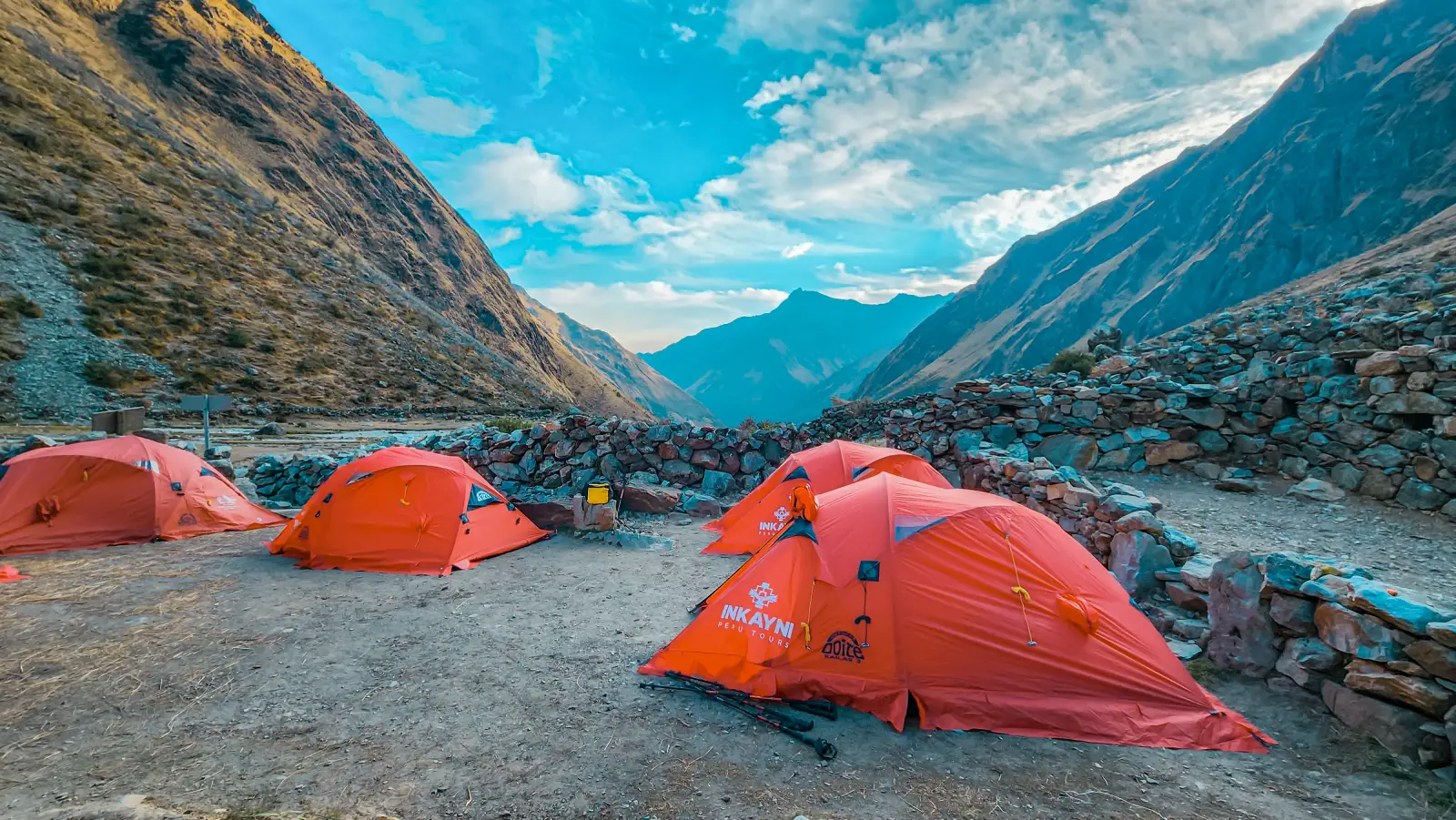
Mountain campsite on the Salkantay Trek.
2-Day Salkantay Trek vs Humantay Lake Day Trip
The decision is less about adding “one more day” and more about what that extra day buys you: Humantay Lake alone, or Humantay plus a night in the upper valley and Salkantay Pass the next morning.
| Factor | Humantay Lake day trip | 2-day Humantay + Salkantay Pass |
| Time | 1 day | 2 days / 1 night |
| Highest point | Humantay Lake: ~13,780 ft (4,200 m) | Salkantay Pass: ~15,190 ft (4,630 m) |
| Overnight | No | Yes |
| Salkantay Pass | No | Yes |
| Physical demand | Moderate, strongly affected by altitude | Moderate to challenging, with a higher second day |
| Best fit | Lake-focused traveler with one free day | Acclimatized traveler who wants a short high-mountain trek |
If Humantay Lake is your only priority, the Full-Day Humantay Lake service is the cleaner choice. The two-day route earns its second day by taking you beyond the lake and up to Salkantay Pass.


How Much Does the 2-Day Salkantay Trek Cost?
Current 2026 prices vary mainly with group size, overnight comfort and how much support is included. Recent published group prices cluster around roughly US$190–300, while upgraded dome or small-group services can sit toward the upper end even when the hiking line is similar.
| Service level | Useful 2026 planning range |
| Standard group service | US$180–320 (S/600–1,070) per person |
| Private / premium | US$300–600+ (S/1,005–2,010+) per person |
The second range is a starting comparison band, not a ceiling. Current private examples for two travelers sit around US$480–540 (S/1,610–1,810) per person, while a solo private departure can approach US$900–1,000+ (S/3,015–3,350+) per person. Group size can therefore change the price more than the trail itself.
Compare the inclusions:
Check the overnight accommodation, meals, Humantay entrance, mule or horse support, sleeping bag, trekking poles, emergency oxygen and whether transport from Cusco is private or shared. A dome or glamping label can also describe very different comfort levels between operators.
Does the 2-Day Salkantay Trek Go to Machu Picchu?
No. This is one of the most important distinctions to understand before booking. The 2-day Humantay Lake + Salkantay Pass circuit returns toward Soraypampa and Cusco after the high pass.
If Machu Picchu is part of your goal, use a route designed to continue through the lower valleys. The 3-day Salkantay Trek compresses the journey much more aggressively, the 4-day Salkantay Trek preserves a recognizable high-mountain backbone, and the 5-day Salkantay Trek keeps more of the mountain-to-cloud-forest transition on foot.
For route-wide mileage and walking-time comparisons, use the Salkantay distance and duration guide rather than turning this short circuit into another Machu Picchu itinerary.
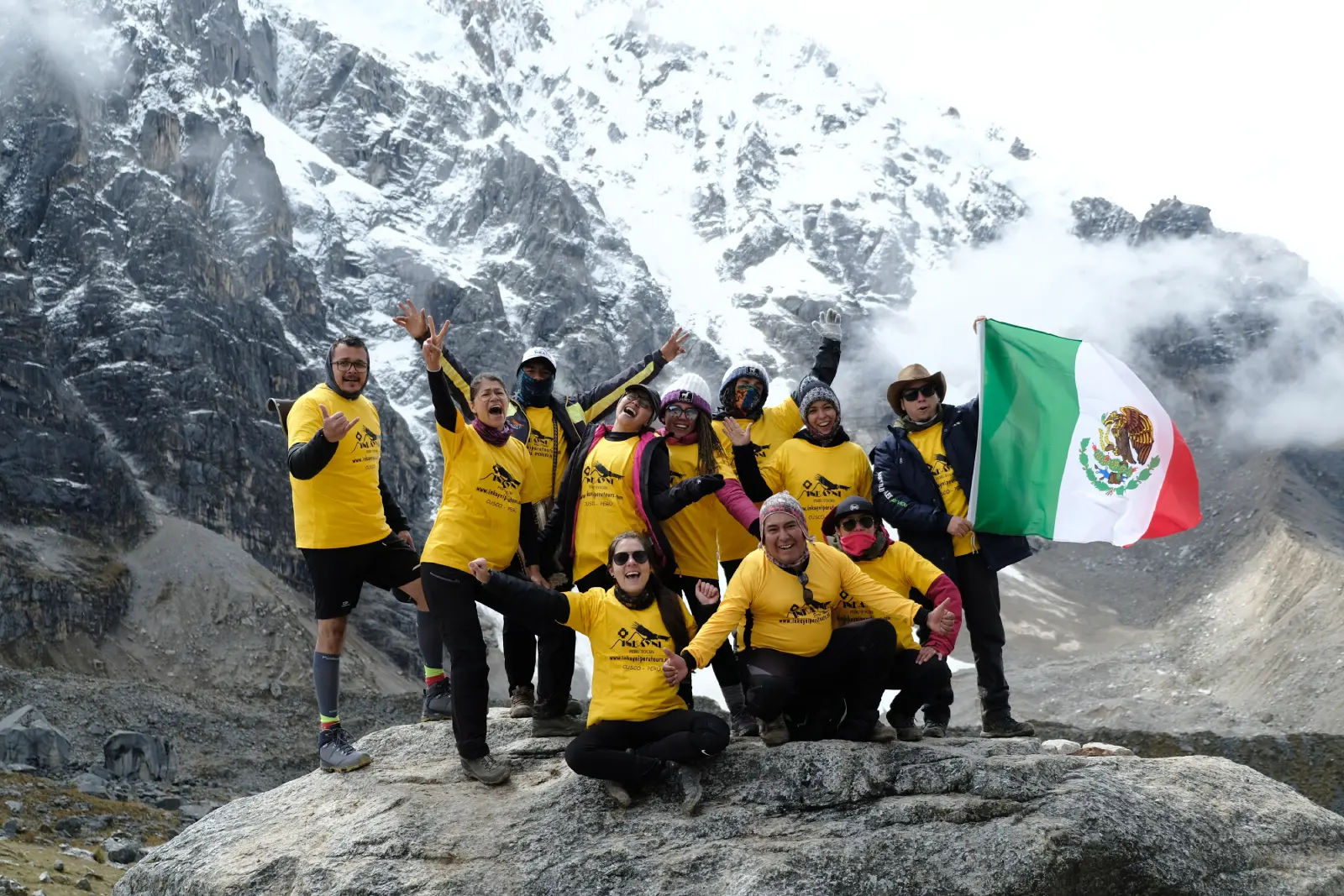
Trekkers celebrating in front of Salkantay mountain.
Best Time for Humantay Lake & Salkantay Pass
For most hikers, May through September offers the most stable conditions, with lower rainfall and firmer trails. April and October can still work well as shoulder months. From roughly November through March, rain, mud, cloud cover and road conditions become more important planning factors.
Dry season does not mean guaranteed clear skies at 15,000 ft. For month-by-month conditions, use the Cusco weather by month guide.
Who Should Choose This 2-Day Route?
| This route makes sense if… | Choose another option if… |
| You want both Humantay Lake and Salkantay Pass. | You only want Humantay Lake and have one free day. |
| You are already acclimatized in Cusco. | You arrived recently and have not tested how you feel above 13,000 ft. |
| You want an overnight mountain experience without committing to four or five days. | Your main objective is Machu Picchu. |
| You are comfortable with two back-to-back hiking days. | You prefer a gentler introduction to high-altitude trekking. |
| Glaciers and exposed high-Andean terrain are the main attraction for you. | You want the full cloud-forest and lower-valley transition of the longer route. |
If you are comparing high-altitude hikes around Cusco rather than specifically choosing a Salkantay itinerary, the trekking routes in Cusco guide helps put the commitment in context.
What to Confirm Before Booking the 2-Day Route
Before paying, ask for the written walking line. “2-day Salkantay Trek” can describe different short routes, and the campsite, trailhead and return point directly affect both difficulty and price.
- Trailhead: Challacancha, Soraypampa or another starting point?
- Total walking: how many miles are actually hiked across both days?
- Overnight camp: Soraypampa, Soyroccocha or another camp?
- Sleeping altitude: this can materially change Night 1.
- Humantay Lake: confirm it is explicitly included.
- Salkantay Pass: confirm the itinerary reaches the full high pass rather than only a viewpoint.
- Luggage support: how much personal gear can the horse or mule team carry?
- Sleeping equipment: tent/dome, mattress and sleeping bag—what is included?
- Meals and water: which meals and refill points are provided?
- Emergency support: first aid, oxygen and evacuation procedures?
- Return to Cusco: pickup point and expected arrival time?
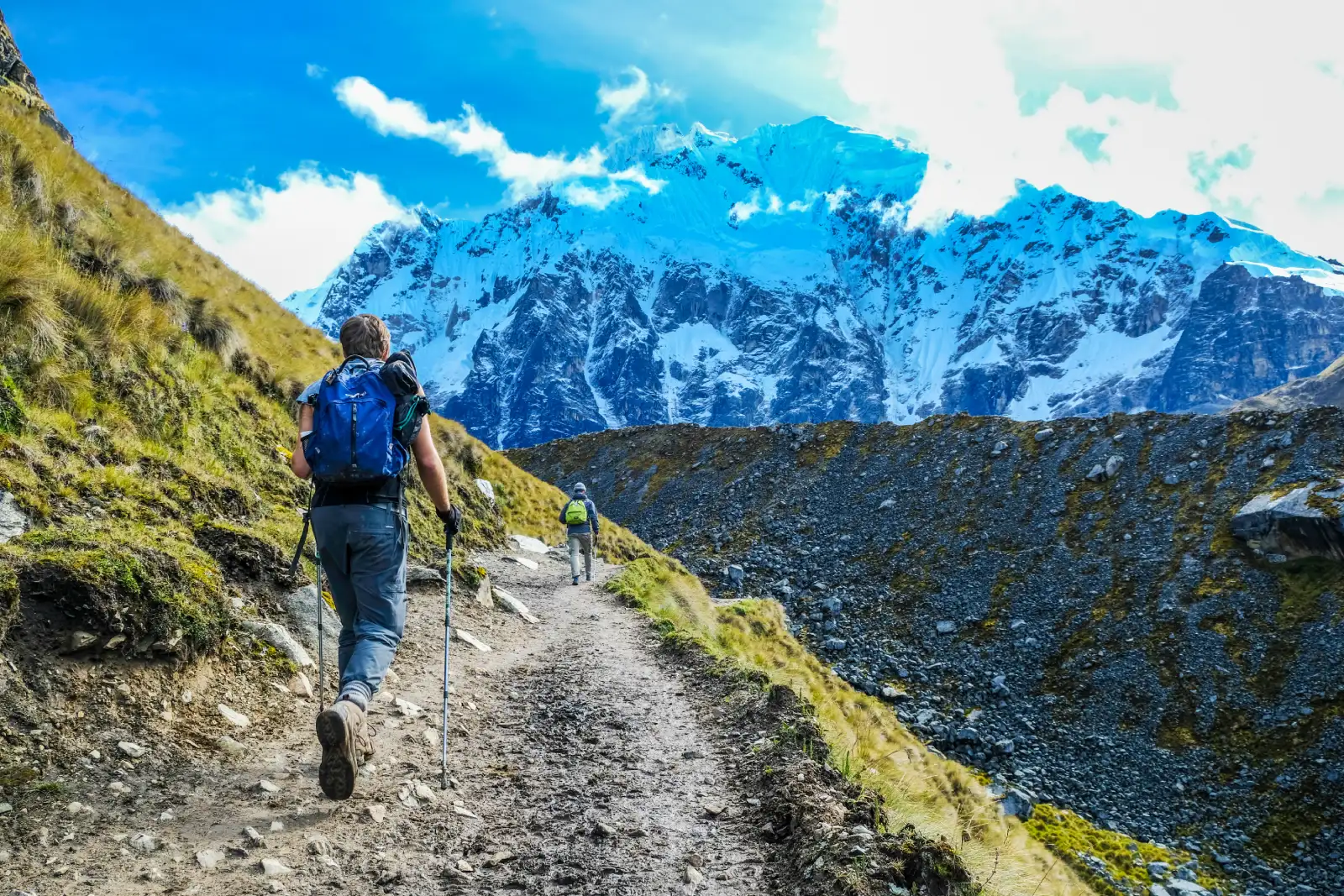
Trail section below Salkantay Mountain.
For training, daypack and gear decisions, use the Salkantay preparation and packing guide. Two days is short enough to fit into a tighter itinerary, but not short enough to make untested footwear or poor acclimatization irrelevant.
Plan the Right Salkantay Experience
Two Days Is Enough for the High Mountains—Not for Machu Picchu
The strongest reason to choose this route is straightforward: you get Humantay Lake, a night in the upper Salkantay valley and the high pass without giving four or five days of your Peru itinerary to a trek.
If the two-day format matches your dates, talk to a travel specialist and ask for the current campsite, mileage and operating details. If you only want the lake, compare the Full-Day Humantay Lake. If Machu Picchu is the goal, the live 4-day Salkantay route and 5-day Salkantay route continue beyond the pass.
Frequently Asked Questions About the 2-Day Salkantay Trek
How many miles is the 2-day Salkantay Trek?
Comparable Humantay Lake + Salkantay Pass routes commonly cover about 13–16 mi (21–26 km) across the two days. The exact number changes with the trailhead, campsite and return walking line.
What is the highest point on the 2-day Salkantay Trek?
The highest point is Salkantay Pass at about 15,190 ft (4,630 m). Humantay Lake sits lower at approximately 13,780 ft (4,200 m).
Does the 2-day Salkantay Trek include Machu Picchu?
No. This route focuses on Humantay Lake and Salkantay Pass, then returns to Cusco. Travelers who want Machu Picchu should choose a longer Salkantay itinerary designed to continue through the lower valleys.
How difficult is the 2-day Humantay Lake and Salkantay Pass Trek?
It is best described as moderate to challenging. The trail is non-technical, but hiking above 13,000 ft and reaching a pass above 15,000 ft makes acclimatization, pacing and basic hiking fitness important.
How much does the 2-day Salkantay Trek cost?
A useful 2026 planning range is about US$180–320 (S/600–1,070) per person for standard group services and roughly US$300–600+ (S/1,005–2,010+) per person for private or premium departures. Very small private groups can cost much more; solo private service can approach US$900–1,000+ (S/3,015–3,350+).
Where do you sleep on the 2-day Salkantay Trek?
The overnight is normally in the upper Soraypampa / Soyroccocha sector. Exact camp location and sleeping altitude vary by itinerary, so confirm both before booking rather than assuming every two-day route uses the same campsite.
Is Humantay Lake included in the 2-day Salkantay Trek?
It is included in the Humantay Lake + Salkantay Pass version described here and is normally visited on Day 1. Because tour names are not standardized across operators, still confirm the lake in the written itinerary.
Is the 2-day route better than a Humantay Lake day trip?
Choose the day trip if the lake is your only priority. Choose the two-day route if you also want Salkantay Pass, a high-altitude overnight and a more complete upper-mountain experience.
What is the best time for the 2-day Salkantay Trek?
May through September generally offers the most stable trekking conditions. April and October can also work well with more variable weather, while the wetter months from roughly November through March require more flexibility.