


What to Bring on the Inca Jungle Trek
The essential items for the Inca Jungle Trek are quick-dry clothing, a light fleece, waterproof layer, broken-in hiking shoes, hiking socks, sun protection, insect repellent, reusable water bottle, compact snacks, passport, Machu Picchu booking details, cash in soles, phone, charger and personal medication. A 20–25 L daypack is practical for most travelers, but Machu Picchu bag dimensions matter more than liters.
Table of Contents
Packing for the Inca Jungle Trek means preparing for several climates and activities without overloading your bag. You may start in the cold air of Abra Malaga and reach much warmer valleys only a few hours later, with hiking and optional adventure activities on the way to Machu Picchu.
These recommendations cover the standard 3-day and 4-day versions, including clothing, personal gear and what Inkayni normally provides.
MULTI-ADVENTURE ROUTEInca Jungle Trek
Bike, raft, and hike through tropical valleys on an adventurous route to Machu Picchu.
Inca Jungle Trek Packing List at a Glance
| Category | What to bring |
| Clothing | 2–3 quick-dry shirts, trekking pants or shorts, light fleece, waterproof layer, sleepwear, warm hat and light gloves. |
| Footwear | Broken-in hiking shoes or light boots, 2–3 pairs of hiking socks, sandals or flip-flops for accommodation and hot springs. |
| Rain, sun & insects | Rain shell or poncho, sun hat, UV-rated sunglasses, sunscreen and insect repellent. |
| Activity items | Swimsuit, compact towel, dry change of clothes and a small waterproof pouch for valuables. |
| Hydration & snacks | Reusable bottle or hydration bladder, electrolyte sachets if you use them, energy bars, trail mix or other compact non-perishable snacks. |
| Documents | Original passport, Machu Picchu booking details, emergency contacts and travel-insurance details if applicable. |
| Cash | Peruvian soles in small bills for drinks, snacks, local extras, Cocalmayo and tips if you choose to give them. |
| Personal & electronics | Personal medication, toiletries, blister care, phone, charging cable and compact power bank. |
| Technical gear | Confirm biking, rafting and zipline equipment with your operator or activity provider before bringing any technical gear yourself. |
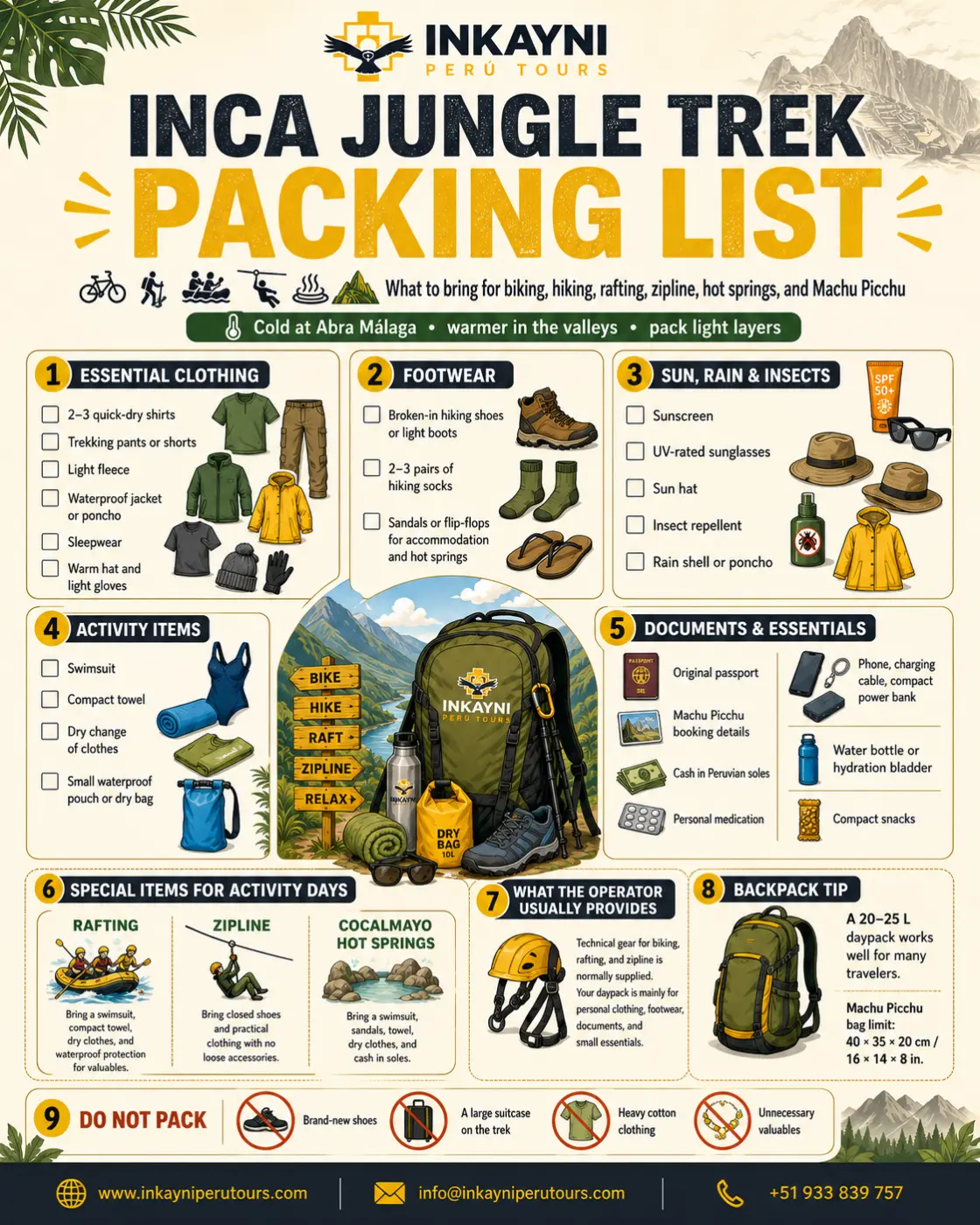
Inca Jungle Trek packing list with clothing, footwear, documents, and key essentials for adventure activities.
What travel agency Provides vs. What You Bring
With Inkayni Peru Tours, separate technical activity equipment from your personal trekking gear. When biking, rafting or ziplining is included, the specialist equipment is normally supplied for the activity. Your bag is mainly for clothing, footwear, documents and personal items.
| Activity | Operator provides | You bring |
| Mountain biking | Bike and the protective equipment listed in the confirmed service. | Warm layer, rain protection, sunglasses, sunscreen and secure closed shoes. |
| Rafting | Wetsuit, life jacket, helmet, raft and paddling equipment when rafting is confirmed and operating. | Swimsuit, compact towel, dry clothes and waterproof protection for valuables. |
| Zipline | Harness, helmet, gloves and the required safety equipment. | Closed shoes and practical clothing that does not interfere with the harness. |
| Cocalmayo | Personal items are not supplied; entrance is separate unless your confirmed package includes it. | Swimsuit, towel, sandals, dry clothes and cash in soles. |
Warning:
It is possible to arrange parts of the Inca Jungle Trek independently, but transport, accommodation, Machu Picchu tickets and return travel all need to line up. Biking, rafting and ziplining also require separate providers when you include them. Your personal packing changes little; the bigger task is having the reservations and contacts organized before departure.

How Packing Changes by Day
What belongs near the top of your bag changes between the cold start at Abra Malaga, the warmer hiking sections and the final visit to Machu Picchu.
Day 1: Abra Malaga biking and possible rafting
Day 1 starts at Abra Malaga, around 4,350 m / 14,271 ft. It can feel cold at the pass, but temperatures rise noticeably as you descend toward the lower valleys.
Keep easy to reach: a warm base layer, light fleece, waterproof shell or poncho, warm hat, sunglasses, sunscreen and secure closed shoes. When rafting is confirmed for later that day, keep your swimsuit, compact towel and dry clothes near the top of the bag as well.
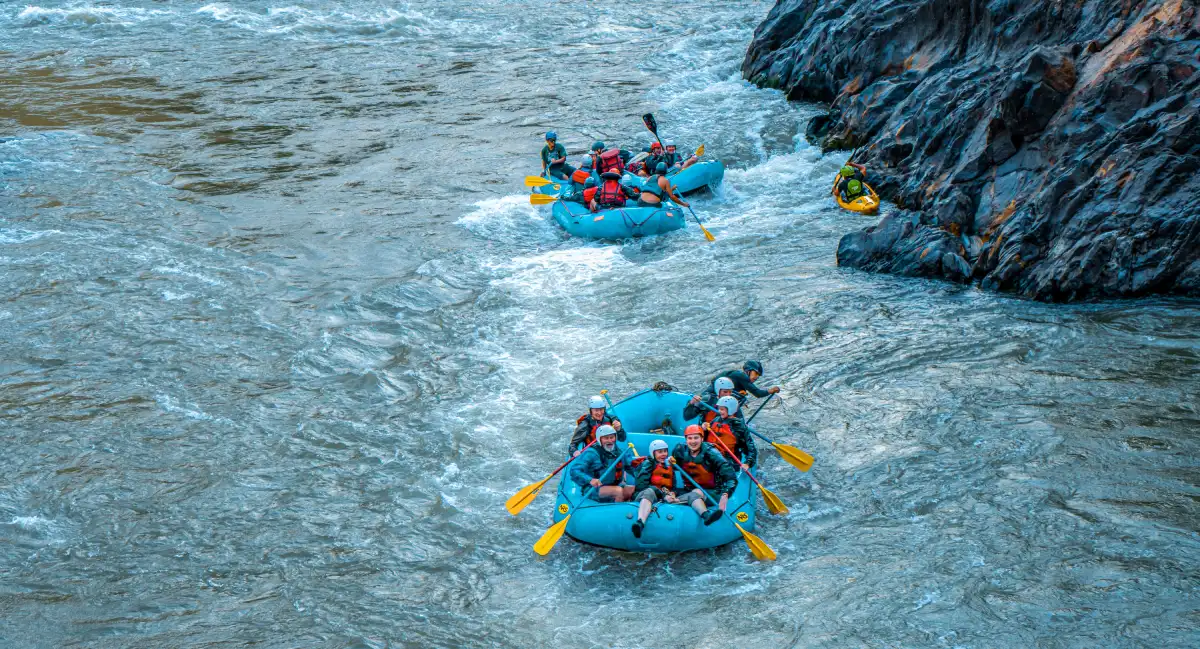
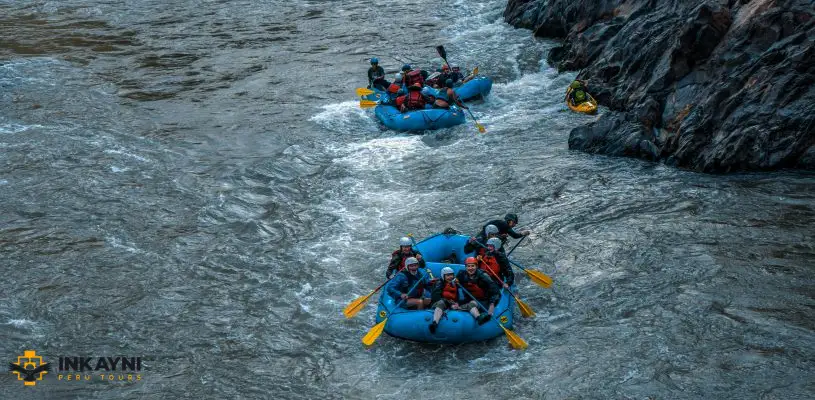
Rafting on the Urubamba River during the Inca Jungle trek.
If you have only recently arrived from low elevation, clothing will not solve the altitude issue. The Cusco acclimatization guide covers that separately.
Days 2 and 3: hiking and warmer valleys
For the warmer hiking days, quick-dry clothing and a light pack work best. Keep one pair of socks dry, your waterproof layer accessible and insect repellent handy in the lower sections.
For Cocalmayo, keep the swimsuit, towel, sandals and cash together. If ziplining is confirmed, closed shoes and clothing without loose accessories work better with the harness.
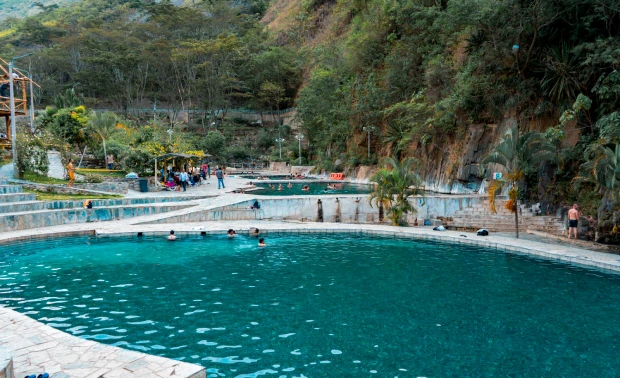
On the 3-day Inca Jungle Trek, one fewer change of clothing is usually enough; the rest of the basic gear remains much the same.
Day 4: Machu Picchu
For Machu Picchu, carry your original passport, confirmed entry details, rain and sun protection, and a small daypack.
Machu Picchu’s official conduct rules limit bags to 40 x 35 x 20 cm / 16 x 14 x 8 in. A 20–25 L daypack often works well, but the dimensions—not the advertised liters—are what matter at the entrance. Oversized bags must be left in storage.
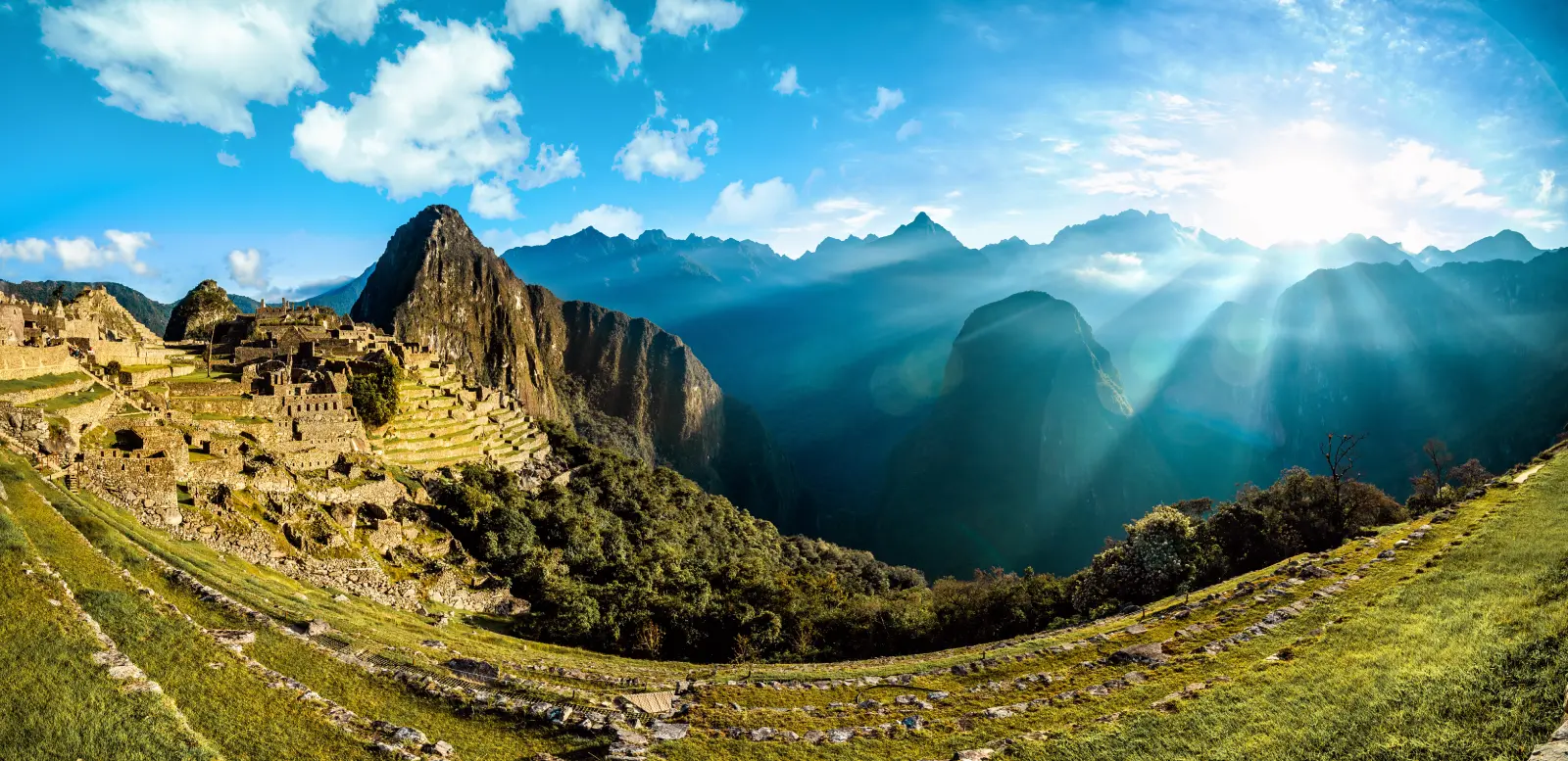
What to Wear on the Inca Jungle Trek
What to wear on the Inca Jungle Trek comes down to layers: enough warmth for the high-altitude start, breathable clothing once you reach the warmer valleys, and a waterproof shell or poncho that packs away easily when the weather clears.
| Item | What works best |
| Hiking shoes or light boots | Broken-in, closed footwear with good grip. Avoid brand-new shoes. |
| Quick-dry shirts | Pack 2–3 synthetic or merino shirts; avoid heavy cotton. |
| Trekking pants or shorts | Choose light, flexible, quick-dry fabrics. Convertible pants also work well. |
| Fleece or light mid-layer | Useful for cold mornings and the high-altitude start at Abra Malaga. |
| Waterproof shell or poncho | Essential in the wetter months; useful year-round in cloud-forest sections. |
| Hiking socks | Bring 2–3 pairs and keep at least one pair dry inside your pack. |
| Sun hat & sunglasses | Important for exposed sections and the biking descent. |
| Warm hat & light gloves | Mainly needed during the cold start at higher elevations. |
For altitude, fitness and cumulative effort, see the Inca Jungle Trek difficulty guide.

The right trekking shoes change everything, comfort, grip, and support from the first step
Rafting, Zipline and Cocalmayo: What You Actually Need to Pack
Rafting, ziplining and Cocalmayo add a few personal items, but not specialist technical equipment to your daypack.
| Activity | Your personal packing |
| Rafting | Swimsuit, compact towel, dry clothes and waterproof protection for valuables. The activity provider supplies the technical gear. |
| Zipline | Closed shoes and practical clothing that will not interfere with the harness. The technical safety equipment is supplied on site. |
| Cocalmayo | Swimsuit, compact towel, sandals, dry clothing and small cash in soles for the local entrance. |

What Backpack Size Should You Use for the Inca Jungle Trek?
- A light 20–25 L daypack works well for many travelers. Because the Inca Jungle Trek uses accommodation rather than multi-night camping, an organized service usually leaves you carrying only personal items.
- The 20–25 L figure is only a recommendation. Machu Picchu restricts bags by dimensions: 40 x 35 x 20 cm / 16 x 14 x 8 in. One 25 L backpack may fit while another does not, so when choosing the best backpack for Machu Picchu, check the packed dimensions rather than the liter rating alone.
The current restriction is published on the official Machu Picchu conduct-rules page.
Important:
A suitcase or large travel bag is better left at your hotel in Cusco. Before departure, confirm where it will be stored or transferred so you only carry what you need on the trek.
Personal Care, Hygiene and Electronics
| Item | Why it matters |
| Sunscreen & lip protection | Useful at the high-altitude start and on exposed walking sections. |
| Insect repellent | Most useful in the warmer lower-elevation areas, especially around vegetation and water. |
| Personal medication | Carry enough for the full trip plus a small buffer, with prescriptions kept in your personal bag. |
| Blister care | A few dressings or blister patches can deal with rubbing before it develops into a more painful blister. |
| Toiletries | Travel-size basics are enough for a 3- or 4-day route; full-size toiletries add weight without much benefit. |
| Phone & power bank | Save tickets, booking details and key contacts offline before departure in case mobile signal is weak or unavailable. |
Trail Food, Snacks and Hydration
On an organized Inca Jungle tour, full meals are generally arranged. A few compact snacks are enough to cover the gaps without adding much weight.
| Type | Practical choice |
| Good snacks | Energy bars, trail mix, nuts, dried fruit, crackers, dark chocolate or other sealed foods you already tolerate well. |
| Hydration | A bottle or hydration bladder with around 1.5 L / 50 fl oz of capacity is a practical starting point for many travelers. Refill when appropriate rather than carrying more water than you need from the beginning. |
| Avoid | Heavy glass containers, food that needs refrigeration, messy sauces and bulky snacks that take up more space than they are worth. |
What Not to Pack for the Inca Jungle Trek
- Brand-new hiking shoes.
- Several pairs of jeans or other heavy cotton clothing.
- A suitcase or roller bag on the trek.
- Full-size toiletries for a 3- or 4-day trip.
- Technical rafting or zipline equipment unless a provider specifically asks you to bring it.
- Expensive valuables you do not need.
- Too many duplicate outfits “just in case”; a small set of layers is more useful.
- Food you intend to take inside the Machu Picchu archaeological site.
Plan the Rest of Your Inca Jungle Trek
Pack Less, Confirm More Before Your Inca Jungle Trek
Your Inca Jungle gear list should match the trip you booked. Three days means fewer clothing changes; rafting or Cocalmayo means keeping a swimsuit, towel and dry clothes easy to reach.
If you want to book an Inca Jungle tour in Peru, check the activity inclusions, Machu Picchu entry, luggage arrangements and transport first. You will then know what the operator supplies and what still belongs in your own bag.
Frequently Asked Questions About the Inca Jungle Trek Packing List
Is an Inca Jungle Trek packing list the same as an Inca Trail packing list?
No. A Classic Inca Trail packing list also has to account for several consecutive trekking days and camping. The Inca Jungle Trek usually uses accommodation and mixes hiking with biking and optional activities, so light layers, quick-dry clothing, closed footwear and a manageable daypack matter more.
What are the must-bring items for the Inca Jungle Trek?
The must-bring items are your original passport, broken-in closed hiking shoes, quick-dry layers, rain protection, sunscreen, insect repellent, water, personal medication, cash in soles, phone or booking details, and a swimsuit when rafting or Cocalmayo is included. Extras depend on your own needs.
What size backpack do I need for the Inca Jungle Trek and Machu Picchu?
A 20–25 L daypack is practical for many travelers, but Machu Picchu limits bags by dimensions rather than liters. The packed bag should stay within 40 x 35 x 20 cm / 16 x 14 x 8 in to avoid oversized-bag storage at the entrance.
Does Inkayni provide biking, rafting and zipline gear?
Inkayni’s current Inca Jungle services list the core technical equipment for included activities. Your bag is mainly for warm layers and closed shoes for biking, a swimsuit and dry clothes for rafting, and suitable clothing for ziplining. Exact inclusions can vary by service, so check your departure details.
What should I pack differently if I organize the Inca Jungle Trek myself?
Your clothing and personal gear change very little. What matters more is keeping transport and accommodation reservations, Machu Picchu booking details, provider contacts and some contingency cash accessible offline. Check what each activity provider supplies before bringing technical equipment yourself.
Do I need a duffel bag for the Inca Jungle Trek?
Usually not. Unlike the Classic Inca Trail, the standard Inca Jungle Trek does not normally use a porter-style duffel system for multi-night camping. A compact daypack is more useful, while your main suitcase can stay in Cusco unless your service says otherwise.
Is the packing list different for the 3-day Inca Jungle Trek?
Only slightly. The same footwear, rain and sun protection, documents, swimsuit and personal items still apply. For three days, one fewer change of clothing and one fewer pair of socks is usually enough. See the 3-day Inca Jungle Trek guide for the itinerary differences.
Do I need trekking poles?
They are optional. Trekking poles can help on uneven, muddy or downhill sections, particularly if you already use them comfortably. For most travelers, broken-in footwear and a light pack matter more than buying poles specifically for this trip.
Autor

Shared:


If you liked this article and the information you found, give us 5 stars!
 (1 votos, promedio: 5.00 de 5)
 Loading...