


Do You Need to Train for the Inca Jungle Trek?
You do not need to train like an athlete for the Inca Jungle Trek, but you should be used to several active days in a row. The best preparation is regular walking or cardio, some hills or stairs, basic strength work and bicycle practice before traveling. If you are arriving from low altitude, allow 2–3 easy days in the Cusco region before starting, especially to begin acclimatizing.
Table of Contents
The Inca Jungle Trek is active, but it is not an expedition that demands months of hard training. Most healthy travelers with a normal level of activity can prepare with regular walking, a little strength work and some time on a bicycle before coming to Peru.
What makes the route different is the mix: you may start high in the Andes on a downhill bike ride, walk for several hours through warmer valleys, then add rafting or ziplining depending on the itinerary. The goal is not peak fitness. It is to arrive comfortable with the basic movements and recover well enough to enjoy the next day.
MULTI-ADVENTURE ROUTEInca Jungle Trek
Bike, raft, and hike through tropical valleys on an adventurous route to Machu Picchu.
How Much Preparation Do You Actually Need?
For many travelers, less than they expect. If you already walk, cycle, hike, go to the gym or do cardio a few times a week, you probably have a reasonable base. Preparation is mainly about making the route-specific parts familiar, especially hills, several active days in a row and the downhill bicycle section.
| Your current routine | What to focus on |
| Regular walking, cycling, gym or cardio | Keep your routine and add a few hills plus one or two bike-control sessions. |
| Some exercise, but inconsistent | Walk or do easy cardio more regularly and add one longer outing each week. |
| Mostly sedentary | Start earlier with frequent walking, basic strength and gradual increases in activity. |
| Returning from injury or managing a medical condition | Use individual professional advice rather than a generic training plan. |

Regular walking and a few longer outings are enough preparation for many travelers.
Keep this in mind:
If you are unsure whether the route matches your current fitness, the Inca Jungle difficulty guide gives the fuller picture. Preparation should make the route more comfortable, not turn it into a fitness test.
Do You Need a 4–6 Week Inca Jungle Training Plan?
Not necessarily. A structured 4–6 week plan is useful if you have been inactive, want a routine to follow or simply feel better preparing in advance. If you are already active, you can keep your normal exercise and add a little route-specific practice.
| When | Simple focus |
| 4–6 weeks before | Walk or do easy cardio 3–4 days a week and add basic leg and core strength. |
| 2–3 weeks before | Add hills or stairs, one longer outing and a bicycle session focused on braking and descending. |
| Final week | Keep moving but reduce hard sessions so you arrive rested rather than sore. |
Cardio and walking
Running is optional. Brisk walking, cycling, swimming, gym cardio or hiking can all build enough endurance for the route. Being comfortable moving for a few hours matters more than speed.
Basic strength
Squats, step-ups, lunges, calf raises and simple core exercises are enough for most travelers. A couple of short sessions a week can make hills and repeated walking feel easier.
Recovery between active days
Inca Jungle is a multi-day trip, so recovery matters more than one impressive workout. A useful test is whether you can take a longer walk or bike ride and still feel reasonably comfortable being active again the next day.

A simple, consistent routine is more useful than exhausting yourself before the trip.
Practice the Bike Before You Worry About Hard Training
For many travelers, the bicycle is the only part of Inca Jungle that really benefits from specific practice. The route begins with a long descent from the Abra Malaga area, so the useful skill is not cycling fitness. It is being able to brake, steer and control your speed comfortably.
If you already ride a bicycle from time to time, you probably do not need much extra preparation. If you have not ridden in years, one or two calm sessions somewhere familiar can make Day 1 feel much easier.
- use both brakes progressively;
- slow down before a curve;
- look where you want the bike to go;
- stop and restart comfortably;
- keep a stable line on a descent;
- speak up if you feel too nervous or tired to continue safely.

The useful skill for Day 1 is control, not speed.
How Much Hiking Preparation Do You Need?
The walking on Inca Jungle is not technical mountaineering. Expect uneven ground, some climbs and descents, warmer lower-elevation conditions and several hours on your feet. If you already walk regularly, adding a few hills, stairs or longer weekend walks is usually enough preparation.
There is no need to train with extreme distances. It is more useful to know that your shoes feel comfortable after a few hours and that your legs recover normally by the next day.

A few hills and longer walks are more useful than extreme training distances.
Give Yourself Time to Acclimatize Before Abra Malaga
Abra Malaga is the highest point associated with the standard Inca Jungle route, at about 4,350 m / 14,271 ft. You reach it by vehicle before descending, so you are not hiking uphill to that elevation. Even so, people arriving directly from much lower altitudes can still feel the change.
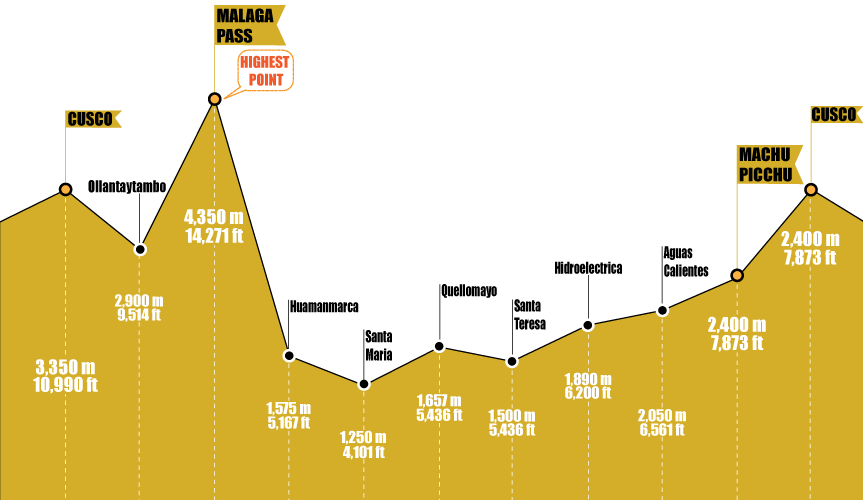
The route starts high around Abra Malaga and quickly descends toward warmer valleys.
If your schedule allows, spend 2–3 easy days in the Cusco region before departure to begin acclimatizing. Keep those first days fairly easy, sleep well and avoid turning acclimatization into another hard training block. The CDC high-altitude travel guidance also recommends gradual ascent where possible and avoiding alcohol during the first 48 hours at altitude.
If altitude is one of your main concerns, the Cusco altitude and acclimatization guide covers symptoms and practical planning in more detail.
Warning:
Fitness does not prevent altitude illness. If symptoms become severe, worsen instead of improving, or affect coordination or breathing at rest, tell your guide and seek appropriate medical help.
Useful Inca Jungle Guides Before You Go
Do Rafting and Ziplining Require Training?
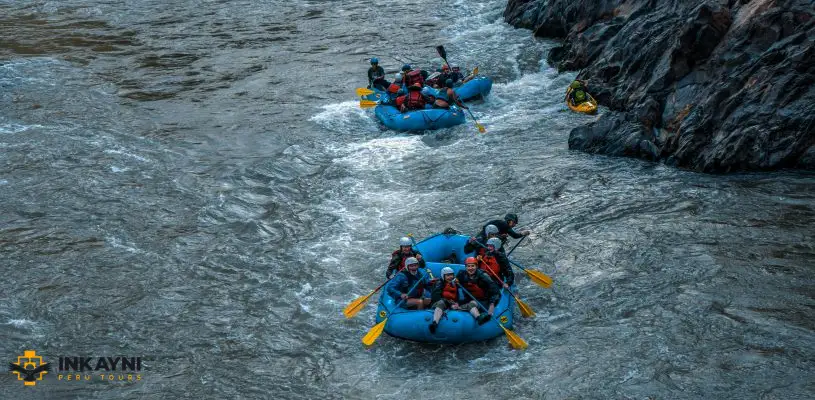
No special training is normally needed for either activity. They are guided activities with their own safety briefing and technical equipment. Your role is mainly to listen, follow instructions and say something before starting if water or heights make you uncomfortable.
| Activity | Useful preparation |
| Rafting | Be ready to follow commands and tell the river guide if you are uncomfortable in moving water. |
| Zipline | Be honest about your comfort with heights and pay attention during the equipment briefing. |
The dedicated guides to rafting on the Inca Jungle Trek and ziplining on the Inca Jungle Tour cover the activity-specific details.

Rafting is guided; preparation is mostly about listening and communicating clearly.

Ziplining usually demands more comfort with heights than physical training.
Prepare for Changing Conditions
Inca Jungle starts high and cool, then descends into much warmer and more humid terrain. Rain can make biking and walking surfaces slippery, while heat can make the lower sections feel more tiring. You do not need to train for every possible weather condition; just be comfortable moving in layers and avoid testing unfamiliar clothing on the trek itself.
For the seasonal decision, see the best time for the Inca Jungle Trek. Close to departure, check the actual forecast and the operator’s latest advice rather than assuming a normally dry month will be completely dry.
Test Your Gear; Do Not Train With a Heavy Backpack
You do not need heavy-pack training for a normal organized Inca Jungle trip. Practice with the daypack and realistic personal load you expect to carry. Walk in your broken-in footwear, adjust the straps and make sure nothing rubs after an hour or two.
The Inca Jungle Trek packing list covers clothing, footwear, documents and the complete gear checklist. For preparation, familiarity matters more than buying more equipment.
Does Preparation Change for the 3-Day and 4-Day Inca Jungle Trek?
Only slightly. The 3-day Inca Jungle Trek has a more compressed rhythm, while the 4-day version spreads the route across an additional day and includes more walking. The basic preparation is the same: regular activity, bike confidence and enough recovery to enjoy consecutive days.
| 3-Day Inca Jungle | 4-Day Inca Jungle |
| More compressed pace and less total hiking. | More walking with a more gradual daily rhythm. |
| Bike confidence remains important. | Bike confidence remains important. |
| Useful if time is limited and you are comfortable with active days. | Useful if you prefer more walking and an extra day on the route. |
If walking time is the main concern, the guide to Inca Jungle duration gives the route-length context.
What to Do in the Final 48–72 Hours
At this point, the useful work is logistical rather than physical. Hard training cannot add meaningful fitness in two days, but it can leave you sore.
- keep activity light and sleep normally;
- continue acclimatizing in Cusco;
- confirm pickup, activities, accommodation, Machu Picchu entry and return transport;
- test the packed daypack and keep documents accessible;
- charge your phone and any power bank;
- eat familiar food and avoid unnecessary experiments;
- tell the guide before departure if you feel unwell or have concerns about an activity.

In the final days, familiar food, rest and simple logistics matter more than another workout.
A Simple Inca Jungle Readiness Check
You are probably prepared enough if most of these feel ordinary rather than intimidating:
- walking for a few hours at a comfortable pace;
- using stairs or hills without unusual exhaustion;
- being active again the following day;
- riding a bicycle and controlling both brakes;
- wearing your planned shoes and daypack comfortably;
- spending 2–3 days in Cusco before departure if arriving from low altitude.
Important note:
This is not a pass-or-fail test. If one part worries you, work on that specific point or discuss it with the operator instead of assuming the whole trek is beyond you.
Confirm the Activity and Safety Details Before You Go
Because Inca Jungle combines several activities, it is worth knowing what equipment is supplied, how the biking support works, what happens if weather affects rafting or ziplining, and how the group handles a traveler who decides not to continue an activity.
For current service details, use the live 4-day Inca Jungle service or 3-day Inca Jungle service rather than relying on an old inclusion list.

Before an activity starts, equipment, instructions and personal concerns should already be clear.
Prepare Enough to Enjoy the Inca Jungle Trek
For most healthy, normally active travelers, preparation does not need to become a second job. Walk regularly, add some hills, practice the bicycle if you are rusty and arrive in Cusco early enough to acclimatize. That is usually more useful than following an aggressive training plan.
If you are still choosing the itinerary, compare the 3-day Inca Jungle Trek with the 4-day Inca Jungle Trek. If fitness, bike confidence or altitude still makes the choice unclear, talk to a travel specialist before finalizing the route.
Frequently Asked Questions About How to Prepare for Inca Jungle Trek
Do I really need to train for the Inca Jungle Trek?
Not intensively. If you already walk, cycle, hike or exercise regularly, your normal fitness is often a good base. A few hills, longer walks and some bicycle practice can make the route more comfortable.
How long should I prepare for the Inca Jungle Trek?
There is no mandatory training period. A generally active traveler may only need a few route-specific sessions. If you are mostly sedentary, starting 4–6 weeks earlier gives you time to build regular activity gradually.
Do I need previous mountain-biking experience?
You do not need advanced mountain-bike skills, but you should be comfortable riding a bicycle, using both brakes, turning and controlling your speed on a descent. If you have not ridden in years, practice before traveling.
How many days should I acclimatize in Cusco?
If your schedule allows, 2–3 days in the Cusco region is a practical buffer, especially when arriving from low elevation. Keep those first days fairly easy and remember that fitness does not prevent altitude illness.
Do rafting and ziplining require training?
No special physical training is normally needed. Both are guided activities. For rafting, follow the river guide’s commands and speak up if moving water makes you uncomfortable. For ziplining, tell the staff if heights make you anxious.
Should I train with a heavy backpack?
No. Practice with the daypack and realistic personal load you expect to carry. The Inca Jungle packing list covers the full gear setup.
Is the 3-day Inca Jungle Trek easier to prepare for than the 4-day route?
Not necessarily. The 3-day route is shorter but more compressed, while the 4-day version includes more walking at a more gradual pace. The basic preparation is similar for both.
What should I do the day before the Inca Jungle Trek?
Keep activity light, finish packing, charge your phone, keep documents accessible, confirm the pickup and activity details, and eat familiar food. There is no benefit in doing a hard workout the day before departure.
Autor
Shared:


If you liked this article and the information you found, give us 5 stars!
 (1 votos, promedio: 5.00 de 5)
 Loading...