


Choquequirao Trek vs Salkantay Trek
Salkantay is the better choice for most travelers who want a mountain trek that usually ends at Machu Picchu, with more departures, more support and bigger landscape variety. Choquequirao is better for hikers who want remote archaeology, fewer crowds and a quieter expedition-style route. In simple terms, choose Salkantay for Machu Picchu and altitude scenery, and Choquequirao for solitude, canyon effort and a less commercial Inca trek.
Table of Contents
The real choice is not only difficulty. Choquequirao feels tougher on the legs because of the Apurímac Canyon, long descents and repeated climbs. Salkantay feels tougher at altitude because it crosses the Salkantay Pass, around 15,190–15,256 ft (4,630–4,650 m), before descending toward warmer valleys and the Machu Picchu area.
| 4-5 daysclassic durations | 15,256 ftSalkantay Pass approx. | 10,000 ftChoquequirao site approx. | Machu Picchuusually with Salkantay |
Both routes belong to the wider trekking world of Cusco, but they do not sell the same experience. Salkantay is a mountain route to Machu Picchu, with dramatic scenery and more organized logistics. Choquequirao is a destination trek, where the main reward is reaching a remote archaeological complex that still feels far from mass tourism.
Choose Salkantay if…
- You want a trek that usually ends at Machu Picchu.
- You prefer snow-capped peaks, Humantay Lake and landscape variety.
- You want more group departures, camps, lodges or comfort options.
- You are prepared for altitude and cold mountain weather.
Choose Choquequirao if…
- You want remote archaeology as the main goal.
- You prefer fewer people and a stronger expedition feeling.
- You are ready for steep canyon descents and climbs.
- You do not need a direct Machu Picchu finish.
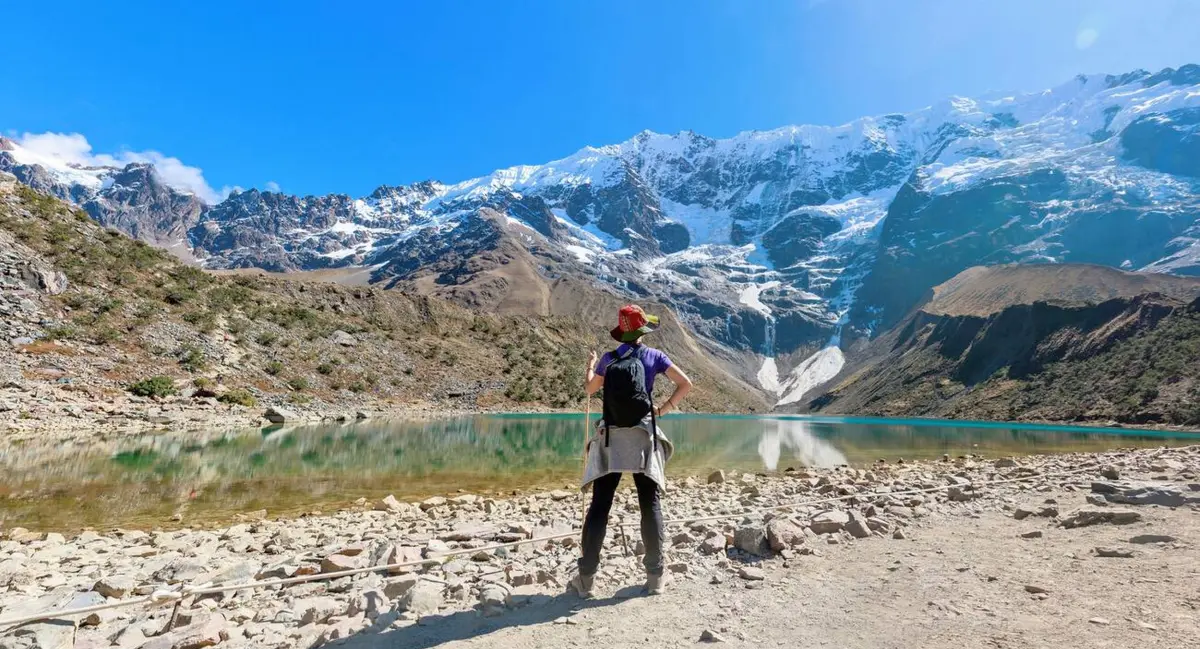
Turquoise waters of Humantay Lake in Salkantay Route.
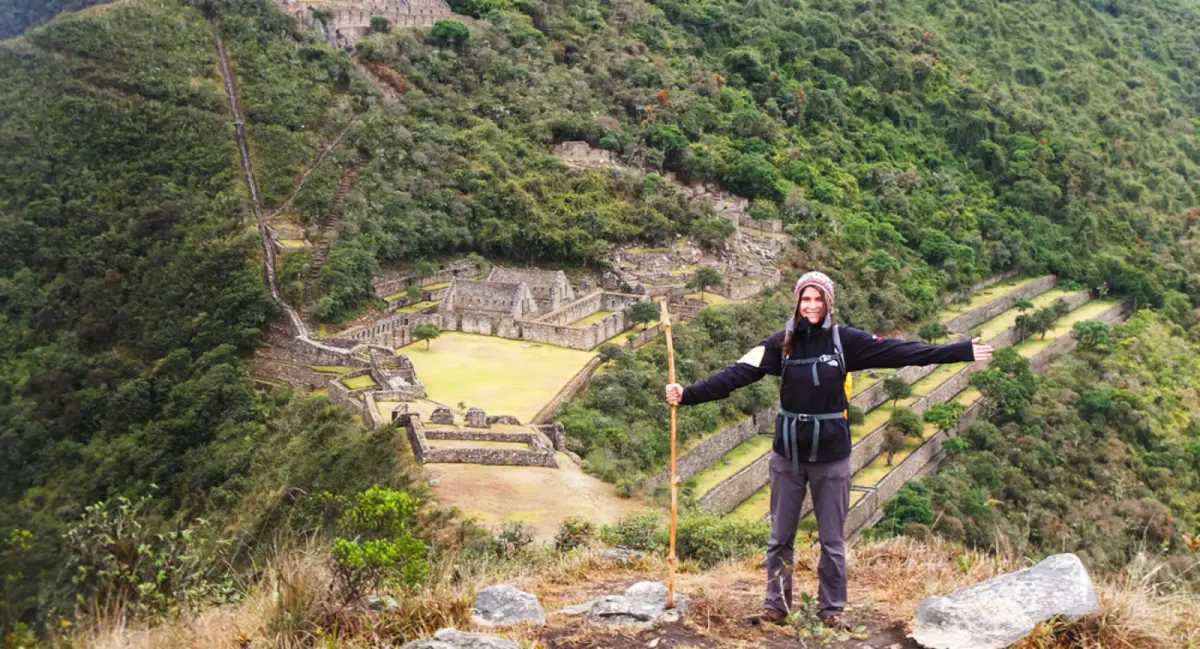
Inca ruins of Choquequirao located on a mountainside in the Andes
GLACIER MOUNTAIN TREKSalkantay Trek
Discover one of Peru’s most scenic treks beneath snowy peaks and changing landscapes.
Choquequirao Trek vs Salkantay Trek: Main Comparison
| Decision point | Choquequirao Trek | Salkantay Trek |
| Main experience | Remote Inca archaeology and a quieter canyon expedition. | High-mountain scenery with a classic finish at Machu Picchu. |
| Typical duration | 4 or 5 days for the classic route; 8-10 days if combined with Machu Picchu. | Usually 4 or 5 days, depending on the route and transport sections. |
| Approximate cost | Often around US$500-750 for an organized 4 or 5-day trek; private or small-group trips can cost more. | Budget group tours can start around US$290-350; standard or better-supported 5-day treks often range around US$580-700+. |
| Highest point | Around 9,950-10,000 ft / 3,030-3,050 m near the archaeological area. | Salkantay Pass, around 15,190-15,256 ft / 4,630-4,650 m. |
| Main physical challenge | Steep canyon descents, long climbs, heat and heavy leg fatigue. | Altitude, cold mornings, long walking days and fast weather changes. |
| Machu Picchu included? | Not on the classic 4 or 5-day trek. | Usually yes, on most classic Salkantay to Machu Picchu itineraries. |
| Logistics | Less standardized: fewer departures, more remote camps and more need for careful planning. | More developed: more operators, group departures, camps, lodges and service levels. |
| Crowds | Much quieter, with fewer hikers on the route. | More popular and more social, especially in high season. |
| Best for | Fit hikers who want solitude, archaeology and a less commercial route. | Travelers who want scenery, Machu Picchu, more support and easier booking. |
| Biggest risk if badly planned | Underestimating the canyon, isolation, water, gear or emergency logistics. | Starting without acclimatization or booking a cheap tour that excludes key Machu Picchu logistics. |
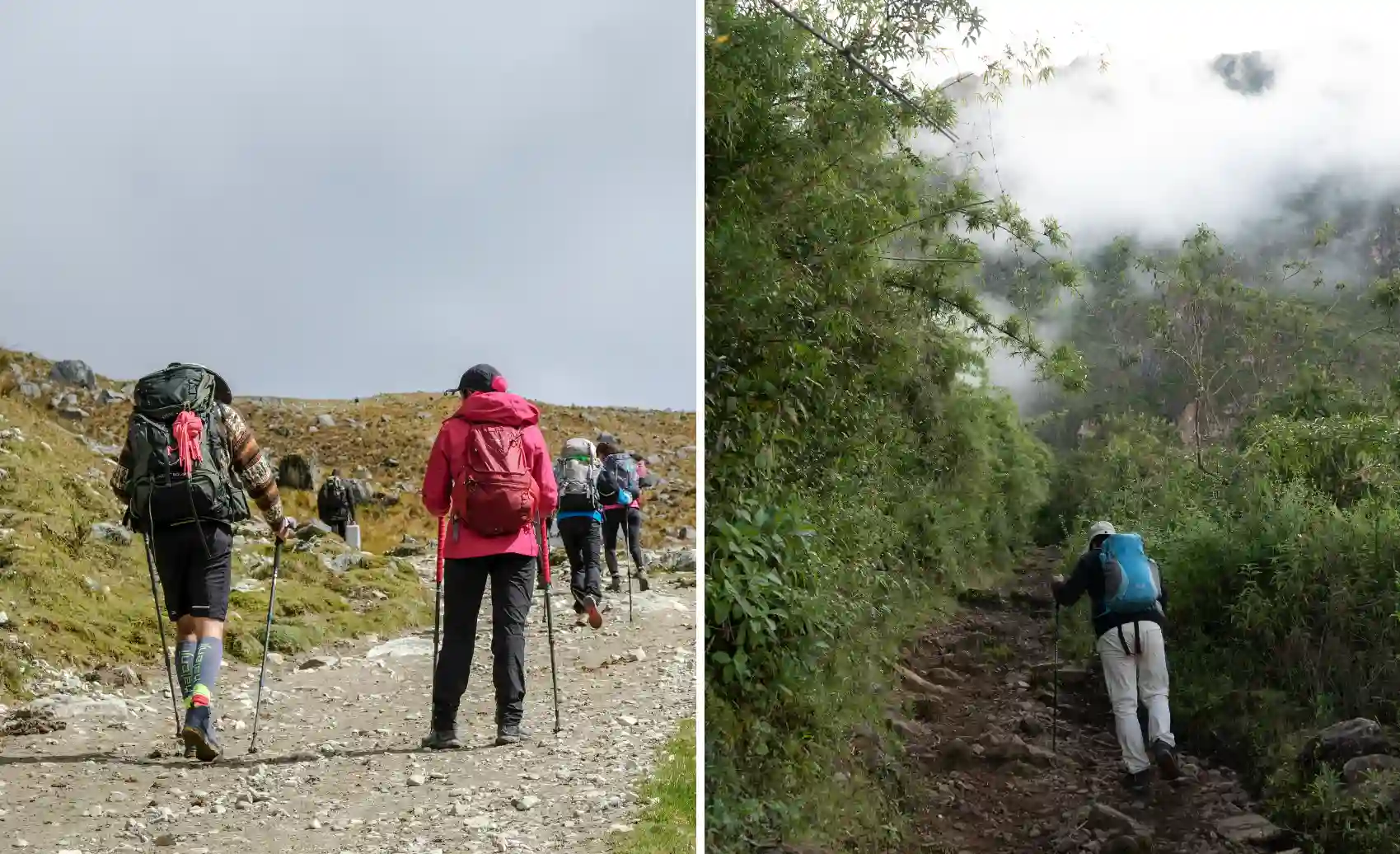
Hikers on a demanding Andean trail section in the Cusco region.
Which Trek Matches Your Travel Style?
This is one of the useful ideas from the original comparison: the decision is not only physical. It also depends on how you like to travel. Some people want silence and a harder route; others want scenery, more comfort and a stronger chance of joining a group departure.
| Your travel style | Better fit | Why |
| Off-the-beaten-path trekker | Choquequirao | The trail is quieter, harder to access and more focused on remote archaeology. |
| First major trek in Peru | Usually Salkantay | It is still demanding, but there are more departures, services and group options. |
| Traveler who wants Machu Picchu | Salkantay | Most classic itineraries finish with a Machu Picchu visit. |
| Traveler who already knows Machu Picchu | Choquequirao | It offers a different Inca world with fewer people and less standardization. |
| Solo traveler who wants social energy | Salkantay | You are more likely to meet other trekkers and join group departures. |
| Closed group seeking privacy | Choquequirao | The route feels more intimate if your group is ready for the physical demand. |
Keep this in mind:
Do not choose Salkantay only because it sounds more comfortable. The altitude is serious. Do not choose Choquequirao only because it is lower. The canyon can punish your legs more than a high pass.
If Machu Picchu is the priority, compare these first
1. Difficulty: Which Trek Is Harder?
Both treks are hard, but they are hard in different ways. Choquequirao is usually more punishing on the legs because the route drops deep into the Apurímac Canyon and then climbs back out. Salkantay is usually more demanding for altitude because it crosses a high mountain pass before descending toward warmer valleys and the Machu Picchu area.
| Difficulty factor | Choquequirao Trek | Salkantay Trek |
| Main physical challenge | Steep descents, long climbs, exposed canyon heat and repeated elevation gain. | High altitude, cold mornings, long walking days and fast weather changes. |
| Hardest feeling | Your knees and legs may suffer more, especially on the return from the canyon. | Your breathing and energy may suffer more near Salkantay Pass if you are not acclimatized. |
| Beginner-friendly? | Not ideal for most first-time multi-day trekkers unless they are very fit and well prepared. | More realistic for fit beginners because there are more group departures and more organized support. |
| Altitude concern | Lower than Salkantay, but still high enough to require acclimatization in Cusco. | More serious because the route reaches a much higher pass. |
| Logistical difficulty | Higher. Fewer services, fewer people, more remote camps and less room for improvisation. | Lower. More operators, more departures, more camps and a clearer connection to Machu Picchu. |
| Overall difficulty | Hard to very hard, especially in 4 days. | Moderate to hard, depending on acclimatization, weather and pace. |
Important:
Do not choose Choquequirao only because it is lower. The canyon can be brutal on tired legs. Do not choose Salkantay only because it is more popular. The altitude is high enough to ruin the trek if you arrive in Cusco and start too soon.

Layered clothing matters on both routes, especially when temperatures change between canyon, pass and camp.
2. Landscapes: Canyon Silence or High Mountain Variety?
Choquequirao Trek
The Choquequirao route is shaped by the Apurímac Canyon. Expect dry slopes, deep valleys, steep switchbacks, cloud forest influence and wide mountain views. The scenery feels rawer and more isolated because fewer travelers are on the trail.
This trek is not about constant postcard variety. Its power comes from scale, silence and the feeling of approaching an Inca site that still feels far from mass tourism.
Hikers walking through a quiet Andean trail section near Choquequirao.
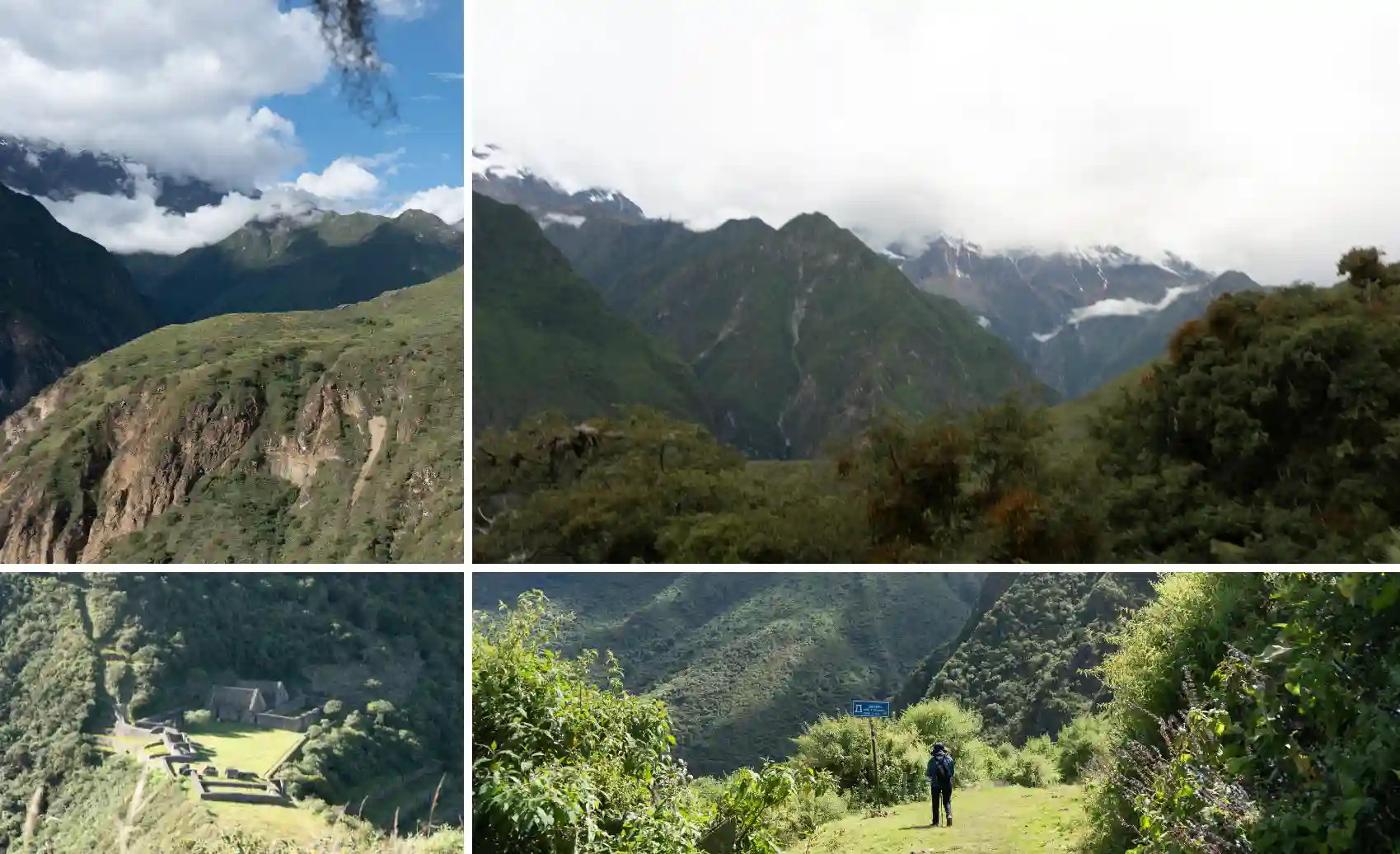
High viewpoints on the Choquequirao route show the scale of the Apurímac Canyon.
Salkantay Trek
The Salkantay Trek offers more visible landscape variety in fewer days. You can move from glacier views and high mountain terrain to cloud forest, warmer valleys and the approach to Aguas Calientes.
Its strongest visual moments are usually Humantay Lake, Salkantay Mountain, Salkantay Pass and, on some routes, the view toward Machu Picchu from Llactapata.

3. Archaeology: Which Trek Has the Stronger Inca Focus?
Choquequirao has the stronger archaeological focus. The whole trek is built around reaching the Choquequirao Archaeological Park, with terraces, plazas, ceremonial areas and sectors still partly covered by vegetation.
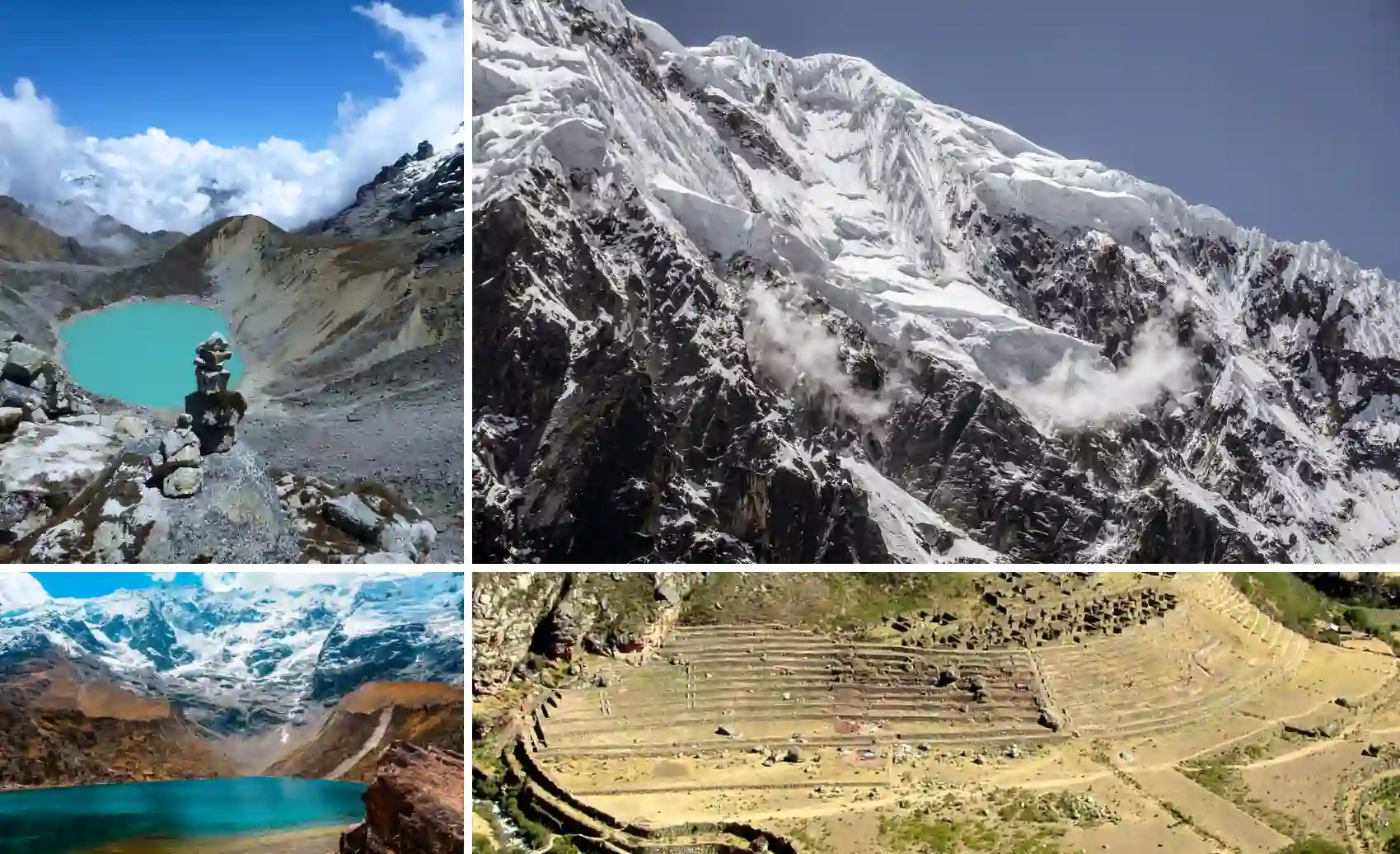
Humantay Lake, Salkantay Mountain and high valleys are key visual rewards on this route.
Salkantay is more of a mountain route to Machu Picchu. Some itineraries include Llactapata or views toward Machu Picchu before reaching Aguas Calientes, but the route is mainly known for landscapes and the final Machu Picchu visit.
| Archaeology factor | Choquequirao Trek | Salkantay Trek |
| Main archaeological reward | Choquequirao itself. | Machu Picchu at the end of the trek. |
| Archaeology during the route | Focused mainly around the Choquequirao complex. | Depends on the itinerary; Llactapata appears in some routes. |
| Best for history-focused travelers | Stronger if you want a remote Inca site. | Stronger if Machu Picchu is your main goal. |
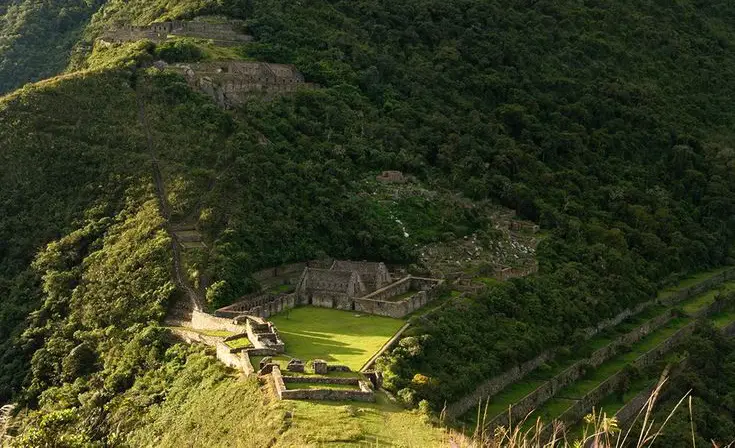
If remote archaeology is the priority
LOST CITADEL TREKChoquequirao Trek
Hike to one of Peru’s most impressive and least crowded Inca archaeological sites.
4. Machu Picchu Connection
This is one of the clearest differences. The Salkantay Trek usually ends with Machu Picchu, making it a practical alternative to the Classic Inca Trail when permits are not available or when travelers want a more mountain-focused route.
The classic Choquequirao Trek does not end at Machu Picchu. Its destination is Choquequirao. There are longer Choquequirao to Machu Picchu routes, usually around 8 to 10 days, but those are serious expedition-style programs, not simple add-ons.
| Question | Better answer | Why |
| I want Machu Picchu at the end of the trek | Salkantay Trek | It is more direct and usually includes Machu Picchu on the final day. |
| I want Choquequirao as the main goal | Choquequirao Trek | The route is designed around reaching and exploring the archaeological complex. |
| I want both Choquequirao and Machu Picchu | Long Choquequirao to Machu Picchu route | Possible, but much longer and more demanding. |

Choquequirao, Salkantay and Machu Picchu offer different types of Andean journeys.
5. Traveling Solo or in a Group
This is another section worth rescuing from the original. For many travelers, the choice is not only “which trek is better,” but whether they will feel safer, more comfortable or more motivated alone, in a group or with a private guide.
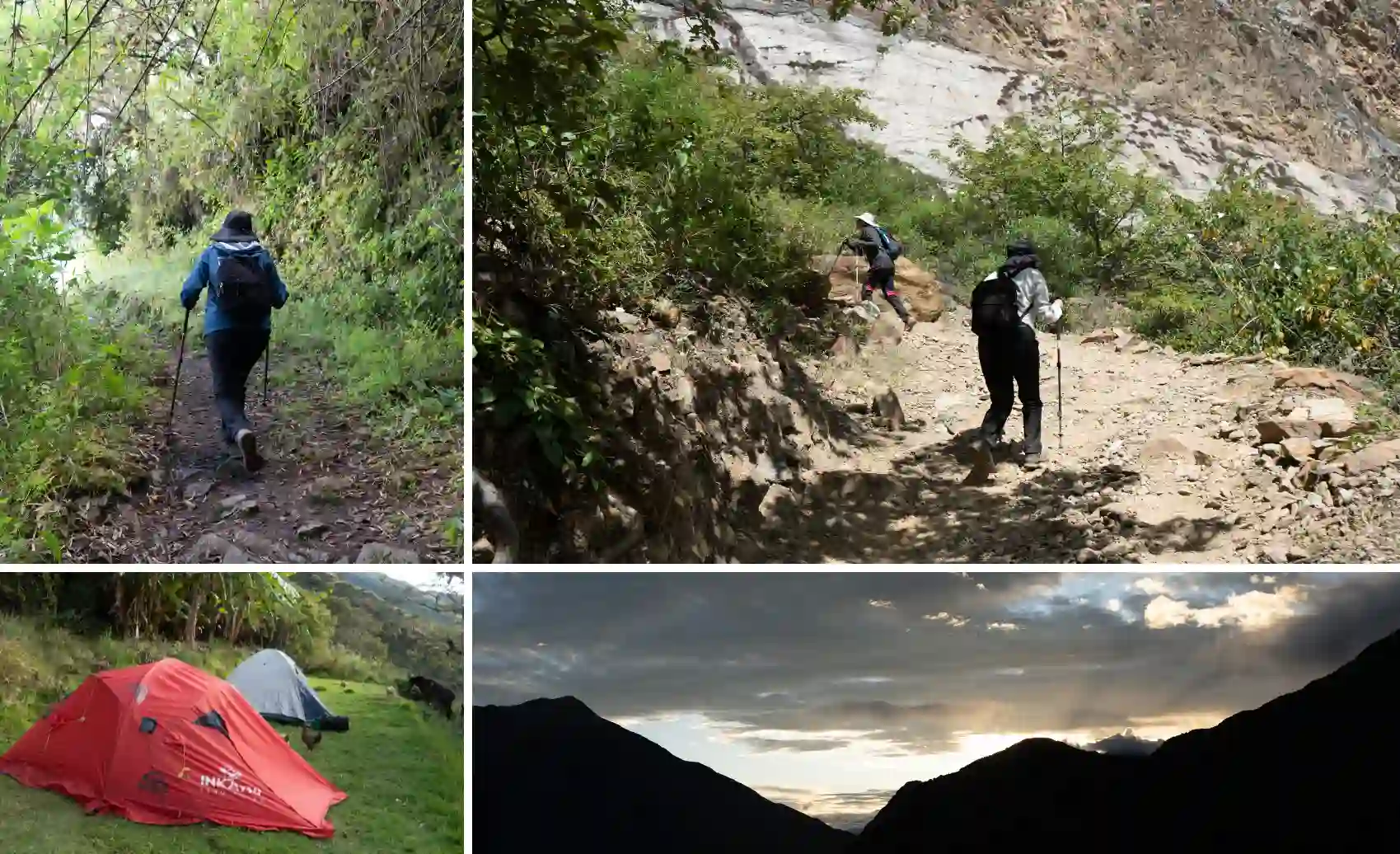
Walking the Choquequirao trail and its campsites.
| Travel setup | Choquequirao Trek | Salkantay Trek |
| Solo traveler | Possible, but more demanding to organize and less forgiving if something goes wrong. | Easier to join a group and more likely to meet other trekkers on the route. |
| Private couple or small group | Excellent if you want silence and a more intimate expedition. | Good if you want scenery with more predictable support. |
| Social trekking | Not the strongest choice. | Stronger because of more departures and trail traffic. |
| Independent style | Only for experienced trekkers with solid logistics. | More feasible, but Machu Picchu tickets and route planning still matter. |

Preparing logistics and gear before starting the Salkantay Trek.
6. Logistics, Permits and Access
Neither Choquequirao nor Salkantay requires the same kind of personal trail permit as the Classic Inca Trail. That does not mean you can ignore planning. Salkantay often requires Machu Picchu tickets, train or transport coordination, camps or lodges and a clear route plan. Choquequirao requires careful trail logistics, food, camps, mule support, transport to the trailhead and realistic safety planning.
| Planning factor | Choquequirao Trek | Salkantay Trek |
| Trail permit | No Inca Trail-style permit, but local entrance and route logistics still apply. | No Inca Trail-style permit, but Machu Picchu tickets are needed if included. |
| Guide | Not always mandatory, but strongly recommended for most travelers. | Not always mandatory, but recommended for safety, logistics and altitude management. |
| Independent trekking | Possible for experienced hikers, but more remote and less forgiving. | Possible, but most travelers use an operator because of logistics and Machu Picchu coordination. |
| Group departures | Less frequent. | More frequent and easier to join. |
| Services on route | More basic and limited. | More developed, with more camps, lodges and support options. |
Practical note:
Choquequirao has public projects aimed at improving access, but regular travelers should still treat it as a trek-first destination today. Salkantay is more developed, but high-altitude weather still demands serious preparation.
7. Route Versions and Must-See Highlights
Choquequirao Trek: what to expect
The classic Choquequirao Trek usually starts around Capuliyoc and follows a demanding route through the Apurímac Canyon. The route descends, crosses lower and warmer terrain, then climbs toward Marampata and Choquequirao.
The reward is not only the archaeological site. It is the silence, the scale of the canyon and the feeling that you are reaching a place that still has a strong sense of isolation.
| Choquequirao option | Best use |
| Choquequirao Trek 4 Days | Compact option for fit trekkers with limited time. |
| Choquequirao Trek 5 Days | Better rhythm for most travelers who want more time at the site and less pressure each day. |
| Choquequirao Trek to Machu Picchu | Long expedition for hikers who want both archaeological destinations in one journey. |
Salkantay Trek: what to expect
The Salkantay Trek is one of the most popular alternative routes to Machu Picchu. It usually combines Humantay Lake, Salkantay Pass, mountain valleys, cloud forest and the final approach to Aguas Calientes.
Its strength is variety. In a few days, you move from high Andean landscapes to warmer vegetation zones, with Machu Picchu as the final cultural reward.
| Salkantay highlight | Why it matters |
| Humantay Lake | One of the most photographed high-Andean lakes near Cusco. |
| Salkantay Pass | The main altitude challenge and symbolic high point of the route. |
| Cloud forest and warmer valleys | A strong contrast after the high mountain section. |
| Llactapata on some routes | Can add an archaeological viewpoint toward Machu Picchu. |
| Aguas Calientes and Machu Picchu | The usual final connection that makes Salkantay commercially powerful. |

Build the wider Cusco trek map
8. Cost and Value
Price changes a lot by operator, group size, service level and season, so fixed numbers can mislead. Salkantay usually has more budget group departures because it is more commercial and more popular. Choquequirao can become more expensive per traveler when the group is small or the logistics are private.
The better question is value. Salkantay gives strong value if you want scenery, Machu Picchu and more organized services. Choquequirao gives strong value if you want solitude, archaeology and a harder expedition-style route.
| Value factor | Choquequirao Trek | Salkantay Trek |
| Budget group availability | Lower. | Higher. |
| Private trip cost | Can rise quickly because logistics are less standardized. | Also rises with private service, but more options exist. |
| Best value if… | You want remote archaeology and fewer hikers. | You want mountain scenery and Machu Picchu in one route. |
| Hidden cost | More effort, more isolation and more logistical planning. | Altitude, Machu Picchu tickets, route add-ons and train/bus coordination. |
Practical tip:
Compare what is included before comparing price: transport, meals, guide, camping gear, entrance fees, Machu Picchu ticket, train or bus, mule/horse support, emergency plan and staff treatment.
9. Best Time to Hike Choquequirao or Salkantay
The dry season, especially from May to September, is usually the best window for both treks. April and October can also work well with more weather flexibility. The rainy season can make both routes harder, but Choquequirao’s canyon trail can become especially slippery and demanding, while Salkantay can lose visibility and comfort at altitude.
| Season | Choquequirao Trek | Salkantay Trek |
| May to September | Best window for drier canyon trails and safer trekking conditions. | Best visibility for mountain views, but colder nights at altitude. |
| April and October | Good shoulder months, with some weather variability. | Often a good balance of scenery, demand and weather. |
| November to March | Higher rain risk, slippery trails and possible disruptions. | Rainier conditions, cloudier views and more demanding trail sections. |
| February | Possible only with careful condition checks. | Possible on many itineraries, but rain can affect safety and comfort. |
Final Verdict: Choquequirao or Salkantay?
- Choose Salkantay if this is your first major trek in Cusco, if Machu Picchu is still the center of your trip, or if you want more group departures, more service levels and easier logistics. It is not an easy trek, especially because of altitude, but it is usually the more practical choice for travelers who want scenery, social energy and a clear ending at Machu Picchu.
- Choose Choquequirao if you want remote archaeology, fewer hikers and a stronger expedition feeling. It is the better choice for travelers who already know Machu Picchu, want something less commercial or are willing to accept harder canyon trekking in exchange for silence and a more isolated Inca site.
Related comparisons and final planning guides
Choose the Trek That Matches the Trip You Actually Want
Choquequirao and Salkantay are both powerful treks, but they do not answer the same travel desire. Salkantay is the stronger choice if your trip is still centered on Machu Picchu and you want glaciers, Humantay Lake, high-altitude scenery and a more organized trekking route. Choquequirao is the stronger choice if the destination itself is remote archaeology and you are ready for a quieter, harder and less standardized experience.
The best decision is not the famous route or the hardest route; it is the route that matches your time, fitness, altitude tolerance and the kind of memory you want from the Andes.
Frequently Asked Questions About Choquequirao vs Salkantay Trek
Which is harder, Choquequirao or Salkantay?
Which trek is better for Machu Picchu?
Which trek is less crowded?
Which trek has better landscapes?
Which trek has more archaeology?
Do I need a permit for Choquequirao or Salkantay?
Can beginners do the Salkantay Trek?
Can beginners do the Choquequirao Trek?
Which trek is cheaper?
What is the best time to hike Choquequirao or Salkantay?
Can I combine Choquequirao and Salkantay?
Which trek should I choose if I have only one chance?
Shared:


If you liked this article and the information you found, give us 5 stars!
 (Ninguna valoración todavía)
 Loading...