


Table of Contents
Many travelers hear about the Huchuy Qosqo trek, but few truly understand what makes it different. Why does this trail appear on Cusco maps yet rarely shows up in itineraries? What lies behind a name that means “Little Cusco” and a path that brings not crowds, but silence and altitude?
Between ravines, cold mountain passes, and villages that still smell of adobe, this route captures the essence of the Sacred Valley without the saturation of mass tourism. Before deciding when to go or how to prepare, it’s worth understanding its logic: altitude, weather, access routes, and physical fitness can’t be improvised in the Andes. Keep reading to learn more about this fascinating Inca site in the heights of the Sacred Valley.
What is Huchuy Qosqo?
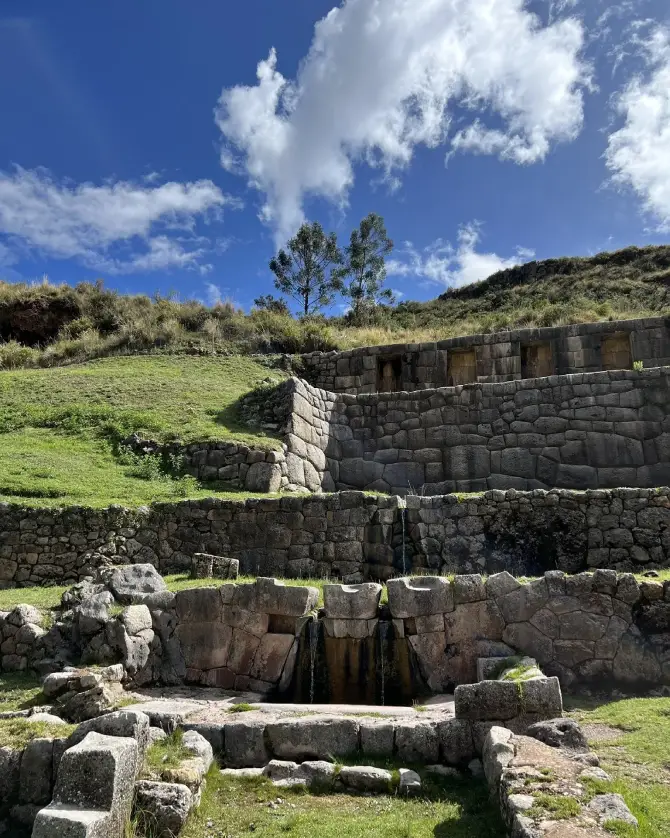
Huchuy Qosqo was an Inca administrative and residential center located at approximately 11,800 feet above sea level, perched on a natural terrace with panoramic views of the Sacred Valley. The site features stone and adobe constructions, agricultural terraces, and irrigation channels that showcase remarkable hydraulic and agricultural planning.
Before full Inca dominance, the location had previous occupations and was known by ancient names (such as Qaqyaqawana or Caquia Xaquixaguana). Already by the 15th century, according to chronicles, its consolidation as a residence or royal estate is attributed to Inca Wiracocha, which explains the scale and care of its structures.
The site is believed to have served strategic functions due to its elevated position and proximity to communication routes between Cusco and the Sacred Valley of the Incas, facilitating territorial control and transit between ecological zones. What distinguishes it from other ruins is its isolation. The main access is through mountain trails, on foot or horseback, and although there’s a rough road that ascends from Lamay and approaches the upper area, the final stretch is walked without much interpretive infrastructure. This condition has favored its preservation without extensive alterations, making it a special place for travelers who value both history and the tranquility of the surroundings.
Did you know…?
The site was also known by ancient names like “Caquia Xaquixaguana” before receiving its current name in the 20th century.
Why do the Huchuy Qosqo trek?
- It represents an experience of peaceful and authentic travel; while Machu Picchu receives thousands of visitors daily, the Huchuy Qosqo trek maintains very low foot traffic, allowing you to explore it without crowds and enjoy it with serenity.
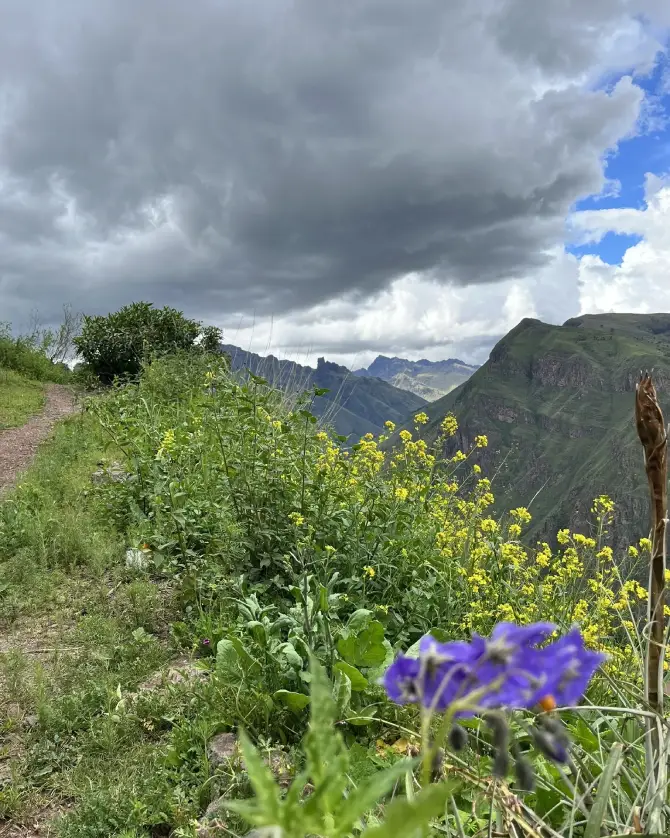
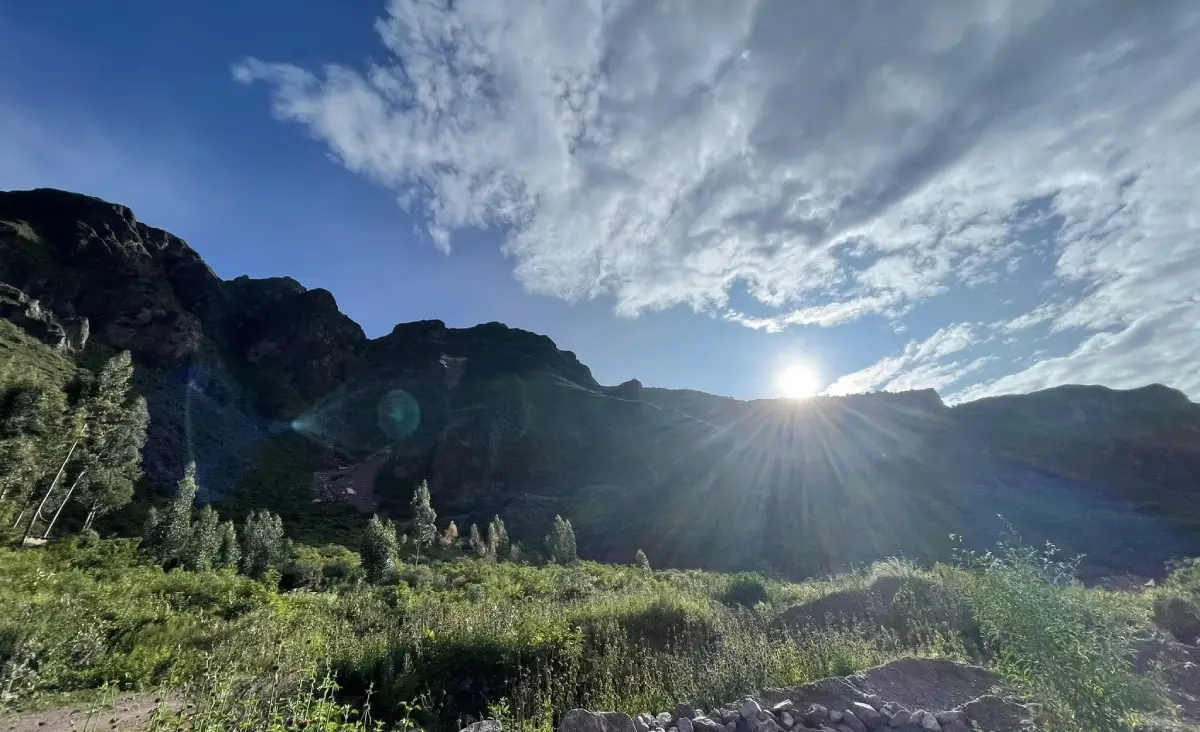
- The path crosses breathtaking landscapes that combine high mountain passes, small lagoons, deep ravines, and Andean communities where traditional life still thrives.
- The trek typically starts from communities like Tambomachay or Chinchero, ascending along original Inca trails and offering brief encounters with local families who preserve their ancestral agricultural and textile customs.
How to get there? Trail options and difficulty
One of the advantages of the Huchuy Qosqo trek is its versatility. There are multiple access routes that adapt to different fitness levels and time availability. From single-day hikes to multi-day camping adventures on the route.
We present the main options to help you plan your experience:

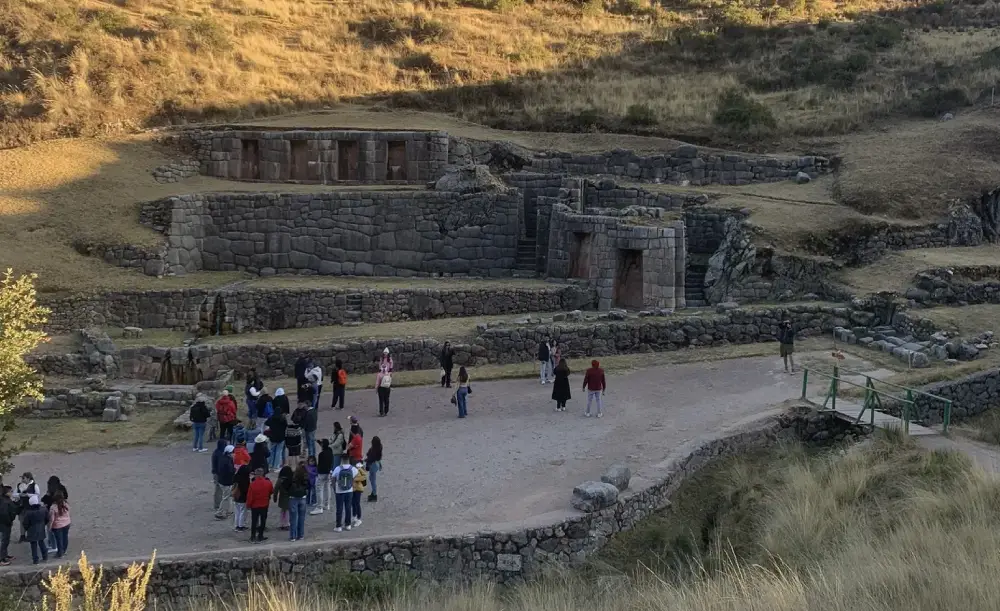
One-day hike from Tambomachay – Qenqo
This is the most popular option for those seeking an intense but achievable single-day experience. The route covers approximately 10 miles (16 km), with a positive elevation gain of about 2,300 feet and an approximate duration of 6 to 8 hours, depending on the group’s pace and weather conditions.
The hike begins on the outskirts of Cusco, near the archaeological site of Tambomachay or from Qenqo, and ascends through Andean puna landscapes until crossing passes that reach around 13,780 feet above sea level. From there, the trail gradually descends toward the Huchuy Qosqo archaeological site, located at approximately 11,975 feet, with continuous views of the Sacred Valley and an atmosphere of absolute tranquility.
Two-day or multi-day trek with camping experience
For those seeking a more leisurely experience, this route allows you to split the journey and spend the night (or nights) in a camping area typically set up near Qoricocha lagoon or in high Andean communities like Patabamba, at nearly 12,467 feet.
A more relaxed pace offers more opportunities for photography, bird watching, and contact with local families. Many operators also include meals prepared en route and transportation from Lamay, in the Sacred Valley, after visiting the site, which facilitates the return to Cusco or connections to other destinations.
Alternative routes from Tauca, Lamay, or Calca
There are other less-frequented but equally fascinating starting points, such as Tauca (near Chinchero and Piuray lagoon), Lamay (in the Sacred Valley), or even from Calca. These routes can vary in length and difficulty, but they share a common denominator: high mountain landscapes, sections with spectacular views, and more direct access to the rural Andean world from the mysticism of the Andes.
These routes are perfect for those looking to completely avoid conventional tourism and open themselves to the spontaneity of the journey.
- From Tauca: ideal for a 2-day hiking adventure. The route passes through rural communities and goes by Piuray lagoon before connecting with the path to Huchuy Qosqo.
- From Lamay: an option to combine trekking with other Sacred Valley sites and easily return toward Cusco after the descent.
- From Calca: a more demanding and less marked route, recommended only with a local guide or for hikers with good mountain experience.
| Route | Start and finish | Distance | Elevation gain | Maximum altitude | Estimated time |
| Tambomachay | Tambomachay – Huchuy Qosqo | 9 to 11 miles | 1,970 to 2,950 ft | 13,780 ft | 6 to 8 hrs |
| Tauca or Patabamba | Tauca or Patabamba – Huchuy Qosqo – Lamay | 11 miles | 2,625 to 3,280 ft | 14,100 ft | 8 to 9 hrs |
| Lamay (Full Day) | Lamay – Huchuy Qosqo – Lamay | 4 to 5 miles | 2,300 to 2,950 ft | 11,975 ft | 5 to 7 hrs |
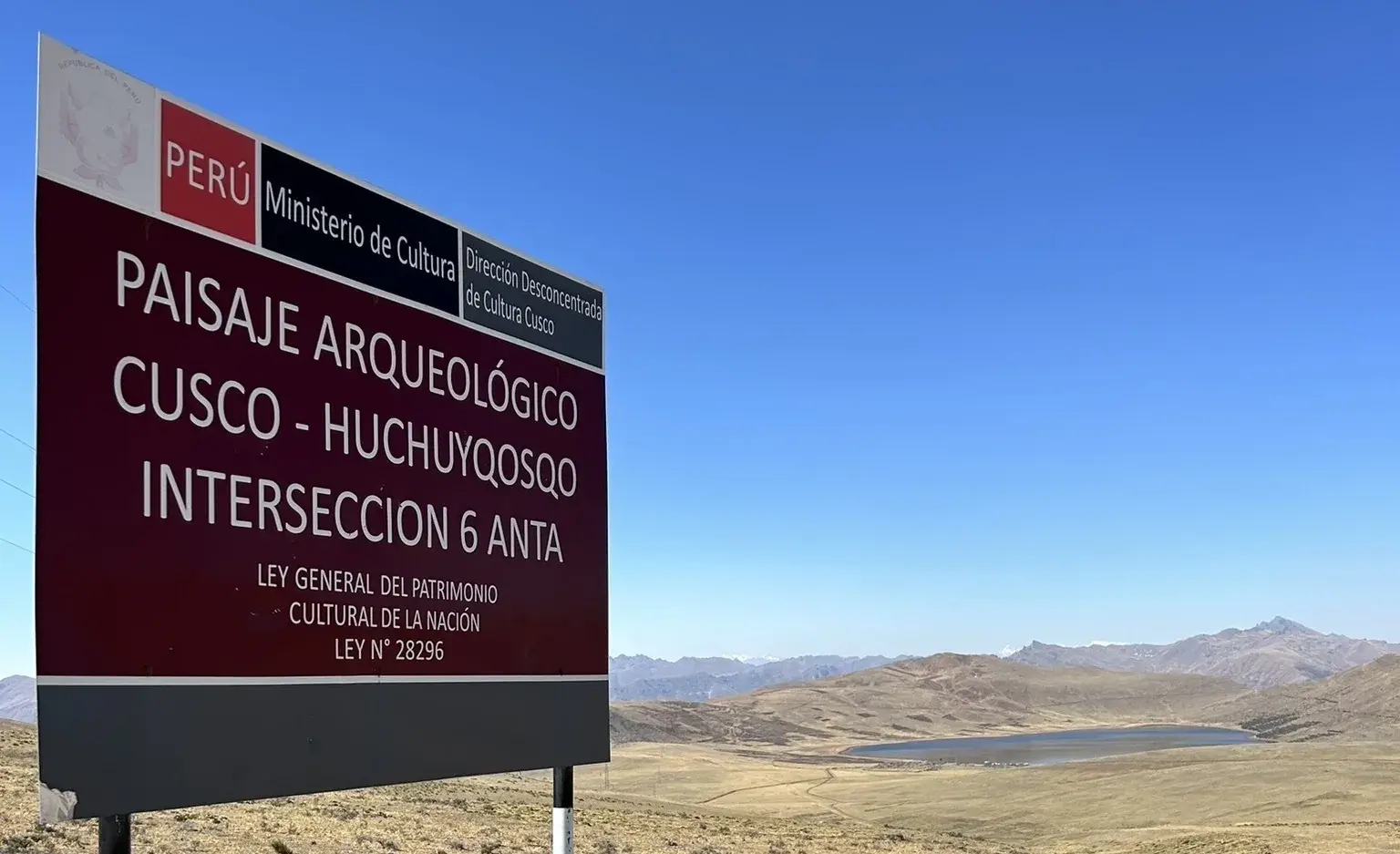
Altitude and physical preparation
One of the most important factors to consider before undertaking the Huchuy Qosqo trek is altitude. The archaeological complex sits at about 11,975 feet above sea level, but depending on the chosen route, the maximum ascent can reach up to 14,100 feet (Tambomachay variant). This can pose a significant challenge for those who aren’t acclimatized.
Although the hike itself doesn’t require climbing techniques, the combination of prolonged ascent and high elevation can amplify the sensation of fatigue, cause headaches, or even altitude sickness symptoms (soroche). For this reason, it’s recommended to spend at least two or three days in Cusco or the Sacred Valley before starting this type of trek route, to allow your body to adapt gradually.
It’s advisable to:
- Stay well hydrated.
- Avoid alcohol during the days leading up to the trek.
- Eat light and rest adequately.
- Consider using coca leaves or altitude sickness pills if you wish.
This trek is suitable for people with moderate physical fitness, as long as they respect the acclimatization time and advance at a steady pace, without rushing.
Expert tip:
Acclimatize for at least two days before the trek. Always carry small bills for rural outposts—many locals sell snacks, textiles, or drinks and don’t accept digital payments.

Best time to visit and weather considerations
Weather in the Andes can be unpredictable, but there’s a clear window that offers the best conditions for doing the Huchuy Qosqo trek: from May to September.
During these months, the weather is dry and skies are usually clear, allowing you to fully enjoy the landscapes and the archaeological site without worrying about heavy rains or slippery trails.
In contrast, the rainy season extends especially from December to March, and although the surroundings become greener and more lush, precipitation can make the paths difficult and even dangerous in some sections. Additionally, visibility can be reduced due to fog and low clouds.
Warning:
During the rainy season (December to March), some trail sections may close or become impassable due to landslides. Always check conditions before heading out and consult with your agency or local guide.
Recommendations:
- Bring layered clothing that can keep you warm during cold mornings and nights.
- Use sunscreen as the high-altitude sun is intense even in winter.
- Always carry a waterproof jacket handy, just in case.
What to expect along the trail
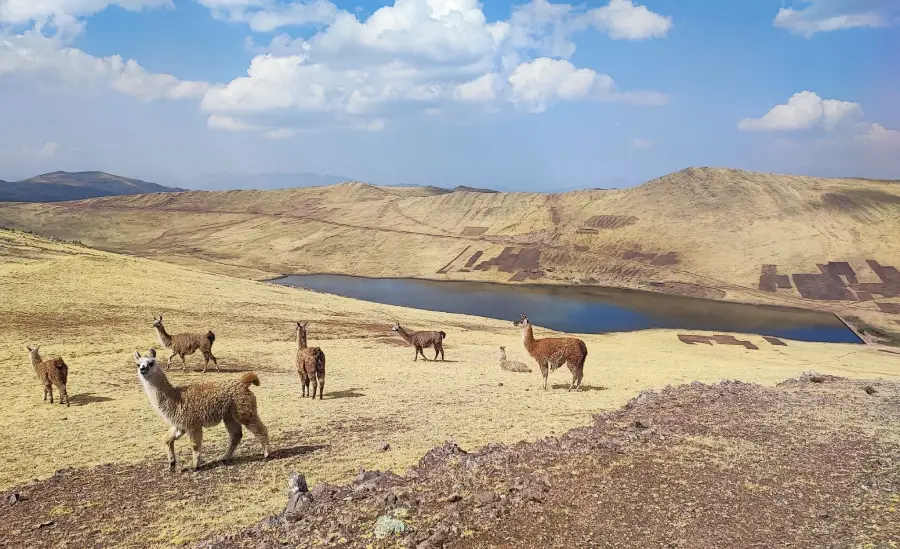
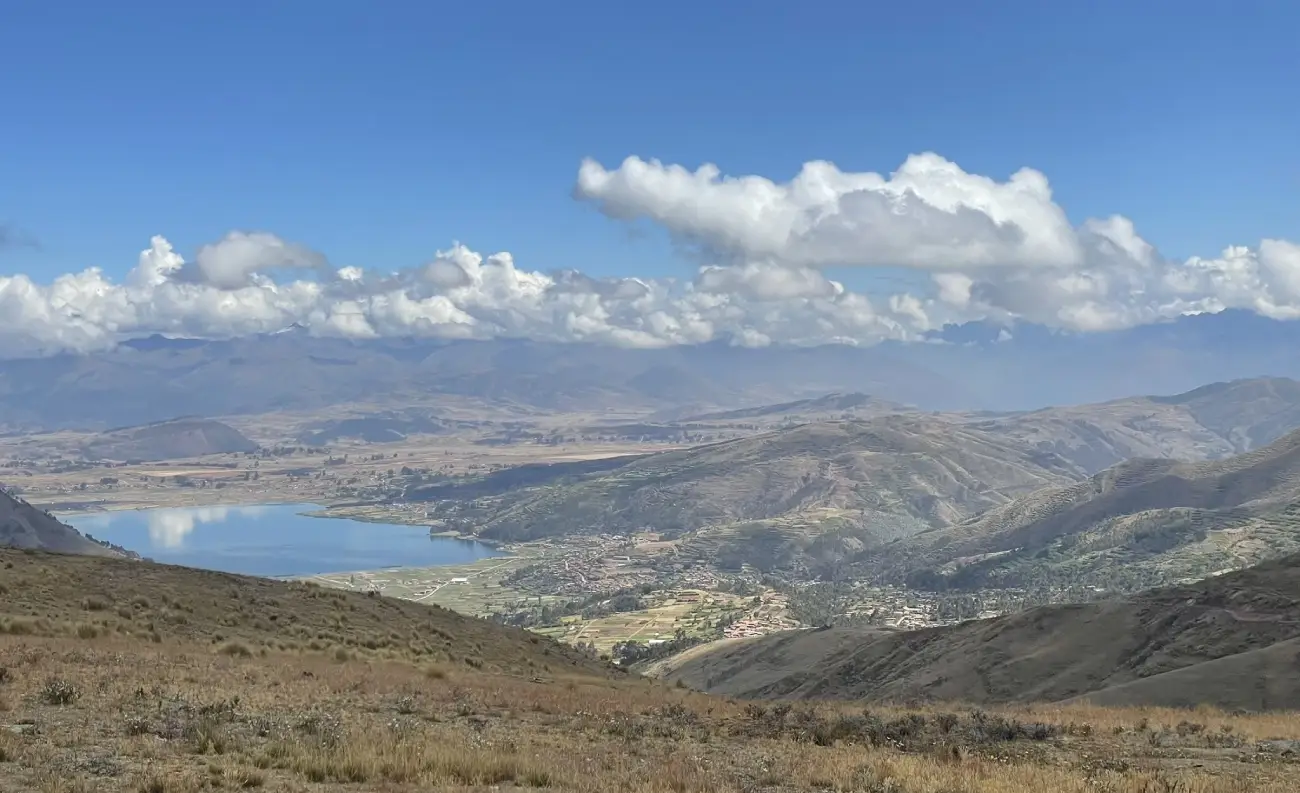
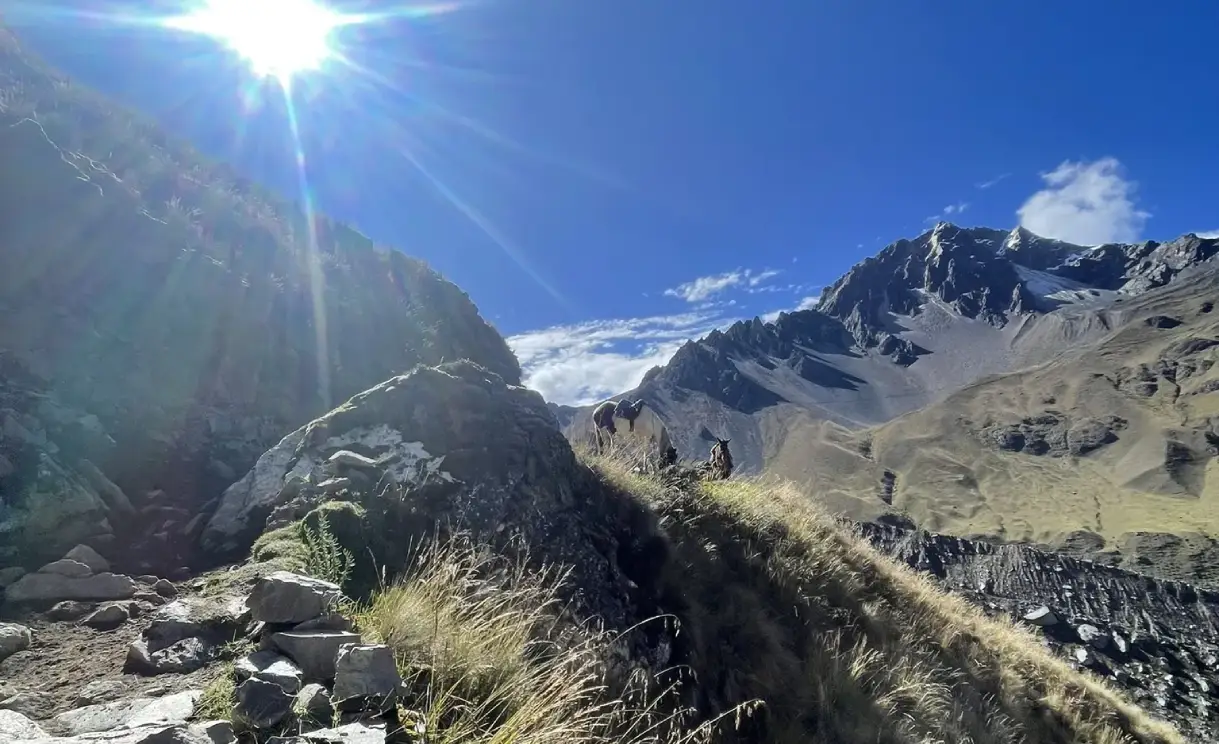
Beyond the final destination, the route to Huchuy Qosqo allows hikers to traverse constantly changing landscapes. Open grasslands, high-altitude lagoons with crystal-clear waters, and mountains that seem to expand the sky.
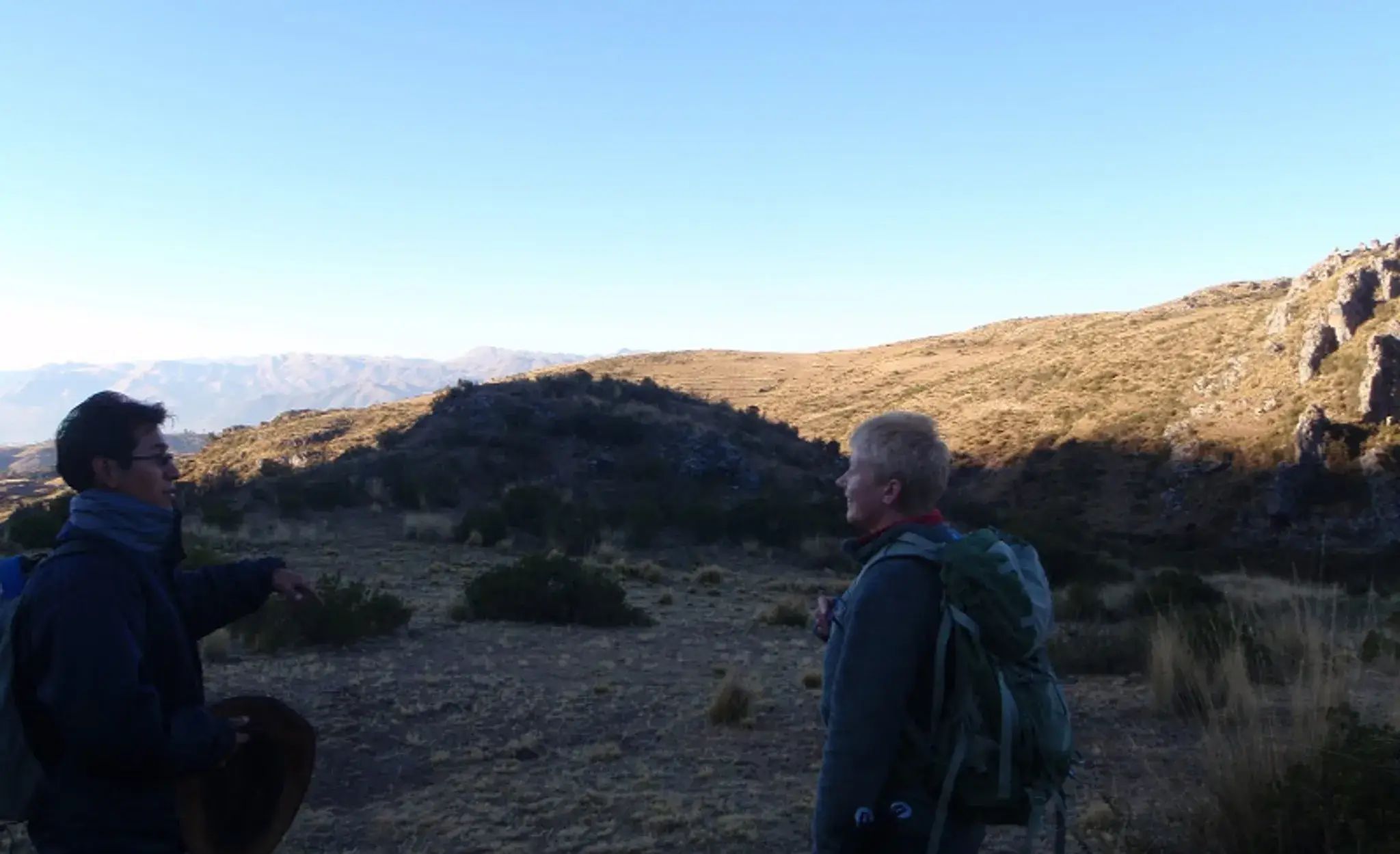
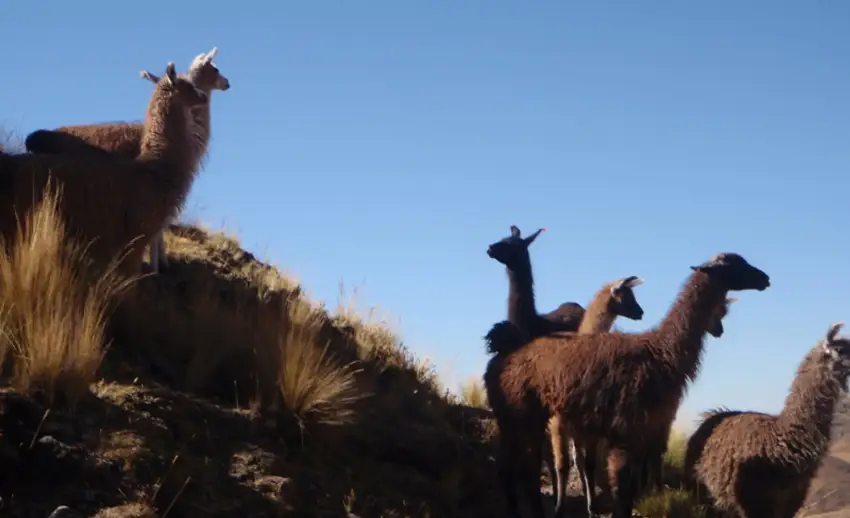
One of the most memorable aspects of the journey is contact with rural Andean life. It’s common to encounter llamas, alpacas, or sheep grazing freely, as well as meeting locals who offer handcrafted textiles or local products.
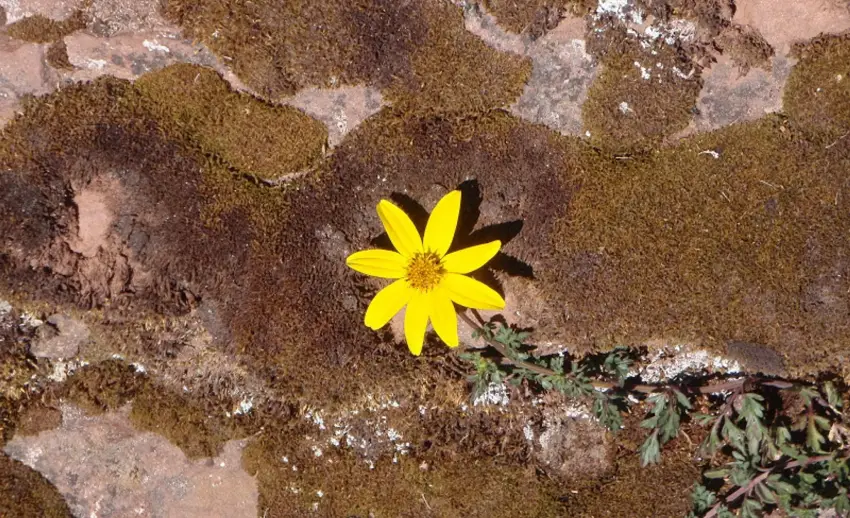
Along the hike, depending on the chosen route, there are also opportunities to observe high Andean birds and native plants like ichu, a resilient high-altitude grass. As the trail descends toward the archaeological site, the environment becomes more fertile, with ancient agricultural terraces that announce the arrival at Huchuy Qosqo from the mountains surrounding the Sacred Valley of the Incas.
Exploring Little Cusco
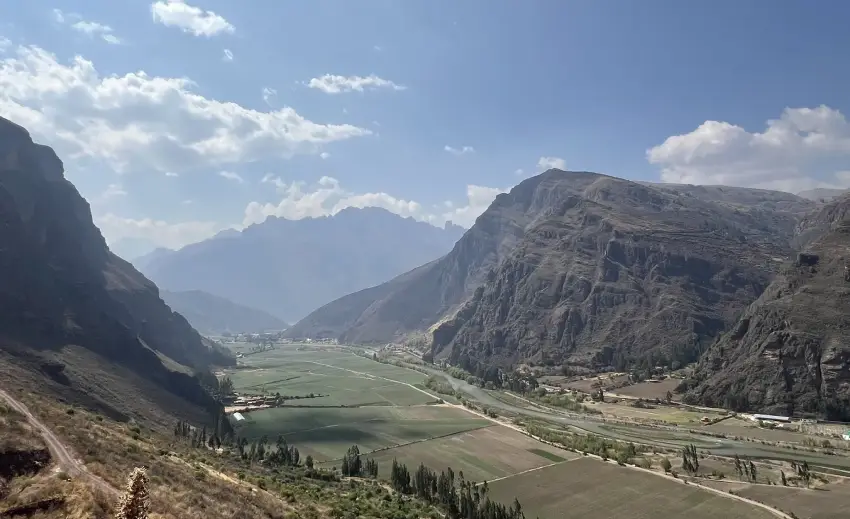
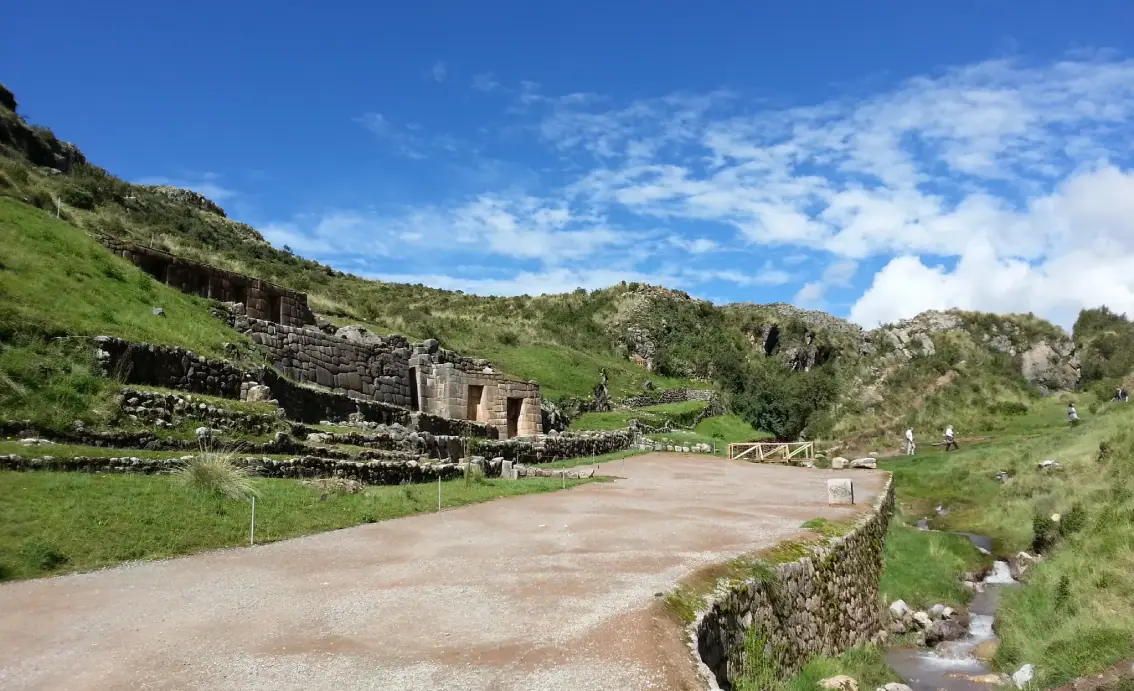
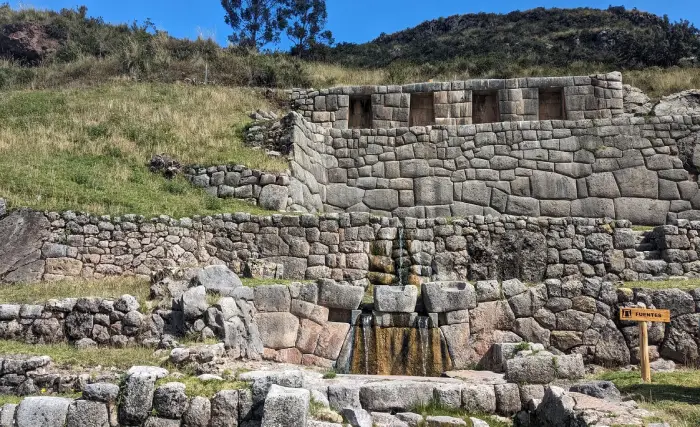
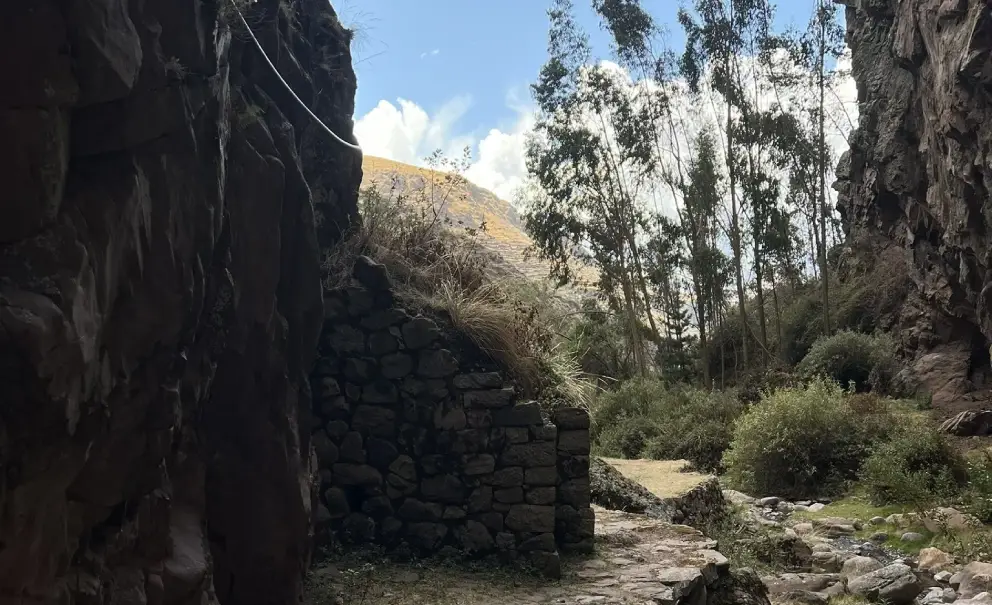
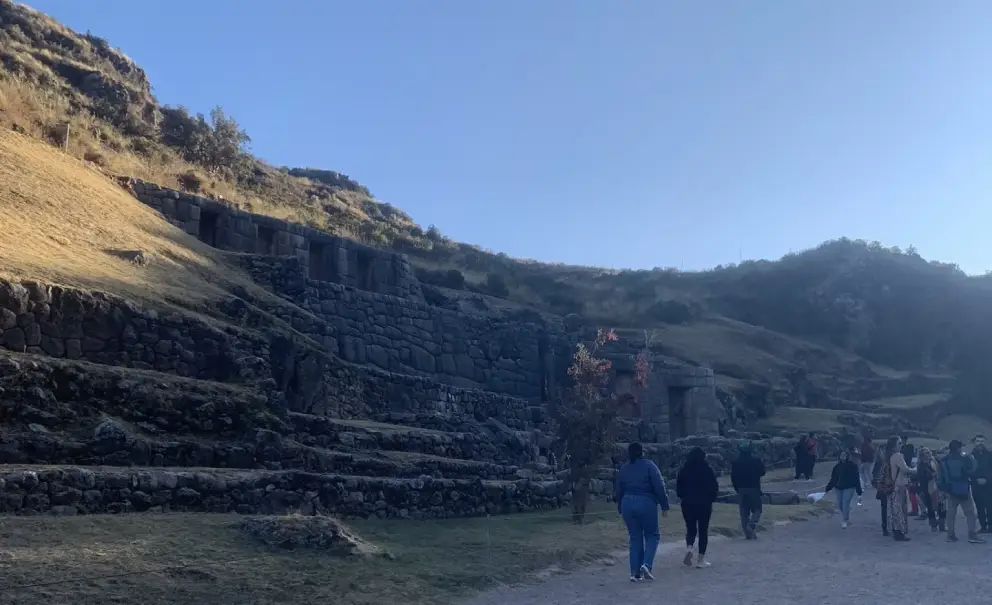
Upon arriving at the Huchuy Qosqo archaeological site, the hiking effort is rewarded with a unique atmosphere: peaceful, open, and charged with history. The ruins are located on a natural platform with commanding views of the Sacred Valley and the snow-capped peaks of the Andes.
Among the most notable structures are:
- Rectangular and trapezoidal enclosures built in stone and adobe.
- Agricultural terraces at different levels, which still preserve their original design.
- Irrigation channels that showcase Inca hydraulic knowledge.
- A kallanka (large ceremonial or administrative hall) restored with a thatched roof, which helps imagine how the complex might have looked centuries ago.
Unlike other tourist archaeological sites, Huchuy Qosqo doesn’t have signage, informative plaques, or interpretive infrastructure, so it’s recommended to hire a local guide or research in advance to understand the historical and architectural context of the place.

Essential gear for the Huchuy Qosqo trek
Although the Huchuy Qosqo trek isn’t extreme, it involves walking at altitude, sudden temperature changes, and prolonged sun exposure. We’ll share a recommended gear list so you’re well prepared and enjoy your experience with comfort and safety.
Appropriate clothing
- Waterproof and windproof jacket (essential).
- Thermal shirt and mid-layer insulation.
- Breathable hiking pants (avoid jeans or heavy fabrics).
- Multi-use bandana, beanie for the cold, and hat for the sun.
- Lightweight gloves, especially if you’re hiking in the mountains or sleeping at camp.
- An extra pair of wool socks.
Other essentials
- Sunscreen and lip balm with SPF protection.
- Sunglasses with UV filter.
- Reusable water bottle.
- Energy snacks (bars, dried fruit).
- Headlamp or small flashlight, especially if camping.
- Altitude sickness pills (consult your doctor).
- Personal documents and cash for local purchases or tips.
Optional but useful
- Lightweight camera or phone with good battery.
- Earplugs if sleeping at camp.
- Toilet paper or biodegradable wet wipes.
Combine Huchuy Qosqo with other Sacred Valley attractions
Huchuy Qosqo is an incredible destination on its own, but it can also easily integrate into a broader itinerary through the Sacred Valley and other wonders of the Cusco region.
We’ll share some options to extend your trip:
1. Huchuy Qosqo and Machu Picchu
Many travelers combine the trek to Huchuy Qosqo with a visit to Machu Picchu. A good strategy is to finish the trek in Lamay and, from there, transfer to Ollantaytambo, where you can catch the train to Aguas Calientes.
This option offers a smooth transition from the less-traveled path to Peru’s most famous icon.
2. Complete Sacred Valley
- The archaeological site of Pisac and its traditional market.
- Moray and the circular terraces of agricultural experimentation.
- The hillside salt ponds of Maras.
- The Inca fortress of Ollantaytambo.
3. Extensions to lesser-known routes
- Short Inca Trail (2 days): ideal for those who’ve already done Huchuy Qosqo and wish to close their trip with a brief hike to Machu Picchu.
- Humantay Lake or Salkantay Trek: as a continuation on more demanding mountain routes.
Conclusion
Can you imagine breathing under open skies, your footsteps echoing among the terraces of Huchuy Qosqo? Doesn’t it spark your curiosity to take an excursion off the usual tourist circuit?
Walking toward “Little Cusco” reveals fragments of history preserved in stone, from the high grasslands to hidden villages. In a region known for wonders like Machu Picchu and the Inca Trail, Huchuy Qosqo presents itself as a place where you can still arrive without hurry.
At Inkayni Peru Tours, we know that if you’re looking for more than a postcard, Huchuy Qosqo awaits you between the morning mist and the afternoon sun.
Frequently asked questions:
How difficult is the Huchuy Qosqo trek compared to other Peru hikes?
The Huchuy Qosqo trek is considered moderate difficulty. It doesn’t require technical hiking experience, but it does need basic physical fitness and good altitude acclimatization.
Compared to the classic Inca Trail or the Salkantay Trek, it’s shorter and less demanding, making it an excellent option for those seeking a less intense but equally rewarding experience.
Can I do the Huchuy Qosqo hike without a guide?
Yes, it’s possible to do the hike on your own (especially via the Lamay route) if you have basic navigation skills.
However, there’s no official signage on the trail or explanations at the archaeological site, so it’s recommended to hire a local guide or go with an agency if you want to learn more about the history, culture, and safe routes.
What’s the difference between a one-day hike and a multi-day Huchuy Qosqo trek?
- The one-day hike (from Tambomachay or Qenqo) typically covers between 9 and 11 miles (15 to 18 km), takes between 6 to 8 hours.
- The multi-day trek (2 or 3 days) includes camping among rural communities, allows for more gradual acclimatization, and provides the opportunity to explore the landscape over more time.
How should I prepare for the altitude at Huchuy Qosqo?
The highest point of the trek reaches 13,123 feet (4,000 m), so it’s essential to acclimatize for at least 2 or 3 days in Cusco or the Sacred Valley before starting.
Stay hydrated, avoid alcohol, eat light, and rest well. You can bring altitude sickness pills or chew coca leaves if you wish. Listen to your body and walk at a steady pace.
Is the Huchuy Qosqo trek suitable for families with teens?
Yes, it’s an excellent option for active families with teenagers (12 years and older) accustomed to walking and spending time in nature. The hike offers memorable landscapes, local fauna like llamas and alpacas, and an introduction to Inca history.
Still, consider their level of altitude adaptation and opt for a more relaxed-pace itinerary if you consider it necessary.
Can I combine Huchuy Qosqo with a visit to Machu Picchu?
Absolutely. Many people finish the trek in Lamay and then transfer to Ollantaytambo, where they can take the train to Aguas Calientes and visit Machu Picchu the next day.
It’s also possible to link Huchuy Qosqo with the short Inca Trail (2 days) or explore other Sacred Valley points like Pisac, Moray, or Maras.
What should I do if weather conditions change during the hike?
- Always bring a waterproof and windproof jacket.
- Pack everything in plastic bags or a waterproof cover inside your backpack.
- Check the forecast before leaving, as a precaution.
- If weather becomes dangerous (thunderstorms, heavy rain, or thick fog), stop in a safe place and consider rescheduling the itinerary if necessary.
Autor

Shared:


If you liked this article and the information you found, give us 5 stars!
 (1 votos, promedio: 5.00 de 5)
 Loading...