Getting to Choquequirao from Cusco
To get to Choquequirao, most travelers start in Cusco, drive toward Cachora or Capuliyoc, and then continue on foot through the Apurímac Canyon toward Marampata and the archaeological site. There is no train, public bus road or operating cable car that reaches the ruins directly. For most visitors, the classic route takes 4 to 5 days, with the 5-day trek offering better pacing and more time at Choquequirao.
Table of Contents
Getting to Choquequirao is not like getting to Machu Picchu. There is no train station below the site, no bus road to the entrance and no operating cable car for visitors. The journey still depends on road transport to a trailhead and a demanding Choquequirao hike through the Apurimac Canyon.
This blog focuses only on access: where Choquequirao is, how to get there from Cusco, which route makes sense, what Huanipaca means, how many days you need, where you can sleep on the way and when a guided service is more practical than going alone.
| Cuscomain starting base | Cachora / Capuliyocclassic access | 4-5 daysusual trek length | No cable carnot operating today |

Map reference for the classic Choquequirao access route.
WORLD WONDER IN THE ANDESMachu Picchu
Discover the history, landscapes, and essential tips for visiting this world wonder.
Where Is Choquequirao?
Choquequirao is an Inca archaeological site in southern Peru, in the Vilcabamba mountain range above the Apurimac River canyon. The Choquequirao Archaeological Park covers areas linked to both Cusco and Apurimac, which is why travelers often see different regional references when researching the route.
For practical travel planning, the most useful idea is simple: most visitors sleep in Cusco, drive toward Cachora or Capuliyoc, then continue on foot through the canyon toward Marampata and Choquequirao.
| Detail | What travelers should know |
| Region context | The archaeological park is associated with both Cusco and Apurimac access areas. |
| Main travel base | Cusco is the usual starting city for guided and independent travelers. |
| Classic trailhead area | Cachora or Capuliyoc, depending on the transport plan and itinerary. |
| Main canyon | Apurimac Canyon, the physical core of the trek. |
| Village before the ruins | Marampata is the main village base near Choquequirao. |

Getting to Choquequirao also makes more sense when compared with other Peru treks. The Inca Trail, the Salkantay Trek, the Lares Trek and the Inca Jungle Trek all follow very different access systems, but none begins with the same road-to-trailhead logic followed by a deep canyon descent on foot.
Can You Get to Choquequirao by Road, Train or Cable Car?
No. You cannot currently reach Choquequirao directly by road, train or cable car. Vehicles can take you near the trailhead area, but the final access to the archaeological site still requires hiking.
| Access type | Available now? | Practical meaning |
| Road to Choquequirao ruins | No | Road transport reaches access towns or trailhead areas, not the archaeological site itself. |
| Train to Choquequirao | No | Unlike Machu Picchu, Choquequirao has no train station for visitors. |
| Public bus to the ruins | No | You can use buses or local transport for part of the trip, but not to the site entrance. |
| Choquequirao cable car | Not operating | The project exists, but travelers should not plan a trip assuming cable car access. |
| Trekking route | Yes | This is the real access method today. |
Warning:
A newer access route from the Santa Teresa and Yanama side, known as the Abra San Juan – Paso Choquequirao pedestrian route, has been promoted as a faster way to reach Choquequirao. This route may reduce the walking approach from the Yanama side, but it should not be confused with a standard full-day tour from Cusco. Travelers still need to verify road access to Yanama, guide availability, trail condition, weather, entrance hours and return logistics before choosing this route.
How to Get to Choquequirao from Cusco
The classic way to get to Choquequirao from Cusco has two parts: first a road transfer, then a multi-day trek. The road section usually follows the Cusco–Abancay corridor toward Cachora or Capuliyoc. From there, the walking route descends into the Apurimac Canyon, crosses lower canyon terrain and climbs toward Marampata before reaching the archaeological site.
| Step | Route logic | What to expect |
| Step 1 | Cusco to Cachora or Capuliyoc | Road transfer of roughly 4.5-6+ hours depending on vehicle, stops, route and road conditions. |
| Step 2 | Capuliyoc to the canyon descent | First wide Apurimac Canyon views, then a long downhill section on exposed trail. |
| Step 3 | Lower canyon to Santa Rosa or Marampata | River crossing area, warmer terrain and one of the most demanding climbs of the route. |
| Step 4 | Marampata to Choquequirao | Final approach to the archaeological site, usually planned after sleeping near Marampata or nearby camps. |
| Step 5 | Return or continue route | Most classic itineraries return by a similar route; longer expeditions continue toward Machu Picchu. |
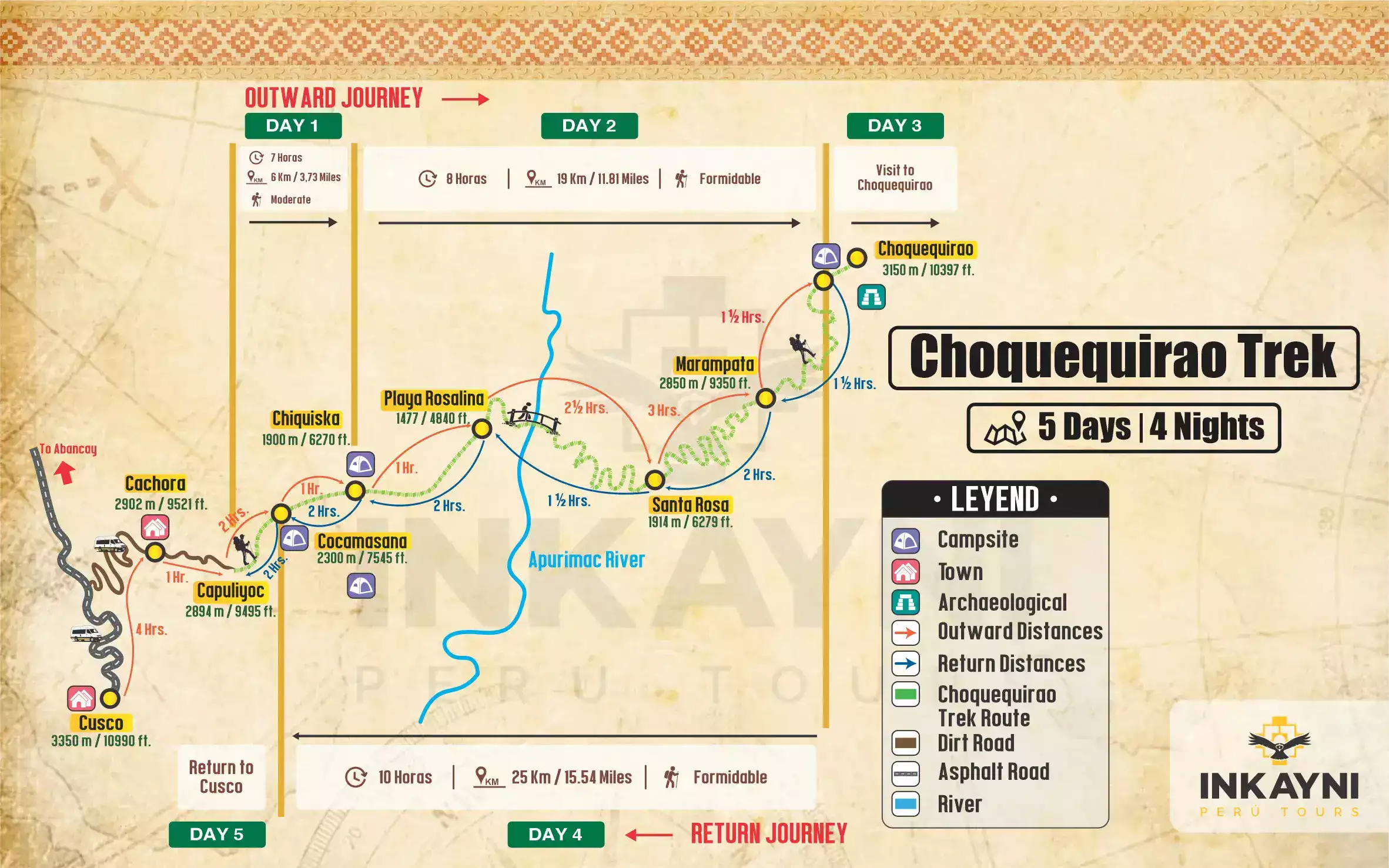
Route map for a 5-day Choquequirao Trek from Cusco.
Choquequirao Route Map and Main Access Points
When travelers ask how to get to Choquequirao, they are usually comparing three access ideas: Cachora, Capuliyoc and Huanipaca. They are not the same. Cachora is a traditional access town, Capuliyoc is a common road-access viewpoint and trailhead area, and Huanipaca is more often discussed as an alternative route or exit depending on local conditions.

Stone paths and canyon scenery on the classic route to Choquequirao.
| Route or access | Best for | What to know |
| Cusco – Capuliyoc – Marampata – Choquequirao | Most guided treks and classic itineraries. | Usually the most practical access today because vehicles can reach the viewpoint or trailhead area before the canyon descent. |
| Cusco – Cachora – Capuliyoc – Choquequirao | Independent hikers or travelers using Cachora as a base. | Can add local transport or extra walking before the main trail section begins. |
| Huanipaca route | Alternative access or exit in some itineraries. | Needs current local verification because trail condition, transport access and safety can vary. |
| Choquequirao to Machu Picchu | Experienced hikers with more time. | A long expedition, not a simple access route to Choquequirao. |
Keep this in mind:
Capuliyoc is often more useful than Cachora as the practical trailhead because it saves road or walking time before the canyon descent. Cachora still matters for independent logistics, local transport and route context.

Rosalina Bridge is one of the key crossing areas on the classic Choquequirao access route.
Related Choquequirao planning
Can You Get to Choquequirao on Your Own?
Yes, independent hiking is possible, but it is better for experienced trekkers. You need to manage transport, food, water, camps, route timing, cash, weather decisions and emergency planning. The trail is not technical, but the canyon profile makes mistakes heavier than they look on a map.
Travelers considering Choquequirao without a guide should be comfortable with remote-route logistics, Spanish basics, cash payments, water treatment and changing local conditions.
| Independent task | Why it matters |
| Transport | You must coordinate buses, colectivos, taxis or private transport to Cachora or Capuliyoc. |
| Food and water | Local food points exist, but availability is limited and can change by season. |
| Camping or lodging | You need to know where you can sleep and carry enough cash in soles. |
| Route timing | Starting late can expose you to stronger canyon heat and slower climbs. |
| Safety margin | Rain, fatigue, dehydration or stomach issues are harder to manage far from services. |
Warning:
Do not treat Choquequirao as a casual independent walk just because it has no Inca Trail-style permit. The route still requires preparation, cash, water treatment, camping decisions and enough fitness to climb out of the canyon safely.
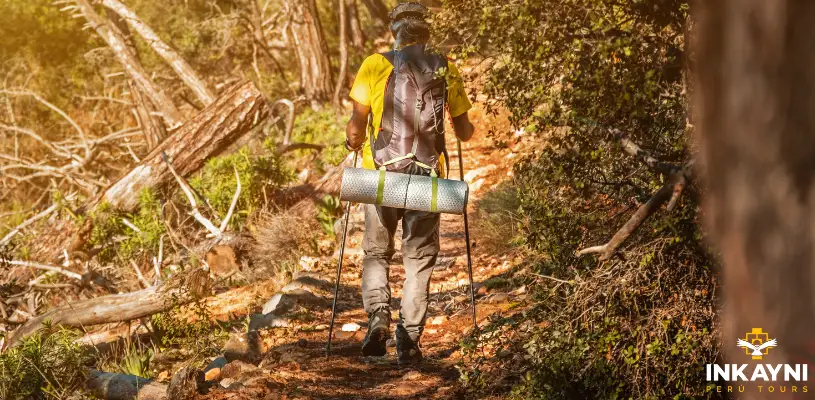
Hiking to Choquequirao independently requires more logistics and physical margin.
Getting to Choquequirao with a Guided Tour
A guided Choquequirao tour does not remove the physical challenge, but it reduces the practical burden. Transport, route timing, meals, camping equipment, mule support and guide service are organized for you. That matters because the hardest part of getting to Choquequirao is not only walking; it is walking with the right logistics.
A 5-day Choquequirao Trek is usually the most balanced guided option if you want enough time to reach the site, explore it properly and return without compressing every hiking day.
| Option | What you handle | Best for |
| Independent trek | Transport, food, water, camps, gear, route timing and emergencies. | Experienced trekkers with Spanish basics and remote-route confidence. |
| Guided tour | The operator handles transport, meals, camps, mule support and guide service. | Travelers who want safer logistics and interpretation at the ruins. |
| Private guided trek | The operator handles logistics with more control over pace and timing. | Couples, families or travelers who want flexibility and a more personal rhythm. |

A guided Choquequirao tour helps organize transport, camps, meals, mule support and route timing.
PERU’S LEGENDARY HIKEInca Trail to Machu Picchu
Follow the historic trail through mountain passes, Inca sites, and cloud forest paths to Machu Picchu.
How Many Days Do You Need to Reach Choquequirao?
Most travelers need 4 or 5 days for the classic Choquequirao route. A 4-day plan is faster and more demanding. A 5-day itinerary gives more time for the archaeological site and better recovery between the hardest climbs.
| Itinerary | Best for | Access logic |
| 4-day Choquequirao Trek | Fit hikers with limited time. | Reaches the site with a tighter rhythm and less recovery time. |
| 5-day Choquequirao Trek | Most travelers who want a better pace. | Gives more room for the site visit and a less compressed return. |
| Choquequirao to Machu Picchu | Experienced trekkers with more days. | Long expedition route, usually 8-9+ days depending on plan. |
Where Can You Sleep on the Way to Choquequirao?
Accommodation on the way to Choquequirao is basic. You should expect campsites, simple rooms, family-run stops and rural lodging rather than standard hotels. Marampata is the most important village base near the archaeological site.
| Stop | Role on the route | What to expect |
| Cachora | Access town before the trek. | Basic lodging, shops, transport and local food options. |
| Capuliyoc | Viewpoint and common trailhead area. | Canyon views, basic services and the start of the descent. |
| Chiquisca | Common lower-route overnight stop. | Campsites, basic meals and simple services depending on season. |
| Santa Rosa | Climb-splitting stop after the river area. | Useful if you need to break the ascent toward Marampata. |
| Marampata | Main village base near Choquequirao. | Simple rooms, campsites, meals, shops and access toward the ruins. |

Marampata is the main village base before reaching the Choquequirao archaeological site.
If sleeping arrangements affect your route choice, check Choquequirao Trek accommodation before deciding whether to camp, use rural lodging or travel with a guided service.
How Much Should You Budget to Get to Choquequirao?
Your budget depends on how you travel. Independent hikers pay separately for transport, food, camping, entrance, gear, mule support and emergency money. Guided treks usually cost more because the main logistics are packaged into one service. The full Choquequirao Trek cost depends less on one single fee and more on what is included.
| Cost item | Approx. planning range | Practical note |
| Transport to trailhead | Variable | Shared transport is cheaper; private transport saves time and simplifies early starts. |
| Choquequirao entrance | Around S/60 for foreign adults is often reported | Carry soles in cash and verify the current fee before departure. |
| Camping or local services | Small cash payments | Showers, toilets, charging, campsites or simple rooms may be paid locally. |
| Food and snacks | Depends on whether you go solo or guided | Independent hikers should buy most supplies in Cusco. |
| Guided trek | Higher total price | Usually includes transport, guide, meals, camps, mule support and route logistics. |
Pro tip:
Do not compare only the headline price. For Choquequirao, the real cost depends on what is included: transport, meals, entrance, camping equipment, mule support, sleeping bag, trekking poles, tips and emergency backup.
Best Time to Get to Choquequirao
The best time to get to Choquequirao is usually the dry season, especially from May to September. The trail is generally more stable, views are clearer and steep sections are easier to manage. The rainy season can still be possible, but it increases mud, slippery descents and route uncertainty.
If weather is a key concern, compare the best time to visit Choquequirao Trek before choosing dates. This matters more if you are planning independently or using an alternative access route where local conditions can change faster.
| Season | Months | Access impact |
| Dry season | April to October | Better footing, clearer views and easier logistics for most travelers. |
| Peak dry months | June to August | Strong visibility, colder nights and more demand for good operators. |
| Rainy season | November to March | Slippery trail, more clouds, slower walking and higher need for waterproof gear. |
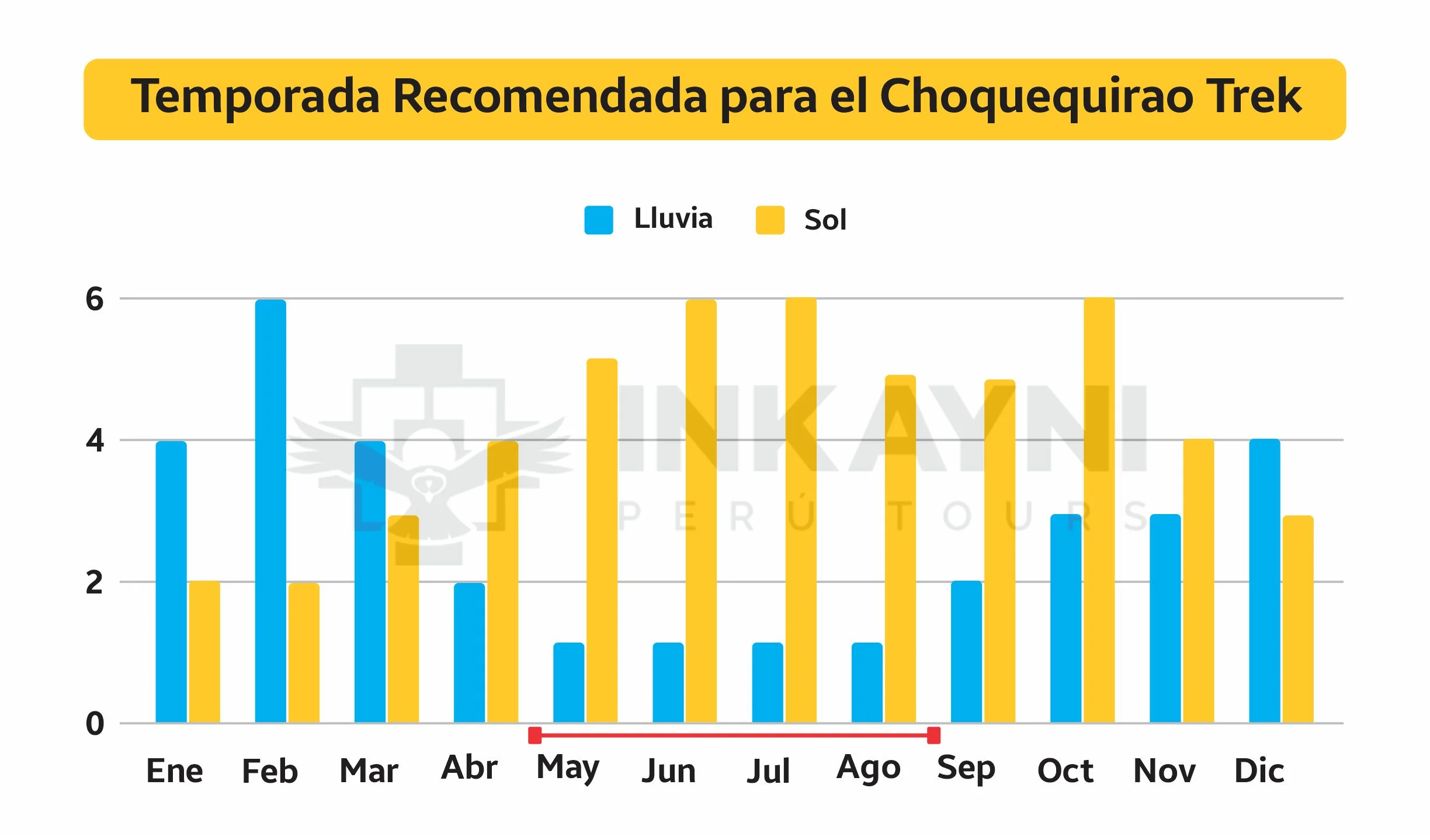
Dry season usually gives better trail conditions for reaching Choquequirao.
What to Bring for the Access Route
This is not a complete packing list, but some items matter specifically for getting to Choquequirao. The route includes heat, descents, climbs, camps and limited services, so your daypack should support hydration, sun protection and basic trail independence.
| Item | Why it matters |
| Water bottle or hydration bladder | The canyon can be hot, and waiting until you feel thirsty is a mistake. |
| Water treatment | Independent hikers should not assume all water sources are safe to drink untreated. |
| Sun hat, sunscreen and sunglasses | Lower canyon sections can feel exposed and hot. |
| Trekking poles | Very useful for steep descents and long climbs. |
| Cash in soles | Useful for local transport, camps, snacks, showers, toilets, mules or route changes. |
| Headlamp | Useful at camp and for early starts before the heat rises. |
For the full gear breakdown, use the Choquequirao Trek packing list before deciding what goes in your daypack and what should be carried by mule support.

Practical trekking clothes and gear help with heat, rain, descents and long walking days on the route to Choquequirao.
Main Machu Picchu and Peru trekking guides
Final Recommendation
For most travelers, the most practical way to get to Choquequirao is to start from Cusco, use organized transport to Capuliyoc or the Cachora area, and follow a 4 or 5-day trekking route through the Apurimac Canyon. The 5-day version usually gives a better pace and more time near the archaeological site, while the 4-day version works better for fit hikers with limited time.
If you want the route handled without managing transport, meals, camps, mule support and local timing by yourself, Inkayni Peru Tours offers a 5-day Choquequirao Trek designed around a more balanced pace from Cusco to the ruins and back.
Frequently Asked Questions About How to Get to Choquequirao
How do you get to Choquequirao from Cusco?
Can you get to Choquequirao by car?
Is there a train to Choquequirao?
Is there a cable car to Choquequirao?
Where does the Choquequirao trek start?
Is Capuliyoc or Cachora better as a starting point?
What is the Huanipaca route to Choquequirao?
Can you do Choquequirao in 3 days?
Do you need a permit to visit Choquequirao?
Where can you sleep on the way to Choquequirao?
Is the Choquequirao route dangerous?
What is the fastest way to get to Choquequirao?
Can you continue from Choquequirao to Machu Picchu?
Autor
Shared: