


What to Know Before Prioritizing Attractions in Cusco
Cusco is easier to enjoy when you separate the trip into layers. Some highlights belong to the city itself, like the Historic Center, San Blas, and the main viewpoints, while others require extra time and planning, especially in the Sacred Valley and Machu Picchu. For a first visit, what matters most is not how many places you add, but how well they fit your days, your pace, and the way your body handles altitude.
Table of Contents
If this is your first trip to Cusco, the hardest part is not finding things to see—it is deciding what deserves your limited time. A good plan for sightseeing in Cusco starts with the city itself, where Inca foundations, colonial architecture, museums, neighborhoods and archaeological sites sit surprisingly close together. From there, the wider Cusco Region opens into the Sacred Valley and, eventually, Machu Picchu.
For most first-time travelers, the best Cusco tourist attractions include the Historic Center, Qoricancha, Sacsayhuaman, San Blas, Pisac, Ollantaytambo, Moray, the Maras Salt Mines, Chinchero and Machu Picchu. These tourist attractions in Cusco, Peru, do not all belong to the same geographic zone, so the list below shows what is inside Cusco city, what requires a Sacred Valley day, and what needs a separate Machu Picchu plan.
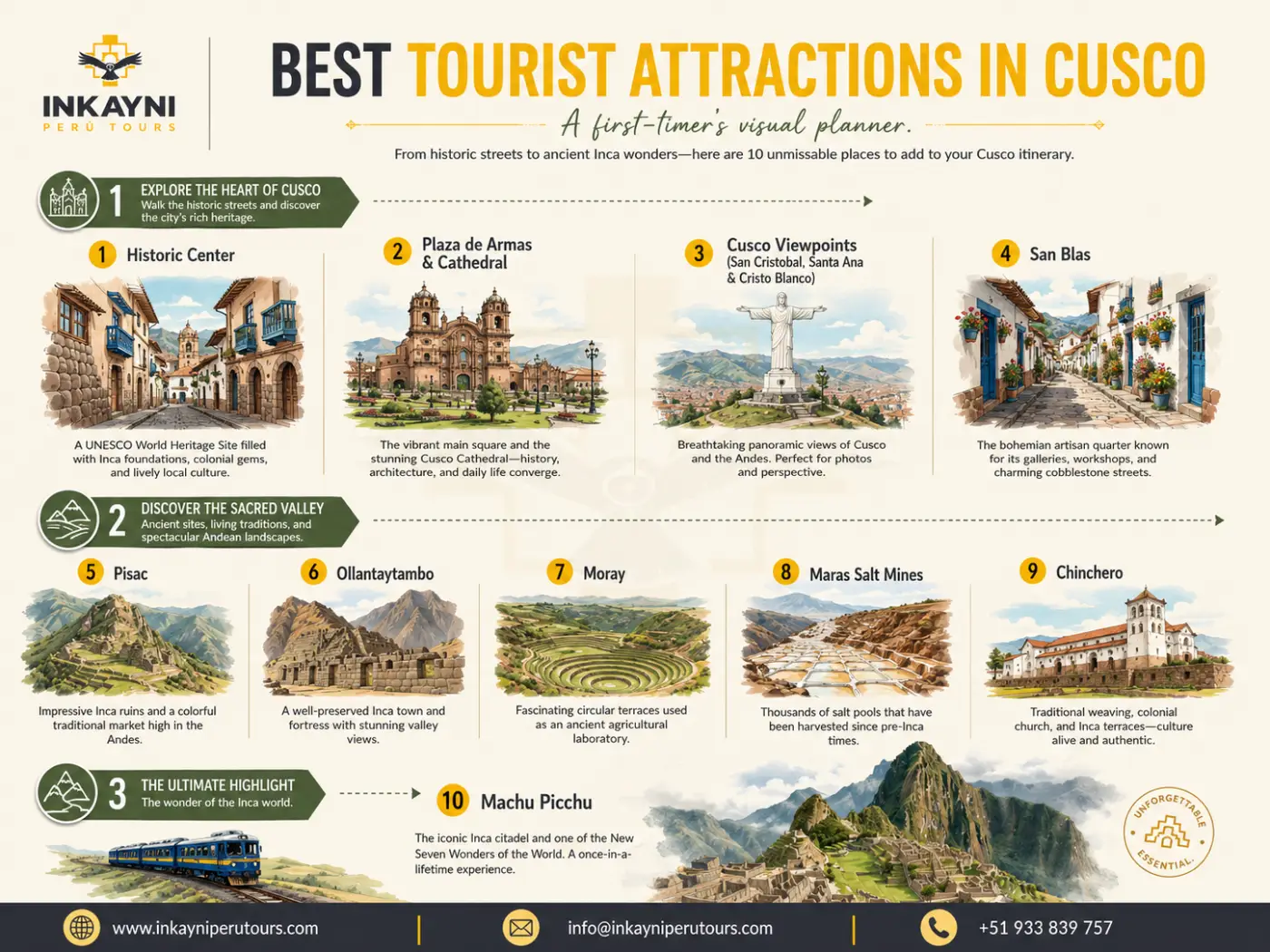
| Place | Area | Time to allow | Best for |
| Historic Center + Plaza de Armas | Cusco city | 2–4 hr | First orientation, architecture and city atmosphere |
| Qoricancha | Cusco city | 1 hr | Inca masonry and colonial-over-Inca history |
| Sacsayhuaman | Above Cusco city | 1–2 hr | Monumental stonework and panoramic views |
| San Blas + viewpoints | Cusco city | 1–3 hr | Art, walking and city views |
| Pisac | Sacred Valley | 2–3 hr | Terraces, archaeology and valley views |
| Ollantaytambo | Sacred Valley | 2–4 hr | Inca urban fabric and train connections |
| Moray | Sacred Valley plateau | 1–1.5 hr | Terraces and agricultural interpretation |
| Maras Salt Mines | Sacred Valley area | 1–1.5 hr | Living salt production and photography |
| Chinchero | High plateau above the valley | 1.5–2 hr | Archaeology, church and textile traditions |
| Machu Picchu | Cusco Region | 1 full travel day minimum | The trip’s major archaeological destination |
Why Cusco Deserves More Than a Stopover
Cusco is often treated as the place where you sleep before the Sacred Valley or Machu Picchu, but that undersells the city. Its historic center still carries the shape of the Inca capital beneath colonial churches, houses and streets, while living neighborhoods, markets and festivals make the past feel present rather than sealed off behind museum walls.
It is also a practical base. From Cusco you can reach the Sacred Valley, start the Inca Trail, travel toward the Salkantay route, or connect with the Lares Trek. The catch is altitude: at about 3,399 m (11,152 ft), Cusco is not the place to schedule your hardest hiking day immediately after landing.
First-day tip:
Keep your arrival day light. Walk the Historic Center, eat normally, hydrate and see how your body responds before stacking Sacsayhuaman, long stairs or a high-altitude day trip on top of the flight.
Tourist Attractions in Cusco City
If your priority is the top attractions in Cusco without spending half the day in a vehicle, start here. The Historic Center, Qoricancha, Sacsayhuaman and San Blas can all fit naturally into one or two city-focused days, depending on your pace and how you respond to the altitude.
1. Historic Center, Plaza de Armas and Cusco Cathedral
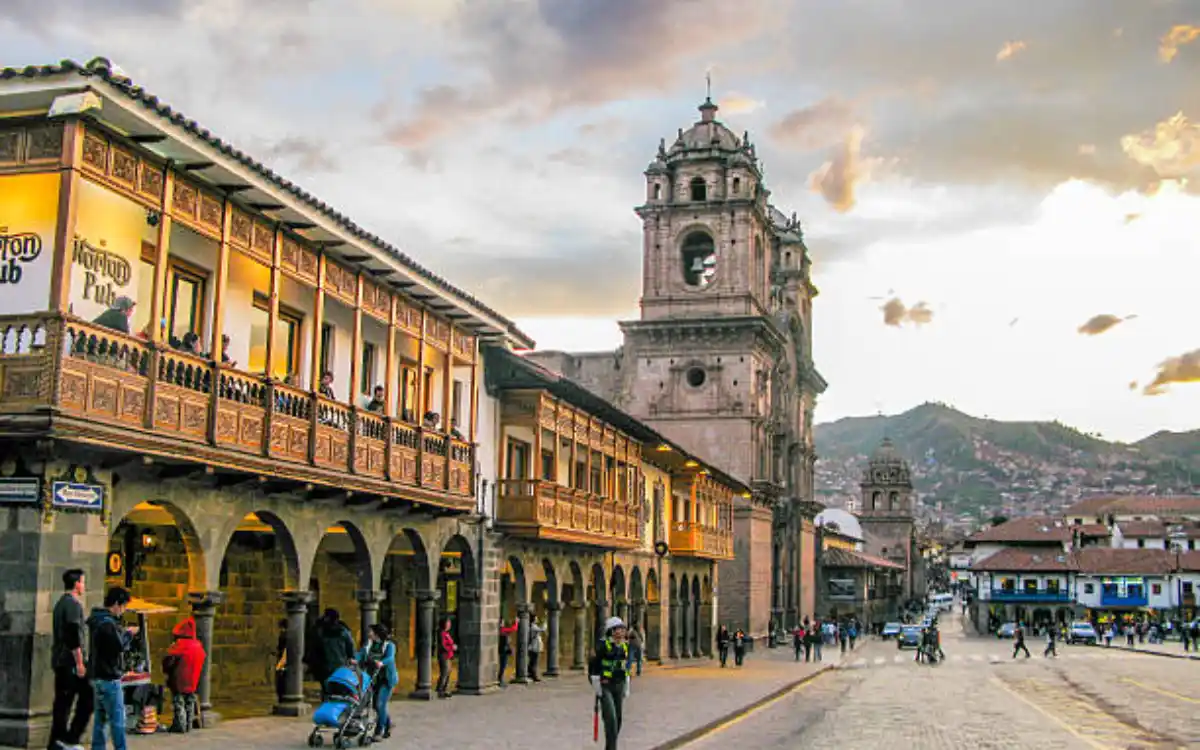
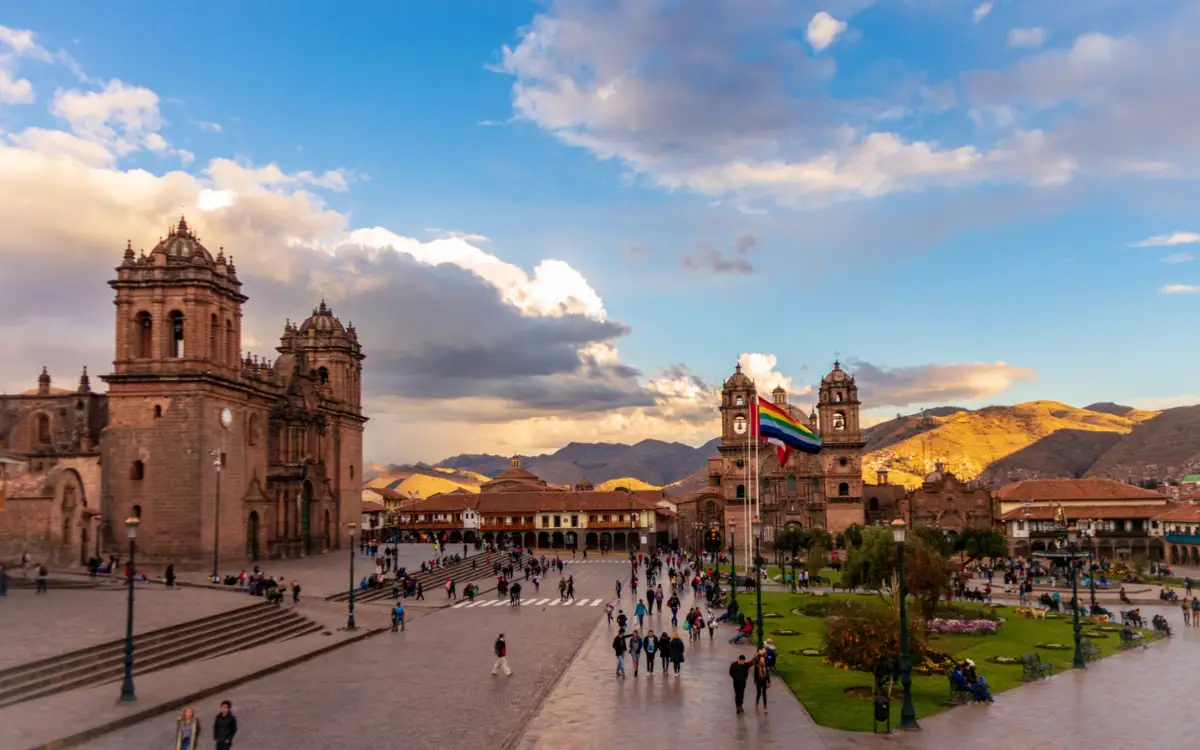
The Historic Center is the best place to begin because it helps the rest of Cusco make sense. Around the Plaza de Armas, colonial arcades and churches sit over the political and ceremonial heart of the former Inca capital. A few streets away, Inca walls continue beneath later buildings, and the city shifts quickly from monumental architecture to shops, cafes, museums and everyday life.
- Do not rush the plaza: walk it once during the day and again after dark, when the churches and arcades are illuminated.
- Inside the Cathedral: look for the Cusco School paintings, carved altars and the well-known Last Supper by Marcos Zapata, where a guinea pig appears at the center of the meal.
- Nearby museums: the Museo Inka, Museo de Arte Precolombino and Casa Concha each add a different layer to the city’s archaeological and artistic story.
2. Qoricancha, the Inca Temple Beneath Santo Domingo
Qoricancha is one of the clearest places to see how Inca and colonial Cusco physically overlap. The former Temple of the Sun preserves finely fitted Inca stone walls beneath and beside the later Santo Domingo complex. Rather than treating the two periods as separate attractions, the visit lets you see how conquest, reuse and survival are built into the same space.
If you have only half a day for the city, Qoricancha pairs naturally with the Historic Center and then Sacsayhuaman. Inkayni’s current City Tour in Cusco follows that broader logic by combining Qoricancha with archaeological sites above the city.
3. Sacsayhuaman and the Archaeological Circuit Above Cusco
Sacsayhuaman is the major archaeological site immediately above Cusco. Its massive zigzag walls, made from blocks fitted at a scale that is hard to appreciate in photographs, are the main reason to go. The elevated setting also gives you a wide view back over the historic city.
Most organized city tours continue from Sacsayhuaman to Qenqo, Puka Pukara and Tambomachay. If your interest is archaeology rather than simply ticking off viewpoints, that four-site circuit is a much stronger first introduction than trying to squeeze the Sacred Valley into the same afternoon.
Ticket note:
The Cusco Tourist Ticket (BTC) has a partial circuit that covers Sacsayhuaman, Qenqo, Puka Pukara and Tambomachay. Ticket types, validity and prices can change, so check the current COSITUC tariff before planning several archaeological sites around the same pass.
4. San Blas and Cusco’s Viewpoints
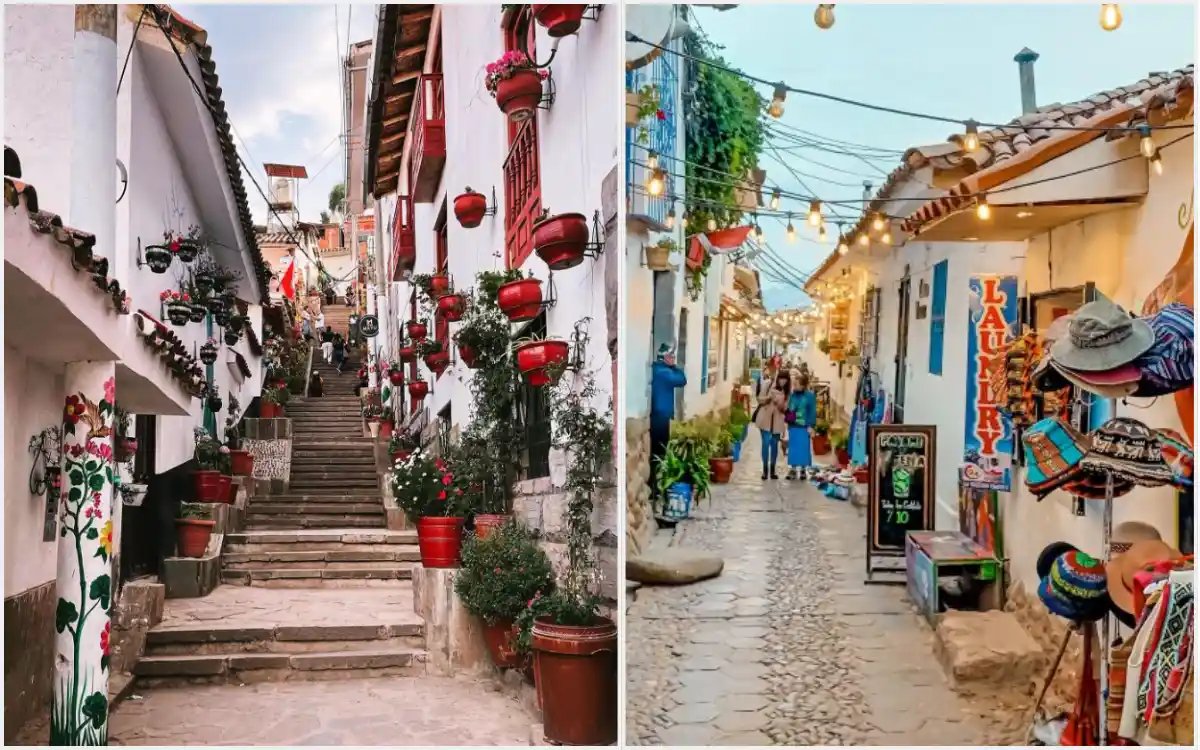
San Blas is where the city becomes more intimate. Narrow lanes, steep stairs, artisan workshops and small galleries replace the monumental scale of the Plaza de Armas. It is best explored on foot, ideally without trying to turn every corner into a checklist stop.
For wider views, combine San Blas with one or two viewpoints rather than driving between all of them. San Cristobal gives a classic view over the center, Santa Ana looks across a more residential side of the city, and Cristo Blanco works well if you are already near Sacsayhuaman.

Three Cusco viewpoints, one skyline of red roofs and mountains.
Sacred Valley Attractions Near Cusco
The Sacred Valley is not a single attraction. It is a broad travel corridor along and above the Urubamba Valley, with archaeological sites and towns spread across different elevations. For travelers comparing places to visit in Cusco beyond the city, Pisac and Ollantaytambo are the core valley stops, while Moray, Maras and Chinchero are commonly folded into the same regional itineraries from the higher plateau.
5. Pisac Archaeological Park and Town
Pisac combines a large archaeological complex high above the valley with a living town below. The upper site is the stronger reason to visit: terraces wrap around the mountainside, while ceremonial sectors and viewpoints reveal how deliberately the Incas shaped steep terrain.
- Allow enough time for the ruins rather than treating them as a quick photo stop.
- If you also want the town and market, make sure your transport plan includes both the archaeological park above and the settlement below.
- Pisac makes sense at the beginning or end of a classic Sacred Valley day, depending on the direction of travel.
6. Ollantaytambo, a Living Town on Inca Foundations
Ollantaytambo is more than the archaeological terraces above town. Its streets, water channels and blocks still preserve part of the Inca urban layout, so the strongest visit combines the archaeological site with time walking through the inhabited center below.
It is also one of the most practical places in the Sacred Valley because many trains to Machu Picchu depart from here. That makes an overnight useful if you want to explore without racing back to Cusco before an early train.

7. Moray and Its Concentric Terraces
Moray is one of the most visually distinctive archaeological sites near Cusco. Its concentric terraces descend into natural depressions, creating a layout unlike the long agricultural terraces seen at Pisac or Ollantaytambo.
Moray is commonly interpreted as a place where the Incas experimented with crops and microclimates, but its exact function is still debated. It is better to understand the site as evidence of sophisticated landscape management than to present the “agricultural laboratory” explanation as completely settled fact. Inkayni’s Moray guide goes deeper into the site itself.

8. Maras Salt Mines
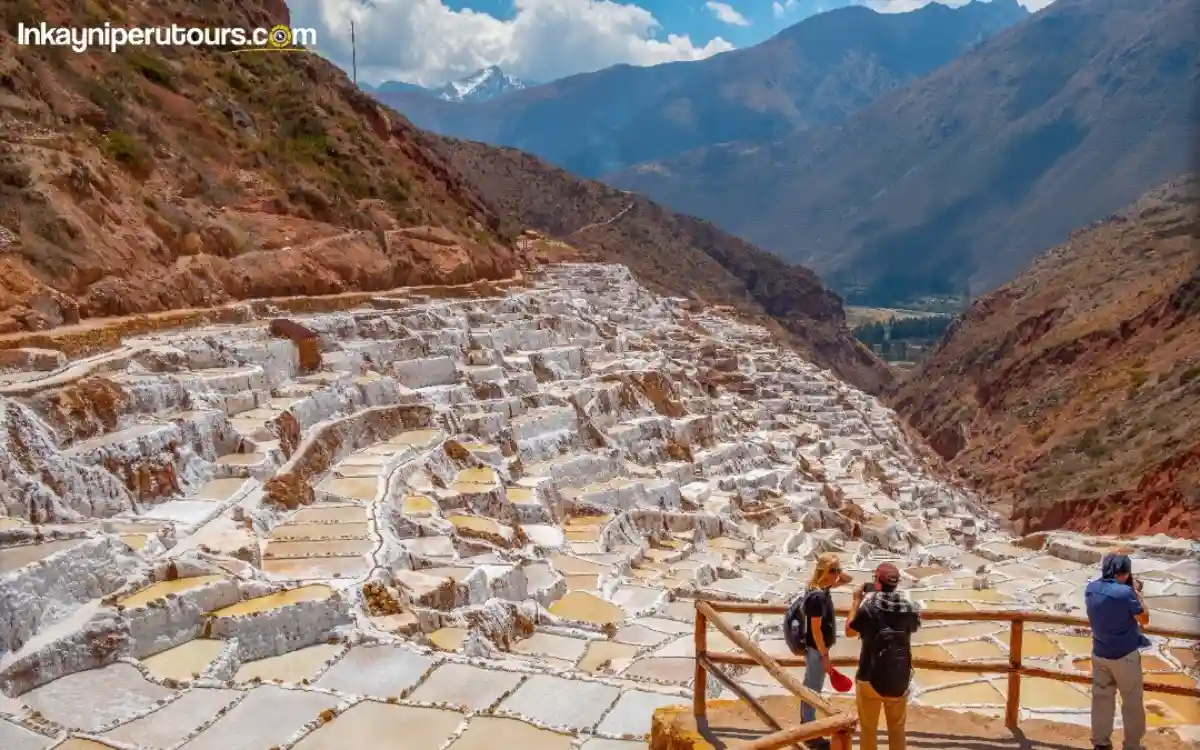
The Maras Salt Mines spread across a steep hillside in thousands of small evaporation ponds fed by a naturally saline spring. The important part is that Maras is not only archaeological scenery: salt production remains a living local activity managed by families connected to the area.
Maras is usually paired with Moray because the two sites are close enough to fit comfortably into one half-day or full-day route. Entrance to the salt mines is separate from the Cusco Tourist Ticket, so do not assume one ticket covers every stop in a Maras–Moray itinerary.
9. Chinchero: Archaeology, Church and Textile Traditions
Chinchero works because several layers of Cusco history share the same space: Inca terraces and walls, a colonial church, a living Andean town and textile workshops where spinning, dyeing and weaving techniques are still demonstrated.
It is easy to reduce Chinchero to a shopping stop, but the archaeological setting deserves time of its own. The best visits treat textiles as one part of the town rather than the entire reason for being there.

10. Machu Picchu: Cusco Region’s Iconic Archaeological Destination
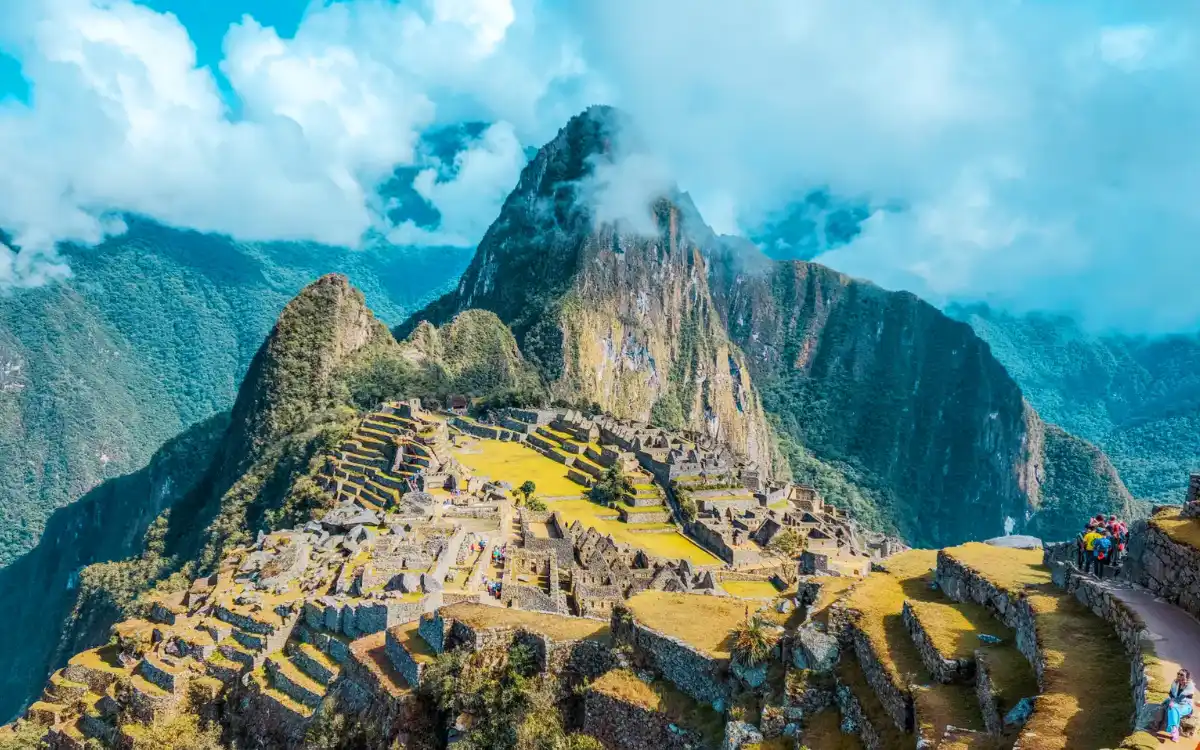
Machu Picchu is not in Cusco city, but any first-time list of major attractions in the Cusco Region would feel incomplete without it. The Inca site sits at about 2,430 m (7,972 ft) in a dramatically different environment from high-altitude Cusco, surrounded by steep forested mountains above the Urubamba River.
What makes Machu Picchu compelling is not one single feature. Terraces, stone buildings, water channels, ceremonial spaces and the mountain setting work together as one carefully planned landscape. Its original functions continue to be studied, so it is better to avoid reducing the entire site to a single label such as “astronomical center” or “royal city.”
How Visiting Machu Picchu Works Today
Machu Picchu now uses timed tickets assigned to specific circuits and routes. Peru’s official system currently organizes the site into three circuits with ten routes, some of which are seasonal. That means “I have a Machu Picchu ticket” is not enough information—you should know the exact circuit and route on your reservation. The official Machu Picchu circuits and routes page is the best reference when regulations change.
- For the easiest logistics, most travelers use the train corridor through Ollantaytambo to Aguas Calientes and then continue by bus or on foot to the entrance.
- If you want to arrive as part of a trek, the Inca Trail, Salkantay Trek and Lares Trek create very different journeys before the final visit.
- Do not build the plan around a promise of “sunrise at Machu Picchu.” Entry time, route, weather and transport determine what the morning actually looks like.
How to Organize the Best Places to Visit in Cusco
If you are deciding what to see in Cusco, use time and geography as your filters rather than trying to collect every famous name. Cusco city works well for the first days, the Sacred Valley deserves its own route, and Machu Picchu should be treated as a separate logistical plan rather than another stop squeezed into a city sightseeing list.
| Time available | A realistic plan |
| 2 days | Focus on Cusco city: Historic Center, Qoricancha, Sacsayhuaman and San Blas. Do not try to force the Sacred Valley and Machu Picchu into the same short stay. |
| 4 days | Use 1–2 days for Cusco, 1 day for a Sacred Valley route, and 1 day for Machu Picchu if transport and tickets are already secured. |
| 5–7 days | A much better first-trip window: acclimatize in Cusco, explore the city, spend a full day or overnight in the Sacred Valley, and visit Machu Picchu without turning every day into a transfer. |
2026 ticket planning:
COSITUC currently lists the full Cusco Tourist Ticket at S/130 for foreign visitors, valid for 10 days. Partial circuits are S/70: Circuit I covers Sacsayhuaman, Qenqo, Puka Pukara and Tambomachay; Circuit III covers Pisac, Ollantaytambo, Chinchero and Moray. Maras Salt Mines and Machu Picchu use separate admission systems. Always verify current tariffs before travel.
Useful Cusco Planning Guides
Treks to Machu Picchu From the Cusco Region
A multi-day trek is not necessary to enjoy Cusco, but it changes the trip completely if walking through the Andes is one of your priorities. The important thing is to choose the route for its experience—not just because all of them eventually connect with Machu Picchu.
| Route | Best fit | What defines it |
| Inca Trail | Travelers prioritizing archaeology and the historic road network | Regulated permits, Inca sites along the route and direct arrival into the Machu Picchu sanctuary corridor |
| Salkantay Trek | Travelers wanting high mountains and dramatic ecosystem change | Crosses Salkantay Pass at about 4,630 m (15,190 ft) below the 6,271 m Salkantay Mountain summit, then descends toward cloud forest |
| Lares Trek | Travelers interested in mountain scenery and living Andean communities | High passes, villages, textiles and a later transport connection to Machu Picchu rather than a direct trail entrance |
Practical Tips Before Visiting Cusco Attractions
Give Altitude a Place in Your Itinerary
Cusco sits at about 3,399 m (11,152 ft), and some nearby sites are higher. Altitude does not affect everyone in the same way, so avoid promising yourself a fixed performance level on Day 1. If you are arriving from near sea level, the Cusco acclimatization guide is more useful than trying to power through symptoms.
Match the Season to the Type of Trip
May through October is the broad dry season, with clearer conditions but colder nights and stronger demand. November through April is wetter and greener, with more variable road and trail conditions. There is no single “perfect” month for every traveler, so compare weather with crowds, prices and whether your priority is city sightseeing or trekking.
Do Not Treat Every Attraction as the Same Ticket
The BTC covers many archaeological sites around Cusco and the Sacred Valley, but not everything. Qoricancha’s main temple complex, the Maras Salt Mines and Machu Picchu have their own admission arrangements. Before buying tours independently, check exactly which entrance fees are included.
Use Normal City Precautions
Cusco’s main tourist areas are heavily visited, but that does not remove normal travel risk. Keep valuables controlled in crowded streets and markets, use registered or reputable transport, and be more conservative at night if you do not know the neighborhood. For mountain trips, weather, altitude and road conditions matter more than urban crime.
Travel Responsibly in a Living Cultural Landscape
The strongest attractions in Cusco are not theme-park sets. Archaeological sites, churches, markets, villages and agricultural landscapes remain connected to people who live and work around them. A few simple habits make the visit better for everyone.
| Do | Avoid |
| Stay on marked paths and follow site staff instructions. | Climbing walls, terraces or fragile structures for photos. |
| Ask before photographing people or traditional activities. | Treating communities or ceremonies as staged photo opportunities. |
| Buy directly from local producers when it makes sense. | Assuming every textile demonstration or market has the same quality or community relationship. |
| Carry your waste out of natural areas. | Feeding animals, leaving stacked stones or altering the landscape. |
Build Your Cusco Trip Around the Places That Matter to You
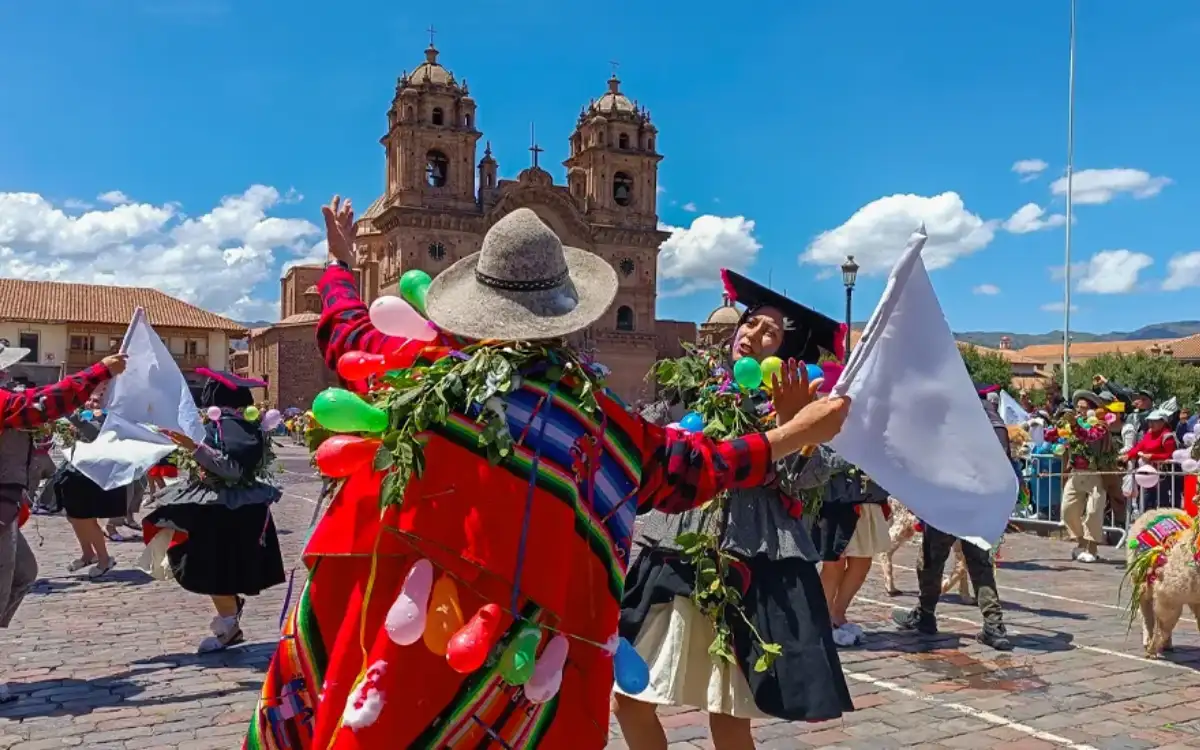
You do not need to visit every attraction in Cusco to have a complete trip. Even the top sights in Cusco serve different interests: a traveler focused on archaeology may spend more time at Qoricancha, Sacsayhuaman and Pisac; someone drawn to living culture may prefer San Blas, Chinchero and local markets; another traveler may organize the entire itinerary around a trek and Machu Picchu.
If you want the logistics handled without turning the trip into a rushed checklist, review Inkayni’s City Tour in Cusco or use the Sacred Valley guide to decide how much of the region belongs in your itinerary. For a customized route, talk to a travel specialist.
Frequently Asked Questions About Tourist Attractions in Cusco
What are the must-see tourist attractions in Cusco for a first visit?
For a first visit, the most useful Cusco attractions to prioritize are the Historic Center, Qoricancha and Sacsayhuaman. If you have more time, add Pisac and Ollantaytambo in the Sacred Valley, then Machu Picchu as a separate full-day or overnight plan. Moray, Maras, Chinchero and San Blas are excellent additions when your schedule allows.
How many days do you need for Cusco, the Sacred Valley and Machu Picchu?
For most first-time travelers, 5–7 days is a comfortable minimum if you want Cusco city, a Sacred Valley day and Machu Picchu without rushing every transfer. A shorter 4-day trip is possible with advance reservations, but it leaves much less flexibility for altitude, weather or delays.
What is the best time to visit Cusco attractions?
May through October is the broad dry season and usually gives more stable sightseeing and trekking conditions. November through April is wetter and greener. June through August has strong demand, so major tickets, trains and accommodation deserve earlier booking.
Do you need to acclimatize before sightseeing in Cusco?
It is wise to keep the first day lighter, especially if you arrive from low altitude. Cusco sits at about 3,399 m (11,152 ft), and sites such as Sacsayhuaman are higher. Hydrate, avoid unusually hard exertion at first and adjust the itinerary if altitude symptoms become significant.
Does the Cusco Tourist Ticket include all major attractions?
No. The BTC covers many archaeological sites and museums, including Sacsayhuaman, Pisac, Ollantaytambo, Chinchero and Moray depending on the ticket type. Maras Salt Mines and Machu Picchu use separate admission systems, and Qoricancha’s main temple complex should also be checked separately when planning costs.
Can you visit Machu Picchu on your own?
Yes. Independent travelers can arrange their own entrance ticket, train, bus and accommodation. The important part is coordinating the exact Machu Picchu circuit and entry time with transport. A tour becomes useful when you prefer one operator to handle those moving pieces and provide a guide.
Is the Sacred Valley inside Cusco city?
No. The Sacred Valley is a wider corridor outside Cusco city. Pisac, Urubamba and Ollantaytambo lie along the valley, while Chinchero, Moray and Maras are commonly included in Sacred Valley itineraries from the higher plateau around it.
Escrito por


Shared:


If you liked this article and the information you found, give us 5 stars!
 (1 votos, promedio: 5.00 de 5)
 Loading...