


Choquequirao vs Ausangate
Choose Choquequirao if you want remote Inca ruins, fewer hikers and a trek where archaeology is the main reward. Choose Ausangate if you want glaciers, turquoise lakes and a colder high-altitude route shaped more by mountain scenery than by ruins. In simple terms, Choquequirao is the stronger archaeological expedition, while Ausangate is the stronger high-mountain journey.
Table of Contents
Many travelers compare these two treks because both feel far from the usual Machu Picchu route. But they are not difficult in the same way, and they do not reward the same kind of traveler. A beautiful photo of Choquequirao does not show the long canyon climb back out; a perfect Ausangate lake photo does not show the cold night, thin air or slow pace above 14,000 ft.
| 4-5 daysClassic Choquequirao | 5-6 daysClassic Ausangate | 10,000 ftChoquequirao site altitude | 16,000 ft+Ausangate high passes | Different riskcanyon vs altitude |
That is where the decision becomes practical. Before choosing by scenery, price or the word “remote,” it helps to understand what each trek demands from your body, your schedule and your expectations.

Choose Choquequirao if…
- You want an Inca archaeological site as the main reward.
- You prefer silence, fewer hikers and a less commercial route.
- You can handle long descents, steep climbs and canyon heat.
- You are comfortable with basic camps and more remote logistics.
- You already know Machu Picchu or want a less conventional Inca experience.
Choose Ausangate if…
- You want glaciers, lakes, puna landscapes and sacred mountain scenery.
- You are already acclimatized and can sleep high for several nights.
- You prefer living Andean culture over archaeological ruins.
- You have warm gear and can handle cold, wind and exposed camps.
- You want one of Cusco’s strongest non-Machu Picchu mountain treks.
Choquequirao trek vs Ausangate trek: Main Comparison
| Decision point | Choquequirao Trek | Ausangate Trek |
| Main experience | Remote Inca archaeology above the Apurímac Canyon. | High-altitude mountain circuit around a sacred Apu. |
| Typical duration | 4 or 5 days for the classic route; longer if connected to Machu Picchu. | Usually 5 or 6 days for the classic circuit; compact 2-day variants focus on Rainbow Mountain and the Ausangate area. |
| Approximate distance | About 38.5-39.7 mi / 62-64 km round trip, depending on route design. | About 40-47 mi / 65-75 km for many classic circuits, depending on version and detours. |
| Highest point | About 10,000-10,400 ft / 3,050-3,150 m around the archaeological area. | Often around 15,748-16,732+ ft / 4,800-5,100+ m on high passes, depending on itinerary. |
| Main physical challenge | Long canyon descents, steep return climbs, heat and heavy leg fatigue. | Very high altitude, cold nights, wind, exposed camps and slower recovery. |
| What can make it expensive | Small group size, private transport, mule support, camping quality, guide quality, food, emergency plan and fewer fixed departures. | High-altitude logistics, horse support, camping gear, private service, Rainbow Mountain add-ons, Machu Picchu add-ons or hotel/train combinations. |
| Main cultural value | Archaeology, Inca terraces, ceremonial sectors and the Stone Llamas. | Living Andean culture, alpaca-herding communities, Apu spirituality and highland rituals. |
| Best for | Fit hikers who want archaeology, solitude and a raw canyon expedition. | Strong hikers who want glacial landscapes, altitude and a sacred mountain circuit. |
Compare Cusco’s Main Trekking Routes Before You Choose}
1. Choquequirao Trek: Remote Inca Archaeology
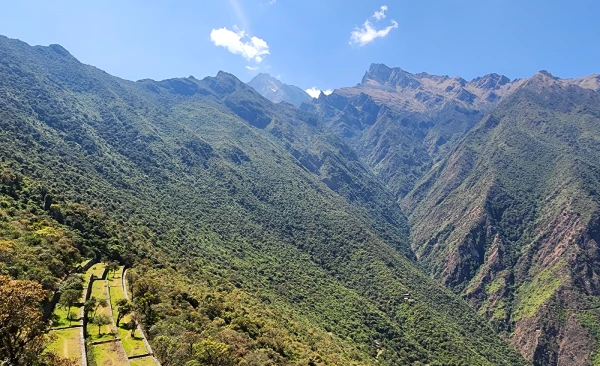
Choquequirao, often translated as “Cradle of Gold,” should not be reduced to a mystical label. The practical value of the trek is clear: it leads to a large Inca complex above the Apurímac Canyon, with plazas, terraces, ceremonial spaces, channels and sectors that still feel less standardized than Peru’s most visited archaeological sites.
The route usually starts around Capuliyoc or the Cachora access area. From there, hikers descend toward the canyon and climb toward Marampata and Choquequirao. The route is not technically mountaineering, but it is physically serious because of repeated elevation change, heat and long walking days.
| Choquequirao factor | Practical meaning |
| Duration | 4 days is possible but compressed; 5 days gives better rhythm and more time at the site. |
| Altitude | Lower than Ausangate, but still high enough to require basic acclimatization in Cusco. |
| Route pain point | Knees, quads and endurance suffer because the canyon descent and return climb are repeated. |
| Cultural reward | The site itself: terraces, ceremonial areas, the Ushnu, water systems and the Stone Llamas sector. |
| Best rhythm | 5 days is usually the more balanced option for most travelers. |
Keep this in mind:
Choquequirao is not the easier option just because it is lower than Ausangate. Its difficulty comes from the canyon: long descents, exposed heat, steep climbs and tired legs on the way back.
LOST CITADEL TREKChoquequirao Trek
Hike to one of Peru’s most impressive and least crowded Inca archaeological sites.
2. Ausangate Trek: Sacred Mountain and High-Altitude Wilderness
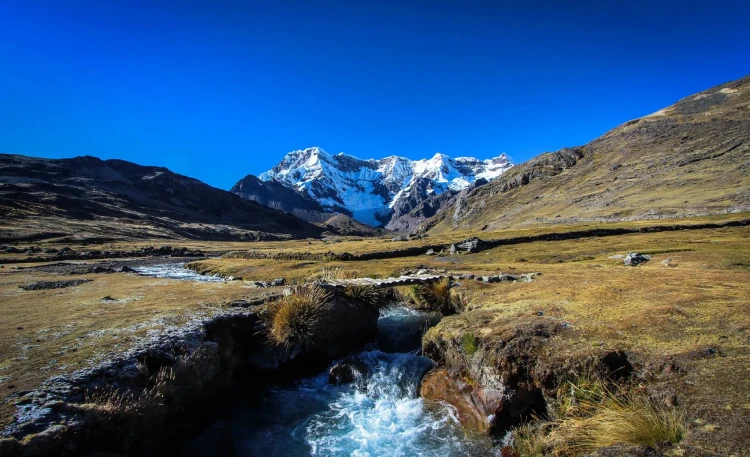
The Ausangate Trek circles one of the most sacred mountains in the Cusco region. Ausangate rises to about 20,945 ft / 6,384 m and is revered as an Apu, a protective mountain spirit in Andean belief. The trek is not mainly archaeological. Its power comes from glaciers, lakes, high passes, alpaca herds, open puna landscapes and living Quechua culture.
The challenge is altitude. Classic Ausangate routes often keep you above 13,120 ft / 4,000 m for much of the journey, with high passes that can exceed 15,700 ft / 4,800 m. That means slower walking, colder nights, thinner air and stronger dependence on proper acclimatization.
| Ausangate factor | Practical meaning |
| Duration | Classic circuits often take 5 or 6 days; 2-day variants usually focus on Rainbow Mountain, Red Valley and part of the Ausangate environment. |
| Altitude | Much higher than Choquequirao, with multiple high passes depending on itinerary. |
| Route pain point | Breathing, sleep, cold, wind and energy recovery matter more than pure distance. |
| Cultural reward | Pastoral communities, Apu spirituality, alpaca herding, Qoyllurit’i context and living Andean landscapes. |
| Best rhythm | 5 or more days works better for the classic circuit because the body needs time at altitude. |
Important:
Do not choose Ausangate only because it sounds scenic. The route is beautiful, but the altitude is serious. You should spend time in Cusco or the Sacred Valley before starting and be honest about how your body reacts above 13,000 ft / 4,000 m.
3. Difficulty: Canyon Wear vs Extreme Altitude
Both treks are demanding, but they punish the body differently. Choquequirao is more muscular. Ausangate is more physiological. The mistake is comparing only maximum altitude or only distance.
Choquequirao: Long Descents and Return Climbs
The Choquequirao route can descend more than 4,900 ft / 1,500 m toward the Apurímac Canyon and then climb heavily again toward Marampata and the archaeological complex. That descent-and-climb pattern is why strong hikers can still finish with sore knees and tired legs.
- Better for travelers who tolerate heat and long climbs.
- Harder for people with knee problems or weak downhill control.
- Less severe for altitude than Ausangate, but still not low-altitude trekking.

Ausangate: Thin Air, Cold Nights and High Passes
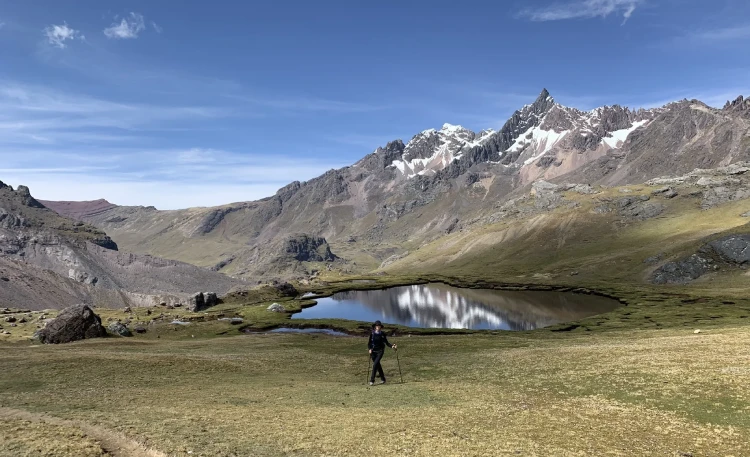
Ausangate does not usually feel hard because of one single climb. It becomes hard because the body spends several days at high altitude. Even moderate walking can feel slow above 14,000 ft / 4,300 m, and nights can be cold enough to affect sleep and recovery.
- Better for travelers who are already acclimatized and comfortable in cold mountain environments.
- Harder for people prone to altitude sickness, headaches, poor sleep or low appetite at elevation.
- Requires warmer gear and more caution with weather than Choquequirao.
| Difficulty factor | Choquequirao Trek | Ausangate Trek |
| Hardest body stress | Knees, quads, glutes and endurance. | Breathing, sleep, cold tolerance and altitude adaptation. |
| Altitude risk | Moderate; lower than Ausangate but not zero. | High; several days at very high elevation. |
| Knee risk | Higher because of long canyon descents and climbs. | Moderate; terrain can be uneven, but the key issue is altitude. |
| Weather exposure | Heat and sun in canyon sections; rain can make trails slippery. | Cold, wind, hail, snow flurries and fast weather shifts are more relevant. |
| Beginner-friendly? | Not ideal unless the traveler is fit and prepared. | Not ideal unless the traveler is already acclimatized and comfortable with high altitude. |
4. Cost and Value: What Are You Paying For?
For an informational comparison, the right question is not “which company is cheaper?” but what a traveler can realistically expect in the market. Choquequirao is less standardized, so the price depends heavily on group size and support level. Ausangate has more route variants, so a short Ausangate/Rainbow option is not the same product as a classic 5-day high-altitude circuit.
| Cost factor | Choquequirao Trek | Ausangate Trek |
| Budget advertised range | Some 4-day group offers can appear around US$280-550, but check what is really included. | Short Ausangate/Rainbow-style routes may appear cheaper than a full circuit, but they do not replace the classic Ausangate trek. |
| Standard supported range | A more complete 4 or 5-day supported trek often sits around US$550-700+ per person. | A classic 5-day high-altitude Ausangate trek often sits around US$600-800+ per person. |
| Premium or private range | Private service, smaller groups, better camps and stronger support can push the trip above US$700. | Private service, horse support, better camp setup, hotel combinations or Machu Picchu/Rainbow add-ons can push the trip toward US$800-1,200+. |
| Common extra costs | Sleeping bag, trekking poles, mule support, snacks, tips, extra hotel nights, transport changes, entrance fees or emergency transport. | Sleeping bag, trekking poles, horse support, local entrance fees, hot springs, tips, extra warm gear, private transport or add-ons like Rainbow Mountain or Machu Picchu. |
| Best value if… | You want remote archaeology, silence and a hard canyon trek more than comfort or easy logistics. | You want glaciers, lakes, living Andean culture and a high-altitude mountain circuit more than Inca ruins. |
Important note:
Do not compare only the headline price. Ask what is included: transport, guide, meals, tents, sleeping mat, sleeping bag, trekking poles, entrance fees, mule or horse support, oxygen, first-aid kit, portable toilet, insurance recommendations and what happens if weather, altitude or route conditions change the plan.
5. Landscapes and Highlights: What Will You Actually See?
Choquequirao and Ausangate are both visually strong, but they do not deliver the same type of beauty. Choquequirao is canyon, forest edge and archaeology. Ausangate is altitude, glaciers, lakes and mineral color.
Choquequirao: Canyon, Cloud Forest and Inca Terraces
The Choquequirao route moves through the Apurímac Canyon, dry slopes, warmer lower sections, cloud forest influence and mountain ridges. The best moments are not only viewpoints; they are the gradual arrival toward an Inca site that still feels quiet and partly recovered by the mountain.
- Capuliyoc viewpoint over the Apurímac Canyon.
- Marampata and the approach toward the archaeological complex.
- Main plaza, ceremonial terraces and Ushnu area.
- Stone Llamas / Sun Llamas terraces.

Ausangate: Glaciers, Lakes and Mineral Colors
Ausangate is more geologic and alpine. The route can include glacial lakes, high passes, open puna grasslands, alpaca herds and views of the snow-covered Ausangate massif. Some versions add Rainbow Mountain and Red Valley, but those are route decisions, not the whole classic circuit.
- Palomani or other high passes, depending on the itinerary.
- Hatun Pucacocha, Yanacocha and other high-altitude lakes.
- Views of Ausangate’s glaciers and surrounding ridges.
- Rainbow Mountain and Red Valley on specific route variants.

6. Archaeological Memory or Living Andean World?
This is one of the most important differences. Choquequirao is strongest if your cultural interest is archaeological: Inca planning, terraces, ceremonial spaces, water channels and the historical landscape connected with Vilcabamba. Ausangate is strongest if your cultural interest is living Andean culture: herding communities, sacred mountain belief, textile and pastoral life, and the broader spiritual geography around the Apu.
| Cultural question | Better choice | Why |
| I want ruins, terraces and Inca architecture. | Choquequirao | The archaeological complex is the main purpose of the trek. |
| I want sacred mountain landscapes and living Quechua culture. | Ausangate | The route moves through the world of pastoral communities and Apu worship. |
| I want something similar to Machu Picchu but quieter. | Choquequirao | It is the closer archaeological alternative, although the experience is more rugged. |
| I want glaciers, lakes and highland spirituality. | Ausangate | The route is natural and spiritual rather than archaeological. |
7. Logistics, Access and Route Planning
Neither route should be treated as a casual hike. Choquequirao has lower altitude but rougher access. Ausangate has clearer mountain circuits but more altitude exposure. Your decision should include transport, camps, food, emergency support, weather and how much margin your itinerary allows.
| Planning factor | Choquequirao Trek | Ausangate Trek |
| Access base | Cusco to Capuliyoc / Cachora area, then trekking access. | Cusco to Upis, Tinki, Pacchanta or route-specific trailheads. |
| Main logistics | Transport, camps, food, mule support, water, entrance fee and return timing. | Transport, high-altitude camps, cook, horse support, warm gear, oxygen, entrances and weather monitoring. |
| Independent travel | Possible for experienced hikers, but not ideal for most visitors. | Possible for experienced high-altitude hikers, but guided support is safer for most travelers. |
| Emergency concern | Remote canyon route and limited easy evacuation points. | Altitude sickness and weather exposure far from easy services. |
| Last-minute booking | Less flexible because departures are less frequent and logistics are more private. | Depends on route; short Rainbow/Ausangate options are easier than a full classic private circuit. |
Important note:
Do not choose only by scenery. Choquequirao requires strong route logistics. Ausangate requires serious acclimatization. A responsible operator should explain evacuation plans, emergency oxygen, camp standards, group size and what happens if weather changes.
8. Best Time to Hike Choquequirao or Ausangate
The dry season, especially May to September, is usually the safest and clearest window for both routes. April and October can also work well with some flexibility. The rainy season is more complicated: Choquequirao trails can become slippery and unstable in the canyon, while Ausangate can bring clouds, snow, mud, cold and poor visibility at altitude.
| Season | Choquequirao | Ausangate |
| May to September | Best for drier canyon trails, but sun exposure can be strong in lower sections. | Best for mountain views, but nights are colder at high camps. |
| April and October | Good shoulder months with fewer hikers and some weather variability. | Often acceptable, but conditions can change quickly at altitude. |
| November to March | Higher rain risk, slippery descents and possible access issues. | More clouds, rain, snow or hail risk; only for well-equipped and flexible hikers. |
| February | Possible only with careful condition checks; not ideal for most travelers. | Possible on some routes, but weather and visibility can be poor. |

9. Which Trek Fits Your Traveler Profile?
| Traveler profile | Better choice | Why |
| History and archaeology lover | Choquequirao | The route is built around a major Inca archaeological complex. |
| High mountain scenery lover | Ausangate | Glaciers, lakes, puna and sacred mountain views dominate the experience. |
| Traveler worried about altitude sickness | Usually Choquequirao | It is lower than Ausangate, although still physically demanding. |
| Traveler with knee problems | Usually Ausangate, with caution | Choquequirao’s canyon descents and climbs can be harder on knees. |
| First serious trek in Cusco | Neither is perfect | Start with acclimatization and consider a softer route first if you lack experience. |
| Repeat traveler who already knows Machu Picchu | Choquequirao or Ausangate | Choose Choquequirao for archaeology, Ausangate for high mountain wilderness. |
| Traveler seeking fewer people | Both, with Choquequirao slightly stronger | Both are quieter than Peru’s famous routes, but Choquequirao feels more isolated. |
| Traveler with limited acclimatization time | Choquequirao, but still carefully | Ausangate is not a good idea without real altitude adaptation. |
Still Unsure? Check Altitude, Weather and Softer Options First

Final Verdict: Choquequirao or Ausangate?
- Choose Choquequirao if your strongest motivation is remote Inca archaeology. It is the better fit when you want ruins, terraces, canyon views, silence and the feeling of reaching a place that still stands outside the most commercial Peru circuit. The price can look higher than some popular treks when the group is small, but what you are paying for is remote logistics, camp support and access to a site that cannot be reached by train or bus.
- Choose Ausangate if your strongest motivation is high mountain wilderness. It is the better fit when you want glaciers, lakes, puna, alpacas, sacred mountain scenery and a route shaped by living Andean culture. A full Ausangate circuit is not the same as a short Rainbow Mountain add-on; compare itinerary length, altitude, camps, horse support and cold-weather logistics before comparing prices.

Frequently Asked Questions About Choquequirao vs Ausangate
Which trek is harder, Choquequirao or Ausangate?
How many days do I need for each trek?
Which trek is better for archaeology?
Which trek is better for mountain scenery?
Which trek is better if I am worried about altitude sickness?
Which trek is worse for knee problems?
Are Choquequirao and Ausangate good for beginners?
Which trek is more remote?
Can I combine Choquequirao and Ausangate in one trip?
Which trek is cheaper?
What is the best time for Choquequirao and Ausangate?
Which one should I choose if I only have one chance?
Escrito por
Shared:


If you liked this article and the information you found, give us 5 stars!

 (1 votos, promedio: 4.00 de 5)
 Loading...