


What Makes Rainbow Mountain Feel Hard
Rainbow Mountain is moderate to hard in practice, not because the trail is technical, but because almost the entire hike happens at very high altitude. The classic route starts around 4,600 m (15,092 ft) and reaches the main viewpoint at about 5,020 m (16,469 ft), so even a short uphill section can feel much heavier than expected, especially if you came from sea level or rushed acclimatization in Cusco. Most travelers complete it with a steady pace, light backpack, and one or two days of prior adaptation, but the hike becomes much harder in rain, wind, snow, or when people underestimate how much the altitude changes the effort.
Table of Contents
Many travelers from around the world hike across the slopes of Andean mountains to reach a landscape with rainbow-like hues: the Montaña de Colores, Rainbow Mountain, or simply Vinicunca. The Peru Rainbow Mountain has become one of Cusco and Peru’s main attractions, ranking among the most popular destinations after Machu Picchu in the region.
But what is really behind that multicolored landscape? What factors make its ascent feel challenging? And how should you decide if this high-altitude day trip fits your body, itinerary, and acclimatization level?
| 16,469 ftClassic viewpoint (5,020 m) | 3 kmApprox. final hike | 1.5–2 hrsTypical ascent | Moderate–HighDifficulty level | 1–2 nightsMinimum acclimatization | Apr–OctMost stable months |
In this blog we’ll explain how difficult is Rainbow Mountain hike, what every traveler should know before heading up, and how this experience connects with broader Cusco trekking routes such as Ausangate, Salkantay, and the Inca Trail.
PERU’S LEGENDARY HIKEInca Trail to Machu Picchu
Follow the historic trail through mountain passes, Inca sites, and cloud forest paths to Machu Picchu.
General Information About Rainbow Mountain
What is Vinicunca Rainbow Mountain?
Also known as Rainbow Mountain, Seven Colors Mountain, Seven Colored Mountain, the Mountain of Seven Colors, or simply Vinicunca, this geological formation in Cusco, Peru, is often referred to by travelers as Peru Rainbow Mountain, Rainbow Mountains Peru, the Painted Mountain, or even the Striped Mountain due to its layered appearance.

A traveler stands before Rainbow Mountain’s mineral layers, shaped by altitude, erosion, and time.
It is famous for its wide range of colors, from red, orange and yellow to green, blue, violet and white, each band created by unique mineral compositions, geological pressure and high altitude Andean conditions.
Rainbow Mountain is often booked as a full-day hike, but many travelers only understand where it fits after comparing it with bigger Peru routes. A broader Machu Picchu plan, the Inca Trail, and the Salkantay Trek belong to a larger trekking journey, while Rainbow Mountain and Humantay Lake are usually compared as demanding high-altitude day trips. The Ausangate Trek belongs to a different scale altogether: more remote, more serious, and far less reducible to a quick out-and-back photo stop.
Rainbow Mountain Peru Altitude
Rainbow Mountain is located in a very high zone of the Vilcanota mountain range, and that altitude defines how the hike feels.
The route starts around 4,600 meters / 15,092 feet and gradually advances to the classic viewpoint, where the most famous photos are taken, located at approximately 5,020 meters / 16,469 feet. A few meters higher is the upper viewpoint, a slightly more panoramic point that reaches about 5,026 meters / 16,489 feet.
The wider Vinicunca massif or summit area is commonly cited at around 5,200 meters / 17,060 feet, which helps explain why many guides and travelers describe Rainbow Mountain as a 17,000-foot experience. The point most visitors actually reach, however, is normally the viewpoint area, not the summit.
Important Note:
Vinicunca’s most visited and photographed point is around 5,020 meters. It is the classic viewpoint that most travelers reach during the hike. The broader mountain area is often cited around 5,200 meters, so avoid confusing the photo viewpoint with the massif’s highest reference.
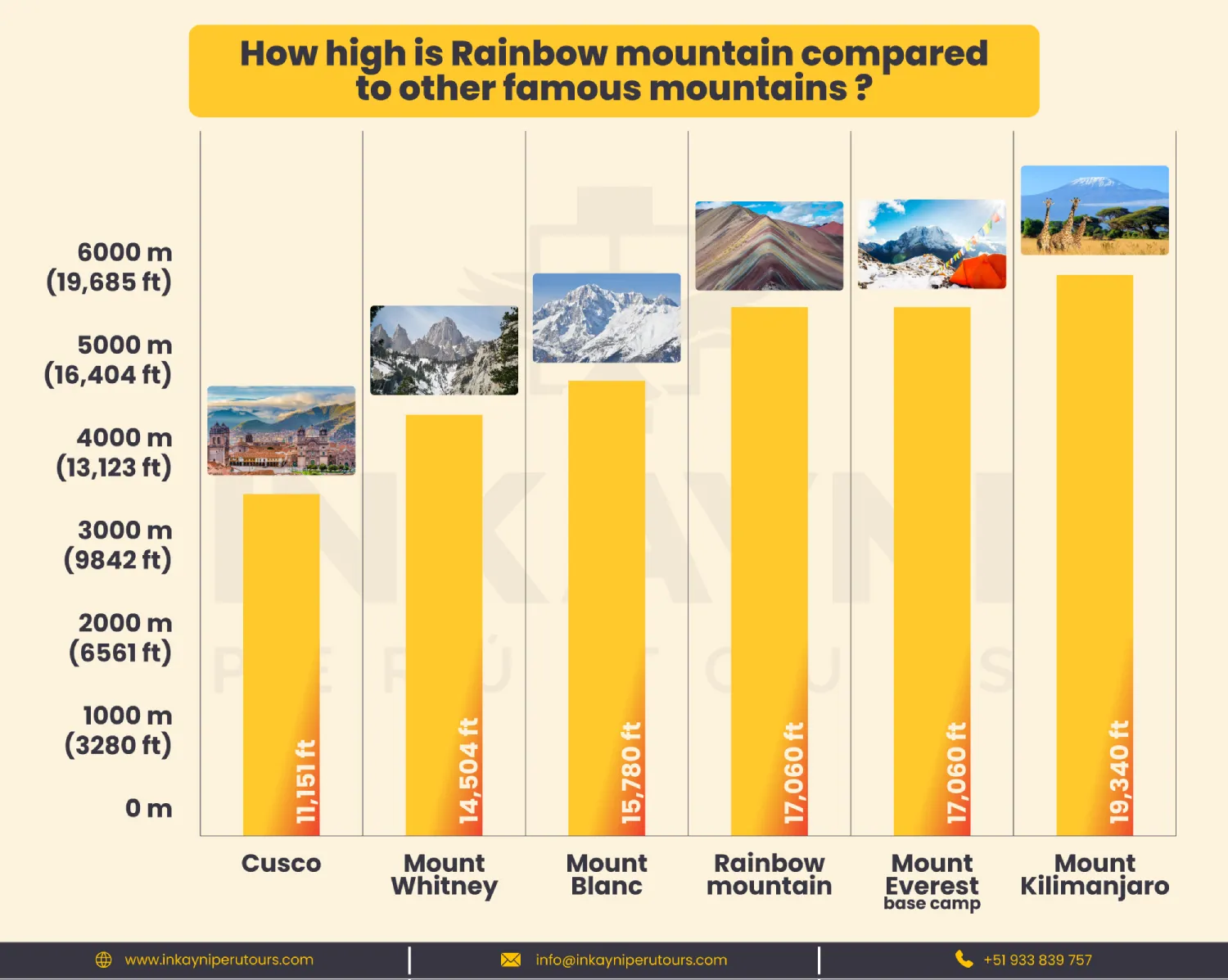
What’s the altitude of Rainbow Mountain compared to other places? (Infographic)
This high elevation of Rainbow Mountain Peru is one of the hike’s characteristics that adds an extra layer of difficulty to the journey.
To put it in perspective, this altitude even surpasses some of the world’s most famous hiking references. For example:
- Mount Whitney (4,421 meters / 14,504 feet): the highest peak in the contiguous United States.
- Mont Blanc (4,810 meters / 15,780 feet): Europe’s highest major summit.
- Rainbow Mountain viewpoint area (around 5,020 meters / 16,469 feet): higher than the Inca Trail‘s highest point, the Warmiwañusca pass at 4,215 meters / 13,828 feet.
- Everest Base Camp (5,364 meters / 17,598 feet): one of the world’s best-known high-altitude trekking references.
- Mount Kilimanjaro (5,895 meters / 19,340 feet): the highest mountain in Africa.
So, how hard is the hike to Rainbow Mountain?
WORLD WONDER IN THE ANDESMachu Picchu
Discover the history, landscapes, and essential tips for visiting this world wonder.
| Myth | Reality |
| “The hike is easy, you just walk up and that’s it.” | The trail is well-marked, but it goes from about 4,600 m to over 5,000 m. At that altitude your body works with less oxygen and a short stretch can feel like a very long climb, especially for those coming from sea level. |
| “If I’m not in super shape, I won’t make it.” | You don’t need to be an athlete, but you should be able to walk uphill for 1 to 2 hours per section without complete exhaustion. With basic fitness and good acclimatization, most travelers reach the viewpoint; the critical issues are heart problems, respiratory conditions, or extreme sedentary lifestyle. |
| “With a horse I don’t need to acclimatize.” | The horse reduces muscular effort, but doesn’t change the altitude or oxygen level. You can ride and still feel altitude sickness, and the final stretch to the viewpoint is on foot, right where altitude is most noticeable. |
| “In dry season it’s always sunny and warm.” | In dry season there is usually less rain and better visibility, but mornings are cold, wind can be intense, and the sun burns strongly due to altitude. In a single day you can go from cold to heat and back to cold, which is why layers are still necessary. |
| “Altitude sickness is inevitable.” | Some people show almost no symptoms and others do, even with preparation. Acclimatizing in Cusco, staying hydrated, and eating lightly can reduce the risk. People who live or come from areas above 2,000 meters usually adapt better, but should still watch for signs like headache, nausea, or dizziness. |
| “Children and elderly people can’t go.” | It’s not prohibited, but requires more care. Children accustomed to altitude and elderly people in good health, with acclimatization time and support from a responsible agency, can do it; in cases of pre-existing conditions, the right approach is to evaluate it with a doctor first. |
Warning:
Altitude shouldn’t be taken lightly. Everything we share in this blog is general information and never replaces recommendations from a doctor who knows each person’s particular condition.
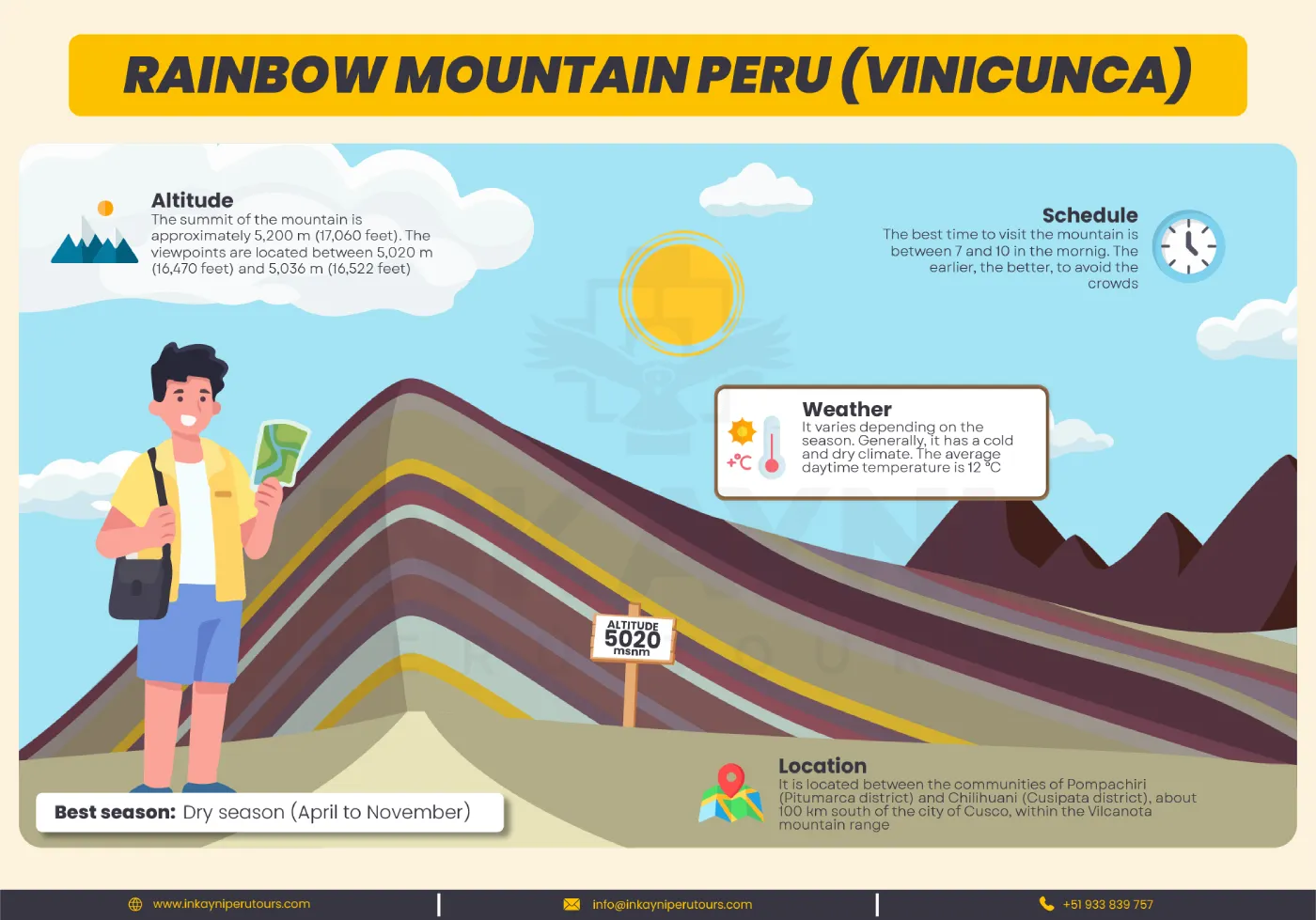
Characteristics of the 7 colored mountain hike
Rainbow Mountain Hike Difficulty
Hiking Rainbow Mountain is rated with moderate to high difficulty. It’s not a technical trail, but it’s done above 5,000 meters, and altitude makes any effort more intense. Its difficulty depends mainly on two factors: your fitness level and degree of prior acclimatization. That’s why the Rainbow Mountain trek is much more than a simple tourist walk.
Besides these personal factors, the time of year you go influences how the trail feels: the elevation gain and height are the same, but weather can make it more bearable or harder.
| Factor | How It Influences Difficulty |
| Your Physical Condition | Ideally you can walk uphill for 1 hour 30 minutes to 2 hours at a steady pace without exhaustion. Those who do regular physical activity usually tolerate the effort better; on the other hand, marked sedentary lifestyle, overweight, or heart and respiratory problems increase fatigue. |
| Your Altitude Acclimatization | Altitude is the heaviest factor. Those coming from sea level usually feel altitude sickness more; those who live or come from cities above 2,000 meters usually adapt better, though they should still go slowly. Review our acclimatization in Cusco guide before placing Rainbow Mountain early in your itinerary. |
MOUNTAIN OF SEVEN COLORSRainbow Mountain Peru
Hike through the Andes to one of the most famous mountain of natural mineral colors.
Difficulty According to Season in Cusco
The Andean zone where Rainbow Mountain is located goes through two well-defined seasons. Each one modifies the trail condition, visibility, and effort sensation during the hike. For a broader month-by-month view, compare this section with our Cusco weather by month guide.
Dry Season (April to October)
During these months, difficulty usually feels moderate to demanding. The lower probability of rain leaves the terrain more stable, with less mud and fewer puddles, and the sky usually stays clearer, which improves orientation. Mornings are cold and the sun is strong mid-morning, but the trail is more predictable and lower risk.
This is also the most stable season for longer routes such as the Inca Trail, the Salkantay Trek, or the Lares Trek.
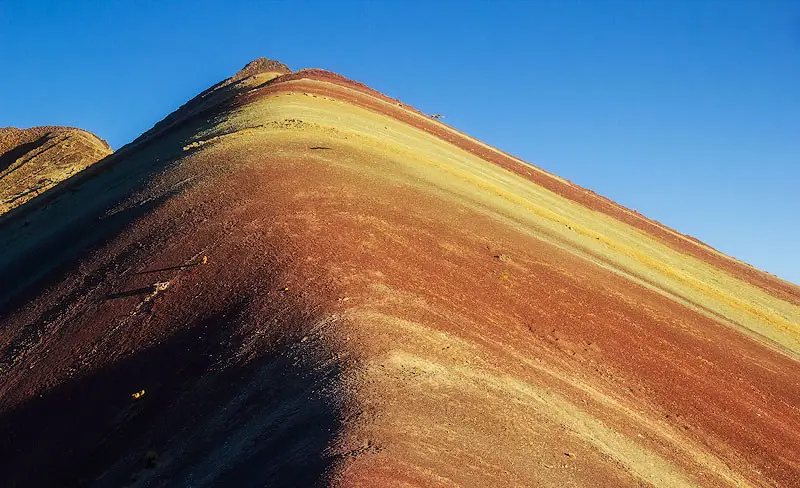
Rainy Season (November to March)
During this season, the route can become demanding. Rain generates mud, slippery areas, and deep puddles; additionally, dense fog can cover the mountain in minutes. Due to altitude, precipitation can turn to snow at the top, which lowers temperature and requires better thermal gear. Rainbow Mountain trips may be delayed, rescheduled, or canceled due to bad weather.
Despite the instability, there can also be clear days when snow melts and Rainbow Mountain Peru clearly displays its mineral stripes.

Rainbow mountain with Andean snow.
TURQUOISE LAKE HIKEHumantay Lake
Discover bright turquoise waters beneath the snowy peaks of the Andes.
Is the Route to Rainbow Mountain Dangerous?
The route is safe for most travelers when altitude is respected and you advance at a prudent pace. It becomes risky when altitude sickness is underestimated, bad weather occurs during rainy months, or you continue despite clear signs of discomfort such as intense headache, dizziness, nausea, or breathing difficulty.
Basic Safety Recommendations
- Save Rainbow Mountain for your last days in Cusco, when you’re better acclimatized.
- Choose a reputable agency that includes trained guide, oxygen tank, and first aid kit.
- Check what the tour includes: transportation, entrance fees, meals, and emergency support.
- Bring layered clothing, windbreaker, gloves, hat, sunscreen, and sufficient water.
- Avoid heavy meals, alcohol, and cigarettes before the hike.
- If altitude sickness symptoms appear, slow down or descend; forcing the climb increases risk.
- Stay hydrated throughout the route and rest when your body asks.
In rainy season, avoid staying in high areas when there are electrical storms. Vinicunca is an exposed slope above 5,000 meters, where lightning is a real risk in the afternoons. If the sky darkens or you hear thunder, begin descending.
Weather in this Andes area can change rapidly. This information is a general guide and doesn’t replace a health professional’s opinion, especially if you have a pre-existing medical condition.
Warning:
In rainy season, electrical storms are possible at Rainbow Mountain and surroundings. If you see storm clouds, hear thunder, or the guide indicates bad weather, begin descending immediately. Always choose a reputable agency with trained guide, emergency protocols, and weather monitoring; that makes the difference between a tense anecdote and a real accident.
Altitude Sickness at Rainbow Mountain
Altitude is no joke.
Underestimating the height of this hike is a mistake, because altitude is precisely what marks the difficulty of the Rainbow Mountain Peru ascent. At that height there’s less oxygen, the heart beats faster, and any climb feels more demanding, especially if you come from sea level or aren’t used to walking at altitude.
Altitude sickness, known as soroche in Peru, can cause headache, nausea or vomiting, dizziness, extreme fatigue, and breathing difficulty. In most cases symptoms are mild and improve with rest, but if they increase, the responsible thing is to stop or descend.

Altitude sickness quick guide for trekking in the Andes.
Other Guides That Help Before Booking Rainbow Mountain
Preparation for Rainbow Mountain
To reduce altitude sickness risk before the hike, consider the following:
- Acclimatize one or two days in Cusco. You can take short walks, visit viewpoints, and explore the city calmly.
- Drink coca tea or use coca candies, a traditional Andean remedy that may help relieve mild altitude sickness discomfort.
- Avoid heavy meals, alcohol, and cigarettes before and during the route; they complicate acclimatization.
- Stay well hydrated and walk at a pace where you can converse without running out of air.
Remember that we offer general guidance about altitude sickness at Vinicunca, but it doesn’t replace evaluation by a health professional.
Tips for a Successful Rainbow Mountain Hike
- Leave as early as possible to avoid crowds and enjoy the clearest weather window of the morning.
- At Rainbow Mountain’s base, climb the hill behind the first viewpoint only if your body is responding well at altitude.
- Weather changes quickly; bring windbreaker, hat, and sunscreen even if the day starts clear.
- Listen to your body: stop, breathe, and advance at your pace. Altitude demands patience.
- If you’re worried about not completing the hike, you can rent a horse for part of the ascent or descent; prices vary locally and should be confirmed on site.
- Along the route there are basic stands with water and snacks.
- Bring cash in soles and small bills for entrances, bathrooms, snacks, or horse rental.
- Pack essentials: light backpack, sunscreen, sunglasses, hat, rain jacket, hoodie, trekking pants, beanie, gloves, hiking shoes, and if desired, trekking poles.

Tips for proper acclimatization for Rainbow Mountain

Rainbow mountain horseback option
Routes to Rainbow Mountain
Pitumarca Route
Pitumarca was the original route to reach the 7 colored mountain. Today, Pitumarca is widely used for ATV tours (quadbikes) to Vinicunca. These tours usually include transport from Cusco, ATV riding to the high zone, and a brief walk to the Peru Rainbow Mountain main viewpoints.
If you opt for an ATV tour to Vinicunca, the walk shortens significantly compared to the classic trekking route. You’ll drive the ATV close to Rainbow Mountain and from there walk a shorter final section to the viewpoints. From these points you’ll have panoramic views of the Montaña de Siete Colores, the adjacent Red Valley, and the Ausangate glacier.
MOUNTAIN OF SEVEN COLORSRainbow Mountain Peru
Hike through the Andes to one of the most famous mountain of natural mineral colors.
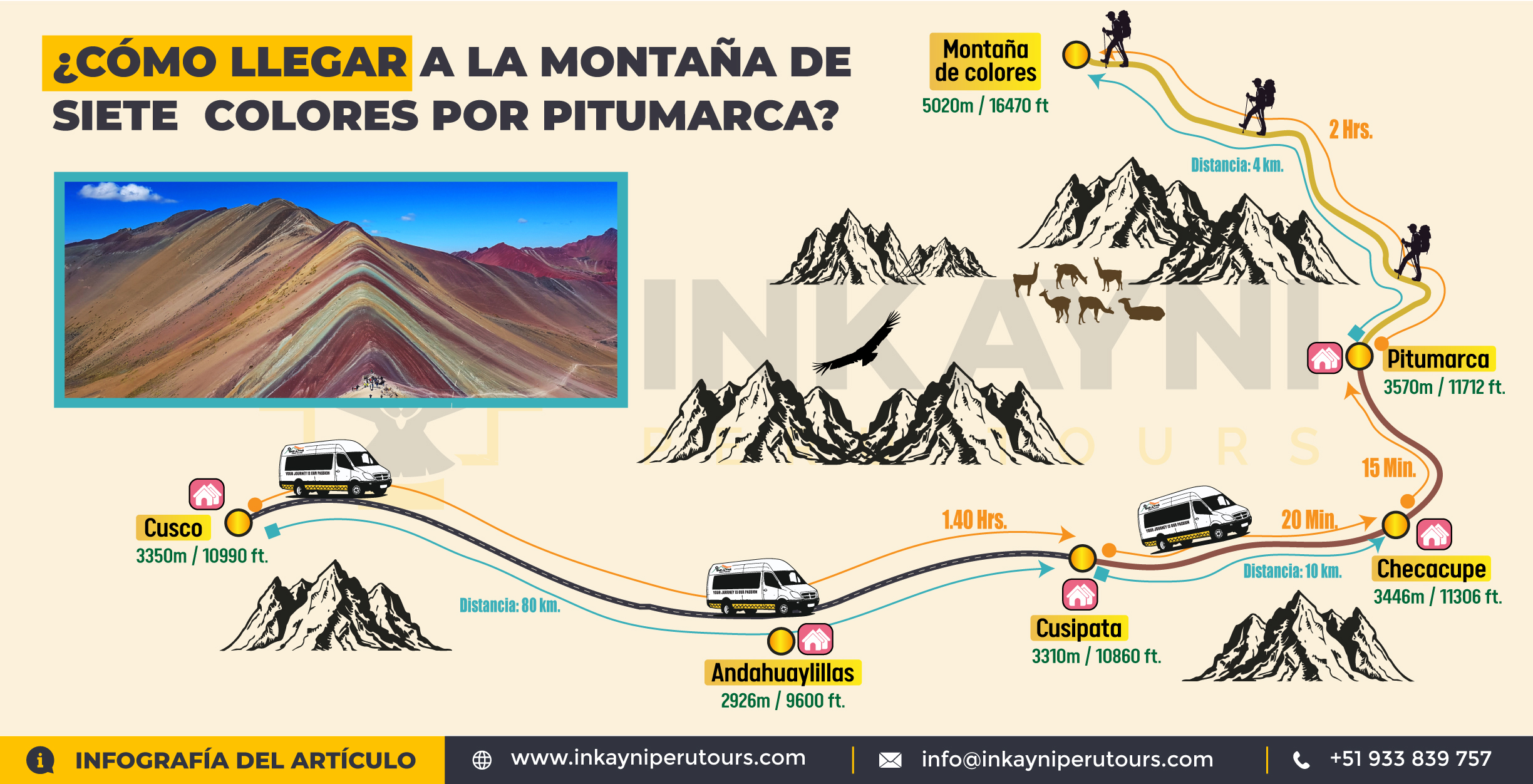
Cusipata Route
This has been the most popular route in recent years to visit the Montaña Siete Colores. You depart from Cusco to Cusipata and then continue by road to Phuluwasipata, the hike’s starting point. From there the trail to Vinicunca is shorter and has better services such as bathrooms, food stands, and entrance control, which has made it the standard option for most agencies.
Upon reaching the parking area at Phuluwasipata, you’ll begin the hike on a trail of approximately 3 km. The ascent to the Winikunka viewpoint takes between 1 hour 30 minutes and 2 hours, depending on your pace and acclimatization level. From this viewpoint you can observe Rainbow Mountain Vinicunca Peru in its mineral stripe framework.

Other Colorful Alternative Destinations
In the Ausangate region there are other routes with polychrome mountains and high mountain landscapes that can complement or even replace the visit to the Montaña 7 Colores. They’re ideal options if you seek less crowding, different perspectives of the Andean landscape, or a different physical challenge.
Palcoyo Rainbow Mountain
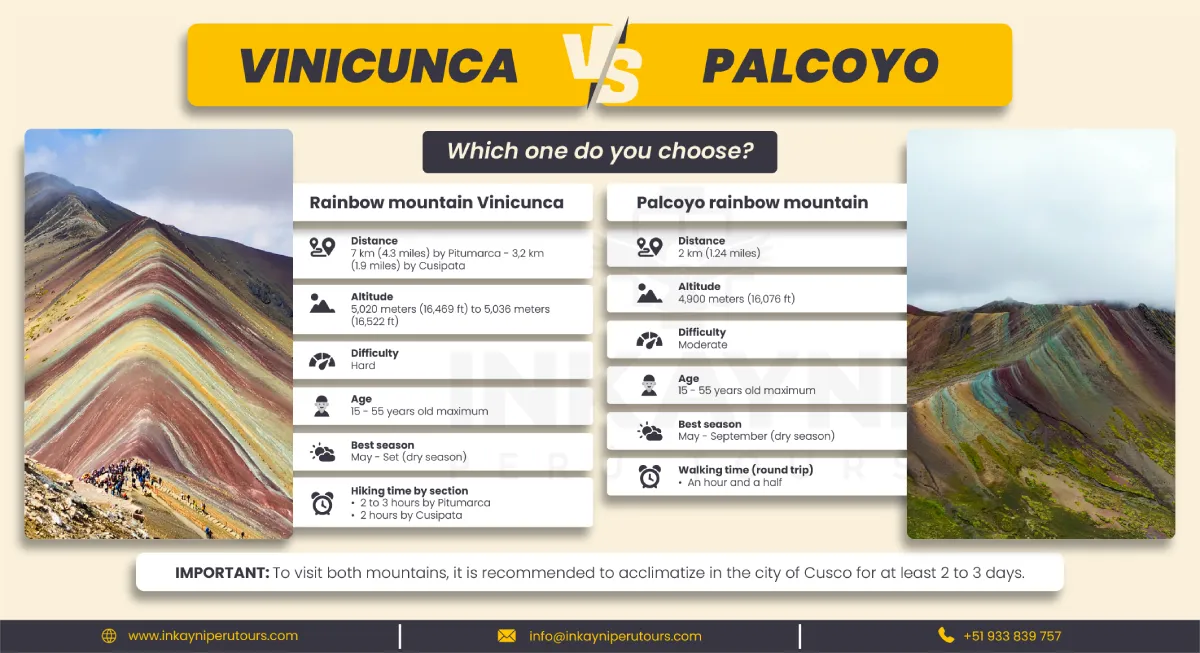
The hike to Palcoyo Mountain is today the main alternative to Vinicunca Rainbow Mountain Peru. It’s a full-day tour from Cusco, with approximate departure between 7:00 and 7:30 in the morning. The trail is shorter and less steep, and is done at a slightly lower altitude around 4,900 meters / 16,076 feet, which translates to more manageable physical effort for most travelers. Its overall difficulty is considered moderate for people with basic altitude acclimatization.

Unlike Vinicunca, Palcoyo usually has fewer crowds and allows walking more calmly. On the route you can see three rainbow mountains, wide valley views, and a striking stone forest that completes the Andean landscape.
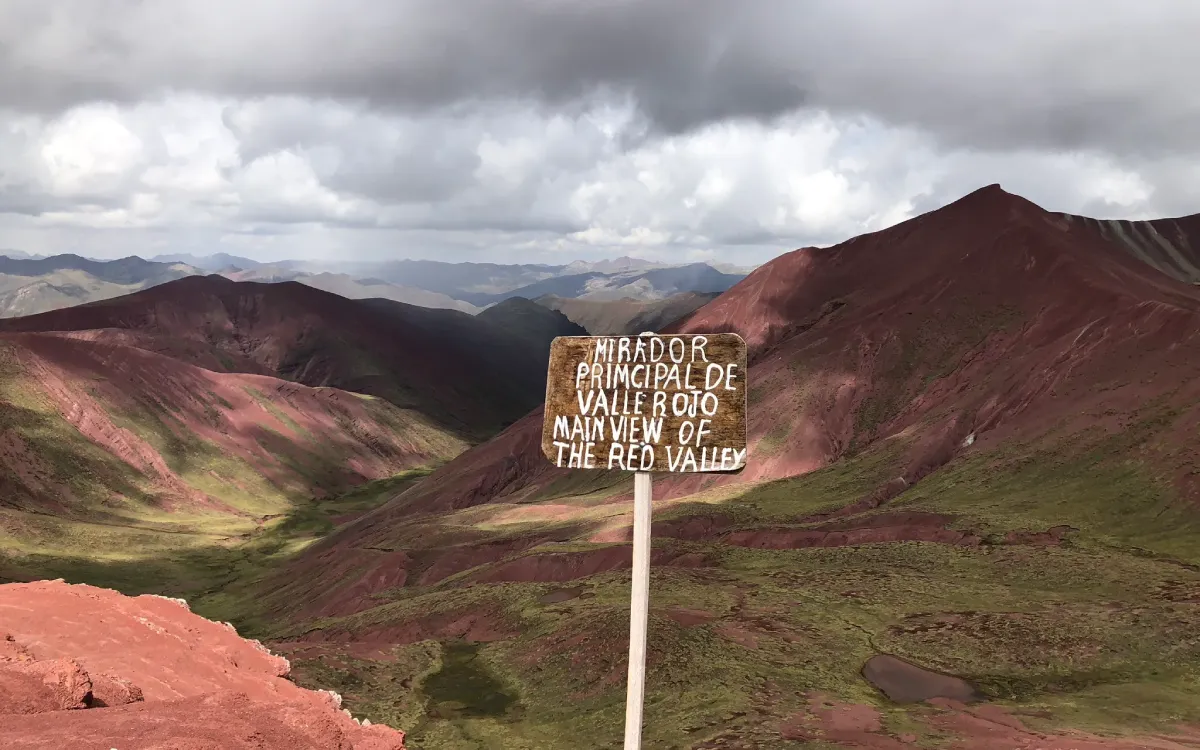
Red Valley
Red Valley is a natural amphitheater near the Montaña de 7 Colores Peru, famous for its slopes with intense reddish tones. If you have time and still feel good energy and altitude-wise, you can add this additional walk as an extension of the hike to Rainbow Mountain Peru trip. The trail difficulty is moderate, with flat stretches and a sustained final climb.
The starting point for Red Valley is Rainbow Mountain itself. First you walk through a relatively flat stretch of about 20–25 minutes and then follow a progressive climb. The total walk takes about 45 minutes depending on your pace, and Red Valley’s highest point is the viewpoint around 5,038 meters / 16,528 feet, from where you appreciate the reddish mountains, the valley, and part of the Ausangate massif.
Pallay Punchu (Pallay Poncho)
The hike to Pallay Punchu Mountain is another colorful alternative, more recent and still less crowded. It’s located approximately 4 hours by road from Cusco, in Layo district, Canas province. This sharp mountain with multicolored stripes rises to an altitude of about 4,791 meters / 15,718 feet.
The route has moderate to demanding difficulty depending on your physical condition and weather. There are two main trails to reach the viewpoint:
- A short but steep route, about 30 minutes, on a zigzag path with considerable elevation gain.
- A longer, gentler route, approximately 50 minutes, with progressive slope and calm pace.
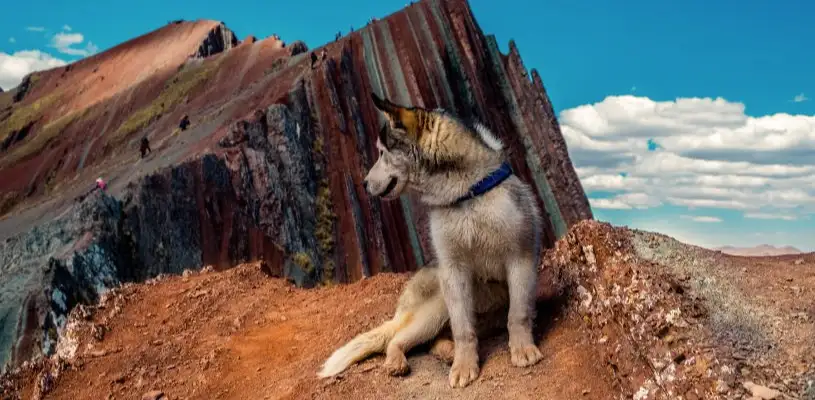
Pallay Punchu, the Sharp Colored Mountain
Ausangate Trek
The Ausangate trek is a multi-day high mountain circuit that circles the Ausangate glacier, the area’s protective apu. The most common itineraries last between 4 and 6 days and total over 60 km of hiking, with passes exceeding 5,000–5,200 meters altitude. It’s considered a high difficulty route, recommended for hikers with good physical condition and previous experience in altitude hiking.
On the route you cross glacial valleys, intensely colored lagoons, rock forests, and wide Andean pampas with llamas and alpacas. Some programs include visiting Rainbow Mountain Peru or the Seven Lakes of Ausangate as part of the circuit. It’s a remote route, with very few hikers compared to other Cusco treks, and requires careful prior acclimatization.

Hiking the Ausangate glacier
MOUNTAIN OF SEVEN COLORSRainbow Mountain Peru
Hike through the Andes to one of the most famous mountain of natural mineral colors.
Ready to Face Rainbow Mountain?
After understanding its real altitude, changing weather, access routes, altitude sickness impact, and alternatives like Palcoyo, Red Valley, Pallay Punchu, or the Ausangate trek, Rainbow Mountain becomes more than just a famous photo. It becomes an Andean challenge that demands respect and preparation.
If you acclimatize, choose the season well, walk at your own pace, and travel with a responsible agency, the question is no longer whether you can reach it, but how you want to remember that day above 5,000 meters. With Inkayni Peru Tours, that effort becomes a well-planned, safe journey consistent with what this mountain deserves.
Frequently Asked Questions About Rainbow Mountain Hike Difficulty
What’s the real difficulty of the hike to Rainbow Mountain?
If you can walk uphill for 1 h 30 to 2 h at a steady pace, with short stops, and arrive acclimatized from Cusco, it’s usual that you can complete the route without major problems.
Is it mandatory to acclimatize in Cusco before visiting Vinicunca?
The recommendation is to spend 1–2 nights in Cusco (3,399 m) before going up: walk slowly through the city, visit viewpoints calmly, stay hydrated, and avoid alcohol and very heavy meals. This is general guidance; if you have heart, respiratory, or blood pressure history, plan the trip with your doctor.
What’s the best season and time to go to Rainbow Mountain?
In rainy season (November to March) the landscape can look very striking with recent snow, but the trail becomes more slippery, fog can cover the mountain, and electrical storms are more frequent.
Most tours depart from Cusco very early, commonly between 4:00 and 5:00 a.m. Arriving early helps avoid the biggest crowd concentration at the viewpoint and to better take advantage of good weather windows.
Can I go if I’m not in great physical shape, traveling with children, or am elderly?
In the case of children and elderly people, the critical point is acclimatization and prior health status. Children who live at altitude and active elderly people with up-to-date check-ups can do the hike if they advance slowly, take pauses, and are accompanied by a responsible agency. With any strong altitude sickness symptoms, the prudent thing is to stop or descend.
Is it better to go with an agency or on my own to Rainbow Mountain Peru?
An organized tour usually includes:
- Transportation round trip from Cusco.
- Basic breakfast and lunch en route.
- Guide who knows the trail, timing, and altitude.
- First aid kit and, in many cases, oxygen tank for minor emergencies.
If you go on your own you’ll have to coordinate several transportation segments, control return schedules, and handle any weather changes or altitude discomfort alone. For a first visit, it’s usually more sensible to hire a reputable agency.
What should I bring in my backpack for the Rainbow Mountain altitude challenge?
- Small, comfortable backpack.
- 1–1.5 liters of water per person.
- Energy snacks: nuts, chocolate, granola bars.
- Layered clothing: base layer, fleece or sweatshirt, and windbreaker or waterproof jacket.
- Warm hat and sun hat or cap.
- Gloves and buff or light scarf.
- Sunscreen, lip balm, and sunglasses with UV filter.
- Cash in soles and small bills for bathrooms, snacks, entrance payments, or horse rental.
Every extra kilo is noticeable above 4,600 m, so bring only what’s necessary.
How much do entrance, horses, and basic services cost at Vinicunca?
- The entrance to Rainbow Mountain is usually paid locally or included in organized tours.
- Horse rental prices vary by section, season, and agreement with local residents.
- Use of rustic bathrooms along the route usually requires small cash payments.
In the area there are no ATMs or reliable card payments. It’s important to bring cash in local currency. Before booking, confirm with the agency what’s included in the tour’s final price.
Are there bathrooms, cell signal, and other services during the Rainbow Mountain hike?
- Rustic bathrooms at the breakfast point and at some trail sections.
- Local stands with water, hot beverages, and snacks.
- In certain areas there’s intermittent cell signal, though it’s not stable or guaranteed.
There are no ATMs, WiFi, or tourist infrastructure similar to the city. Everything important such as warm clothing, water, and personal medication must leave with you from Cusco.
What do I do if I feel altitude sickness during the Rainbow Mountain trek?
- Slow the pace, take a break, and dress warmly.
- Drink water and, if it feels good, a hot beverage such as coca tea.
- Immediately notify the guide so they can assess your condition, use supplemental oxygen if necessary, or decide on descent.
If symptoms worsen, including persistent vomiting, severe breathing difficulty, very intense headache, or disorientation, the responsible thing is not to keep climbing. At altitude, insisting “no matter what” can turn a bad moment into a real emergency.
Remember this information is general and doesn’t substitute a health professional’s opinion. If you have chronic illnesses or specific doubts, consult your doctor before the trip.
Is Rainbow Mountain worth it year-round or can it close due to weather?
- Heavy rains, snow, or electrical storms in rainy season.
- Landslides or road cuts on access routes.
- Blockades or protests in the region.
Responsible agencies monitor weather and route conditions. If the forecast is very adverse, they can change the date or propose another destination. Before booking, ask how they handle weather cancellations and what rescheduling options they offer.
Autor
Shared:


If you liked this article and the information you found, give us 5 stars!
 (2 votos, promedio: 5.00 de 5)
 Loading...