


Where to Stay on the Choquequirao Trek
Choquequirao Trek accommodation is basic and rural, not hotel-style. Most hikers sleep in campsites, rustic rooms or family lodges at stops like Chiquisca, Santa Rosa and Marampata, and for most travelers Marampata is the best base near the ruins because it offers beds, meals and easier access to Choquequirao. If you want the cheapest option, camping is usually the most practical choice.
Table of Contents
Choquequirao Trek Accommodation is not like staying in Cusco, the Sacred Valley or Aguas Calientes. This is a remote hiking route, so most places to sleep are simple and practical: campsites, rustic cabins, rural family lodges, basic rooms and rest points where travelers can eat, refill water or recover before the next climb.
The main places to understand are Cachora, Capuliyoc, Chiquisca, Playa Rosalina, Santa Rosa, Marampata and the camping area near the Choquequirao entrance. Your best option depends on your route length, hiking pace, budget, gear and whether you travel independently or with a guided trek.
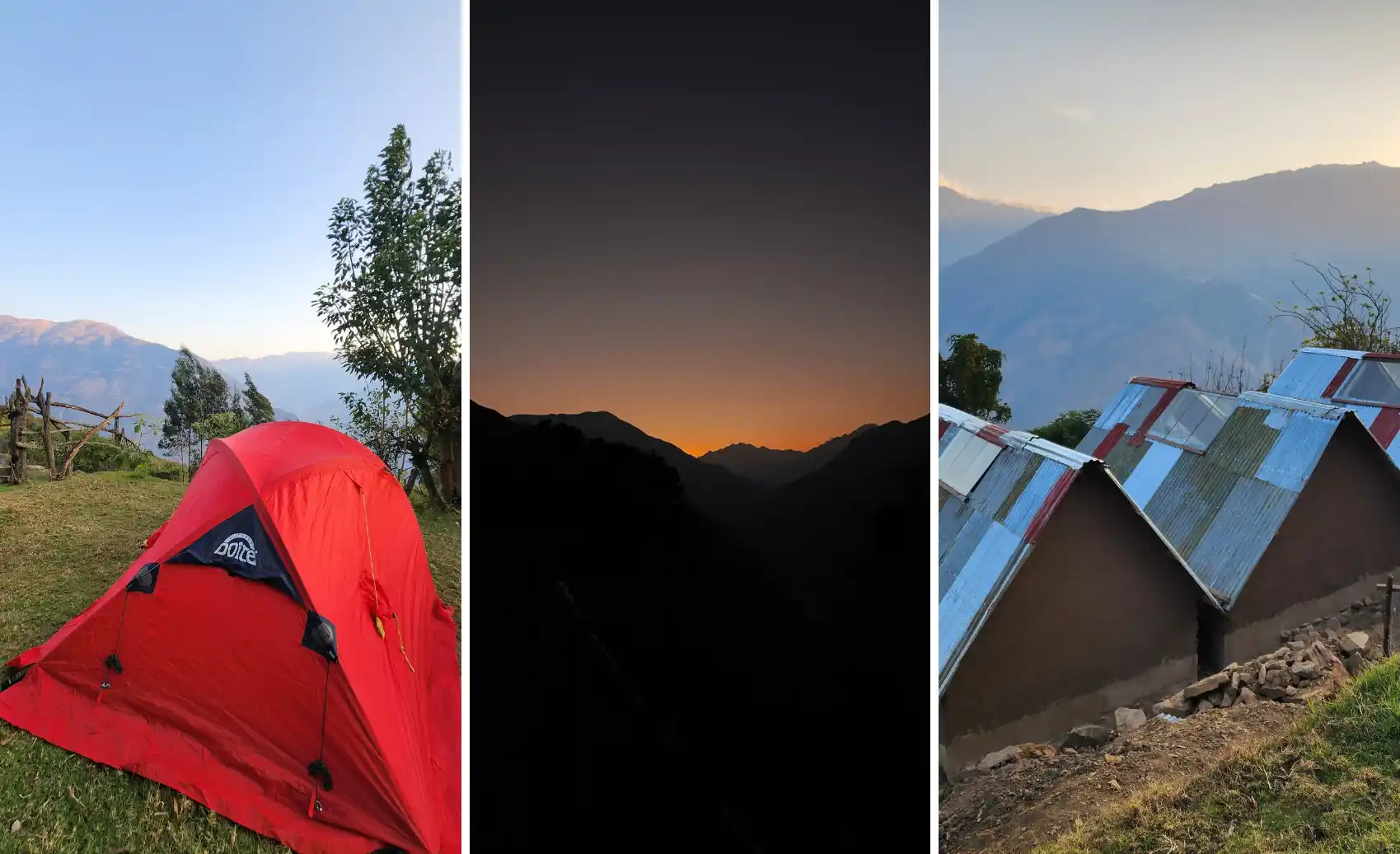
Sleep warm, recover well. Photo by Inkayni Peru Tours.
Choquequirao accommodation at a glance
Best base
Marampata, because it has beds, campsites, meals, basic supplies and access to Choquequirao.
Common first night
Chiquisca or Santa Rosa, depending on route pace and how much of the canyon climb you want to complete.
Price logic
Camping is usually the cheapest option. Rooms, cabins and lodge-style stays cost more.
What to carry
Cash in soles, headlamp, warm layers, rain gear, snacks and a power bank.
WORLD WONDER IN THE ANDESMachu Picchu
Discover the history, landscapes, and essential tips for visiting this world wonder.
Are There Hotels on the Choquequirao Trek?
There are no city-style hotels along the classic Choquequirao Trek. On the trail, “accommodation” usually means campsites, basic rooms, rustic cabins or family-run rural lodges. Private bathrooms, hot showers, Wi-Fi and electricity are not guaranteed.
If you search for “hotel Choquequirao,” check the exact location. Some results may be in Cusco, Abancay or access-route towns, not on the hiking route itself. For the trek, the practical question is where you can sleep, eat, refill water and recover before the next hiking section.
Compared with the Inca Trail and the Salkantay Trek, Choquequirao has fewer formal overnight services, so your sleep plan matters more.
Choquequirao Trek Accommodation by Route Section
The best Choquequirao Trek accommodation depends on where you are on the route. Some stops work mainly for logistics, others for sleeping, and Marampata works as the most practical base near the archaeological site.
| Place | Approx. altitude | Sleep options | Best for | Services to expect |
| Cachora | 9,500 ft (2,900 m) | Basic guesthouses, local lodgings, campsites | Before or after the trek | Food, shops, transport and better phone signal than the trail. |
| Capuliyoc | 9,300 ft (2,850 m) | Campsites and basic rest areas | Trailhead logistics | Food, bathrooms, viewpoints and vehicle access. |
| Chiquisca | 6,330 ft (1,930 m) | Campsites and rustic rooms | Common first-night stop | Basic meals, bathrooms and showers in some places. |
| Playa Rosalina | 5,085 ft (1,550 m) | Basic campsite or pass-through stop | Apurímac River crossing | Limited services; do not rely on full lodging comfort. |
| Santa Rosa | 6,875 ft (2,095 m) | Basic campsites, simple rooms, rest points | Splitting the canyon climb | Water, snacks and simple food depending on season. |
| Marampata | 9,350 ft (2,850 m) | Rural lodges, simple cabins, campsites, lodge-style rooms | Best base near Choquequirao | Beds, meals, bathrooms, basic supplies and limited connection in some places. |
| Near Choquequirao entrance | Around 9,800–10,100 ft (3,000–3,085 m) | Camping only | Closest night to the site | Basic tent area and water access depending on local conditions. |
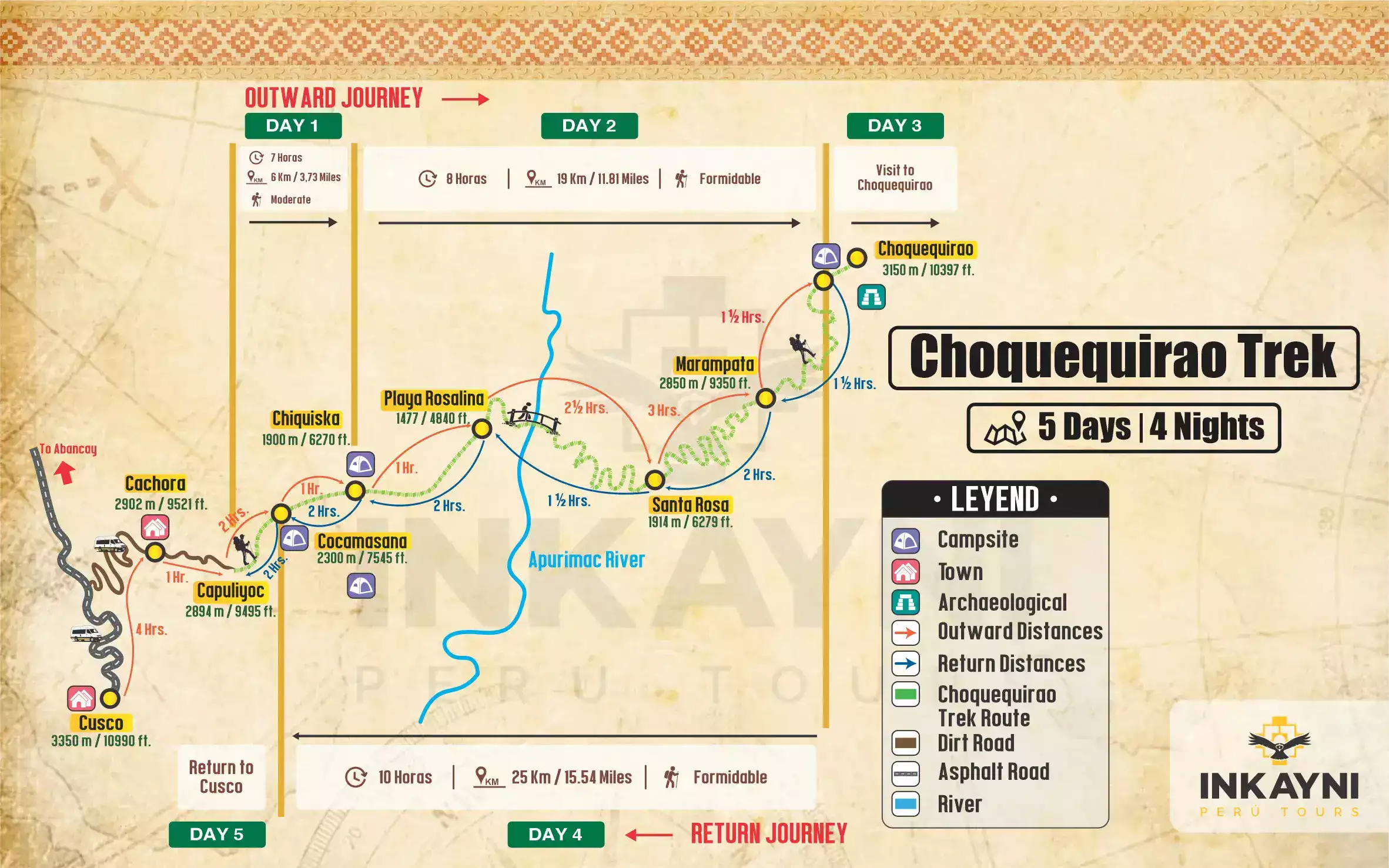
Route map for the 5-day Choquequirao Trek. Photo by Inkayni Peru Tours.
How Much Does Choquequirao Trek Accommodation Cost?
Choquequirao Trek accommodation is usually paid in cash and varies by season, location, room type and what each place includes. Use the ranges below as a planning reference. Always confirm whether the price is per person, per tent or per room before you stay.
| Category | Approx. range | Where you may find it | What to expect |
| Basic campsite | US$2–6 approx. (S/5–20) | Capuliyoc, Chiquisca, Santa Rosa, Marampata | Tent space, basic bathroom or water access depending on the place. |
| Simple room or rustic cabin | US$8–20 approx. (S/30–75) | Chiquisca, Santa Rosa, Marampata | Basic bed or mattress, simple shelter and shared services. |
| Rural family lodge | US$15–35 approx. (S/55–130) | Mostly Marampata and nearby areas | Simple room, local host support and meals usually available separately. |
| Lodge-style room | US$45–70+ approx. (S/165–260+) | Near Marampata or access-route areas | More comfort than a cabin, but still remote and limited compared with city hotels. |
| Simple cooked meal | US$4–10 approx. (S/15–35) | Chiquisca, Santa Rosa, Marampata, local rest points | Breakfast, lunch or dinner depending on local availability. |
Guided treks usually include camps, meals, equipment and mule support in the total price. Independent travelers need to separate lodging, food, transport, entrance tickets and emergency money, so the real trek cost can be higher than the nightly accommodation alone suggests.
PERU’S LEGENDARY HIKEInca Trail to Machu Picchu
Follow the historic trail through mountain passes, Inca sites, and cloud forest paths to Machu Picchu.
Types of Choquequirao Trek Accommodation
Names can be confusing on the Choquequirao route. A “lodge,” “cabin,” “room” or “camping area” may mean different levels of comfort depending on the stop. Use the table below to understand what each option usually means before choosing where to sleep.
| Sleep option | Where to find it | What it usually means | Best for |
| Basic campsite | Capuliyoc, Chiquisca, Playa Rosalina, Santa Rosa, Marampata and near the Choquequirao entrance | Tent space with basic services such as water, bathrooms or meals depending on the stop. | Hikers with camping gear or guided groups with tent logistics. |
| Rustic room or simple cabin | Mostly Chiquisca, Santa Rosa and Marampata | A simple bed or mattress, usually with shared or basic services. | Travelers who want shelter without carrying a full camping setup. |
| Rural family lodge | Mainly Marampata and nearby settlement areas | Family-run rooms, local meals and easier access to Choquequirao. | Travelers who want a practical base before or after visiting the ruins. |
| Lodge-style room | Near Marampata or access-route areas, not inside Choquequirao | A more organized bed-based option, still limited compared with city hotels. | Travelers with more budget who want extra comfort on a rustic route. |
| Guided camp | Depends on the operator’s itinerary | Tents, meals, mule support and camp logistics arranged by the tour provider. | Travelers who do not want to manage camps, food and overnight logistics. |
| Access-town hotel or guesthouse | Cusco, Abancay or Cachora | A normal pre-trek or post-trek stay outside the remote trail. | Travelers who want rest, showers, luggage storage or transport access. |

Campsites keep the route flexible and budget-friendly. Photo by Inkayni Peru Tours.

A simple cabin can mean a lighter pack and better sleep. Photo by Inkayni Peru Tours.
Main Overnight Stops on the Route
Most 4 and 5-day itineraries use a combination of Chiquisca, Santa Rosa, Marampata and sometimes camping near the Choquequirao entrance. Cachora and Capuliyoc are more useful for access and logistics, while Marampata is the most practical base for visiting the archaeological site.
Cachora and Capuliyoc
Cachora works as a pre-trek or post-trek town with basic lodgings, local food, shops and transport connections. Capuliyoc is one of the most practical starting points today because vehicles can reach this viewpoint before the descent into the Apurímac Canyon. Some hikers sleep near Capuliyoc before starting early, but many use it only as the trailhead.

Cachora can work as a practical access town before the trek. Photo by Inkayni Peru Tours.
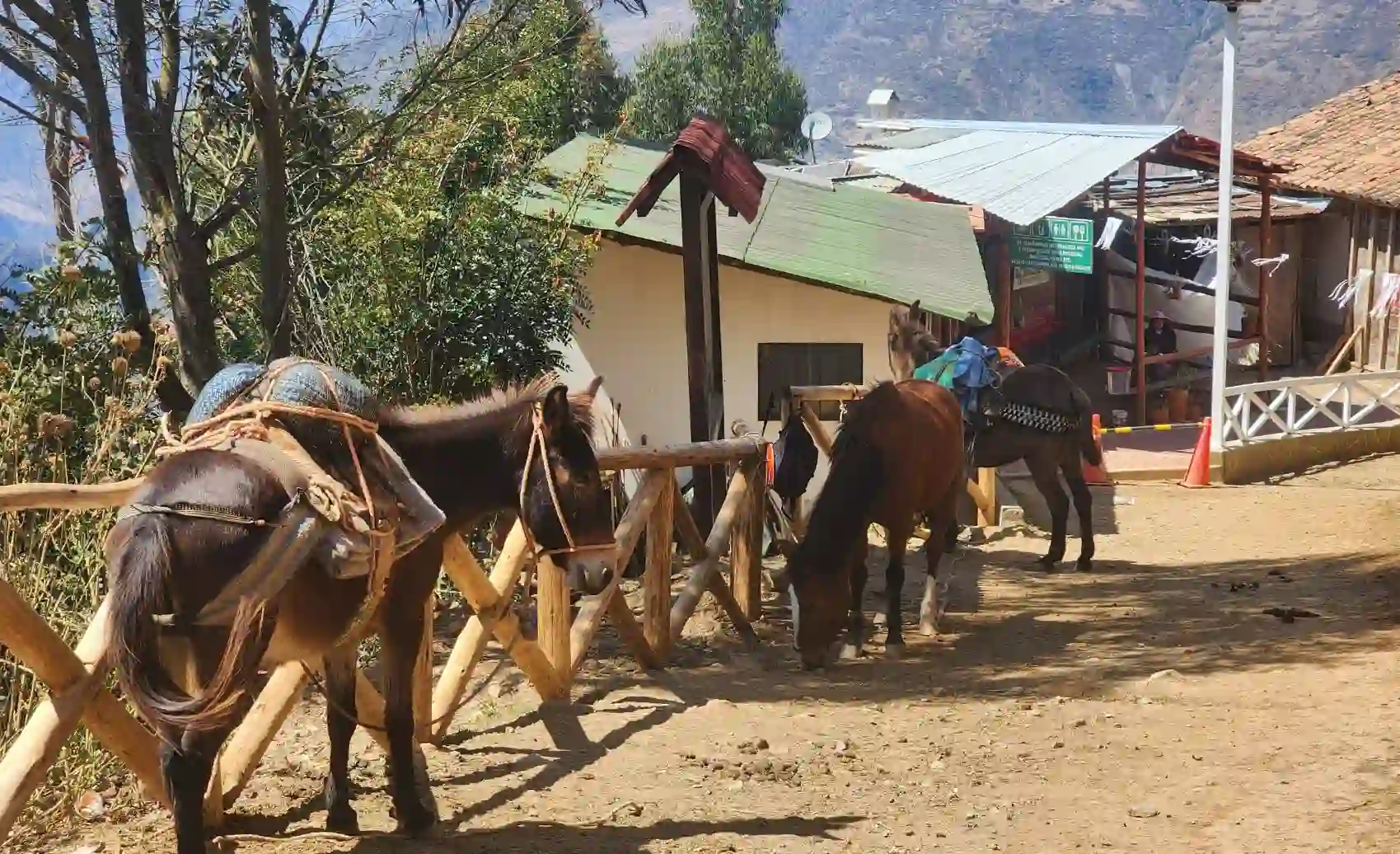
Capuliyoc is the main checkpoint before the canyon descent. Photo by Inkayni Peru Tours.
Chiquisca and Playa Rosalina
Chiquisca is one of the most common first-night stops on the Choquequirao Trek, especially on 4 and 5-day itineraries. Its lower altitude and warmer climate make it a practical place to rest after the first descent. Playa Rosalina sits near the Apurímac River crossing and is usually treated more as a route marker or basic rest point than a comfortable overnight base.
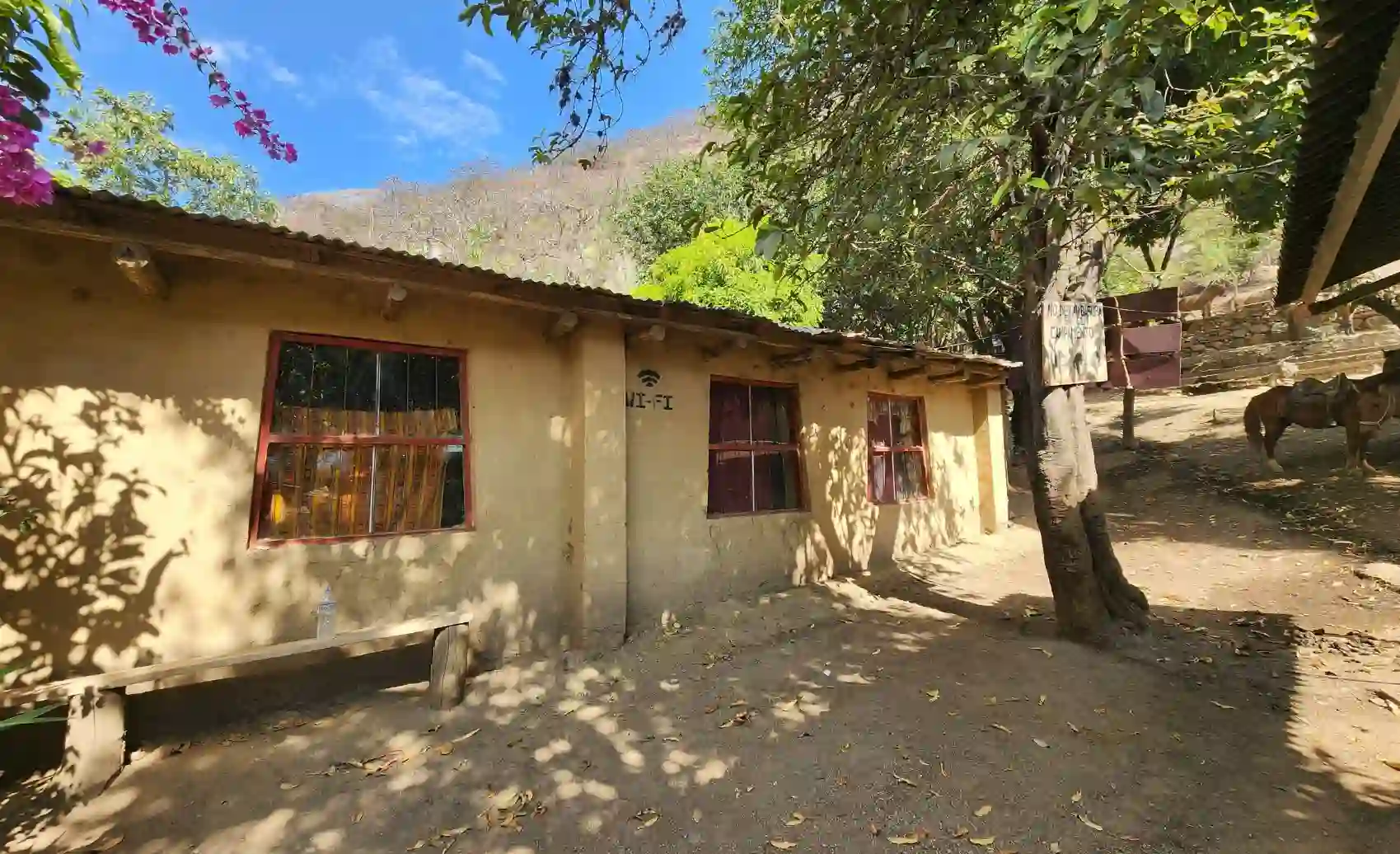
Chiquisca is a strong first-night stop on classic itineraries. Photo by Inkayni Peru Tours.
Santa Rosa Baja and Santa Rosa Alta
Santa Rosa Baja and Santa Rosa Alta sit after the Apurímac River crossing, on the steep climb toward Marampata. These rest points are simpler than Chiquisca or Marampata, but they can help split the climb if the heat, pack weight or elevation gain makes the day too demanding. Services may include basic camping, simple rooms, snacks or cooked food depending on season and local availability.
Marampata
Marampata is usually the best place to stay near Choquequirao. It is the closest village to the Choquequirao Archaeological Park and one of the most complete accommodation areas on the route. Travelers may find rural lodges, simple rooms, campsites, homemade meals and basic supplies. Many sleep here before or after exploring the site because it is close enough for a day visit.
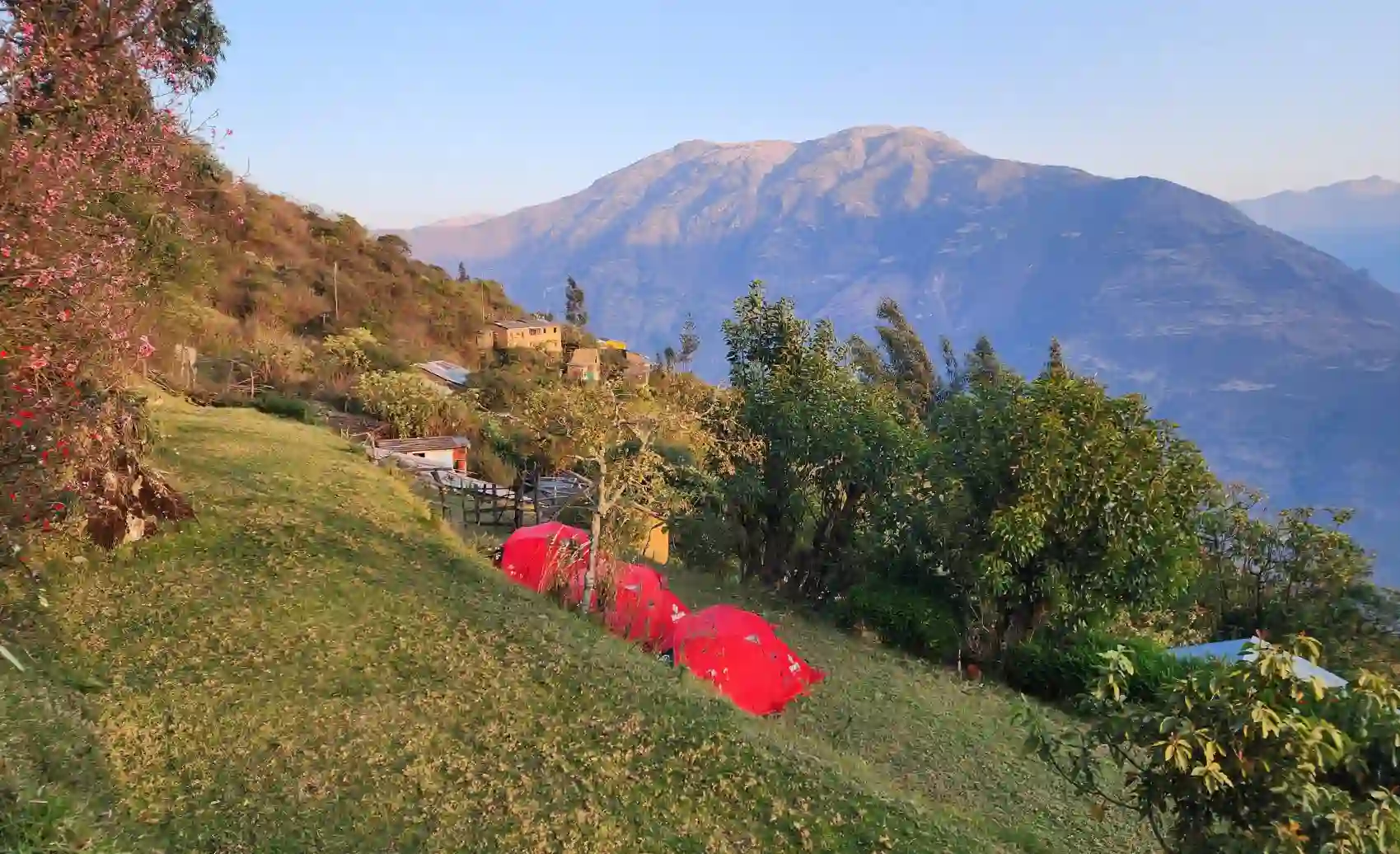
Marampata is usually the best base near Choquequirao. Photo by Inkayni Peru Tours.
Where Do Most Itineraries Sleep?
Accommodation changes depending on whether you choose a fast, standard or slower route. A 4-day Choquequirao Trek usually compresses the overnight plan, while a 5-day Choquequirao Trek gives more room for recovery and time near the ruins.
| Itinerary style | Typical sleep logic | Best for | What to watch |
| 3-day route | Very compressed, often using Marampata or lodge-style support. | Strong hikers with limited time. | Less recovery time and harder daily rhythm. |
| 4-day route | Common stops include Chiquisca, Santa Rosa or Marampata depending on the operator. | Travelers who want the classic trek in a compact plan. | The canyon climb can feel demanding if the overnight stop is too aggressive. |
| 5-day route | Usually gives more room for Marampata and a fuller Choquequirao visit. | First-time remote trekkers or travelers who want better recovery. | Costs more than a faster route, but the pace is usually easier to manage. |
Main trek guides for choosing your route
Can You Camp Near Choquequirao?
You cannot sleep inside the Choquequirao archaeological site itself. Camping inside the protected ruins is not allowed. However, there are camping areas near the entrance or control zone, usually a short walk from the site depending on the exact route and local conditions.
This option is best for hikers with full camping equipment or guided groups with camp logistics already arranged. If you travel independently, confirm water access, tent areas and current local conditions before relying on this stop.

Hikers overlooking Choquequirao in southern Peru. Photo by Inkayni Peru Tours.
What should you bring if you camp near Choquequirao?
- Rain and wind-resistant tent.
- Sleeping bag suitable for cold Andean nights.
- Sleeping pad or thermal insulation.
- Headlamp or handheld lamp.
- Warm layers, rain protection and a dry change of clothes.
- Water purification tablets, filter or boiled water plan.
- Cash in soles for campsite fees, meals or local services.
Important note:
Choquequirao’s official visitor rules prohibit camping inside the archaeological site. If you camp near the entrance, control zone or route areas outside the ruins, confirm current local rules with your guide, local managers or the cultural authorities before setting up a tent.
What Services Should You Expect?
Services along the Choquequirao Trek are rustic. The safest expectation is simple bedding or tent space, local meals, basic bathrooms, cold or simple showers in some areas, limited electricity and weak or no signal.
| Service | What to know | Traveler tip |
| Bathrooms | Many rest points have basic bathrooms, but quality varies. | Carry toilet paper and hand sanitizer. |
| Showers | Some places offer simple showers; hot water is not guaranteed. | Bring a quick-dry towel and warm clothes for after washing. |
| Food | Meals may be available, but not always included in the room or campsite price. | Carry snacks and confirm dinner or breakfast early. |
| Signal and internet | Limited and unreliable. Some places may offer basic connection for a fee. | Download maps and booking details before the trek. |
| Electricity | Charging options are limited and not always available. | Bring a charged power bank. |
What to Ask Before Choosing Accommodation
Before relying on a place to sleep, ask practical questions instead of only asking for a price. This matters especially if you plan to hike without a guide, because you will need to handle camps, meals, timing and backup options by yourself.
- Is the price per person, per tent or per room?
- Does the price include dinner or breakfast?
- Is there a bed, mattress, blanket or only space for a tent?
- Is there a bathroom, shower or hot shower?
- Can I arrive without a reservation in high season?
- Is water available nearby, and does it need purification?
- Can I charge a phone or battery pack?
- Is the place open during rainy season?
- How far is it from Choquequirao or the next day’s trail section?
Related planning before you choose a place to sleep
Best Option by Traveler Type
The right accommodation depends on budget, gear, comfort expectations and how much logistics you want to manage. Use this table to choose the most realistic option before the trek.
| Traveler type | Best option | Why it works |
| Lowest budget | Basic campsite | Cheapest option, but you need tent, sleeping bag, mat and more planning. |
| Less gear | Rustic room or simple cabin | Useful if you want shelter without carrying a full camping setup. |
| Best base near Choquequirao | Rural lodge or room in Marampata | Closest practical village base for meals, beds and access to the ruins. |
| Less logistics | Guided camp | Tents, meals, mule support and overnight planning are handled by the operator. |
| Pre-trek or post-trek rest | Cusco, Abancay or Cachora hotel | Better showers, luggage storage, transport access and recovery outside the remote trail. |
Where to Stay Before and After the Choquequirao Trek
Accommodation planning should not start only on the trail. Where you sleep before and after the trek affects acclimatization, transport timing, gear preparation and recovery after several days of hiking.
Cusco
Cusco is the main base for most international travelers because it has the widest range of hotels, restaurants, transport and tour services. It is also the best place to prepare gear, rest before departure and spend 1 or 2 days acclimatizing before a demanding trek. A light sightseeing day or a slow acclimatization plan in Cusco can help you adjust without overexerting yourself.
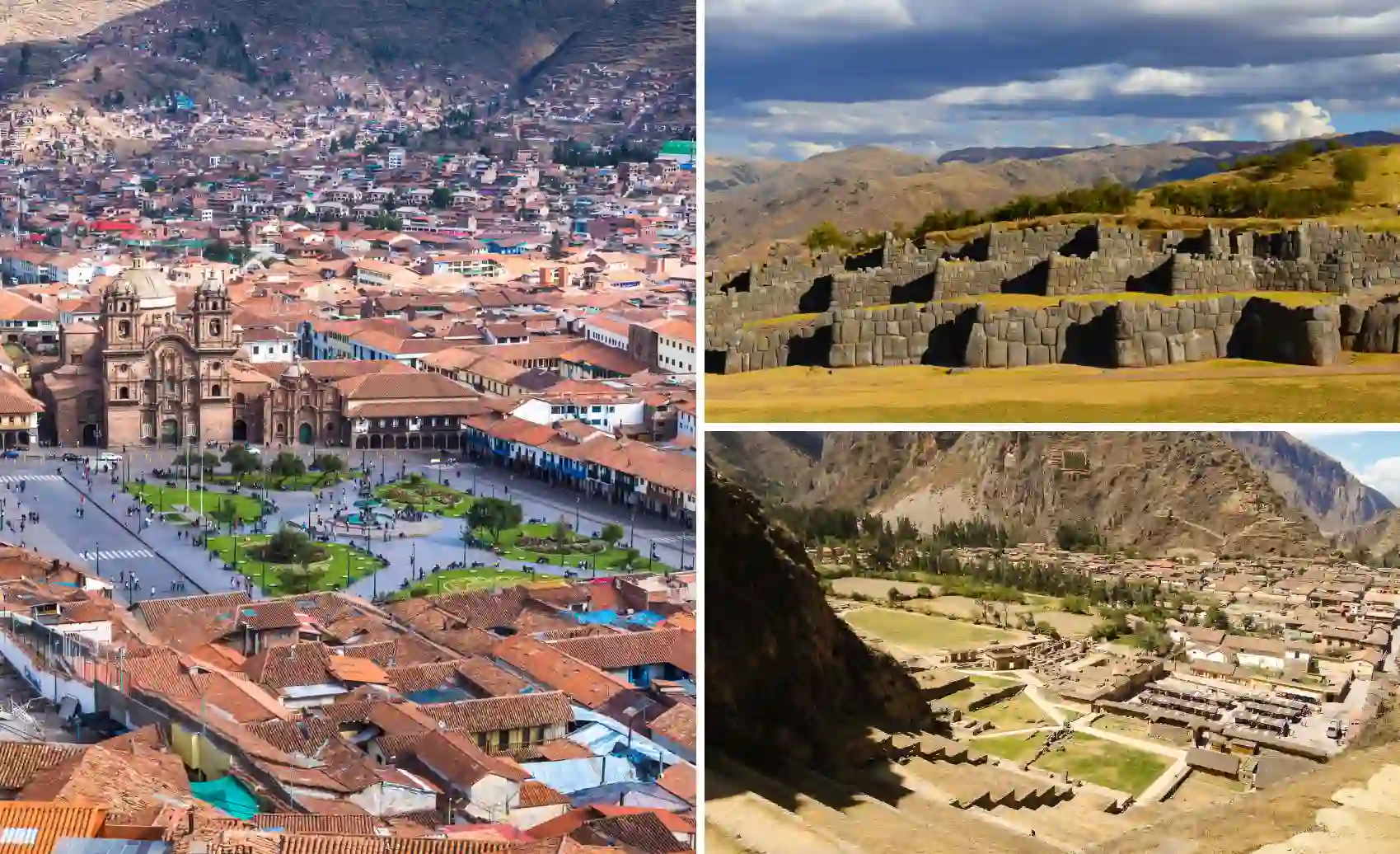
Use Cusco or the Sacred Valley to acclimatize before Choquequirao. Photo by Inkayni Peru Tours.
Abancay and Cachora
Abancay can be useful for national travelers or visitors arriving from the west of Peru. Cachora can work if you want to sleep closer to the access route before starting early. Both are more practical for logistics than for international-style hotel comfort.
Back in Cusco after the trek
After completing the Choquequirao Trek, most travelers return to Cusco to recover, shower properly, do laundry and continue with the Sacred Valley, Machu Picchu by train or another Peru itinerary. Choose a comfortable hotel for the first night after the trek if your budget allows it.
Final Recommendation
For most travelers, the best Choquequirao Trek accommodation plan is simple: use Chiquisca or Santa Rosa for the canyon section, choose Marampata as the main base near Choquequirao, and camp near the entrance only if you have proper gear or guided support.
If you travel independently, confirm prices, meals and availability before relying on a specific stop. If you choose a guided trek, check whether tents, meals, sleeping equipment, mule support and entrance logistics are included in the total price.
Frequently Asked Questions About Choquequirao Trek Accommodation
Are there hotels on the Choquequirao Trek?
Where is the best place to sleep near Choquequirao?
Can you sleep inside the Choquequirao archaeological site?
Do I need to bring a tent for the Choquequirao Trek?
How much does Choquequirao Trek accommodation cost?
Does accommodation include food?
Can I buy food or snacks on the route?
Are there bathrooms and showers on the route?
Can I book Choquequirao Trek accommodation in advance?
Is Chiquisca or Santa Rosa better for the first night?
What should I carry even if I sleep in cabins or lodges?
Autor
Shared:


If you liked this article and the information you found, give us 5 stars!
 (Ninguna valoración todavía)
 Loading...