


Choquequirao Trek 4 Days
The Choquequirao Trek 4 Days is the faster and more demanding version of the classic route, made for fit travelers who want to reach the ruins, explore the main sectors and return to Cusco without adding a fifth day. It usually covers about 37 miles (60 km) round trip through steep canyon descents, hard climbs back toward Marampata, hot exposed trail sections and basic camping conditions, so it is not the best choice for beginners or undertrained hikers.
Table of Contents
The Choquequirao Trek 4 Days is not the slowest or easiest way to reach the ruins, but it is one of the most direct. The reward is powerful: empty trails, deep canyon views, quiet camps, and real time inside an Inca site that still feels far from mass tourism. The challenge is just as real. This 4-day version gives less room for long rests, so the pace, camps, heat, and climbs matter from the first day. Before choosing it, it is worth understanding exactly how this route feels on the ground.
| 4 daysfast trek version | 37 miapprox. round trip (60 km) | 7-9 hrslongest hiking days | Hardnot for beginners |
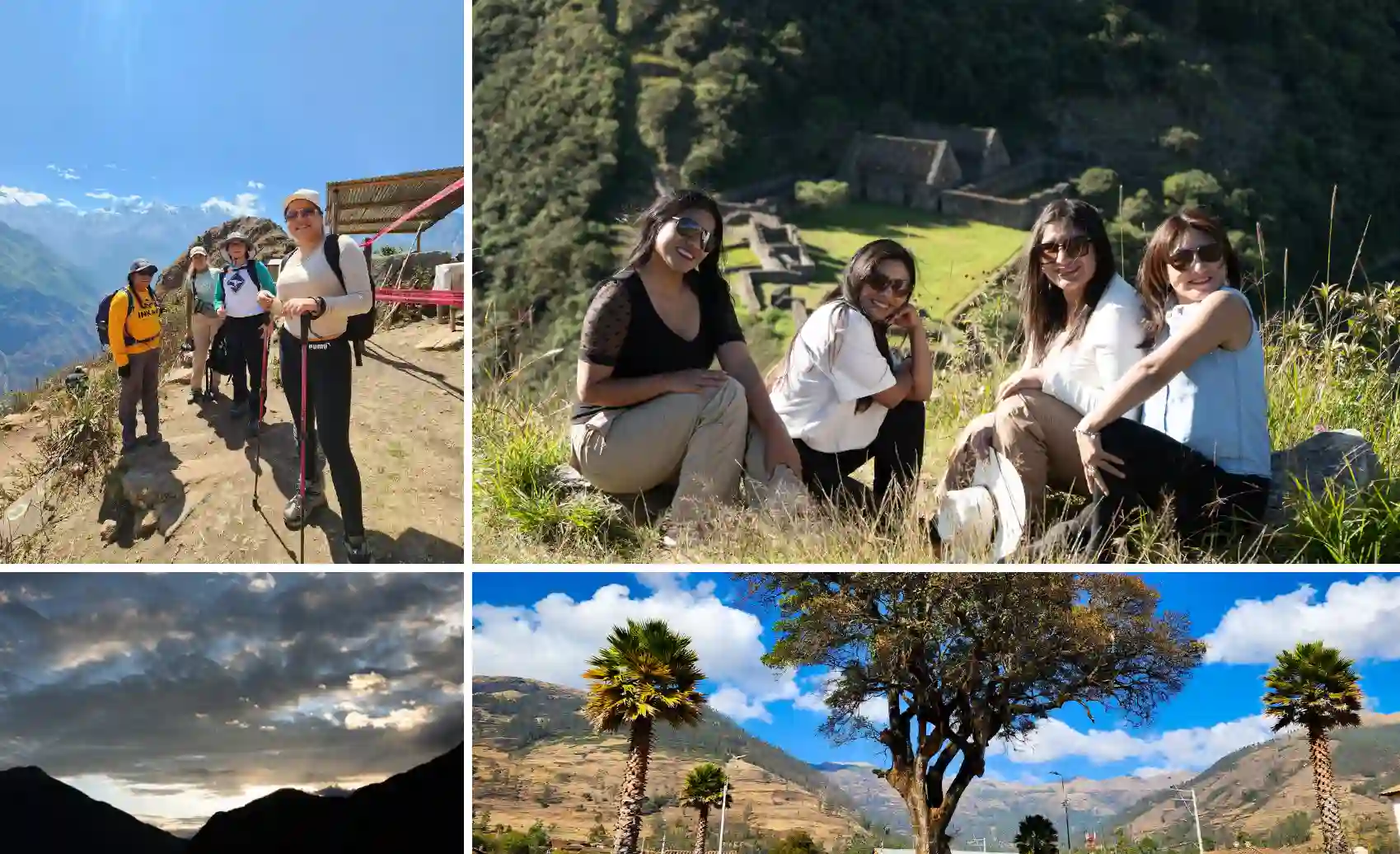
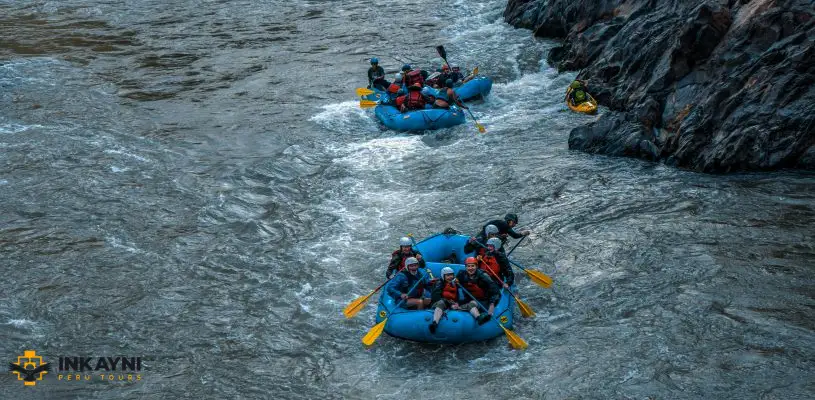
Travelers on the Choquequirao Trek 4 Days, a demanding route through the Apurímac Canyon.
LOST CITADEL TREKChoquequirao Trek
Hike to one of Peru’s most impressive and least crowded Inca archaeological sites.
This faster version makes more sense when it is compared with other long Peru treks such as the Inca Trail, the Salkantay Trek, the Lares Trek, or the Ausangate Trek. The difference is not only distance, but how much effort, heat, and recovery are compressed into each day.
What Is the Choquequirao Trek 4 Days?
The Choquequirao Trek 4 Days is a condensed trekking itinerary from Cusco to the Choquequirao archaeological complex and back. It usually starts with a road transfer toward Capuliyoc, descends into the Apurímac Canyon, climbs toward Marampata and reaches Choquequirao for a guided exploration of its terraces, plazas and ceremonial areas.
This version is not a relaxed introduction to trekking in Peru. It works best for travelers who already hike, train regularly or are comfortable with long days on steep terrain. The main advantage is time: you can experience Choquequirao in four days without adding a fifth day to your Peru itinerary. The tradeoff is intensity.
Choquequirao Trek 4 Days vs 5 Days: Which One Fits You?
The 4-day and 5-day versions reach the same destination, but they do not feel the same. The 4-day trek compresses the effort and gives less margin for slow pacing. The 5-day version is usually better if you want more recovery time, a calmer site visit or a safer pace for your first remote trek in Peru.
| Factor | 4-day Choquequirao trek | 5-day Choquequirao trek |
| Best for | Fit travelers with limited time. | Travelers who want a slower and more comfortable pace. |
| Daily effort | Longer hiking days, less recovery time. | Better distribution of climbs, descents and rest. |
| Site exploration | Possible, but timing must be well managed. | More flexible for a fuller visit to the ruins. |
| Beginner suitability | Not recommended for first-time multi-day trekkers. | More reasonable if you have basic fitness and time. |
| Best planning page | This 4-day guide. | Choquequirao Trek 5 Days. |
Plan the right Choquequirao version
Is the Choquequirao Trek 4 Days Worth It?
Yes, if you want a remote Inca trek and you are ready for the effort. The reward is strong: quiet trails, canyon views, camping nights and a visit to one of Peru’s most impressive archaeological landscapes without the crowd pressure of Machu Picchu.
The 4-day version is worth it when your itinerary is tight but your fitness is solid. It is not worth forcing if you are undertrained, short on acclimatization or expecting an easy scenic walk. Choquequirao feels rewarding because it is hard.

Panoramic views, camps and remote trails along the Choquequirao Trek 4 Days.
How Difficult Is the Choquequirao Trek 4 Days?
The Choquequirao Trek 4 Days is hard. The challenge is not technical climbing; it is sustained effort. You descend into a hot canyon, climb steep switchbacks, carry or manage gear, sleep in camps and repeat long hiking days with limited services.
The most demanding factors are heat, elevation change, trail exposure and the compressed schedule. Many hikers find the route harder than expected because the climbs come after long descents, and the canyon can feel intense during the middle of the day.
| Difficulty factor | What to expect |
| Daily hiking time | Often 7 to 9 hours on the hardest days, depending on pace and camps. |
| Terrain | Steep descents, long climbs, dusty paths and exposed canyon sections. |
| Heat | The canyon can feel very hot, especially late morning and early afternoon. |
| Altitude | Not extreme at the ruins, but effort and acclimatization still matter. |
| Experience level | Best for hikers with prior multi-day trekking or strong conditioning. |
Warning:
Do not choose the 4-day route just because it saves one day. If this is your first multi-day trek, the 5-day version is usually the smarter choice.

Steep climbs and descents are the real test of the 4-day Choquequirao itinerary.
Choquequirao Trek 4 Days Itinerary
The itinerary can vary by operator, camp availability, weather and group pace. The outline below shows a practical 4-day structure that keeps the site visit possible without pretending the route is easy.
Day 1: Cusco to Capuliyoc to Chiquisca or Santa Rosa
Day 1 snapshot: leave Cusco, reach Capuliyoc and descend into the canyon.
Focus: manage heat and downhill impact
The day begins with an early drive from Cusco toward Capuliyoc, the usual starting viewpoint for the trek. From there, the trail descends into the Apurímac Canyon. Some groups camp around Chiquisca; stronger groups may continue toward Santa Rosa to reduce the next day’s effort.
| Day 1 detail | Reference |
| Main route | Cusco to Capuliyoc, then descent toward Chiquisca or Santa Rosa. |
| Trail character | Long descent, exposed canyon views and warmer terrain. |
| Difficulty | Moderate to challenging, mainly because of the descent and heat. |
| Camp logic | Camping closer to Santa Rosa makes Day 2 more manageable. |
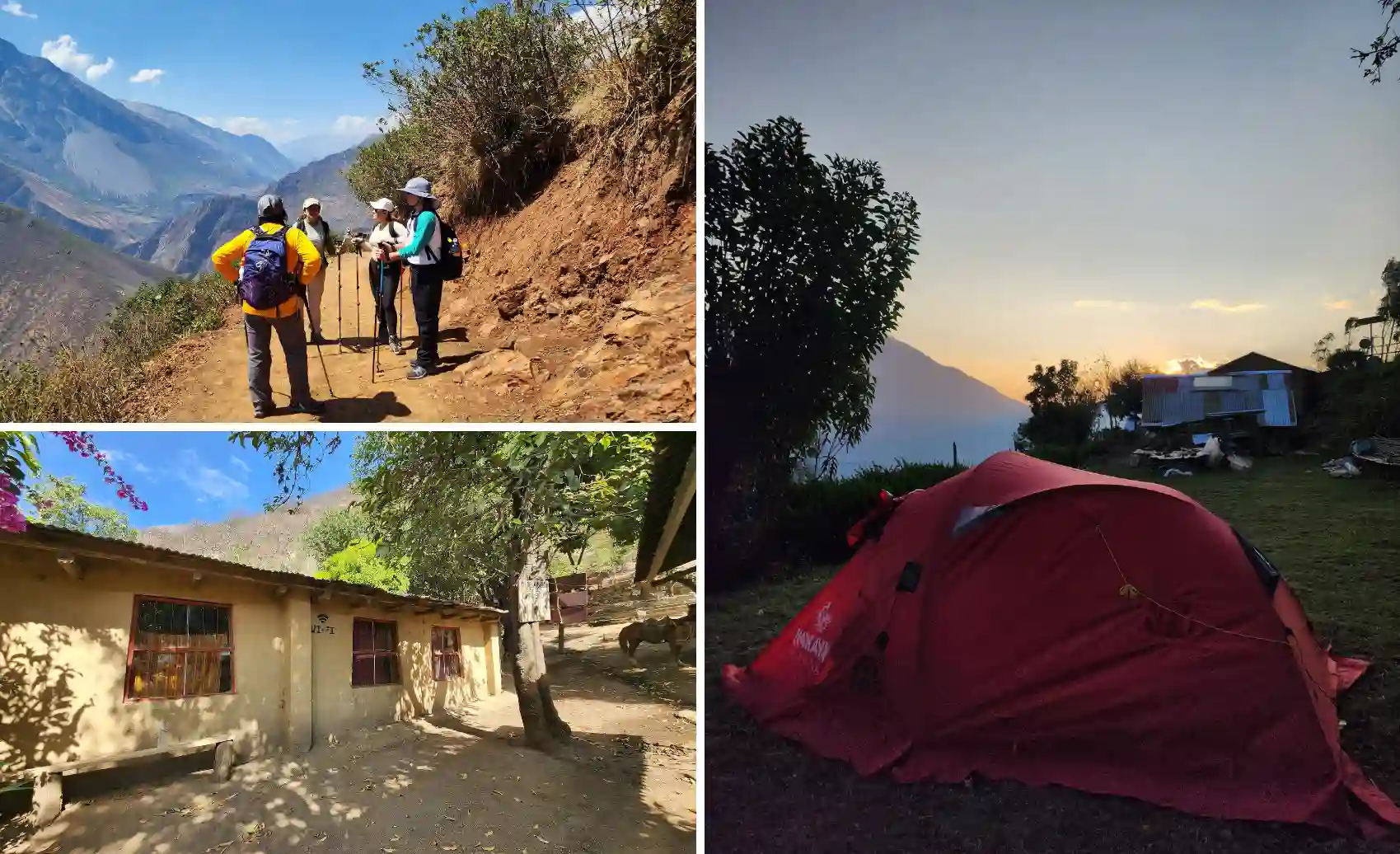
First day descent into the canyon on the Choquequirao Trek 4 Days.
Day 2: Santa Rosa to Marampata to Choquequirao
Day 2 snapshot: climb toward Marampata and enter Choquequirao.
Focus: pace the ascent and protect time at the ruins
Day 2 usually contains the hardest climb of the trek. You ascend from the canyon side toward Marampata, rest in the village area and continue toward Choquequirao. Depending on timing, the visit may include the main plaza, terraces, ceremonial spaces and viewpoints before returning to camp near Marampata.
| Day 2 detail | Reference |
| Main route | Santa Rosa to Marampata, then Choquequirao archaeological site. |
| Trail character | Steep climb, exposed sections and the main archaeological visit. |
| Difficulty | High, especially if the group reaches the ruins the same day. |
| Key moment | First views of Choquequirao and exploration of the main sectors. |

Exploring the Choquequirao archaeological complex during the 4-day trek.
Day 3: Marampata to Playa Rosalinas to Chiquisca or Cocamasana
Day 3 snapshot: return through Playa Rosalinas and climb toward the next camp.
Focus: knees, heat and steady rhythm
The return begins early. The trail descends toward Playa Rosalinas and then climbs again toward Chiquisca or Cocamasana. This day can feel harder than expected because the downhill sections are demanding on the knees and the heat can build quickly in the canyon.
| Day 3 detail | Reference |
| Main route | Marampata to Playa Rosalinas, then climb toward Chiquisca or Cocamasana. |
| Trail character | Long descent, river crossing area and return climb. |
| Difficulty | High, especially in heat or after a short night of recovery. |
| Useful gear | Trekking poles help on descents and protect the knees. |
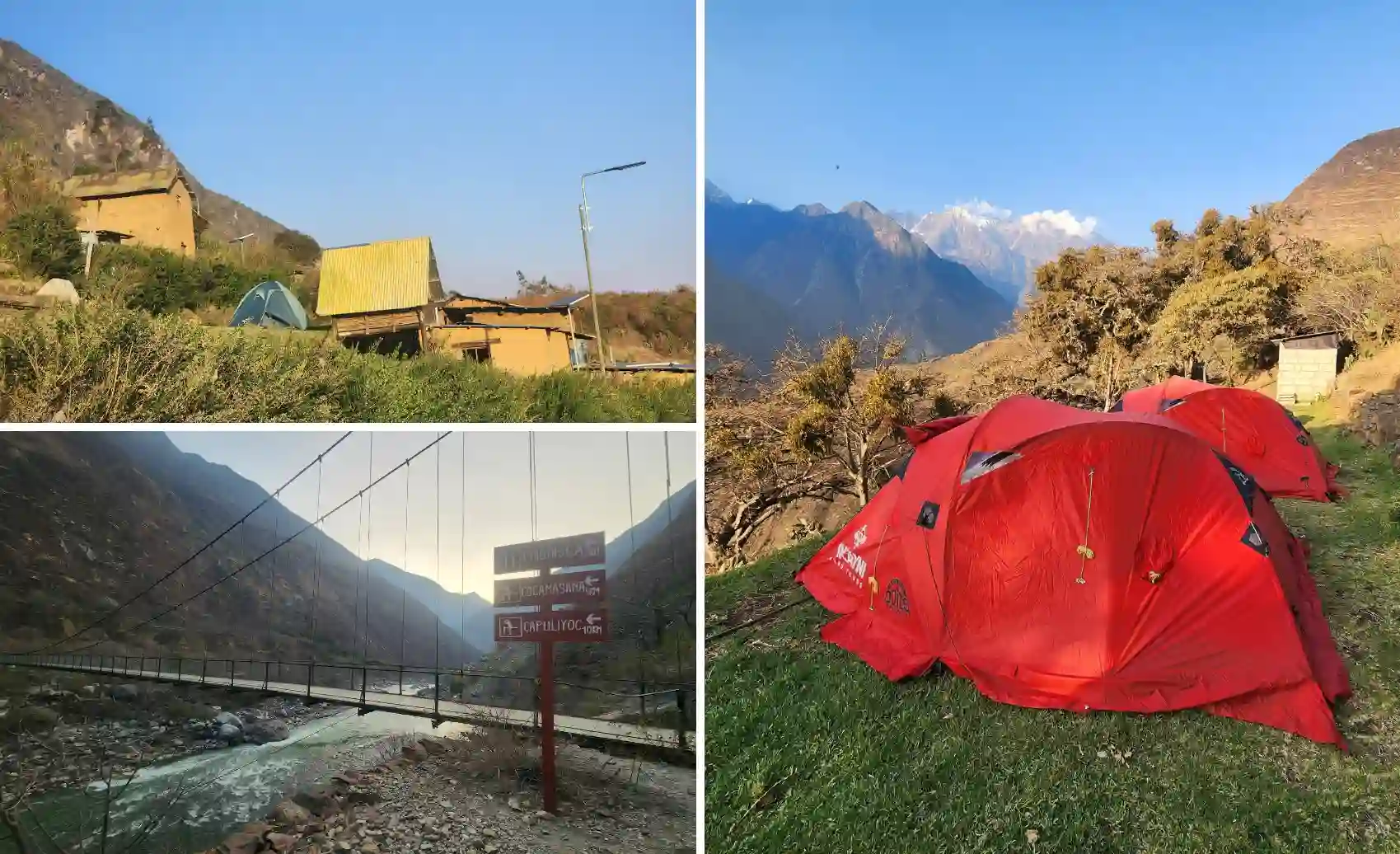
Return route through campsites and canyon trails on Day 3 of the Choquequirao Trek.
Day 4: Cocamasana or Chiquisca to Capuliyoc to Cusco
Day 4 snapshot: finish the final climb to Capuliyoc and return to Cusco.
Focus: close strong without rushing
The final day usually starts early to avoid the strongest heat. You climb back toward Capuliyoc, where transport returns to Cusco. Even if the hike is shorter than previous days, the ascent can feel demanding because your legs are already tired from the previous three days.
| Day 4 detail | Reference |
| Main route | Final climb to Capuliyoc, then private transport back to Cusco. |
| Trail character | Uphill finish, open views and return drive. |
| Difficulty | Moderate to high because of accumulated fatigue. |
| Arrival | Most groups return to Cusco later in the day, depending on pace and road conditions. |

Final climb toward Capuliyoc before returning to Cusco.
How Much Does the Choquequirao Trek 4 Days Cost?
A well-supported Choquequirao Trek 4 Days usually costs between US$530 and US$650 per person. Private departures, very small groups and premium services may cost more, while an independent trek can be cheaper if you already own the necessary camping equipment.
| Travel style | Estimated price | What the budget normally covers |
| Organized guided trek | US$530–650 per person | Transport from Cusco, guide, meals, tents, cooking equipment, mule support and entrance arrangements. |
| Private or premium service | US$650–900+ per person | Smaller group, more schedule flexibility, additional staff or upgraded camping and meal services. |
The cheapest advertised price is not always the lowest final cost. Before booking, check whether the entrance ticket, sleeping bag, trekking poles, personal duffel allowance, emergency horse and return transport are included. Group size is also important because private departures normally become cheaper per person as more travelers join.
For a more detailed breakdown of transport, equipment, food and support costs, see our Choquequirao trek cost breakdown.
Important:
Compare tours with similar inclusions. A lower quote may exclude entrance fees, mule support, camping equipment or meals that another operator includes in the published price.
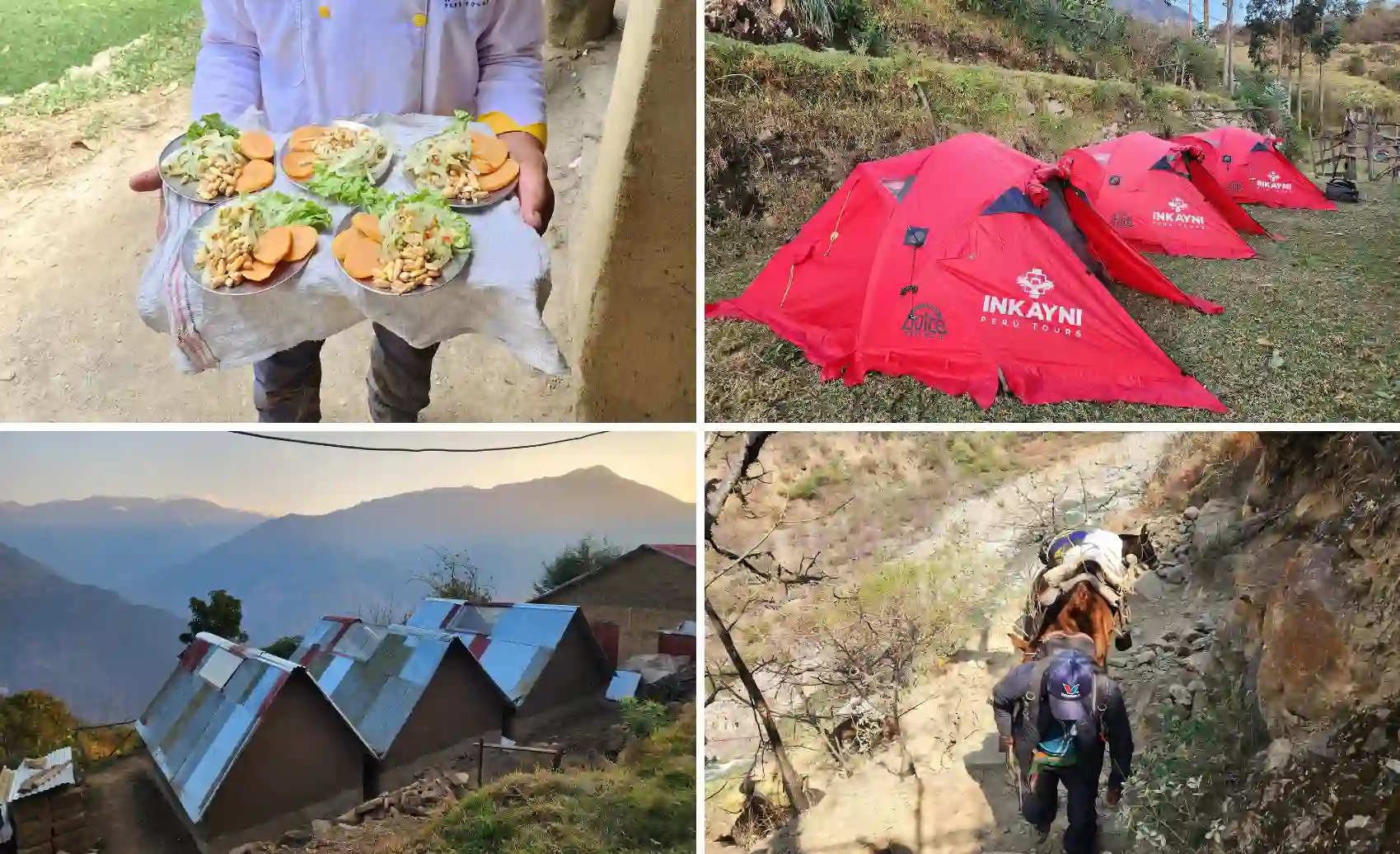
Good logistics matter on a short Choquequirao trek because the itinerary gives little room for mistakes.
What Should You Pack for the Choquequirao Trek 4 Days?
Pack light, but do not underpack. The route combines hot canyon sections, cool nights, sun exposure, dust, possible rain and long days away from services. If you travel with an agency and mule support, your daypack can stay lighter. If you go independently, your backpack becomes one of the biggest difficulty factors.
| Item | Why you need it |
| Hiking boots or trail shoes with grip | Steep descents and dusty paths require stable footing. |
| Sun hat, sunglasses and sunscreen | The canyon has exposed sections with strong sun. |
| Light rain layer | Weather can change, especially in shoulder or wet months. |
| Warm layer for camp | Nights can feel cold after long, sweaty hiking days. |
| Reusable water bottle or hydration system | Hydration is essential in hot canyon sections. |
| Trekking poles | Very helpful for long descents and final climbs. |
| Headlamp | Useful at camps and for early starts. |
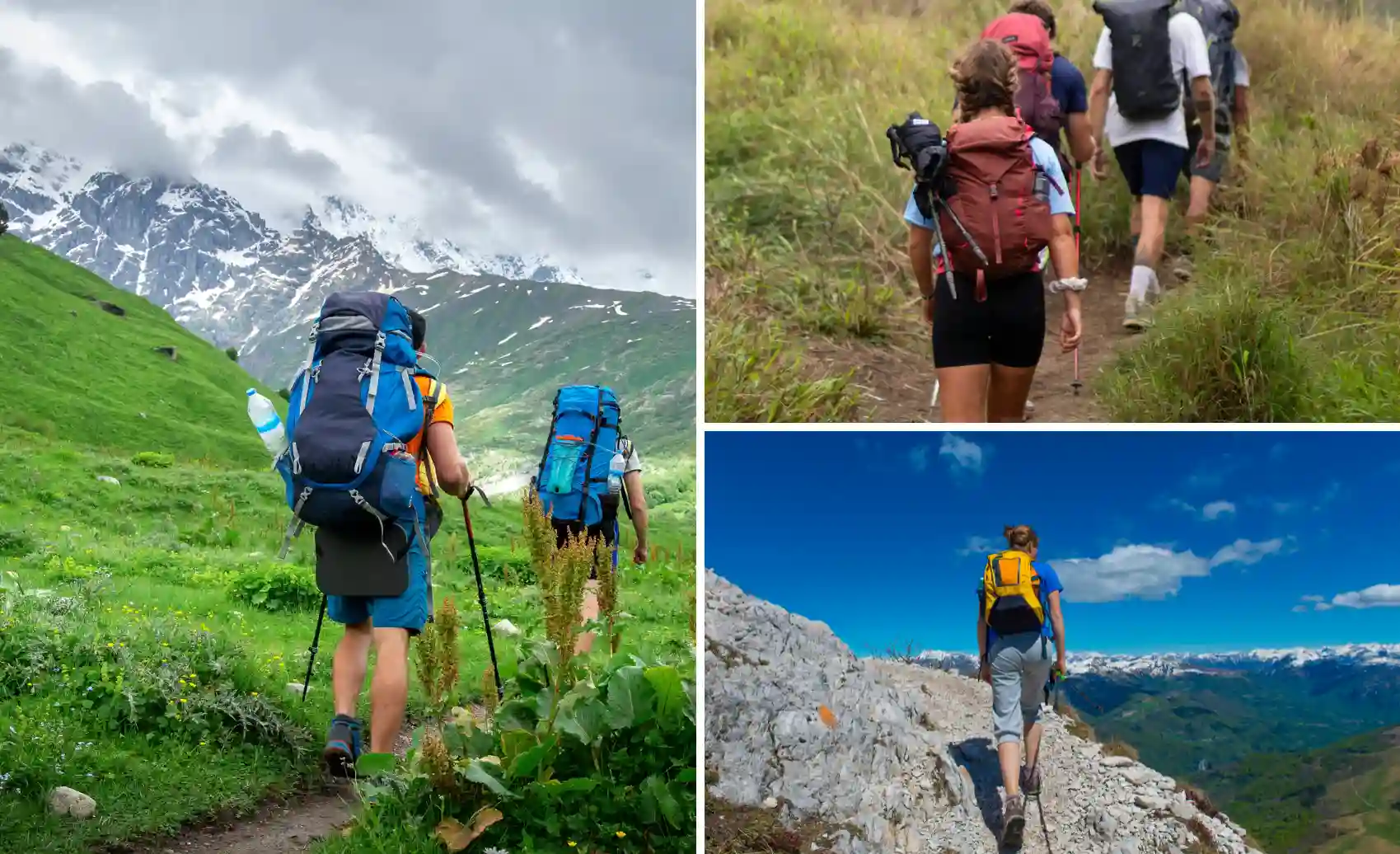
Choose your backpack based on whether you travel independently or with mule support.
Pro tip:
For a guided 4-day trek, a daypack around 20 to 30 liters is usually enough if your main duffel goes with mule support. For an independent trek, weight control becomes much more important because every climb feels heavier.
Essential Tips for This Short Trek Version
The 4-day Choquequirao trek works best when you prepare before the trail, not during it. The route is remote, so small mistakes with pacing, hydration or packing can become bigger problems.
- Acclimatize first: Spend at least 1 to 2 days in Cusco or the Sacred Valley before starting.
- Train for descents: Downhill sections can be harder on the knees than the climbs.
- Start early: Early starts help you avoid the strongest canyon heat.
- Do not overpack: Extra weight makes every ascent worse.
- Use a guide if unsure: The route is remote and logistics matter more than they seem.
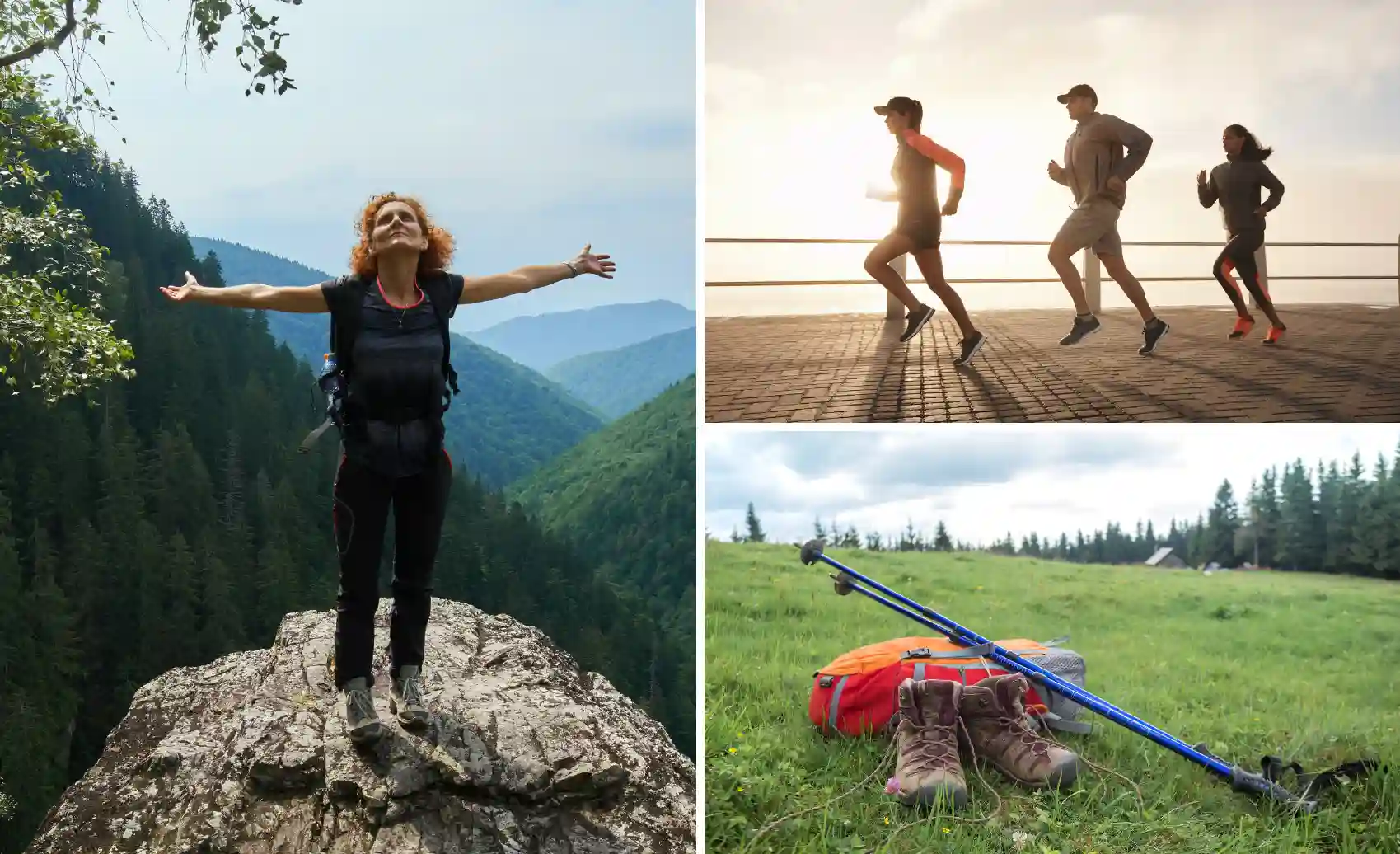
Good preparation makes the 4-day Choquequirao itinerary safer and more manageable.
Compare this trek with other Peru routes
Should You Book the 4-Day Choquequirao Trek?
Book the 4-day version if you are fit, short on time and comfortable with a demanding pace. Choose the 5-day version if you want more margin, more recovery and a calmer experience at the archaeological site.
With Inkayni Peru Tours, the goal is not only to get you to Choquequirao. It is to pace the route safely, organize camps, manage meals and guide you through the site with enough context to understand what you are seeing.
Keep this in mind:
The best itinerary is not always the shortest one. The 4-day route is excellent for the right traveler, but the 5-day version may be the better experience if you want more time at Choquequirao and less pressure on each hiking day.
Final Advice
The Choquequirao Trek 4 Days is not a shortcut for everyone. It is a focused, demanding route for travelers who want the core Choquequirao experience in less time. You will still face the canyon, the climbs, the heat, the camps and the effort that make this trek feel earned.
If you are ready for that pace, this version can be one of the most rewarding short treks in Peru. If you are unsure, choose more time instead of forcing the route. Choquequirao is better when you arrive strong enough to enjoy it.
Frequently Asked Questions About the Choquequirao Trek 4 Days
What is the Choquequirao Trek 4 Days?
Is the 4-day Choquequirao trek hard?
Where Do You Sleep on the 4-Day Choquequirao Trek?
The exact camps depend on the operator, weather and group pace. Common camping areas include Chiquisca, Santa Rosa, Marampata and Cocamasana or nearby return sectors. A good 4-day itinerary uses camps strategically: not only where they are scenic, but where they reduce the toughest climbs.
| Camp area | Why it matters |
| Chiquisca | Useful after the first descent; warmer, lower and often used on the way in or out. |
| Santa Rosa | Helps shorten the next morning’s climb toward Marampata. |
| Marampata | Strategic base for visiting Choquequirao and resting after the ascent. |
| Cocamasana or nearby return camp | Used to break up the return route before the final climb to Capuliyoc. |
Is the 4-day Choquequirao trek good for beginners?
How long do you hike each day?
Where do you sleep on the trek?
Do you need a permit for the Choquequirao Trek 4 Days?
Is the 4-day trek enough time to see Choquequirao?
What is the best time to do the Choquequirao Trek 4 Days?
How much does the 4-day Choquequirao trek cost?
Can you do the Choquequirao Trek 4 Days independently?
What should I pack for the 4-day trek?
Should I choose 4 days or 5 days?
Escrito por
Shared:


If you liked this article and the information you found, give us 5 stars!
 (Ninguna valoración todavía)
 Loading...