


What Animals Can You See in Machu Picchu?
More than 580 species comprise the Machu Picchu animals you might glimpse on your trek, spread across birds, mammals, reptiles, amphibians, and insects. Its location between the Andes and the high jungle creates a unique ecosystem combining mist, humid forests, and varied microclimates.
- Birds: over 420 species, with the Andean Cock-of-the-rock as the national symbol.
- Mammals: around 60–70 species, including the Spectacled Bear, pumas, vizcachas, and Andean deer.
- Butterflies: between 300 and 500 species that fill the cloud forest trails with color.
Many of these animals are endemic to the Machu Picchu Historic Sanctuary, visible in areas like the Inca Trail, the Inca Bridge, or Mandor Gardens.
Table of Contents
Before even stepping into the ruins, many travelers wonder what Machu Picchu animals still inhabit this protected landscape. The first thing that comes to mind is usually stone terraces, mist sliding between Inca walls and the iconic view of the citadel. Yet Machu Picchu is also part of a living sanctuary where cloud forest, steep slopes, humid ravines and high Andean habitats meet.
This guide explains the wildlife you may realistically see, the animals that live in the wider sanctuary, the difference between common sightings and rare species, and how to behave responsibly around fauna. For the full archaeological and route context, start with our Machu Picchu travel guide. If your visit depends on a specific viewpoint or route, review the Machu Picchu circuits and routes before you travel.
| 444bird species | 75mammal species | 365butterfly species | 24wild ecosystems |
WORLD WONDER IN THE ANDESMachu Picchu
Discover the history, landscapes, and essential tips for visiting this world wonder.

Quick Facts About Machu Picchu Animals
| Topic | Planning reference |
| Best place for easy sightings | Open terraces, forest edges, Mandor, the Inca Trail and quiet areas near flowers or fruiting trees. |
| Most likely animals for regular visitors | Llamas, small birds, hummingbirds, butterflies and sometimes vizcachas. |
| Rare or very rare animals | Spectacled bear, puma, taruca, Andean pudú and Andean condor. |
| Best time of day | Early morning and late afternoon, when many birds and small animals are more active. |
| Best season for general visibility | May to October usually gives drier trails and better light, while the rainy season brings more humidity, amphibian activity and greener forest. |
| Responsible behavior | Do not feed, touch, chase or disturb wildlife. Stay on marked routes and follow official rules. |
What Animals Live in Machu Picchu?
The Historic Sanctuary of Machupicchu protects far more than the archaeological site. Its territory includes humid montane forest, cloud-forest slopes, high Andean areas, ravines, river corridors and microclimates that support an unusually rich mix of species.
Official SERNANP references list 75 mammal species, 444 bird species, 14 amphibian species and 24 reptile species inside the sanctuary. SERNANP also reported 365 butterfly species after the 2024 discovery of a new butterfly species in the protected area. These figures should be read as biodiversity references for the whole sanctuary, not as a promise that every visitor will see these animals during a normal citadel route.
| Animal group | Reference count | What travelers should understand |
| Birds | 444 species | Birds are the richest visible group, especially around forest edges, Mandor and Inca Trail cloud-forest sections. |
| Mammals | 75 species | Most mammals are shy or nocturnal. Llamas are the easiest to see inside the citadel, while wild mammals are much harder. |
| Amphibians | 14 species | Usually linked to humidity, forest floor, streams and rainy conditions. They are not common casual sightings. |
| Reptiles | 24 species | Small lizards and snakes may exist in rocky or humid areas, but visitors should never touch or disturb them. |
| Butterflies | 365 species | Often easier to notice in warm, humid areas, especially near flowers, forest trails and Mandor. |
Did you know?
Machu Picchu is a mixed World Heritage area because it protects both cultural heritage and a natural landscape. That is why the wildlife discussion should include the broader sanctuary, not only the stone city.
Animals You Are Most Likely to See as a Visitor
Many animals live in the wider sanctuary, but normal visitors should keep expectations realistic. You are much more likely to see llamas and birds than a bear or puma.
| Animal | Chance for regular visitors | Where to look |
| Llamas | High | Open terraces and grassy areas inside the archaeological site. |
| Small birds | Medium to high | Forest edges, gardens, quiet paths, Mandor and sections of the Inca Trail. |
| Hummingbirds | Medium | Near flowers, gardens and cloud-forest vegetation. |
| Butterflies | Medium to high in warm, humid areas | Mandor, forest paths, river areas and sunny clearings. |
| Vizcachas | Possible, depending on route and time | Rocky areas, stone walls and sunny sections. |
| Coatis | Possible outside the main citadel areas | Forested paths and areas near Aguas Calientes or Mandor. |
| Spectacled bear, puma or Andean deer | Very rare | Remote forest and mountain habitats. Do not plan a normal visit expecting to see them. |
If your main interest is animal sightings, combine your Machu Picchu visit with quieter nature areas. The things to do in Aguas Calientes guide covers Mandor, the butterfly house and other nature-focused options near town. For a dedicated llama guide, use our article about llamas in Machu Picchu.
Emblematic Mammals of the Sanctuary
The mammals of Machu Picchu often go unnoticed because many are shy, nocturnal or live in less visited habitats. They are still important for understanding the sanctuary as a living protected area.
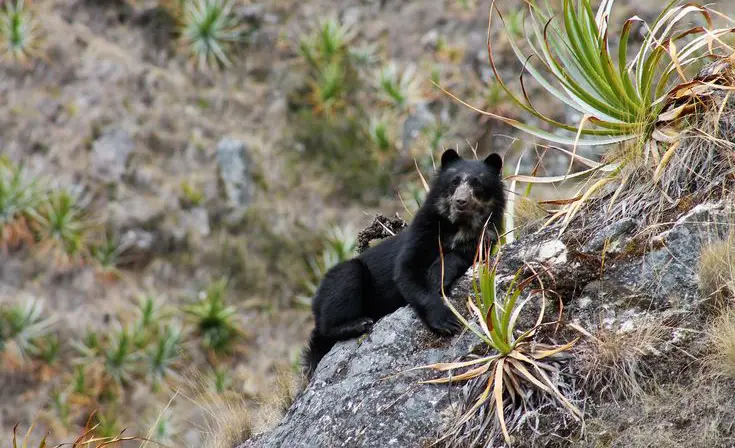
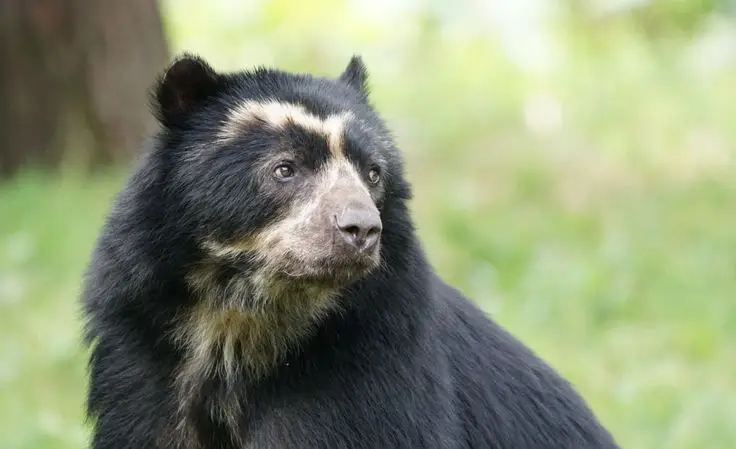
Spectacled Bear
- Scientific name: Tremarctos ornatus.
- Habitat: Cloud forests and higher areas with dense vegetation.
- Visitor chance: Very rare.
The spectacled bear is South America’s only bear and one of the most important mammals in Andean cloud forests. It helps disperse seeds and supports forest regeneration. Sightings are unusual for regular visitors because the bear avoids crowds and moves through quieter habitats.
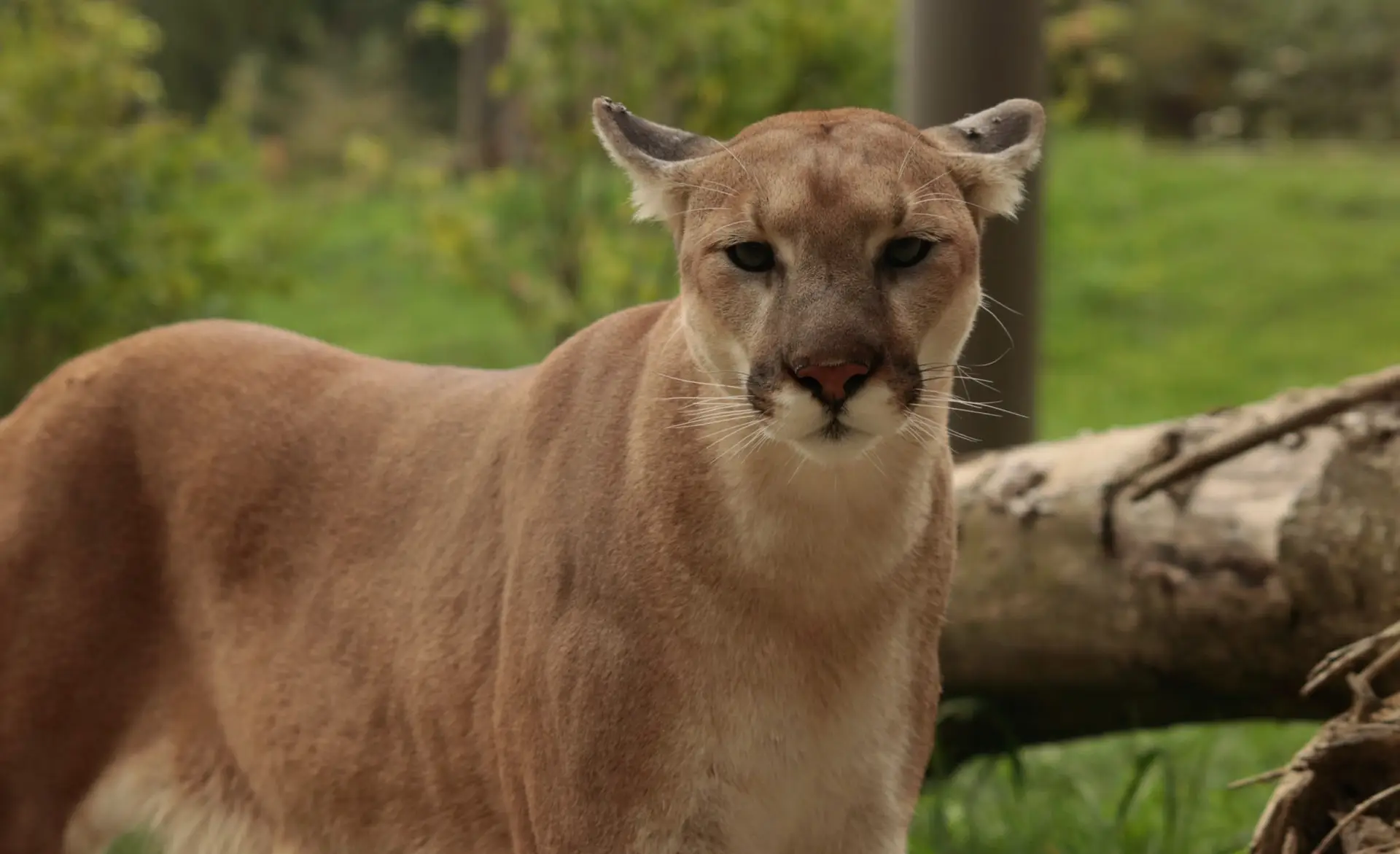
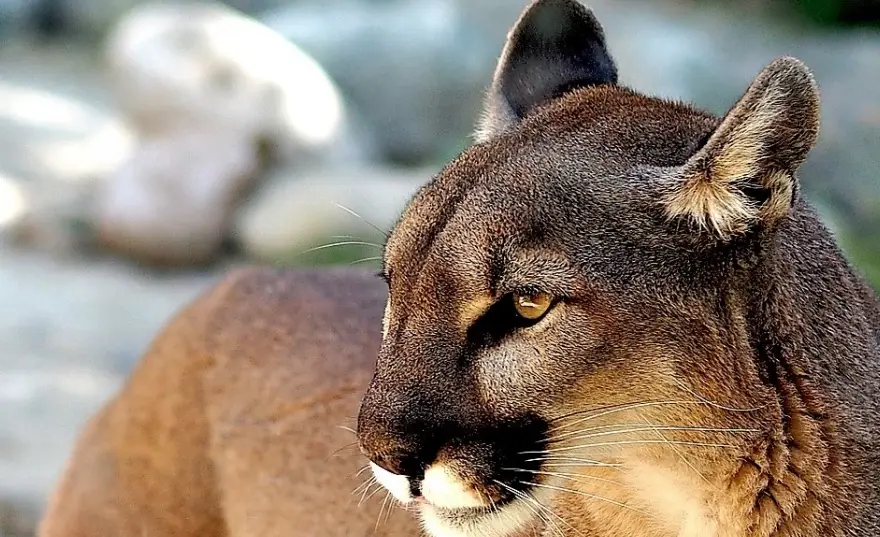
Andean Puma
- Scientific name: Puma concolor.
- Habitat: From valleys to higher mountain areas.
- Visitor chance: Extremely rare.
The puma is an apex predator and a powerful symbol in Andean thought. In practice, visitors should not expect to see one. Pumas avoid people and usually remain in remote areas far from crowded routes.
Andean Vizcacha
- Scientific name: Lagidium peruanum.
- Habitat: Rocky, sunny areas at higher elevations.
- Visitor chance: Possible in rocky sectors.
The Andean vizcacha looks like a mix between a rabbit and a squirrel. It is more active in the morning and late afternoon, when it may sunbathe or move between rocks. It is one of the more realistic wild mammal sightings for observant visitors.


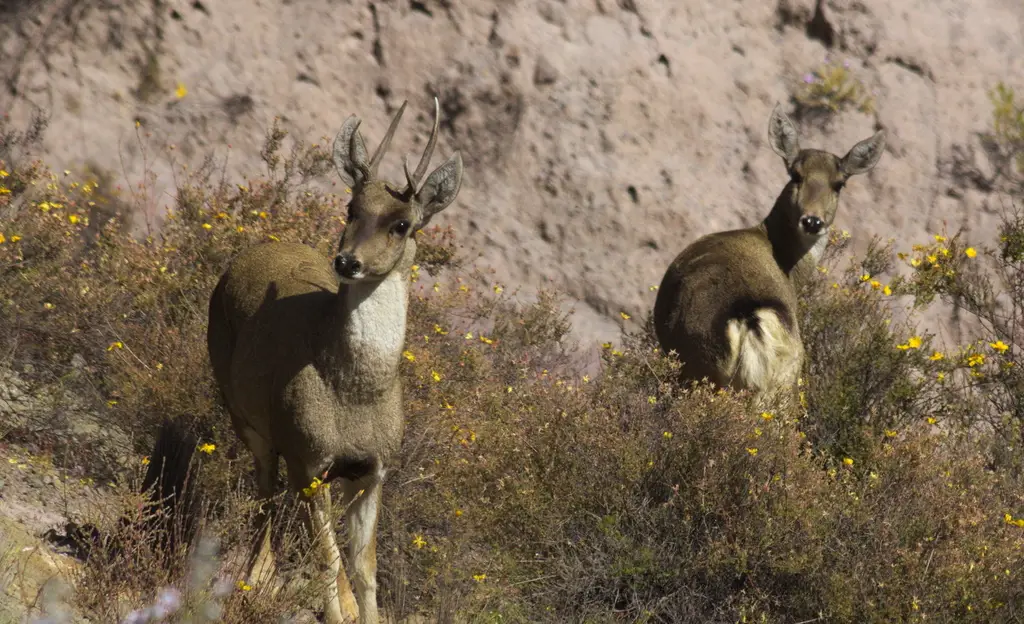
Taruca or Andean Deer
- Scientific name: Hippocamelus antisensis.
- Habitat: High slopes and open areas near forests.
- Visitor chance: Very rare.
The taruca is a shy Andean deer adapted to mountain landscapes. It is protected and difficult to observe. Treat it as part of the sanctuary’s biodiversity, not as a likely sighting during a standard Machu Picchu visit.

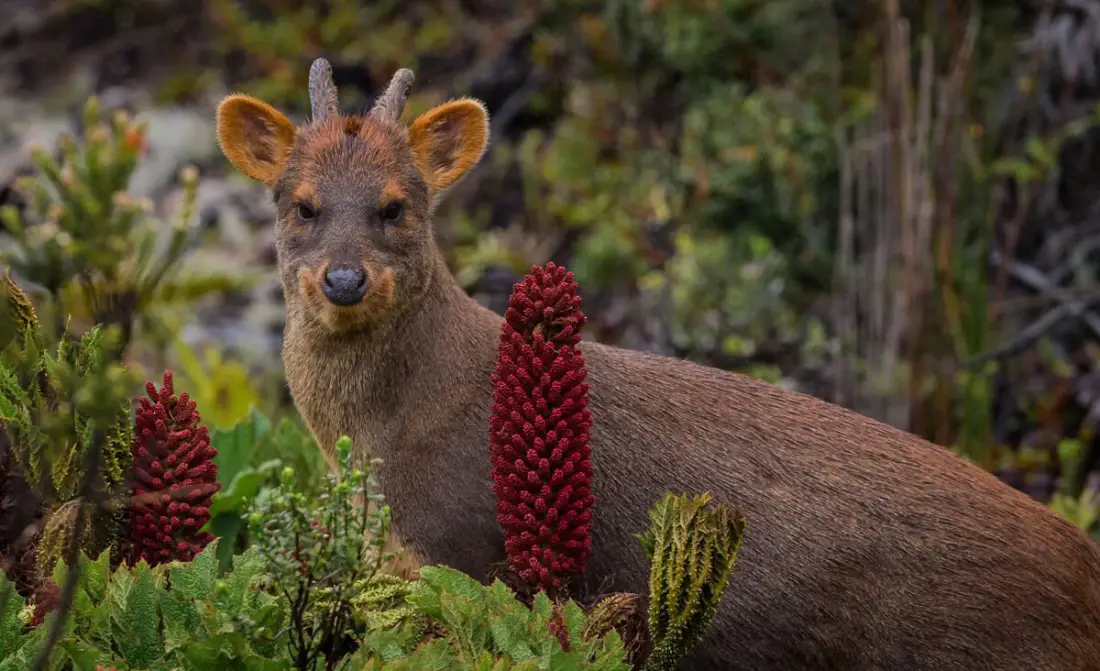
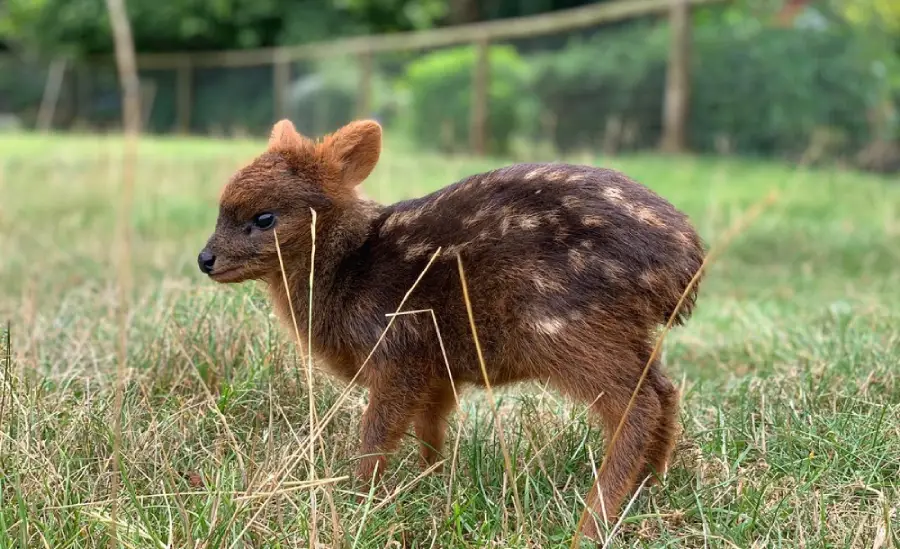
Sachacabra or Andean Pudú
- Scientific name: Pudu mephistophiles.
- Habitat: Humid, dense forests in the cloud-forest zone.
- Visitor chance: Nearly invisible.
The Andean pudú is one of the smallest deer in the world. Its size, shyness and camouflage make it extremely difficult to see. It belongs more to the hidden life of the cloud forest than to the regular visitor experience.
Featured Birds Around Machu Picchu
For many travelers, birds are the most rewarding wildlife group around Machu Picchu. You may hear them before you see them. Forest edges, flowering plants, ravines, Mandor and cloud-forest sections of the Inca Trail to Machu Picchu are better for bird activity than the busiest stone sectors.
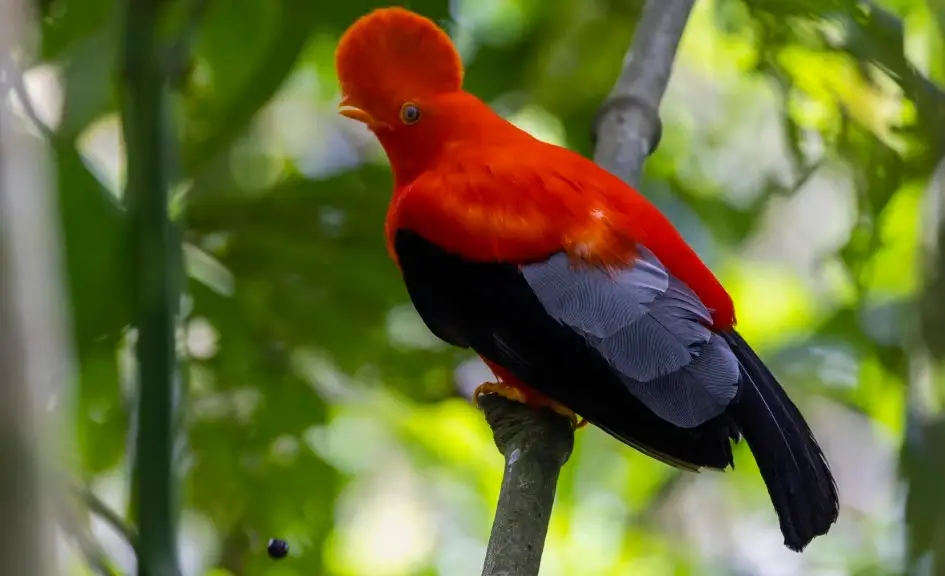
Andean Cock-of-the-rock
- Scientific name: Rupicola peruvianus.
- Habitat: Humid forests and ravines.
- Visitor chance: Possible in certain forested areas, especially outside the busiest citadel sectors.
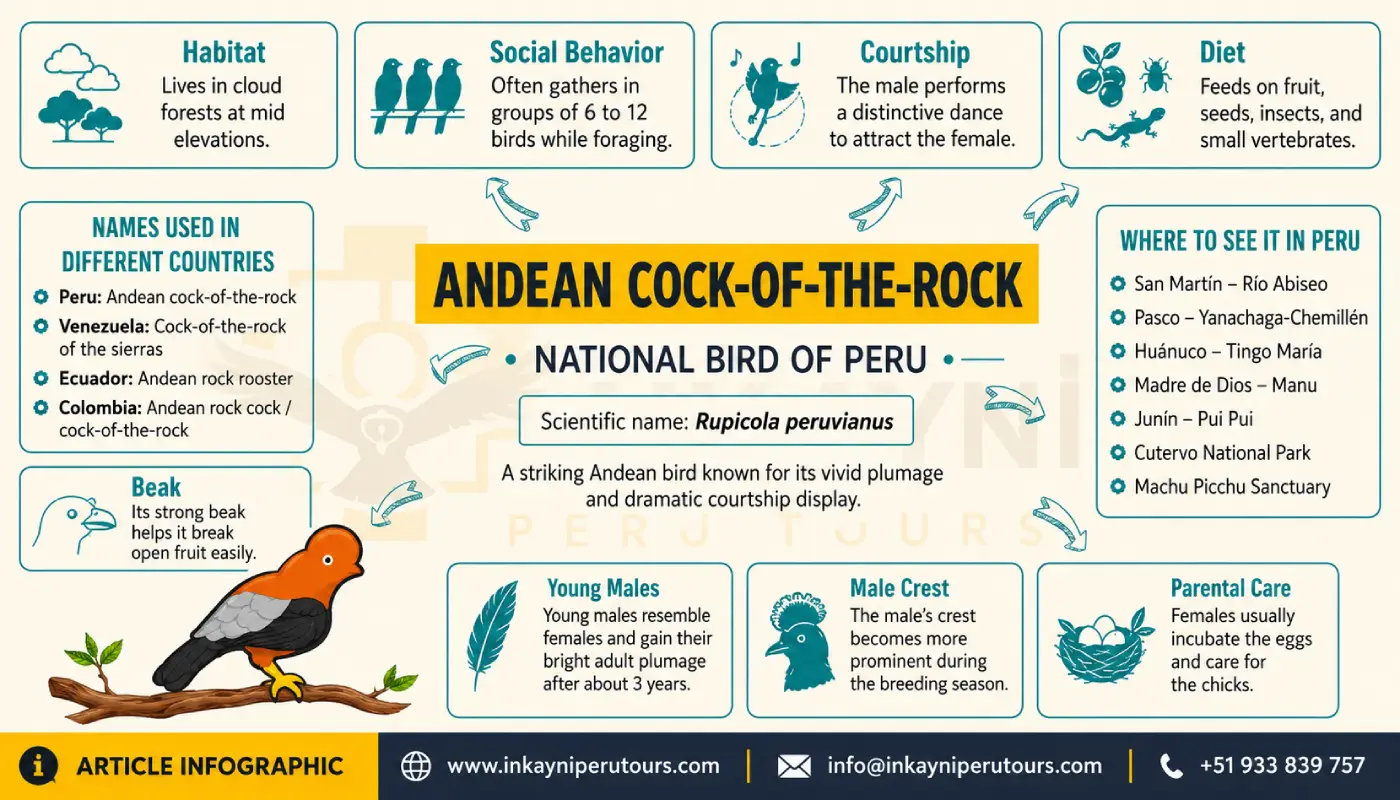
Visual overview of the Andean cock-of-the-rock, Peru’s national bird.
The Andean cock-of-the-rock is Peru’s national bird and one of the most striking species associated with cloud forests. Males are known for their intense orange plumage and courtship displays. For more context, read our guide to the Andean Cock-of-the-rock.

Andean Condor
- Scientific name: Vultur gryphus.
- Habitat: High mountains and deep valleys.
- Visitor chance: Very rare near standard routes.
The Andean condor is one of the largest flying birds in the world and a major symbol of the Andes. It may soar over high mountain areas, but visitors should not expect a guaranteed sighting at Machu Picchu.


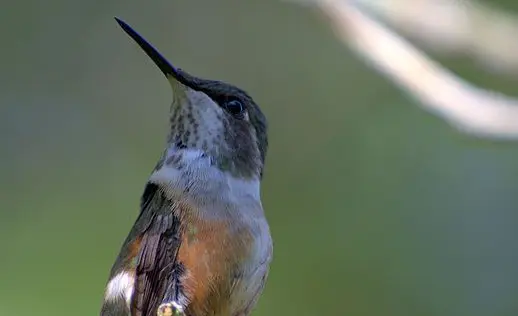
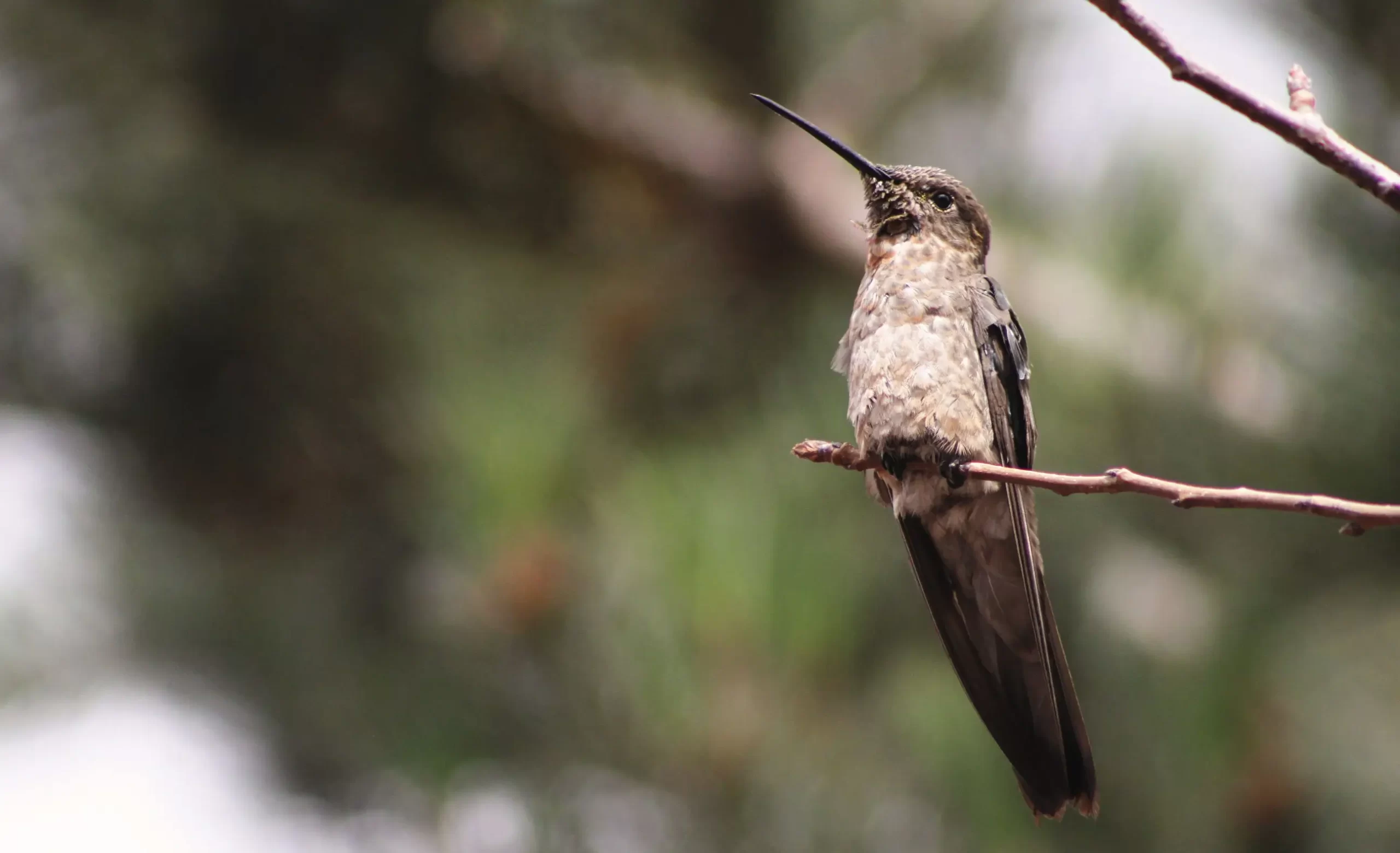
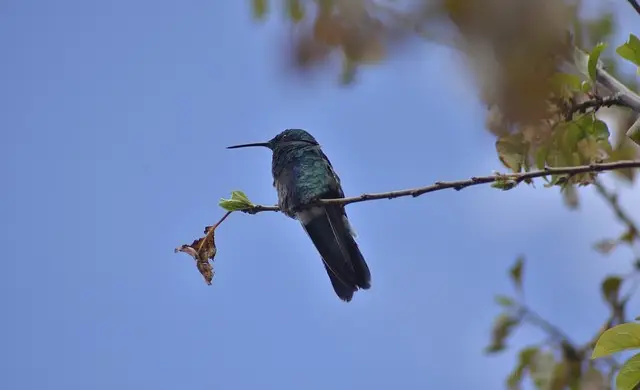
Giant Hummingbird
- Scientific name: Patagona gigas.
- Habitat: Open slopes, shrub areas and flowering zones.
- Visitor chance: Possible where flowers and shrubs are present.
The giant hummingbird is the largest hummingbird in the world. Around Machu Picchu and nearby cloud-forest environments, hummingbirds are often easier to notice near flowers, gardens and quiet edges of vegetation.
Tanagers and Toucans
- Common habitat: Humid forests and cloud-forest edges.
- Visitor chance: Possible in quieter forested areas.
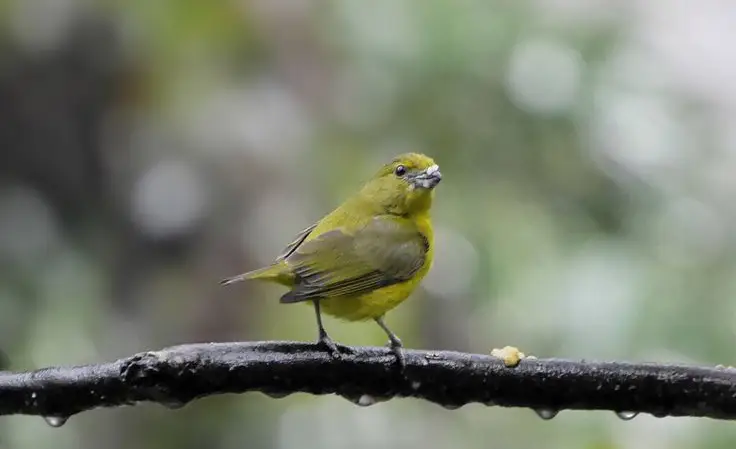
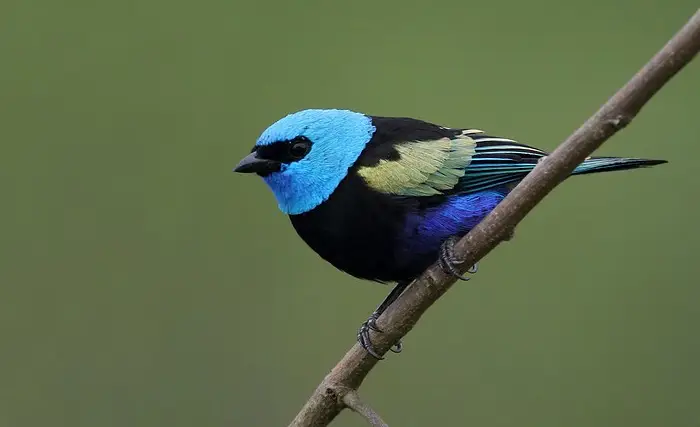
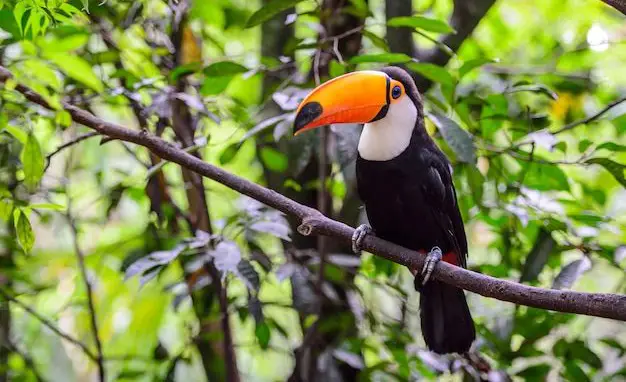
Tanagers bring flashes of blue, green, yellow and orange to the forest. Toucans and toucanets are harder to see but form part of the wider bird diversity of the sanctuary. Listen for movement and calls before trying to locate them visually.
Butterflies Around Machu Picchu
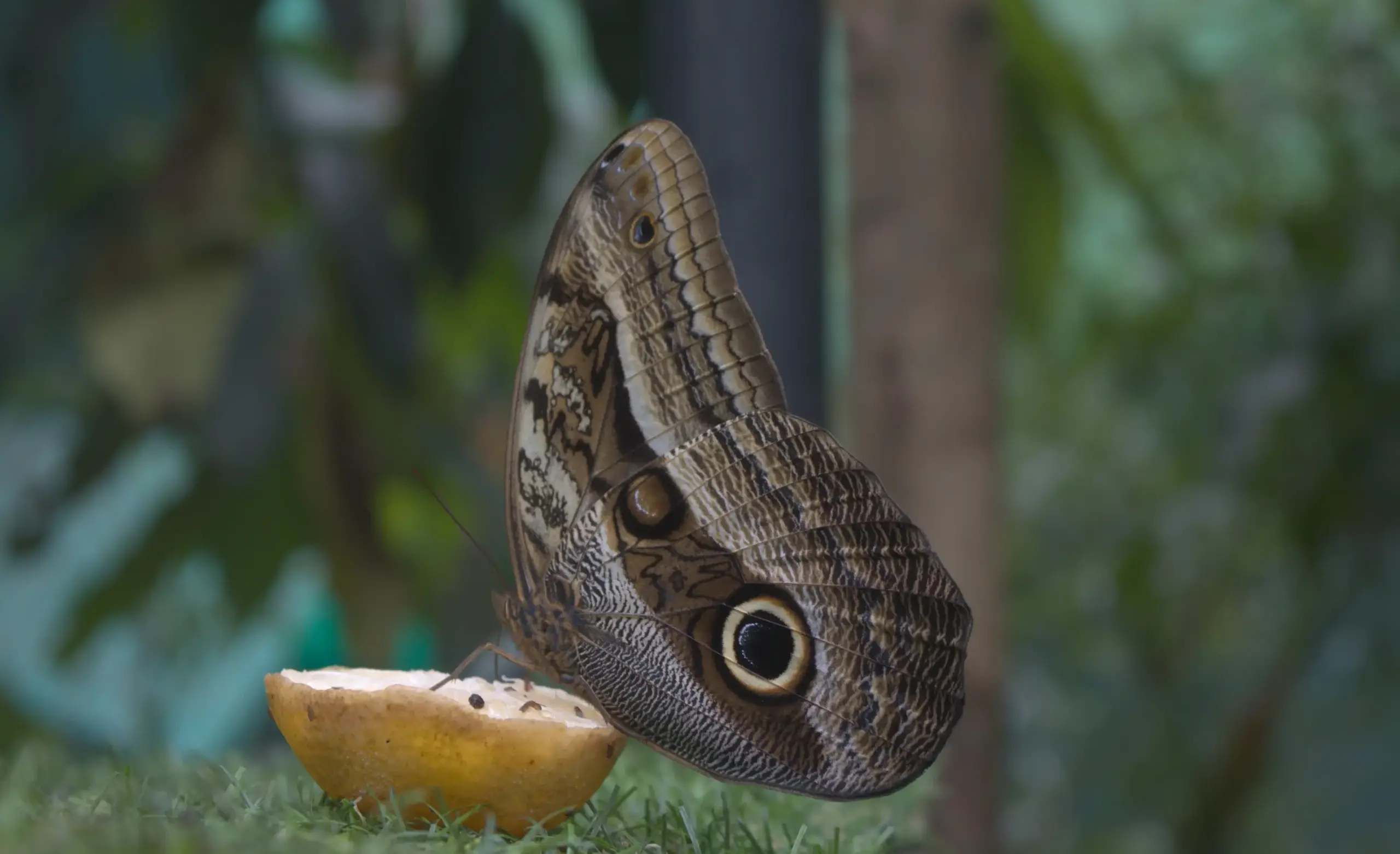
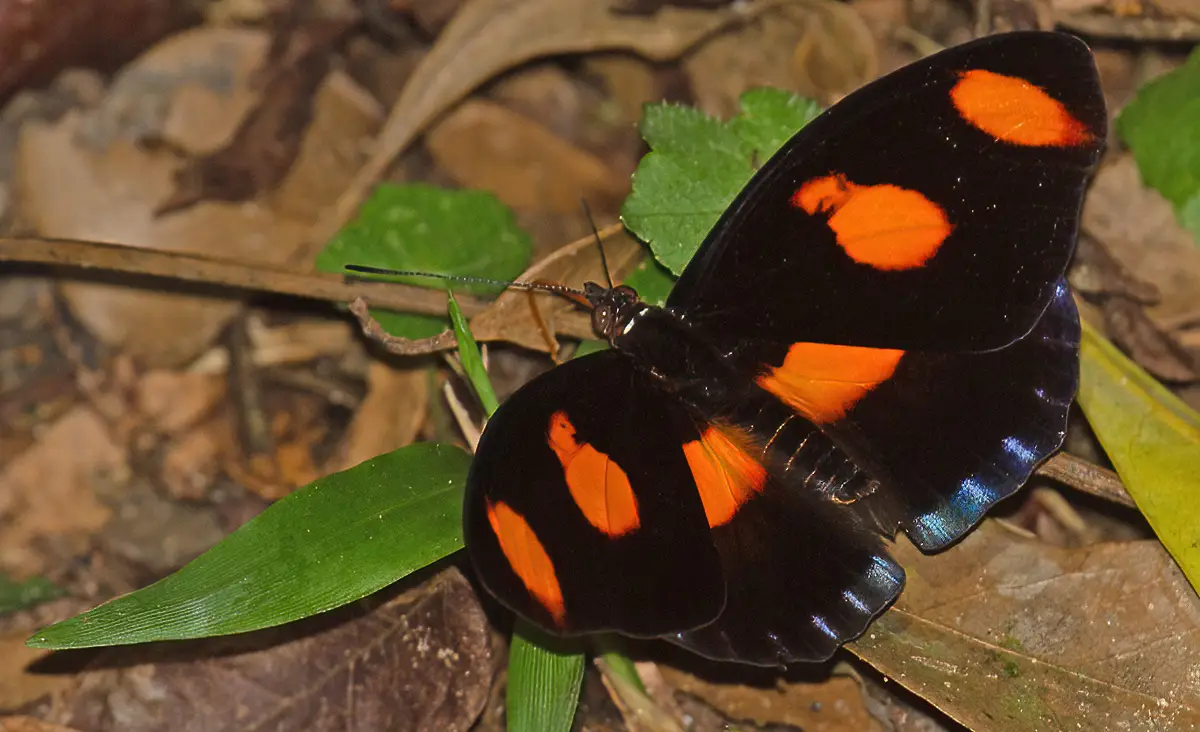
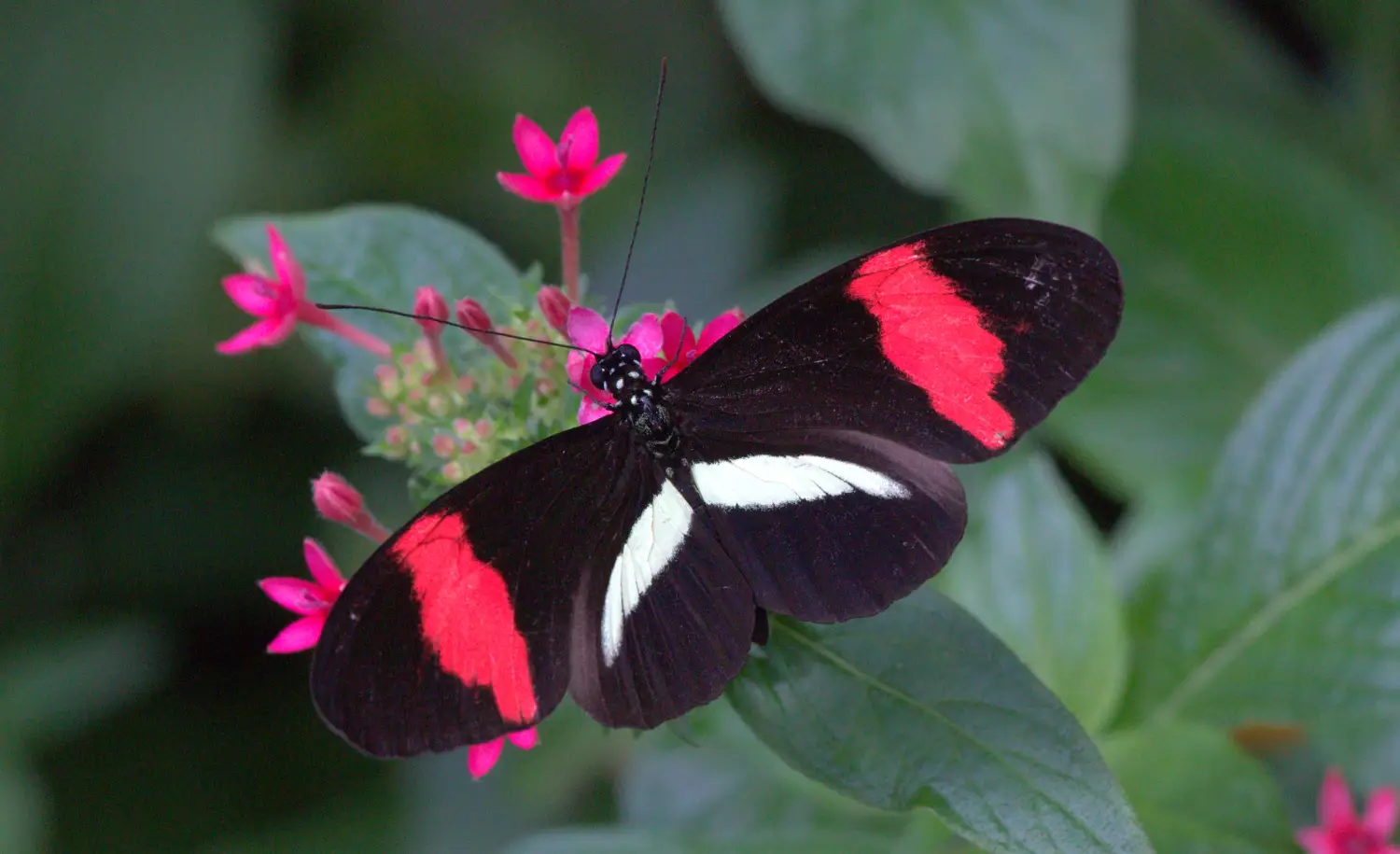
Butterflies are one of the best reasons to slow down around the cloud forest near Machu Picchu. SERNANP reported 365 butterfly species in the Historic Sanctuary after a new species was described in 2024. Visitors may notice more activity in warm, humid conditions, near flowers, fruit, river edges and forest clearings.
- Morpho species: known for metallic blue wings in many tropical forest areas.
- Heliconius species: often recognized by red, black or orange patterns.
- Cloud-forest butterflies: diverse, seasonal and easier to observe in calm, humid places.
The butterfly house near Aguas Calientes can be useful if you want to learn more in a controlled setting. For nearby activities, use our guide to what to do in Aguas Calientes.
Reptiles and Amphibians
Reptiles and amphibians are much more discreet than birds or llamas. They hide among leaves, stones, moss and humid forest floor. Some may become more active at dusk or after rain, but most visitors will not see them unless they are moving slowly in the right habitat.
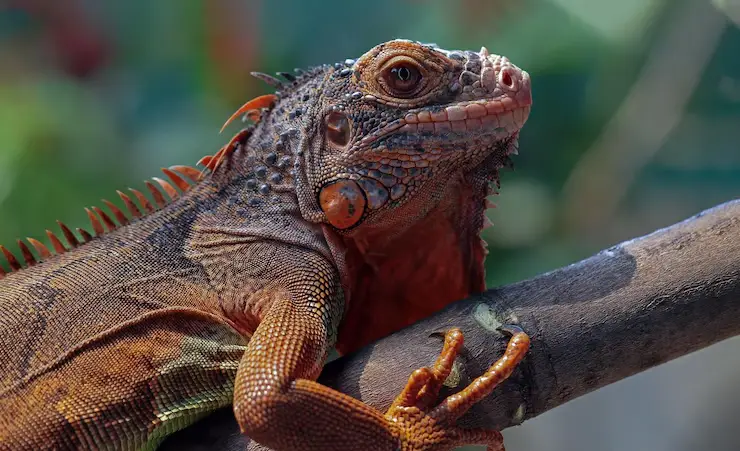
- Small lizards may appear on rocks, branches or sunny edges.
- Snakes are generally shy and should never be touched.
- Frogs and toads are linked to humidity, streams, forest floor and rainy conditions.
- Tiny Pristimantis frogs and other amphibians are especially sensitive to habitat quality.
These small animals matter because they respond quickly to pollution, habitat disturbance and climate stress. Their presence is one sign that the sanctuary is more than a postcard. It is an active ecosystem.


Where and When Are You Most Likely to Spot Wildlife?
Wildlife sightings depend on route, noise, weather, habitat and luck. A standard Machu Picchu circuit is not the same as a slow walk through Mandor or a quiet Inca Trail cloud-forest section.
| Area | What you may see | Visitor note |
| Citadel terraces | Llamas, small birds, occasional vizcachas and butterflies. | Best for casual sightings during a normal visit. |
| Inca Bridge route | Birds, butterflies and vegetation-edge activity. | Access depends on your official route. The bridge is not crossed. |
| Mandor area | Butterflies, hummingbirds, small birds, insects and forest life. | Outside the citadel, usually better for nature-focused visitors with extra time. |
| Inca Trail cloud forest | Cock-of-the-rock, tanagers, hummingbirds, orchids, insects and other forest species. | Better for wildlife than a rushed citadel-only visit. |
| Aguas Calientes river and garden areas | Birds, butterflies, insects and occasional small mammals. | Good if you sleep in town and have time before or after Machu Picchu. |
Move quietly, avoid strong perfumes, stay on marked routes and pause near flowers, fruiting trees or forest edges. Compact binoculars can make the experience much richer. If you are planning a trek, compare the Inca Trail, Salkantay Trek and Inca Jungle Trek because each route crosses different habitats.
Seasonal Sighting Comparison
| Period | Conditions | Wildlife notes |
| Dry season: May to October | Lower rainfall, firmer trails, cooler mornings and generally better visibility. | Good for birdwatching, photography, hiking and clearer observation along open routes. |
| Transition months: April and November | Mixed conditions, greener vegetation and possible showers. | A good balance if you prepare for both rain and sun. |
| Rainy season: December to March | Higher humidity, frequent rain, fog and muddy sections. | More amphibian activity and lush forest, but lower visibility and more difficult trail conditions. |
- Best time in any season: early morning or late afternoon, when wildlife activity is often higher.
- Important trail note: the classic Inca Trail normally closes in February for maintenance, while Machu Picchu itself and nearby town areas follow separate operations.
For trip timing beyond wildlife, read Machu Picchu weather by month and the best time of day to visit Machu Picchu.
Useful guides for wildlife-friendly planning
How to Observe Wildlife Responsibly
Machu Picchu is a protected cultural and natural landscape. Visitors should treat animals as part of the sanctuary, not as props for photos. Official visitor rules prohibit feeding domestic or wild animals, and visitors should avoid loud or disturbing behavior inside the llaqta.
| Do | Avoid |
| Walk quietly and stay on marked routes. | Leaving official paths to chase animals. |
| Use binoculars or zoom instead of approaching. | Touching, feeding or surrounding wildlife. |
| Pause near forest edges, flowers and clearings. | Shouting, clapping, whistling or using flash. |
| Carry out all trash. | Leaving food scraps that alter animal behavior. |
| Report unusual wildlife sightings to staff if needed. | Trying to handle snakes, frogs, insects or injured animals. |
For official visitor behavior, review the Machu Picchu code of conduct before entering the site.
A Living Sanctuary
Machu Picchu is not only a place of stone walls and terraces. It is a living sanctuary where mist, trees, insects, birds and mammals form part of the same protected landscape. The deeper lesson is simple: the ruins are easier to photograph, but the living world around them is just as important to protect.

Plan a route that matches your wildlife interest
If wildlife is important to you, choose your route and timing carefully. A standard citadel visit gives quick sightings, while the Inca Trail, Mandor and quieter cloud-forest areas offer better chances to notice birds, butterflies and forest life.
For help combining Machu Picchu with a trek, train schedule, Aguas Calientes night or nature-focused stop, contact Inkayni Peru Tours.
Frequently Asked Questions About Machu Picchu Animals
What animals can you see in Machu Picchu?
How many animal species live in the Historic Sanctuary of Machupicchu?
Can I see llamas at Machu Picchu?
Can I see a spectacled bear in Machu Picchu?
Are there pumas in Machu Picchu?
Where is the best place to see birds near Machu Picchu?
When is the best time to see wildlife?
Can I feed animals in Machu Picchu?
Are there dangerous animals in Machu Picchu?
Do I need binoculars for wildlife observation?
Can kids enjoy wildlife at Machu Picchu?
Is Mandor good for wildlife near Machu Picchu?
Escrito por


Shared:



If you liked this article and the information you found, give us 5 stars!
 (2 votos, promedio: 5.00 de 5)
 Loading...