


Llamas in Machu Picchu
Yes, llamas are regularly seen in Machu Picchu, especially around the agricultural terraces, grassy open sectors, and some panoramic areas. They are domesticated Andean camelids and have become part of the site’s visual identity, but the encounter should stay respectful: do not feed them, touch them, crowd them, or block their path for a photo. If your route includes open terrace sectors, you have a real chance of seeing them, although exact sightings always depend on animal movement and your official circuit.
Table of Contents
Machu Picchu is known for stone terraces, mountain silhouettes and Inca architecture, but the llamas moving calmly through the site have also become part of its visual identity. They graze on slopes, cross open paths and often appear in the same frame as Huayna Picchu, the agricultural terraces and the cloud forest around the sanctuary.
Seeing llamas in Machu Picchu can be memorable, but the experience should stay respectful. These animals live inside a protected heritage site with official routes, visitor rules and conservation needs. This guide explains what llamas are, where you are most likely to see them, how to photograph them without disturbing them.
| Lama glamallama species | Terracescommon sighting areas | Morningcooler grazing time | No feedingofficial visitor rule |
WORLD WONDER IN THE ANDESMachu Picchu
Discover the history, landscapes, and essential tips for visiting this world wonder.
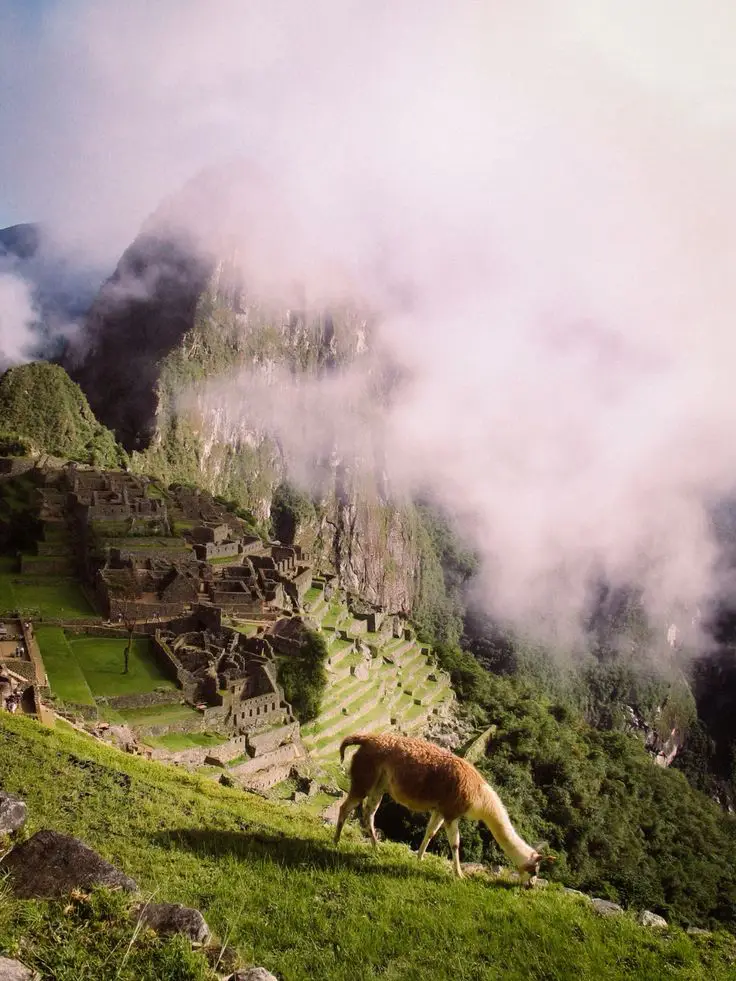
A llama grazing quietly among the terraces of Machu Picchu. Photo by: Amritakumar.

Llamas often appear in open grassy areas around the archaeological site. Photo by: Marcos.
What Is a Llama?
The llama (Lama glama) is a domesticated South American camelid related to alpacas, guanacos and vicuñas. It is the largest of these Andean camelids and has long been used in highland communities for carrying loads, producing fiber, and supporting daily life in mountain environments.
In the Andes, llamas are both practical and symbolic animals. They helped connect communities across high-altitude terrain, supplied wool and meat, and appeared in ritual life linked to mountains, fertility, exchange and the land. Their presence at Machu Picchu connects the visitor experience with a deeper Andean relationship between people, animals and landscape.
Did you know?
In Andean sky observation, some constellations were read through dark shapes in the Milky Way rather than only through bright stars. One of these dark-cloud figures was associated with a llama.
Are There Really Llamas in Machu Picchu?
Yes. Llamas are regularly seen inside Machu Picchu, especially in grassy and open sectors. There is no public official census that gives a fixed number of animals for visitors, so figures such as “30 to 50 llamas” should be treated only as rough visitor estimates.
The practical point is simpler: if your route passes through open terraces or panoramic areas, you have a real chance of seeing them. If your route is more limited or focused on lower sectors, the sighting depends more on where the animals happen to be that day.
Where Can You See Llamas in Machu Picchu?
Llamas move freely within managed areas of the site, so no exact location is guaranteed. Still, several areas are more likely than others.
| Area | Why llamas appear there | Visitor note |
| Agricultural terraces | Open grass, visibility and grazing space. | One of the most common places to see llamas in Machu Picchu. |
| Guardian House area | Open panoramic zone and grassy surroundings. | Access depends on your official route. Do not assume every ticket includes this viewpoint. |
| Lower terraces | Grassy slopes and quieter movement areas. | Good for observing llamas without crowding them. |
| Paths near open sectors | Llamas may cross between grazing areas. | Let them pass. Do not block the path for a photo. |
The classic photo with a llama and Machu Picchu in the background usually depends on route access, timing and animal movement. Before planning your photo expectations, review what to do in Machu Picchu and confirm which viewpoints your ticket allows.
Why Are Llamas Important at Machu Picchu?

A llama walking through one of the open areas of Machu Picchu. Photo by: Shutterbug.
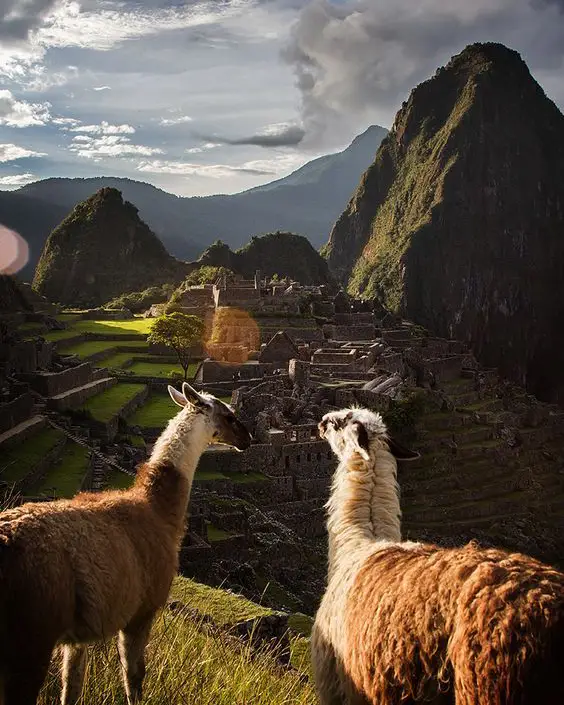
Llamas add movement and life to the archaeological landscape. Photo by: Pancat Mycaeba.
Llamas are part of the modern Machu Picchu experience, but their meaning reaches beyond tourism. In Inca and wider Andean society, camelids carried goods, provided fiber and meat, and held ritual importance. Whether llamas lived permanently inside the citadel in Inca times is uncertain, so it is better not to present that as a fixed historical fact.
Today, their presence reinforces Machu Picchu as a living Andean landscape. They also graze on grassy areas, which connects them to the day-to-day management of open vegetation inside the sanctuary. That presence requires careful visitor behavior because the site is fragile, crowded and highly regulated.
Responsible travel note:
A llama inside Machu Picchu is not an accessory for a photo. It is an animal moving through a protected heritage landscape. Observe calmly, keep space and let the animal choose its path.
How to Behave Around Llamas in Machu Picchu
Llamas at Machu Picchu are used to people, but they are not pets. The official Machu Picchu code of conduct prohibits feeding domestic or wild animals and also prohibits loud or disturbing behavior inside the site. Follow the rules and use common sense.
| Do | Avoid |
| Keep a respectful distance. | Touching, hugging or grabbing a llama for a photo. |
| Let the animal walk freely. | Blocking its path or surrounding it with a group. |
| Take photos quietly from the side. | Flash, shouting, whistling or sudden movements. |
| Follow your official circuit. | Leaving marked areas to chase an animal. |
| Observe body language. | Ignoring pinned-back ears, head movement or signs of discomfort. |
| Carry out any trash. | Feeding llamas or leaving food scraps in the site. |
For official visitor rules, review the Machu Picchu code of conduct before entering the llaqta.
Warning:
If a llama pins its ears back, tilts its head, moves away or seems tense, give it space immediately. Spitting is usually a defensive reaction, not a joke or a show.
Best Time of Day to See and Photograph Llamas
No time guarantees a llama encounter, but cooler hours often work better. Morning light can be softer, the animals may be more active, and the terraces can feel calmer depending on the route and season. Afternoon light can also be good, especially when many early visitors have already left.
| Time of day | What to expect | Photo note |
| Morning: 6:00–9:00 a.m. | Cooler air, softer light and possible grazing activity. | Good for natural color, mist and softer shadows. |
| Midday: 10:00 a.m.–2:00 p.m. | Stronger sun and harsher contrast. Some animals may rest or move to quieter areas. | Avoid crowding animals for a forced photo. |
| Afternoon: 2:00–4:00 p.m. | Light can become softer again, but visitor flow depends on date and demand. | Can feel calmer, but it is not guaranteed to be empty. |
If your main goal is photography, also read our guide to the best time of day to visit Machu Picchu. Weather can change the light quickly, so check Machu Picchu weather by month before planning around photos.
How to Photograph Llamas Without Disturbing Them

A respectful distance helps you capture the setting without stressing the animal. Photo by: Travel Photography.
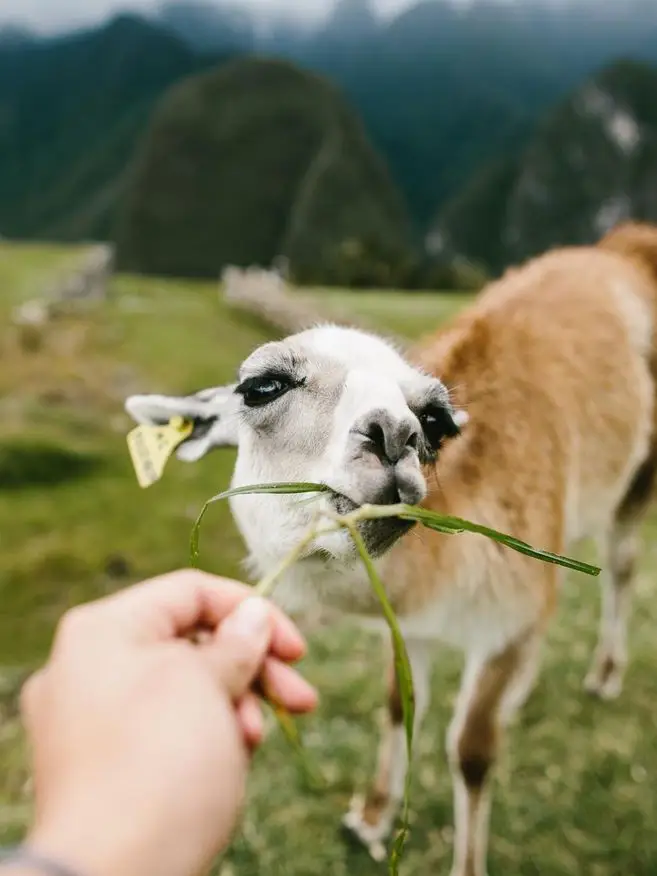
Young animals need even more space and patience. Photo by: Peru Destinations.
- Use a wide angle when the llama is close and the ruins are behind it.
- Place the animal to one side of the frame if you want to show the terraces and mountains.
- Stay still and wait instead of following the animal.
- Do not use flash.
- Do not block the trail or ask others to surround the animal.
- Never feed a llama to make it look at the camera.
Good llama photos usually come from patience, not pressure. A calm grazing moment on the terraces is better than a forced selfie that makes the animal uncomfortable.
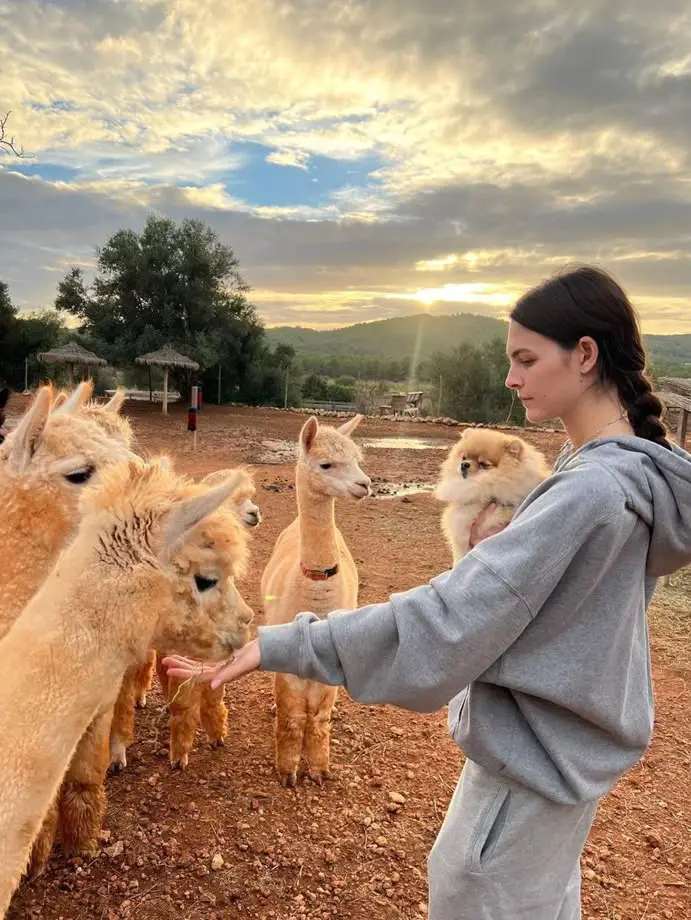
Close encounters should always respect the animal’s space. Photo by: Gabriella.
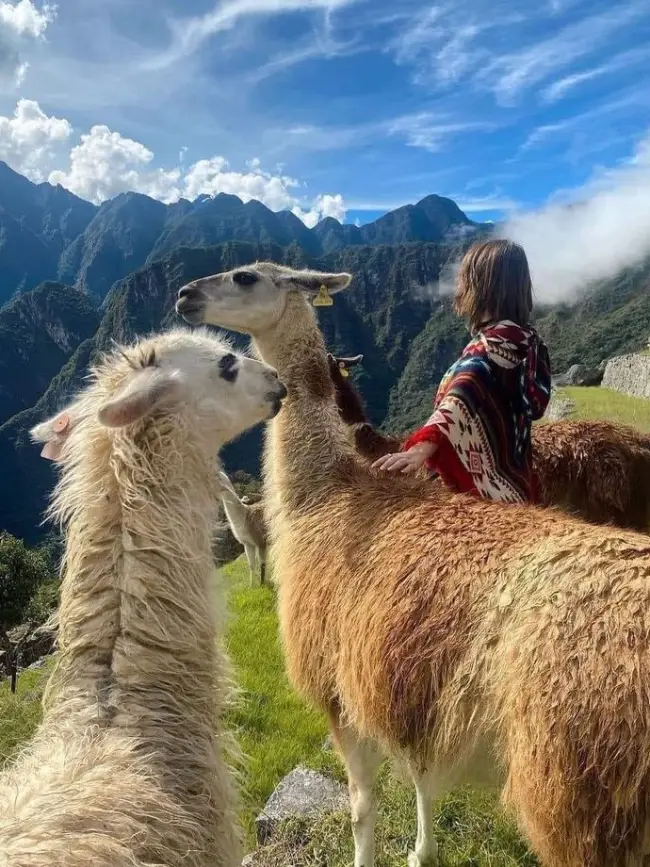
Do not touch or crowd llamas for a photo. Photo by: Pinterest.
Llamas and the Andean Worldview

Llamas remain closely linked to Andean communities and mountain life. Photo by: Inca Trail.

A quiet scene that reflects the bond between animals and landscape. Photo by: Solitude.
Llamas have been long-time partners of Andean peoples. Their wool helped protect against cold, their strength helped move goods across difficult terrain, and their presence carried symbolic value in rituals connected with Pachamama, Inti and the mountain world.
The Inca road network, known as the Qhapaq Ñan, connected highlands, valleys and sacred places. Llamas were essential pack animals in that mountain system. This is one reason Andean routes such as the Inca Trail to Machu Picchu still feel tied to the broader world of camelids, high passes, community movement and ritual geography.
Llamas, Alpacas, Vicuñas and Guanacos: What Is the Difference?
Travelers often confuse Andean camelids. This quick guide helps you identify them without turning the article into a biology lesson.
| Camelid | How to identify it | Status | Common use or trait |
| Llama | Large body, long face, banana-shaped ears. | Domesticated. | Traditionally used as a pack animal and for fiber. |
| Alpaca | Smaller, softer wool, rounder face, shorter ears. | Domesticated. | Bred mainly for fine fiber. |
| Vicuña | Small, slender, delicate face, light brown coat. | Wild. | Known for extremely fine fiber. |
| Guanaco | Larger wild camelid, reddish-brown coat, agile body. | Wild. | Ranges across South America, especially open highland and southern landscapes. |

Llamas are larger than alpacas and have long, curved ears. Photo by: El Financiero.

Alpacas are smaller and are better known for soft fiber. Photo by: Goodheart Animal Sanctuaries.
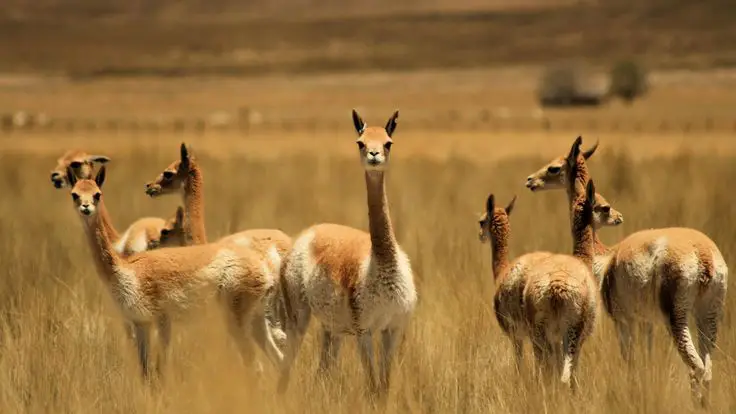
Vicuñas are wild, slender camelids from high Andean landscapes. Photo by: Pinterest.
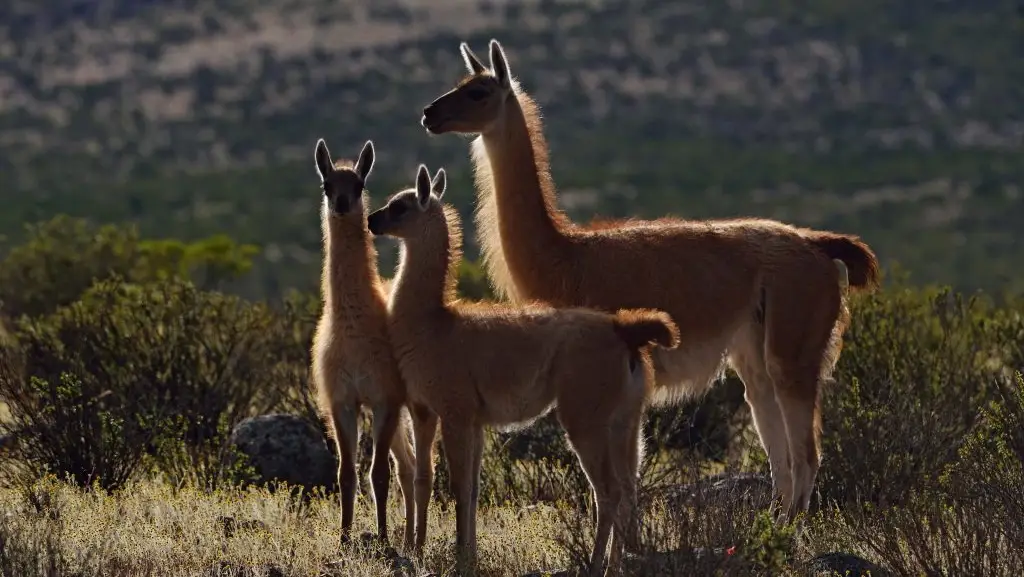
Guanacos are wild camelids with a more athletic body and reddish-brown coat. Photo by: Biodiversity.
Can You See Alpacas in Machu Picchu?
In practice, the animals travelers usually see inside Machu Picchu are llamas, not alpacas. Alpacas are more commonly associated with highland communities, textile centers, farms and other parts of Cusco and the Sacred Valley.
If you want to learn the differences between llamas, alpacas, vicuñas and guanacos in a more controlled setting, interpretation centers and community visits in the Sacred Valley are better options than the archaeological circuits of Machu Picchu.
Guides to plan a responsible Machu Picchu visit
Llamas in Other Famous Cusco Spots
Machu Picchu is not the only place where travelers may see llamas or alpacas in the Cusco region. These sightings vary by season, route, local communities and visitor movement, but the following places are common reference points.
Sacsayhuamán
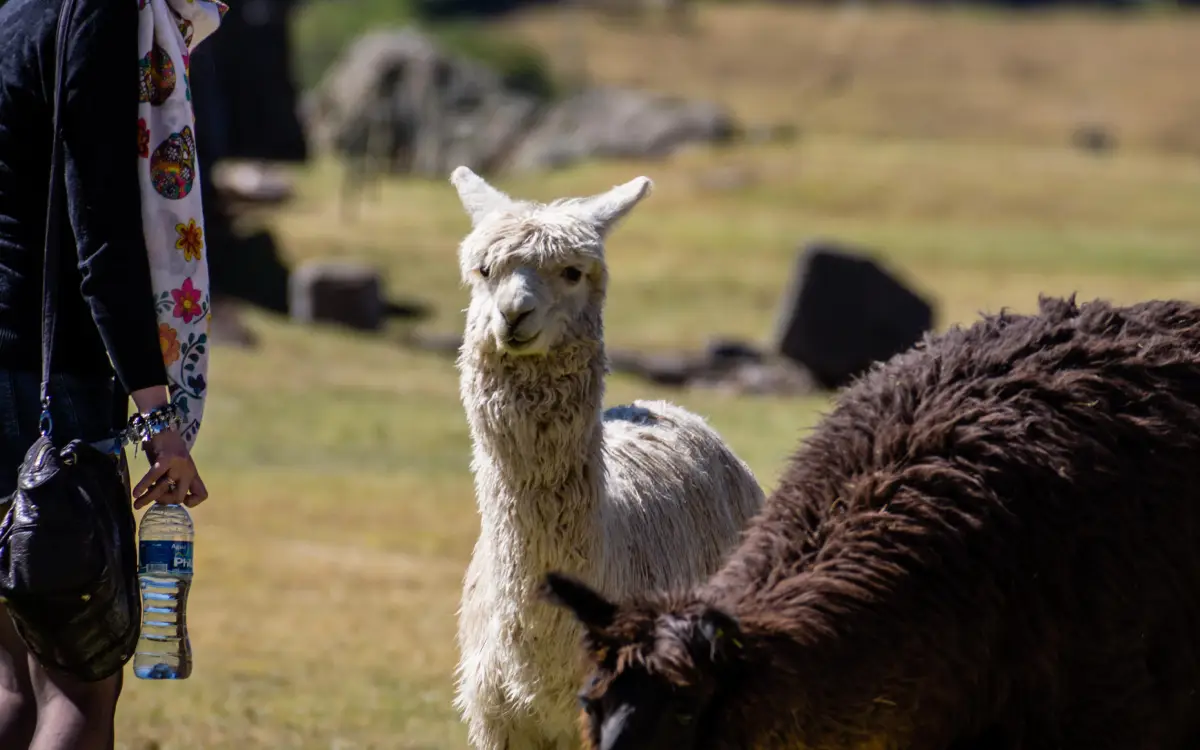
Llamas and alpacas can often be seen near open areas around Sacsayhuaman. Photo by: Oscar R. Davi.
Above Cusco, the open areas around Sacsayhuamán and nearby sites can offer easier camelid photos than Machu Picchu because the terrain is wider and the visit is less route-restricted. For a broader city plan, see our guide to tourist attractions in Cusco.
Sacred Valley

The Sacred Valley connects camelids with farming, textiles and traditional communities. Photo by: Flickr.
The Sacred Valley is one of the best areas for seeing camelids in connection with textiles, farming landscapes and traditional villages. Pisac, Chinchero, Ollantaytambo and nearby communities can all give more context than a quick photo inside Machu Picchu.
Rainbow Mountain and High Andean Routes

High Andean routes often connect llama sightings with local communities and mountain landscapes. Photo by: Alessandra B.
On routes such as Rainbow Mountain, sightings often depend on local communities, grazing areas and trekking corridors. Llamas may also appear around sections of the Salkantay Trek or traditional highland routes linked to Cusco.
Awanakancha and Camelid Interpretation Centers

Camelid interpretation centers are useful for learning differences between llamas, alpacas, vicuñas and guanacos. Photo by: Sophie Frederickson.
Interpretation centers on the Cusco–Pisac road are useful if you want to understand camelid species, weaving traditions and fiber differences before visiting the Sacred Valley or Machu Picchu.

A calm moment near the terraces of Machu Picchu. Photo by: Pinterest.

A colorful detail from the Andean camelid world. Photo by: Pinterest.
A Responsible Encounter With Machu Picchu Llamas
Llamas in Machu Picchu help visitors feel that the site is still alive. They move between grass, stone, mist and mountain edges with a calm that contrasts with the crowd. That is exactly why the encounter should be quiet and respectful.
At Inkayni Peru Tours, we encourage travelers to treat Machu Picchu as a protected cultural and natural landscape. Whether you arrive by train, by the bus to Machu Picchu, or after a trek through the Andes, you are entering a place where animals, visitors and archaeological spaces must coexist carefully.
Frequently Asked Questions About Machu Picchu Animals
What animals are exclusive to Machu Picchu?
Can I see llamas at Machu Picchu?
Do I need special equipment to observe animals?
Are there specialized wildlife observation tours?
Can I encounter animals during my visit to the ruins?
How safe are encounters with wild animals?
What is the best month to see birds or butterflies?
Are there dangerous animals in the area?
Is it a good idea to visit Machu Picchu with kids if there are animals?
Do I need binoculars or a special camera?
What time is best for seeing active animals?
What should I do if I encounter a bear or puma?
Where can I see the cock-of-the-rock in the wild?
Are there venomous animals?
Is feeding animals allowed if they approach?
What butterflies can be seen at Mandor or the Inca Trail?
Are the animals protected by law?
Are there conservation centers near the area?
Can I see wildlife in Aguas Calientes too?
Escrito por


Shared:


If you liked this article and the information you found, give us 5 stars!
 (2 votos, promedio: 5.00 de 5)
 Loading...