


Is Inca Trail Dangerous?
The Inca Trail, in practice, is not a dangerous hike if you do it with an authorized operator and arrive with basic preparation. It is a regulated route with checkpoints, permits, and daily controls, so the real problems are usually not dramatic accidents but very predictable things: altitude discomfort, slips on wet stone, fatigue from poor pacing, and weather that changes fast.
Most of that is reduced by acclimatizing 2 to 3 days before the trek, using boots with good grip, walking conservatively on descents, and carrying a waterproof layer and warm clothing where you can reach them quickly.
Table of Contents
The Inca Trail is NOT dangerous when you prepare properly. It’s a regulated trek, with access only through authorized operators and limited quotas of 500 people daily. Of 60,000 annual trekkers, fewer than 0.1% experience serious incidents.
| SafeWith preparation | 13,828 ftHighest point | 2–3 daysAcclimatization | FebTrail closed |
What do you need to know? Three things: how to acclimatize to avoid altitude sickness, when to go to avoid heavy rains and closure periods, and how to identify reliable operators. Before booking, it also helps to compare permit availability, the classic 4-day route, and the lighter Short Inca Trail.
Safety on the Inca Trail also depends on choosing the right route for your body and timing. The Short Inca Trail is the least demanding option for many travelers, the Classic 4 Day Inca Trail remains the standard benchmark, and alternatives such as the Salkantay Trek, the Lares Trek, or the Choquequirao Hike only make sense once you compare altitude, pace, and how much risk you are really prepared to manage on the trail.
What is the Inca Trail?
The Inca Trail to Machu Picchu is one of the most beautiful and best-preserved sections of what was the extensive road network known as the Inca Roads or Qhapac Ñan. It once connected the main Inca cities or llaqtas of the Tahuantinsuyo or Inca Empire. The Inca Trail to Machu Picchu consists of an impressive series of stone structures, bridges, and tunnels that adapt to the mountainous terrain of the Andes and traverse various Inca sites.
| Feature | Detail |
| Total distance | 27 miles / 43 km (classic 4-day route) |
| Maximum altitude | 13,779 feet / 4,200 m (Dead Woman’s Pass) |
| Typical duration | 4 days / 3 nights |
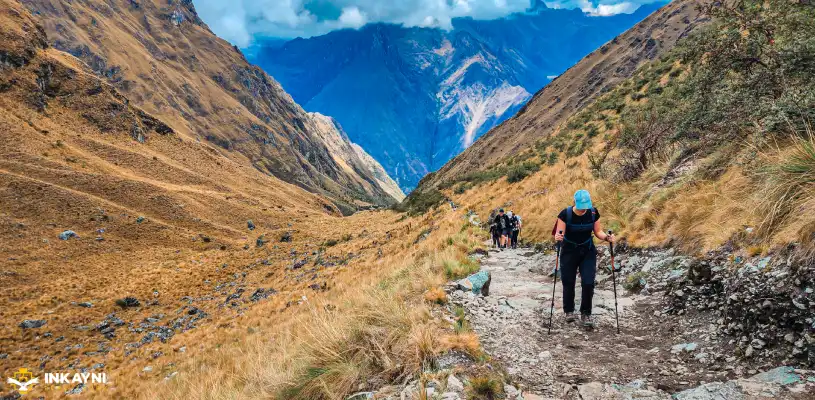
Tourists hiking the Inca Trail
Important note:
The Inca Trail requires an authorized operator, closes every February, and should be booked at least 6 months in advance due to limited permits.
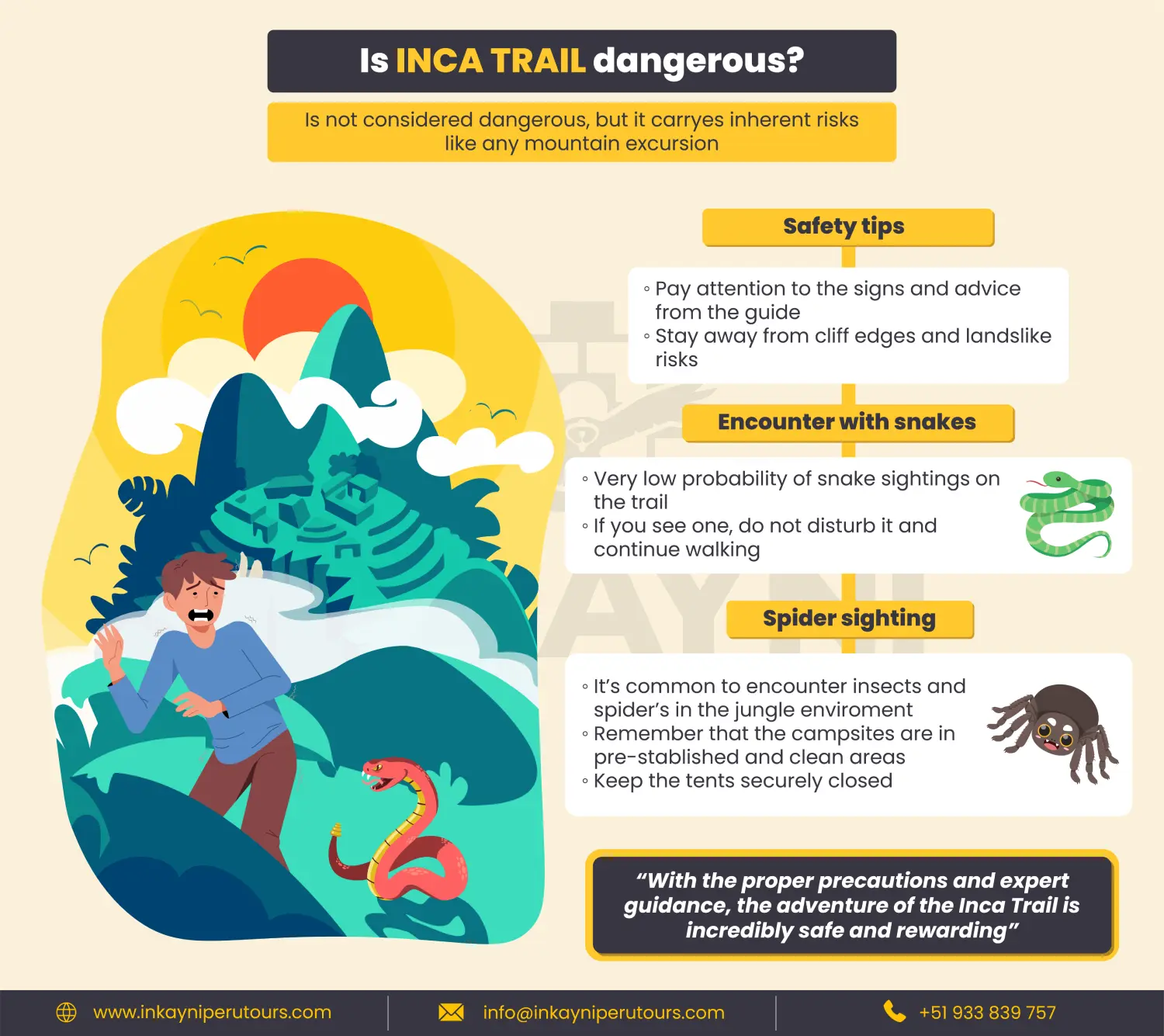
Is Inca Trail dangerous? (infographic)
Is Inca Trail Dangerous?
Under normal conditions, the Inca Trail is a safe route if you come with acclimatization, correct equipment, and enter with an authorized operator. What usually ruins the experience aren’t “serious accidents,” but typical problems: altitude discomfort, poorly managed fatigue, slips on wet stones, and rapidly changing weather.
To put it plainly: if you control these 4 variables, you’re good. If you ignore them, the Inca Trail will make you pay.
| Risk | How Common? | Key Prevention |
| Altitude sickness | Common if you don’t acclimatize | 2–3 days in Cusco before trek |
| Irregular terrain | Occasional minor discomfort/injuries | Supportive boots + trekking poles |
| Variable weather | Rains Nov–Mar | Prefer dry season (Apr–Oct) |
| Landslides | Rare (more likely with rains) | February is closed (maintenance) |
1. Altitude Sickness or Soroche
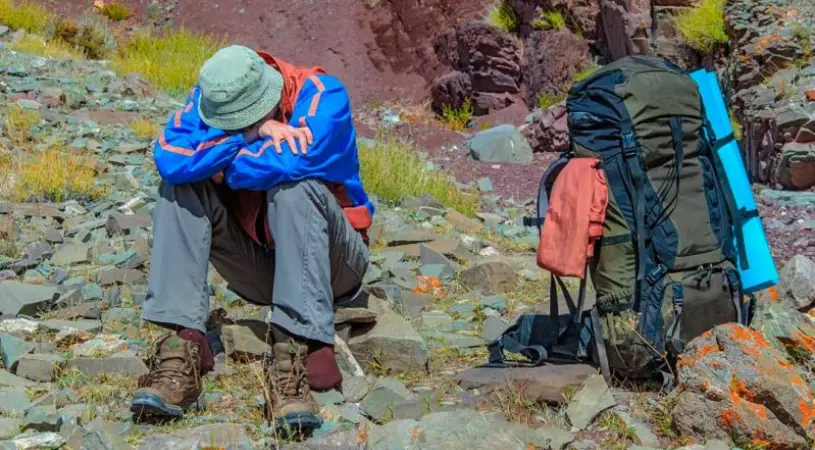
Altitude sickness is the difficulty the body experiences adapting to decreased oxygen at high elevations. On the Inca Trail, altitude varies along the route and reaches up to 13,828 feet / 4,215 m at Dead Woman’s Pass (Warmiwañusca).
- Common symptoms: headache, nausea, fatigue, dizziness, and shortness of breath. Each person reacts differently to altitude.
- How to prevent it: Acclimatize gradually by spending 2–3 days in Cusco before the trek, hydrate (approximately 2–3 liters/day depending on your body), avoid alcohol, eat light, and consider coca tea. If symptoms are severe, notify your guide immediately (this does not replace medical advice).
2. Irregular Terrain and Associated Injuries
The terrain during the Inca Trail is highly varied due to the rugged geography of the Andes. Throughout the journey, travelers face steep paths, narrow trails, rocky sections, steep descents, and Inca stone staircases.
This terrain can cause minor discomfort or incidents such as:
- Dehydration and fatigue: The effort of the journey can take its toll if you don’t hydrate properly. Drinking enough water improves performance.
- Bruises and scrapes: Stone sections can cause stumbles. Trekking poles with rubber tips help stabilize.
- Muscle discomfort: Cramps or strains can appear if you rush your pace. Walk at your own speed and rest when appropriate.
- Sprains: Poor footing can cause minor sprains. Guides typically carry first aid kits for initial care.
Prevention: Trekking boots with ankle support and non-slip soles, trekking poles, and conservative pace on descents. Most of these problems are greatly reduced with proper equipment and judgment.

Tourists carefully descending stone steps on the Inca Trail
3. Weather Conditions
Weather in the Cusco region and on the Inca Trail can be unpredictable, especially during the rainy season (November to March). Precipitation can make the trail slippery and require more care.
- Dry season (April–October): More stable days and firmer trails; cold nights.
- Rainy season (November–March): More frequent rains, slippery sections, and more attention needed while walking.
Important note:
The Inca Trail remains closed in February for maintenance (and it coincides with peak rainfall in the area).
What to bring: waterproof poncho, layered clothing, and be ready for rapid temperature changes.

Tourists at the Sun Gate with cloudy skies
4. Landslides During Rainy Season
During rainy season, landslides or rockfalls can occur in mountain areas. As a precaution, authorities close the Inca Trail during February for maintenance and safety.
For a more stable experience, avoid February (no access) and, if traveling in January or March, confirm with your operator the route status and forecast before starting.
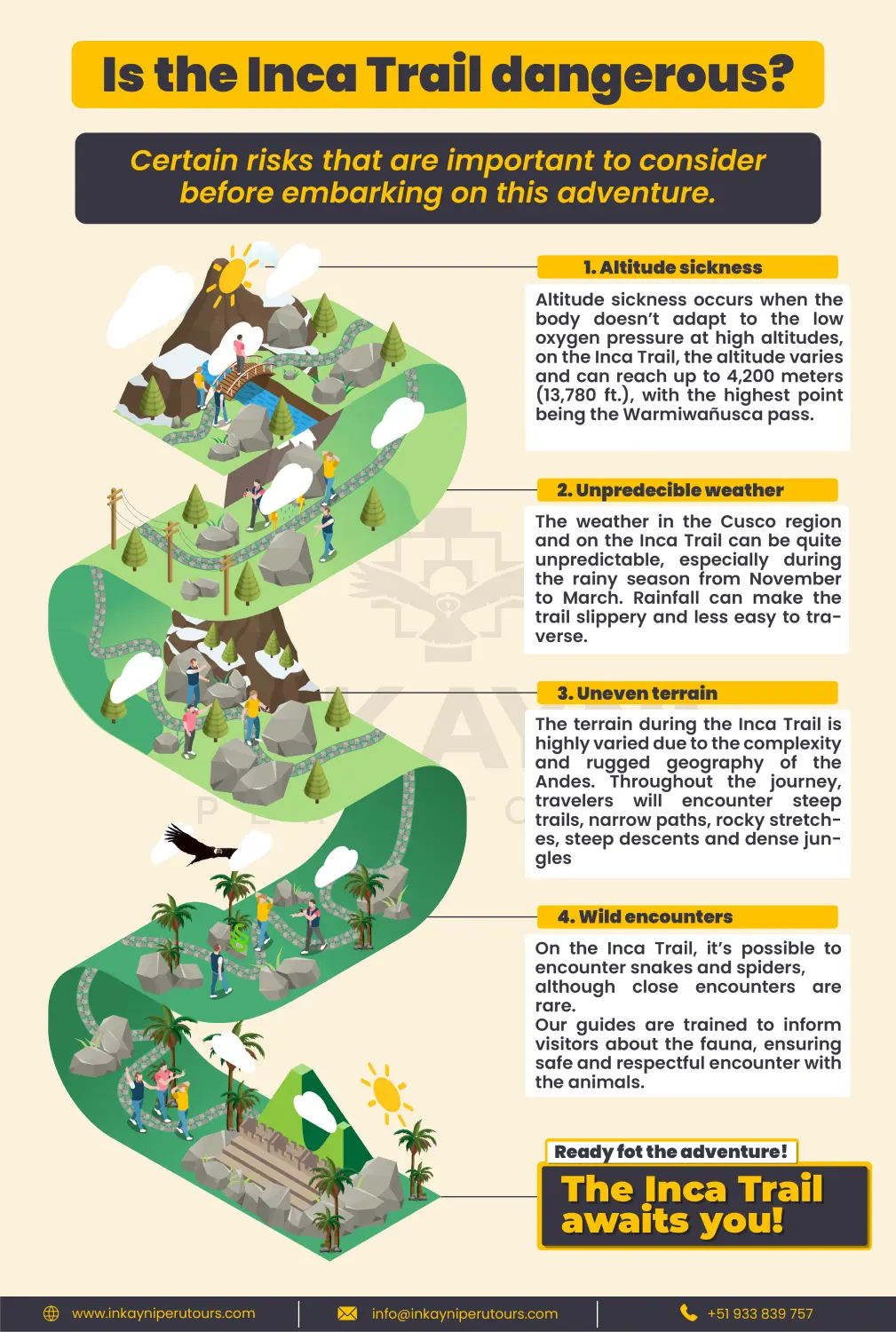
Is the Inca Trail dangerous, certain risk (infographic)
Other Guides That Help You Plan a Safer Inca Trail
Is There Wildlife on the Inca Trail?
Yes, the Inca Trail crosses protected natural areas with rich biodiversity, so it’s possible to encounter wildlife. The important thing: these animals are shy and close encounters are uncommon. They pose no real danger to hikers.
Birds You Might Spot
- Condors – The world’s largest flying bird
- Eagles – Especially the chestnut eagle
- Hummingbirds – Very common, you’ll see several during the trek
- Cock-of-the-rock – Peru’s national bird, beautiful but elusive

Birds from left to right: cock-of-the-rock, chestnut eagle, violet-eared hummingbird, and Andean condor
Mammals of the Area
- Vizcachas – Andean rodents similar to rabbits, you’ll likely see them
- Taruka or Andean deer – Very shy, uncommon to see
- Andean foxes – Nocturnal, rarely seen
- Spectacled bear – Extremely rare, avoids human contact
- Andean puma – Nearly impossible to see, fewer than 5 sightings in 20 years

From left to right: spectacled bear, Andean fox, puma concolor, Andean vizcacha, and Andean deer
Your tour guide is trained to inform you about local fauna and ensure that any encounter with wildlife occurs safely and respectfully, without disturbing their natural habitat.
Acclimatization for the Inca Trail: How to Avoid Altitude Sickness
Altitude sickness is the difficulty the body experiences adapting to decreased oxygen at high elevations. Cusco sits at 11,154 feet (3,400 m), which increases the likelihood of experiencing symptoms if you come from sea-level areas.
Symptoms of Altitude Sickness
Symptoms vary from person to person and can be more intense depending on how quickly you’ve ascended. The most common are:
- Headaches – From mild discomfort to intense pain
- Dizziness and vertigo – Feeling unbalanced when moving
- Fatigue and weakness – Excessive tiredness and lack of energy
- Nausea and vomiting – Stomach upset, can be severe
- Loss of appetite – Loss of interest in eating
- Insomnia – Difficulty falling or staying asleep
- Shortness of breath – Feeling like you can’t get enough air

Altitude sickness is the body’s difficulty acclimatizing to lack of oxygen at high altitudes
How to Prevent Altitude Sickness
Follow these steps to significantly reduce the risk of soroche:
- Gradual acclimatization: Take 2-3 days in Cusco before intense activities. Don’t start the trek the same day you arrive.
- Adequate hydration: Drink 3-4 liters of water daily. Avoid alcohol and caffeine the first days.
- Light meals: Balanced diet rich in carbohydrates. Avoid heavy and heavily spiced meals.
- Sufficient rest: Respect your sleep hours. Don’t push yourself physically the first days.
- Coca tea: Traditional Andean beverage that helps with mild symptoms. Its effectiveness varies per person.
- Medical consultation: If in doubt, talk to a doctor about medications like Diamox before traveling.

Coca tea: beverage with stimulant properties that helps relieve fatigue and altitude sickness
Important note:
Each person reacts differently to altitude. If symptoms persist or are severe, inform your guide immediately and seek medical attention.
Necessary Physical Preparation
To enjoy the Inca Trail without problems, you need good physical condition. Start training 3-4 months before to gradually adapt your body to the required effort.
Train these aspects:
- Cardiovascular endurance: Long hikes of 2-4 hours, stair climbing, cycling
- Leg strength: Strong quadriceps, glutes, and ankles prevent injuries on descents
- Practice on irregular terrain: Trails with ups and downs similar to the trek
- Weighted backpack: Practice with 11-15 lbs (5-7 kg) to get used to it
If you can walk 6 miles (10 km) on irregular terrain without complete exhaustion, you’re in adequate condition for the Inca Trail.

How to Choose a Reliable Operator
You can only do the Inca Trail with an operator authorized by the Ministry of Culture. Choosing poorly can turn the trek into a risky experience.
Verify these points before booking:
- Official license: Ask for the authorization number and verify it’s current
- Certified guides: All must have official licenses, not “guides in training”
- Small groups: Maximum 12-16 people. Large groups = less attention in emergencies
- Insurance included: Confirm what it covers (medical evacuation, hospitalization)
- Verifiable reviews: Read reviews on TripAdvisor and Google, especially 3-star ones
Operators like Inkayni Peru Tours, with years of experience and official certifications, guarantee adequate safety standards.
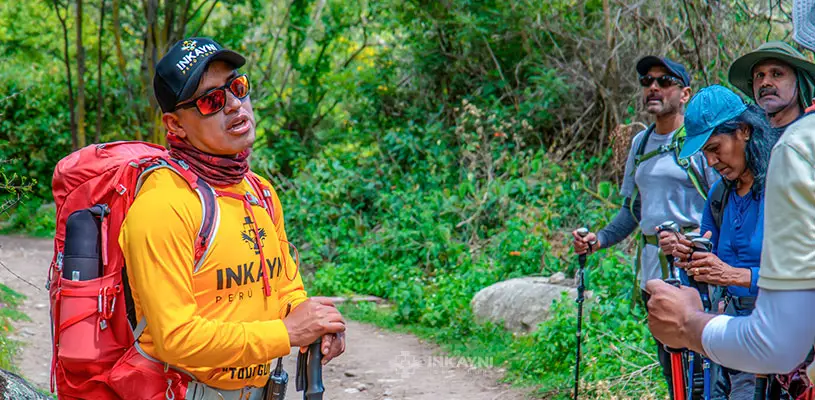
Certified guides guarantee a safe experience
Is Inca Trail Dangerous Depending on the Route You Choose?
Not all routes have the same level of difficulty or risk. Safety largely depends on choosing the appropriate route for your physical condition.
| Route | Duration | Max. Altitude | Difficulty | For Whom |
| Short Inca Trail | 2D/1N | 8,957 ft / 2,730 m | Easy-Moderate | Limited time, first time at altitude, families |
| Classic Inca Trail | 4D/3N | 13,779 ft / 4,200 m | Moderate-Difficult | Good physical condition, acclimatized |
| 5-day Inca Trail | 5D/4N | 13,779 ft / 4,200 m | Moderate | Slower pace, families with children |
| Salkantay + Inca | 7D/6N | 17,060 ft / 5,200 m | Very Difficult | Experienced hikers only |
Short Inca Trail (2D/1N)
The Short Inca Trail is the least risky option. With only 6 miles (10 km) of trail and maximum altitude of 8,957 feet (2,730 m), it’s ideal if you have limited time or it’s your first experience at altitude. Risks are minimal if you follow guide recommendations.
Classic Inca Trail (4D/3N)
The Classic Inca Trail requires good physical preparation and prior acclimatization. On day 2, you reach 13,779 feet (4,200 m) at Warmiwañusca, where altitude sickness is most common. It’s not dangerous if you acclimatized 2-3 days in Cusco and carry proper equipment. This is the most popular route.

Tourists at Dead Woman’s Pass, the highest point of the Inca Trail
5-day Inca Trail (5D/4N)
The 5-day Inca Trail is similar to the classic but with a slower pace, which reduces the risk of altitude sickness and fatigue-related injuries. It’s the safest option for those seeking the complete experience without rushing.
Salkantay + Inca Trail (7D/6N)
The combined trek reaches 17,060 feet (5,200 m) and covers 51 miles (82 km) total. It requires excellent physical condition and previous altitude experience. Not recommended for beginners. Only choose this route if you’ve done similar treks without altitude sickness problems.
So… Should You Do the Inca Trail?
The dangerous Inca Trail to Machu Picchu question has a clear answer: the trek is not dangerous if you understand the risks and prepare adequately. It’s a regulated route with authorized operators, and 60,000 annual trekkers complete it without problems. What makes the difference isn’t luck, but preparation: acclimatization in Cusco, appropriate season, correct equipment, and reliable operator.
Rather than asking if the dangerous Inca Trail Machu Picchu is worth it, ask yourself if you’re ready to prepare properly. Because when you do, the Inca Trail becomes a powerful experience. Book with authorized operators like Inkayni Peru Tours who have certified guides, small groups, and proven safety standards. The Inca Trail awaits you; plan it 4-6 months in advance.
Frequently Asked Questions
Is Inca Trail dangerous?
What are the most common risks and how do I avoid them?
What happens if I get altitude sickness during the Inca Trail?
Are Inca Trail guides prepared for emergency situations?
How close is the hospital or medical center?
What’s the hardest part of the Inca Trail?
Why does the Inca Trail close in February?
What’s the best time to do the Inca Trail?
Do I need my original passport to enter? What if I renewed it?
What are the bathrooms like during the Inca Trail?
Do I need travel insurance for the Inca Trail?
Are there wild animals and do they pose danger?
Escrito por


Shared:


If you liked this article and the information you found, give us 5 stars!
 (2 votos, promedio: 5.00 de 5)
 Loading...