


Choquequirao vs Rainbow Mountain
Choquequirao is better if you want a real multi-day trek to remote Inca ruins, with solitude and the journey itself as part of the reward. Rainbow Mountain is better if you want a shorter, cheaper high-altitude day trip with a strong visual payoff from Cusco. In simple terms, Choquequirao is the deeper trekking expedition, while Rainbow Mountain is the faster scenic experience.
Table of Contents
Many travelers compare Choquequirao and Rainbow Mountain because both feel like “alternative” experiences from Cusco. But they are not alternatives in the same way. Choquequirao asks you to disappear into the canyon for several days to reach a remote Inca site. Rainbow Mountain asks you to handle very thin air for a few hours to reach one of the most photographed landscapes near Cusco.
That difference matters before you look at price, distance or photos. So the real question is not simply “Which one is more beautiful?” It is whether you want a true trekking expedition where the journey is the reward, or a high-altitude day trip where the viewpoint is the reward.
| 4–5 daysChoquequirao classic trek | 1 dayRainbow Mountain trip | US$560–950+Choquequirao guided range | US$60–120+Rainbow standard range |

Choose Choquequirao if…
- You want remote Inca archaeology as the main reward.
- You prefer solitude over a crowded viewpoint.
- You have 4 or 5 days available for a real trek.
- You can handle long descents, steep climbs and canyon heat.
- You want the route itself to feel like an expedition.
Choose Rainbow Mountain if…
- You have only one free day from Cusco.
- You want a strong visual reward without camping.
- You are acclimatized and can handle very high altitude.
- You accept that weather and crowds can affect the experience.
- You want a cheaper, easier-to-book day trip.
Choquequirao vs Rainbow Mountain: Main Comparison
| Decision point | Choquequirao Trek | Rainbow Mountain / Vinicunca |
| 1. Main experience | Remote Inca archaeology reached through a demanding canyon trek. | A short but intense high-altitude hike to a colorful geological viewpoint. |
| 2. Typical duration | 4 or 5 days for the classic round trip. | 1 full day from Cusco, including long road transfers and an early start. |
| 3. Approximate hiking distance | Often around 31–43 mi / 50–70 km on classic versions, depending on trailhead, camps and itinerary design. | Usually about 3–7.5 mi / 5–12 km round trip depending on access point, route variant and whether transport or horse support is used. |
| 4. Altitude | The archaeological area is around 10,000 ft / 3,050 m, but the canyon descent and return climb are the real challenge. | The hiking zone usually moves from around 15,250 ft / 4,650 m toward a viewpoint near 16,500 ft / 5,040 m; altitude is the main challenge. |
| 5. Physical difficulty | Hard to very hard because of long descents, steep climbs, heat, camping and cumulative fatigue. | Moderate to hard for a day hike because the effort is short, but oxygen is limited. |
| 6. Cost logic | Higher cost because it requires several trekking days, guide, meals, camping gear, mule support and trailhead transport. | Lower cost because it is a standardized day tour with road access, shared transport and no camping logistics. |
| 7. Typical market range | Supported 4–5 day treks often fall around US$560–950+; private or higher-comfort services can cost more. | Better-supported group or small-group tours often range around US$60–120+; private tours can rise to US$150–280+ or more. |
| 8. Crowds | Very low compared with Cusco’s most popular attractions. | Can be crowded, especially during late morning and high season. |
| 9. Best for | Fit hikers with several free days who want solitude, archaeology and a true expedition feel. | Travelers with limited time who want a high-impact landscape and can handle altitude. |
| 10. Biggest risk if badly planned | Underestimating the canyon, carrying too much, poor water planning, weak gear or no emergency margin. | Going without acclimatization, rushing the climb, poor clothing, low visibility or altitude symptoms. |
Important:
Do not compare Choquequirao and Rainbow Mountain as if they were two similar hikes. Choquequirao is a multi-day trekking commitment. Rainbow Mountain is a high-altitude day trip. One tests endurance over several days; the other tests your body’s reaction to altitude in a few hours.
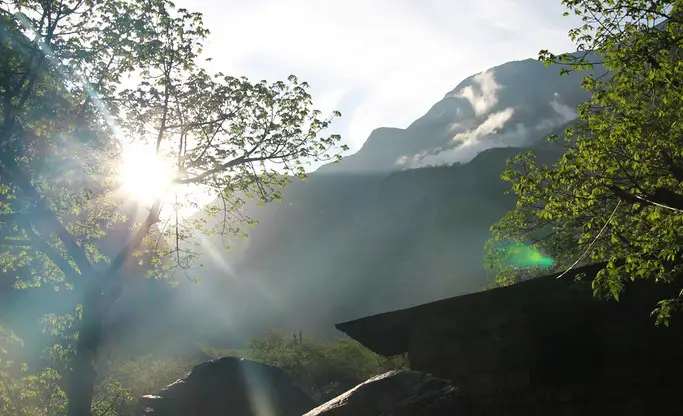
LOST CITADEL TREKChoquequirao Trek
Hike to one of Peru’s most impressive and least crowded Inca archaeological sites.
What Makes Choquequirao Special?
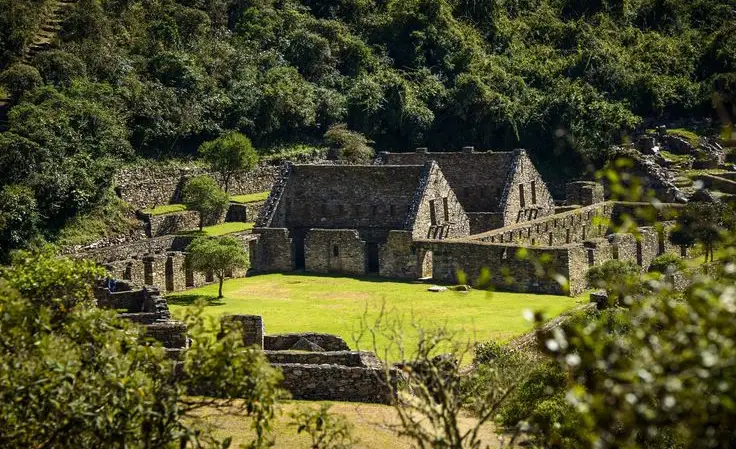
Choquequirao is not a quick viewpoint. It is a remote Inca archaeological complex set above the Apurímac Canyon, reached only by walking. Its value comes from the combination of physical effort, silence, scale and archaeology. You do not just arrive, take a photo and leave; the trek itself becomes part of the meaning of the visit.
The site is often compared with Machu Picchu because of its architecture and mountain setting, but the experience is different. Choquequirao feels less standardized, less crowded and more unfinished. It is better understood as a large archaeological landscape still being recovered, not as a polished monument with quick road access.

What Makes Rainbow Mountain Special?
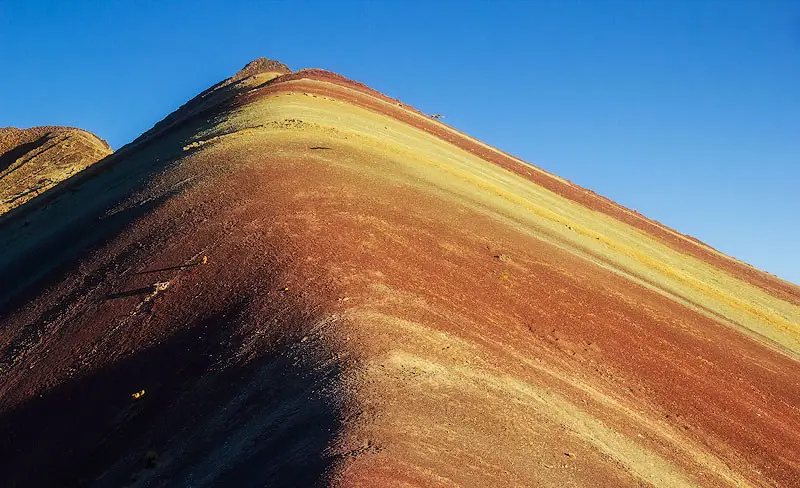
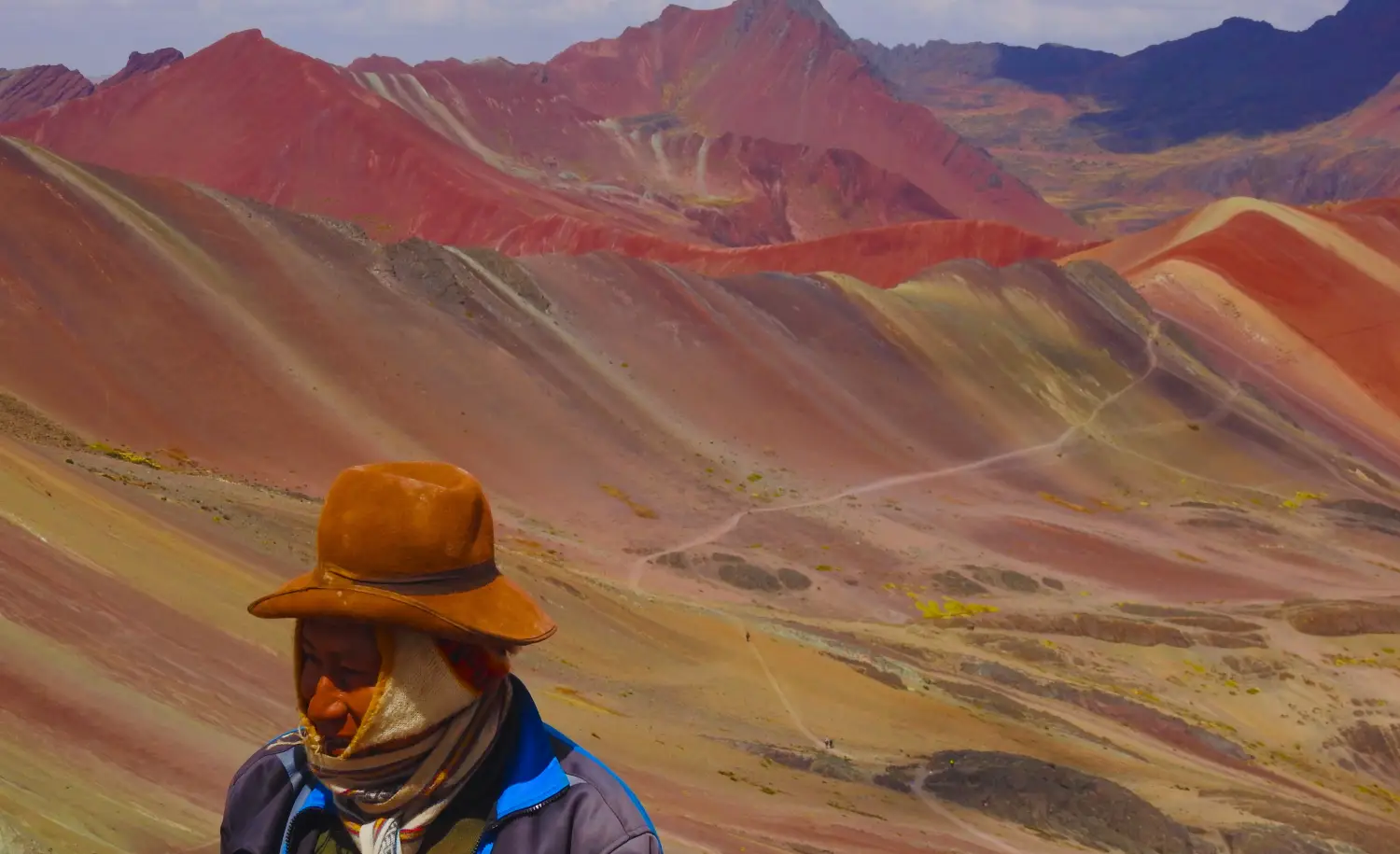
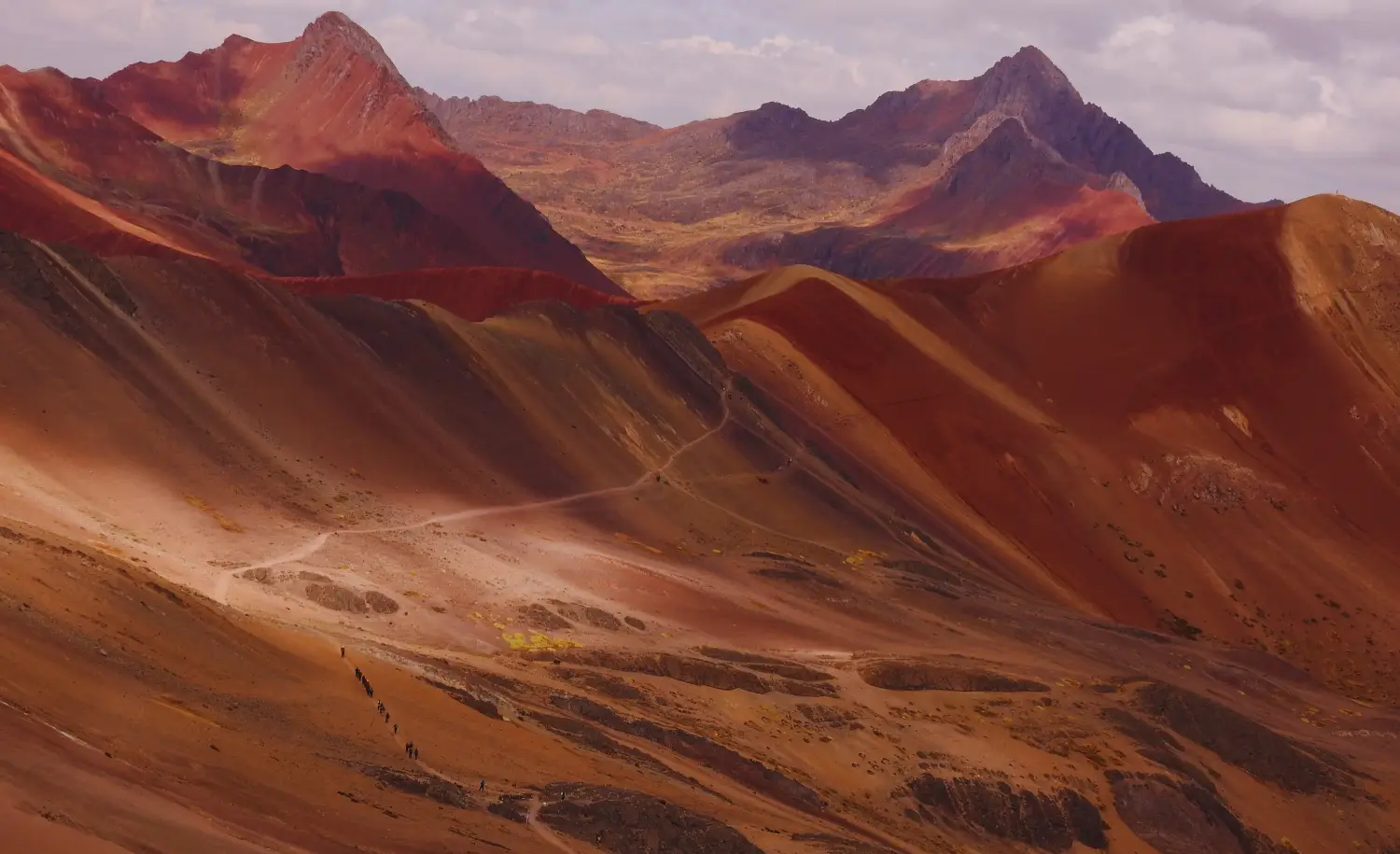
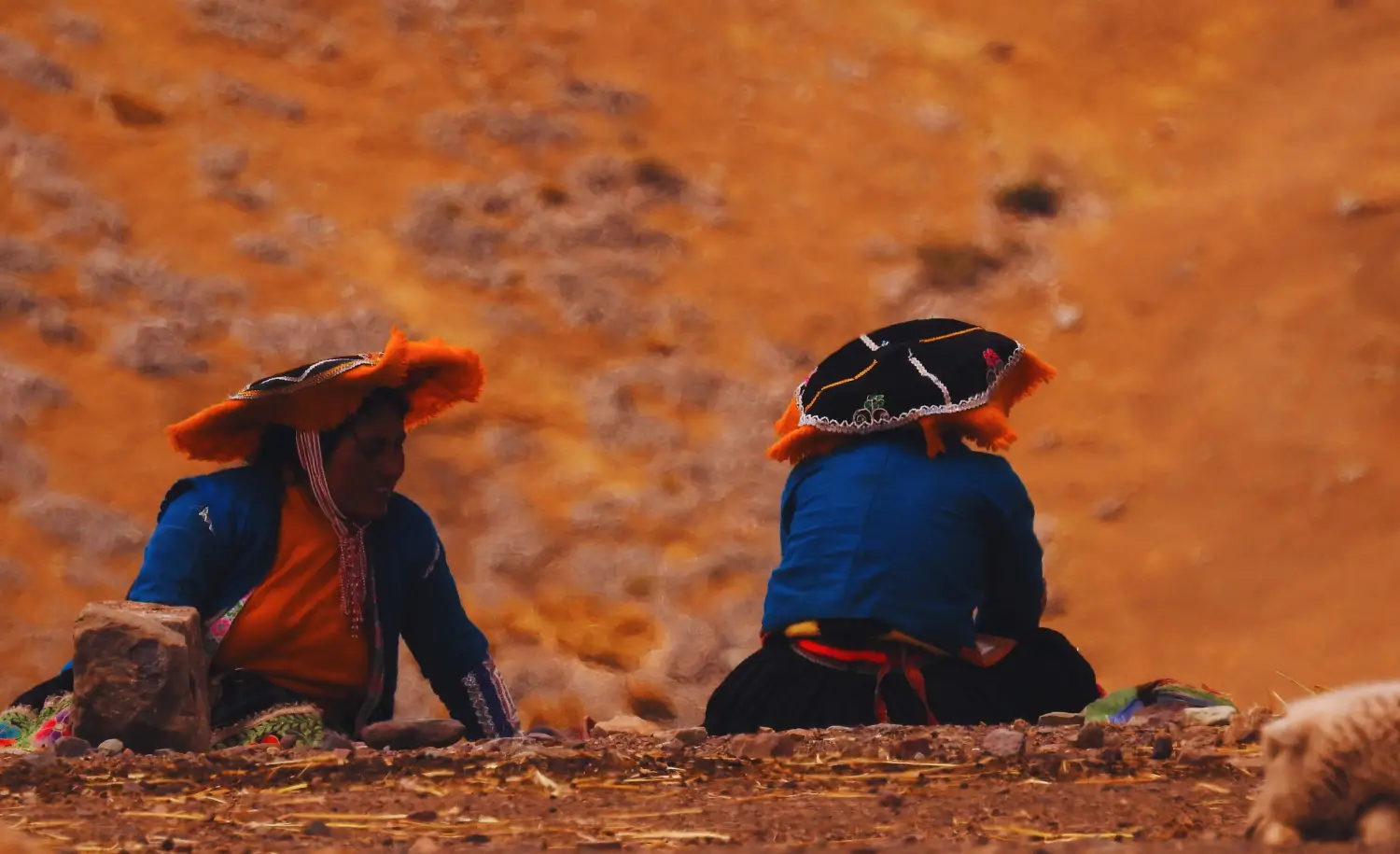
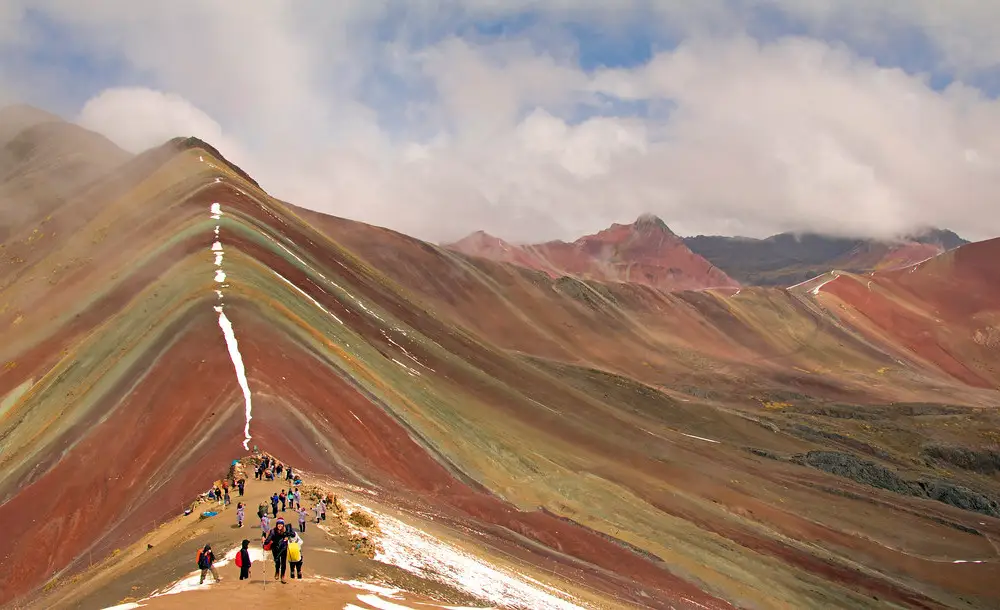
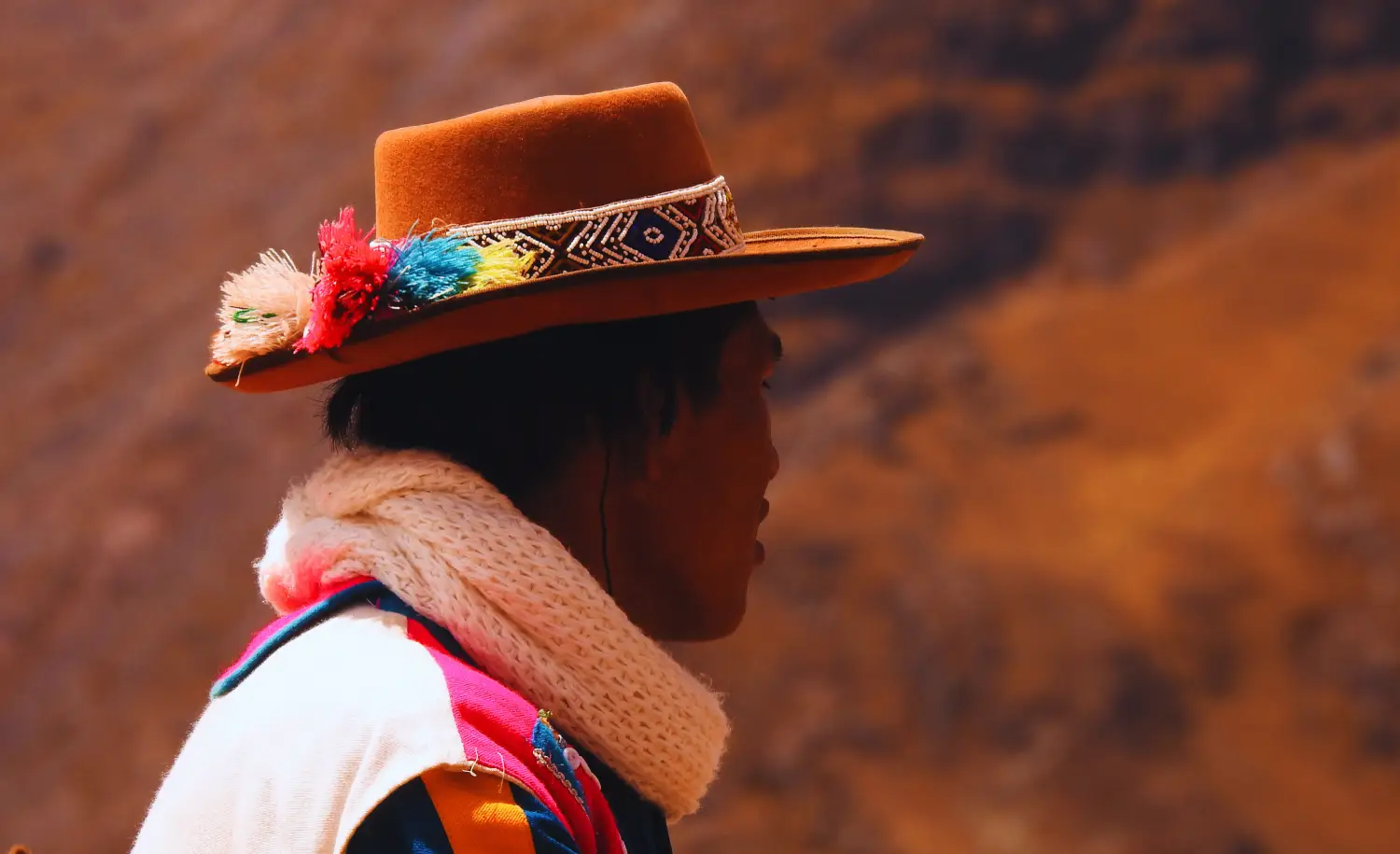
Rainbow Mountain, or Vinicunca, is almost the opposite travel product. It is not an archaeological journey, and it does not require several trekking days. Its appeal is visual and immediate: mineral-colored slopes, high Andean scenery, alpacas, local communities and a viewpoint that can be reached in one long day from Cusco.
The challenge is altitude. The hike may be short compared with Choquequirao, but the viewpoint sits in the 16,000 ft / 4,900 m+ zone. That means even fit travelers can feel breathless if they are not acclimatized. Rainbow Mountain is more accessible logistically, but it should not be treated as a casual walk.
| Rainbow Mountain factor | What it means for travelers |
| 1. Short duration | It fits easily into a Cusco itinerary, usually as a full-day trip. |
| 2. High altitude | The main risk is not distance, but altitude symptoms, cold wind and weather exposure. |
| 3. Low planning barrier | Many operators offer daily departures, so it is easier to book than Choquequirao. |
| 4. Crowds and visibility | The experience depends heavily on timing, weather and how busy the viewpoint is. |
| 5. Optional add-ons | Some tours include or offer Red Valley, horse support, ATV variations or private transport, but these change the real price. |
MOUNTAIN OF SEVEN COLORSRainbow Mountain Peru
Hike through the Andes to one of the most famous mountain of natural mineral colors.
1.- Difficulty: Which One Is Actually Harder?
Choquequirao is harder overall because it demands several days of sustained effort. Rainbow Mountain is shorter but more altitude-sensitive. A traveler can struggle badly on Rainbow Mountain if they arrive from sea level and go too soon, but the physical commitment is still much smaller than Choquequirao.
| Difficulty factor | Choquequirao Trek | Rainbow Mountain |
| 1. Main physical stress | Long descents, steep climbs, heat, camping and repeated effort over several days. | Thin air, cold, wind and a steep final push in a short time window. |
| 2. Who suffers more | Travelers with weak knees, poor leg strength, low endurance or no multi-day hiking experience. | Travelers who are not acclimatized, rush uphill or underestimate high-altitude symptoms. |
| 3. Recovery demand | High. Your legs accumulate fatigue day after day. | Usually low to moderate. Most travelers recover after the day trip. |
| 4. Technical difficulty | Not technical climbing, but terrain is long, remote and physically punishing. | Not technical, but altitude and weather can make it feel much harder. |
| 5. Best preparation | 6–8 weeks of hiking, stairs, leg strength, trekking poles and long walks with a pack. | 2–3 days in Cusco or the Sacred Valley, slow pace, hydration and warm layers. |
| 6. Main mistake | Choosing it because it is “lower altitude” without respecting the canyon profile. | Choosing it as a “short walk” without respecting the 5,000 m altitude zone. |
Warning:
Rainbow Mountain can feel harder than expected because altitude hits fast. Choquequirao can feel harder than expected because the canyon repeats the same punishment: down, up, down, up. Do not choose either route only by looking at distance.
2.- Cost and Value: Why the Price Difference Is So Big
- The price gap is big because these are not the same kind of product. Rainbow Mountain is usually a one-day tour with road access, shared transport and a short high-altitude hike. Choquequirao is a multi-day trekking operation with guide, meals, camping logistics, mule or horse support, transport and several days of staff work.
| Cost factor | Choquequirao Trek | Rainbow Mountain | ||
| Standard guided range | A supported 4 or 5-day guided trek commonly falls around US$560–950+, depending on group size, guide quality, food, camping gear, mule support and transport. | A better-supported group or small-group tour often sits around US$60–120+, depending on pickup, guide, meals, entrance handling, oxygen support and transport quality. | ||
| Private / premium range | Private or higher-comfort Choquequirao services can rise to around US$950–1,300+, especially with smaller groups, better camp setup, stronger support and private transport. | Private Rainbow Mountain trips often range around US$150–280+, depending on vehicle, guide, departure time, Red Valley, meals and service level. | ||
| What the price usually pays for | Several days of guide service, meals, cook or support staff, camping logistics, mule or horse support, trailhead transport, entrance arrangements and safety planning. | One day of transport from Cusco, guide, breakfast or lunch, route support and sometimes oxygen or entrance coordination, depending on the operator. | ||
| Common extras to confirm | Sleeping bag, trekking poles, extra mule support, personal tent, snacks, tips, entrance fees, emergency oxygen, hotel before/after and private transport. | Entrance fees, Red Valley add-on, horse rental, ATV variation, walking poles, oxygen support, tips, breakfast/lunch quality and pickup location. | ||
| Best value if… | You want a true trekking expedition, remote archaeology, solitude and several days away from the normal Cusco circuit. | You want a short, visual, affordable high-Andes experience that fits easily into a Cusco itinerary. |
Practical note:
Compare inclusions before comparing totals. A US$70 Rainbow Mountain tour and a US$700 Choquequirao trek are not expensive or cheap in the same way. One is a single-day viewpoint trip; the other is a supported multi-day route. The better question is whether the price matches the real value you want: a fast visual reward or a deeper trekking experience.

3.- Logistics: What Can Go Wrong?
- Rainbow Mountain is easier to organize, but the day can still fail if weather, crowds or altitude symptoms hit. Choquequirao requires more planning from the start because there are fewer services, fewer people and more distance between help points.
| Planning factor | Choquequirao Trek | Rainbow Mountain |
| 1. Booking pressure | Lower than the Inca Trail, but you should book ahead to secure guide, transport, mule support and camp logistics. | High supply of daily tours, but better operators and private services still book out in peak months. |
| 2. Route control | More self-contained; once you are on the trail, there are fewer quick fixes. | More road access and easier return to Cusco if altitude or weather becomes a problem. |
| 3. Emergency risk | Higher because of remoteness, limited signal and multi-day exposure. | Usually lower, but altitude symptoms must be taken seriously. |
| 4. Weather impact | Rain can make the trail muddy, slow and dangerous in canyon sections. | Cloud, hail or snow can hide the colors and reduce the value of the day trip. |
| 5. Best safety margin | Use a supported trek unless you have real independent backcountry experience. | Spend at least 2 days acclimatizing before going above 16,000 ft / 4,900 m. |
| 6. What to confirm before booking | Daily walking hours, mule support, camp quality, water plan, emergency plan and time at the archaeological site. | Departure time, entrance fees, Red Valley add-on, oxygen, horse/ATV availability, guide support and weather policy. |
If Choquequirao Is the Serious Option
4.- Solitude vs Crowds
- Choquequirao wins clearly if you want quiet. The route filters people because it requires time, effort and camping. Rainbow Mountain is beautiful, but it is one of Cusco’s most popular day trips. That does not make it a bad choice; it means you need to manage expectations.
| Experience factor | Choquequirao | Rainbow Mountain |
| 1. Atmosphere | Quiet, slow, physical and introspective. | Fast, visual, busy and social. |
| 2. Best timing | Dry season with enough days to avoid rushing the trek. | Early departure, good weather window and realistic expectations about crowds. |
| 3. Photo experience | Ruins, canyon, clouds, trail moments and wide mountain landscapes. | Color layers, highland communities, llamas and dramatic mineral slopes. |
| 4. Who may feel disappointed | Travelers expecting comfort, quick access or social energy. | Travelers expecting silence, solitude or perfect colors in any weather. |


5.- Best Time to Visit
For both places, the dry season from May to September is usually the most reliable window. The difference is how weather affects the experience. Choquequirao becomes slower and riskier when trails are wet. Rainbow Mountain can still be accessible in many conditions, but clouds or snow can hide the colors completely.
| Season | Choquequirao | Rainbow Mountain |
| 1. May to September | Best overall window for drier trails and safer canyon conditions. | Best visibility, but also more visitors and very cold mornings. |
| 2. April and October | Good shoulder months if you accept some weather variability. | Often a good balance of visibility and crowd levels. |
| 3. November to March | Higher rain risk, slippery terrain and more difficult canyon logistics. | Clouds, mud, snow or hail may reduce visibility; go only with flexible expectations. |
| 4. February | Possible only with careful condition checks and a conservative plan. | Possible, but weather can make the colors less visible and the trail colder or muddier. |


6.- Physical Preparation
For Choquequirao: Train Your Legs Before Your Lungs
Choquequirao does require acclimatization, but the larger issue is leg endurance. Train with long walks, stairs, downhill sections, squats, lunges and a daypack. The canyon descent can feel easy at first, but the return climb is where many hikers understand the real difficulty.


For Rainbow Mountain: Acclimatize Before the Photo
For Rainbow Mountain, do not obsess over distance. The hike is short compared with Choquequirao, but the altitude can make a normal pace feel impossible. Spend at least two days in Cusco or the Sacred Valley, walk slowly, hydrate and avoid treating the day as a race to the viewpoint.

Shorter or Easier Alternatives Around Cusco
Which One Matches Your Travel Style?
| If you are… | Choose | Why |
| Short on time | Rainbow Mountain | One full day from Cusco. |
| Looking for archaeology | Choquequirao | It is built around a major Inca site. |
| Worried about altitude | Choquequirao, with caution | Lower than Rainbow Mountain, but much harder on the legs. |
| Worried about knees | Rainbow Mountain | Shorter hike; Choquequirao has long canyon descents. |
| On a tighter budget | Rainbow Mountain | Much cheaper as a standardized day trip. |
| Avoiding crowds | Choquequirao | Far quieter and less visited. |
| Wanting comfort | Rainbow Mountain | No camping; you return to Cusco the same day. |
| Seeking a real trek | Choquequirao | Several days, canyon effort and expedition feeling. |
| Traveling for photos | Rainbow Mountain | Fast visual reward, if weather is clear. |
Questions to Ask Before Booking Either Option
| Question | Why it matters | More important for |
| 1. How many days do I really have? | Choquequirao needs 4 or 5 days plus recovery; Rainbow Mountain fits into one full day. | Both |
| 2. Am I acclimatized enough? | Rainbow Mountain reaches extreme altitude; Choquequirao is lower but still physically demanding. | Rainbow Mountain |
| 3. How much time do we have at Choquequirao itself? | The trek loses value if the itinerary rushes the archaeological visit after several days of hiking. | Choquequirao |
| 4. What happens if I feel altitude symptoms? | A good Rainbow Mountain tour should have a clear descent, oxygen and support plan. | Rainbow Mountain |
| 5. Are entrance fees and extras included? | Cheap prices can exclude entrances, Red Valley, horse rental, gear, transport details or key support. | Both |
| 6. What is the real hardest part? | For Choquequirao, it is the canyon profile; for Rainbow Mountain, it is altitude and weather exposure. | Both |
| 7. What if the weather is bad? | Weather can affect trail safety in Choquequirao and visibility at Rainbow Mountain. | Both |
| 8. What exactly does the price include? | Ask about meals, transport, entrance fees, gear, oxygen, mule or horse support, and cancellation rules before comparing prices. | Both |
If Your Real Goal Is Machu Picchu or a Longer Trek


Final Verdict: Choquequirao or Rainbow Mountain?
- Choose Rainbow Mountain if you want the strongest visual reward in the shortest amount of time. It is cheaper, easier to book and simple to add to a Cusco itinerary, but it still requires acclimatization because the altitude is serious. It is the practical choice for travelers with limited time, photographers, day hikers and visitors who want a memorable high-Andes landscape without committing to a multi-day trek.
- Choose Choquequirao if you want the deeper journey: remote ruins, silence, canyon landscapes and several days away from the normal Cusco circuit. It costs more and asks much more from your body, but it gives a type of archaeological and emotional reward that a one-day viewpoint cannot offer.
Frequently Asked Questions About Choquequirao vs Rainbow Mountain
Is Choquequirao harder than Rainbow Mountain?
Is Rainbow Mountain difficult if it is only one day?
Can You Do Both on the Same Peru Trip?
Yes, but the order matters. Do not land in Cusco and go straight to Rainbow Mountain the next morning if you are not acclimatized. A better plan is to spend time in Cusco or the Sacred Valley first, do a moderate day trip, then choose Rainbow Mountain or start Choquequirao with better adaptation.
If you want both experiences comfortably, plan at least 9 to 12 days in Peru: arrival, acclimatization, one or two lighter Cusco/Sacred Valley days, Rainbow Mountain, rest day, and then the 4 or 5-day Choquequirao trek. Doing both with no rest can turn a good itinerary into a survival test.
Which one is cheaper?
Which one is better for first-time hikers in Peru?
Which one is better for avoiding crowds?
Can I visit both Choquequirao and Rainbow Mountain in one trip?
Which one is better for photography?
Which one is better if I am worried about altitude sickness?
Which one is worse for knee problems?
Can I do Choquequirao without a guide?
Can I do Rainbow Mountain without a guide?
What is the best time for Choquequirao and Rainbow Mountain?
Is Rainbow Mountain a good acclimatization hike before Choquequirao?
What can disappoint travelers at Rainbow Mountain?
What can disappoint travelers at Choquequirao?
Autor
Shared:


If you liked this article and the information you found, give us 5 stars!
 (Ninguna valoración todavía)
 Loading...