


Choquequirao Trek vs Inca Jungle Trek
Choquequirao is better if you want remote Inca archaeology, fewer people and a harder canyon trek where the ruins are the main reward. Inca Jungle is better if you want Machu Picchu at the end, with biking, warmer valleys and more flexible hostel-style logistics. In simple terms, Choquequirao is a trekking expedition to a remote site, while Inca Jungle is an adventure route to Machu Picchu.
Table of Contents
Many travelers compare Choquequirao and the Inca Jungle Trek because both sound like alternatives to the classic Machu Picchu routes. But they are not alternatives in the same way. Choquequirao asks you to hike deep into the Apurímac Canyon for a remote Inca site. Inca Jungle moves you through biking, warmer valleys, local towns, optional adventure activities and a final arrival at Machu Picchu.
A Choquequirao photo does not show the long climb back out of the canyon. An Inca Jungle itinerary does not always show what is included, how safe the biking or rafting provider is, or which Machu Picchu ticket and circuit you actually get.
| 4-5 daysChoquequirao classic trek | 3-4 daysInca Jungle common range | US$540-950+Choquequirao guided range | US$300-700+Inca Jungle market range | Machu Picchunormally Inca Jungle finish |
Choose Choquequirao if…
- You want remote Inca archaeology as the main reward.
- You prefer silence and low visitor flow over a social route.
- You can handle steep descents, hard climbs and canyon heat.
- You are comfortable with camps, mule logistics and fewer services.
- You do not need Machu Picchu included in the same trek.
Choose Inca Jungle if…
- You want Machu Picchu as the final goal.
- You prefer biking, hiking, hot springs and optional activities.
- You want more towns, services and hostel-style logistics.
- You are traveling with a social or mixed-fitness group.
- You accept that safety standards and inclusions must be checked carefully.
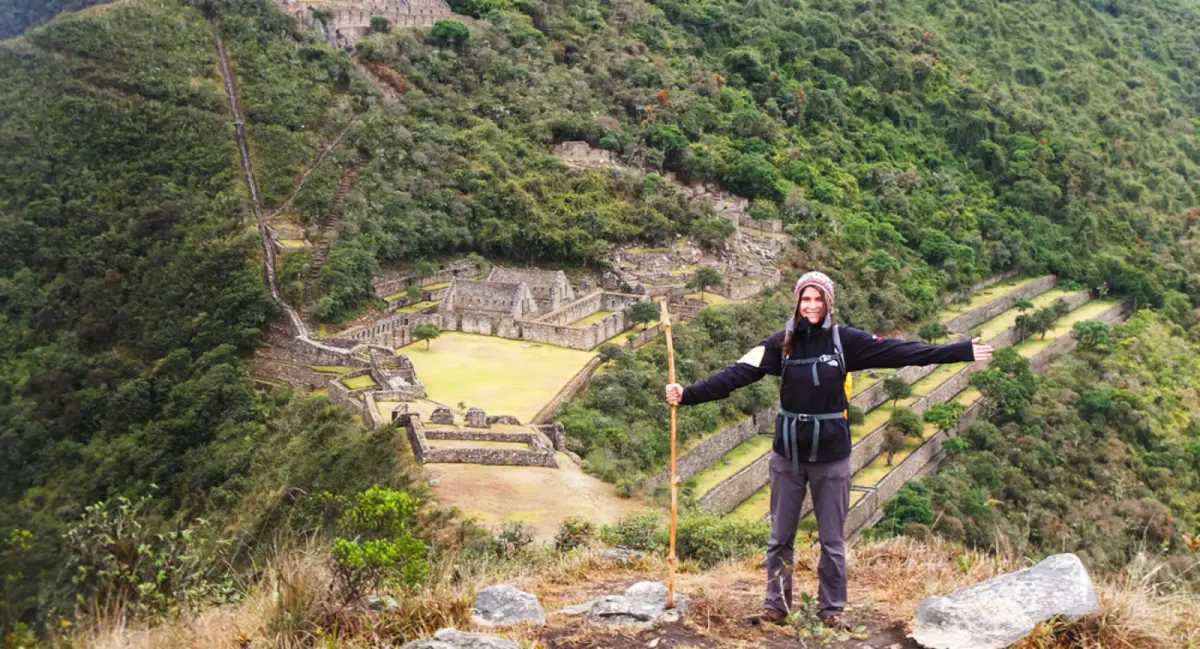
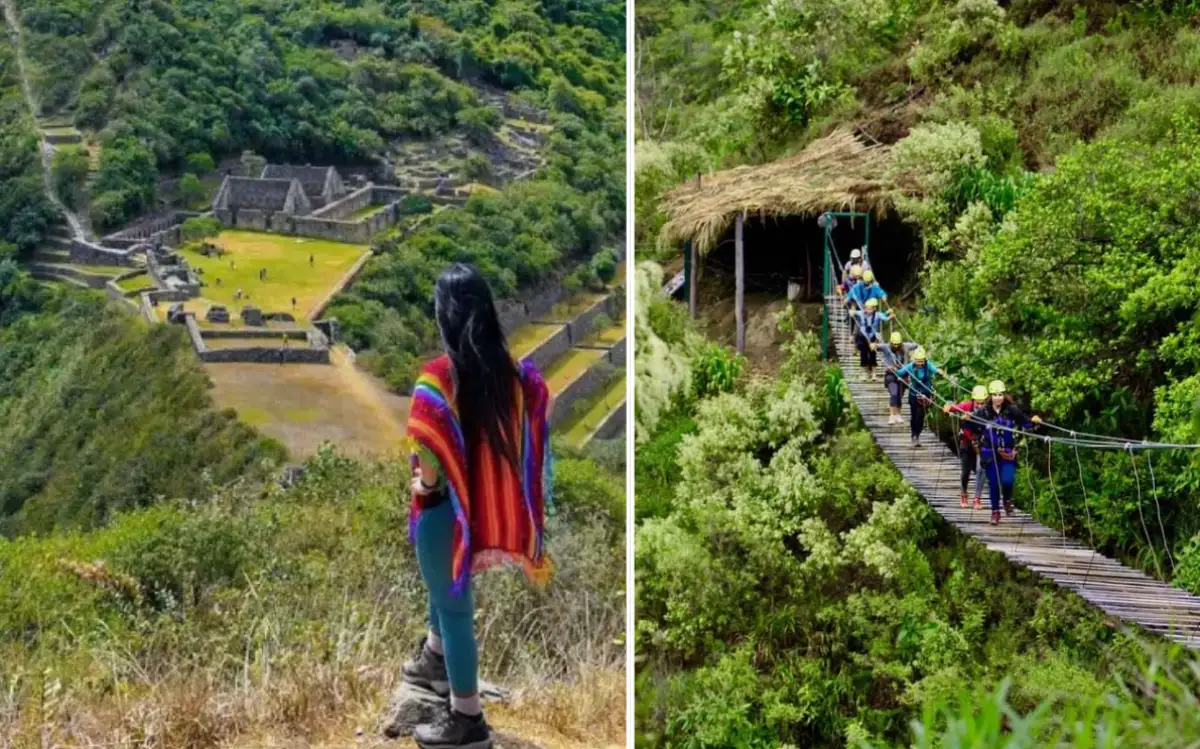
Inca ruins of Choquequirao located on a remote mountain in the Andes.

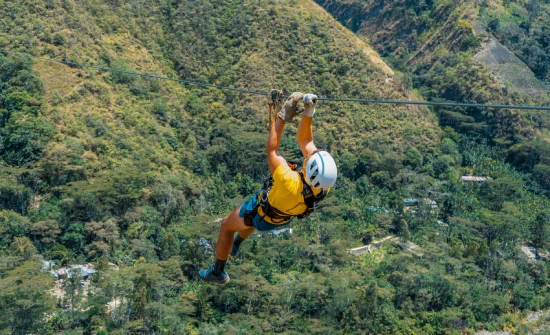
Zipline adventure over the tropical valley during the Inca Jungle Trek.
Choquequirao vs Inca Jungle Trek: Main Comparison
| Decision point | Choquequirao Trek | Inca Jungle Trek |
| 1. Main experience | Remote Inca archaeology, silence and a hard canyon expedition. | Multi-activity adventure route to Machu Picchu with more towns, transport sections and services. |
| 2. Typical duration | Usually 4 or 5 days for the classic round trip; longer if connected to Machu Picchu. | Usually 3 or 4 days, depending on biking, rafting, zip-lining, hot springs and transport sections. |
| 3. Approximate distance | Often around 31-43 mi / 50-70 km for classic versions, depending on trailhead, camps and itinerary design. | Often around 25-31 mi / 40-50 km of walking sections, but not all the route is walked because biking and transport are part of the itinerary. |
| 4. Highest point | The archaeological area sits around 10,000 ft / 3,050 m, but the route has major elevation loss and gain through the canyon. | The route often starts near Abra Málaga, around 14,160-14,270 ft / 4,316-4,350 m, before dropping quickly to lower, warmer valleys. |
| 5. Typical cost | Often around US$540-950+ for an organized 4 or 5-day trek; private, premium or small-group trips can cost more. | Often around US$300-700+ for 3 or 4-day group services; private, safer activity providers, train upgrades or better hotels can push the price higher. |
| 6. Main physical challenge | Long descents, steep climbs, canyon heat, heavy leg fatigue and limited services. | Bike descent safety, long active days, humidity, optional adventure activities and Machu Picchu logistics. |
| 7. Machu Picchu included? | No, not on the classic 4 or 5-day Choquequirao-only trek. | Usually yes, because the route is designed as an alternative way to reach Machu Picchu. |
| 8. Infrastructure | Basic camps, mule support and fewer services. | Hostels, local restaurants, transport sections, hot springs and more tourist services. |
| 9. Best for | Fit hikers who want solitude, archaeology and a physically raw route. | Travelers who want variety, social energy, Machu Picchu and easier logistics. |
| 10. Biggest risk if badly planned | Underestimating the canyon, water, heat, gear, evacuation difficulty or physical recovery. | Booking a cheap tour that excludes Machu Picchu essentials, uses weak activity providers or leaves return logistics unclear. |
Price note:
These are planning ranges, not fixed prices. Compare what is included: Machu Picchu ticket, circuit, entry time, return train or bus, biking equipment, rafting or zip-line safety standards, hostels, meals, camping gear, entrance fees, mule support, emergency oxygen and first-aid planning.
Start with the Core Route Guides
LOST CITADEL TREKChoquequirao Trek
Hike to one of Peru’s most impressive and least crowded Inca archaeological sites.
Day-by-Day Itinerary Snapshot
A side-by-side itinerary helps because these treks do not spend energy in the same way. Choquequirao concentrates the effort in long hiking days and canyon elevation change. Inca Jungle spreads the effort across biking, walking, optional activities, transport sections and the final visit to Machu Picchu.
| Itinerary logic | Choquequirao Trek | Inca Jungle Trek |
| 1. First travel question | Am I ready for a remote canyon trek? | Do I want activities and Machu Picchu in one route? |
| 2. Daily rhythm | Long hiking days, camping and limited services. | Bike descent, hiking, local towns, hot springs and Machu Picchu logistics. |
| 3. Recovery | Harder; tired legs accumulate over several days. | Easier; activity variety and hostel nights can help mixed groups. |
| 4. Where the trip ends | Back toward the trailhead after visiting Choquequirao. | Machu Picchu Pueblo / Machu Picchu, depending on itinerary. |
| 5. What can disappoint you | Expecting comfort, easy exits or a short scenic walk. | Expecting a quiet trek, deep archaeology or all adventure activities included in the base price. |
1. What Makes Each Trek Special?
Choquequirao Trek: Deep into Inca Territory
Choquequirao sits high above the Apurímac Canyon and is often compared with Machu Picchu because of its scale, terraces and mountain setting. The experience, however, is very different. There is no train, no bus to the ruins and no easy last-minute exit. The route is built around walking, camping, descending into the canyon and climbing back toward the archaeological complex.
The reward is a large Inca site that still feels quiet and partly recovered. Travelers come for terraces, plazas, ceremonial spaces, water channels and the famous white-stone llama figures. The journey matters as much as the ruins because the physical effort filters the experience.

Inca Jungle Trek: Adventure on the Move
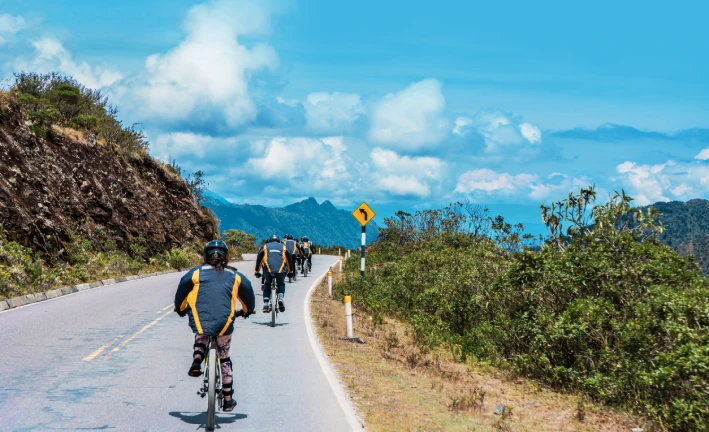
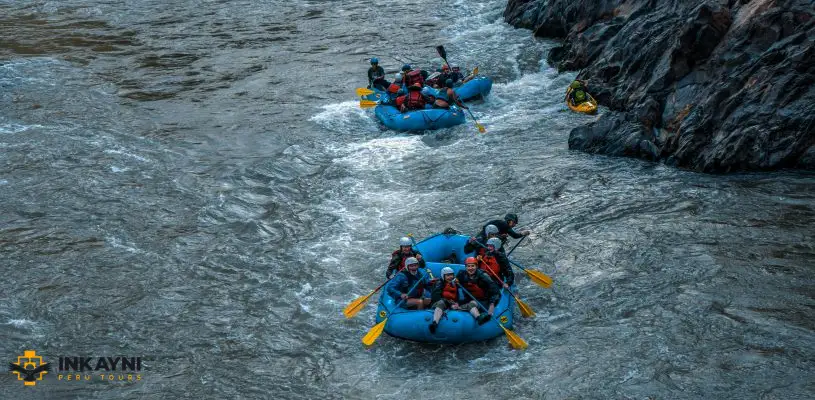
The Inca Jungle Trek is not a classic pure hiking route. It is a mixed adventure itinerary that usually combines a high-road descent by bike, hiking through warmer valleys, optional rafting or zip-lining, hot springs near Santa Teresa and the final approach to Machu Picchu.
It suits travelers who want an active trip but do not want several days of hard camping. The route feels more social, flexible and varied. It also has more places where services can be added or removed, which is why prices and inclusions vary so much between operators.

Practical reading:
Choose Choquequirao if the ruins and the silence are the reason you travel. Choose Inca Jungle if the route experience, activities and Machu Picchu ending matter more than archaeological depth.
2. Cost and Value: Which Trek Gives You More for Your Money?
- Inca Jungle often looks cheaper because there are more budget group departures and simpler hostel-based services. Choquequirao often costs more per traveler because the route is less standardized and needs camping logistics, mule support and stronger backcountry planning.
- Do not compare only the advertised price. The cheapest Inca Jungle tour may exclude rafting, zip-lining, hot springs, return train upgrades, bus to Machu Picchu or the best ticket option. A cheap Choquequirao trek may reduce support, gear quality, emergency planning or time at the ruins.
| Cost factor | Choquequirao Trek | Inca Jungle Trek |
| 1. Budget / basic range | Independent or very basic services may appear around US$250-450, but travelers handle more logistics and risk. | Budget group services can appear around US$240-350, depending on inclusions, season and return transport. |
| 2. Standard organized range | Many supported 4 or 5-day guided services sit around US$540-950+. | Many 3 or 4-day organized services sit around US$300-700+, especially when Machu Picchu logistics and safer activity standards are included. |
| 3. Private / upgraded range | Private trips, smaller groups or stronger support can rise toward US$950-1,300+. | Private rooms, better hotels, train upgrades and safer activity providers can push the price toward US$700-1,000+. |
| 4. Common extras | Sleeping bag, trekking poles, mule/horse support, extra snacks, tips, private transport and gear rental. | Rafting, zip-lining, hot springs, better hostel/hotel rooms, bus to Machu Picchu, train upgrades, tips and activity photos. |
| 5. Best value if… | You want remote archaeology, fewer people and several days of true trekking. | You want activities, a social route and Machu Picchu with easier logistics. |
| 6. Cheap-price risk | Weak camp support, poor food, rushed pacing, unclear mule service or no serious safety plan. | Excluded Machu Picchu logistics, poor biking equipment, weak rafting providers, unclear return transport or hidden activity costs. |
Money warning:
A cheap Inca Jungle price can become less attractive if Machu Picchu entry, return transport, bus, activities or safer equipment are not clearly included. A cheap Choquequirao price can become risky if support, food, water planning or emergency logistics are weak.
3. Physical and Mental Demands
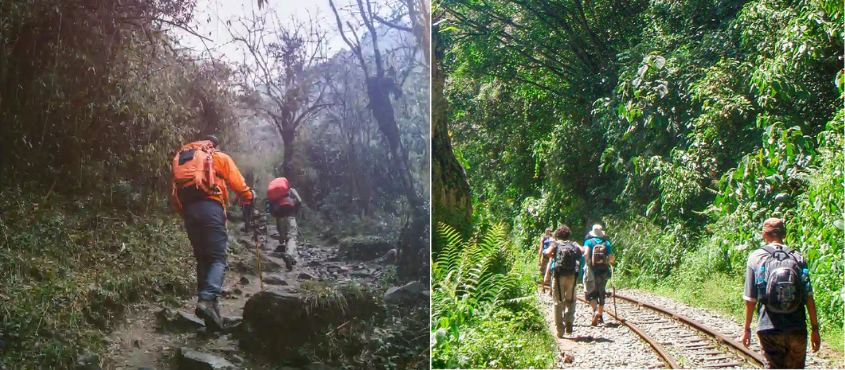
Both routes are active, but they do not punish the body in the same way. Choquequirao is a hiking-first trek. It builds fatigue through long descents, hard climbs, canyon heat and repeated leg stress. Inca Jungle is more varied: the hardest part may be the first bike descent, long activity days, humidity or the final logistics around Machu Picchu.
| Demand factor | Choquequirao Trek | Inca Jungle Trek |
| 1. Overall difficulty | Hard to very hard. | Moderate, with some demanding days depending on activities. |
| 2. What hurts most | Knees, quads, calves and endurance on the canyon return. | Hands/arms during biking, heat/humidity, long active days and final Machu Picchu fatigue. |
| 3. Altitude issue | Lower than many Cusco treks, but still high enough to require acclimatization. | Starts high near Abra Málaga, then drops quickly; altitude is less sustained than Salkantay, Ausangate or Lares. |
| 4. Mental demand | High because of isolation, basic camps and limited signal. | Medium because there are towns, hostels, transport options and more people. |
| 5. Beginner-friendly? | Not ideal for most first-time multi-day hikers. | More realistic for active beginners who accept biking and long days. |
| 6. Safety issue to check | Water planning, heat management, mule support, camp quality and emergency response. | Bike equipment, helmets, guide control, rafting provider, zip-line standards and road/weather conditions. |
Keep this in mind:
Do not choose Inca Jungle only because it is easier. The bike descent and adventure activities still need good safety standards. Do not choose Choquequirao only because its altitude is lower. The canyon can be brutal on tired legs.
4. What Will You Actually Discover?
Choquequirao: Archaeology as the Main Reward
Choquequirao is the stronger choice for travelers who want an archaeological focus. The site is linked to the broader Vilcabamba landscape and late Inca resistance, but it should not be reduced to a slogan. Its value comes from the combination of ceremonial spaces, terraces, mountain control, agricultural planning and ongoing recovery.
The feeling is very different from a scheduled visit to Machu Picchu. You do not simply arrive, take a photo and leave. You earn the site through effort, and that changes how the ruins are experienced.

Inca Jungle Trek: Living Culture on the Road to Machu Picchu
The Inca Jungle Trek is less about one major archaeological complex and more about movement through living landscapes. The route passes through warmer valleys, local towns, farms, coffee areas and sections connected to the wider Machu Picchu travel corridor.
This makes it stronger for travelers who want variety and everyday culture rather than silence and excavation. You may experience local meals, hot springs, bike routes and the final transition into Machu Picchu Pueblo before visiting the sanctuary.
Go Deeper into Archaeology or Machu Picchu Planning
MULTI-ADVENTURE ROUTEInca Jungle Trek
Bike, raft, and hike through tropical valleys on an adventurous route to Machu Picchu.
5. Logistics, Tickets and Access
The logistical difference is huge. Choquequirao is flexible in the sense that it does not work like the Classic Inca Trail permit system, but it is not simple. You still need transport to the trailhead, food, camping gear, mule support, water planning and a realistic safety plan.
Inca Jungle has more services, but it usually depends on Machu Picchu tickets and return logistics. That means the route can feel easier, but a poorly organized package can create problems at the end of the trip.
| Planning factor | Choquequirao Trek | Inca Jungle Trek |
| 1. Trail permit | No Classic Inca Trail-style trekking permit; local entrance and route logistics still matter. | No Classic Inca Trail-style trekking permit, but Machu Picchu ticket planning is central. |
| 2. Transport | Cusco to Capuliyoc/Cachora area and return, usually with fewer daily options. | Cusco to Abra Málaga / Santa María route, then transport sections toward Santa Teresa or Hidroelectrica depending on itinerary. |
| 3. Accommodation | Camping or basic route setups. | Simple hostels or local lodging on many itineraries. |
| 4. Machu Picchu ticket | Not needed for the classic Choquequirao-only trek. | Usually essential; confirm circuit, entry time, train/bus return and whether optional mountains cost extra. |
| 5. What can go wrong | Weak gear, poor mule logistics, underestimated heat, water issues or route fatigue. | Low safety standards for biking/rafting, missing Machu Picchu ticket, unclear return transport or extra activity costs. |
| 6. Booking flexibility | More flexible with dates, but harder to organize well at the last minute. | Easier to find departures, but Machu Picchu availability can still limit the final visit. |
Booking note:
Inca Jungle may be easier to book than the Classic Inca Trail, but do not leave Machu Picchu tickets and return transport to chance in high season. Choquequirao has fewer formal limits, but a good support team matters more because the route is remote.
6. Which Trek Is Better for Your Travel Style?
| Traveler type | Better choice | Why |
| 1. First-time visitor who wants Machu Picchu | Inca Jungle Trek | It usually finishes with Machu Picchu and has simpler logistics than Choquequirao. |
| 2. Strong hiker seeking solitude | Choquequirao Trek | The route is quieter, harder and more focused on remote ruins. |
| 3. Traveler on a tighter budget | Often Inca Jungle Trek | There are more budget departures, but inclusions must be checked carefully. |
| 4. Traveler worried about knees | Usually Inca Jungle Trek | Choquequirao has long canyon descents and climbs that can punish knees. |
| 5. Traveler who dislikes biking or adventure activities | Choquequirao Trek | Inca Jungle depends partly on activities; Choquequirao is a more traditional trek. |
| 6. Mixed group with different fitness levels | Inca Jungle Trek | The route has more services, towns and activity variety. |
| 7. Traveler who already knows Machu Picchu | Choquequirao Trek | It offers a less conventional archaeological journey. |
| 8. Traveler who wants deep archaeology | Choquequirao Trek | The ruins are the main destination, not a final add-on. |
| 9. Traveler who wants a more social route | Inca Jungle Trek | It has more group departures, towns, hostels, hot springs and optional activities. |
7. Best Time and Weather Considerations
The dry season from May to September is usually the best window for both treks. April and October can also work well with some flexibility. The rainy season is more complicated, especially for Choquequirao because the canyon route can become slippery, hot, humid or harder to recover from.
| Season | Choquequirao Trek | Inca Jungle Trek |
| May to September | Drier trails and better canyon conditions, but strong sun exposure can still be intense. | More stable weather and easier logistics, with high demand for Machu Picchu tickets. |
| April and October | Good shoulder months if you accept some weather variation. | Good balance for travelers who want fewer crowds and reasonable conditions. |
| November to March | Higher rain risk, slippery trails and harder remote logistics. | Rain can affect biking, roads, jungle trails and activity safety. |
| February | Possible only with careful condition checks. | Possible on many itineraries, but rain and road conditions deserve extra caution. |
Questions to Ask Before Booking Either Trek
| Question | Why it matters | More important for |
| 1. Is Machu Picchu really included? | Ask for ticket, circuit, entry time, bus, train or car return, not only the phrase “Machu Picchu included.” | Inca Jungle |
| 2. What safety equipment is used for biking? | Helmet quality, bike condition, guide control, road/weather checks and emergency support matter more than the activity name. | Inca Jungle |
| 3. Are rafting and zip-lining included or optional? | Many low prices exclude these activities or add them locally, which changes the real cost. | Inca Jungle |
| 4. How many hours do we walk on the hardest day? | A route can look moderate on paper but still feel hard if one day concentrates most of the climb or distance. | Both |
| 5. How much time do we have at Choquequirao itself? | The trek loses value if the itinerary rushes the archaeological visit after days of hiking. | Choquequirao |
| 6. Who carries the camping gear? | Mule support, duffel limits and camp quality can change the real difficulty of Choquequirao. | Choquequirao |
| 7. What happens if weather, knee pain or activity safety becomes a problem? | A good operator should explain pacing, backup plans and realistic alternatives before departure. | Both |
Compare Other Routes Before Deciding
Final Verdict: Choquequirao or Inca Jungle Trek?
- Choose Choquequirao if you want the harder, quieter and more archaeological route. It is the better fit for strong hikers who value solitude, ruins, canyon landscapes and the feeling of reaching a place that still sits outside the usual Machu Picchu circuit.
- Choose Inca Jungle Trek if you want a more varied and social route that usually ends at Machu Picchu. It is the better fit if you want biking, optional adventure activities, hot springs, warmer valleys, local towns and simpler day-to-day logistics.

Frequently Asked Questions About Choquequirao vs Inca Jungle Trek
Which trek is harder, Choquequirao or Inca Jungle?
Which trek is cheaper?
Does the Inca Jungle Trek include Machu Picchu?
Does the classic Choquequirao Trek include Machu Picchu?
Which trek is better for beginners?
Which trek is better for archaeology?
Which trek is better for a social trip?
Which trek is better if I have knee problems?
Is Inca Jungle a real trek or an adventure tour?
What should I check before booking Inca Jungle?
Can I do Choquequirao without a guide?
Can I book Inca Jungle at the last minute?
What is the best time for these treks?
Which one should I choose if I only have one chance?
Escrito por
Shared:


If you liked this article and the information you found, give us 5 stars!
 (Ninguna valoración todavía)
 Loading...