


What Is the Food Like on the Choquequirao Trek?
On a guided Choquequirao Trek, food is usually simple, hot and filling, with breakfast, lunch and dinner prepared to support long hiking days through the canyon. Common meals include oatmeal, eggs, soups, rice, pasta, potatoes, vegetables, tea and coffee, and many agencies also offer hot drinks and some trail snacks. Even so, hikers should still bring their own backup snacks and electrolytes, and any vegetarian, vegan or allergy-related request should be made before the trek.
Table of Contents
Choquequirao Trek food is the meal plan that supports several demanding days through canyon descents, exposed climbs, rural camps and limited services. When meals are well organized, the route feels more manageable because hikers can focus on walking, drinking water, resting and recovering before the next section.
This blog explains what meals are usually like with an agency, what breakfast, lunch, dinner and snacks may include, how food is prepared on the trail, which dietary adaptations are possible, what you should still carry yourself and what to ask before booking.
| 3 mealsusually included | Hot drinkscamp routine | Snacksbring backups | Special dietsrequest early |
WORLD WONDER IN THE ANDESMachu Picchu
Discover the history, landscapes, and essential tips for visiting this world wonder.
Why Food Matters on the Choquequirao Trek
The Choquequirao route combines long walking days, steep canyon terrain, warm exposed sections and basic trail infrastructure. Food matters because the body needs steady calories, salt, fluids and warm meals to recover after hours of descent and uphill walking. Poor meal planning can turn normal fatigue into headaches, stomach discomfort, dehydration or low energy before the next climb.
Meal planning also depends on the itinerary. A faster route gives your body less time to recover, while a slower plan usually gives more space for breakfast, rest stops and dinner at camp. If you are still choosing the number of days, compare the Choquequirao Trek 4 Days with the Choquequirao Trek 5 Days before deciding how much rhythm and recovery time you want.
Main trek guides before choosing your route
What Meals Are Usually Included with an Agency?
With a professional trekking agency, the food plan usually covers breakfast, lunch and dinner during the trekking days. Many organized services also include hot drinks, trail snacks and a simple camp dining setup. Exact inclusions vary by itinerary, service level and operator, so check the included and not included section before booking.
| Meal | Examples of what it may include |
| Breakfast | Oatmeal or porridge, pancakes, eggs, bread with jam or butter, fruit, coffee, hot chocolate, coca tea or muña tea. |
| Lunch | Soup, rice, quinoa, pasta, native potatoes, vegetables, chicken, beef, avocado, salads or natural drinks when available. |
| Dinner | Hot soups, stews, pasta, rice dishes, vegetables, potatoes, light desserts, fruit compotes and herbal teas. |
| Snacks | Fruit, cookies, nuts, raisins, chocolate, cereal bars, quinoa or kiwicha bars and simple trail snacks. |
| Afternoon tea | Tea, coffee, hot chocolate, popcorn, crackers, cookies or light appetizers before dinner in some organized treks. |
| Drinking water | Some agencies provide boiled or treated water at camp. Others may ask you to carry water, buy it locally or bring purification tablets. |
Important note
Choquequirao Trek food is not identical in every service. It can change by operator, itinerary length, season, group size, budget and dietary request. Before paying, confirm meals, snacks, drinking water, special diets and any meal not included on the first or last day.

Buffet-style meals can make camp dining easier after long hiking days.
Breakfast on the Choquequirao Trek
Breakfast is the first fuel of the day. On this route, mornings often start early because hikers try to cover exposed sections before the sun becomes stronger. A good breakfast should be warm, filling and easy to digest.
- Oatmeal with honey and fruit: useful for slow-release energy before several walking hours.
- Eggs or omelets: a practical protein source before uphill sections.
- Andean bread: often served with jam, butter, cheese or simple sides.
- Pancakes: common in organized trekking breakfasts when camp logistics allow it.
- Coffee, coca tea or muña tea: warm drinks that help start the day and support digestion.

Breakfast should be simple, warm and energy-rich.
Lunch on the Choquequirao Trek
Lunch is the main energy reset of the hiking day. Depending on the itinerary, it may be served at a rest point, campsite or planned stop. The best lunch for this route gives calories without leaving you too heavy for the next section.
- Soups: quinoa soup, vegetable soup or cream soups that are warm and easy to digest.
- Main dishes: chicken, beef, pasta, rice, native potatoes, sweet potato or cooked vegetables.
- Fresh sides: salads or vegetables when they can be carried and prepared safely.
- Drinks: herbal teas, natural drinks or warm beverages depending on the camp setup.

Lunch helps hikers recover before the next trail section.
Dinner on the Choquequirao Trek
Dinner is the recovery meal. After a long hiking day, it should help you warm up, replace calories and prepare for sleep. The best dinners on this trek are complete, warm and simple enough for tired stomachs.
- Hot soups: chicken broth, pumpkin soup or vegetable soup with Andean herbs.
- Main dishes: pasta, rice, stews, vegetables, potatoes or other filling dishes.
- Desserts: fruit, compotes, hot chocolate or simple sweets depending on the service.
- Herbal teas: anise, muña, chamomile or coca tea are common after dinner.
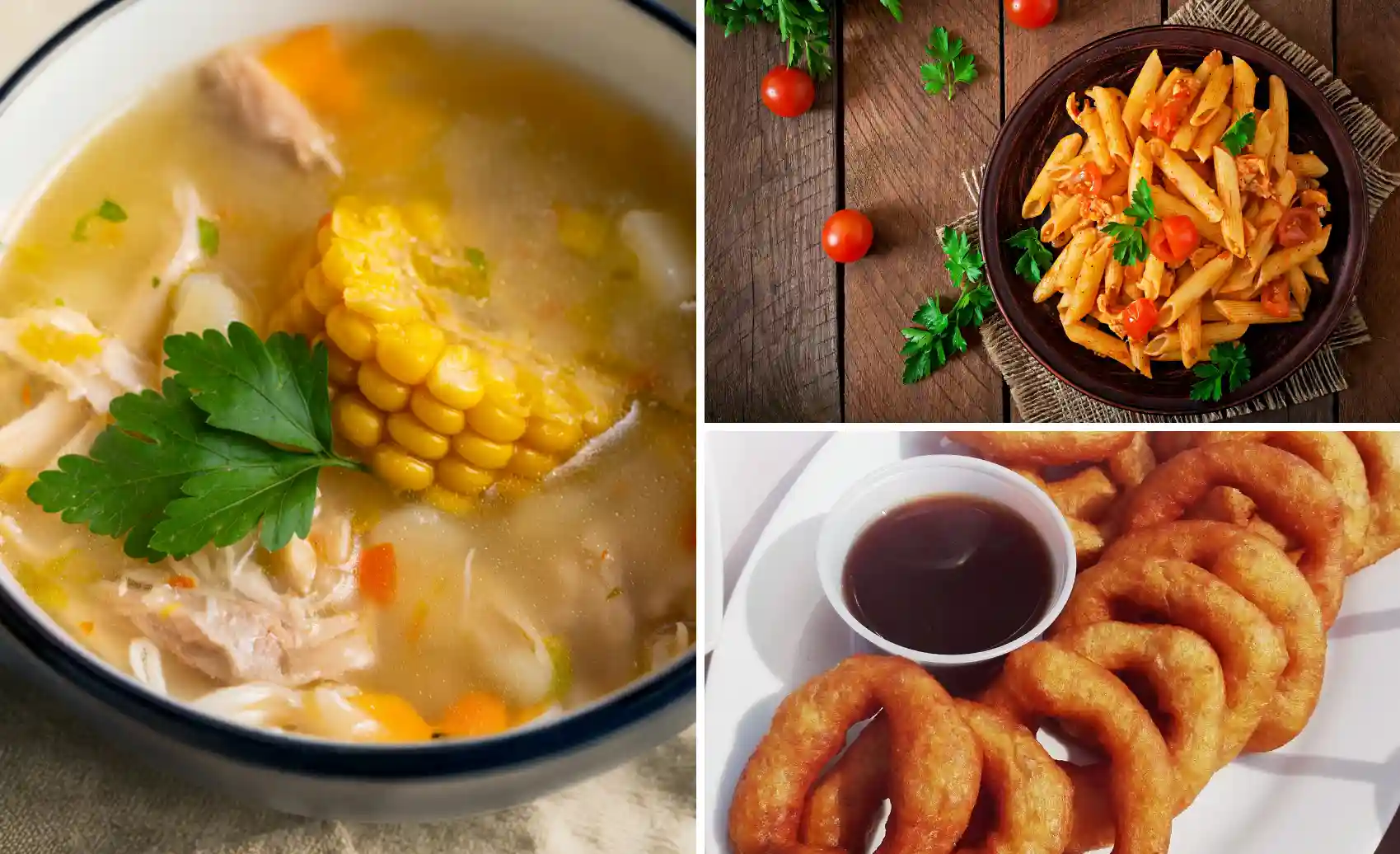
A warm dinner helps hikers recover at camp.
PERU’S LEGENDARY HIKEInca Trail to Machu Picchu
Follow the historic trail through mountain passes, Inca sites, and cloud forest paths to Machu Picchu.
Snacks, Hot Drinks and Hydration
Even when meals are included, personal snacks still matter. The hardest moments can come between meals, especially during long climbs, warm canyon sections or stretches where services are limited. Snacks should be familiar, compact and easy to eat during short breaks.
- Fresh fruit such as bananas, apples or oranges.
- Energy bars made with quinoa, kiwicha or oats.
- Nuts, raisins, almonds, cashews or trail mix.
- Dark chocolate or cacao-based snacks.
- Electrolytes or rehydration tablets if you sweat heavily.

Personal snacks help between meals and during long climbs.
Pro tip
Bring snacks your stomach already knows. The Choquequirao route is not the best place to test new supplements, very sweet bars or unfamiliar foods during a long climb.
How Food Is Prepared on the Trail
Food preparation depends on portable camp logistics. On organized treks, the support team usually carries cooking equipment, sets up a kitchen area and prepares meals at camps or planned rest points. This is one of the clearest differences between hiking with an agency and planning the route independently.
| Aspect | What it means on the trek |
| Portable kitchen | Meals are prepared with camp stoves, cooking gear and basic kitchen equipment carried along the route. |
| Camp cook | A cook or kitchen team handles meal preparation, timing, hygiene and group portions. |
| Local ingredients | Menus often use Andean staples such as potatoes, corn, quinoa, vegetables, herbs and seasonal products. |
| Meal timing | Breakfast, lunch and dinner are planned around the hiking rhythm, not only around city mealtimes. |
| Dining setup | Depending on the service, meals may be served in a dining tent or simple camp eating area. |
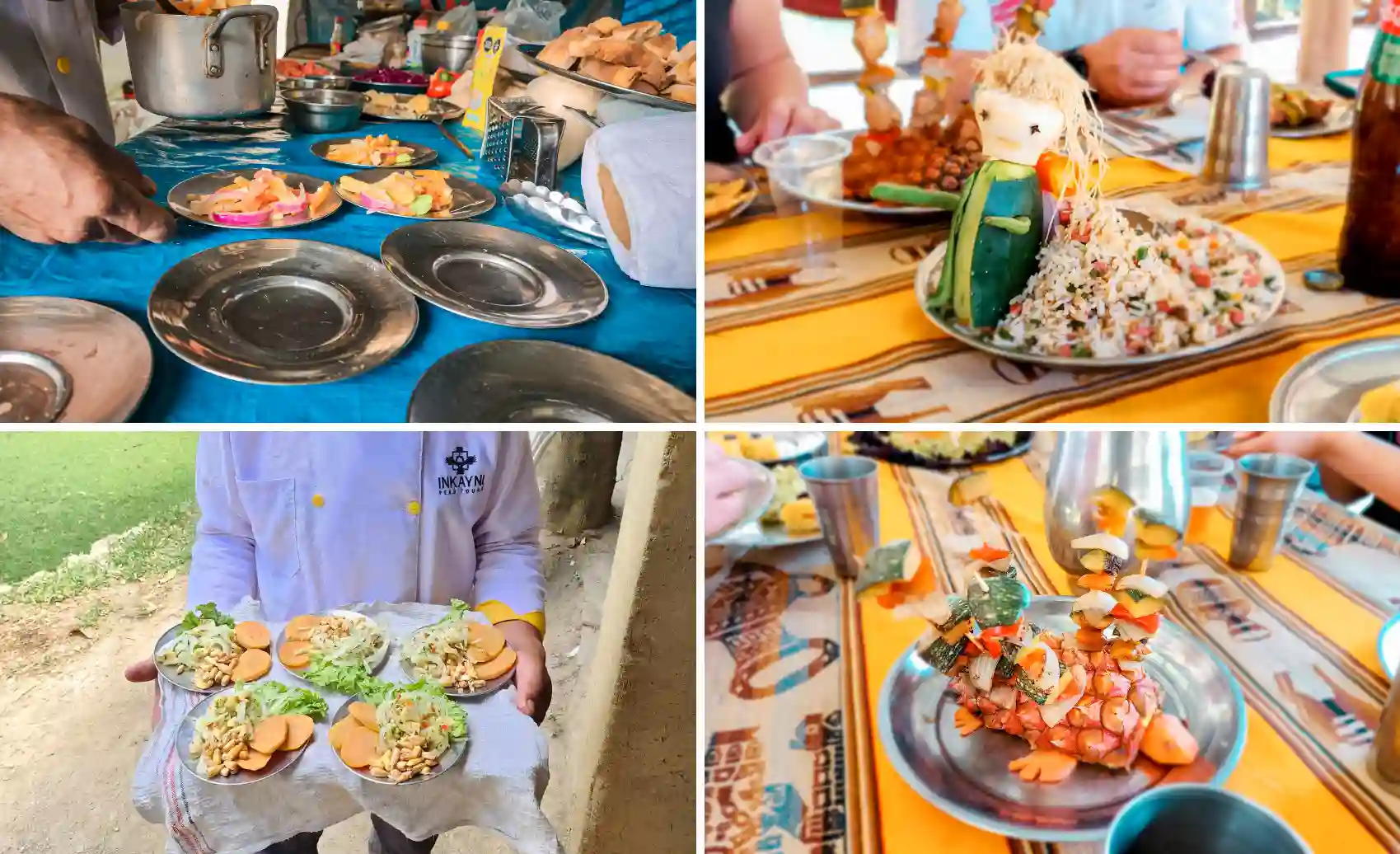
Camp cooking logistics reduce the burden on hikers.
A trekking agency reduces the food, cooking, timing and support burden. You still walk the same trail, but the team manages ingredients, meal preparation, kitchen gear and camp routines. That support is useful on a route where tired hikers may finish the day with little energy for cooking.
Vegetarian, Vegan and Allergy-Friendly Options
Vegetarian, vegan, gluten-free, lactose-free or allergy-sensitive meals may be possible on organized treks, but they must be requested in advance. Remote trekking kitchens adapt better when the team knows your needs before buying ingredients and planning the menu.
- Vegetarian meals: usually based on vegetables, quinoa, rice, potatoes, pasta, soups, legumes and eggs if accepted.
- Vegan meals: possible with advance notice, but you should confirm protein sources and snacks.
- Gluten-free or lactose-free needs: explain them clearly before the trek, especially if contamination is a concern.
- Food allergies: report the exact allergen before booking and repeat it during the briefing.

Special diets should be requested before the trek.
Warning
If you have a severe allergy, send the exact allergen, severity, cross-contamination concerns and safe alternatives before the trek. A general comment during the hike may be too late for a remote kitchen.
What Food Should You Bring Yourself?
Even with an agency, you should carry some personal food items. The goal is to cover personal preferences, emergency hunger, stomach sensitivity and gaps between stops. This is especially useful if you are used to eating at specific times.
| Bring | Why it helps |
| 2 or 3 familiar energy bars | Useful on climbs or when you need quick calories before the next meal. |
| Nuts or trail mix | Compact, calorie-dense and easy to eat while resting. |
| Electrolytes | Helpful if you sweat heavily in the canyon heat. |
| Personal tea or stomach-friendly snack | Useful if your digestion is sensitive during treks. |
| Reusable bottle or hydration bladder | Allows you to sip consistently instead of waiting until you feel thirsty. |
Your food choices should match your gear plan. The Choquequirao Trek packing list helps you avoid carrying too much weight while still remembering small meal-related items such as a bottle, hand sanitizer, electrolytes and personal snacks.
More Choquequirao resources for food and logistics
Local Flavors You May Try
Food on the Choquequirao route often uses simple Andean ingredients that travel well and give steady energy. The exact menu depends on the agency and season, but these products are common in Cusco and Apurimac-style trekking meals.
- Quinoa: useful in soups or side dishes because it is filling and practical for camp cooking.
- Native potatoes: common in Andean meals and useful after hiking hours.
- Corn and chicha morada: sometimes used in drinks or meal accompaniments.
- Muña and coca tea: common hot drinks on Andean routes.
- Local fruits: may appear in desserts, drinks or snacks depending on the season.
- Artisan bread: often useful at breakfast or early route stops.

Local snacks and Andean ingredients add variety to the route.
Agency Meals vs Independent Food Planning
The biggest difference is logistics. With an agency, the team usually organizes ingredients, cooking gear, meal timing, camp kitchen setup and support staff. Independent travelers need to plan what to buy, how much to carry, how to cook, where to refill water and what to do if a local food stop is closed.
| Option | Main advantage | Main tradeoff |
| Agency food plan | Meals, cooking logistics and timing are organized for you. | Less flexibility and higher total trek cost. |
| Independent food plan | More control over budget, food choices and pace. | More weight, more planning and more risk if services are limited. |
| Mixed approach | You use local meals where available and carry backup food. | Requires careful route research and cash in soles. |
If you plan to hike without a guide, food becomes one of the most important planning points. You need to think about meal weight, cooking options, water treatment, snacks, local availability and backup calories before leaving Cusco. Food planning also connects with Choquequirao Trek safety, especially when weather, fatigue or stomach problems affect the hiking rhythm.
Final Recommendation
For most travelers, the best Choquequirao Trek food plan is simple, organized and realistic. You need enough calories for long hiking hours, enough fluids for warm canyon sections and enough flexibility for personal digestion, allergies or snack habits.
A full-service agency is useful if you want meals, camp kitchen logistics, muleteer support, route timing and daily recovery handled for you. If that support matters more than full independence, the 5-day Choquequirao Trek is the most natural option to review before booking.
Frequently Asked Questions About Choquequirao Trek Food09
What meals are usually included on the Choquequirao Trek with an agency?
Is Choquequirao Trek food prepared fresh?
Do I need to bring my own food if meals are included?
Can vegetarian or vegan meals be prepared?
Can agencies adapt meals for allergies or intolerances?
What drinks are common on the Choquequirao Trek?
Is drinking water provided on the trek?
What snacks are best for the Choquequirao Trek?
What happens if I do the trek independently?
Does food affect Choquequirao Trek difficulty?
What should I ask before booking?
Autor
Shared:


If you liked this article and the information you found, give us 5 stars!
 (Ninguna valoración todavía)
 Loading...