


How Much Does the Choquequirao Trek Cost?
For most travelers, the Choquequirao Trek usually costs around US$560-850 for a standard guided 4 or 5-day trip, while private or premium services often move into the US$900-1,400+ range. Going independently can reduce the price, but the savings are smaller than many expect once transport, food, gear rental, entrance fees and safety are added.
Table of Contents
The real question behind Choquequirao Trek cost is not only “how much is the tour?” A traveler comparing prices wants to know what the money pays for, what a cheap offer may leave out, and whether going independently is actually worth the savings once transport, food, gear, entrance fees, mule support and safety are added.
Choquequirao is still a trek-first destination: there is no train or bus to the ruins, services are limited, and the final price changes a lot depending on whether you go independently, join a standard guided group, book a private trek, or extend the route toward Machu Picchu.
| US$400-700Independent baseline | US$560-850Standard guided trek | US$900-1,400+Premium or private service |
LOST CITADEL TREKChoquequirao Trek
Hike to one of Peru’s most impressive and least crowded Inca archaeological sites.
Choquequirao Trek Cost in 2026
Standard vs Premium: What Are You Actually Paying For?
If you are comparing agency prices, focus on what each service includes. A standard trek can already be a good value if the operator is serious. A premium or private trek makes sense when the higher price gives you clear benefits: smaller group, better camp comfort, private transport, stronger support, flexible pacing or better emergency preparation.
| Service level | Estimated range | Usually includes | Best for |
| Standard guided trek (4 or 5 days) | US$560-850 | Guide, transport, meals, entrance handling, tents, basic camp setup, cook and mule support for group gear. | Most travelers who want a supported trek without paying for private service. |
| Premium or private trek (4 or 5 days) | US$900-1,400+ | Smaller group, private logistics, better camp setup, stronger support, more flexible pace and more personalized service. | Travelers who value comfort, privacy, better pacing or more control. |
Quick rule before comparing prices
- Compare inclusions first. Transport, guide, meals, entrance and mule support should be clear.
- Ask who carries what. Mule or duffel support changes your real effort.
- Check camp comfort. Tents, sleeping pads, food and staff matter after long hiking days.
- Confirm emergency support. Oxygen, first aid and evacuation protocol should not be vague.
- Look beyond the headline price. Cheap can be fine, but only if the service is transparent.

Use the total Choquequirao Trek cost as a planning range, not only as a tour price.
Independent Choquequirao Trek Cost
For travelers without their own trekking gear, doing Choquequirao independently is not as cheap as it first looks. You may save on the agency price, but you still need transport, entrance fee, food, snacks, camping gear, water treatment, cash for small services and a safety margin.
| Expense | Estimated cost | Practical note |
| Transport Cusco – trailhead – Cusco | US$50-100 | Shared transport keeps it lower; private transport raises the total but saves time. |
| Choquequirao entrance | US$18-22 | Often reported around S/60 for foreign adults. Carry soles in cash. |
| Food, snacks and water | US$80-140 | Buy most supplies in Cusco before the trek. Route options are limited. |
| Camping or local services | US$30-80 | Depends on camps, showers, toilets, charging points or basic lodging used along the route. |
| Gear rental | US$100-220 | For tent, sleeping bag, mat, trekking poles, stove, backpack or other items you do not own. |
| Cash buffer | US$50-100 | For drinks, snacks, tips, small services, route changes or unexpected transport. |
| Estimated self-guided total | US$400-700 | A realistic range for a foreign traveler without trekking gear who manages the route independently. |
| If you add mule, guide or private transport | US$650-950+ | At this point, the price can get close to a guided trek, so compare inclusions carefully. |
Pro tip:
Choquequirao can be done independently, but the route becomes more complex once you add transport, food planning, camping gear, mule support, water treatment, route timing and emergency preparation. For most travelers, booking with a reliable travel agency is the most practical way to reach Choquequirao archeological site.
What Does a Guided Choquequirao Tour Usually Include?
A guided trek is more expensive because it packages the difficult parts of the route: transport, route timing, camp logistics, meals, staff and support.
| Included item | Why it affects the price |
| Professional guide | Manages the route, pacing, safety and interpretation of Choquequirao. |
| Round-trip transport | Organized transport to Capuliyoc or Cachora reduces delays and uncertainty. |
| Meals during the trek | Food quality, cook support and dietary requests affect service level. |
| Entrance fee | Some operators include it; others list it separately. |
| Camping setup | Tents, mats, dining setup and kitchen support change comfort and logistics. |
| Mule or horse support | Reduces the load carried by travelers and helps the route feel more manageable. |
| Emergency support | First-aid kit, oxygen or emergency protocol should be clearly explained. |
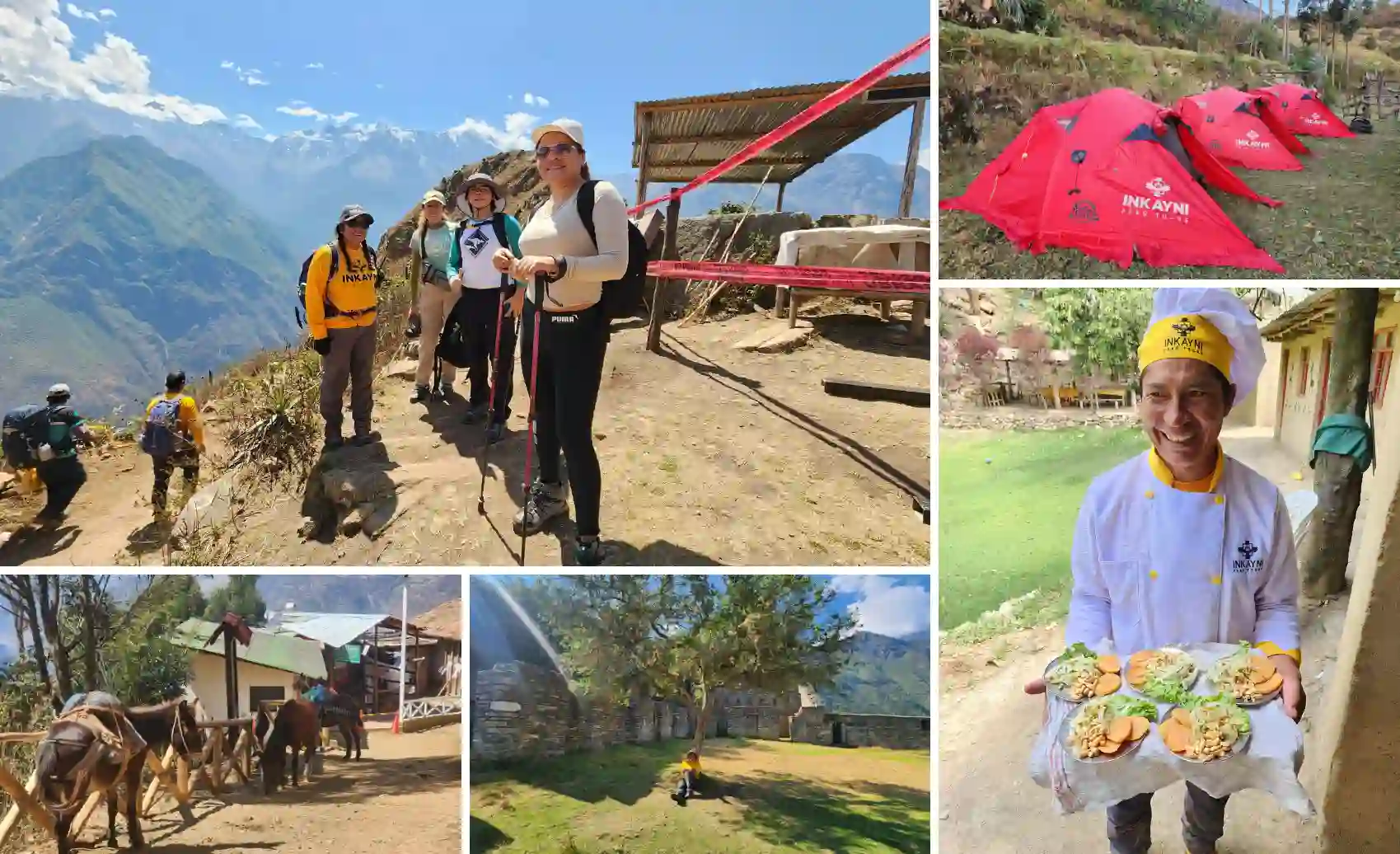
Guided Choquequirao prices usually reflect transport, camping logistics, meals, staff and mule support.
Why Does the Choquequirao Trek Price Change So Much?
Choquequirao costs more than a simple day tour because it needs several moving parts: transport to the trailhead, guide service, meals, camp setup, mule support, equipment, staff and enough time to reach the ruins without rushing the route.
| What changes the price | How it affects your budget |
| Duration | A 5-day trek usually costs more than a 4-day trek, but it gives better pacing and more recovery time. |
| Group size | Shared groups reduce cost. Private or small-group treks cost more because transport, guide and staff are divided among fewer people. |
| Inclusions | Meals, entrance, tents, sleeping mats, mule support, oxygen and first-aid support can be included or charged separately. |
| Gear and camp quality | Better tents, mats, kitchen setup and food raise the price but improve comfort on a remote route. |
| Operator support | Established operators may charge more because they invest in staff, logistics, safety, communication and clearer service conditions. |
Price logic:
Do not compare Choquequirao tours only by the headline price. Compare what is included, how many days the trek takes, who carries the gear, what camp support is provided and what happens if someone cannot continue.

Online listings help you compare inclusions before you ask for a final quote.
Where Should You Book: Online or in Cusco?
For a price-focused traveler, this is a fair question. Booking in Cusco can sometimes be cheaper, but Choquequirao is not a simple last-minute day trip. The route needs transport, food, camps, mule support and staff coordination. For many travelers, the better strategy is to compare online first, ask direct questions, then decide if the lower local price is worth the risk.
| Booking option | Advantages | Risks | Best for |
| Online before traveling | Time to compare reviews, inclusions, policies and communication. | Some offers look good until you check what is excluded. | Travelers with fixed dates or limited time in Cusco. |
| Direct with a Cusco operator | Clearer communication and sometimes better value than third-party platforms. | Still requires checking reputation and written inclusions. | Travelers who want support but also want to ask detailed questions. |
| Last-minute in Cusco | Possible discounts if a group is already formed. | Lower availability, rushed decisions and variable service quality. | Flexible backpackers with time and tolerance for uncertainty. |
| Independent | Lowest cost and full control. | No guide, no organized emergency plan and all logistics are your responsibility. | Experienced hikers with gear, Spanish and self-sufficiency. |

Booking in Cusco can work, but last-minute prices and quality vary widely.
How Season Affects Choquequirao Trek Cost
Season does not always change the official price dramatically, but it changes availability, comfort and how much support you may need.
| Season | Cost effect | Practical reading |
| May to September | Higher demand and less room for last-minute negotiation. | Best weather window for most trekkers; book earlier with better operators. |
| April and October | Often balanced. | Good shoulder months if you accept some weather variation. |
| November to March | Prices may be more flexible, but rain can raise practical risk. | Bring better rain protection and avoid cutting logistics too tightly. |
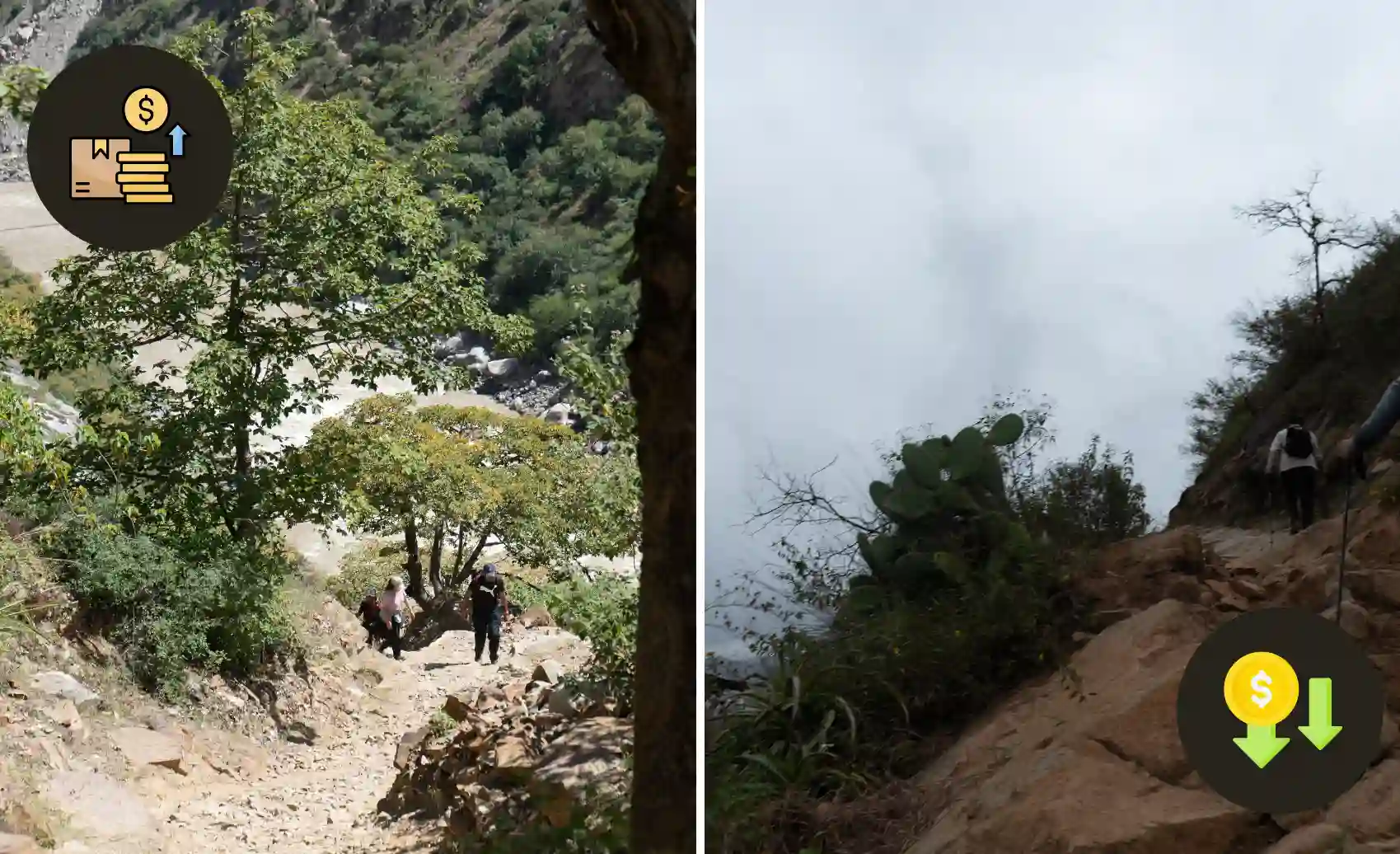
Season changes the real budget: dry months are safer, rainy months can create delays and extra costs.
Extra Costs Travelers Often Forget
This is where many budgets fail. The tour price or independent estimate may cover the main route, but small expenses still appear before and during the trek.
| Extra cost | Typical range | When it applies |
| Sleeping bag rental | US$3-8 per day | If not included or if your own bag is not warm enough. |
| Trekking poles | US$2-5 per day | Highly useful for Choquequirao’s descents and climbs. |
| Tent or sleeping mat | US$1-10 per day | Mainly for independent trekkers. |
| Snacks and drinks | US$20-60 | Buy in Cusco if you want better prices and choices. |
| Wi-Fi, charging, showers or toilets | Small cash payments | Available only in some places; carry soles. |
| Tips | US$20-60+ | Depends on group size and service quality. |
| Travel insurance | US$15-50+ per week | Recommended if it covers trekking, medical care and remote evacuation. |
| Emergency transport or plan change | Variable | Keep a cash buffer, especially if traveling independently. |
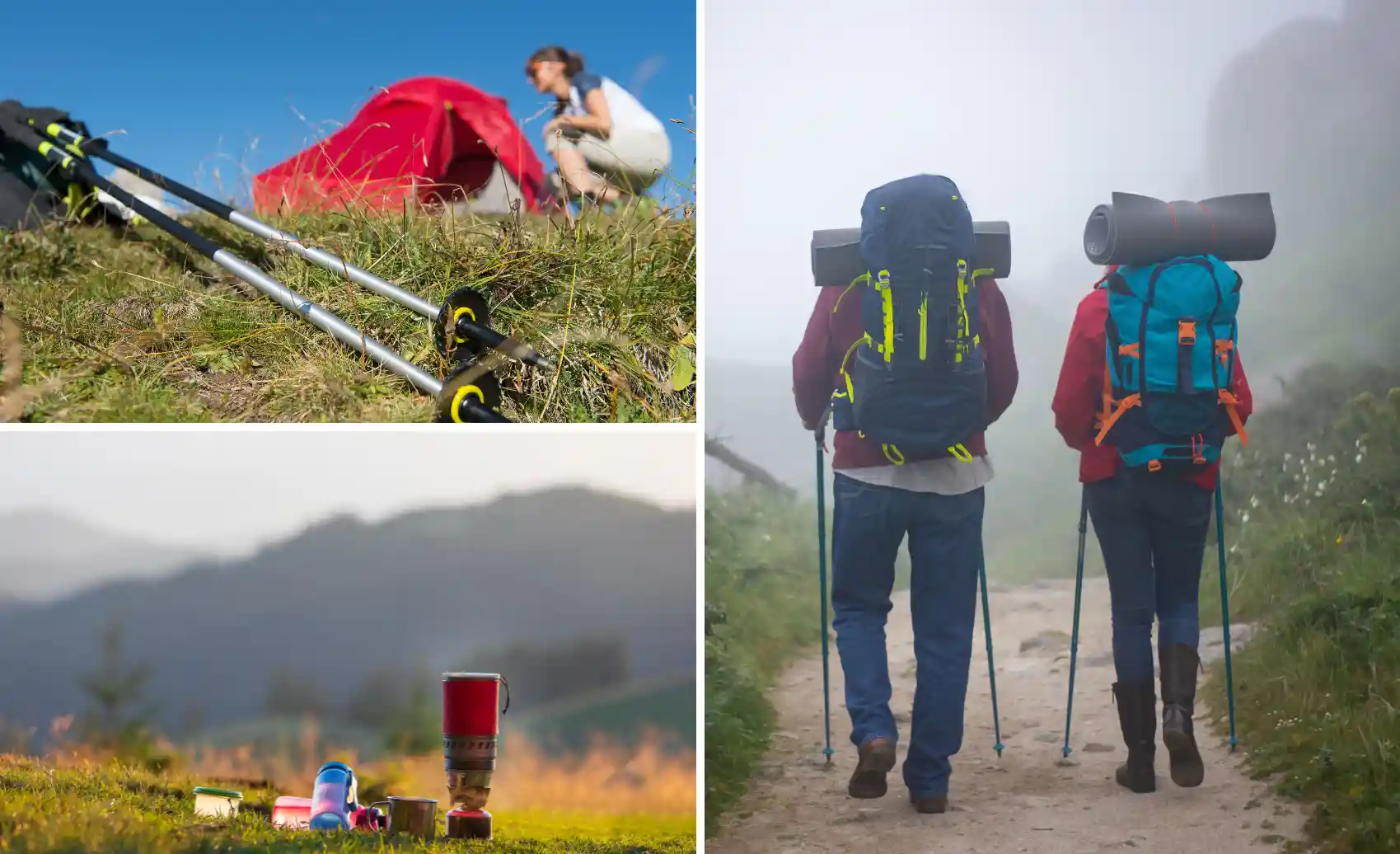
Rental gear can save money, but poor equipment can make the canyon route uncomfortable or risky.
Tips, Snacks, Water and Insurance: Small Items That Change the Real Budget
For a guided trek, tips are not mandatory but are common when the service is good. For independent trekkers, snacks, water treatment, fuel and small route expenses matter more because there is no operator absorbing logistics.

Small bills in soles and dollars are useful for tips and minor trail expenses.
| Item | Suggested budget | Useful note |
| Guide tip | US$10-25 per traveler | Depends on group size and service quality. |
| Cook / camp staff tip | US$5-15 per traveler | Group tip systems are common. |
| Muleteer tip | US$5-10 per traveler | Carry small bills. |
| Snacks | US$20-40 | Dried fruit, nuts, chocolate and bars are easier to buy in Cusco. |
| Water treatment | US$5-30 | Tablets are cheaper; filters are better for frequent hikers. |
| Insurance | US$15-50+ per week | Check trekking altitude and evacuation coverage. |

Buy snacks in Cusco before the trek; route prices are higher and options are limited.
Compare other treks if your budget changes
Sharing transport, gear and group logistics is one of the safest ways to reduce the Choquequirao budget.
Final Budget Advice: What Should You Actually Pay For?
If you are researching Choquequirao trek price, treat the number as a filter, not as the final decision. A basic independent budget may work for experienced hikers who already own gear and can manage risk. A standard guided trek is usually more expensive, but the price buys time, safety, route organization, food, staff support and a more controlled experience.
For most travelers, the best value is not the cheapest option. It is the option that clearly explains what is included, what is not included, how much weight you carry, how the team handles emergencies and how much time you actually spend at Choquequirao. Inkayni Peru Tours can work as the commercial bridge here: compare the market ranges first, then review a concrete 5-day Choquequirao trek service to see inclusions, rhythm and support in a real operated itinerary.
Frequently Asked Questions About Choquequirao Trek Cost
How much does the Choquequirao Trek cost in 2026?
Is the Choquequirao Trek cheaper without a guide?
Can I do Choquequirao for less than US$300?
How much does a guided Choquequirao tour usually cost?
Why are some Choquequirao tours so cheap?
What is usually not included in the tour price?
How much cash should I carry on the Choquequirao Trek?
Is the Choquequirao entrance fee included?
Is the 5-day Choquequirao trek worth the extra cost?
Does season change the Choquequirao Trek price?
How much does Choquequirao to Machu Picchu cost?
Is Choquequirao cheaper than Machu Picchu?
Should I book online or in Cusco to save money?
What is the safest way to reduce the budget?
Autor

Shared:


If you liked this article and the information you found, give us 5 stars!
 (Ninguna valoración todavía)
 Loading...