


Intipunku at Machu Picchu
Intipunku, or the Sun Gate, is the historic upper gateway linked to the traditional Inca Trail arrival at Machu Picchu. For regular visitors, it is not a viewpoint included with any ticket, but a specific panoramic route inside Circuit 1, usually Route 1-C when it is officially available in high season. It is worth choosing if your priority is the Sun Gate perspective, Inca Trail context, and a moderate uphill walk with wide views over the sanctuary. If your main goal is the most complete first visit through temples, plazas, and internal sectors, Circuit 2 usually makes more sense.
Table of Contents
Inti Punku at Machu Picchu is the high gateway associated with the traditional Inca Trail arrival, where hikers first see the sanctuary from above after several days of walking. That is why this route carries a different meaning from a standard Machu Picchu circuit: you are looking back at the citadel from the direction of arrival.
This guide focuses only on Intipunku at Machu Picchu. It explains what the route is, which ticket you need, how difficult it feels, when it is worth choosing, how it differs from Circuit 2, and why it should not be confused with the separate Inti Punku Ollantaytambo hike in the Sacred Valley.
| Route 1-CPortada Intipunku | Circuit 1Panoramic route | ModerateUphill walk | 4 hrsPlanning reference |
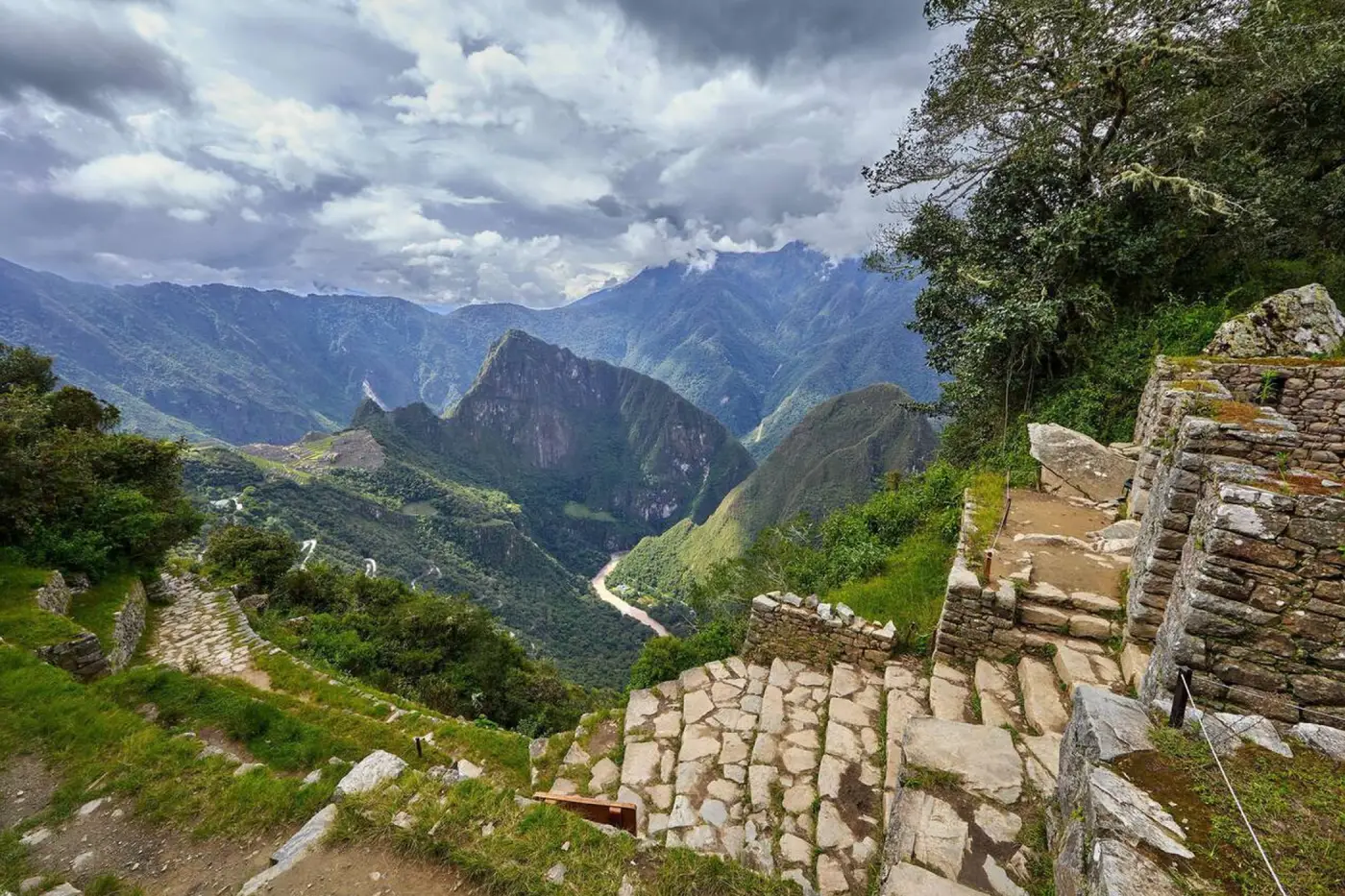
Panoramic view of Machu Picchu from Intipunku (Sungate).
WORLD WONDER IN THE ANDESMachu Picchu
Discover the history, landscapes, and essential tips for visiting this world wonder.
What Is Intipunku Machu Picchu?
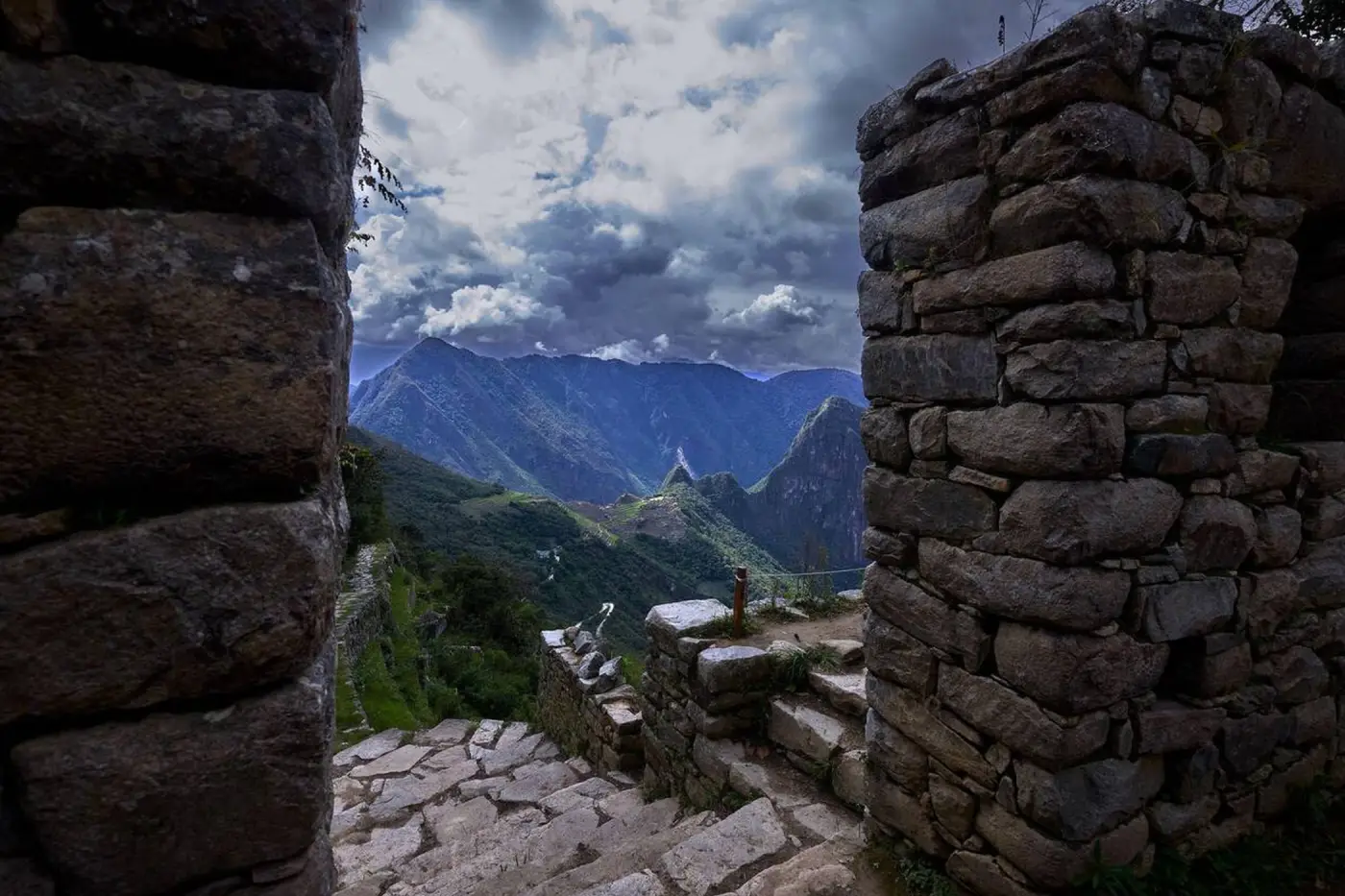
Intipunku is a Quechua name often translated as Sun Gate. At Machu Picchu, it refers to the stone gateway on the upper approach used by Inca Trail hikers before entering the sanctuary. For many trekkers, this is the emotional threshold of the route: after days of walking, the citadel appears below with Huayna Picchu and the surrounding ridges behind it.
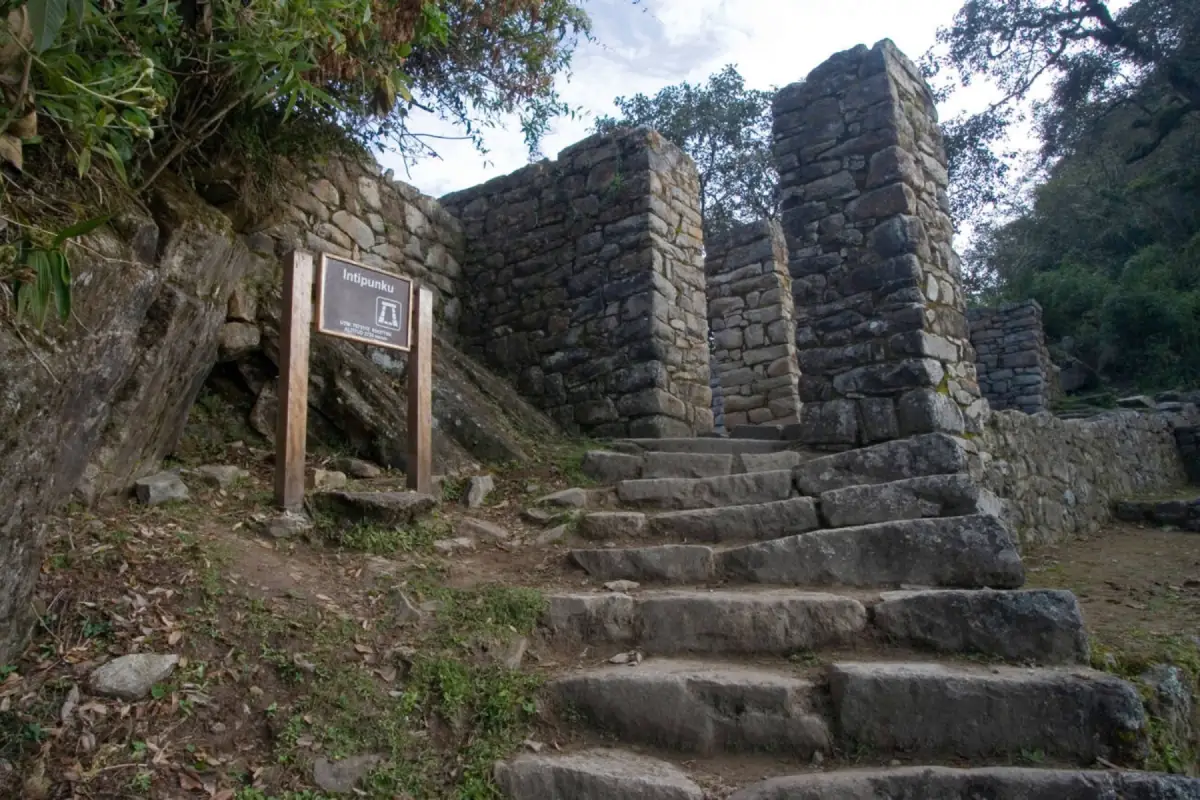
Intipunku or Sun Gate near Machu Picchu.
For regular visitors, the experience is different. You do not arrive after the full Inca Trail, but you can still walk from the Machu Picchu route system toward the Sun Gate when Route 1-C is open. That makes the visit valuable for travelers who want to understand how the old approach worked without committing to the full 4 Day Inca Trail.
The route is also useful for travelers comparing the Short Inca Trail with a standard Machu Picchu visit. The Short Inca Trail gives you a partial trekking arrival into the sanctuary area, while the Intipunku route inside Machu Picchu gives you only the Sun Gate perspective if the official route is available.

Final Stretch to Machu Picchu through short Inca Trail.
| Detail | Planning reference |
| Route name | Route 1-C, Portada Intipunku. |
| Circuit | Circuit 1, the panoramic circuit of Machu Picchu. |
| Availability | Officially listed as a high-season route. Always verify the route before booking trains and hotels. |
| Maximum stay | The official Route 1-C map lists a maximum stay of 4 hours. |
| Ticket purchase | Use TuBoleto or confirm ticket handling with your operator. |
| Best use | Panoramic view, Inca Trail context, historical approach, photography, and a route with a clear purpose. |
Did you know?
The Sun Gate is strongly connected with the Inca Trail, but the Intipunku Machu Picchu route and the full Inca Trail are not the same product. The full Inca Trail requires permits, an authorized operator, camps, and several days of trekking. The Intipunku route is a Machu Picchu ticket route when available.
How to Visit Intipunku at Machu Picchu
The correct sequence is simple: secure the right ticket first, then organize the rest of the logistics. Most travelers still need to plan arrival to Aguas Calientes, the bus to Machu Picchu, passport control, route timing, and the return to town or train station.
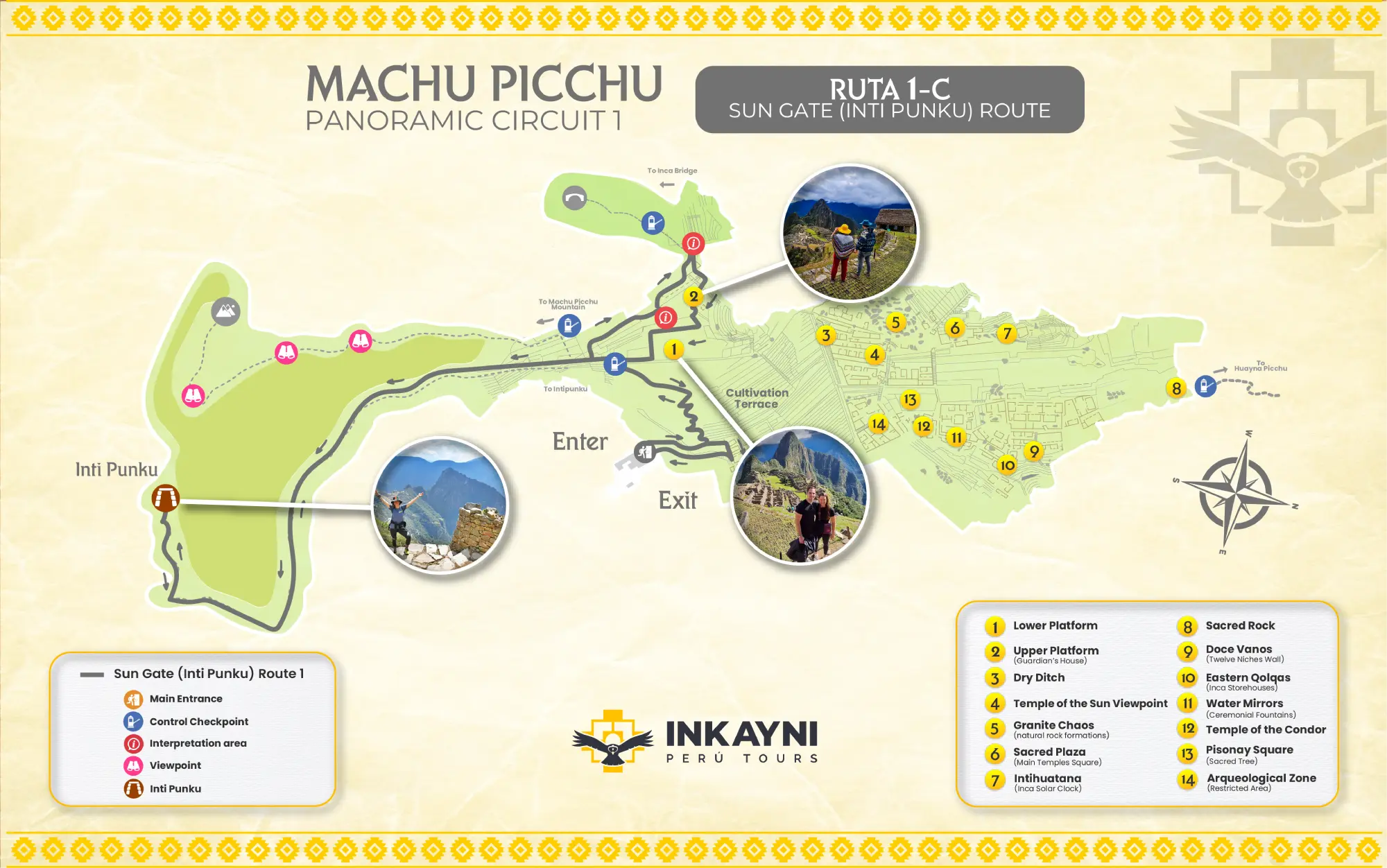
Map of Machu Picchu Circuit 1-C showing the route to Inti Punku (Sun Gate).
Step 1
Confirm Route 1-C
Look for Portada Intipunku under Circuit 1 when buying your ticket. If it is not shown, do not plan around the Sun Gate.
Step 2
Plan Aguas Calientes
Decide whether you will sleep in town or arrive by train to Machu Picchu Pueblo with enough buffer.
Step 3
Walk with time
This route is not technically hard, but it is uphill. Do not rush it. The point is the gradual view back toward Machu Picchu.
Step 4
Stay on route
Machu Picchu circuits are controlled. Follow the assigned path, keep your documents ready, and use the restrooms before entering.
Warning:
Route 1-C Portada Intipunku is a high-season route only. It is commonly available from around June 1 to October 15, but dates can change by official regulation. If this route does not appear on TuBoleto for your travel date, you cannot access Intipunku with a standard Machu Picchu ticket.
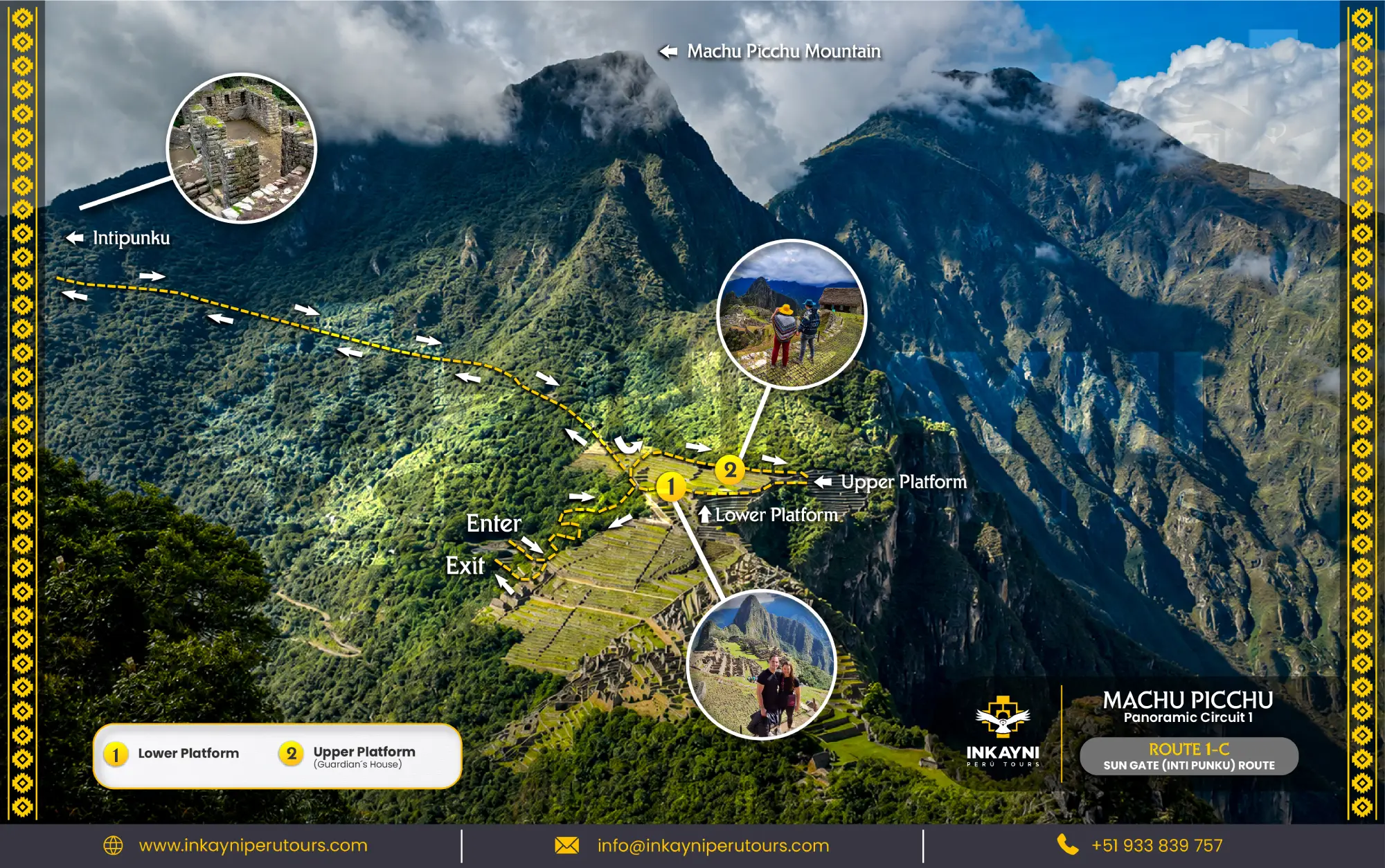
3D map of Route 1-C to Intipunku
Useful logistics before choosing the Sun Gate route
PERU’S LEGENDARY HIKEInca Trail to Machu Picchu
Follow the historic trail through mountain passes, Inca sites, and cloud forest paths to Machu Picchu.
How Difficult Is the Intipunku Machu Picchu Hike?
The hike to Intipunku is moderate for most active travelers. It is not a technical climb, and it is generally less exposed than Huayna Picchu, but it still requires uphill walking, sun protection, and enough time. The effort can feel stronger after several days at altitude, during strong sun, or when the stone path is wet from mist or rain.
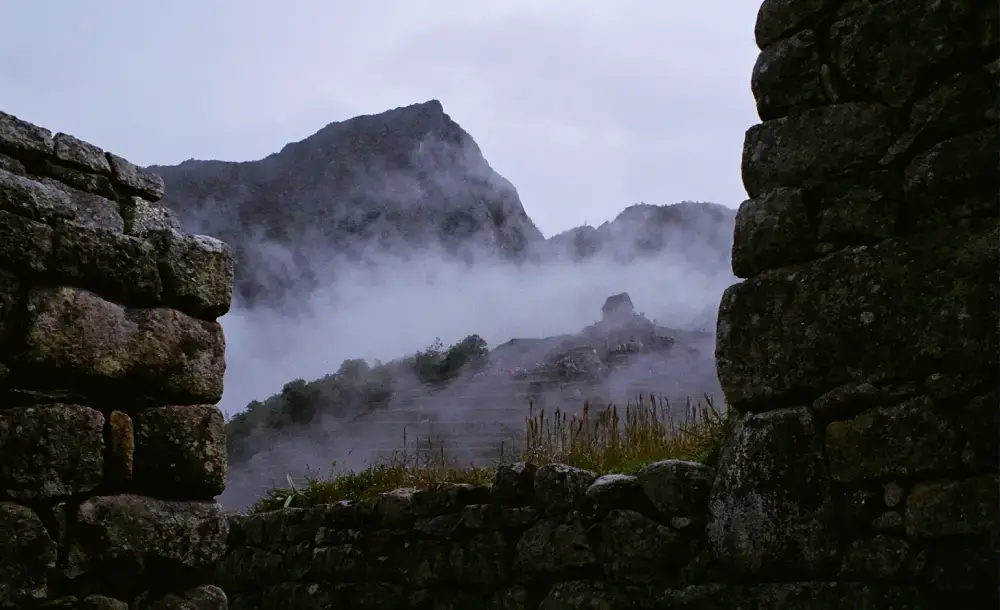
Several travel sources describe the walk as taking around 2 to 3 hours round trip for average visitors. The official Route 1-C map gives a maximum stay of 4 hours, which is a better planning ceiling if you want to walk calmly, take photos, listen to your guide, and avoid rushing back to the exit.
| Traveler profile | How the route may feel | Practical advice |
| Active traveler | Moderate and manageable. | Use good walking shoes, carry water, and keep a steady pace. |
| First-time high-altitude visitor | More tiring than expected, especially after poor sleep or little acclimatization. | Spend time in Cusco or the Sacred Valley first and avoid rushing the climb. |
| Traveler with knee issues | The uphill may be manageable, but descending can be uncomfortable. | Consider a shorter panoramic route or a classic circuit with less route pressure. |
| Photography-focused traveler | Worth it if views open, but weather can affect the reward. | Choose the route for history and perspective, not only for a guaranteed clear photo. |
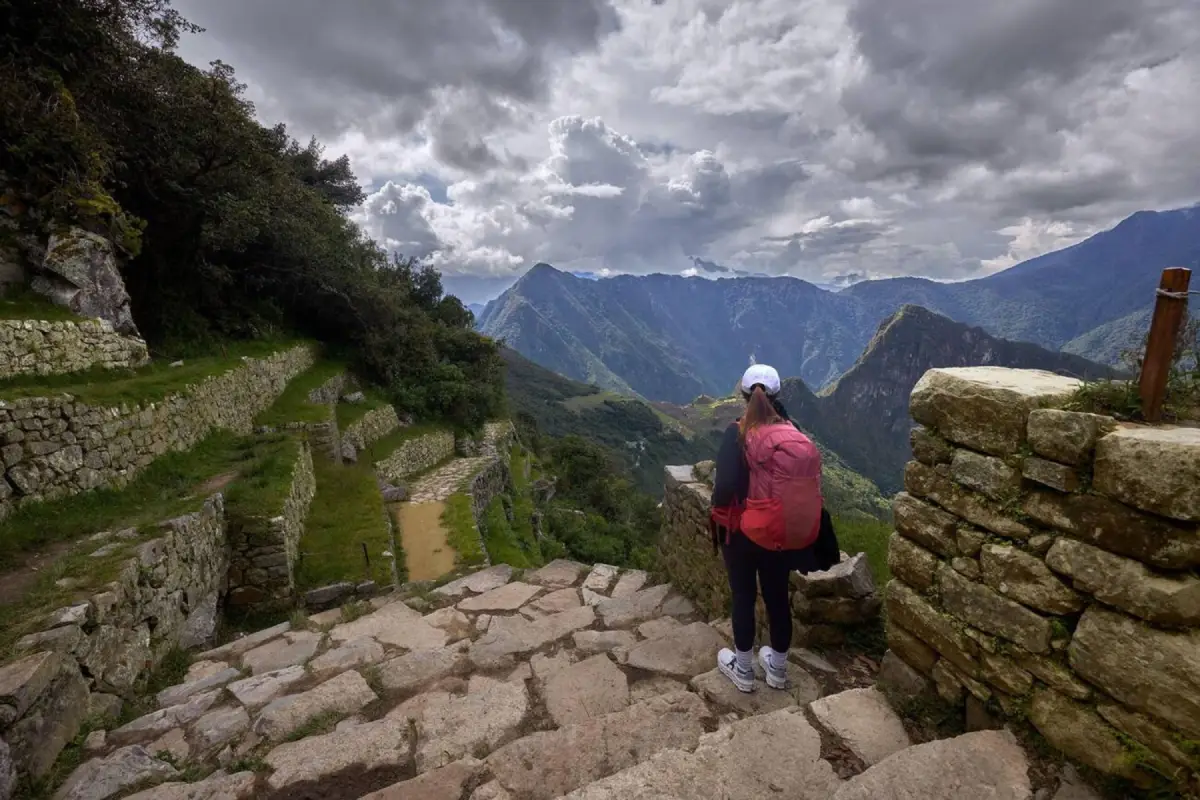
Stone walls and stairways at Intipunku in Machu Picchu,
Intipunku and the Inca Trail Connection
Intipunku matters because it was the traditional arrival point for hikers approaching Machu Picchu through the Inca Trail. From this upper gateway, the sanctuary appears below with Huayna Picchu, terraces, forest, and mountain ridges in the same view.

For regular visitors, Route 1-C gives only part of that experience. You can walk toward the Sun Gate when the route is available, but you are not doing the full Inca Trail. The 4 Day Inca Trail is a multi-day trek with permits, camps, guides, and a gradual arrival to Machu Picchu. The Short Inca Trail is a lighter version for travelers with less time.
| Option | What it gives you | Best for |
| Route 1-C Intipunku | Sun Gate perspective inside the Machu Picchu route system. | Travelers who want the view and historical context without a full trek. |
| Short Inca Trail | A partial trekking arrival toward Machu Picchu in less time. | Travelers who want trail experience but cannot do four days. |
| 4 Day Inca Trail | The classic multi-day approach through the old Inca road system. | Travelers who want the full symbolic arrival to Machu Picchu. |
Pro tip:
Choose Route 1-C if you want the Sun Gate viewpoint during a Machu Picchu visit. Choose the Inca Trail if the journey itself, the camps, the archaeological stops, and the gradual arrival are part of what you want to experience.
Best Time to Visit Intipunku Machu Picchu
| Period | View conditions | Planning advice |
| May and September | Good balance of drier weather and slightly softer crowd pressure. | Strong months if route availability aligns with your travel date. |
| June through August | Usually the clearest skies of the year, with colder mornings. | Book early because demand rises for tickets, trains, buses, and hotels. |
| April and October | Transition months with mixed sun, mist, and occasional rain. | Good if you accept weather variation and want softer light across the mountains. |
| November through March | Wet season with higher odds of rain and dense cloud cover. | Choose another route if visibility is your main reason for visiting Intipunku. |
For a broader planning view, compare this section with Machu Picchu weather by month and the best time of day to visit Machu Picchu. Weather and light matter more on this route because the view is the main reward.
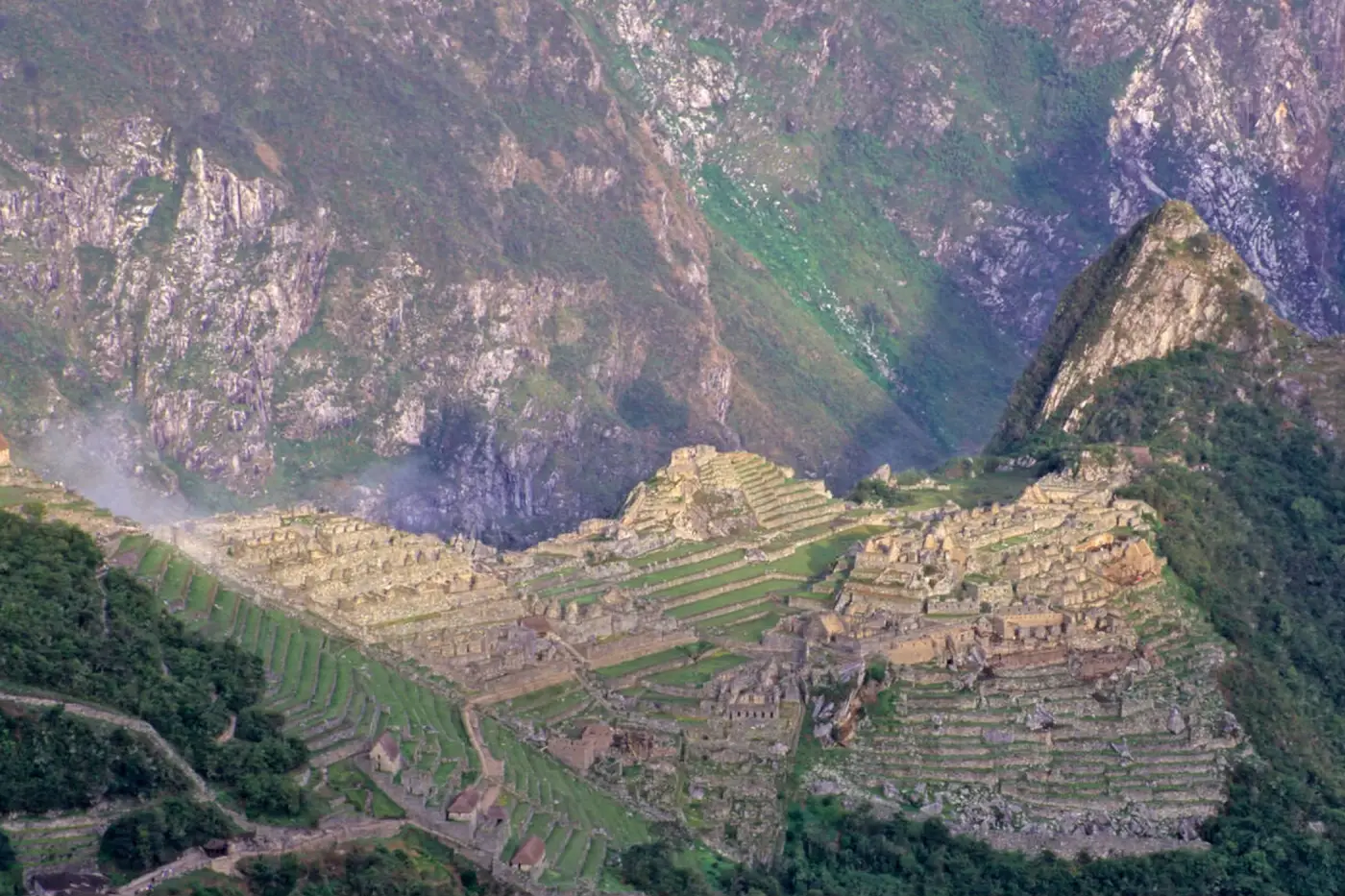
From Intipunku, travelers get one of the most complete views of Machu Picchu.
What to Bring for the Sun Gate Route
Pack for a controlled archaeological site, not for an open mountain trek. You need enough comfort for a moderate uphill route, but you must respect Machu Picchu rules on backpacks and restricted items. If you are coming directly from Cusco, a simple acclimatization plan can make the walk feel easier.
Clothing
Use light layers, sun protection, and a rain poncho during wet or transition months.
Footwear
Wear walking shoes or light trekking shoes with grip. Stone paths can be slippery after mist or rain.
Documents
Bring the original ID or passport used for your ticket. The entrance document must match the booking.
Small daypack
Keep your backpack within the official limit of 16 x 14 x 8 in (40 x 35 x 20 cm).
Warning
Machu Picchu rules prohibit oversized backpacks, food or kitchenware, tripods, selfie sticks, drones, umbrellas, and leaving the marked circuits. Re-entry is not allowed after you exit the archaeological site.
Intipunku or Another Machu Picchu Route?
Intipunku is meaningful, but it is not automatically the best choice for every traveler. The right route depends on whether you want the Sun Gate, the classic photo angle, a fuller citadel walk, or a harder mountain climb.
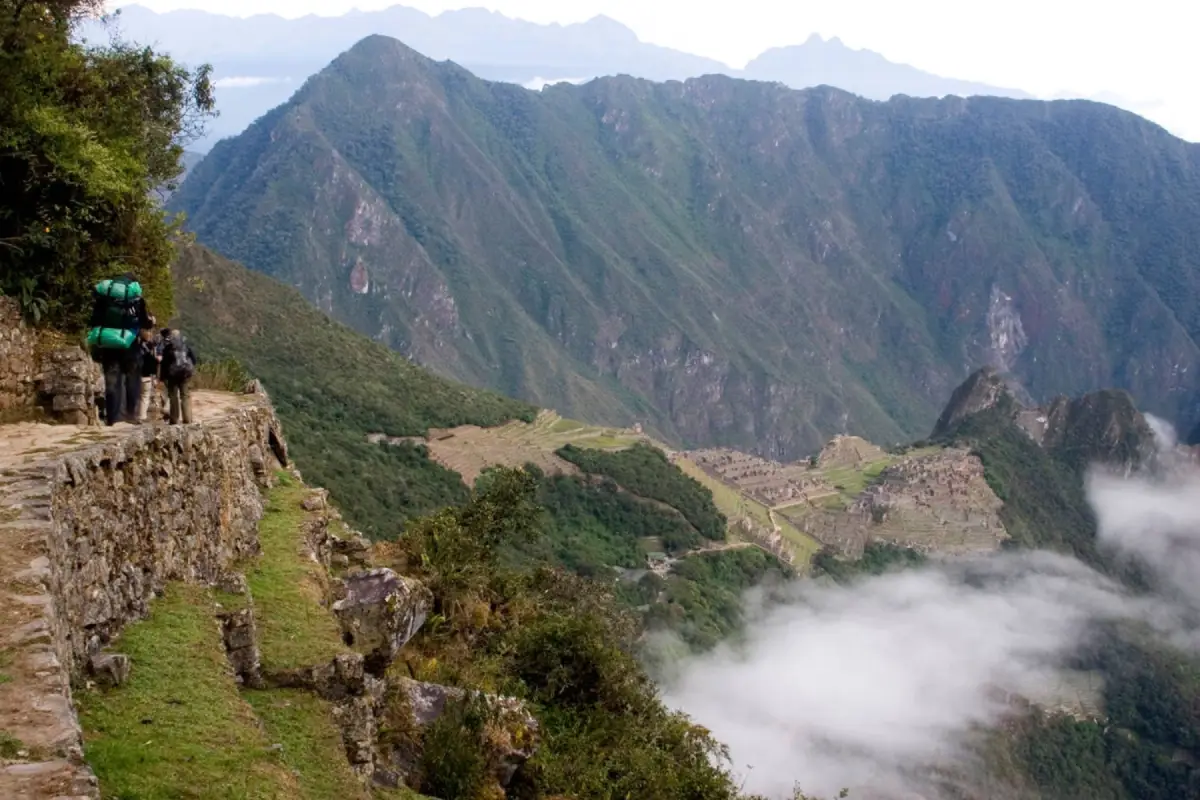
Hikers descending from Intipunku toward Machu Picchu after completing the Inca Trail, with the citadel visible below.
| Option | Choose it if you want | Main trade-off |
| Intipunku Machu Picchu | A historic gateway, Inca Trail context, and a panoramic uphill route. | Less focus on lower temples and urban sectors. |
| Upper Terrace | A classic panoramic angle with less walking. | You do not get the Sun Gate route. |
| Circuit 2 | The most balanced first-time Machu Picchu visit. | You do not visit Intipunku unless your ticket includes that route. |
| Huayna Picchu | A steep iconic mountain climb above the citadel. | More physically demanding and limited by ticket availability. |
| Machu Picchu Mountain | A longer mountain hike with wider views. | More time and energy than Intipunku. |
Useful guides before choosing your Machu Picchu route
Inti Punku Machu Picchu vs Inti Punku Ollantaytambo
This is one of the biggest sources of confusion. Intipunku Machu Picchu is inside the Machu Picchu route system and depends on an official ticket. Inti Punku near Ollantaytambo is a separate Sacred Valley hike above the town, with a much longer walking day, higher altitude, and no Machu Picchu entry ticket involved. If you were looking for the free full-day Sacred Valley route, use Inkayni’s Inti Punku Ollantaytambo hike guide instead.
| Comparison point | Intipunku Machu Picchu | Inti Punku Ollantaytambo |
| Location | Inside the Machu Picchu route system, connected with Circuit 1 and Route 1-C when available. | Above Ollantaytambo in the Sacred Valley, outside the Machu Picchu archaeological site. |
| Access | Requires the correct Machu Picchu ticket and route availability. | Free hike, but longer and more demanding, with limited services on the trail. |
| Main view | Machu Picchu from the upper historical access area. | Sacred Valley, Ollantaytambo, Urubamba corridor, and the Verónica snowcap. |
| Effort | Moderate route inside the Machu Picchu visit system. | Demanding full-day hike, best for acclimatized travelers. |
| Best for | Travelers already visiting Machu Picchu who want the Sun Gate route. | Travelers with an extra day in the Sacred Valley who want a quieter mountain hike. |
Practical note
If your goal is Intipunku Machu Picchu, focus on Route 1-C, Machu Picchu ticket availability, Aguas Calientes logistics, and official circuit rules. If your goal is Inti Punku Ollantaytambo, plan it as a separate Sacred Valley hike and do not mix it with your Machu Picchu entry day.
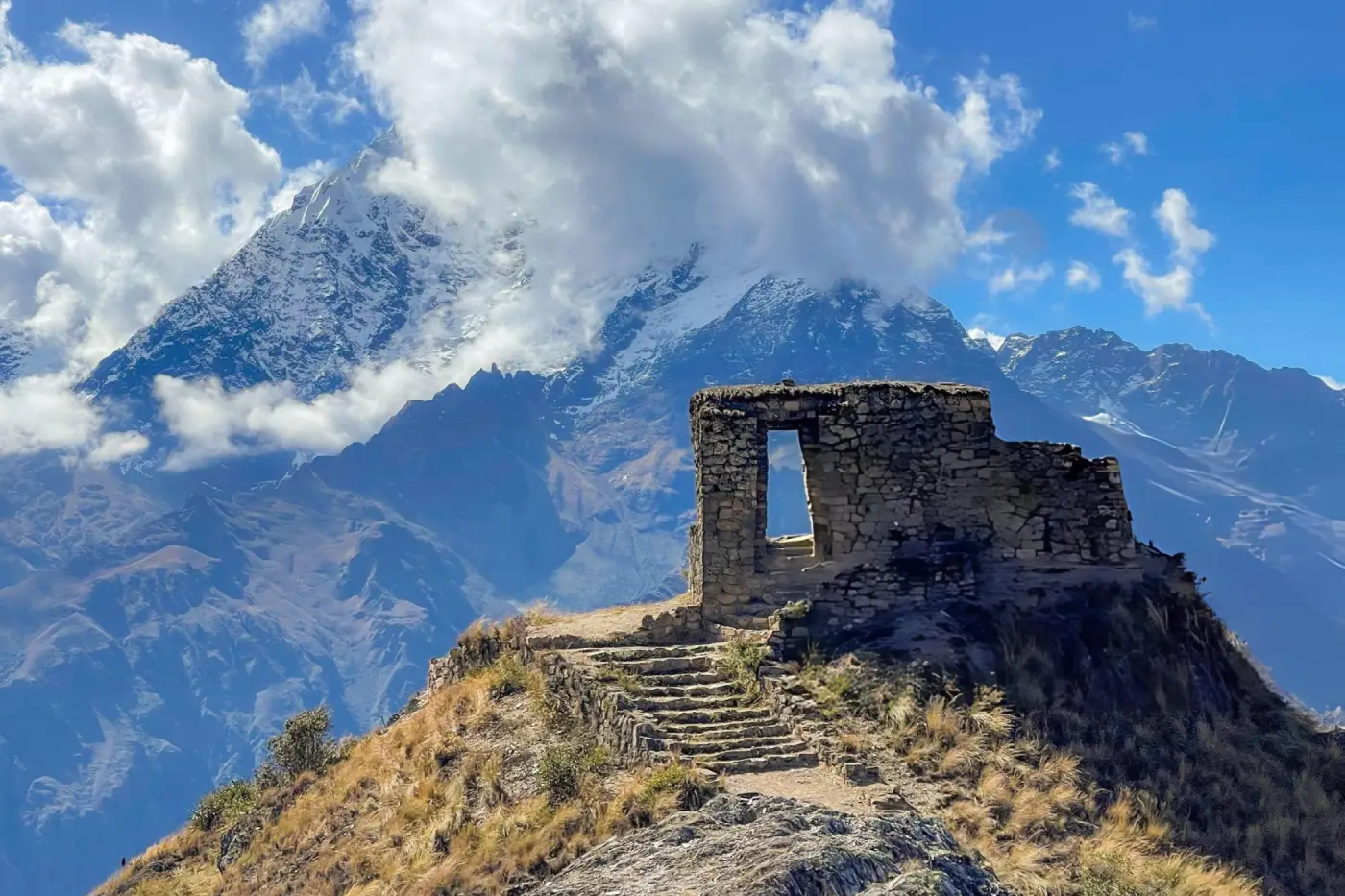
Intipunku archaeological site near Ollantaytambo,
Intipunku or Sun Gate near Machu Picchu.
PERU’S LEGENDARY HIKEInca Trail to Machu Picchu
Follow the historic trail through mountain passes, Inca sites, and cloud forest paths to Machu Picchu.
When Intipunku Is Not the Right Choice
Choose another route if this is your only Machu Picchu visit and you care more about walking through temples, plazas, and internal archaeological sectors than reaching the Sun Gate. Circuit 2 usually fits that profile better because it gives a fuller experience of the citadel itself.
Intipunku may also be less ideal if you have knee pain, limited walking tolerance, a very tight train schedule, or if the route is not available on your date. The route rewards patience. If you need a shorter and more predictable visit, the upper terrace route may be a better match.
The preserved structures at Intipunku served as an access and observation point within the Inca road network linking the Inca Trail to Machu Picchu.
Choose the Right Way to Reach the Sun Gate
Intipunku is worth choosing when you want more than a standard viewpoint. It gives you the Sun Gate perspective, the Inca Trail context, a moderate uphill walk, and one of the most meaningful panoramic angles over Machu Picchu. It works best when the route is available, your schedule has enough margin, and you understand that Route 1-C is mainly about landscape, history, and arrival.
If this is your only Machu Picchu visit and you want temples, plazas, and a fuller walk through the lower citadel, compare Route 1-C with Circuit 2 before buying. If the journey to the Sun Gate matters more than the viewpoint alone, consider the Inca Trail to Machu Picchu or the Short Inca Trail instead.
Frequently Asked Questions About Intipunku Machu Picchu
What is Intipunku Machu Picchu?
Which ticket do I need for Intipunku Machu Picchu?
Is Intipunku included in every Machu Picchu ticket?
Is Intipunku the traditional entrance used by the Inca Trail?
How hard is the hike to Intipunku?
Is Intipunku better than Circuit 2?
Can I visit Intipunku without doing the Inca Trail?
Is Intipunku Machu Picchu the same as Inti Punku Ollantaytambo?
What is the best month to visit Intipunku Machu Picchu?
Can I visit Intipunku and Huayna Picchu with the same ticket?
What should I bring for the Intipunku route?
Autor

Shared:



If you liked this article and the information you found, give us 5 stars!
 (Ninguna valoración todavía)
 Loading...