


What They Do and Why They Matter
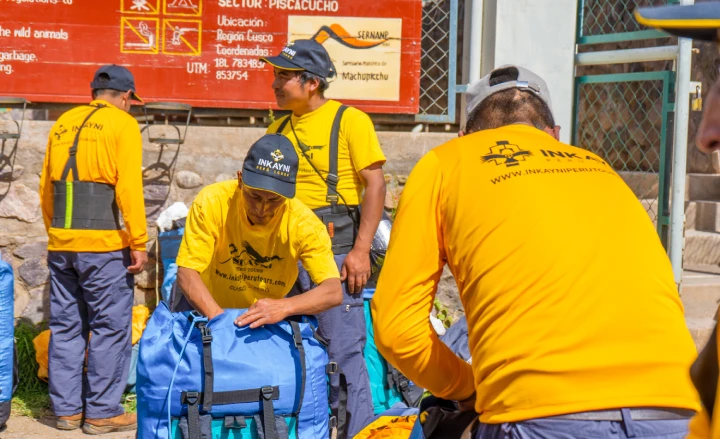
Inca Trail porters are the support workers who make the Classic 4-day Inca Trail possible. They carry camp equipment, food, cooking gear, and the duffel bags allowed by the operator, then move ahead of the group to set up tents, prepare meals, and have the campsite ready before hikers arrive. On the classic route, this is not optional logistics: pack animals are not used on the protected trail, so porter service is part of how the trek actually functions.
Table of Contents
Before travelers reach the first campsite on the Inca Trail, someone has already pitched the tents, lit the stoves, and heated the water. Those are the Inca Trail porters. They leave before the group, walk faster, carry more weight, and arrive first at each point along the route so everything is ready when the rest of the team comes around the bend.
Their work is invisible from outside the trek. But without the Inca Trail porter service, the Classic 4-day Inca Trail simply does not function. This guide explains who they are, what they do on each day of the journey, what the law says about their rights, how tipping works, and how to engage with them respectfully during the hike to Machu Picchu.
| 44 lbMen’s legal load (20 kg) | Law 31614Porter worker law | 500Daily trail spaces incl. staff | Last nightTypical tipping moment |
PERU’S LEGENDARY HIKEInca Trail to Machu Picchu
Follow the historic trail through mountain passes, Inca sites, and cloud forest paths to Machu Picchu.


Porter service matters most on the Classic Inca Trail, where campsites, sleeping gear, and several trail days turn weight and load distribution into part of the experience itself. On the Short Inca Trail, hotel-based logistics change that equation, while routes such as the Salkantay Trek, the Lares Trek, the Inca Jungle Trek, or the Choquequirao Hike follow different support systems.
Who Are the Inca Trail Porters?
Most Inca Trail porters are men and women from rural communities in Cusco and the Sacred Valley. Many are native Quechua speakers with a daily relationship with the mountains they cross. They know every section of the trail, its elevation changes, its risk zones, and its shifting weather patterns. That knowledge is not built in months.
Within the Inca Trail system, they are part of a team that also includes the guide and the cook. The daily permit system includes tourists and support staff, so porter logistics are not separate from route availability; they are part of how the trail is regulated and operated. For travelers, this also means that choosing an operator is a decision about labor conditions, not only itinerary, price, or hotel category.
Why the Inca Trail Needs Porters
The Classic Inca Trail is a protected trekking route administered through the Peruvian state and authorized operators. One of the reasons porters are essential is concrete: pack animals are not used on the classic route because mules and horses would damage original stonework, stairways, narrow sections, and archaeological areas.
To protect that heritage, the trek’s logistical equipment is carried by human labor. Inca Trail porters are hired by authorized agencies and work within a regulated system. Without their work, there would be no campsites, no hot meals at altitude, no organized luggage movement, and the Inca Trail experience would be radically different for every traveler.
Keep this in mind:
The Inca Trail can only be done with authorized agencies and limited permits. The classic route is usually described as having 500 daily spaces, and that number includes guides, cooks, porters, and travelers. This is why booking early matters during high season.


What an Inca Trail Porter Does During the 4-Day Trek
Before dawn, porters pack the camp equipment, take down tents, organize sleeping gear, and load what is assigned to them: agency logistical gear, food, cooking equipment, and the personal belongings the traveler has handed over according to the contracted duffel allowance. The total load must respect the legal porter weight limit: up to 44 lb (20 kg) for men and 33 lb (15 kg) for women.
They then move along the trail at a fast pace, often much faster than the traveler group, to reach the next campsite with enough time to set everything up before everyone arrives. At camp, they pitch the tents, set up the dining area, assist the cook, organize water and gear, and prepare the route logistics for the following day.
Along the way, they also help maintain order on the trail, collect waste when needed, and work within a route where weather, altitude, and terrain can change quickly. Their pace is not a performance show; it is the rhythm required for the service to function.

Their Rights: Law No. 31614
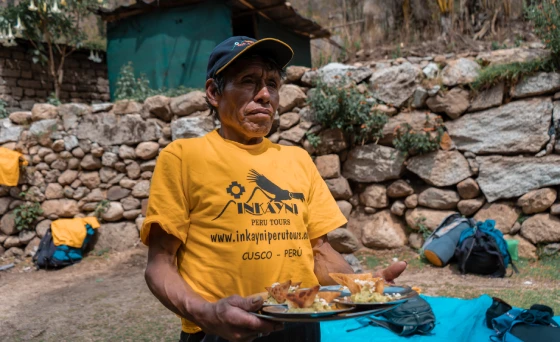
Since November 11, 2022, porters in Peru have been protected by Law No. 31614, known as the New Porter Worker Law. This law replaced Law No. 27607 and established a stronger legal framework for the labor conditions of people who carry goods for tourist, recreational, or sports expeditions in areas where motorized transport cannot enter.
| Legal point | What it means in practice |
| Weight limit | Up to 44 lb (20 kg) for men and 33 lb (15 kg) for women. This is the regulated porter weight limit. |
| Minimum age | The law prohibits hiring people under 18 for porter work. |
| Equipment | The employer must provide suitable clothing, personal protective equipment, lumbar support, sun protection, and appropriate overnight equipment. |
| Insurance | The employer must provide life insurance and Supplementary Work Risk Insurance (SCTR). |
| Rest and overnight conditions | Rest must allow recovery after the working shift, and overnight stays must take place in adequate environments that protect health and safety. |
| Remuneration | The law sets a minimum payment tied to the Peruvian tax unit (UIT), plus additional pay rules for extra time and cook duties. |
Did you know…?
Law No. 31614 defines porter work as a formal labor relationship under Peru’s private labor regime. It also recognizes porter work as risk activity, which is why insurance and safety protections matter.
The law alone does not guarantee that all agencies comply. The real difference lies in choosing operators who apply these standards in practice and go beyond the legal minimum. When you choose a responsible agency, part of that decision reaches directly the people carrying the equipment.

How Much Should You Tip Inca Trail Porters?
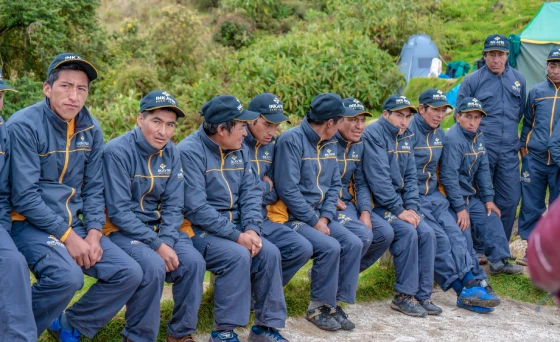
Tipping Inca Trail porters is not mandatory, but it is a custom the team genuinely values and one that carries real weight for people whose income depends on short working seasons. It is not a charity gesture: it is a concrete way of acknowledging an effort that sustains the entire trek experience.
As a practical reference based on what travelers typically give on the 4-day Inca Trail:
| Team member | Common reference | Practical note |
| Porters | S/ 45–S/ 100 per traveler in the group | Usually collected as a group and distributed at the end of the trek. |
| Cook | S/ 80–S/ 150 per group reference | The cook’s work is separate from porter logistics and often receives its own envelope. |
| Guide | $15–$20 USD per traveler reference | Depends on group size, service quality, and personal judgment. |
The usual moment is the last night of the trek, after dinner, before reaching Machu Picchu. The most common approach is for someone in the group to say a few words of thanks and then hand out the envelopes collectively. No elaborate ceremony is needed: the intention is already in the gesture.
Keep this in mind:
Bring enough soles from Cusco. There are no ATMs on the trail and no option for digital payment. Calculate the amount before you leave and have it ready in cash for the last night.


How to Engage With the Team During the Trek
Local voice:
“Our guides often act as translators between travelers and porters. There is mutual interest: tourists want to know more about the porters’ experience, and they enjoy sharing it.” — Erwin, Inkayni Peru Tours sales team.
Most Inca Trail porters speak Quechua and Spanish. Few speak fluent English, so the guide works as a natural communication bridge. But there are ways to connect that need no translation.
Learning their names is the first step. During meal breaks or rest stops, asking which community they come from or how long they have been working the route opens a more human conversation than any formal protocol. If they are busy setting up camp or organizing equipment, the most respectful thing is not to interrupt. Respect also means reading when the space is for work and when it is open for conversation.
Participating with genuine gratitude in the group farewell on the last night has a different effect than simply handing over an envelope. The team notices, and that closing moment makes the difference between a logistically sound trek and one that leaves something human in everyone who made it happen.

Inkayni’s Commitment to Its Porters
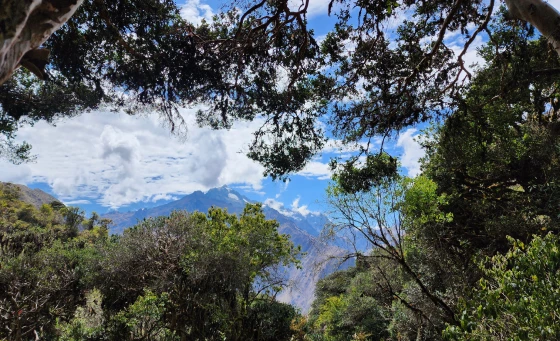
At Inkayni Peru Tours, our porters are part of the team before the trek even begins. They are not a logistical resource that switches on at departure and off at arrival: they are people with names, communities, and terrain knowledge who make every expedition possible.
Beyond what Law No. 31614 requires, Inkayni applies concrete commitments to every porter who works on its operations. This is what porter welfare on the Inca Trail looks like in practice.
- Each porter carries up to 11 lb (5 kg) of the traveler’s belongings, a more conservative traveler-duffel limit than the legal load maximum.
- They are equipped with ergonomic backpacks, uniforms, waterproof gear, and their own rest tents.
- Medical insurance and nutritious meals are included throughout the hike.
- Salaries are above the legal minimum, recognizing the physical effort and cultural value of the work.
- Transportation to and from their home communities is covered.
- Direct relationships with those communities are maintained and ongoing work opportunities are promoted.
Keep this in mind:
Choosing a responsible agency is also a decision about the working conditions of the people who make the trek possible. That choice has real consequences for those who live off the route.

Other Guides That Help You Understand the Inca Trail Better
PERU’S LEGENDARY HIKEInca Trail to Machu Picchu
Follow the historic trail through mountain passes, Inca sites, and cloud forest paths to Machu Picchu.
The Trail Belongs to Them Too
Inca Trail porters are not the background of the experience. They are part of it. When you know who they are, what they do before dawn, and under what conditions they work, the trek changes in dimension. Dead Woman’s Pass looks different when you understand that someone crossed part of the route before you that same day, carrying a regulated load, so there would be hot coffee, camp, and a meal waiting on the other side.
At Inkayni, the Inca Trail is done with and by the people of the Sacred Valley who truly know it. If you want to hike the route with that perspective in mind, tell us how you are planning your trip.


Frequently Asked Questions About Inca Trail Porters
How many porters join each group on the Inca Trail?
What do Inca Trail porters carry?
What does Law No. 31614 protect for Inca Trail porters?
Is tipping Inca Trail porters mandatory?
What happens if an Inca Trail porter is injured during the hike?
Do Inca Trail porters speak English?
What should I pack in the bag the porters will carry?
Are there female porters on the Inca Trail?
Why do Inca Trail porters walk so fast?
Do I need a porter for the Inca Trail?
Should I hire a personal porter for the Inca Trail?
Where do porters sleep during the trek?
Do porters eat the same food as tourists?
How can I choose an ethical Inca Trail operator?
Autor

Shared:



If you liked this article and the information you found, give us 5 stars!
 (1 votos, promedio: 5.00 de 5)
 Loading...