


Best Time for the Inca Jungle Trek
The best time for the Inca Jungle Trek is usually from May to September, when biking, hiking and route logistics are more stable. May and September offer the best balance between good conditions and lower peak-season pressure, while June to August are typically drier but busier around Machu Picchu. January and February are the least predictable months because heavy rain can affect trails, river levels, roads and adventure activities.
Table of Contents
Choosing the best time for the Inca Jungle Trek is really about deciding what kind of trip you want. The route mixes downhill biking, hiking, rafting and ziplining, so rain affects more than whether the trail gets muddy. It can change visibility on the bike descent, river levels, road conditions and whether an adventure activity runs as planned.

Zipline adventure over the tropical valley during the Inca Jungle Trek.
Best Time for the Inca Jungle Trek at a Glance
| Period | Typical conditions | Best for |
| May–September | Drier trails and more stable conditions for biking, hiking and the overall route. | Most travelers. |
| May & September | Good weather without quite as much peak-season pressure as July and August. | Best overall balance. |
| April & October | Shoulder-season weather: often good, but with a greater chance of showers and changing conditions. | Travelers comfortable with some variability. |
| January–February | Wettest stretch, with more mud, higher river flow and a greater chance of route adjustments. | Flexible travelers who check conditions before departure. |
MULTI-ADVENTURE ROUTEInca Jungle Trek
Bike, raft, and hike through tropical valleys on an adventurous route to Machu Picchu.
What Are the Best Months for the Inca Jungle Trek?
May and September are two of the best months for the Inca Jungle Trek if you want a balance of weather and demand. In May, the rainy season is usually retreating, trails begin to dry out and the valleys can still look very green. September keeps much of the dry-season stability while the heaviest July–August rush starts to ease.
If your priority is simply the driest weather, June through August are the stronger choice. Expect clearer mornings and firmer surfaces, but also more pressure on Machu Picchu tickets, preferred circuits, trains and accommodation.
April and October are useful shoulder months. Some days can feel almost like dry season; others remind you that the weather is changing. They work well for travelers who prefer a little less demand and do not mind carrying rain protection just in case.
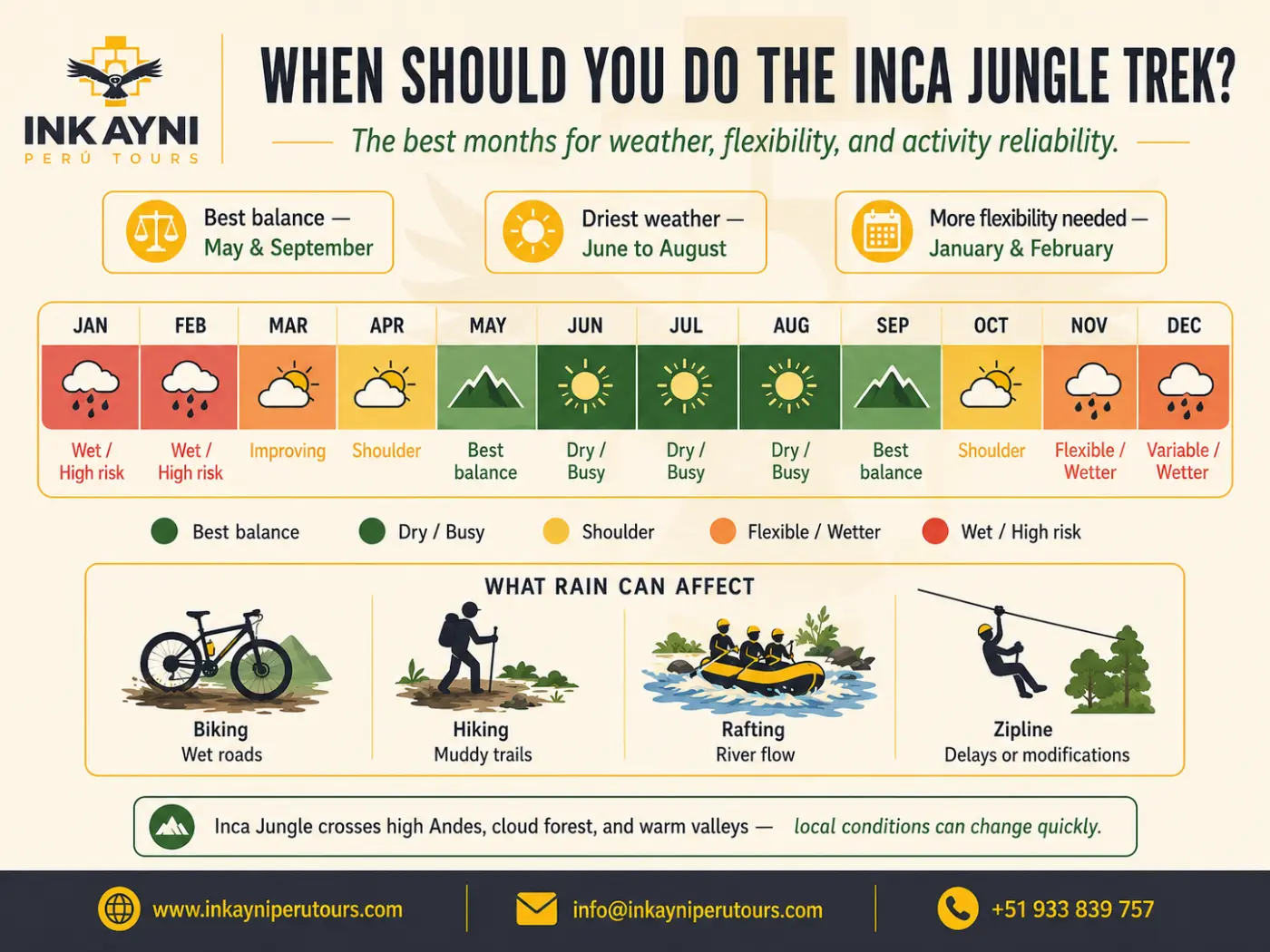
Best months for the Inca Jungle Trek.
Inca Jungle Weather Month by Month
| Month | What to expect | Verdict |
| January | Frequent rain, muddy trails and higher river flow; activity changes become more likely. | High flexibility needed. |
| February | One of the wettest periods, with road, landslide and river conditions requiring closer attention. | Least predictable month. |
| March | Still wet and very green, although conditions usually begin improving as the month progresses. | Possible with flexibility. |
| April | Transition toward drier weather, green scenery and fewer peak-season visitors. | Good shoulder month. |
| May | Firmer trails and increasingly dependable weather before peak demand fully builds. | Excellent balance. |
| June | Dry and often clear, with colder conditions around the high start at Abra Malaga. | Excellent weather. |
| July | Peak dry season, cold high-altitude mornings and the busiest Machu Picchu logistics. | Great weather, high demand. |
| August | Still predominantly dry, with firm trails and good visibility. | Very good, but busy. |
| September | Mostly dry while visitor pressure begins to ease after the July–August peak. | Excellent balance. |
| October | Generally workable, with showers becoming more common as the wet season approaches. | Good shoulder month. |
| November | More frequent rain, greener valleys and usually less tourism pressure. | Good for flexible travelers. |
| December | Wetter trails and more changeable conditions for the adventure activities. | Possible, but less predictable. |
Important note:
A monthly calendar is useful for planning, but it cannot tell you exactly what the route will look like on your departure day. Inca Jungle drops from a high Andean pass into warmer, greener valleys in a matter of hours, so weather can be very different from one section to the next.
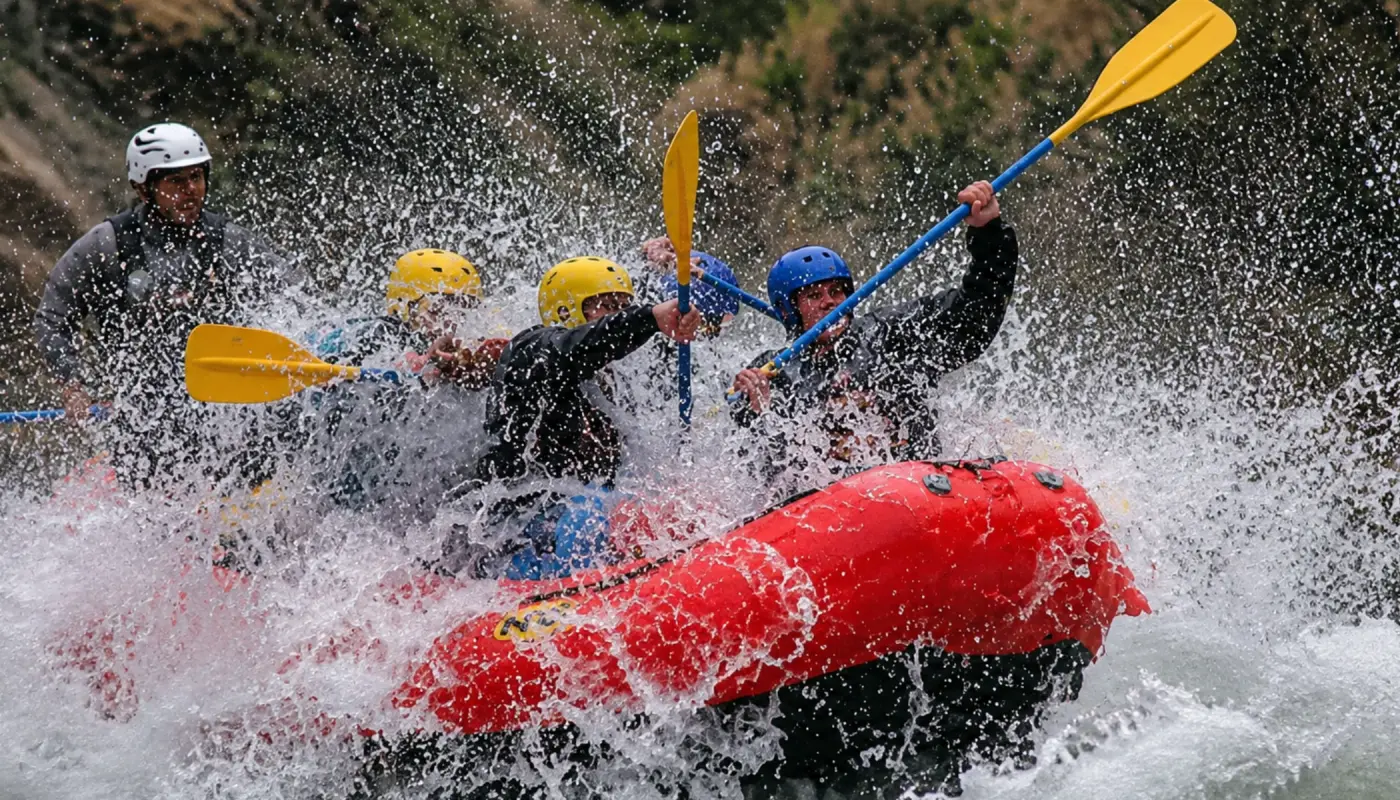
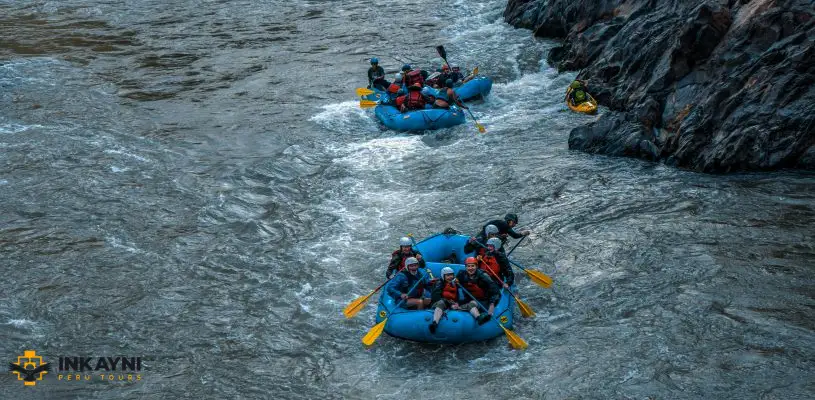
Rafting near Santa Maria during the Inca Jungle Trek.
How the Rainy Season Changes the Inca Jungle Trek
The Inca Jungle rainy season changes more than the hiking. Because this is a multi-activity route, the same storm can affect the bike descent, river flow, trail footing and road connections differently.
| Activity | What heavier rain can change |
| Downhill biking | Wet pavement, fog, debris and reduced visibility can mean slower riding or a modified biking section. |
| Hiking | Mud and slippery surfaces can slow the walk, while intense rain can also affect roads and trail connections around Santa Maria and Santa Teresa. |
| Rafting | Higher river flow can make the river more demanding or unsuitable to operate on a particular day. |
| Zipline | Heavy rain, storms or local operating conditions can delay, modify or suspend the activity. |
For the river itself, use the dedicated guide to rafting on the Inca Jungle Trek. For activity-specific operating and safety details, see the Inca Jungle zipline guide.
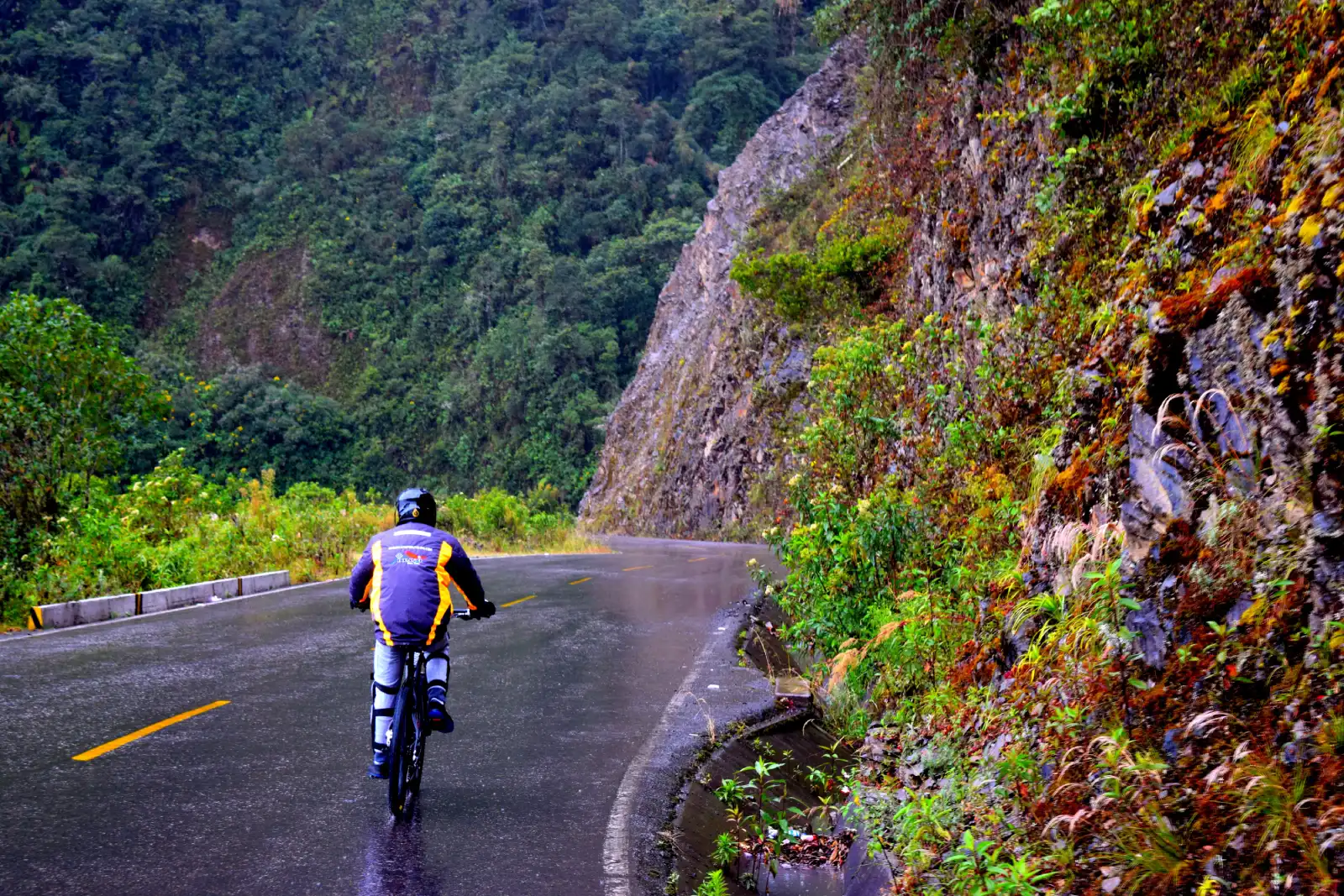
Downhill biking through mountain roads.
Why February Deserves Extra Caution
February is different from the Classic Inca Trail situation. There is no universal government closure of the Inca Jungle Trek in February. Some operators continue running departures when conditions allow, while others reduce, modify or suspend them during the wettest part of the season.
The reason to be cautious is practical rather than bureaucratic. Sustained rain can raise river levels enough for rafting to be removed, make sections of the bike descent less suitable and increase the chance of mud, debris or landslides along the Santa Maria–Santa Teresa corridor.
That risk is documented. Official Peruvian emergency reports have recorded rain-driven landslides affecting the Santa Maria–Santa Teresa connection and intense-rain events damaging transport infrastructure in Santa Teresa. See the INDECI report on landslides affecting the Santa Maria–Santa Teresa connection and the 2026 Santa Teresa intense-rain report.
Warning:
If your dates are fixed in January or February and the full bike descent or rafting is a major reason you chose Inca Jungle, check current road, river and activity conditions before paying. The route may operate, but not necessarily in exactly the form you imagined.
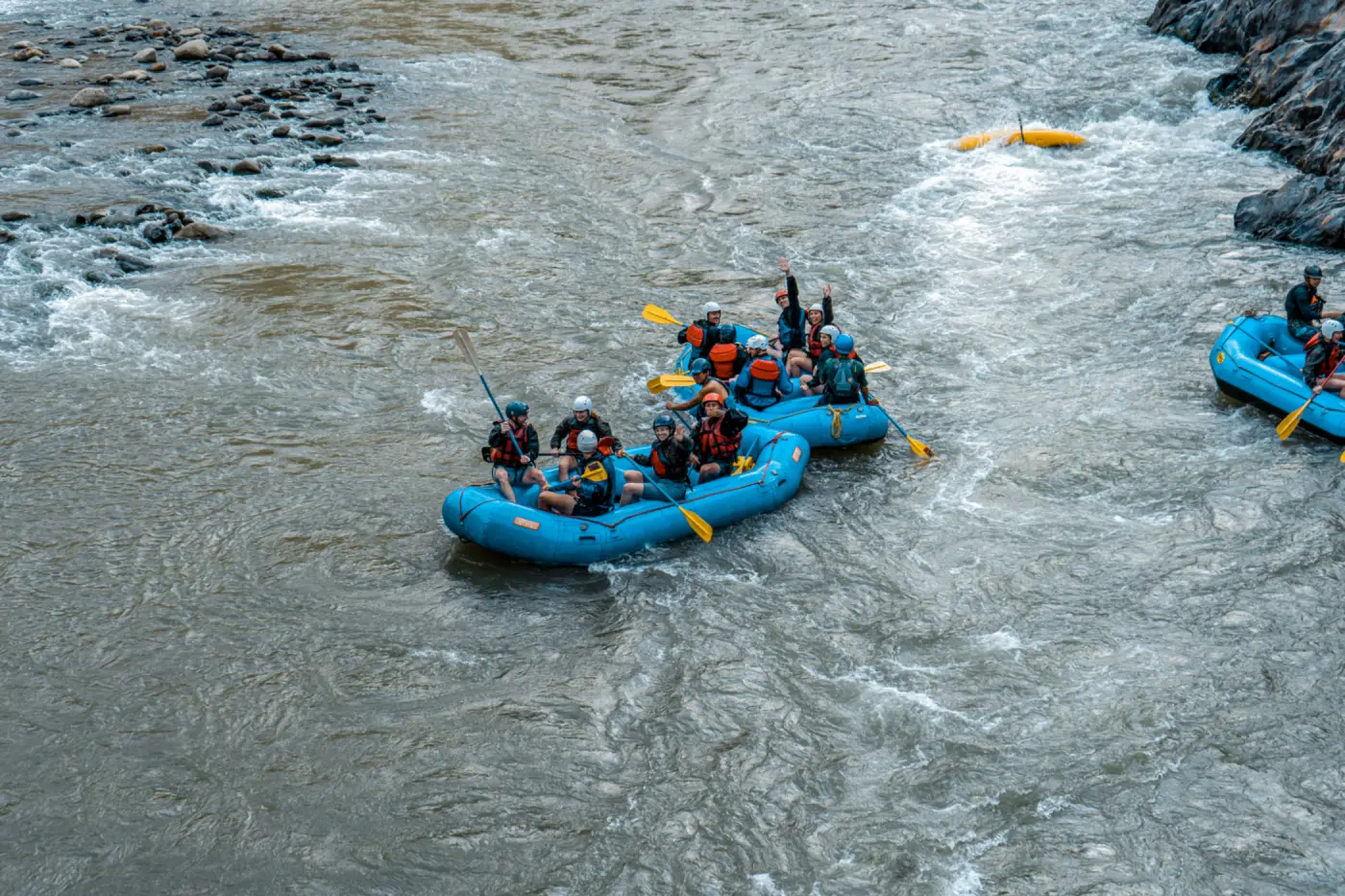
Rafting near Santa María is one of the route’s main adventure highlights.
Dry Season or Fewer Crowds: Which Should You Prioritize?
There is no single best month for everyone. If you want the strongest chance of dry weather, choose June, July or August. If you want good conditions with slightly less peak-season pressure, May or September is usually the sweeter spot.
The trade-off is mostly around Machu Picchu rather than an Inca Jungle permit. The trek itself does not use the Classic Inca Trail quota, but your Machu Picchu entrance, preferred circuit, return train and accommodation still become harder to organize during the busiest months.
If you travel during the wetter shoulder season, the equation flips: tourism demand can be lighter, but biking, hiking and rafting become more dependent on the weather that week. The Inca Jungle packing list covers the rain protection and clothing side of that decision.
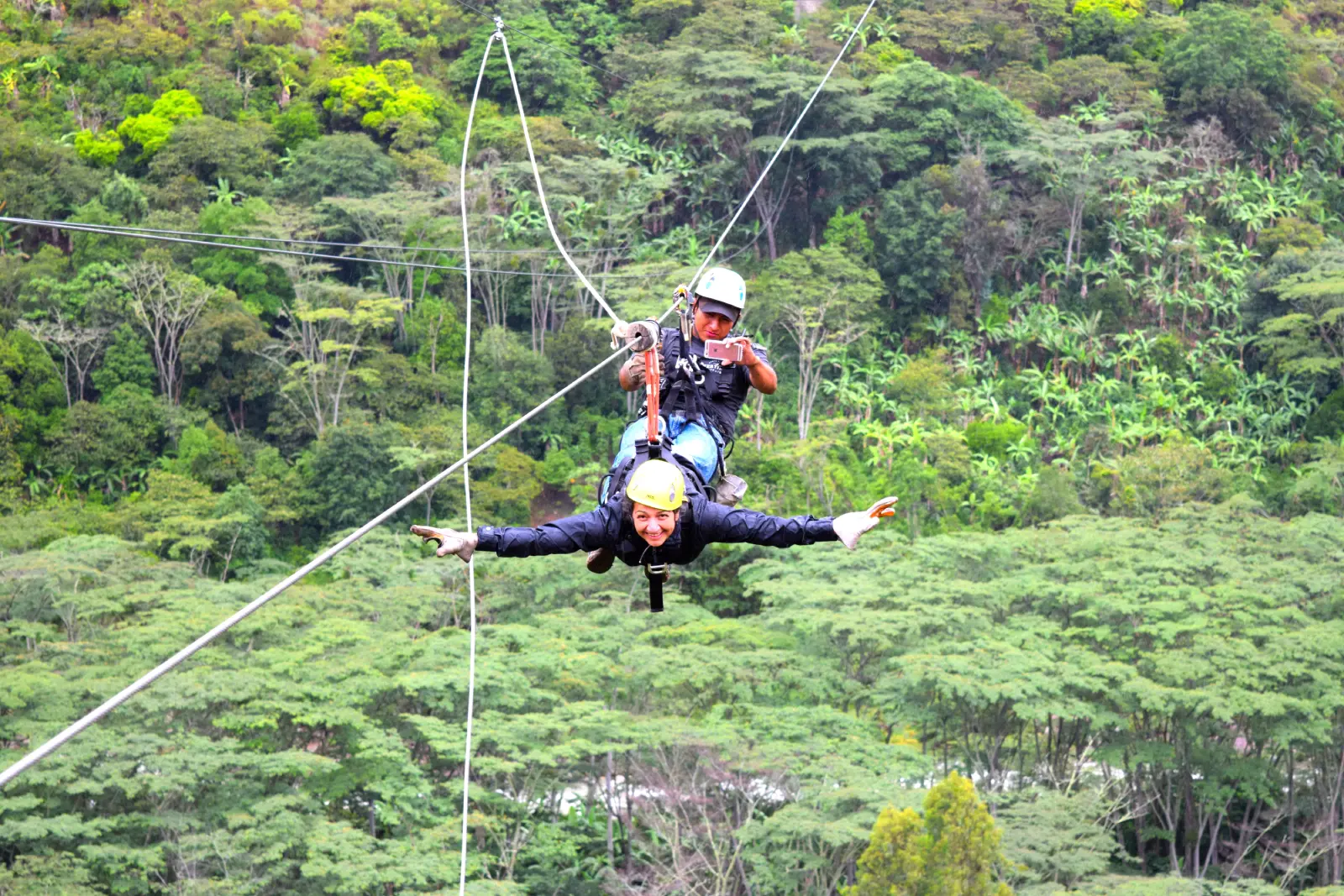
Zipline adventure near Santa Teresa.
Plan the Rest of Your Inca Jungle Trek
Choose the Inca Jungle Season That Fits Your Priorities
For the simplest decision, plan the Inca Jungle Trek between May and September. Choose May or September for the best balance, June through August when dry weather matters most, or April and October when you are happy to trade a little predictability for a shoulder-season trip.
If your dates fall in the wetter months, focus less on whether the tour technically “runs” and more on whether the biking, rafting, hiking and road conditions still match the experience you want. Compare the 4-day Inca Jungle route, check the 3-day option, or check your travel dates against current route conditions before locking the trip.
Frequently Asked Questions About the Best Time for the Inca Jungle Trek
What is the best month for the Inca Jungle Trek?
May and September are excellent all-round choices because they usually combine good trail and activity conditions with less peak-season pressure than July and August. If your priority is simply the driest weather, June through August are usually more predictable.
Is the Inca Jungle Trek closed in February?
No universal official February closure applies to the Inca Jungle Trek in the way it does to the Classic Inca Trail. February is still one of the least predictable months because heavy rain can affect roads, trails, river levels and adventure activities. Operators may reduce departures or modify the route according to conditions.
Can you do the Inca Jungle Trek during the rainy season?
Yes, when conditions allow, but the itinerary needs more flexibility. Rain can make trails muddier, reduce visibility during biking and affect rafting or zipline operations. March, April and November are generally easier wet or shoulder-season choices than January and February.
Can high river levels cancel the rafting?
Yes. Heavy rainfall can raise river flow enough for the rafting provider to modify or suspend the activity. That decision depends on current river conditions rather than a fixed month on the calendar.
Is May or September better for the Inca Jungle Trek?
Both are strong choices. May is often greener after the wet season, while September usually keeps predominantly dry conditions as the busiest part of the season begins to ease. The difference is small enough that your wider Peru itinerary can make the decision.
Does it still rain during the dry season?
Yes. “Dry season” means rain is less frequent, not impossible. Inca Jungle crosses several elevations and microclimates, so rain protection still belongs in your daypack between May and September.
Autor

Shared:


If you liked this article and the information you found, give us 5 stars!
 (Ninguna valoración todavía)
 Loading...