The extra day sounds as if it should mean either a longer trail or an easier climb to Dead Woman’s Pass. Neither assumption is quite right. Both itineraries use the regulated Classic Inca Trail to Machu Picchu; what changes is how the middle and final stages are distributed.
This comparison uses Inkayni’s current 4-day and 5-day services as the practical baseline because those are the two itineraries travelers can book here. A later section briefly explains why some 5-day programs from other operators use a different camp rhythm, so you can compare like with like.
PERU’S LEGENDARY HIKEInca Trail to Machu Picchu
Follow the historic trail through mountain passes, Inca sites, and cloud forest paths to Machu Picchu.
Inca Trail 4 Days vs 5 Days at a Glance
| Decision factor | 4 Days Inca Trail | 5 Days Inca Trail |
| Historic route | Classic Km 82 route | Essentially the same Classic Km 82 route |
| Highest point | Warmiwañusqa — 13,829 ft (4,215 m) | Warmiwañusqa — 13,829 ft (4,215 m) |
| Days 1–2 | ~7.5 mi (12 km) + ~6.8 mi (11 km) | ~7.5 mi (12 km) + ~6.8 mi (11 km) |
| Day 3 | Pacaymayo → Wiñay Wayna, ~9.9 mi (16 km) | Pacaymayo → Phuyupatamarca, ~6.5 mi (10.5 km) |
| Machu Picchu | Arrival and visit on Day 4 | Arrival Day 4 + second visit Day 5 |
| Accommodation | 3 camping nights | 3 camping nights + 1 hotel night in Aguas Calientes |
| Current group departures | Daily, minimum 2 hikers, subject to permits | Every other day, minimum 2 hikers, subject to permits |
| Group personal porter | Up to 11 lb (5 kg) | Up to 11 lb (5 kg) |
| Standard group range | US$780–950 | US$940–1,100 |
| Private standard range | US$950–1,600+ | US$1,110–1,800+ |
| Premium / luxury private | US$1,900–2,900+ | US$2,200–3,000+ |
| Best reason to choose it | Classic schedule, lower cost and one less calendar day | Shorter Day 3 + more Machu Picchu time |
These are planning ranges, not permanent tariffs. Current Inkayni group and private services sit inside the standard bands above; the premium/luxury ranges reflect higher-end private services in the wider Peru market and can rise sharply for solo travelers or heavily upgraded camps.
If you are still deciding whether the Classic route itself suits you—not just how many days to spend on it—the broader Inca Trail guide covers seasonality, route conditions and the main itinerary formats.
Pro tip:
Private and premium are not the same thing. Private service can cost more simply because guide, cook, porter and permit logistics are divided among fewer travelers. Premium or luxury service adds another layer of camp comfort, equipment, meals, transport or other upgrades.
4-Day vs 5-Day Inca Trail: Itinerary Comparison
The day-by-day comparison below follows the current Inkayni itineraries. It shows exactly where the two services remain alike and where the extra day starts changing the experience.
4-Day Inca Trail: Classic Route Rhythm
Day 1 — Km 82 → Wayllabamba: about 7.5 mi (12 km). The trek warms up through the lower valley and archaeological areas such as Patallacta before the first camp.
Day 2 — Wayllabamba → Warmiwañusqa → Pacaymayo: about 6.8 mi (11 km). This is the main altitude test, climbing to Dead Woman’s Pass at about 13,829 ft (4,215 m) before descending to Pacaymayo.
Day 3 — Pacaymayo → Wiñay Wayna: about 9.9 mi (16 km). The longest stage combines archaeological sites, original stone stairs and a major descent before the final campsite.
Day 4 — Wiñay Wayna → Intipunku → Machu Picchu → Cusco: about 3.1 mi (5 km) of final trail walking before the Sun Gate and Machu Picchu visit.
Current service details: group and private versions are available. The group product lists up to 11 lb (5 kg) of personal porter allowance, while the private service lists up to 15 lb (7 kg). Group departures are currently published daily with a minimum of two hikers, subject to permits.
Use the complete 4-day Inca Trail guide for the full owner article. When you are ready to compare live services, see the 4-day group service or 4-day private service.
5-Day Inca Trail: Slower Second Half and Two Machu Picchu Visits
Day 1 — Km 82 → Wayllabamba: about 7.5 mi (12 km). The first stage is essentially the same as the 4-day itinerary.
Day 2 — Wayllabamba → Warmiwañusqa → Pacaymayo: about 6.8 mi (11 km). You still cross the highest pass on Day 2, so the extra calendar day does not remove the main altitude challenge.
Day 3 — Pacaymayo → Phuyupatamarca: about 6.5 mi (10.5 km). Instead of continuing to Wiñay Wayna, the trek stops at Phuyupatamarca at around 12,073 ft (3,680 m).
Day 4 — Phuyupatamarca → Wiñay Wayna → Intipunku → Machu Picchu: about 6.2 mi (10 km). After the first Machu Picchu arrival and visit, the itinerary continues to Aguas Calientes for a 3-star hotel night.
Day 5 — Machu Picchu → Cusco: return to Machu Picchu for a second visit, then take the bus, train and ground transfer back toward Cusco.
Current service details: the group product lists up to 11 lb (5 kg) of personal porter allowance, while the private service lists up to 15 lb (7 kg). Group departures are currently published every other day with a minimum of two hikers, subject to permits.
For current inclusions and prices, use the 5-day group service or 5-day private service.
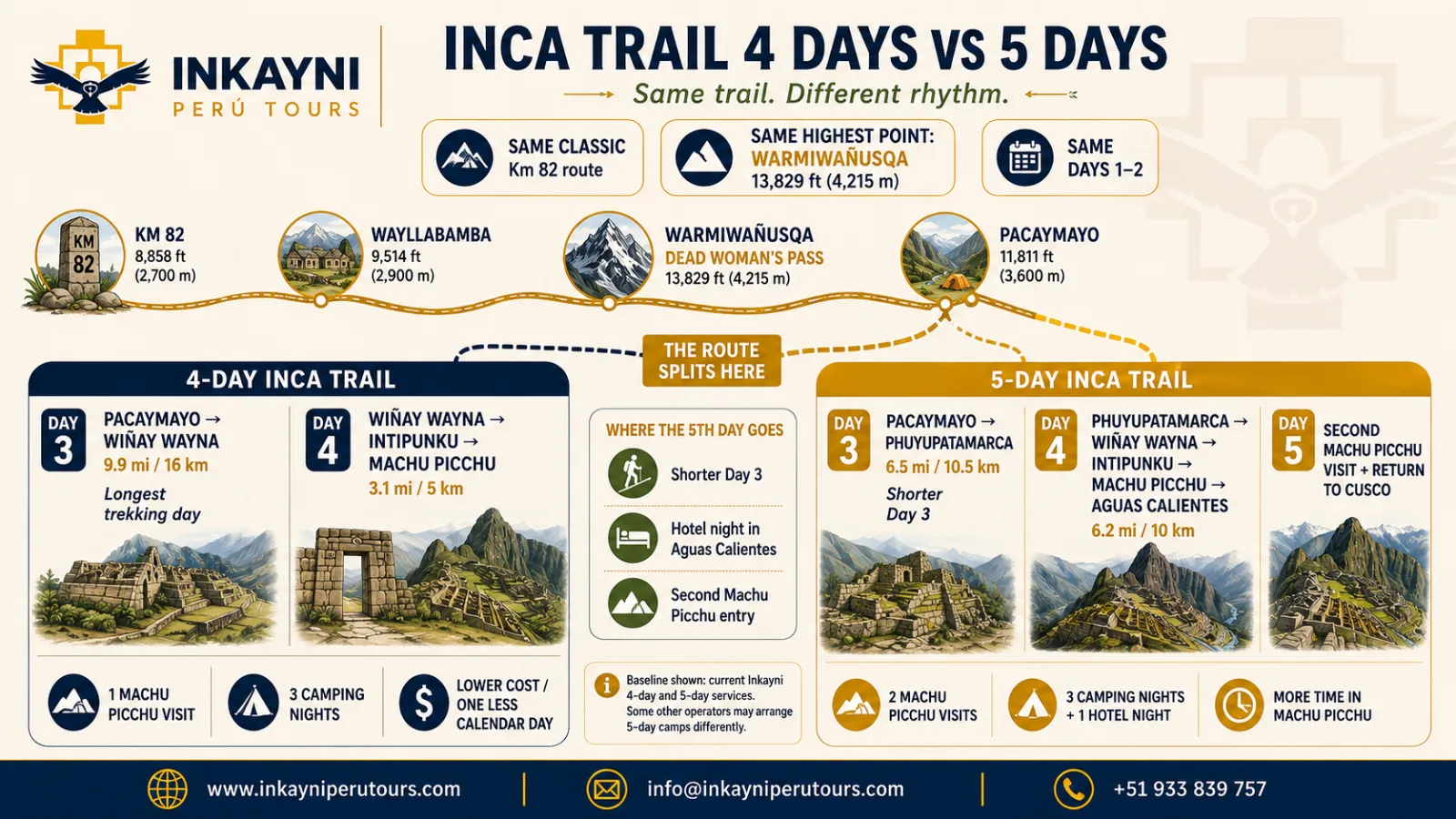
Comparison of the 4-day and 5-day Inca Trail routes to Machu Picchu.
Important note:
In these current itineraries, Days 1–2 are essentially the same. The 5-day advantage appears mainly after Warmiwañusqa, when Day 3 becomes shorter and the later archaeological section gets more room.
Same Historic Inca Trail, Different Daily Rhythm
The two itineraries do not represent separate historic corridors. Peru’s official Camino Inka network identifies the Classic line as Route 01: Piskacucho → Wayllabamba → Wiñaywayna → Machupicchu.
That is why the useful comparison is not “Which trail is longer?” but “Where is the same trail divided differently?” If total distance is part of your decision, the Inca Trail length guide explains why published totals can vary slightly even when operators use the same historic corridor.
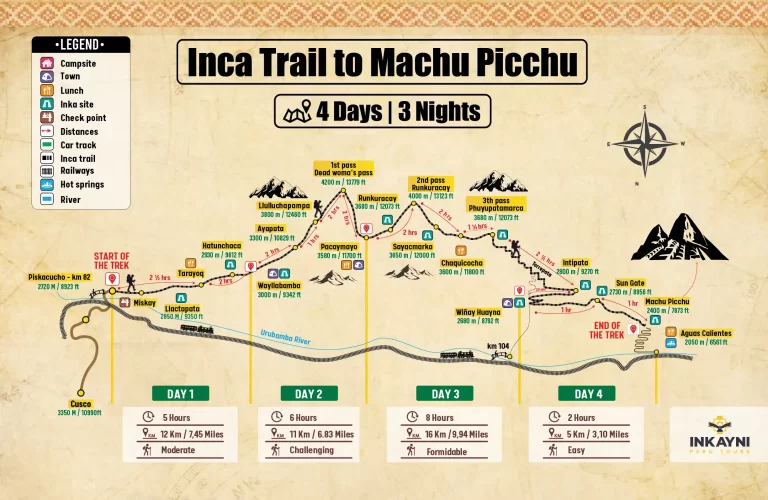
The 4-day format compresses the route into three camping nights.
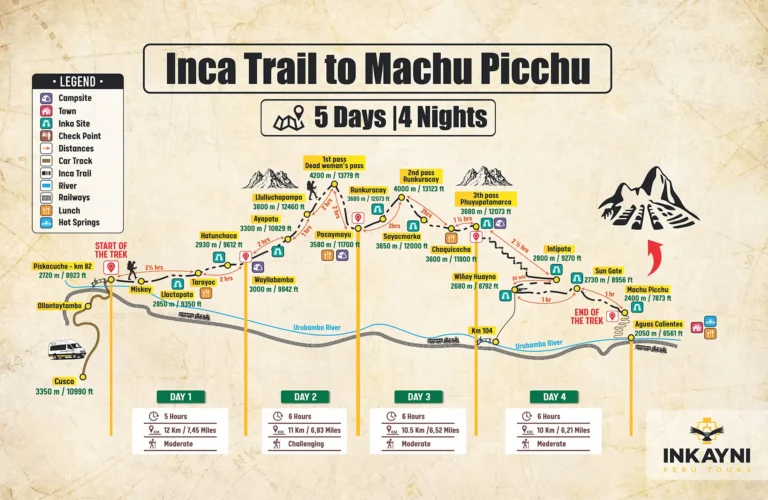
The 5-day format gives the second half more room.
Day 3 Is Where the Itineraries Really Split
Day 3 is where the comparison stops being theoretical.
On the 4-day Inca Trail, you leave Pacaymayo and continue through the archaeological middle section all the way to Wiñay Wayna. The published distance is roughly 9.9 mi (16 km). It is not the highest day, but it combines accumulated fatigue, stone steps, archaeological stops and a long descent.
On the 5-day Inca Trail, the same day ends at Phuyupatamarca after about 6.5 mi (10.5 km). The remaining descent through Intipata and Wiñay Wayna shifts to Day 4.
That is the most concrete reason the 5-day option feels less rushed. The extra day does not make Warmiwañusqa lower; it prevents the second half from being packed into the same long Day 3.
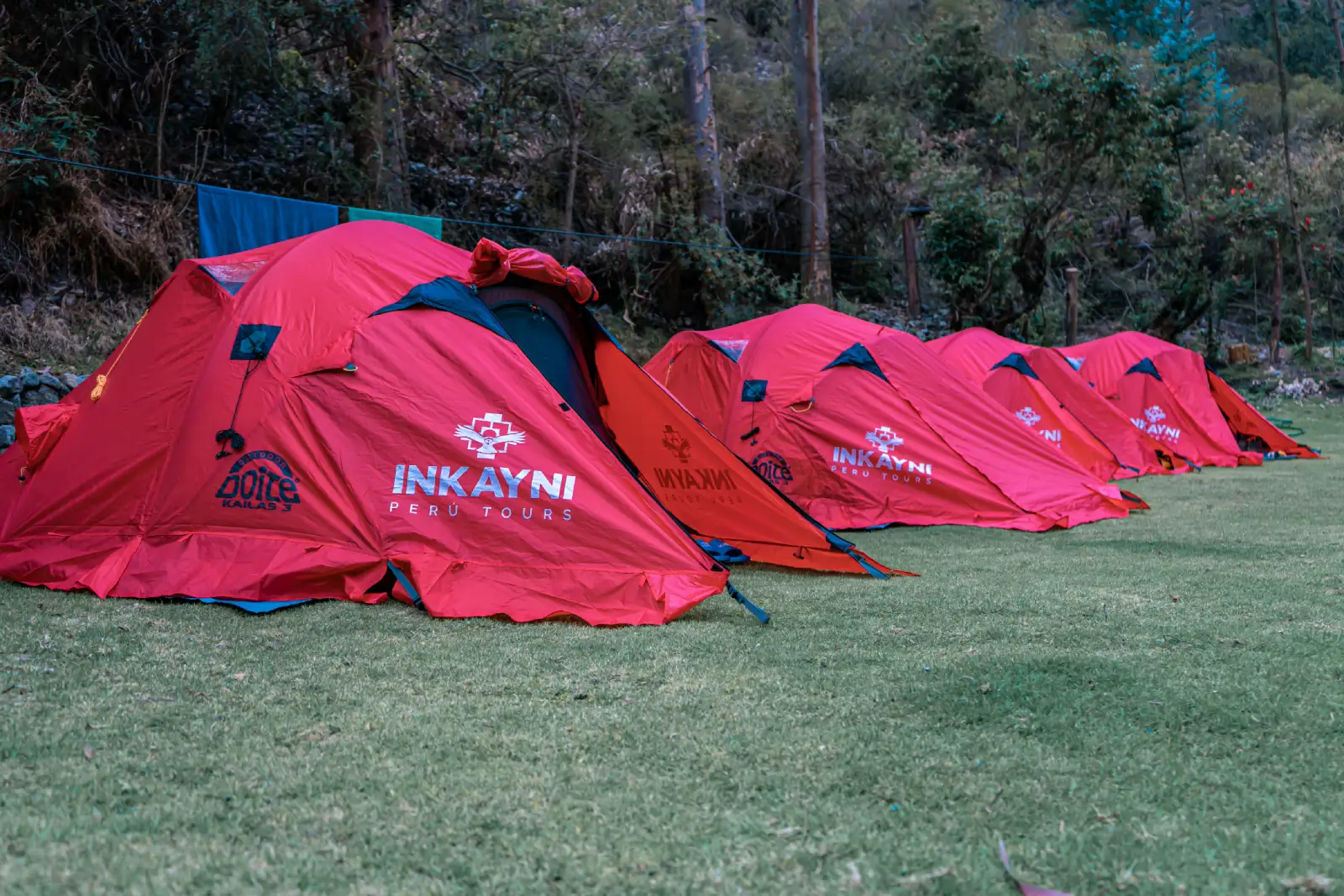
Both options remain porter-supported camping treks on the regulated trail.
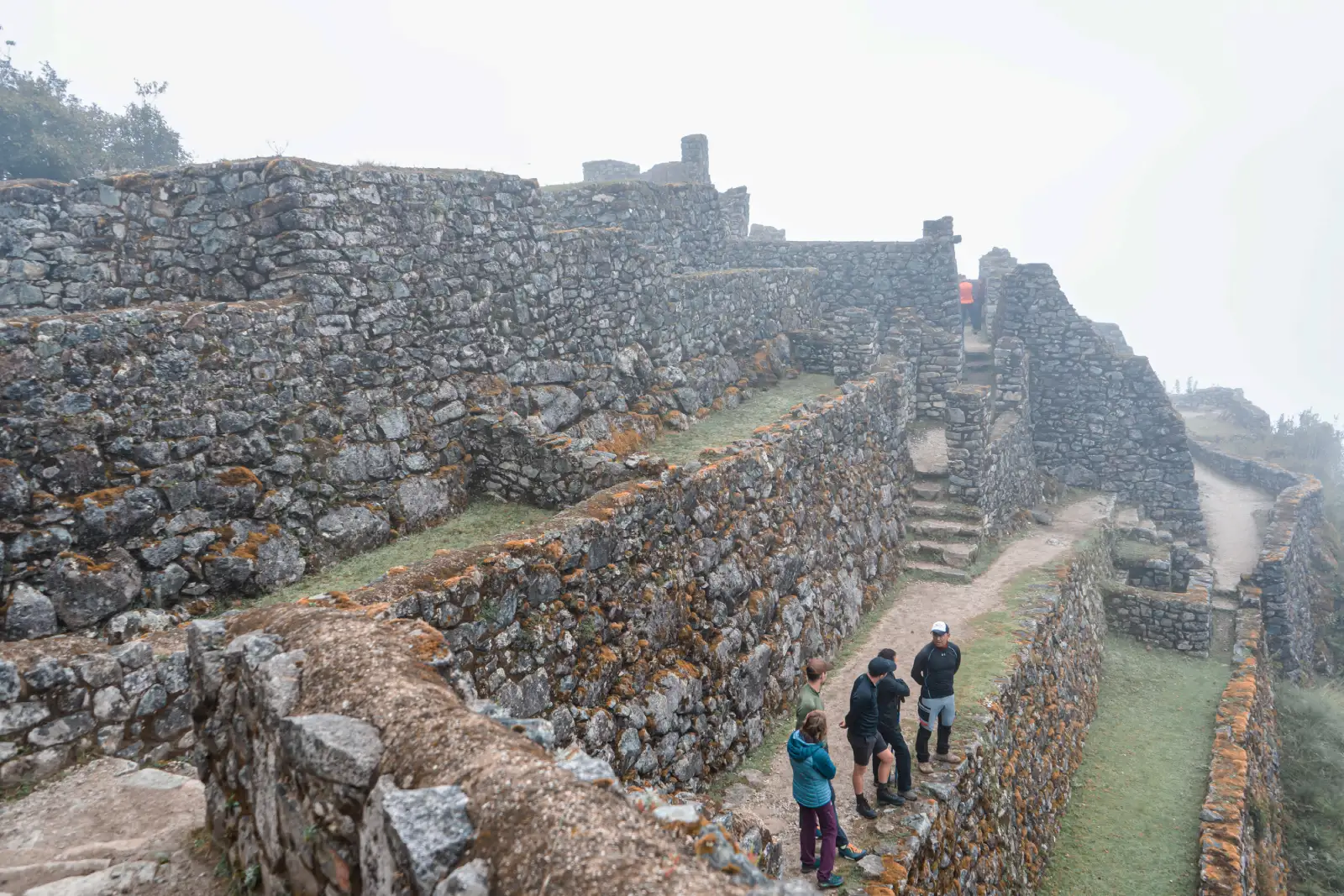
Misty terraces of Phuyupatamarca.
Does the 5-Day Inca Trail Make Dead Woman’s Pass Easier?
Not before the pass in the current services compared here. Both itineraries walk roughly 7.5 mi (12 km) on Day 1 and about 6.8 mi (11 km) on Day 2, crossing Warmiwañusqa at about 13,829 ft (4,215 m).
If your main concern is altitude on Day 2, adding the fifth calendar day does not provide another acclimatization night before the highest point. Arriving in Cusco or the Sacred Valley with 2–3 days to acclimatize matters more.
Where the 5-day format helps is accumulated fatigue after the highest pass. Day 3 is shorter and the descent toward Wiñay Wayna moves to Day 4. For a fuller terrain analysis, use the Inca Trail difficulty guide and training guide.
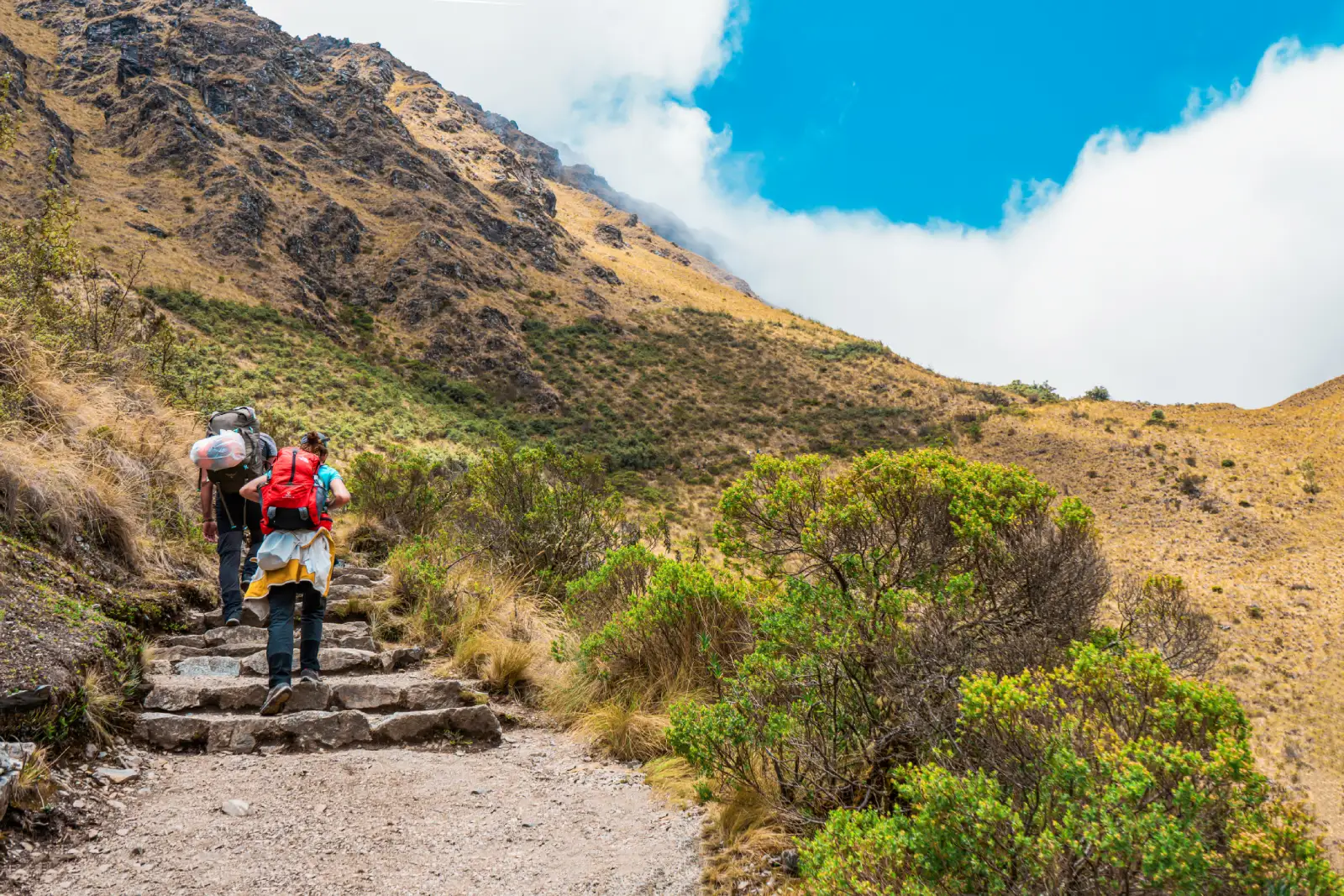
Both itineraries face the same major ascent on Day 2.
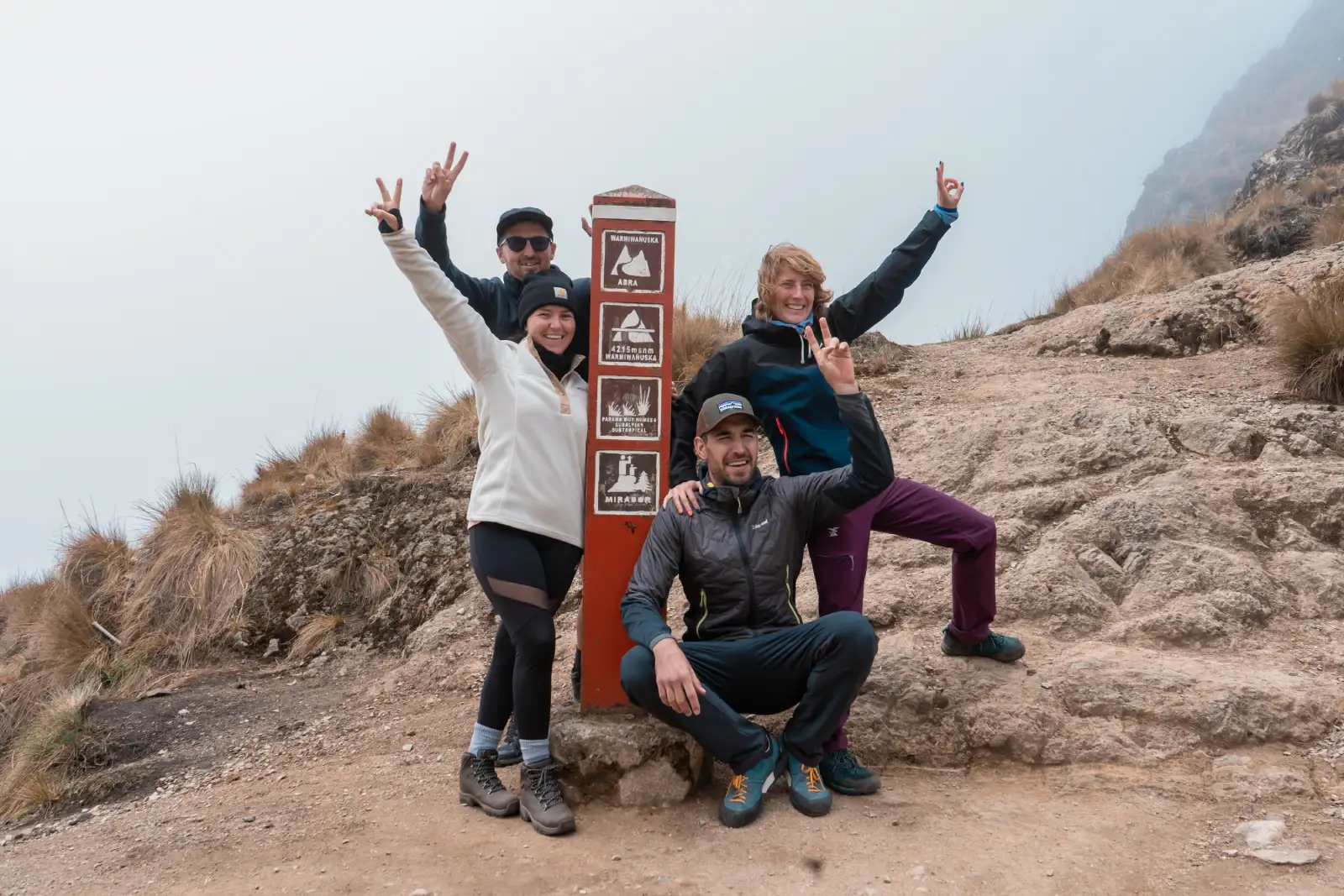
Warmiwañusqa remains the highest point on both itineraries.
Machu Picchu: One Visit vs Two Visits
The second major difference is what happens after Intipunku, the Sun Gate.
The 4-day trek reaches Machu Picchu on Day 4, completes the visit and begins the return toward Cusco. The 5-day trek reaches Machu Picchu the same way on Day 4, then continues to Aguas Calientes for a hotel night and returns to Machu Picchu the next day.
The current Inkayni 5-day products list two Machu Picchu entries. For 2026, the Ministry of Culture links Inca Trail arrivals to Circuit 3B; because the second entry is a separate visit and circuit rules can change, confirm the exact circuit attached to each ticket before booking. The Machu Picchu circuits guide explains how the current visitor routes differ.
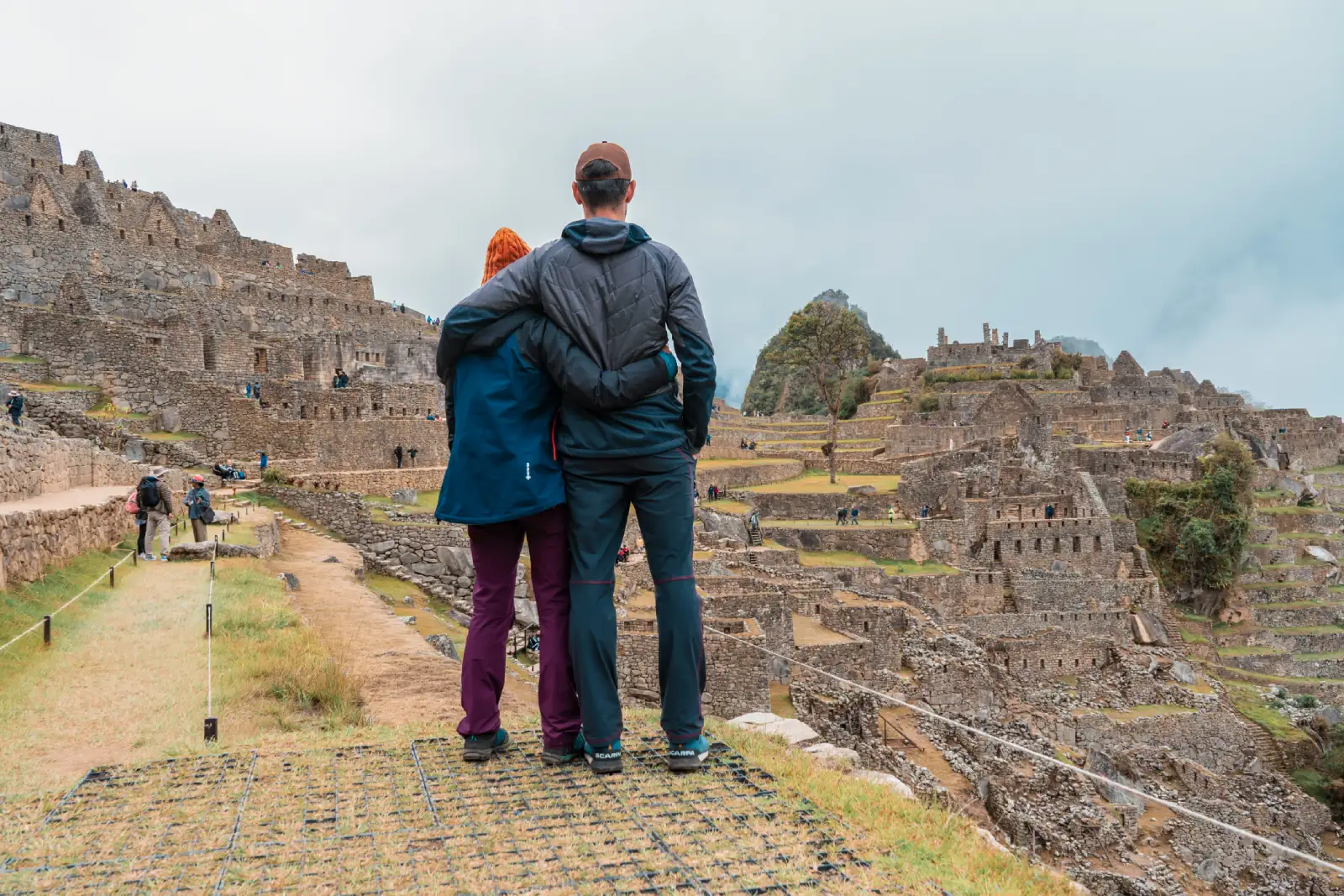
The 5-day service adds another Machu Picchu visit on Day 5.
Camping, Hotel and Porter Service: What Changes?
Both current group itineraries include porter-supported camping and a personal porter allowance of up to 11 lb (5 kg). The private services increase that allowance to up to 15 lb (7 kg).
The key accommodation difference is Night 4. The 4-day trek is already finished, while the current 5-day itinerary sleeps in a 3-star hotel in Aguas Calientes after reaching Machu Picchu on Day 4.
| Service detail | 4 Days | 5 Days |
| Camping nights | 3 | 3 |
| Aguas Calientes hotel | No overnight hotel in the standard trek | 1 night, currently 3-star |
| Group personal porter | Up to 11 lb (5 kg) | Up to 11 lb (5 kg) |
| Private personal porter | Up to 15 lb (7 kg) | Up to 15 lb (7 kg) |
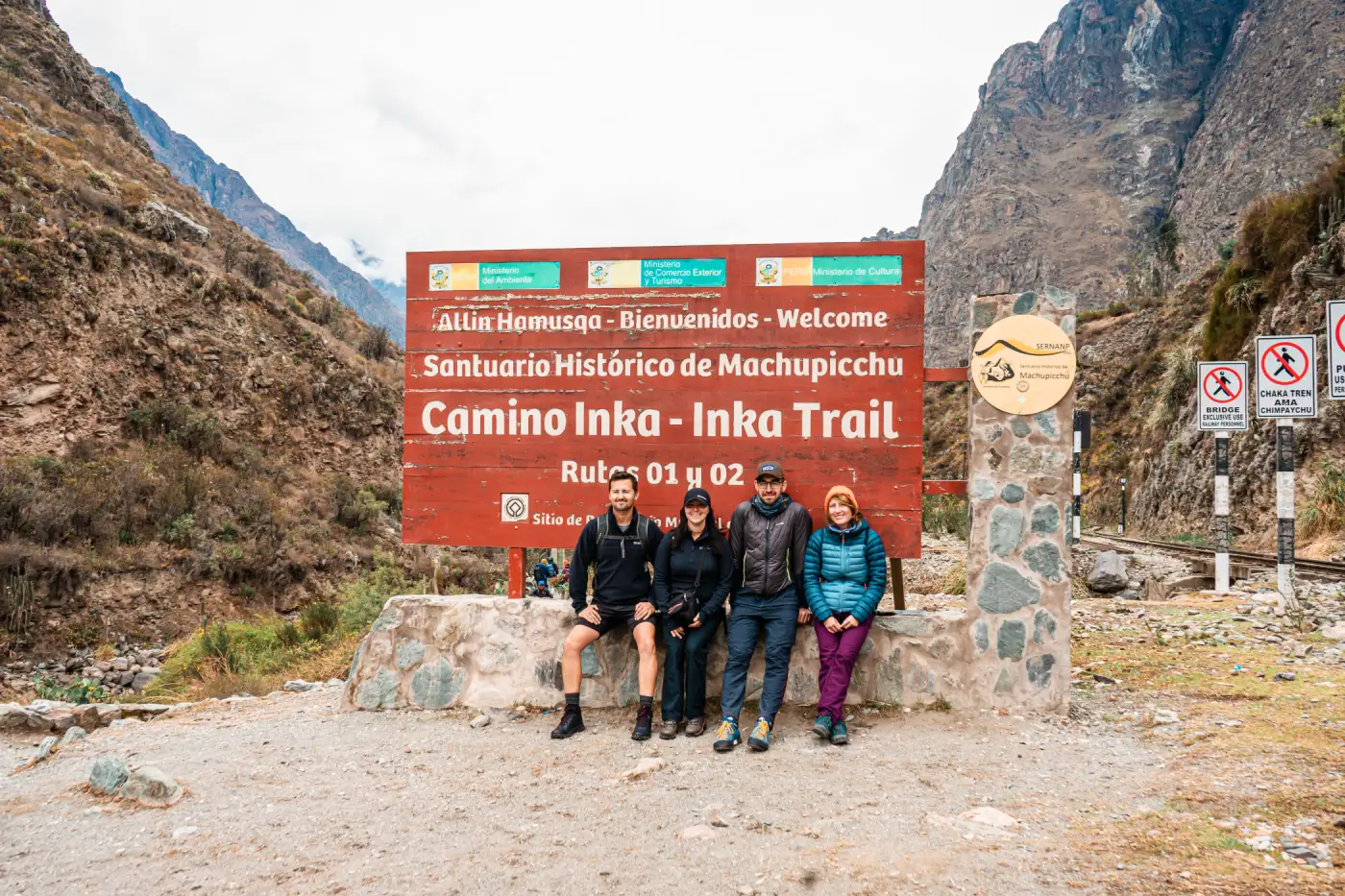
Km 82, the classic trail start.
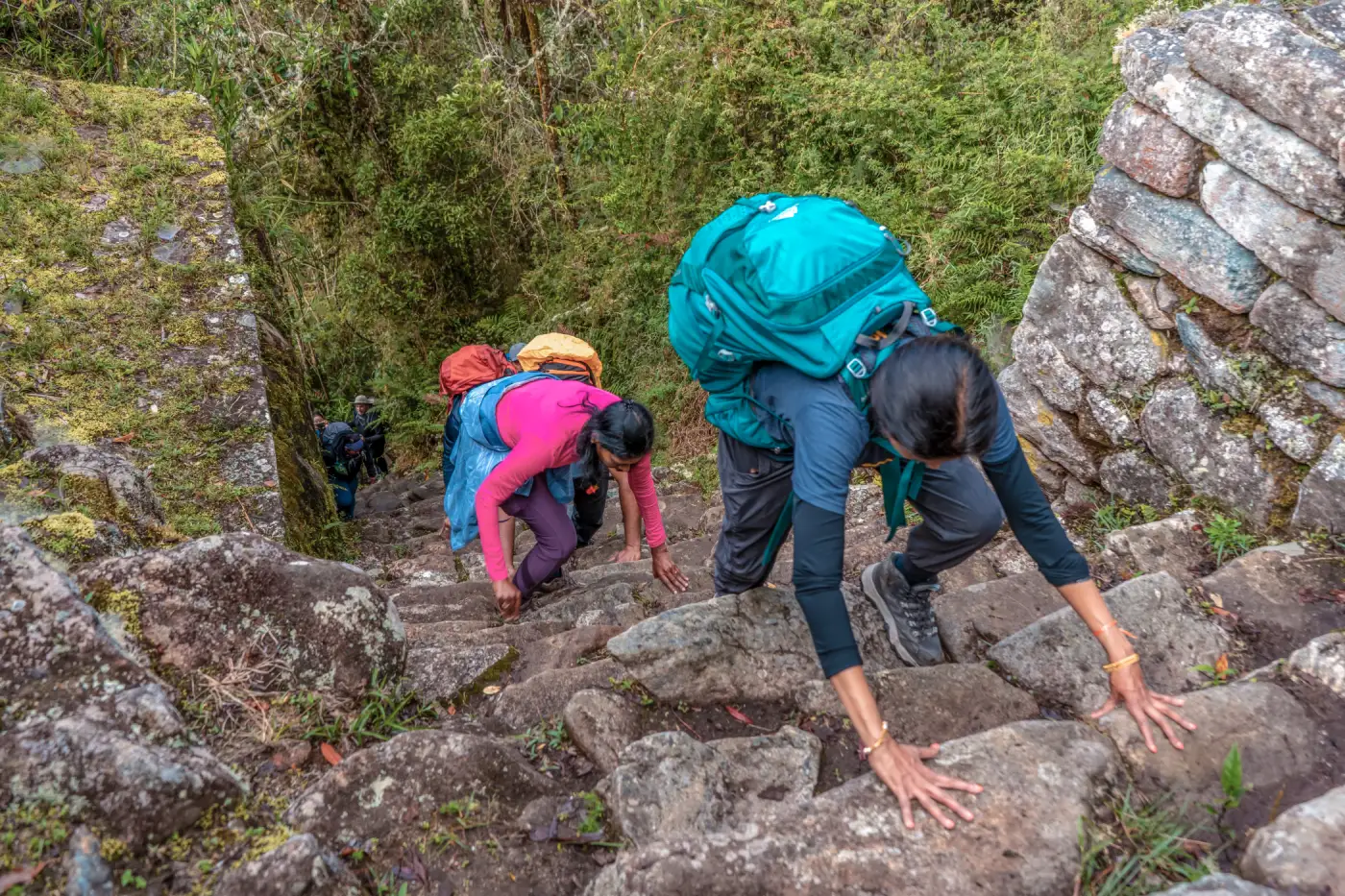
Stone stairs near Wiñay Wayna.
Inca Trail 4 Day vs 5 Day: Price Ranges and Service Levels
The 5-day route generally costs more because it adds another operating day and, in the service compared here, a hotel night, additional meals and transport coordination, plus a second Machu Picchu visit. Across the wider market, price also changes with group size, porter allowance, camp equipment, train category and whether the service is group, private or genuinely premium.
| Service level | 4-Day planning range | 5-Day planning range | What usually changes |
| Standard full-service group | US$780–950 (S/2,610–3,180) | US$940–1,100 (S/3,150–3,685) | Shared guide, porter team, permits, meals, standard camps and return transport. |
| Private standard | US$950–1,600+ (S/3,180–5,360+) | US$1,110–1,800+ (S/3,720–6,030+) | Private guide and logistics; per-person cost rises sharply for very small parties. |
| Premium / luxury private | US$1,900–2,900+ (S/6,365–9,715+) | US$2,200–3,000+ (S/7,370–10,050+) | Glamping-style camps, more staff, upgraded equipment, premium meals, trains or other comfort additions. |
Solo-private and highly customized luxury departures can exceed these bands substantially. Current high-end 4-day and 5-day products in Peru can rise above US$4,000 per person for a solo traveler because the entire operation is effectively carried by one booking.
The current Inkayni products sit inside the standard and private-standard bands. Use the live 4-day group, 4-day private, 5-day group and 5-day private pages for the current quote attached to your dates.
Why 5-Day Inca Trail Itineraries Can Look Different
When you compare other Peru operators online, you may notice that their fifth day does not look like the itinerary above. That is normal: 5-day Inca Trail schedules are not standardized.
| 5-day format | How it usually works | Main consequence |
| Day-4 arrival + second visit | 3 trail camps → Machu Picchu Day 4 → Aguas Calientes hotel → Machu Picchu again Day 5 | Less compressed later trekking plus a second Machu Picchu visit. |
| All-trail 5-day format | 4 camping nights → Wiñay Wayna near Night 4 → Intipunku and Machu Picchu Day 5 | More of the fifth day remains inside the trail experience; a second Machu Picchu visit is not automatic. |
Some operators also shift the first or second camp, changing daily mileage and altitude progression. That is why a claim such as “the 5-day trek is better for acclimatization” can be true for one itinerary and misleading for another.
Fun fact:
The government regulates the historic trail corridor, but “4 days” and “5 days” are operating schedules. Two authorized operators can therefore use the same Classic Inca Trail while dividing the camps and trekking days differently.
Do 4-Day and 5-Day Inca Trail Permits Work Differently?
Both options depend on the regulated Inca Trail permit system and must be operated through an authorized company. The fifth day does not create a separate unrestricted permit pool, so do not assume it will automatically be easier to book.
For the current group services, the 4-day trek publishes daily departures and the 5-day trek publishes departures every other day, but both still depend on official permit availability. Confirm the trek first, then build non-refundable hotels and flights around the secured start date.
The Inca Trail permits and availability guide explains the booking process in detail. The trail also closes during February for annual conservation and maintenance, so the number of days does not create a February workaround.
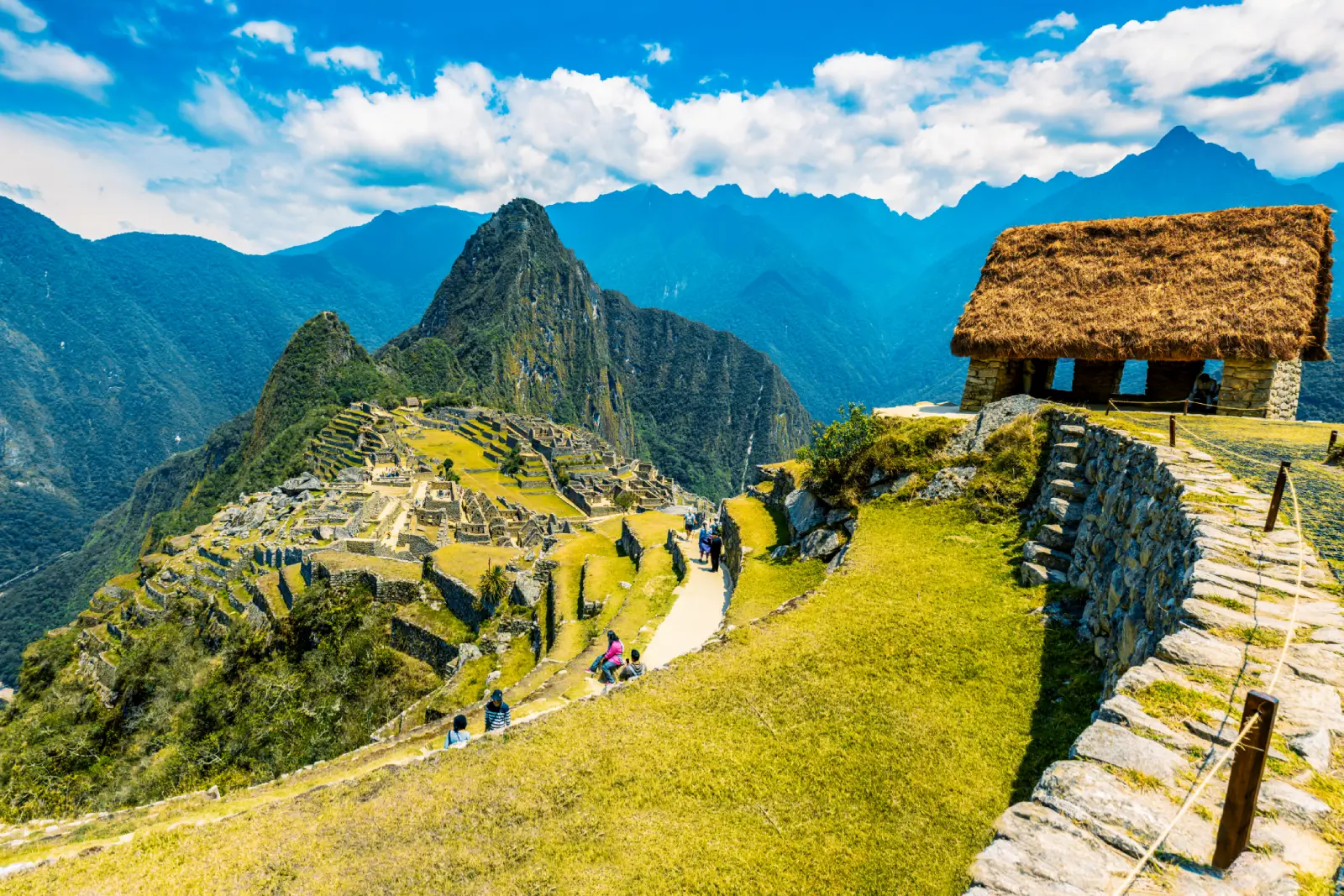
Machu Picchu at the end of the Inca Trail.
Which Inca Trail Itinerary Fits You Better?
| Your priority | Choose | Accept |
| You have only four trekking days | 4 Days | A longer Day 3 and one Machu Picchu visit |
| You want the standard Classic Inca Trail rhythm | 4 Days | The archaeological middle section is more compressed |
| You can handle Warmiwañusqa but prefer a shorter Day 3 | 5 Days | One extra calendar day and a higher price |
| You want to camp at Phuyupatamarca | 5 Days | Days 1–2 remain essentially unchanged in this schedule |
| You want two Machu Picchu visits | 5 Days | The fifth day is partly a Machu Picchu day, not another full trekking day |
| You expect five days to avoid Dead Woman’s Pass | Neither assumption is correct | Both routes cross Warmiwañusqa |
Choose the Inca Trail Pace That Fits Your Trip
The 4-day Inca Trail fits better when you want the classic schedule, need to save a day or prefer the lower-cost option. The 5-day Inca Trail earns its extra day when you would rather shorten Day 3 and value the Phuyupatamarca camp, Aguas Calientes hotel and second Machu Picchu visit.
Neither route removes Warmiwañusqa or replaces the need for proper acclimatization. If you want help matching permits, departure rhythm, fitness, group size and Machu Picchu entries to the right service, talk to a travel specialist.
Frequently Asked Questions About the Inca Trail 4 Days vs 5 Days
Are the 4-day and 5-day Inca Trail routes different?
They follow essentially the same Classic Inca Trail from Km 82 to Machu Picchu. In the current services compared here, the main difference is how the route is divided after Pacaymayo and what happens after reaching Machu Picchu.
Is the 5-day Inca Trail easier?
The second half is less compressed, especially Day 3, but the main altitude challenge remains. In the current itinerary, Warmiwañusqa is still crossed on Day 2.
Does the 5-day Inca Trail include two Machu Picchu visits?
The current Inkayni 5-day services list a Machu Picchu arrival and entry on Day 4, followed by an Aguas Calientes hotel night and another Machu Picchu visit on Day 5. Confirm the exact circuits when booking because official rules can change.
How much personal luggage can the porters carry?
Current group services list up to 11 lb (5 kg) of personal porter allowance, while the current private 4-day and 5-day services list up to 15 lb (7 kg), including sleeping equipment weight when applicable.
Are 5-day Inca Trail permits easier to get?
Do not assume so. Both options depend on official Inca Trail availability. The group departure rhythm differs, but permits still control whether either trek can operate on your preferred start date.