


Training for the Inca Trail
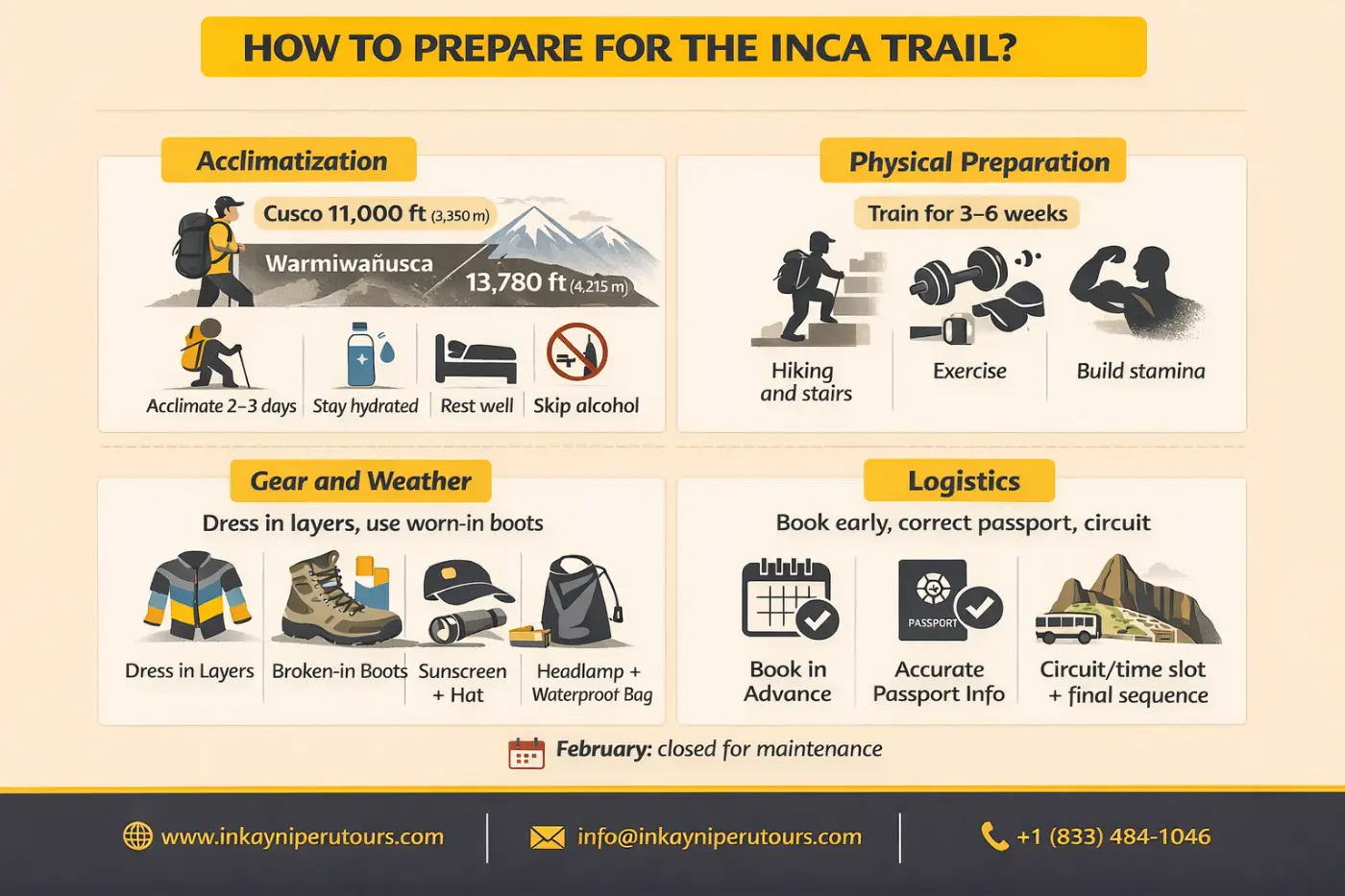
Training for the Inca Trail should be built around the Classic 4-day route, because that is the version that combines 43 km (27 miles), repeated climbs and descents, stone steps, several consecutive hiking days, and altitude at 4,215 m (13,829 ft). In practice, the goal is not to become a runner but to arrive able to walk for hours at a steady pace, climb stairs without rushing, descend with knee control, and carry a light daypack without losing posture. Active travelers usually need 8 to 12 weeks, average travelers 12 to 16, and sedentary travelers more time. Long walks, hills, stairs, leg strength, core work, backpack practice, and 2 to 3 days of acclimatization in Cusco matter much more than generic gym effort.
Table of Contents
If you’re searching for how to train for Inca Trail, the real question is practical: will your body tolerate several consecutive days of effort on high Andean terrain without your knees, breathing or energy collapsing halfway through the route? The Classic Inca Trail is not a technical climb, but it combines altitude, stone steps, long ascents, long descents, early mornings and accumulated fatigue.
This guide keeps training as the main focus while also covering the preparation details that affect the trek in real life: acclimatization in Cusco, weather, gear, permits, passport details and operator logistics.
| 8–12 wksActive traveler | 12–16 wksAverage fitness | 43 kmClassic route (27 mi) | 13,829 ftHighest pass (4,215 m) | 2–3 daysAcclimatization | 5–7 kgDaypack practice |
PERU’S LEGENDARY HIKEInca Trail to Machu Picchu
Follow the historic trail through mountain passes, Inca sites, and cloud forest paths to Machu Picchu.
Remember this:
The Inca Trail is part of the wider Qhapaq Ñan, the Andean road network that connected territories of the Inca state. Today, travelers usually use “Inca Trail” to refer to the regulated trekking route that reaches Machu Picchu through Intipunku, the Sun Gate.
Training only makes sense when you know which route you are preparing for. The Classic 4 Day Inca Trail is the clearest benchmark because it combines several days of hiking, stone steps, altitude, and accumulated fatigue, while the Short Inca Trail demands less overall endurance. Routes such as the Salkantay Trek or the Lares Trek change the balance again, while add-ons like Huayna Picchu or Machu Picchu Mountain ask for extra leg control rather than a full multi-day trekking base.
1. Training for the Inca Trail
Training is the first major part of this guide because most travelers who search for Inca Trail preparation need a practical plan: how long to train, what exercises matter, how to handle stairs and descents, and how to arrive with enough endurance for several consecutive hiking days.
The Classic 4 Day Inca Trail is a 27-mile (43 km) trekking route covering 4 days and 3 nights to Machu Picchu. The main challenge is not a single impossible moment. It is the combination of 6–8 hours of hiking per day, stone paths, steep steps, changing weather, high altitude and repeated effort. Day 2 usually brings the hardest climb toward Warmiwañusqa. Day 3 adds long descents and irregular steps. Day 4 begins early and still requires control, patience and energy.

Ascending a section of the Inca Trail between mountains and clouds, heading to Machu Picchu.
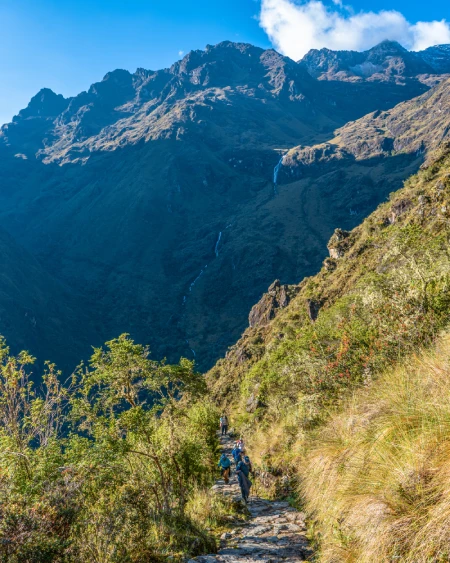
Section of the Inca Trail with a wide view of the valley and surrounding mountains.
Training for Machu Picchu vs. Training for the Inca Trail
Many travelers search for training for Machu Picchu, but the preparation depends on how they plan to get there. If you visit Machu Picchu by train and bus, basic walking comfort, stair tolerance and altitude adjustment may be enough. If you hike the Classic Inca Trail, your body needs a specific plan: several days of endurance, stair climbing, downhill control, backpack practice and acclimatization before the trek.
For travelers who also plan to climb Huayna Picchu or Machu Picchu Mountain, extra stair sessions and controlled descents are useful. These hikes are shorter than the Classic Inca Trail, but their steep stone sections demand balance and leg strength.
How Fit Do You Need to Be for the Inca Trail?
You do not need to be an athlete, but you should be able to walk several hours at a steady pace, climb long sections without rushing, and descend stone steps without losing control. The Inca Trail rewards steady movement. It punishes poor pacing, weak knees, new shoes and training that ignores descents. This is why preparation should be practical, not decorative.
| Your current level | Recommended preparation | Best starting point |
| Sedentary or inconsistent | 4–6 months | 30-minute walks, then gradual hills and stairs |
| Moderately active | 12–16 weeks | Longer walks, leg strength and weekend hikes |
| Active traveler | 8–12 weeks | Elevation simulation, backpack practice and descents |
Expert tip:
Real Inca Trail preparation includes walking consecutive days with accumulated fatigue. In your city, look for routes with irregular stairs, slopes or stone paths. The gym can help, but the trail rewards specific practice on uneven ground.

How to train for Inca Trail: Plan by Fitness Level
A useful Inca Trail training plan should be progressive. Starting too hard can irritate knees, ankles or lower back. Starting too late leaves no time to adapt. Use the following structure as a practical reference and adjust it to your body, age, medical history and available terrain.
| Training block | Main goal | What to do |
| Weeks 1–4 | Build consistency | Walk 30–60 minutes, add gentle hills, begin light leg and core work |
| Weeks 5–8 | Add endurance and strength | Increase walking time, include stairs, train legs/core 2–3 times per week |
| Weeks 9–12 | Simulate trail demands | Hike with elevation gain, practice descents, carry a light backpack |
| Final 7–10 days | Arrive fresh | Reduce intensity, sleep well, keep mobility, avoid panic training |

Infographic about five key reasons to prepare before the Inca Trail.
Cardiovascular Training: Hiking Endurance
Cardio gives you the ability to keep moving for hours without exhausting yourself early. For the Inca Trail, hiking is more specific than running because the trek is based on steady movement, uneven ground, slopes and controlled pacing. Running, cycling or swimming can help your aerobic base, but your main preparation should include long walks and hikes with elevation changes.
| Cardio focus | Frequency | Practical example |
| Base walking | 3–4 times/week | 45–90 minutes at a pace where you can still speak |
| Hills and stairs | 1–2 times/week | Repeated climbs, step-ups or stair sessions with controlled breathing |
| Long hike | 1 time/week if possible | 2–4 hours on mixed terrain, adding backpack weight gradually |

Physical preparation for the Inca Trail.

Stair training sessions can help simulate the rhythm of Inca Trail climbs.

Leg Strength for Inca Steps and Long Descents
The Inca Trail has stone steps with irregular height and rhythm. Some sections climb steadily; others descend for a long time. Descents often feel harder on knees than ascents because each step transfers force through ankles, knees, hips and lower back. Strength training helps your body absorb that impact.
| Exercise | Why it helps | Simple use |
| Squats | Build quadriceps, glutes and basic climbing power | 2–3 sets of 10–15 reps |
| Lunges | Improve unilateral strength and balance | 2–3 sets of 8–12 reps per leg |
| Step-ups | Simulate Inca steps and climbing rhythm | Use a stable bench or stairs, then add light backpack weight |
| Deadlifts or hip hinges | Strengthen posterior chain and protect lower back | Use light weight first and prioritize technique |

Squats help strengthen the legs for climbs and descents.

Strength and endurance exercises help protect joints on uneven terrain.
Core, Balance and Mobility for Uneven Terrain
A strong core keeps your posture stable when the trail becomes irregular, when your backpack pulls backward, or when long descents force your body to control each step. Core training also helps reduce lower-back fatigue during long hiking days.
| Core exercise | Suggested work | Trail benefit |
| Planks | 3 sets of 30–60 seconds | Stable posture with backpack |
| Side planks | 2–3 sets per side | Hip and lateral control on uneven ground |
| Mountain climbers | 3 sets of 10–15 reps per side | Core control under movement |
| Superman or bird dog | 2–3 controlled sets | Lower-back endurance and spinal stability |

Mountain climbers help train core control under movement.

Russian twist exercise for core stability.

Superman exercise for lower-back endurance.
Strategic Nutrition for the Inca Trail
Food does not replace training, but it affects energy, digestion and recovery. In the final days before the trek, keep meals familiar and easy to digest. Avoid experimenting with new foods at altitude.
Before the trek
Complex carbohydrates: rice, pasta, quinoa, potatoes or oats
Lean proteins: chicken, fish, eggs, tofu or legumes
Fruits and vegetables you already tolerate well
Steady hydration during the day
During the trek
Energy snacks: trail mix, bars, chocolate or fruit
Small sips of water during the day
Light meals if altitude affects your appetite
Avoid heavy meals during hard hiking segments
After the trek
Carbohydrates plus protein
Water or electrolytes if needed
Light meals first if digestion feels slow
Rest before another demanding activity

Protein-rich foods can support recovery during training and after the trek.

Tourists enjoying lunch during the Inca Trail.
Warning:
Do not train intensely in the last 7 days. Do not break in boots on trek day. Do not experiment with new foods during the Inca Trail. Arrive recovered, not exhausted.
2. Acclimatization in Cusco Before the Inca Trail
Altitude is the most underestimated factor of the Inca Trail. You can be in good physical shape and still feel the impact of low oxygen if you arrive too late or rush the first days in Cusco. Fitness helps with effort, but it does not guarantee immunity from altitude sickness.
Cusco sits at about 3,399 m / 11,152 ft. The Inca Trail rises higher at Warmiwañusqa, around 4,215 m / 13,829 ft. If you fly from sea level and begin the trek too soon, your body has little time to adjust. Plan at least 2–3 days before the hike, especially if this is your first high-altitude trip.
The Sacred Valley can work as a gentler transition. Ollantaytambo sits lower than Cusco and often feels easier on arrival. Travelers with flexibility can spend one night there, move slowly, hydrate and then continue toward Cusco or the trail start with less shock to the body.

Altitude sickness quick guide for trekking in the Andes.
| Cusco | About 3,399 m / 11,152 ft |
| Ollantaytambo | About 2,792 m / 9,160 ft |
| Warmiwañusqa | About 4,215 m / 13,829 ft |
| Machu Picchu | About 2,430 m / 7,972 ft |
During acclimatization, walk slowly, eat light, drink water in small amounts throughout the day, avoid alcohol and sleep enough. Mild headache, fatigue, light nausea and poor sleep can happen. Persistent vomiting, confusion, loss of balance or shortness of breath that does not improve with rest should be taken seriously. Speak with a medical professional before travel if you have relevant health conditions or concerns about altitude medication.

WORLD WONDER IN THE ANDESMachu Picchu
Discover the history, landscapes, and essential tips for visiting this world wonder.
3. Inca Trail Weather
The Inca Trail crosses different elevations and ecological zones. Dry season usually brings clearer skies and colder nights. Rainy season brings wetter trails and more cloud cover. Transition months can change quickly. Dress in layers so you can adjust without stopping too long or getting soaked. For a wider seasonal view before choosing your dates, check our best time to hike the Inca Trail and Cusco weather by month guides.
| Season | Typical conditions | Clothing logic |
| Dry season: May–September | Clearer days, colder nights, strong sun during open sections | Base layer, warm layer, waterproof shell, sun protection |
| Rainy season: November–March | More rain, mud, slippery stone, warmer nights | Reliable rain gear, dry bags, quick-dry clothing |
| Transition: April and October | Mixed conditions, fewer crowds, variable afternoons | Flexible layers and waterproof protection |

4. Essential Gear
You do not need the newest equipment, but each item should solve a real problem: cold, rain, sun, friction, hydration, balance or document protection. Most operators provide camp equipment and porters for heavier items, but your daypack still matters.
| Category | What to bring | Why it matters |
| Documents | Original passport, student card if applicable, cash in soles | Passport data is checked against the permit |
| Clothing | Quick-dry base layer, fleece or insulated layer, waterproof shell, hat and gloves | Weather changes quickly between high passes and cloud forest |
| Footwear | Broken-in hiking boots or trail shoes, trekking socks, camp sandals if useful | Blisters and friction can ruin the trek early |
| Daypack | 20–30L backpack, rain cover, dry bag or plastic protection | Keeps warm layers, snacks, water and documents accessible |
| Protection | Sunscreen, sunglasses, insect repellent, headlamp, small towel, blister kit | Small items prevent common trail problems |
Your shoes should be tested before the trip. Use them on hills, stairs and long walks with the socks you plan to wear on the trek. Very rigid boots can punish long descents; lightweight trail shoes can feel better but offer less ankle support. Choose based on your ankles, experience and comfort after two or more hours of walking. Our best shoes for Inca Trail guide goes deeper into footwear choice.

Trekking shoes for Inca Trail infographic.
Your backpack should sit close to your back, not pull from the shoulders. Practice with the weight you expect to carry during the hike. Add weight gradually until you can walk with 5–7 kg / 11–15 lbs while keeping posture stable. Trekking poles can help on descents and reduce knee stress, but they should have rubber tips to protect stone surfaces and improve grip. For more detail, review our Inca Trail backpack guide.
Expert tip:
If you rent equipment, check it before leaving Cusco. The sleeping bag must close properly, poles should not loosen by themselves, and rubber tips must fit securely.
5. Permits, Reservations, and Agency Logistics
The Inca Trail cannot be done independently. Access is regulated through authorized tour operators, limited daily permits and identity verification. This makes logistics part of your preparation. Your permit must match your passport details exactly, and your operator should confirm the route, dates, inclusions, personal porter weight, Machu Picchu entry circuit and final-day timing.
| Daily permits | Are limited and include travelers and support staff. During dry season, book well in advance. |
| February closure | The Classic Inca Trail typically closes for maintenance. Choose another route or another month. |
| Machu Picchu entry | Visits are organized by official circuits/routes and time slots. Your final-day schedule must match your ticket. |
| Passport details | Your name and document number must match the permit. Check everything before paying. |
Warning:
A vague answer about permits, equipment, porter weight or Machu Picchu entry is a serious signal to ask again before paying. Good logistics should be clear in writing.
The Crucial Importance of Your Passport
Your original passport is mandatory throughout the Inca Trail journey. It must match exactly with the name and document number used for your permit reservation. Copies or other documents are not a safe substitute. Park rangers and control points verify the permit and passport data along the route. If your passport will change before the trek, confirm the correct update process with your operator before paying.

On-site visit stamp at Machu Picchu.

Common Mistakes Before Hiking the Inca Trail
- Training hard in the final week: this usually leaves the body tired when it should be fresh.
- Using new boots on trek day: blisters appear after hours of friction, often when turning back is impossible.
- Skipping acclimatization: strength does not replace altitude adaptation.
- Carrying too much: unnecessary weight turns every climb into a heavier effort.
- Ignoring descents: many travelers train climbs but forget that long downhills punish knees.
- Eating heavily before the trek: altitude and digestion are not always friendly together.
- Assuming all operators include the same things: equipment, porter weight, meals and ticket details vary. Check our guide to the best Inca Trail tour operators before booking.
Related Inca Trail Planning Guides
COMPACT INCA TRAIL EXPERIENCEShort Inca Trail to Machu Picchu
Enjoy part of the famous Inca Trail on a shorter hike to Machu Picchu.
Ready to Train and Plan the Inca Trail Properly?
Once your body, altitude plan, gear and logistics are clear, the next step is choosing the right departure and confirming the official details. Check availability and reserve your Classic Inca Trail to Machu Picchu with Inkayni Peru Tours so your permit, itinerary, equipment and Machu Picchu entry are aligned from the start.
Frequently Asked Questions About Training for the Inca Trail
How much training for the Inca Trail do I need?
What is the best training for the Inca Trail?
Is training for Machu Picchu the same as training for the Inca Trail?
How fit do you need to be for the Inca Trail?
Should I run to prepare for the Inca Trail?
How much weight should I train with in my backpack?
How do I train for Inca steps and long descents?
How many days should I acclimatize in Cusco before the Inca Trail?
What should I do if I get altitude sickness before or during the hike?
What common mistakes ruin Inca Trail preparation in the last week?
Autor

Shared:


If you liked this article and the information you found, give us 5 stars!
 (2 votos, promedio: 5.00 de 5)
 Loading...