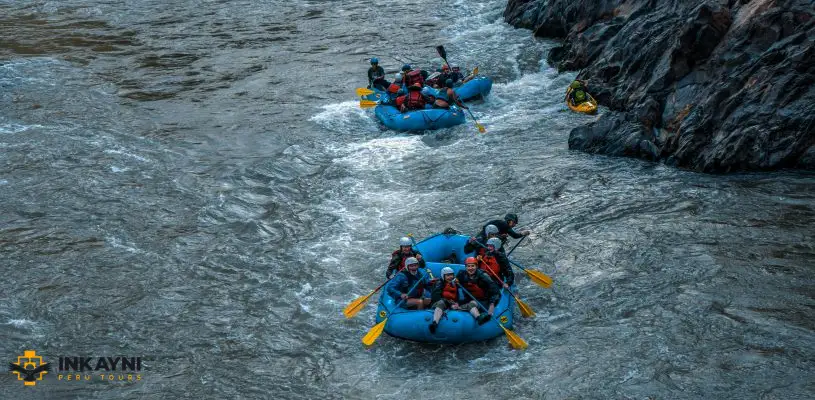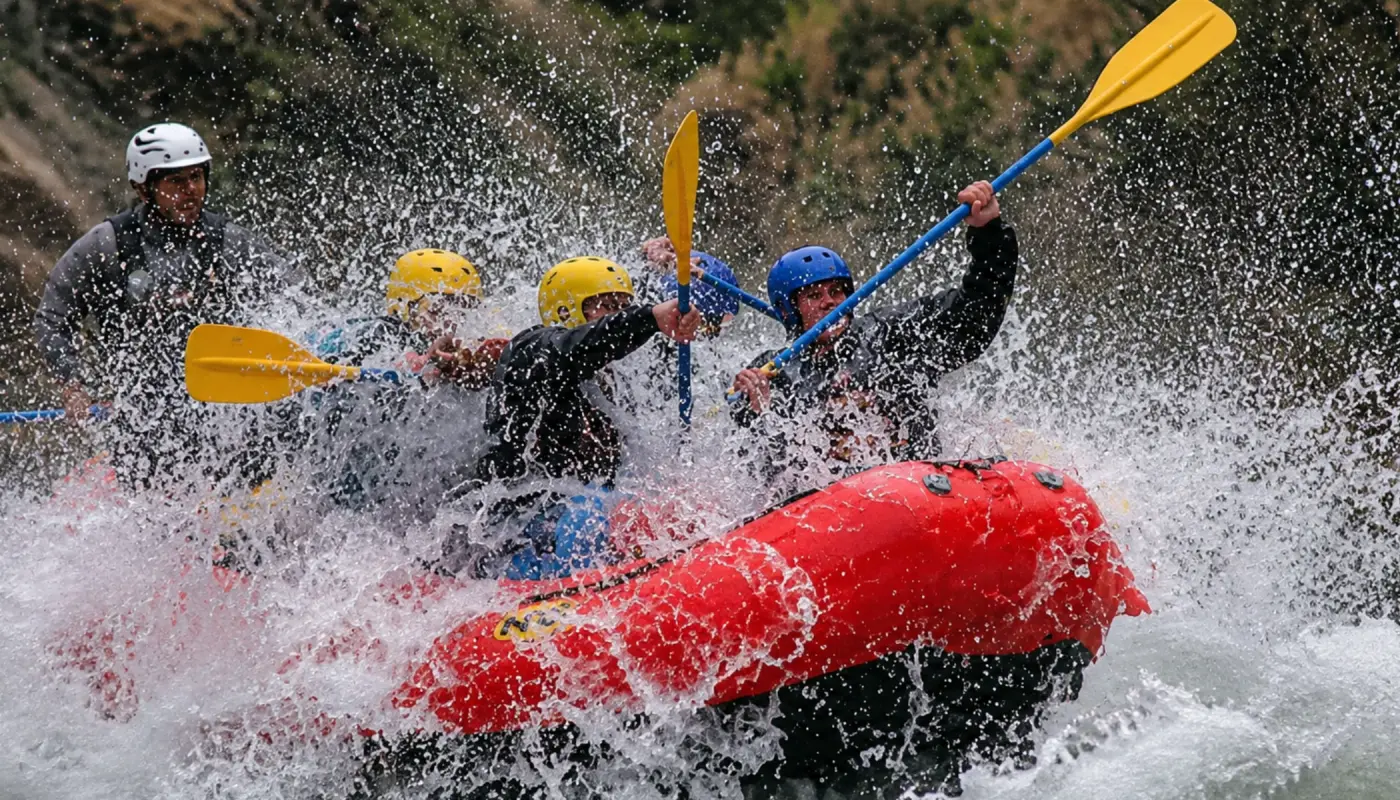

By the time you reach the river near Santa Maria, you have already descended from the cold heights of Abra Malaga by bike. Then the Inca Jungle route changes pace again: helmet on, flotation vest secured, paddle in hand, and roughly two hours of Class III-IV whitewater ahead. What matters before you join is understanding the rapid rating, knowing what the provider supplies, and checking whether swimming ability, weather or another participation restriction could affect you.
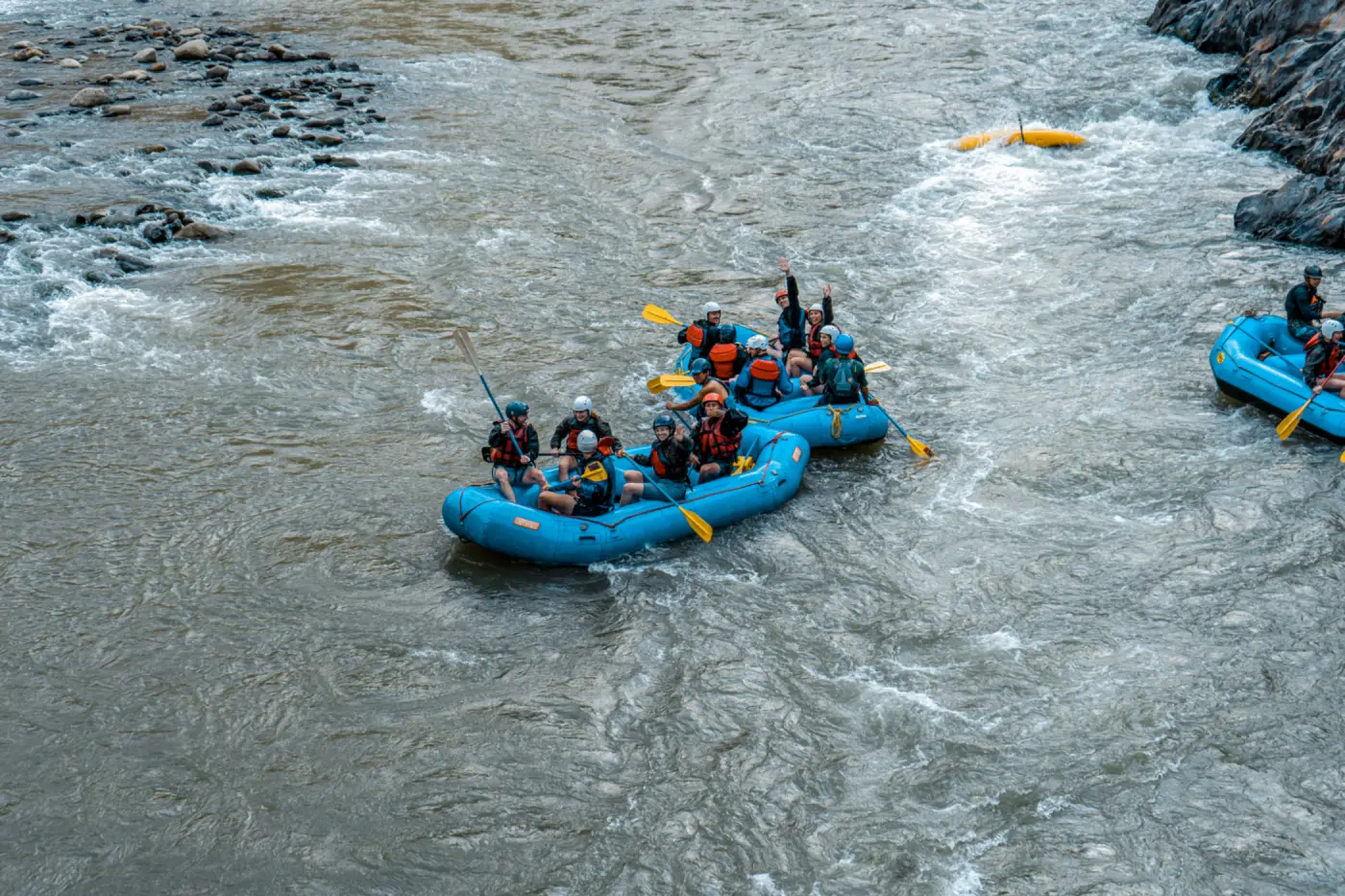
Rafting near Santa María is one of the route’s main adventure highlights.
Inca Jungle Rafting: Quick Facts
| Location | Practical detail |
| Where | Santa Maria area, Cusco, on the Inca Jungle route to Machu Picchu. |
| Time on the river | About 2 hours on many current 3-day and 4-day itineraries. |
| Rapids | Commonly described as Class III and IV around the Santa Maria section. |
| Previous experience | Not normally required on guided itineraries; a briefing and technical equipment should be provided before entering the river. |
MULTI-ADVENTURE ROUTEInca Jungle Trek
Bike, raft, and hike through tropical valleys on an adventurous route to Machu Picchu.
Where Does Rafting Fit Into the Inca Jungle Route?
Rafting normally fits into Day 1 after the mountain-bike descent and lunch near Santa Maria. What happens after the river depends on whether you are following the shorter or longer Inca Jungle itinerary.
| Route | How rafting fits into Day 1 |
| 4-Day Inca Jungle Trek | Bike from Abra Malaga toward the lower valley, have lunch near Santa Maria, raft for about 2 hours on Class III-IV rapids, then spend the night in Santa Maria. |
| 3-Day Inca Jungle Trek | Bike and have lunch near Santa Maria, raft for about 2 hours, then continue by vehicle to Santa Teresa. The current itinerary also mentions safety-kayak support during the rafting section. |


Important note:
On Inkayni’s current Inca Jungle services, rafting is scheduled on Day 1 after biking and lunch near Santa Maria, lasts about two hours and is described as Class III–IV. The current 3-day itinerary also states that previous rafting experience is not required and mentions safety-kayak support. The 4-day group stays in Santa Maria afterward, while the 3-day group continues by vehicle to Santa Teresa.
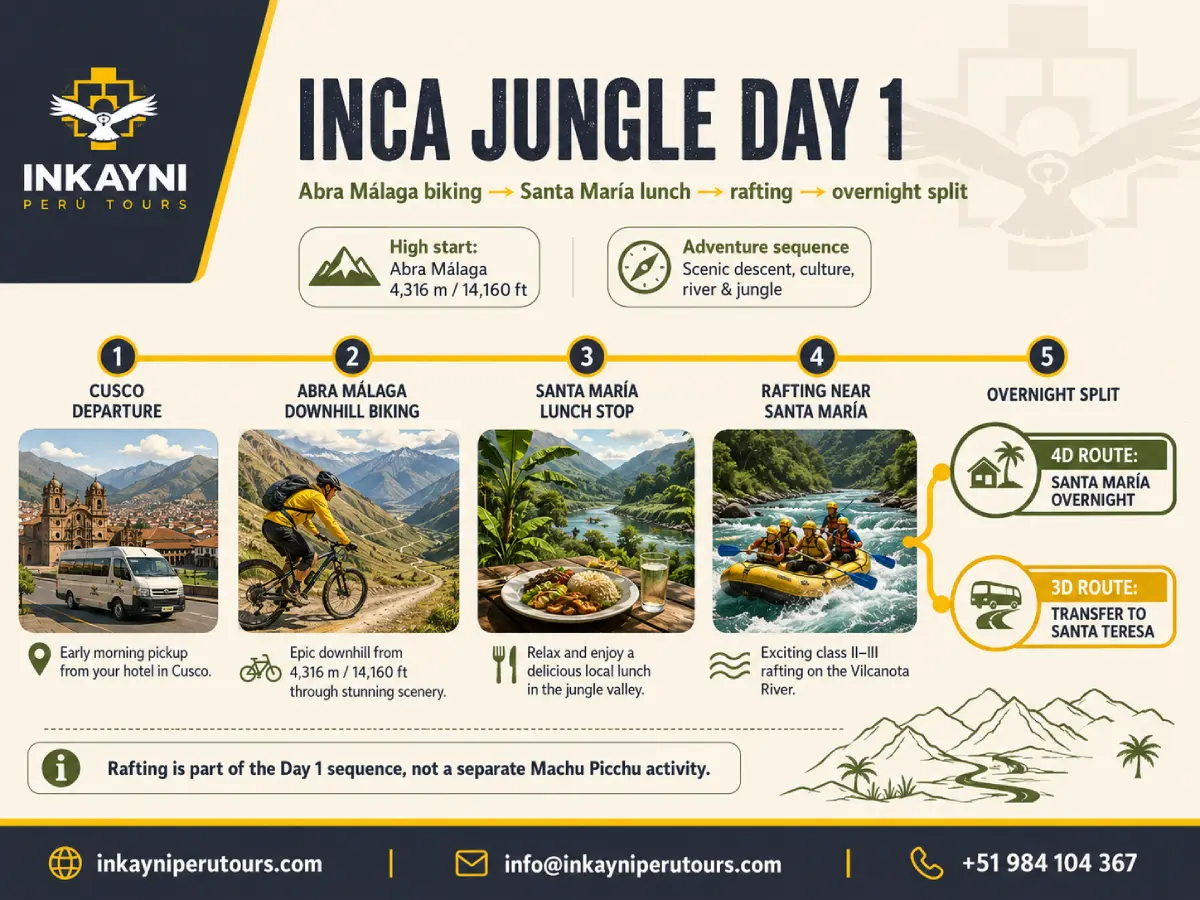
Day 1: biking from Abra Málaga, rafting, and the route split.
How Difficult Are the Inca Jungle Class III–IV Rapids?
The Santa Maria rafting section is commonly presented as Class III and IV whitewater. On the International Scale of River Difficulty, Class III is generally considered intermediate; Class IV is advanced, with stronger water and more demanding boat control.
For a traveler joining a guided Inca Jungle trip, the useful distinction is that the rating describes the river, not the experience level you must already have. Many organized trips accept first-time rafters after a safety briefing, but participation rules still depend on the river provider and conditions.
| Rapid class | General meaning | What you can expect |
| Class III | Intermediate whitewater with irregular waves, stronger current and maneuvers around river features. | Active paddling and quick responses to the guide rather than a calm float. |
| Class IV | More powerful whitewater where precise boat handling becomes important. | Crew coordination, guide instructions and current river conditions matter even more. |
Where Do Class III–IV Rapids Sit on the Full Rafting Scale?
The international scale runs from Class I to Class VI. You do not need to memorize it, but the full range helps put the Inca Jungle rating in perspective.
| Class | Compact description |
| I — Easy | Moving water with small waves and few obstacles. |
| II — Novice | Straightforward rapids with clear channels and occasional maneuvering. |
| III — Intermediate | Irregular waves and faster current requiring coordinated maneuvers. |
| IV — Advanced | Powerful, turbulent rapids requiring more precise handling. |
| V — Expert | Long or very powerful rapids with greater consequences and demanding rescue conditions. |
| VI — Extreme | Extreme whitewater reserved for expert teams under carefully assessed conditions. |
Water level, obstacles and local conditions can change how a rapid behaves, so the number is a useful reference rather than a promise that the river will feel identical every day. American Whitewater makes the same point: classifications do not replace current, first-hand river information.
Important note:
Class III-IV means you are entering real whitewater, not floating down a calm sightseeing river. It does not mean you need to arrive as an advanced rafter. For a first-timer, the priorities are simple: meet the provider’s restrictions, wear the supplied equipment correctly and respond quickly to the guide.
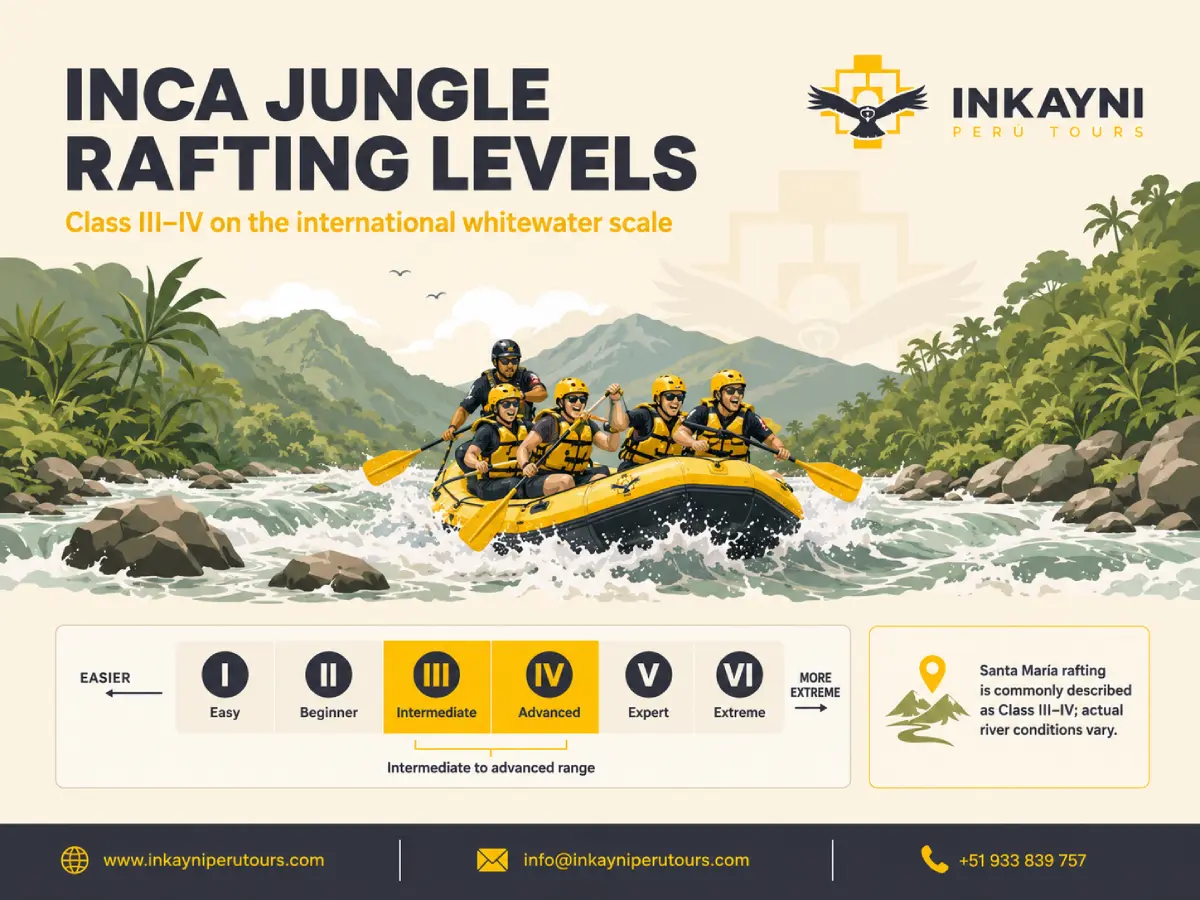
Rafting on this route usually ranges between Class III and IV.
What Actually Happens During the Rafting Activity?
Before the raft moves, the group should know what to do. The river session begins with a briefing and equipment fitting, then the guide coordinates the crew on the water.
- Briefing: learn the paddling commands and what to do if someone falls into the water.
- Equipment fitting: staff fit the flotation vest, helmet and any cold-water gear used that day.
- On the river: paddle with the crew and follow the guide’s commands rather than trying to steer independently.
- Exit: leave the raft only where and when river staff indicate.
Support arrangements vary by provider. A safety kayak may accompany the raft on some departures, while other operators use different rescue setups. If that detail matters to you, confirm it for the service you are actually booking.

What Safety Gear Should the Rafting Operator Provide?
On an organized Inca Jungle rafting section, the technical river equipment should come from the activity provider. You should only need personal items for before and after the river. Check the inclusions if you are comparing packages, because equipment wording can vary between operators.
| Equipment | What matters to you |
| Flotation vest & helmet | Both should fit securely. Tell staff if either feels loose, painful or badly positioned. |
| Raft & paddle | Use the seating, grip and paddling technique explained during the briefing. |
| Wetsuit / cold-water gear | Used according to the provider and conditions rather than as a fixed setup on every departure. |
| Rescue equipment | Managed by river staff. Some departures also use safety-kayak support; confirm the setup with your provider. |
Warning:
An older version of this article suggested rafting could be done “on your own.” A Class III-IV section on the Inca Jungle route should instead be treated as an organized river activity with trained staff, proper equipment and a safety briefing.
Do You Need Rafting Experience or Strong Swimming Skills?
Previous rafting experience is not normally required on many guided Inca Jungle departures. You still need to follow commands, paddle with the group and stay composed in moving water. The provider’s participation rules matter more than whether you have rafted before.
Swimming is a separate question, and requirements can differ by river provider. If you cannot swim, feel uneasy in fast-moving water, or have a mobility or health concern that could affect participation, ask for the provider’s current restriction before booking. “No previous experience required” does not automatically mean that every non-swimmer can participate.
Rafting is also only one part of the route. For altitude, biking confidence, hiking hours and accumulated effort, the guide to how difficult the Inca Jungle Trek is gives the fuller picture.
What Should You Wear and Bring for Rafting?
Your personal rafting kit is small because the technical equipment should come from the operator.
| Bring | Why |
| Swimsuit | Wear it under the river gear so changing is easier before and after the activity. |
| Compact towel & dry clothes | Useful once you leave the river and continue the Inca Jungle itinerary. |
| Waterproof protection for valuables | Keep your phone and documents dry unless the provider offers a secure storage option. |
For footwear, rain protection, documents and the rest of your trekking gear, the Inca Jungle Trek packing list has the full checklist.

Can Rain or River Conditions Cancel the Rafting?
Yes. Light rain does not automatically mean rafting will stop, but heavier rain, rising water or other local conditions can force a postponement or cancellation. The river team decides whether the section is suitable on the day.
There is no useful guarantee based only on the month of travel. If rafting is a priority, ask how weather-related changes are handled before you pay. Light rain may still allow the activity, while heavier rain or unsuitable river conditions can change the plan. For the wider seasonal picture, see the weather section of the Inca Jungle Trek guide.
Plan the Rest of Your Inca Jungle Trek
Make Rafting a Planned Part of Your Inca Jungle Day
If rafting is one of the reasons Inca Jungle caught your attention, settle the important details before departure: make sure the activity is included in your service, check any participation restriction that may affect you, and know what happens if the river is unsuitable that day.
The 4-day Inca Jungle route gives you the fuller Santa Maria-Santa Teresa trekking day, while the 3-day route compresses the journey when time is tighter. If rafting is the deciding factor, you can also check which current Inca Jungle itinerary fits your dates.
Frequently Asked Questions About Rafting on the Inca Jungle Trek
Is there rafting at Machu Picchu?
No. Searches such as “Machu Picchu rafting tours” usually refer to rafting on a route that later reaches Machu Picchu. The Inca Jungle river section takes place near Santa Maria on Day 1, well before the archaeological visit.
Do I need to know how to swim for Inca Jungle rafting?
Swimming requirements can vary by river provider. If you cannot swim or are uncomfortable in moving water, ask for the current restriction before booking. No previous rafting experience and swimming ability are two different questions.
Can I skip rafting on the Inca Jungle Trek?
Usually this needs to be coordinated in advance. Rafting sits inside the Day 1 schedule, so where you wait and how you reconnect with the group depends on the specific itinerary. Any refund or alternative should be confirmed rather than assumed.
Can bad weather cancel the rafting?
Yes. Light rain does not automatically stop rafting, but heavier rain or unsuitable river conditions can lead to postponement or cancellation. The river team makes that decision on the day.