


Can You Trek from Choquequirao to Machu Picchu?
Yes. The Choquequirao Trek to Machu Picchu is usually planned in 7 to 9 days. The 7-day route is the most practical option without using almost an entire Peru trip. The 8-day version gives more breathing room, while 9 days is better for trekkers who want a fuller expedition pace.
Table of Contents
The Choquequirao Trek to Machu Picchu is not just a longer version of the classic Choquequirao route. It is a remote connection between two major Inca sites, crossing the Apurimac Canyon, mountain villages, high passes, cloud forest, Llactapata, Aguas Calientes and finally Machu Picchu. This guide explains the 7, 8 and 9-day route options, how they differ, how hard they feel, what they usually cost, what is included, and what travelers should check before booking.

Two major Inca sites connected by one remote trekking route.
What Is the Choquequirao Trek to Machu Picchu?
The Choquequirao Trek to Machu Picchu is a multi-day route that continues beyond Choquequirao instead of returning to Cachora or Capuliyoc. After exploring the archaeological site, the trail moves east through Río Blanco, Pinchaunuyoc, Maizal, Yanama or nearby highland routes, Lucmabamba, Llactapata and Aguas Calientes before the final visit to Machu Picchu.
This route is for travelers who want a serious Andean trek, not only a visit to Choquequirao. The first part shares the same demanding canyon approach used by the Choquequirao hike, but the second half adds higher terrain, more logistics and the final approach to Machu Picchu through the cloud forest.
Choquequirao to Machu Picchu Route Versions
The route is commonly planned in 7, 8 and 9-day formats. The 7-day version is the most practical for travelers who want the full connection but still need time for Cusco, the Sacred Valley or other parts of Peru. The 8-day version gives the trek a more comfortable rhythm. The 9-day version is better for hikers who want a slower, more continuous expedition.
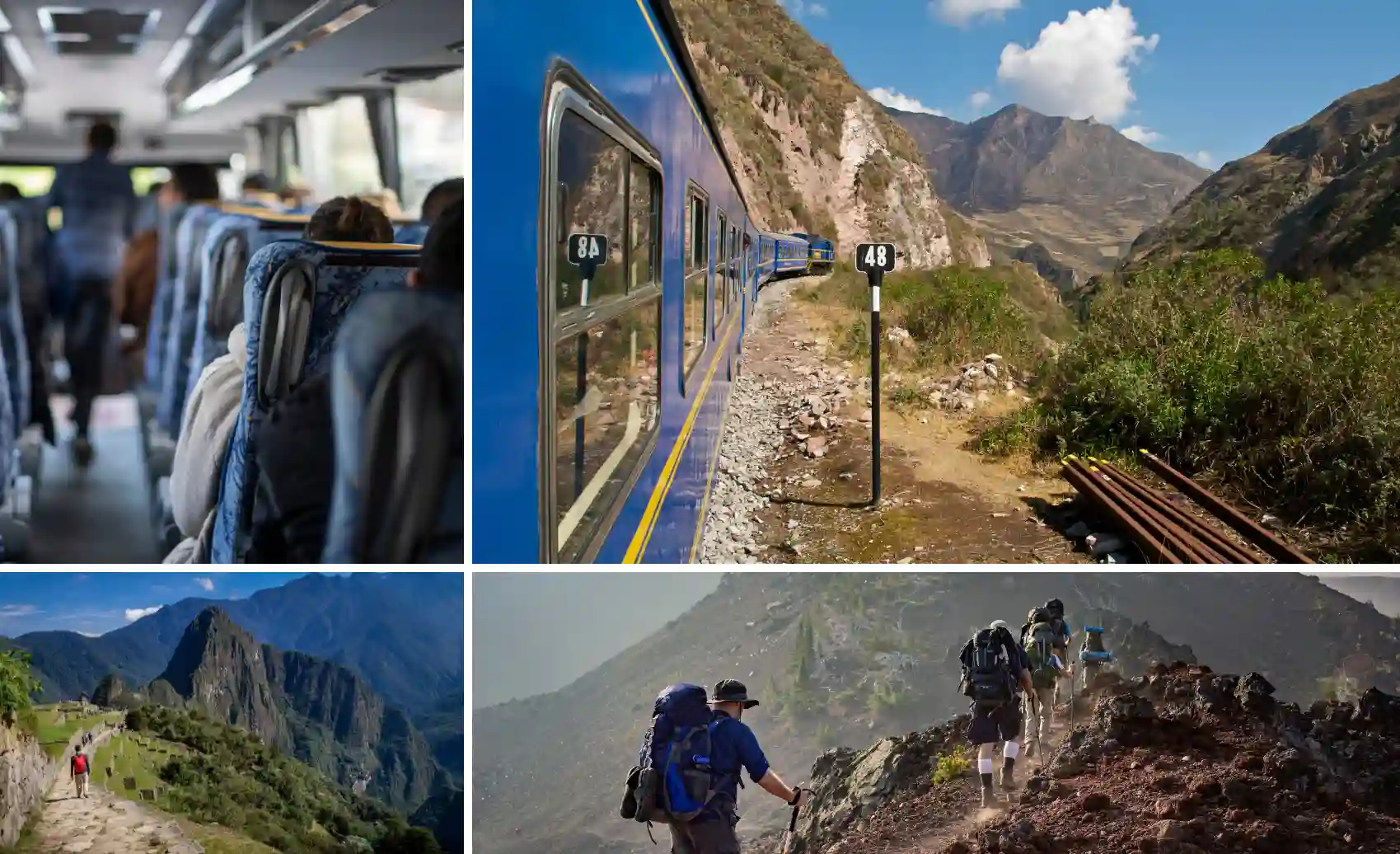
The final approach combines hiking, Aguas Calientes, bus access and train return.
Most practical
7 Days
A compact route that keeps the essential highlights: Choquequirao, Pinchaunuyoc, Maizal, a high pass, Llactapata and Machu Picchu. It may use transport after Yanama or in the valley connection.
Most balanced
8 Days
A better rhythm for travelers who want more recovery, more time at Choquequirao and a less compressed transition through the highland and cloud forest sections.
Most complete
9 Days
A fuller expedition pace for trekkers who want more continuous walking, less compression and more remote nights before reaching Machu Picchu.
Route note:
Many 7-day Choquequirao to Machu Picchu itineraries are practical hybrid routes. They usually include the full Choquequirao approach, Pinchaunuyoc, Maizal, a high pass, Llactapata and Machu Picchu, but may use local or private transport after Yanama or in the Lucmabamba connection to avoid turning the trip into a 9-day expedition.
A compressed 4-day Choquequirao Trek or a more balanced 5-day Choquequirao Trek makes more sense if your goal is Choquequirao only. The route to Machu Picchu is a different commitment because it adds more days, higher logistics, ticket coordination, train return and a stronger need for guide support.
| Factor |
Full connection
Choquequirao to Machu Picchu
7 to 9 days
|
Classic route
Choquequirao Only
4 to 5 days
|
| Best for | Travelers who want Choquequirao and Machu Picchu in one serious trek. | Travelers focused mainly on Choquequirao and the Apurimac Canyon. |
| Distance | Approx. 55-70 mi / 89-112 km, depending on version and transport sections. | Approx. 37-40 mi / 60-64 km. |
| Sites | Choquequirao · Pinchaunuyoc · Llactapata · Machu Picchu | Choquequirao |
| Highest point | Around 13,546-15,256 ft / 4,130-4,650 m, depending on route. | Choquequirao area, around 10,335 ft / 3,150 m. |
| Estimated tour price | Approx. US$1,000-2,500+ per person, depending on 7, 8 or 9-day format. | Approx. US$550-950+ per person for an organized 4- or 5-day trek. |
| Difficulty | Very Challenging | Challenging |
7 and 8-Day Choquequirao to Machu Picchu Itineraries
The 7-day version is useful for travelers with limited time who still want the full Choquequirao to Machu Picchu connection. The 8-day version is better if you want a less compressed pace, more recovery and more time to absorb the highland and cloud forest sections.
Which itinerary feels better?
The 7-day route is better if time is limited and you want the essential connection. The 8-day route is better if you prefer more recovery and less pressure. The 9-day route is usually better for trekkers who want the fullest walking experience and do not mind using most of their Peru trip on this expedition.
How the 9-Day Version Differs
The 9-day version usually keeps a slower expedition rhythm. Instead of compressing the highland and cloud forest connection, it gives more room between Yanama, Totora, Lucmabamba, Llactapata and Aguas Calientes. It is the best option for hikers who care more about continuity, landscapes and recovery than finishing quickly.
| Version | Main advantage | Main tradeoff |
| 7 days | Fits better into a normal Peru itinerary. | More compressed and may use transport in the route connection. |
| 8 days | Better balance between time, recovery and route experience. | Costs more and requires one extra travel day. |
| 9 days | Fuller expedition pace and more continuous walking. | Too long for many travelers with limited time in Peru. |
How Hard Is the Choquequirao Trek to Machu Picchu?
The Choquequirao Trek to Machu Picchu is very challenging. It combines the hard Apurimac Canyon approach with remote terrain, high passes, long descents, basic camps and several days of accumulated fatigue. The exact difficulty depends on whether you choose a 7, 8 or 9-day version, and how much walking or transport is used after Yanama.

Long, remote trail sections make this route much harder than a short Machu Picchu visit.
| Section | How it feels | Main challenge |
| Capuliyoc to canyon floor | Moderate to hard | Long descent, heat and first impact on knees. |
| Canyon floor to Marampata | Hard | Sustained climb after crossing the Apurimac area. |
| Choquequirao to Pinchaunuyoc | Moderate | Site exploration plus continued trekking. |
| Río Blanco to Maizal | Hard | Remote climb and fewer comfort points. |
| Maizal to high pass and Yanama area | Very hard | Altitude, cold air, steep sections and accumulated fatigue. |
| Lucmabamba to Llactapata | Moderate to hard | Cloud forest climb and descent toward Hidroelectrica. |
| Machu Picchu day | Easy to moderate | Early start, bus access, guided visit and train return logistics. |
Best Time for the Choquequirao to Machu Picchu Trek
The best window is usually May to September, when trails are more stable, river crossings are safer and the high passes are less exposed to heavy rain. April and October can still work with more weather variation. The wettest months are a weaker choice because mud, landslides, swollen rivers and slippery descents can affect both comfort and safety.

Clear skies and firmer trails make the dry season the strongest window.
| Season | Months | Conditions | Recommendation |
| Dry season | May to September | Firmer trails, colder nights, better pass conditions. | Best window |
| Shoulder months | April and October | Mixed weather, fewer people, more uncertainty. | Possible with flexibility |
| Wet season | November to March | Muddy trails, heavy rain, landslide risk, harder river crossings. | Not ideal |
How Much Does the Choquequirao Trek to Machu Picchu Cost?
The Choquequirao to Machu Picchu route costs more than the classic Choquequirao-only trek because it adds extra trekking days, more staff time, more food, mule support, Machu Picchu tickets, Aguas Calientes hotel, bus, train and return logistics. A shorter price is not always better if it excludes key items travelers will have to pay later.
| Route type | Realistic planning range | What changes the price |
| 5-day Classic Choquequirao | Approx. US$550-950+ per person | Duration, guide, mule support, meals, camping gear and private service. |
| 7-day Choquequirao to Machu Picchu | Approx. US$1,000-1,800+ per person | Compact route, guided support, Machu Picchu ticket, hotel, train, mule support and possible transport sections. |
| 8-day Choquequirao to Machu Picchu | Approx. US$1,450-2,200+ per person | More time, more meals, more staff days, better pacing and more route flexibility. |
| 9-day Choquequirao to Machu Picchu | Approx. US$1,800-2,600+ per person | Longer expedition, more continuous walking, additional camps, private pacing and higher logistical cost. |
When comparing operators, do not judge only by the final number. A cheaper price may exclude the Aguas Calientes hotel night, Machu Picchu entrance, train ticket, bus tickets, sleeping bag, mattress, trekking poles, mule allowance, meals, tips or emergency planning.
What Does an Organized Tour Usually Include?
For most travelers, a guided route is the safest and most practical way to complete the Choquequirao to Machu Picchu trek. After Choquequirao, the trail becomes more remote, and logistics matter more than on a short trek.
| Included service | Why it matters |
| Licensed trekking guide | Manages route, pacing, interpretation and safety decisions. |
| Transport from Cusco and return logistics | Connects road access, Aguas Calientes, train and Ollantaytambo return. |
| Meals and cook team | Supports recovery during demanding trekking days. |
| Camping equipment | Tents, dining setup and kitchen gear reduce the load you carry. |
| Mule support | Keeps your backpack lighter on long climbs and descents. |
| Tickets and hotel logistics | May include Choquequirao, Machu Picchu, train, bus and Aguas Calientes hotel arrangements. |
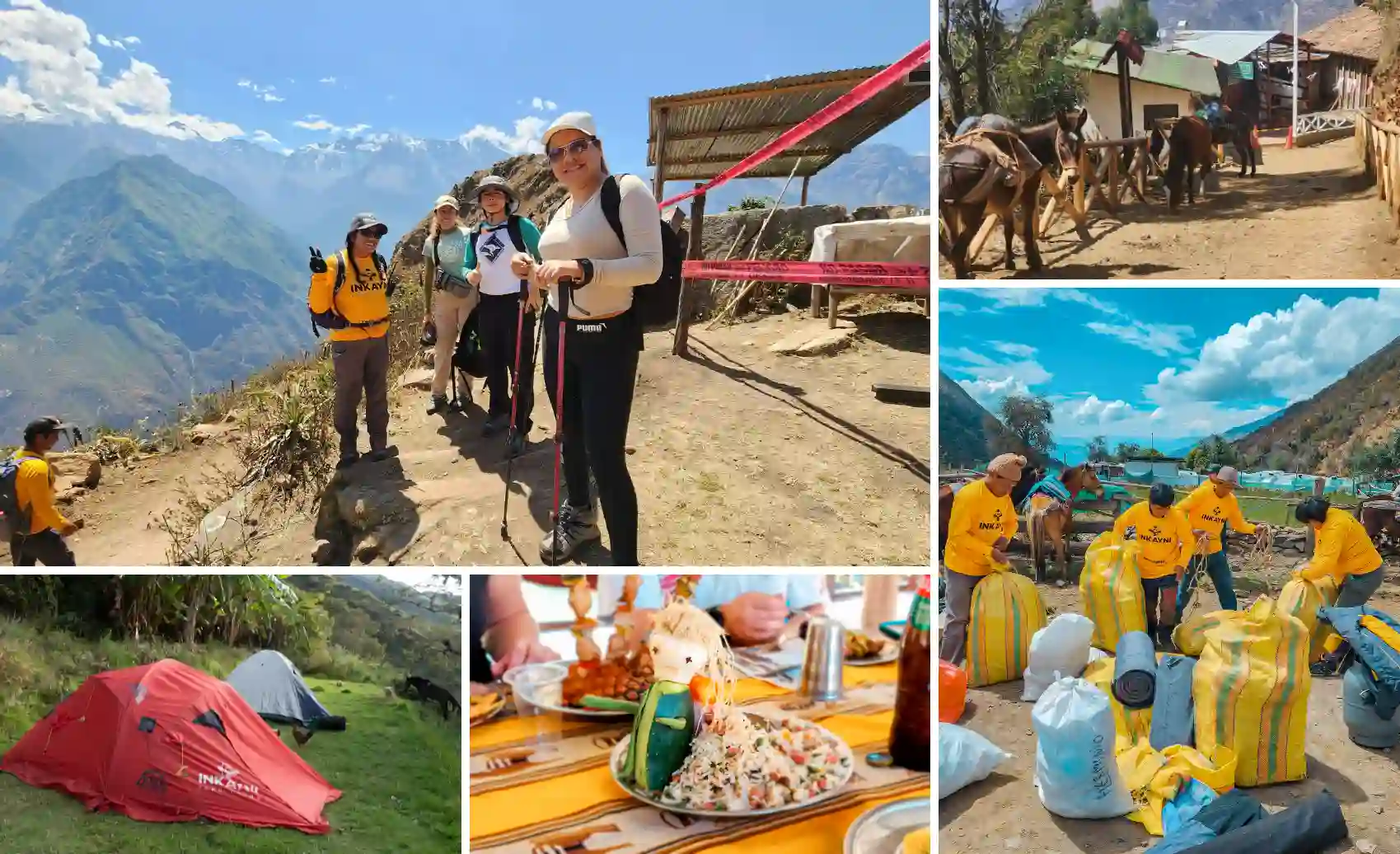
A guided tour should solve safety, food, camp and route logistics.
Before booking:
Ask whether the price includes Machu Picchu tickets, Choquequirao entry, train, bus, Aguas Calientes hotel, meals, mule weight allowance, sleeping bag, mattress, trekking poles, tips and any transport section between Yanama, Lucmabamba or Hidroelectrica.
Machu Picchu Tickets, Circuits and Return Logistics
After the final trekking day, most groups sleep in Aguas Calientes and visit Machu Picchu the next morning. Your Machu Picchu ticket should be booked in advance, especially in the dry season. The official visit system uses circuits and routes, so your exact experience inside the citadel depends on the route available when your ticket is purchased.
The most important point is simple: do not leave Machu Picchu tickets as an afterthought. A proper plan should coordinate the ticket, bus, guide, train from Aguas Calientes to Ollantaytambo and road transport back to Cusco. If you plan independently, verify ticket availability, train schedules and return transport before committing to the full route.
Ticket note:
Machu Picchu currently uses 3 main circuits grouped into 10 routes. Availability and rules can change, so confirm the ticket route before departure rather than assuming every ticket gives the same view or access.
Preparation, Packing and Insurance
This route requires more preparation than the classic Choquequirao trek. Train for several long hiking days, steep descents, high-altitude sections and walking with a daypack. Spend at least 2 full days acclimatizing in Cusco or the Sacred Valley before the trek.
Training
Build endurance, leg strength, downhill control and recovery capacity. Stairs, hills and long hikes matter more than flat walking alone.
Gear
Use broken-in boots, trekking poles, warm layers, rain protection, sun protection, headlamp and a tested daypack.
Insurance
Choose coverage for medical evacuation, accidents and cancellations. Remote sections require real logistical planning if something goes wrong.

Prepare early: training, insurance, tickets and tested gear all matter on this route.
Landscapes Along the Route
The landscapes are one of the strongest reasons to choose this route, but they should not be confused with an easy nature walk. You move from dry canyon to high passes, then down into warmer cloud forest and the Urubamba valley.
First days
Apurimac Canyon
Dry slopes, hot lower sections, cactus, canyon views and possible condor sightings.
Choquequirao area
Inca terraces and plazas
Large terraces, plazas, stone sectors and the remote atmosphere of a site still far from mass tourism.
Highland section
Cloud forest and high passes
Orchids, forested slopes, puna landscapes and cold, exposed pass crossings.
Final approach
Lucmabamba and Llactapata
Coffee plantations, warmer valleys and the first distant views of Machu Picchu from the ridge.
Condors, orchids, hummingbirds and cloud forest habitats are part of the wider wildlife in Choquequirao, but sightings always depend on season, weather, group noise and luck.
Independent or Guided?
Experienced hikers can do parts of this route independently, but the full Choquequirao to Machu Picchu trek is not ideal for casual self-guided travel. After Choquequirao, the route becomes more remote, signage may be inconsistent, and evacuation decisions can be difficult without local support.
| Option | Best for | Main risk |
| Independent trek | Very experienced hikers with navigation, camping and remote-route confidence. | Food, water, route finding, evacuation and carrying heavier gear. |
| Guided group trek | Strong hikers who want logistics, meals, camps and tickets handled. | Less flexibility, but safer and easier to organize. |
| Private guided trek | Travelers who want better pacing, extra support and itinerary control. | Higher cost, but better rhythm and flexibility. |
Other Strong Trekking Options to Machu Picchu
The full Choquequirao route is not the only way to reach Machu Picchu on foot. If your priority is the most classic regulated trek, the Inca Trail to Machu Picchu is still the best-known option. If you want a high Andean route with glacier views, the Salkantay Trek to Machu Picchu may fit better.
Still choosing the right Machu Picchu trek?
Is the Choquequirao Trek to Machu Picchu Worth It?
The Choquequirao Trek to Machu Picchu is worth it if you want a route that feels earned from beginning to end. You do not just arrive at Machu Picchu after a transfer; you reach it after crossing canyon terrain, remote camps, high passes, cloud forest and Llactapata. That is also why this route is not for everyone.
Choose the 7-day version if you want the most practical connection. Choose the 8-day version if you prefer a more balanced rhythm. Choose 9 days if your priority is the fullest expedition experience rather than saving time.
Frequently Asked Questions
Is the Choquequirao Trek to Machu Picchu 7, 8 or 9 days?
Is the 7-day version too rushed?
Which version is best for most travelers?
How hard is the Choquequirao Trek to Machu Picchu?
What is the highest point of the route?
What is the best month to do this trek?
How much does the Choquequirao Trek to Machu Picchu cost?
Do I need a guide, or can I do it independently?
How much luggage do I carry during the trek?
Will I have phone signal or internet on the route?
Can I refill water during the trek?
What happens if I get sick or cannot continue?
Escrito por

Shared:


If you liked this article and the information you found, give us 5 stars!
 (1 votos, promedio: 5.00 de 5)
 Loading...