


How to Reach Machu Picchu via Hidroelectrica
The Hidroelectrica route is the main budget alternative to Machu Picchu: a long road trip from Cusco to Hidroelectrica, followed by a mostly flat 10 km (6.2 mi) walk to Aguas Calientes beside the railway and the Urubamba River. It works best for backpackers and flexible travelers who want to save money and do not mind a long travel day, but it is not the right choice for anyone who wants the easiest, fastest or most predictable route. The key practical point is this: the walk ends in Aguas Calientes, not at the citadel, so you still need to sleep there or carefully coordinate your Machu Picchu ticket, bus and entry time with enough margin.
Table of Contents
The journey from Hidroelectrica to Machu Picchu is one of the most popular alternative routes for travelers who want to reduce costs and add a walking section before reaching Aguas Calientes. It is not the classic train to Machu Picchu, and it is not the Inca Trail. It is a long road journey through the high jungle, followed by a flat walk near the railway line beside the Urubamba River.
This guide explains how the Hidroelectrica route works, how much it may cost, how long it takes, when it makes sense, when it does not, what to pack, how to stay safe, and how to connect the walk with your Machu Picchu circuit, bus and entrance time.
| 6.2 mi10 km walk | 2–3 hrswalking section | $20–40one-way budget range | Long dayplan with margin |
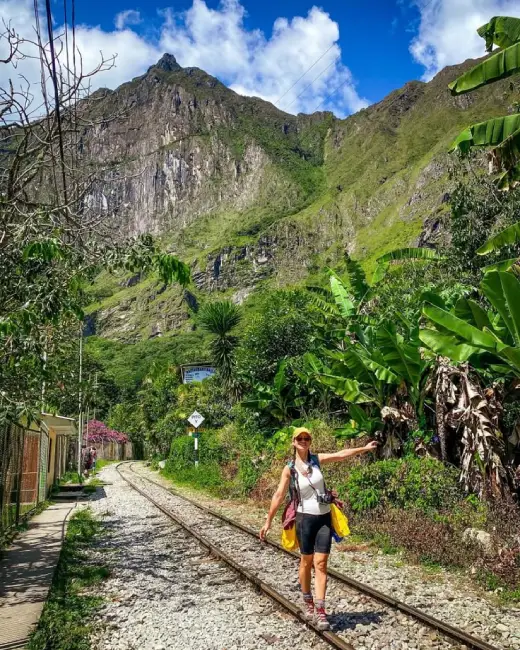
Walking beside the railway route toward Aguas Calientes. Photo by: Kitti.
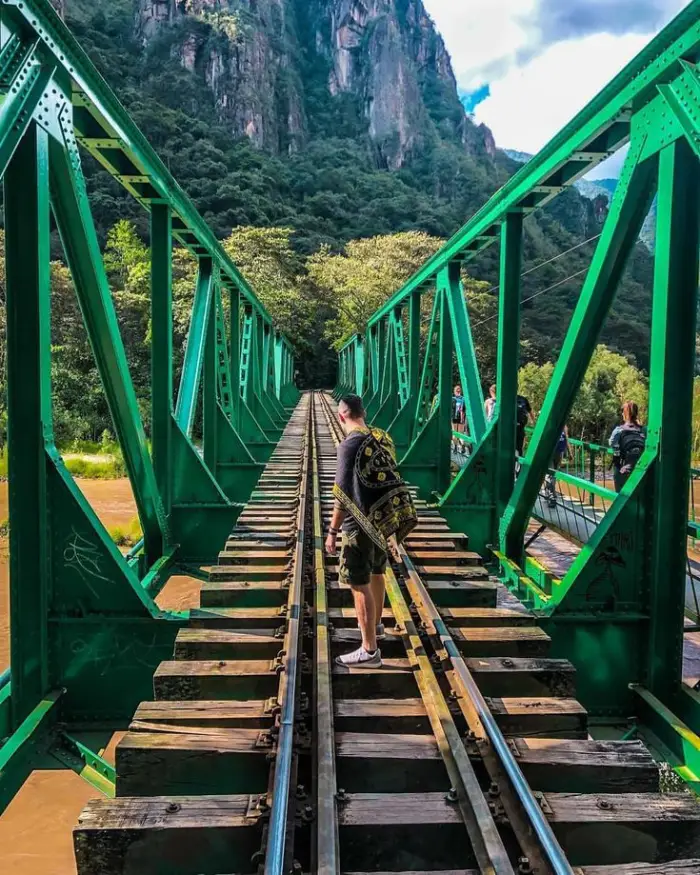
Bridge section on the alternative route to Machu Picchu Pueblo. Photo by: Pinterest.
WORLD WONDER IN THE ANDESMachu Picchu
Discover the history, landscapes, and essential tips for visiting this world wonder.
What Is the Hidroelectrica Route?
The Hidroelectrica route is an alternative way to reach Aguas Calientes, the town at the base of Machu Picchu. Instead of taking the regular train from Ollantaytambo, travelers go by road from Cusco toward Santa María, Santa Teresa and the Hidroelectrica station. From that point, they either walk to Aguas Calientes or take a short train if available.

Walking the rails toward Hydroelectrica, Machu Picchu bound.
This route is also called the Hydroelectric route, the Santa Teresa route, the budget route to Machu Picchu, or the walk from Hidroelectrica to Aguas Calientes. These names usually refer to the same basic idea: road transport to Hidroelectrica, then the final section toward Machu Picchu Pueblo.
It is important to be precise. The walk does not take you directly into Machu Picchu. It takes you to Aguas Calientes. The next day, or later the same day if your schedule allows it, you still need the bus to Machu Picchu or the steep walking route up to the entrance.
Route Overview: Cusco to Hidroelectrica to Aguas Calientes
The full journey usually has three parts. The longest part is the road trip from Cusco to Hidroelectrica. The most iconic part is the walk from Hidroelectrica to Aguas Calientes.
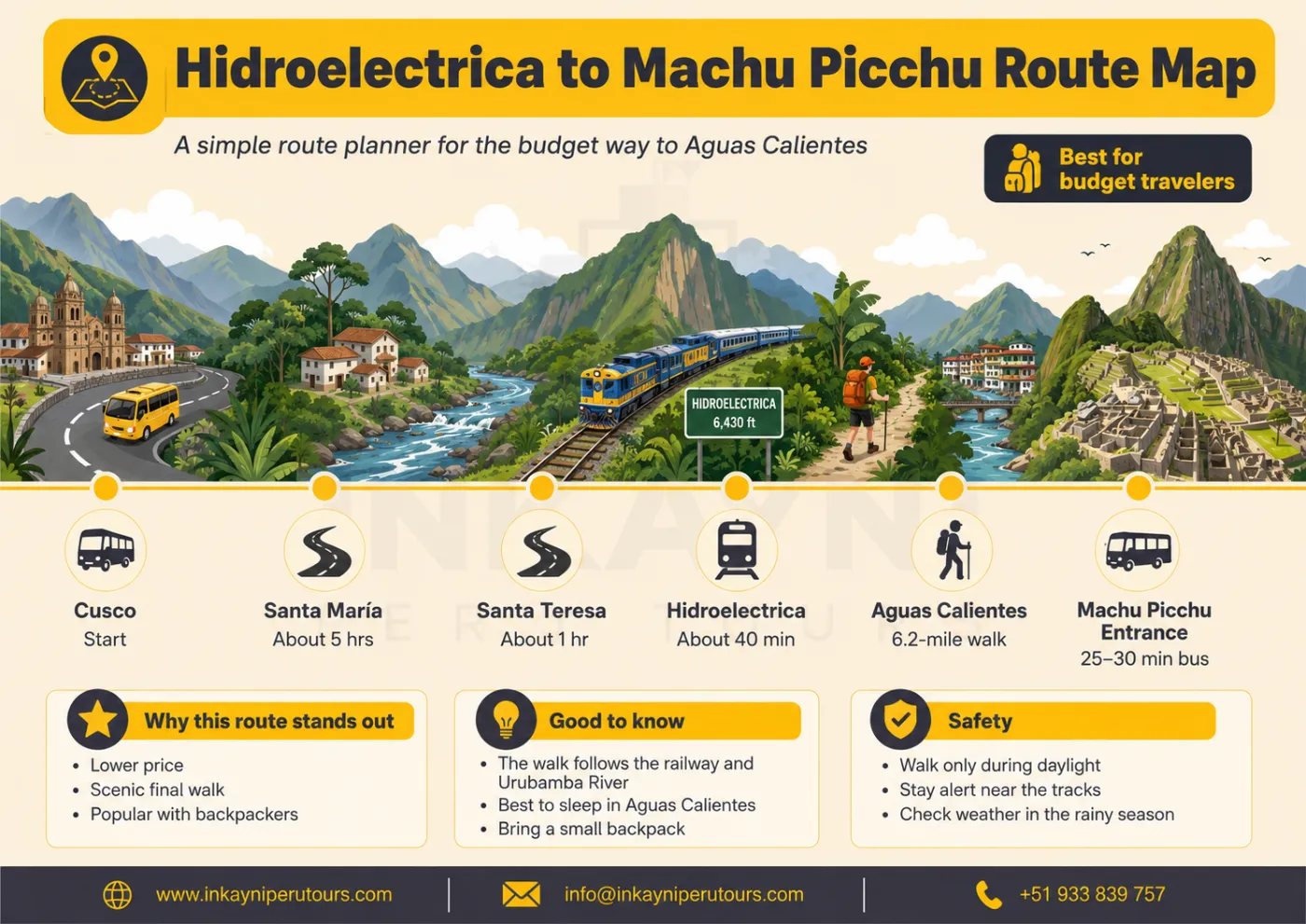
Visual map of the budget route to Machu Picchu via Hidroelectrica.
| Section | Approx. time | Practical note |
| Cusco to Santa María / Santa Teresa | 5–6 hours | Long road journey through mountain and high-jungle scenery. Roads can feel winding and tiring. |
| Santa Teresa to Hidroelectrica | 30–45 minutes | Usually done by local transport, shared taxi or arranged vehicle. |
| Hidroelectrica to Aguas Calientes | 2–3 hours walking | Mostly flat walk of about 6.2 mi (10 km) near the railway and Urubamba River. |
| Aguas Calientes to Machu Picchu entrance | 25–30 min by bus or 1.5–2 hours walking | The bus is easier; the walk up is steep and tiring before the site visit. |
Important note:
Do not book a Machu Picchu entrance time that depends on perfect timing from Cusco through Hidroelectrica on the same day. This route is long, weather-sensitive and road-dependent. It is safer to sleep in Aguas Calientes before entering Machu Picchu.
Road journey toward the high jungle before reaching Hidroelectrica. Photo by: Pinterest.
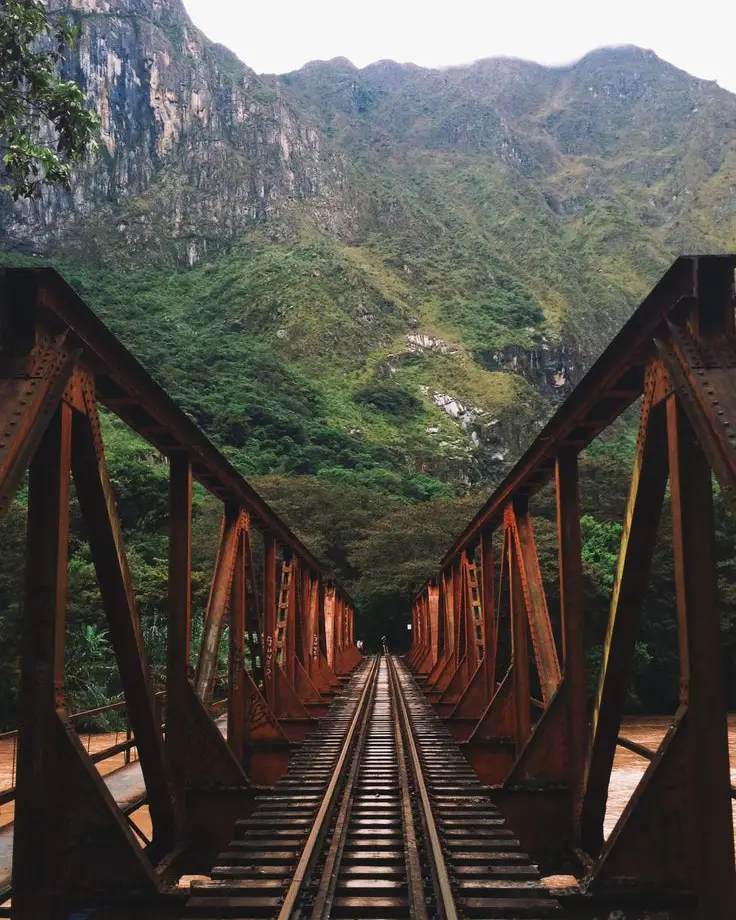
Green mountains near the alternative route to Aguas Calientes. Photo by: Donny Santos.
How Much Does the Hidroelectrica Route Cost?
The main reason travelers choose this route is cost. It is usually cheaper than taking the regular train from Ollantaytambo to Aguas Calientes, especially if you walk the final section instead of taking the short train from Hidroelectrica.
| Item | Approx. cost | Practical note |
| Cusco to Hidroelectrica shared transport | $15–30 USD one way | Depends on company, season, pickup point and whether it is direct or uses transfers. |
| Hidroelectrica to Aguas Calientes walk | Free | Budget choice. Takes about 2–3 hours and requires daylight, good shoes and attention. |
| Short train from Hidroelectrica to Aguas Calientes | $25–35+ USD one way | Useful if you are tired, carrying luggage or arriving late. Verify current operation and availability. |
| Aguas Calientes accommodation | $15–40+ USD budget range | Hostels and simple rooms can be affordable, but prices rise in high season. |
| Bus from Aguas Calientes to Machu Picchu | $12 USD one way / $24 USD round trip | Reference fare for foreign adults. Verify current rates before buying. |
| Machu Picchu entrance | $40–60+ USD approx. | Depends on nationality, age, student status and route type. Buy through the official system. |
Keep this in mind:
All prices are approximate planning references. Transport fares, bus tickets, hotel rates and Machu Picchu entrance prices can change by season, demand, operator, nationality, route and official updates. Always confirm current prices before booking or traveling.
Hidroelectrica Route vs Train to Machu Picchu
This comparison helps you decide whether the budget route is really the best option for your trip. Sometimes the cheapest route makes sense. Sometimes paying more for the train saves time, energy and stress.
| Factor | Hidroelectrica route | Regular train route |
| Main advantage | Lower cost and a more adventurous arrival. | Comfort, speed and simpler logistics. |
| Approx. one-way cost | $15–40 USD if walking from Hidroelectrica. | $55–170+ USD for standard or panoramic tourist trains. |
| Total travel time from Cusco | 7–10 hours depending on road, pace and stops. | Usually shorter and easier to coordinate, especially from Ollantaytambo. |
| Comfort | Lower. Long road, basic services, walking section. | Higher. Reserved seats, scheduled train and more predictable timing. |
| Best for | Backpackers, flexible travelers, budget trips and adventure-minded visitors. | First-time visitors, families, short trips, older travelers and travelers with luggage. |
| Main risk | Road delays, rain, landslides, walking near the railway, arriving after dark. | Higher price and limited availability in peak season. |
For a full train comparison, review our guide to the train to Machu Picchu. If your priority is comfort, the regular train route is usually a better choice.
Guides to compare before choosing this route
How to Get to Hidroelectrica from Cusco
There are three common ways to reach Hidroelectrica from Cusco. The choice depends on your budget, comfort level and whether you want to avoid complicated transfers.
| Option | Approx. cost | Who it suits |
| Tourist minivan Cusco to Hidroelectrica | $15–30 USD one way | Most common budget option. Usually easier than changing vehicles independently. |
| Public transport via Santa María and Santa Teresa | $15–25 USD approx. | Cheapest flexible option, but requires more patience and transfers. |
| Private transport | Varies by vehicle and group | Better for groups, families or travelers who want comfort and control. |
The road usually passes through high mountain zones and then descends toward the warmer high jungle. Abra Málaga can feel cold, foggy and exposed, while the Santa Teresa area is warmer and more humid. Motion sickness can be an issue for some travelers because the road has many curves.

Railway and mountain landscape near the route to Aguas Calientes. Photo by: Pinterest.
Walking from Hidroelectrica to Aguas Calientes
The walk from Hidroelectrica to Aguas Calientes is about 6.2 mi (10 km). It follows the railway area and the Urubamba River through warm, humid vegetation. The route is mostly flat, which makes it accessible for many travelers, but it still requires attention because you are walking near railway infrastructure.
Distance and duration
- Distance: about 6.2 mi (10 km).
- Average walking time: 2 to 3 hours.
- Terrain: mostly flat, with some uneven or narrow sections.
- Best time to walk: during daylight, ideally early enough to reach Aguas Calientes before dark.
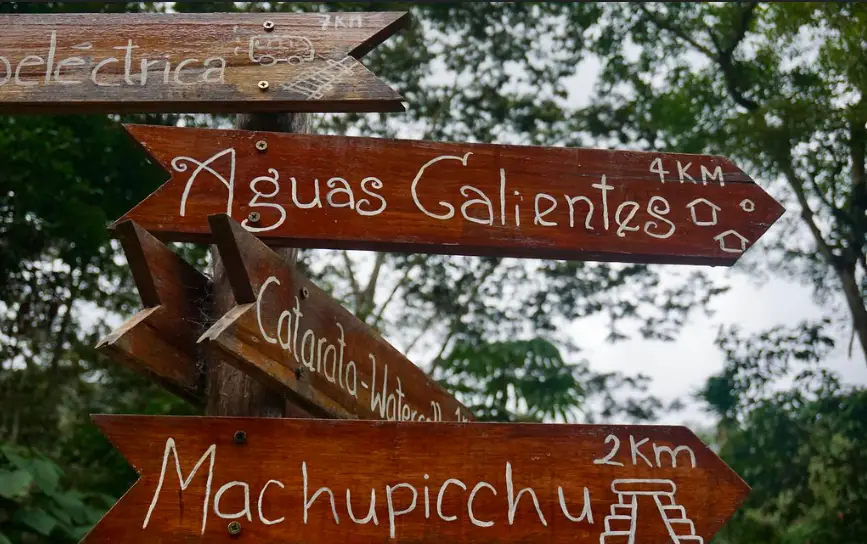
Wooden sign along the route from Hidroelectrica to Aguas Calientes. Photo by: Hernán Castro.
What you may see along the way
- Urubamba River views.
- Cloud-forest vegetation.
- Railway bridges and mountain walls.
- Small waterfalls during wet months.
- Mandor area, known for gardens, birds and vegetation.
- Partial views toward the mountains surrounding Machu Picchu.
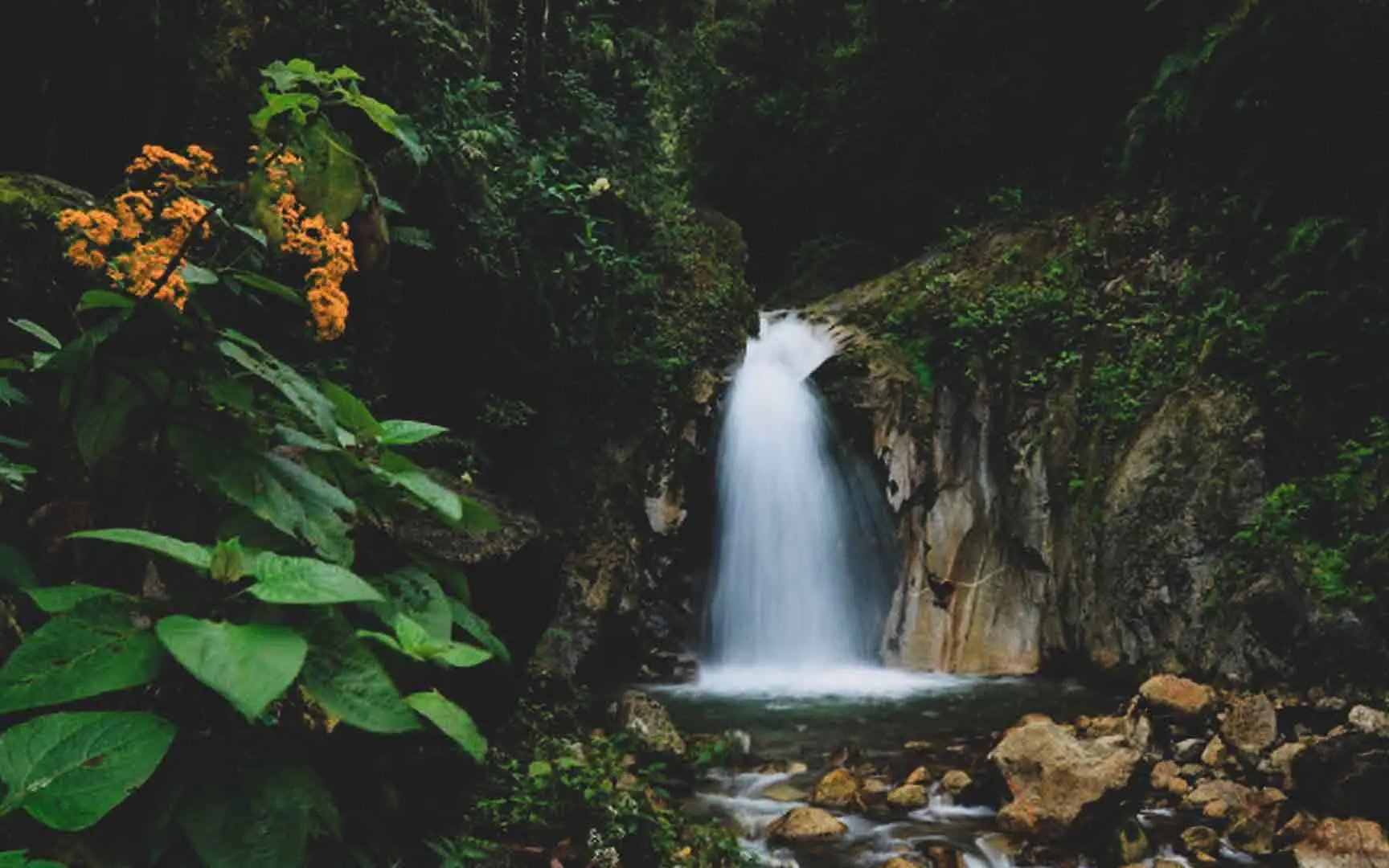
Water and vegetation near the Mandor area. Photo by: Quillabamba Peru Tours.
Safety on the Hidroelectrica Walk
This route is popular, but it should not be treated carelessly. The main safety issue is not the physical difficulty. The main issue is walking near railway areas, crossing bridges, dealing with rain and avoiding the route after dark.
- Walk during daylight only.
- Stay away from the rails when possible.
- Do not use headphones at high volume.
- Cross bridges and narrow sections carefully.
- Move aside early if you hear or see a train.
- Do not walk distracted while taking photos.
- Carry a flashlight, but do not plan to rely on it as your main strategy.
Warning
Do not underestimate the route just because it is mostly flat. Trains can appear, rain can reduce visibility, and some sections require attention. Your safest plan is to walk in daylight, stay alert and arrive in Aguas Calientes with enough margin.
Rain, Landslides and Best Season
The Hidroelectrica route passes through high-jungle terrain, where weather can change quickly. The dry season is usually better for this route because paths are less muddy and the road is more predictable. The rainy season brings greener scenery, but also more risk of slippery sections, road issues, landslides or delays.
| Season | What to expect | Travel advice |
| Dry season: May to October | Lower rain risk, better walking conditions and more predictable roads. | Best overall season for this route, but still carry sun protection and light layers. |
| Rainy season: November to March | Greener landscape, more humidity, frequent rain and higher chance of road or trail complications. | Check weather and road updates. Avoid tight schedules and do not walk late. |
| Transition months: April and October | Mixed conditions, with possible showers and generally better balance than peak rainy months. | Good option if you want fewer peak-season crowds and can prepare for changes. |
For broader climate planning, use our Machu Picchu weather guide. If rain is heavy or local operators warn about road conditions, the regular train route may be the safer and more practical choice.
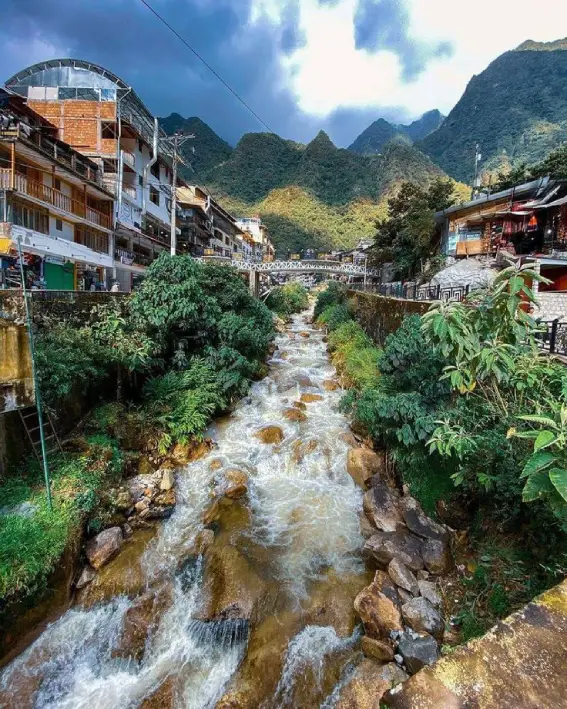
The Urubamba River accompanies part of the route. Photo by: Yami Storm.
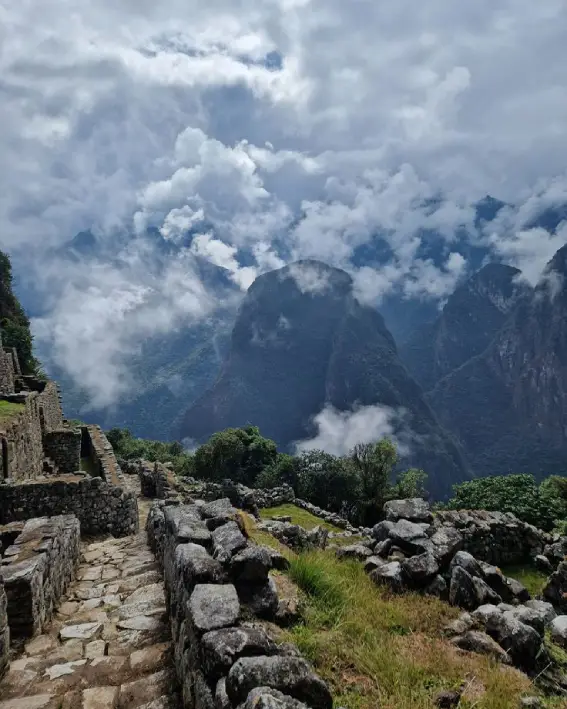
Clouds and vegetation are common in the high-jungle landscape. Photo by: Jack.
What to Bring for the Hidroelectrica Route
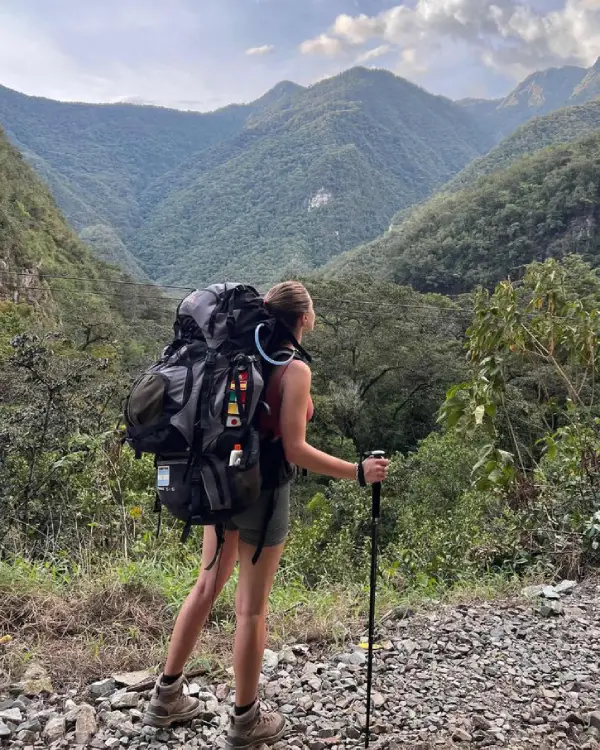
Pack light. The road journey is long, and the walking section becomes uncomfortable with heavy luggage. If possible, leave unnecessary bags in Cusco and carry only what you need for one or two nights.
| Item | Why it matters |
| Comfortable walking shoes | The route is mostly flat, but the surface can be uneven, wet or dusty. |
| Rain jacket or poncho | Useful in high-jungle weather, especially from November to March. |
| Small backpack | Better than wheeled luggage for the walk to Aguas Calientes. |
| Water and snacks | Helps during the 2–3 hour walk and possible transport delays. |
| Insect repellent | The route passes through warmer and more humid areas. |
| Sunscreen, hat and sunglasses | Sun can be strong even when clouds are present. |
| Flashlight or headlamp | Emergency backup only. You should still avoid walking after dark. |
| Passport and tickets | Needed for Machu Picchu entrance, accommodation and transport checks. |
Other Treks That Include the Hidroelectrica Route
Hidroelectrica is not only used by independent budget travelers. It is also part of some trekking routes that end in Aguas Calientes before visiting Machu Picchu.

Salkantay trekking landscape before descending toward the high jungle. Photo by: Salkantay Trekking.
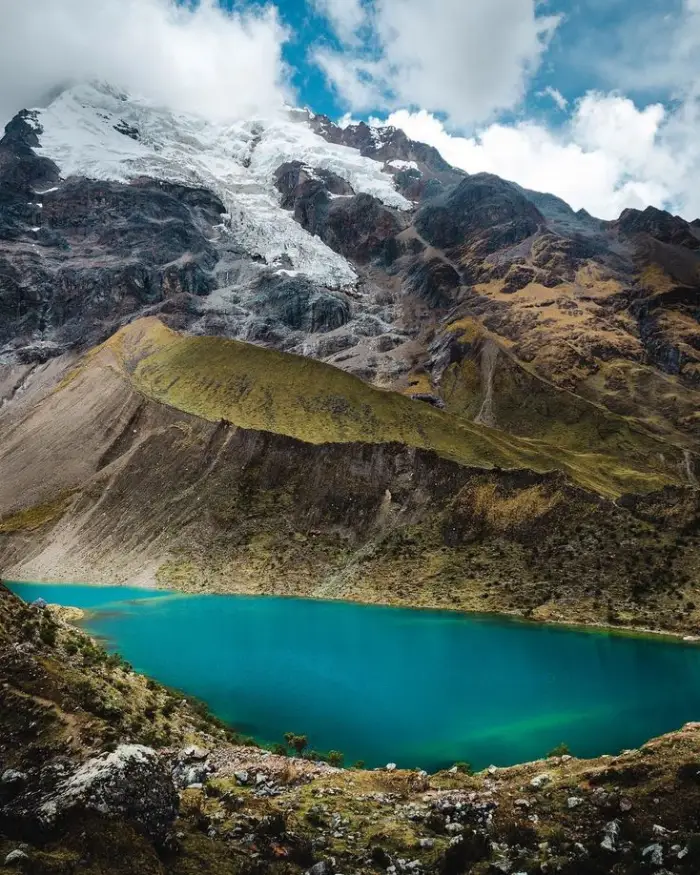
High Andean scenery before descending toward warmer valleys. Photo by: Peruvian Terra.
Salkantay Trek
The Salkantay Trek usually crosses high mountains, cloud forest and warmer valleys before reaching the Hidroelectrica area. Many versions of the route use the final walk to Aguas Calientes before the Machu Picchu visit.
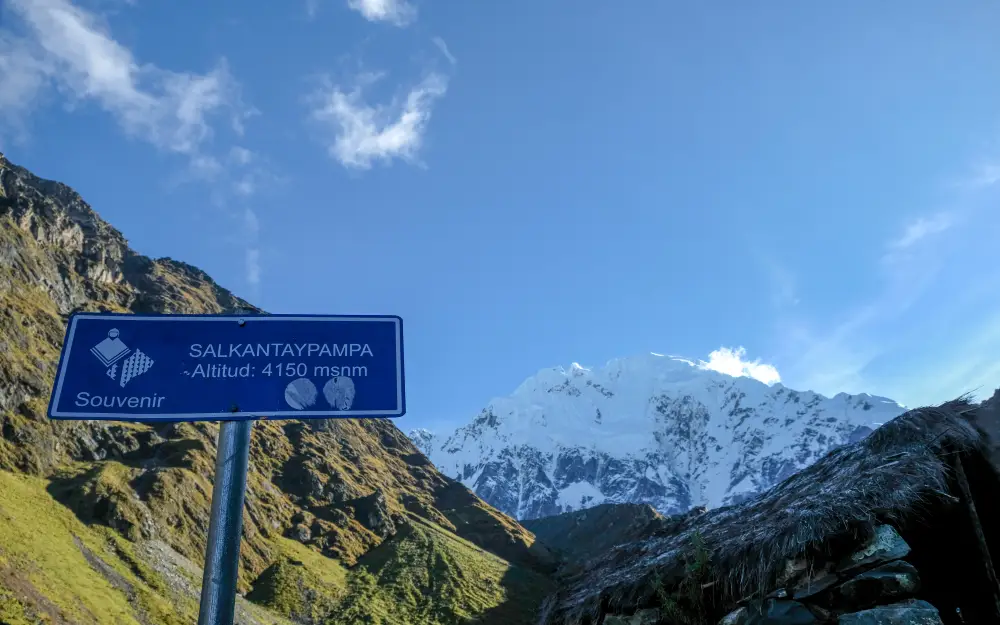
High mountain landscape on the Salkantay route. Photo by: Inkayni Peru Tours.
Inca Jungle Trek
The Inca Jungle Trek usually combines biking, hiking and adventure activities before reaching the Hidroelectrica area. It is one of the strongest options for travelers who want a more active route to Machu Picchu without using the classic Inca Trail.
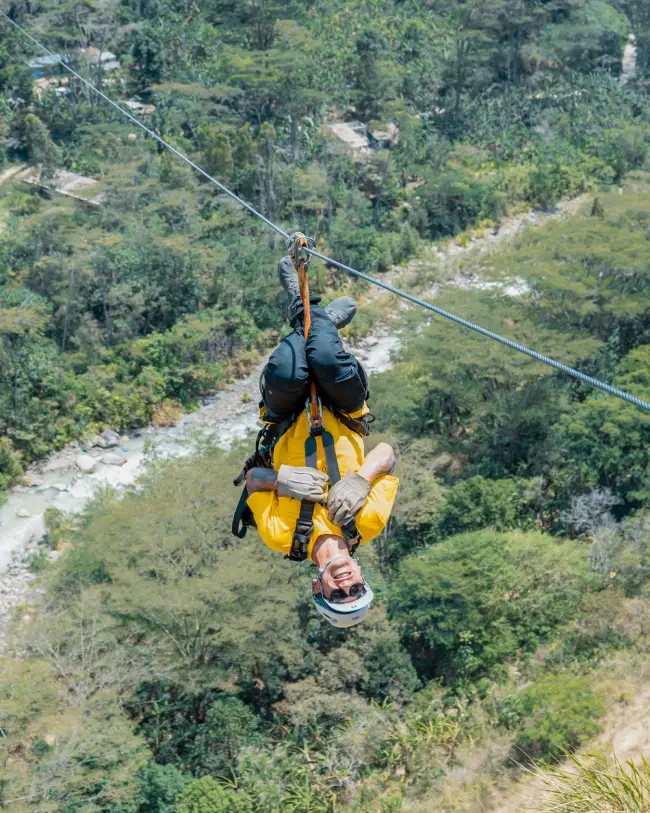
Inca Jungle Trek combines adventure and high-jungle scenery. Photo by: Inkayni Peru Tours.
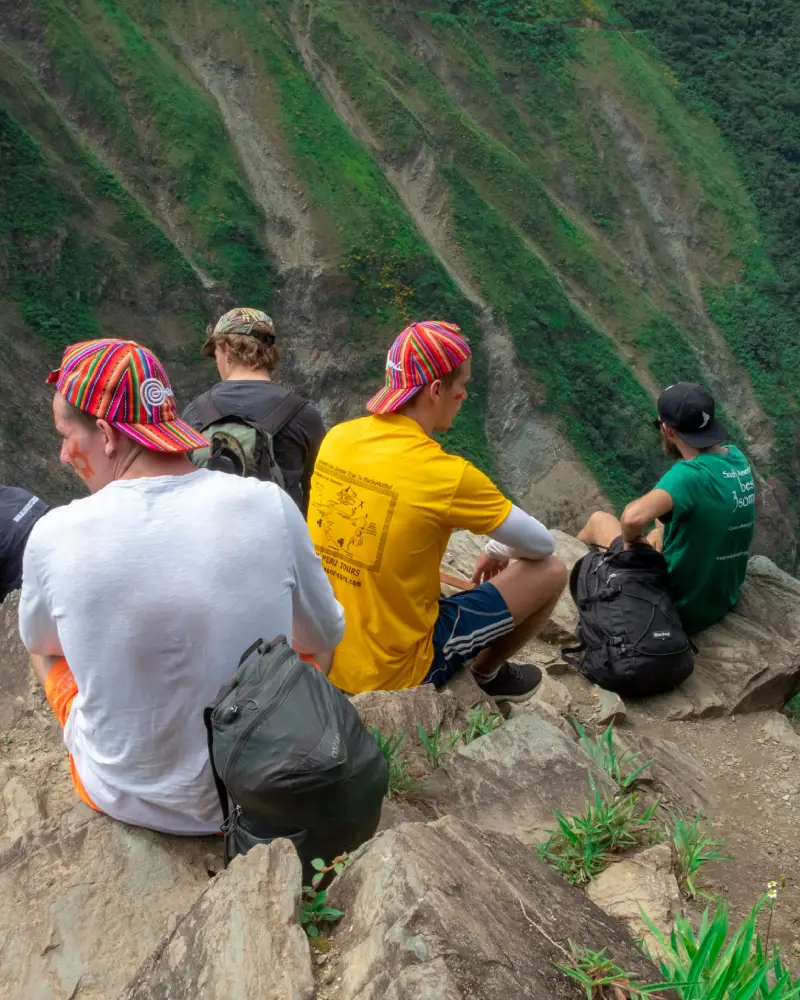
Mountain scenery on the Inca Jungle route. Photo by: Inkayni Peru Tours.
Arriving in Aguas Calientes
After the walk, you arrive in Aguas Calientes. This is where most travelers sleep before visiting Machu Picchu. The town has hotels, hostels, restaurants, cafés, shops and the bus station for the final ascent to the entrance.
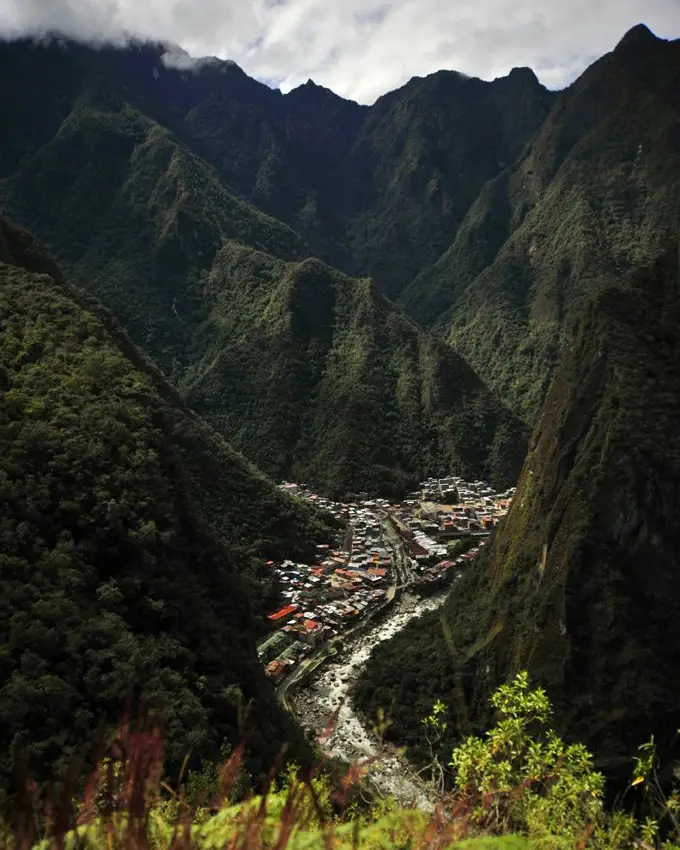
Aguas Calientes sits below Machu Picchu, surrounded by steep green mountains. Photo by: Flickr.
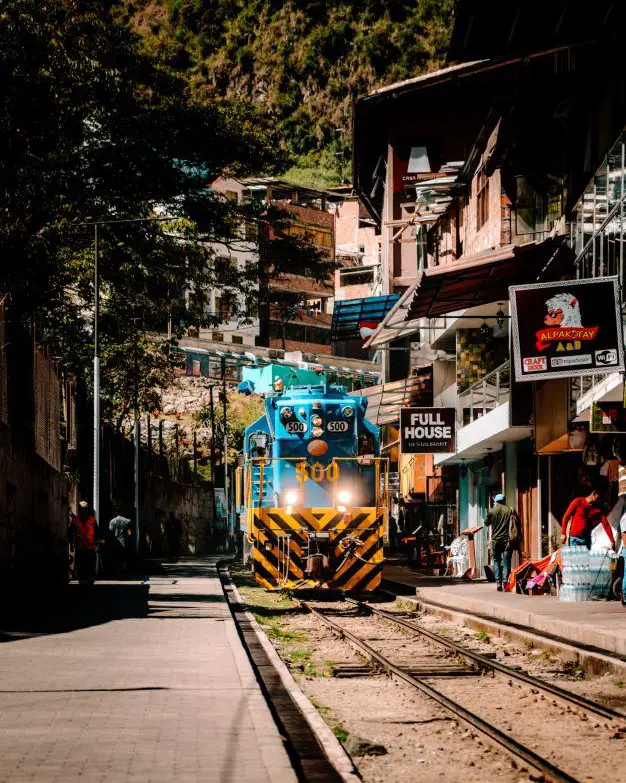
Train tracks and restaurants in Machu Picchu Pueblo. Photo by: Pinterest.
For more planning ideas, read our guide on what to do in Aguas Calientes. If you arrive tired after the walk, sleeping there before entering Machu Picchu is usually the most reasonable choice.
Accommodation in Aguas Calientes
Aguas Calientes has options for different budgets. Prices change by season, demand and proximity to the train station or bus area.
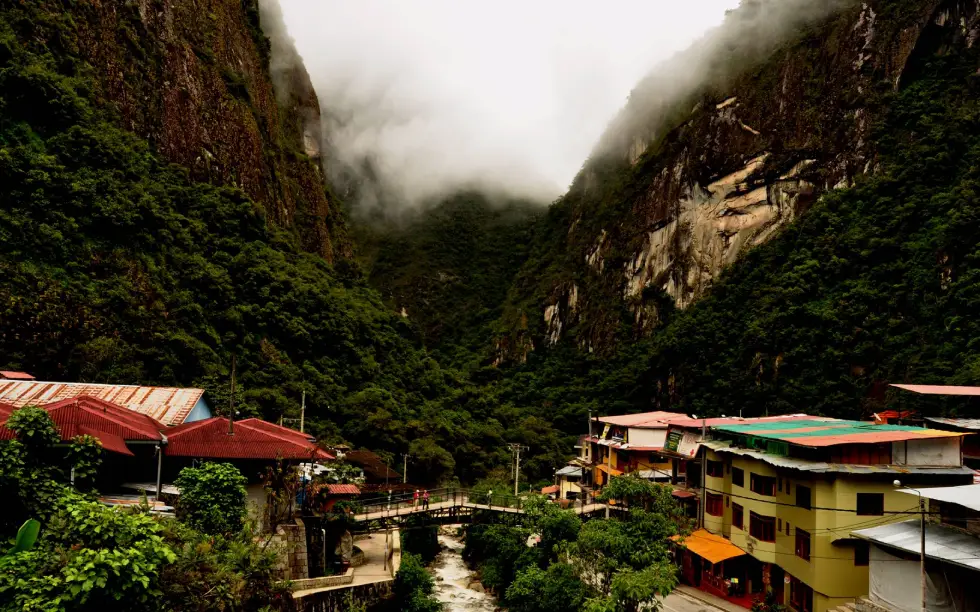
Lodging area in Aguas Calientes surrounded by mist and mountains. Photo by: Nadia Ramirez.
| Accommodation type | Approx. price | Best for |
| Hostels and basic rooms | $15–35 USD | Backpackers and travelers choosing the budget route. |
| Mid-range hotels | $40–120 USD | Travelers who want rest, private bathroom and easier morning logistics. |
| Premium hotels | $150+ USD | Travelers who want comfort after the long route or before an early visit. |
Entering Machu Picchu After the Hidroelectrica Route
Once you reach Aguas Calientes, you still need to enter Machu Picchu with an official ticket. The visit now works with official circuits and routes, so your ticket controls what you can see inside the archaeological site.
- Buy your Machu Picchu ticket in advance through the official platform.
- Choose your circuit according to your goal: classic visit, panoramic view, royal sector or mountain route.
- Coordinate your bus from Aguas Calientes with your entry time.
- Do not arrive at the entrance late, especially if your ticket has a specific route.
For a first visit, many travelers prefer Circuit 2 when available because it gives one of the most complete classic experiences. For mountain options, compare Huayna Picchu, Machu Picchu Mountain and the route that best fits your physical condition.
Is the Hidroelectrica Route Worth It?
The alternative route through Hidroelectrica is worth it if your priority is saving money, walking through a different landscape and accepting a long travel day. It is not ideal if you need comfort, predictability or a simple first-time visit.
| It is worth it if… | It may not be ideal if… |
| You are traveling on a tight budget. | You have limited time in Cusco. |
| You enjoy walking and basic adventure. | You are traveling with heavy luggage. |
| You can sleep in Aguas Calientes before the visit. | You need a comfortable and predictable route. |
| You are flexible with weather, road delays and timing. | You are traveling with small children, older adults or mobility concerns. |
| You are combining the route with Salkantay or Inca Jungle. | You want a relaxed luxury or honeymoon-style Machu Picchu trip. |
Plan the Route Without Improvising
The route through Hidroelectrica can be rewarding, but it needs realistic planning. The cheap option is not automatically the best option for every traveler. You need daylight, weather awareness, safe walking habits, a hotel plan in Aguas Calientes and a Machu Picchu ticket that fits your timing.
At Inkayni Peru Tours, we can help you compare the train route, the Hidroelectrica route, Salkantay, Inca Jungle and other ways to reach Machu Picchu according to your budget, energy and travel style.
Frequently Asked Questions About Hidroelectrica to Machu Picchu
How far is the walk from Hidroelectrica to Aguas Calientes?
Can you walk from Hidroelectrica directly to Machu Picchu?
Is the Hidroelectrica route safe?
How much does the Hidroelectrica route cost?
Is there a train from Hidroelectrica to Aguas Calientes?
Is Hidroelectrica cheaper than the train to Machu Picchu?
Can I do Cusco to Hidroelectrica and Machu Picchu in one day?
What is the best season for the Hidroelectrica route?
Do I need a guide for the Hidroelectrica walk?
Should I take luggage on the Hidroelectrica route?
Escrito por


Shared:



If you liked this article and the information you found, give us 5 stars!
 (3 votos, promedio: 5.00 de 5)
 Loading...