


Quick Answer
The Inca Trail is worth it for most travelers who are reasonably fit, acclimatize properly, and book their permit well in advance. It is the only trek that enters Machu Picchu through the Intipunku (Sun Gate) on foot and it follows an original Inca road and includes archaeological sites you cannot reach by train or bus.
If you want the most iconic and historically meaningful way to arrive at Machu Picchu, the 4-day Classic Inca Trail remains one of the best treks in the world.
Table of Contents
Few treks in Peru carry as much expectation as the Classic Inca Trail to Machu Picchu. So, is the Inca Trail worth it for your trip? The real question is whether the effort, cost, permit pressure, camping, altitude, and advance planning make sense for the way you want to experience Machu Picchu.
For many travelers, the answer is yes. The Inca Trail gives you something a train, bus, or standard Machu Picchu visit cannot give: a gradual arrival through the Andean landscape, with Inca sites along the way and the first view of the citadel from the Sun Gate. But it is not the best choice for every traveler. This guide explains what makes the Inca Trail worth it, who should choose it, when an alternative route may be better, and what to confirm before booking.
| 4 daysClassic route | ~26 miApprox. distance | 13,828 ftDead Woman’s Pass | 500Daily spaces incl. staff | FebruaryAnnual closure |
PERU’S LEGENDARY HIKEInca Trail to Machu Picchu
Follow the historic trail through mountain passes, Inca sites, and cloud forest paths to Machu Picchu.

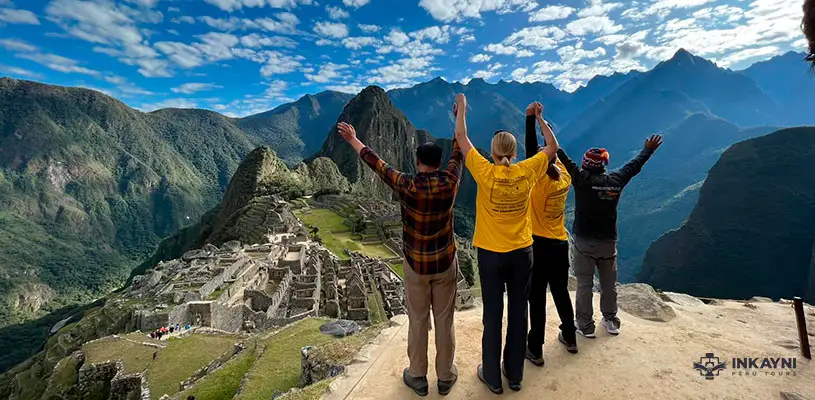
Final Stretch to Machu Picchu through short Inca Trail.
The real comparison is not only whether the Classic Inca Trail is worth it in isolation, but how it stands against the main alternatives. The Short Inca Trail keeps the on-foot arrival to Machu Picchu with less time and less campsite pressure, while the Salkantay Trek, the Lares Trek, or the Huchuy Qosqo hike shift the decision toward different scenery, logistics, and levels of route pressure. That is what makes the “worth it” question practical rather than sentimental.
What Makes It Worth It, and What You Should Know Before Deciding
The only route that enters Machu Picchu through the Sun Gate
All other routes end in Aguas Calientes and require a bus. The arrival through the Sun Gate is exclusive to travelers who hike the Inca Trail.
Permits sell out months before departure
Dates from April to August go first, often within hours of the annual permit release in October. Book early or you may lose your preferred date.
Inca sites only accessible on foot, away from train-based tourism
Runcuracay, Sayacmarca, Phuyupatamarca, and Wiñay Wayna are found only along the trail. You experience them far from the main tourist flow.
Altitude is the main challenge, more than fitness
Dead Woman’s Pass reaches 13,828 ft above sea level. Spend at least 2 days acclimatizing in Cusco before starting the trek.
Three different ecosystems in four days
You move from the Andean highlands to cloud forest and then into subtropical jungle. The landscape changes every few hours.
The trail closes every February for conservation
No permits are issued in February. Plan your trip between March and January, and check the dry season window for better trail conditions.
More than 97% of reviews rate it as a positive experience
Across thousands of verified reviews, the trek consistently appears as one of the most memorable experiences travelers have in Peru.
The price reflects what is actually included
A quality 4-day tour usually costs between $800 and $1,000 USD or more, including permits, guide, porters, all meals, camping setup, and entrance to Machu Picchu. Compare carefully what any lower quote actually covers.
Why the Inca Trail Is Worth It
The Inca Trail is worth it because it is not just a route to a famous site. It is part of the experience of understanding why Machu Picchu was built in that landscape and how the Inca road system connected mountains, valleys, sacred places, agricultural zones, and administrative centers.
Unlike most approaches to Machu Picchu, the Classic Inca Trail does not end with a bus ride from Aguas Calientes town. It reaches the sanctuary on foot through Inti Punku, the Sun Gate. That arrival is the strongest reason many travelers choose the route even when other options are cheaper, easier, or more flexible.

| What makes it valuable | What it means for travelers |
| Sun Gate arrival | You reach Machu Picchu through the historical upper approach instead of arriving first by train and bus. |
| Archaeological sites along the route | Places such as Runkurakay, Sayacmarca, Phuyupatamarca, and Wiñay Wayna are part of the walking experience. |
| Original Inca road | You are not only hiking near Inca history; you are walking sections of the old road system itself. |
| Landscape variety | The route moves through high Andean terrain, cloud forest, stone stairways, and warmer vegetation near Machu Picchu. |
| Limited access | Permits control the number of people on the route, so the experience is more restricted than general Machu Picchu tourism. |
Practical read:
The Inca Trail is worth it if the route itself matters to you. If your only goal is to stand inside Machu Picchu with the least effort, a train-based itinerary may be more practical.
What You Should Know Before Deciding
The Inca Trail has real advantages, but it also comes with limits. It requires permits, a licensed operator, a fixed departure date, camping, early mornings, changing weather, and several days of walking at altitude. Once your permit is secured, you cannot treat the date like a flexible hotel reservation.

A narrow Inca Trail section cutting across steep.
| Why it may be worth it | What to consider first |
| It is the only classic trek that reaches Machu Picchu through the Sun Gate. | Permits can sell out months in advance, especially for dry season dates. |
| You visit Inca sites that are not part of a normal train-and-bus visit. | The route is physically demanding, especially on Day 2 at Dead Woman’s Pass. |
| The route feels more complete than arriving only through Aguas Calientes. | You need to camp, manage cold nights, and walk for several consecutive days. |
| The experience has strong historical, cultural, and emotional value. | The price is higher than basic Machu Picchu visits because it includes permits, guide, logistics, staff, meals, and camping. |
Inca Trail vs. Other Ways to Reach Machu Picchu
The Inca Trail is not the only strong route to Machu Picchu. It is the best choice for travelers who want the historical walking approach. Other routes may be better if you want lower permit pressure, more mountain scenery, more cultural contact, or a shorter itinerary.

| Route | Best for | Main limitation |
| Classic Inca Trail | Travelers who want the original Inca road, archaeological sites, campsites, and Sun Gate arrival. | Requires permits, guide, camping, fixed dates, and stronger preparation. |
| Short Inca Trail | Travelers with less time who still want to hike into Machu Picchu through the Sun Gate. | Shorter and easier, but it does not include the full multi-day Inca Trail experience. |
| Salkantay Trek | Travelers who want glacier scenery, higher mountain landscapes, and an alternative to sold-out Inca Trail dates. | It does not arrive at Machu Picchu through the Classic Inca Trail or Sun Gate. |
| Lares Trek | Travelers interested in Andean communities, rural landscapes, and a less crowded route. | It connects to Machu Picchu by train rather than through the Inca Trail entrance. |
| Train and bus route | Travelers with limited time, comfort needs, or no interest in multi-day trekking. | Efficient and comfortable, but it does not include the trekking journey or trail-only ruins. |
GLACIER MOUNTAIN TREKSalkantay Trek
Discover one of Peru’s most scenic treks beneath snowy peaks and changing landscapes.
How the Inca Trail Compares With Other Famous Treks Around the World
The Inca Trail is consistently ranked among the world’s best treks, alongside Everest Base Camp, the Camino de Santiago, and the W Trek in Torres del Paine. Each one attracts a different type of traveler. Here is an honest comparison of the factors that matter most when planning:
Who the Inca Trail Is Right For
The Inca Trail is a strong fit for travelers who see Machu Picchu as part of a larger journey, not just a site to check off. You do not need to be an athlete, but you do need enough endurance, patience, and respect for altitude.
| Traveler profile | Is the Inca Trail worth it? |
| Moderately fit, history-focused traveler | Yes. This is the ideal profile: you value the Inca road, the ruins along the trail, and the physical build-up before Machu Picchu. |
| Active first-time trekker | Usually yes, if you train, acclimatize, and accept that Day 2 is demanding. |
| Traveler with sold-out dates | Consider Salkantay, Lares, Huchuy Qosqo, or the Short Inca Trail depending on your time and fitness. |
| Traveler short on time or avoiding camping | The train route or Short Inca Trail may be a better fit. |
| Traveler with serious altitude concerns | Speak with a doctor before booking and avoid starting the trek immediately after arriving from sea level. |
Related Guides to Decide If the Inca Trail Is Worth It
Inca Trail Worth It: Quick Decision Factors
Before comparing routes in detail, use this table to decide whether the Classic Inca Trail fits your trip, budget, fitness level, and travel style.
| Factor | What to expect | Decision impact |
| Cost | Reputable 4-day group tours often start around $800–$1000 USD per person. | Worth it if the route, guide, camps, permits, staff, and Machu Picchu entry matter to you as one complete experience. |
| Difficulty | Demanding but not technical. The hardest point is Dead Woman’s Pass at about 13,828 ft. | Worth it if you can train, acclimatize, and handle several hiking days in a row. |
| Time | The Classic route takes 4 days and 3 nights. | Worth it if you want the journey to Machu Picchu to be part of the trip, not only the final visit. |
| Permits | Daily spaces are limited and include travelers, guides, porters, cooks, and support staff. | Worth it if you can book early and travel on fixed dates. |
| Comfort | You sleep in campsites, wake early, hike with changing weather, and manage cold nights. | Less ideal if you prefer hotels, flexible schedules, and minimal physical effort. |
| Unique value | You walk original Inca road sections and reach Machu Picchu through Inti Punku, the Sun Gate. | This is the strongest reason to choose the Classic Inca Trail over train-based visits. |
Permits and Tickets
This is where many travelers lose their preferred date. The Inca Trail uses a limited permit system. The widely used reference is around 500 total daily spaces, including trekkers, guides, porters, cooks, and support staff. That means the number of actual traveler spots is much lower than 500.
You cannot buy a Classic Inca Trail permit as an independent traveler. It must be arranged through an authorized operator and linked to your personal information and travel document. The route also closes every February for maintenance and conservation work.
| Permit point | What it means |
| Limited daily access | Spaces include travelers and support staff, so popular months can sell out early. |
| Authorized operator required | The route cannot be booked as an independent hike. |
| Passport data matters | Your permit must match the document you carry on the trek. Confirm details before payment. |
| Machu Picchu entry | The final visit follows official timed entry and circuit rules. Confirm which ticket or circuit is included. |
| February closure | The Inca Trail is not available during the annual maintenance closure. |
Before paying:
Ask your operator to confirm the route, date, passport information, Inca Trail permit, Machu Picchu ticket, return train, luggage allowance, sleeping bag policy, and cancellation conditions in writing.

How Much Does the Inca Trail Cost?
A reputable 4-day Classic Inca Trail group tour usually starts around $800–$900 USD per person. Private services, upgraded trains, extra porters, premium camping equipment, or additional Machu Picchu hikes can raise the final cost.
The price is higher than a basic Machu Picchu visit because the trek requires permits, licensed guides, meals, campsites, porters, camping logistics, transportation, and entry coordination. Before booking, check exactly what is included and what must be paid separately.
| Cost point | What travelers should know |
| Typical group tour | Expect many reputable 4-day Classic Inca Trail tours to start around $800–$1000USD per person. |
| Private or upgraded service | Private departures, upgraded trains, extra porter support, or premium equipment can increase the final price. |
| Gear rentals | Sleeping bags and trekking poles may be rented separately, depending on the operator. |
| Extra hikes or upgrades | Huayna Picchu, Machu Picchu Mountain, Vistadome train upgrades, tips, and travel insurance may not be included. |
| Very low prices | Treat them carefully. A lower quote may exclude essentials or reflect weaker equipment, labor conditions, or service standards. |
Price alone should not be the deciding factor. A cheaper operator can become expensive if key services are missing, equipment is poor, staff are treated badly, or the permit/ticket conditions are unclear.
For a deeper training plan, review our guides on how to prepare for the Inca Trail, Inca Trail difficulty, and acclimatization in Cusco.

So, Is the Inca Trail Worth It for you?
Yes. Not because every step is comfortable, but because nothing else combines what this trek delivers in four days. You walk along an original royal Inca road that has been in use for five centuries. You visit ruins that no train or bus will ever reach. You cross three ecosystems, sleep under the Andean sky, and arrive at one of the world’s most iconic monuments through the same stone gate the Incas built for that exact purpose. That experience exists nowhere else on the planet.
Compared with other world-class treks, the Inca Trail offers the most concentrated combination of cultural depth, natural variety, and a finish that cannot be replicated. If you are planning a trip to Peru and can prepare physically, the 4-day Classic Inca Trail is the experience around which to build your itinerary. Contact our travel advisors to check availability for your dates and secure your spot before permits sell out.
Frequently Asked Questions About Whether the Inca Trail Is Worth It
Is the Inca Trail worth it?
What makes the Inca Trail different from other Machu Picchu routes?
How much does the Inca Trail cost?
How difficult is the Inca Trail really?
Do I need a permit to hike the Inca Trail?
How far in advance should I book the Inca Trail?
Is the Inca Trail better than Salkantay?
Is the Inca Trail worth it if I am not very fit?
What is the best season to hike the Inca Trail?
What should I confirm before booking?
Autor

Shared:


If you liked this article and the information you found, give us 5 stars!
 (3 votos, promedio: 5.00 de 5)
 Loading...