Table of Contents
If Machu Picchu calls, whilst dreaming, you to experience an authentic trekking experience, choose the Lares Trek! Enjoy the natural beauty, the rich people’s culture and the exciting journey to the majestic lost Inca citadel nestled high in the mountains.
If you’ve considered this exciting adventure in Peru, but still have questions about: How difficult is the Lares Trek? Stay tuned to this blog because together will find out if is the Lares Trek hard or not! So you can plan your trekking experience accordingly.
As you learn about Lares Trek’s hardness, you will be prepared to make the most of your journey through the Peruvian Andean landscapes and culture facing the challenges waiting for you.

The Lares Trek offers natural beauty, physical challenge and the opportunity to live with local people who keep their real culture alive.
WHAT IS LARES TREK?
The Lares Trek, also known as the “Weavers route“, is a famous and appreciated trek in Cusco, Peru. This route offers a different and authentic experience to the famous Inca Trail to Machu Picchu.
The “Weavers route” comes from the rich textile tradition of the communities along the trail. During the trek, hikers interact with talented local weavers who still preserve their ancestral techniques of dyeing and weaving to create striking garments and textiles that are representative of Andean culture.
Unlike the Inca Trail, the Lares Trek offers a quieter and less crowded experience. The Lares Trek trails pass through stunning mountain scenery, deep valleys, glacial lakes and ancient archaeological sites.
The Lares Trek also presents an exceptional opportunity to meet and interact with local communities. The local people still maintain their traditions, the Quechua language and harmonious relationship with nature. Furthermore, hikers can immerse themselves in Andean culture, learn about the history of the ancient Incas, and also witness the traditional ways of people’s life within the Peruvian Andes.
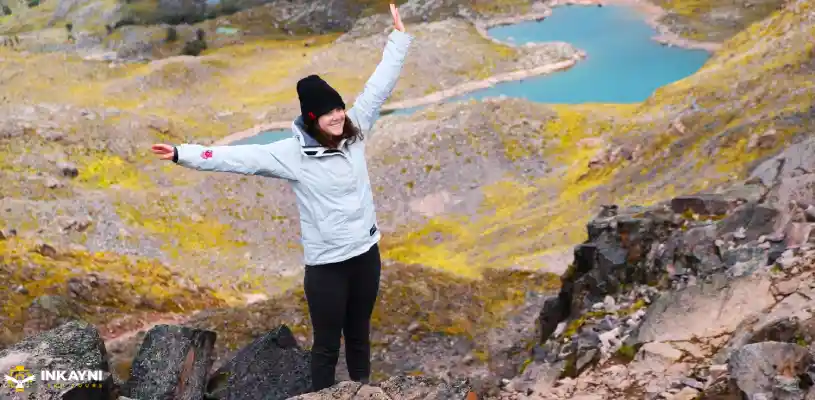
Excited hiker on the Lares Trek
HOW DIFFICULT IS THE LARES TREK?
The Lares Trek is tough because each day of trekking takes between 4 and 5 hours over uneven and high mountainous terrain or steep and rocky trails that add an additional challenge to the trek. Additionally, the climate in the Peruvian Andes is unpredictable. Altitude sickness is another factor that influences the trek.
However, every challenge you face on this trek is amply rewarded by the astounding beauty you will encounter along the way. From the breathtaking scenery to the authentic experiences with local communities, every step you take on the Lares Trek immerses you deeper into a unique and rewarding journey.
| Lares Trek 4D/3N difficulty | |||
| Day 1 | Pumahuanca – Puyoc | Formidable | 5 stars |
| Day 2 | Yanacocha – Cuncani | Challenging | 4 stars |
| Day 3 | Cuncani – Lares | Mild | 1 star |
| Day 4 | Machu Picchu – Cusco | Easy | 1 star |
The extended version of the Lares Trek includes the Short Inca Trail (Lares Trek to Machu Picchu + Short Inca Trail in 5D/4N trek), and its difficulty is the same as the classic Lares trek. However, the Short Inca Trail section adds a hiking day to this famous trail making it more challenging but worthwhile.
| Lares Trek 5D/4N difficulty | |||
| Day 1 | Pumahuanca – Puyoc | Formidable | 5 stars |
| Day 2 | Yanacocha – Cuncani | Challenging | 4 stars |
| Day 3 | Cuncani – Lares | Mild | 2 stars |
| Day 4 | Ollantaytambo – km 104 – Aguas Calientes | Tough | 3 stars |
| Day 5 | Machu Picchu – Cusco | Easy | 1 star |
The Lares Trek to Machu Picchu + Short Inca Trail is 41 km/25.47 mi long.
We hope that our answer clears your question about how difficult is the Lares Trek so far.
MAXIMUM ALTITUDE REACHED IN THE LARES TREK
Along the Lares Trek, hikers reach their highest point at the Sicllakasa Pass at 4,830 m / 15,846 ft above sea level! This mountain pass provides stunning panoramic views of the majestic snowy peaks of the Andes, surrounding valleys and nature connections.
WHERE DOES THE LARES TREK STAR?
The starting point is Pumahuanca, situated at an altitude of 3,150 m/ 10,334 ft above sea level. The adventurers begin their trek through the breathtaking landscapes of the Southern Peruvian Andes searching for cultural and natural experiences near the Sacred Valley.
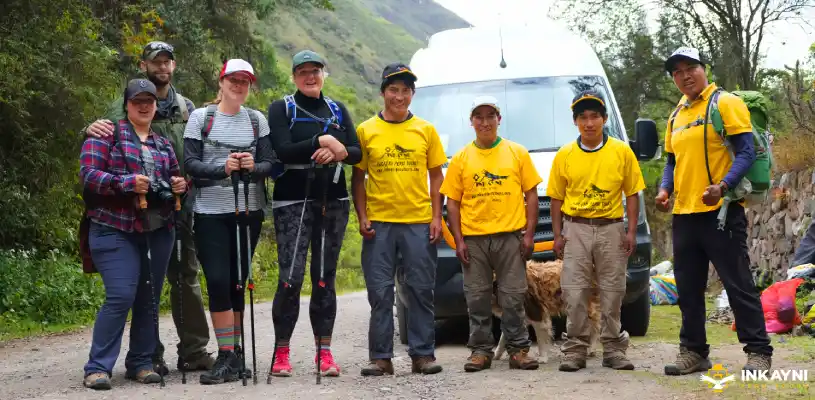
Hikers and our super team starting the trek.
WHERE DOES THE LARES TREK END?
- The Lares Trek to Machu Picchu 4D/3N, an exciting and enriching trek through the majestic landscapes of the Peruvian Andes, culminates spectacularly in Lares at 3,200 m / 10,498 ft above sea level. From Lares, adventurers will board a bus to Ollantaytambo and then take a train to Aguas Calientes which is a tourist town. This last leg of the journey will prepare them for the unforgettable experience of exploring the mysterious ancient Inca citadel of Machu Picchu.
The Lares Trek ends in the hot springs of Lares.
- The Lares Trek to Machu Picchu 5D/4N ends triumphantly at the majestic Inca citadel of Machu Picchu. After days of trekking through landscapes and immersing yourself in the local culture, you will arrive at the iconic archaeological site of Machu Picchu, one of the 7 Wonders of the Modern World.
Witness the wonder of this historic site from the Sun Gate (Inti Punku) enjoying a panoramic view that will take your breath away.
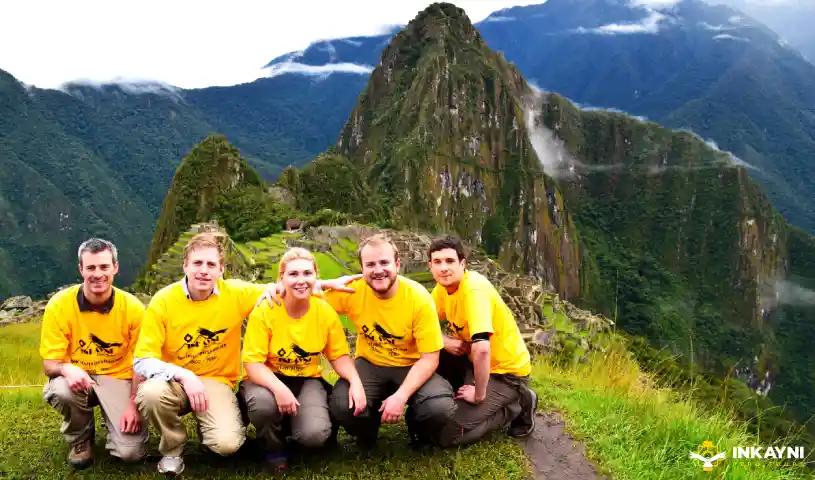
Hikers in Machu Picchu, the last day of the Lares Trek.
VERSIONS OF THE LARES TREK
This trek has two versions:
- Lares Trek 5D/4N to Machu Picchu
- Lares Trek 4D/4N to Machu Picchu

Lares Trek has two versions: 5 days/4 nights and 4 days/3 nights.
LARES TREK TO MACHU PICCHU 4D/3N
The exciting Lares Trek to Machu Picchu 4D/3N takes you to explore the Peruvian Andes. You will explore stunning lakes surrounded by majestic snow-capped mountains. In addition, you will experience how local people live, speak Quechua (Incas’ language) and witness the ancestral traditions which have been preserved.
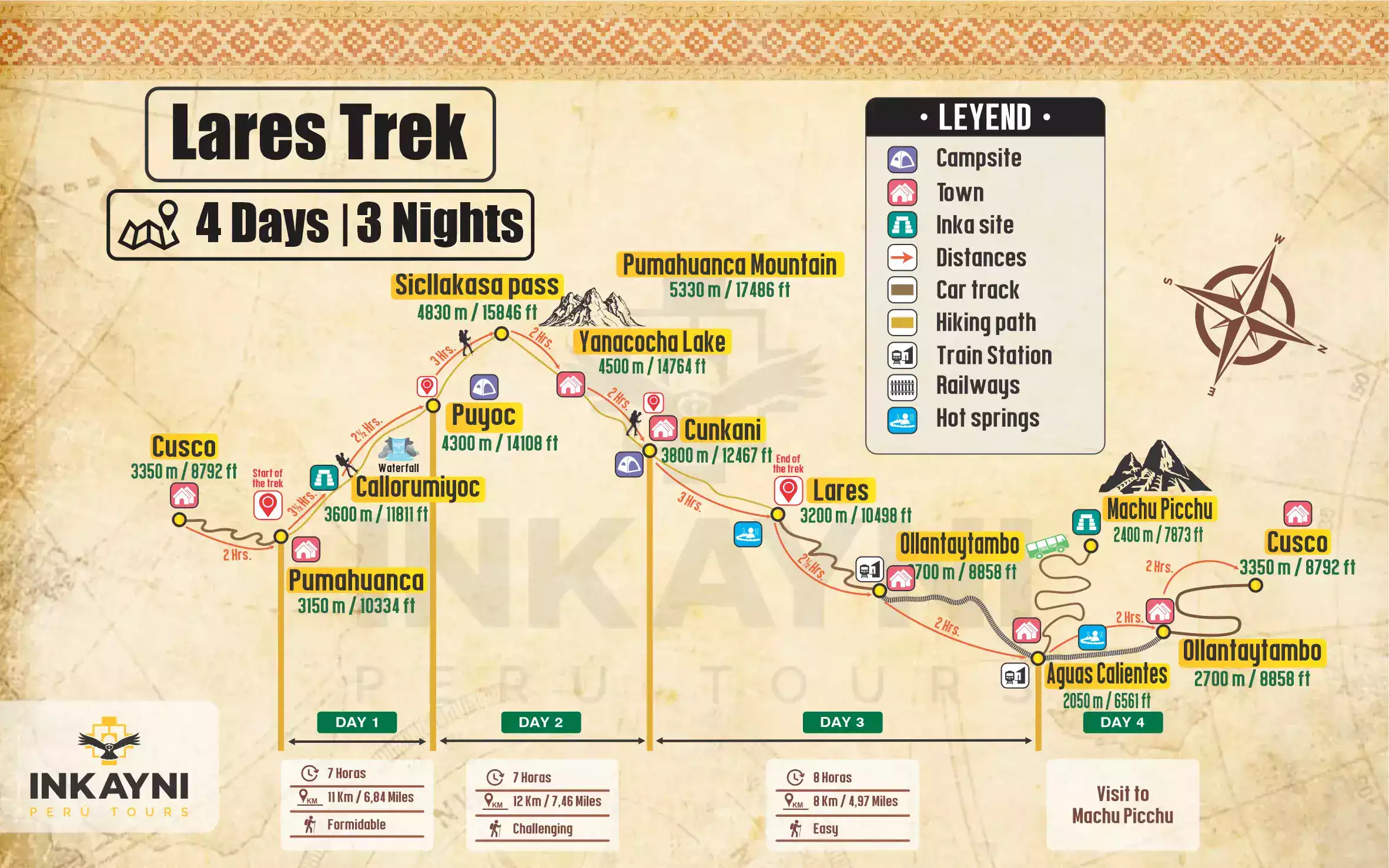
Lares Trek 4D/3N Map
HOW DIFFICULT IS THE LARES TREK 4D/3N TO MACHU PICCHU?

Lares Trek 4D/3N in a nutshell
DAY 1: CUSCO – PUMAHUANCA – PUYOC (FORMIDABLE).
Start this day by taking our VAN and heading to Pumahuanca town at 3,350 m/ 8,792 ft above sea level. Then, we start hiking towards Puyoc (4,300 m/ 14,108 ft).
This day is rated “FORMIDABLE”. You will hike 11 kilometres (6.84 miles) in 7 hours.
Overnight: Camp in Puyoc
DAY 2: PUYOC – YANACOCHA – CUNCANI (CHALLENGING).
The second day starts very early in the morning. The trek starts in Puyoc (4,300 m/ 14,108 ft above sea level) up to Cunkani (3,800 m/ 12,467 ft).
This day is rated “CHALLENGING”. Almost 12 km or 7.46 mi will be covered in 7 hours.
Overnight: Camp in Cunkani
DAY 3: CUNCANI – LARES (MILD).
The third day is the most exciting because you will meet a local family in Cuncani, who will teach you about their customs. Immediately after Cuncani, we head to Lares Hot Springs. After a relaxing bath in it, we will be picked up by our VAN and driven back to Ollantaytambo and take the train to Aguas Calientes later.
This day is rated “MILD”. It covers a distance of approximately 8 kilometres.
Overnight: Golden Sunrise Hotel *** or similar.
DAY 4: MACHU PICCHU – CUSCO (EASY)
Wake up very early and take the first bus to Machu Picchu. Then, you have a guided tour covering the most important places in Machu Picchu. After your guided tour, you will have time to climb Huayna Picchu or Machu Picchu Mountain (optional, if you have permits and/or entrance tickets). In the afternoon, we will take the train back to Ollantaytambo, and continue by VAN back to Cusco city.
The last day of the trek is very “EASY”.
IN CONCLUSION: HOW DIFFICULT IS THE LARES TREK TO MACHU PICCHU 4D/3N?
The Lares Trek 4D/3N is considered tough to challenging due to several factors:
- Altitude: You reach high altitudes, including the highest point at Sicllakasa Pass, located over 4,500 m / 14,774 ft above sea level. It can affect people, causing symptoms of altitude sickness such as fatigue, shortness of breath and headaches.
- Terrain: The trail to Machu Picchu via the Lares Trek features uneven and mountainous landscapes. Rocky trails, steep terrain and extreme weather conditions are waiting for you.
- Length: Completing the daily stages over the course of four days and three nights requires physical stamina.
- Weather: The Andes weather is unpredictable, with sudden temperature changes and possible rainfall. It is important to be prepared with adequate clothing.
These factors make the Lares Trek more difficult, even if you’re continuing to ask yourself how difficult is the Lares Trek!
| Lares Trek 4D/3N difficulty | |||
| Day 1 | Pumahuanca – Puyoc | Formidable | 5 stars |
| Day 2 | Yanacocha – Cuncani | Challenging | 4 stars |
| Day 3 | Cuncani – Lares | Mild | 2 star |
| Day 4 | Machu Picchu – Cusco | Easy | 1 star |
How difficult is the Lares Trek in this version? It is tough to challenging.
LARES TREK TO MACHU PICCHU + SHORT INCA TRAIL 5D/4N
It is a fusion of two trekking routes in Cusco region. On this trek, you will explore the beautiful landscapes of the Lares Valley and its impressive lakes whilts immersing yourself in the authentic life of Quechua communities. On the other hand, the Short Inca Trail allows one to hike a short section of the famous Inca Trail, an ancient route used by the Incas to reach Machu Picchu and other important places.
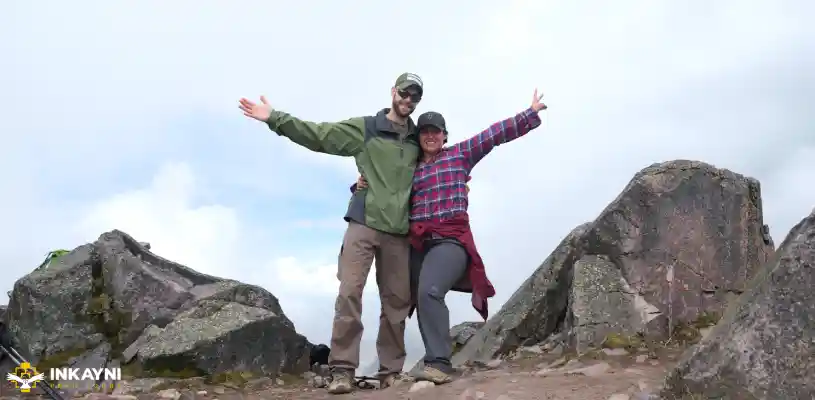
This trek is ideal for those seeking a more complete and diverse experience exploring the Peruvian Andes.
HOW DIFFICULT IS THE LARES TREK TO MACHU PICCHU 5D/4N?

Lares Trek 5D/4N in a nutshell
DAY 1: CUSCO – PUMAHUANCA – PUYOC (FORMIDABLE).
This version begins picking you up from your hotel and heading to Pumahuanca, far away from the Sacred Valley of the Incas at 3,350 m/8,792 ft above sea level. From Pumahuanca, we start hiking towards Puyoc located at 4,300 m/14,108 ft above sea level.
This day is rated as “FORMIDABLE”. You will trek 11 km/6.48 mi in 7 hours.
DAY 2: PUYOC – YANACOCHA – CUNCANI (CHALLENGING)
The exciting second day starts early in the morning heading towards Cuncani at 3,800 m/12,467 ft above sea level.
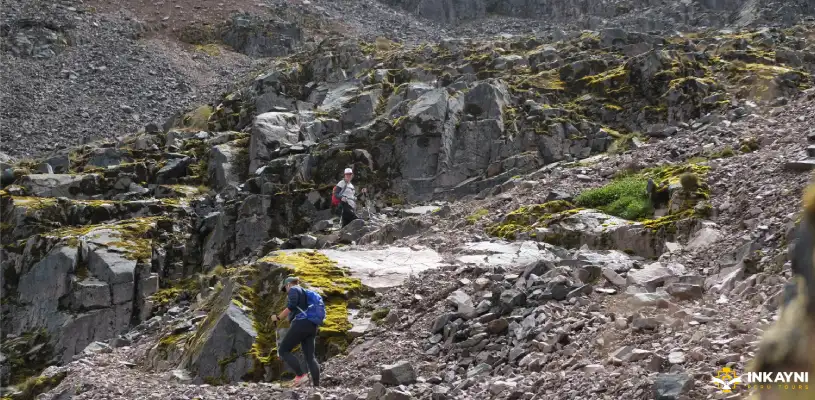
Ascending the Sicllaccasa Pass (the highest point of the trek) during the second day of walking is challenging.
This day is rated “CHALLENGING”. You will hike 12 km/7.46 mi through uneven high Andean terrain in 7 hours.
DAY 3: CUNCANI – LARES – OLLANTAYTAMBO (MILD)
Undoubtedly, the third day is the most exciting and enriching! You will immerse yourself in the authentic local culture by meeting a friendly family from Cuncani, who will share with you their heritage.
After enjoying this experience in Cuncani, we will continue hiking for a while to the Hot Springs of Lares.
Overnight: Casa Blanca or a similar hotel in Ollantaytambo.

After several days of hiking on the Lares Trek, the hot springs of Lares are a real treat for hikers.
This day is rated as “Mild”, with an approximate distance of 8 km in 3 hours.
DAY 4: OLLANTAYTAMBO – KM 104 – AGUAS CALIENTES (EASY)
The exciting fourth day begins leaving our cosy hotel in Ollantaytambo to the train station. Then, we take the trail to kilometre 104, also known as “Chachabamba”, the starting point of the Short Inca Trail. Here, we will begin our exciting trek and pass the impressive archaeological site of Wiñay Wayna, continuing our ascent through captivating landscapes.
After a full day of trekking, we will arrive at the emblematic Sun Gate (Inti Punku) in the afternoon. From this strategic point, we will enjoy unique panoramic views and descend towards Aguas Calientes. Here, we will check into the hotel and enjoy a comforting dinner to recharge our batteries.
The fourth day of the trek is rated as “Moderate”, with a distance of approximately 10 kilometres or 6.21 miles to be hiked in 6 hours.
Our accommodation in Aguas Calientes will be the Golden Sunrise Hotel, or a similar three-star hotel.
DAY 5: MACHU PICCHU – CUSCO (EASY)
Wake up very early and take the first bus to Machu Picchu. Then, you have a guided tour covering the most important places in Machu Picchu. After your guided tour, you will have time to climb Huayna Picchu or Machu Picchu Mountain (optional, if you have permits and/or entrance tickets). In the afternoon, we will take the train back to Ollantaytambo, and continue by VAN back to Cusco city.
The last day is rated as “easy”. The highlight experience is visiting Machu Picchu.
IN A NUTSHELL: HOW DIFFICULT IS THE LARES TREK TO MACHU PICCHU + SHORT INCA TRAIL 5D/4N?
| Lares Trek 5D/4N difficulty | |||
| Day 1 | Pumahuanca – Puyoc | Formidable | 5 stars |
| Day 2 | Yanacocha – Cuncani | Challenging | 4 stars |
| Day 3 | Cuncani – Lares | Mild | 2 stars |
| Day 4 | Ollantaytambo – km 104 – Aguas Calientes | Tough | 3 stars |
| Day 5 | Machu Picchu – Cusco | Easy | 1 star |
The Lares Trek 5D/4N is considered tough to challenging due to several factors:
- Altitude: During Lares Trek to Machu Picchu + Short Inca Trail you will reach high altitudes ranging from 3,800 m/12,467 ft to 4,830 m/15,846 ft above sea level. Also, the highest point is at Sicllakasa Pass, located at approximately 4,830 m/ 15,846 ft above sea level.
- Terrain: The trek to Machu Picchu via the Lares Trek + Short Inca Trail features varied and mountainous terrain. You will walk on rocky trails and steep terrain.
- Distance and duration: The trek lasts 5 days and 4 nights. Some trekking days involve walking considerable distances, from 8 to 12 kilometres or more, for approximately 6 to 7 hours of daily walking.
- Weather: The weather in the Andes is unpredictable, with sudden temperature changes and possible rain or snow.
WHO IS GOING TO CARRY OUR LUGGAGE DURING THE TREK?
On this route, mules or horses carry camping and cooking equipment. Furthermore, mules can carry 7 kilos (15 pounds) of your belongings.
Hiring mules is a common practice on the Lares Trek because it is allowed on this route. However, on the Inca Trail, you must be helped by porters because horses or mules are not allowed on the trek.
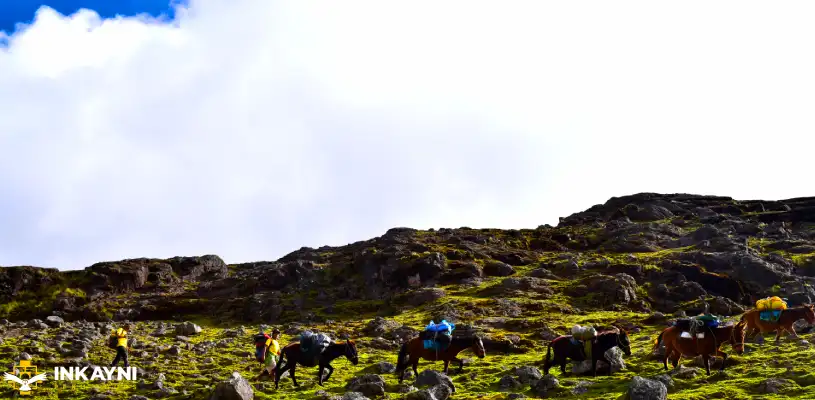
Inkayni Peru Tours is committed to responsible and sustainable tourism including the ethical and humane treatment of animals.
HOW FREEZING IS LARES TREK?
The weather varies depending on the season and altitude. At night, temperatures can drop considerably, especially in the colder months (May to August). At higher altitudes, such as the Sicllakasa Pass, the temperature can be close to or even below zero Celsius degrees . So, it is important to wear appropriate clothing to keep warm, including layers of clothing, hats and gloves.
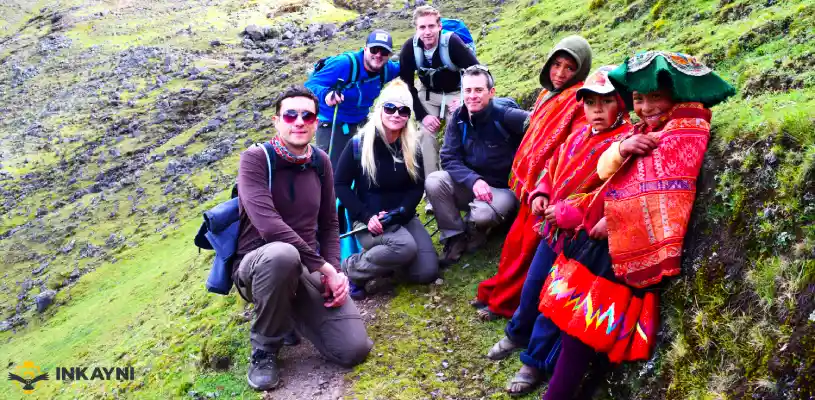
Red-cheeked children. The reddening of the cheeks is a natural response of the body to protect itself against cold and solar radiation.
WHEN IS THE BEST TIME TO HIKE THE LARES TREK?
The best time to do the Lares Trek is during the dry season, which runs from April to October. During these months, you will be able to enjoy beautiful sunny days and the opportunity to contemplate the breathtaking views of the Andean landscapes in all their splendour.
Recommended months for the Lares Trek include May, June and July. These months offer pleasant weather and less rain chance, which improves trekking and walking conditions.
There is also an increase in tourists to Cusco during the dry season, especially those who wish to take advantage of the favourable weather for activities such as the Lares Trek. Therefore, if you plan to do the Lares Trek during these months, it is recommended to book in advance to secure your place and have a more comfortable and well-organised experience.
In any case, planning ahead will allow you to secure your place on the trek and make the most of this exciting adventure in the spectacular scenery and rich culture of the Peruvian Andes.
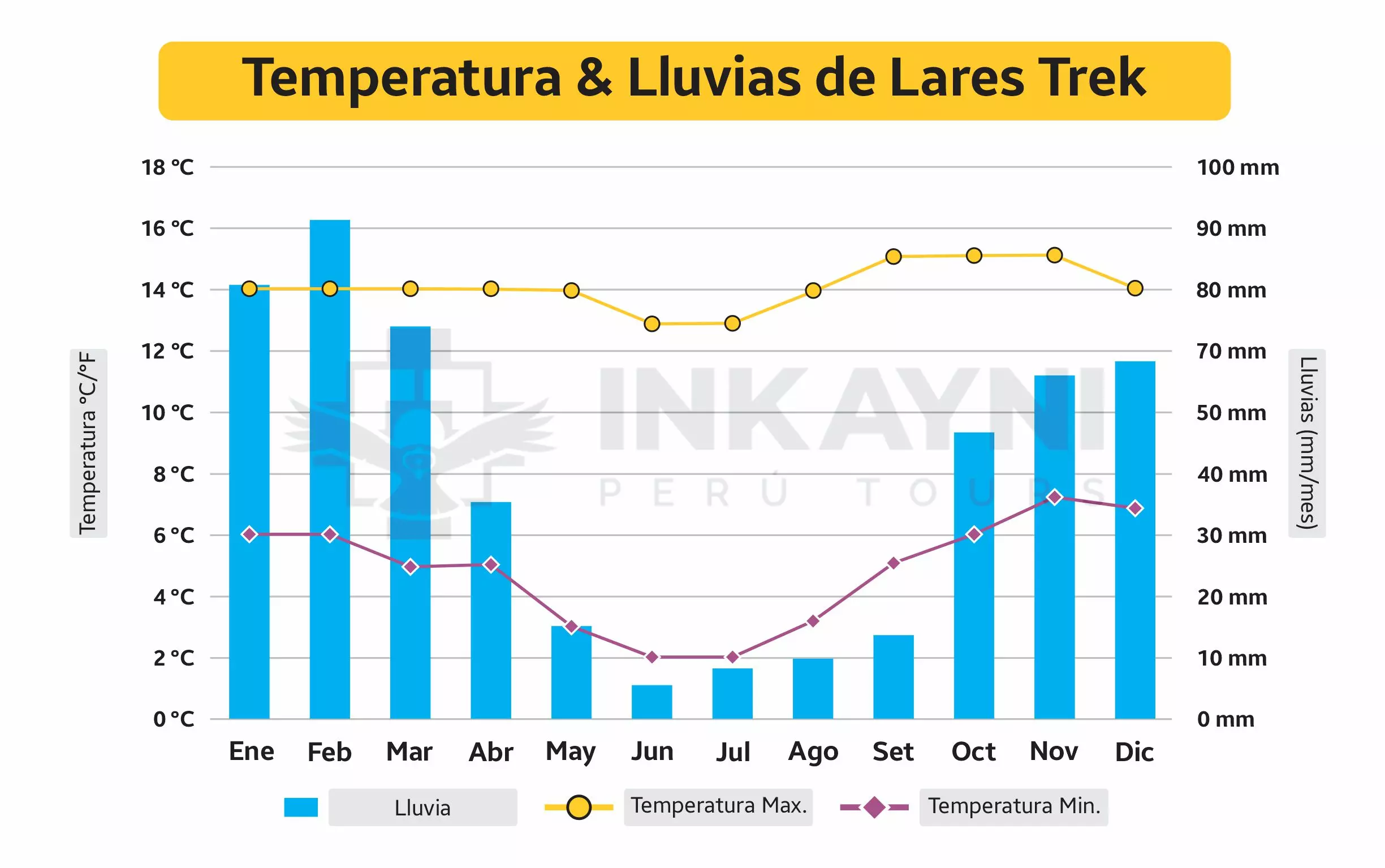
Dry season (April – October).
DO I NEED GOOD PHYSICAL STAMINA?
Yes, it is advisable to be in good physical condition to do the Lares Trek. Although no previous trekking experience is required, it is important to be prepared to walk long distances in mountainous terrain and at high altitudes. The trek involves several days of trekking and several hours of walking each day, so it is important to have cardiovascular endurance and leg strength.
Regular physical activity such as hiking, cardiovascular exercise and endurance training before trekking will help you prepare better for the adventure. It is important to remember that the pace of walking can be adapted to the group and that local guides are always willing to provide support and ensure that everyone enjoys the experience in a safe and enjoyable way.

Keep your pace up during the Lares Trek to Machu Picchu
WHAT SHOULD I DO IF I EXPERIENCE ALTITUDE SICKNESS DURING THE LARES TREK TO MACHU PICCHU?
If you suffer from altitude sickness during the Lares Trek, it is essential to act quickly. Here are some tips for dealing with altitude sickness:
- Relax and rest: If you feel altitude sickness symptoms, the first thing to do is relax and rest. If necessary, stop your hike for a moment and allow your body to adjust to the altitude.
- Hydrate: Hydration is essential to prevent and alleviate altitude sickness. Drink plenty of water throughout the trek to keep your body hydrated.
- Drink Coca tea: If possible, you can drink coca tea which is a traditional infusion of coca leaves that has been used for centuries in the Andes to alleviate altitude sickness.
- Chew coca or coca candy: Chewing coca leaves in small amounts or eating coca or lemon candy can also alleviate altitude sickness.
- Communicate with your tour guide and fellow travellers: Don’t hesitate to express how you feel at all times. Our guides are trained and can offer advice and recommendations for dealing with altitude sickness. Also, sharing your experiences with your fellow travellers can provide emotional support and understanding.
Remember that our guides will be there for you throughout the trek. If you experience any symptoms of altitude sickness, do not hesitate to ask for help or tell them how you are feeling. They are highly trained to act at times like this, providing you with the support and assistance you need to enjoy your trekking experience in a safe and pleasant way.

Hikers rest and continue this exciting trek.
PACKING LIST FOR THE LARES TREK TO MACHU PICCHU?
If you want a fantastic and unforgettable experience during the Lares Trek, it is important to pack properly to ensure a comfortable and safe experience during the trek.
- Backpack: A sturdy and comfortable backpack to carry your belongings during the trek.
- Trek Clothing: Bring breathable long and short-sleeved shirts, comfortable and durable trousers, a waterproof jacket or windbreaker to protect you from rain and wind, a mid-layer (sweatshirt or warm jacket) for cold nights, underwear and socks suitable for walking.
- Suitable footwear: Sturdy and comfortable hiking boots, preferably waterproof, to provide support and protection for your feet during the hike.
- Personal hygiene items: Toothbrush, toothpaste, biodegradable soap, small towels, hand sanitiser, etc.
- Sunscreen and lipstick: To protect your skin and lips from exposure to the high altitude sun.
- Hat or cap and sunglasses: To protect you from the sun and glare from the snow.
- Headlamp: A headlamp or torch with extra batteries to light up the nights in camp.
- Water bottle with water and purification: Carry a reusable water bottle and some methods of water purification, such as tablets or filter, to keep you hydrated during the trek.
- Energy snacks: Bring some snacks such as nuts, granola bars or chocolate to keep your energy levels up during the trek.
- Documents and cash: Don’t forget to bring your passport, ID cards and cash for additional expenses.
Remember that when you book Lares Trek with Inkayni Peru Tours, the mules will transport the camping and cooking equipment, so you only need to carry a backpack with your personal belongins and the weight allowance (7 kg / 15 lbs).

You should not overload your trekking backpack. |
TIPS FOR THE LARES TREK
BEFORE THE LARES TREK:
- The Lares Trek requires physical fitness, especially due to the altitude and varied terrain. Do endurance exercises, hiking and cardiovascular activities to strengthen your body before the adventure.
- If possible, arrive a few days early in Cusco or the Sacred Valley to acclimatise to the altitude and avoid altitude sickness. Drink plenty of water and avoid heavy meals.
- Be sure to bring everything you need for the trek, including appropriate clothing, sturdy footwear, personal hygiene items, sunscreen and basic medications.
DURING THE LARES TREK:
- Don’t hesitate to follow the directions and advice of your local guide, as they know the best routes and best practices for ensuring your safety and enjoyment.
- Maintain your energy levels by drinking enough water and eating energy foods.
- The trek is not a competition. Flow at your own pace and rest when necessary. Listen to your body and don’t push yourself harder than necessary.
- Keep the trail clean, take back your rubbish and respect the traditions and customs of the local communities you will meet along the way.
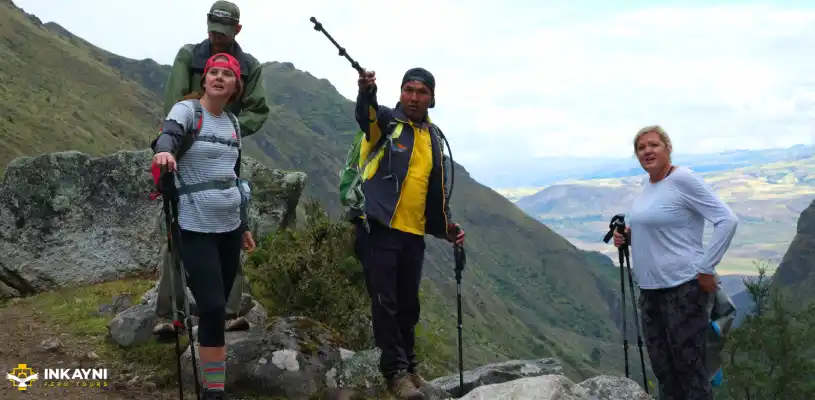
Remember, the guide acts as a leader and motivator encouraging the trekkers, providing emotional support and keeping morale high in times of challenge.
AFTER THE LARES TREK:
- Rest and recuperate: Take some time to rest and recover your body. A massage or a relaxing bath can relieve muscle fatigue.
- Enjoy Machu Picchu: If you have not yet visited the Inca citadel of Machu Picchu, you must explore this spectacular archaeological wonder. Also, take time to immerse yourself in the history and majesty of this site.
- Thank and share: Thanks to your guides, porters, cooks and support staff who made the experience possible. Share your stories and photos with friends and family, inspiring them to undertake their adventure in the Peruvian Andes.
So far, is there any doubt about how difficult is the Lares Trek? We don’t think so! It was a pleasure to accompany you during your reading time.

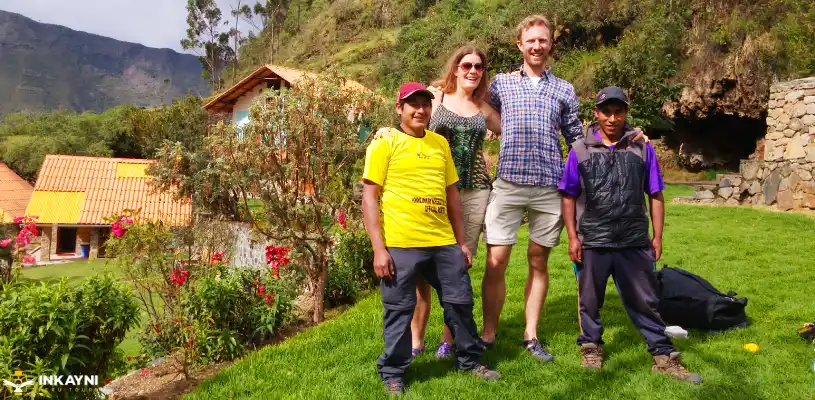
Thrilled hikers beside their experienced guide, Justino.
Lares Trek to Machu Picchu is a route that extends beyond the ordinary and dives deep into the experience of Andean villages.
Share moments with local people who raise llamas, alpacas, and weave colourful textiles with inherited skills. Furthermore, discover the essence of Quechua, the ancestral language still proudly spoken in these lands.
You will be amazed by the Andean landscapes while meeting friendly and charming people who keep their cultural identity alive through centuries-old traditions.
Here is your call to adventure, to curiosity, to the prospect of exploring the unknown, to the connection with the Inca roots, now that you know the answer “How difficult is the Lares Trek?”. Join the Lares Trek with Inkayni Peru Tours and witness the magic only our Peruvian Andes can offer. Embark on this transformative journey and create memories that last a lifetime! We await you opening our arms!
👉𝗦𝗨𝗦𝗖𝗥𝗜𝗕𝗘 𝗢𝗨𝗥 𝗕𝗟𝗢𝗚 ▶ 👈
👉𝗦𝗨𝗦𝗖𝗥𝗜𝗕𝗘 𝗢𝗨𝗥 𝗧𝗜𝗞 𝗧𝗢𝗞 ▶ https://acortar.link/E4XQ8C 👈

Autor
Shared: