


Best Markets in Cusco to Visit
For most first-time travelers, San Pedro Market is the best market to visit in Cusco because it is central, easy to reach, and gives the clearest mix of local food, fresh juices, souvenirs and everyday city life in one place. Pisac Market works better if your priority is textiles, crafts and a Sacred Valley stop, while Huancaro and Wanchaq make more sense if you want a more local and less tourist-focused view of how Cusco shops and eats. If you only have time for one market, start with San Pedro in the morning and bring cash in small bills.
Table of Contents
Everyday life for those who live in Cusco, and an extraordinary space for those who visit for the first time. The markets in Cusco have that special trait: they are an open window to local culture.
Are they just commercial centers? Why do they spark so much fascination? What is it about these markets that tourists should not miss?
Take it with you, dear customer.

Waiting at San Pedro Market. Photo by Sarah Fernandes
The smell of fried yucca, a bowl of hominy soup, cumbia playing in the background, the colors of flowers for sale, and vendors smiling as they offer textiles, herbs, fruits or handmade souvenirs. These markets are the warm, colorful and very human side of Cusco’s living cultural diversity.
This guide shows you the distinctive features of the main markets in and around Cusco, what each one is best for, how to visit them, and how to connect them with your wider trip through Cusco, the Sacred Valley and Machu Picchu.
| San Pedrobest first market | Pisactextiles + crafts | Cashsmall bills help | Morningbest time to go |
Best Markets in Cusco: Quick Comparison
Use this table if you are short on time. Each market has a different personality: some are better for food, others for textiles, and others for everyday local life.
| Market | Best for | Practical note |
| San Pedro Market | First-time visitors, juices, local food, souvenirs | The easiest market to visit from the historic center. |
| San Blas Market | Breakfast, local neighborhood atmosphere, simple meals | Good before or after walking through the San Blas neighborhood. |
| Huancaro Market | Local produce, agricultural goods, less touristy experience | Best for travelers who want to see how Cusco eats and buys locally. |
| Wanchaq Market | Everyday food, juices, herbs and local meals | More local than touristy; useful if you are staying outside the main square. |
| Pisac Market | Textiles, ceramics, jewelry, Sacred Valley crafts | Best combined with a Sacred Valley day trip. |
| Aguas Calientes Handicraft Market | Last-minute souvenirs before or after Machu Picchu | Convenient but usually more tourist-oriented. |
| Chinchero Textile Centers | Textile demonstrations and weaving traditions | Best for understanding the process behind Andean textiles. |
| Cusco Handicraft Center | Souvenirs, paintings, instruments, convenient shopping | Open later than most traditional markets. |
WORLD WONDER IN THE ANDESMachu Picchu
Discover the history, landscapes, and essential tips for visiting this world wonder.
San Pedro Market: Welcome to the Beginning
This is what we do.

Flower vendors at San Pedro Market. Photo by: Naloni JR
When you pass through the main entrance of San Pedro Market, located on Ccascaparo Street near the historic center, you begin one of Cusco’s most vivid sensory experiences: crafts, textiles, fruits, bread, soups, juices and daily local movement. From large blankets with Quechua-inspired weaving patterns to small handmade keychains called cholitas, the market introduces you to the city through things people actually buy, eat and carry.
Here, variety feels like closeness.
Dive in further, and it becomes a sensory exploration of aromas and sounds:
- The buzzing of blenders preparing mango, papaya, banana or strawberry juices.
- The scent of fried liver, warm chuta bread and classic corn with cheese.
- The quick rhythm of vendors calling customers, weighing products and packing orders.

Local woman with traditional hat carrying eucalyptus. Photo by: Carlos Fabal
San Pedro Market is known as a place that preserves traditional memory, but it also belongs to Cusco’s modern urban history. For more than a century, it has been part of the city’s commercial life and remains one of the most accessible places for travelers who want to see daily Cusco without leaving the center.
What has San Pedro Market witnessed?
- Mothers who sold sweet bread now have daughters running the family business.
- Friendships that last through the aisles of various stalls.
- Foreign visitors smiling after tasting Cusco’s traditional dishes for the first time.
The best way to pay in these markets is with cash. Some vendors may accept the local app Yape, but most small stalls still work more easily with small bills and coins. Bargaining can happen, especially for souvenirs, but it should always be respectful.
Location on the map: where is it?
Practical Information:
- Hours: commonly around 6 a.m. – 6 p.m.; mornings are usually best.
- Exact location: Ccascaparo Street, Cusco, across from San Pedro train station.
- Market specialty: Fresh juices, soups, chuta bread, corn with cheese, local products and souvenirs.
- Carry in your pocket: Cash, small bills and a camera.
- When bargaining: Always do so kindly.
San Blas Market: What Endures
All of us who live in San Blas, we also work in San Blas.
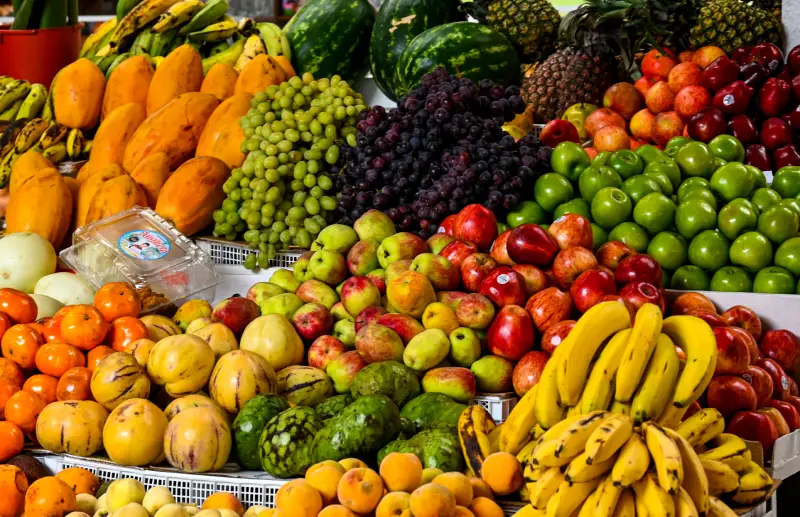
The shine of fruit at San Blas Market. Photo by: Onas Mer
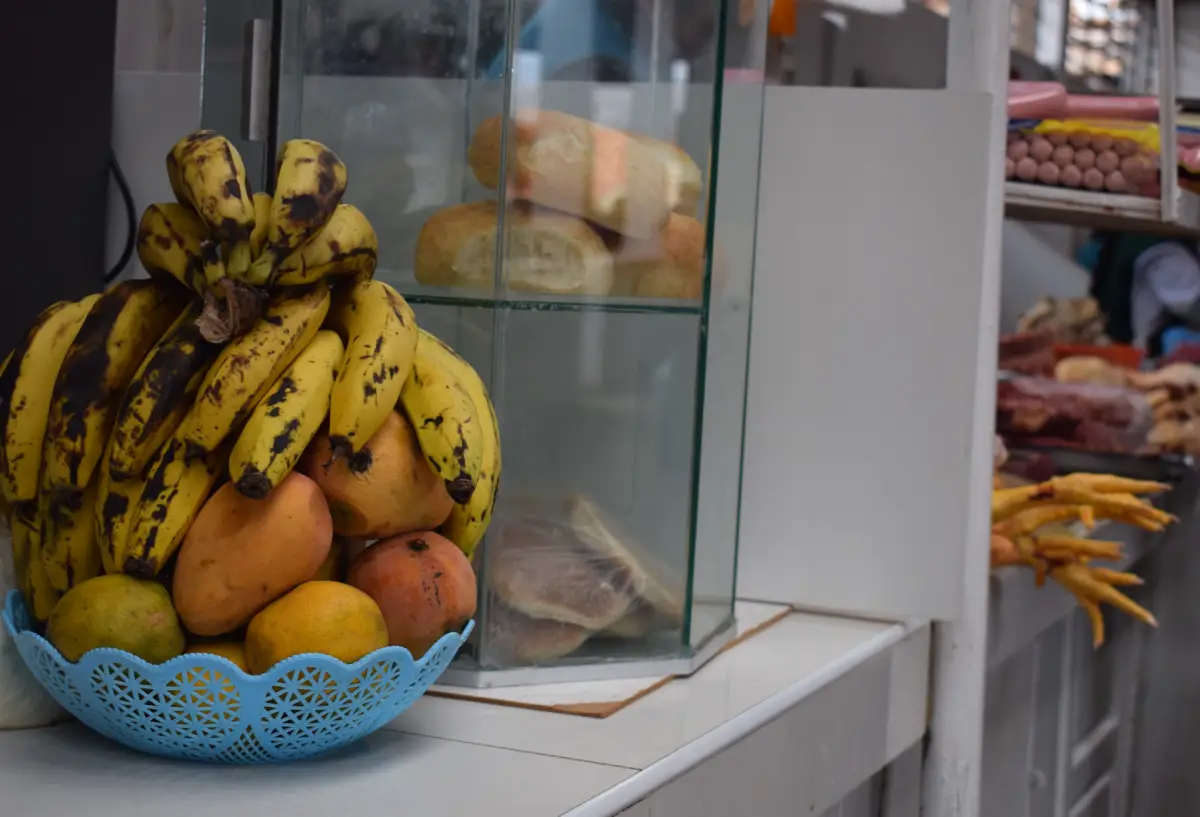
A breakfast stall awaiting its first customers. Photo by: An Filip
White walls and columns frame San Blas Market, located in the Pumapaccha area, close to one of Cusco’s most traditional neighborhoods. It is often quieter than San Pedro and feels more like a neighborhood food stop than a tourist attraction.
From early morning to late afternoon, vendors receive local buyers, students, workers and travelers from Peru and abroad.
What will you find?
- Fresh meat sections: chicken, pork, trout and beef.
- Food stalls with traditional breakfasts and lunches.
- Plants and flowers in different sizes, colors and uses.
- Weekend handicraft fairs near San Blas Plaza with textiles, ceramics and jewelry.
Why does it feel so welcoming?
Built around 1969, San Blas Market has served generations of neighborhood residents. Its warmth comes from that local use: people do not only pass through; they return, recognize each other and protect the place as part of daily life.
If you are looking for fruit juice, tamales with coffee, a bowl of chicken soup or a less crowded meal near San Blas, this market can be one of the best small stops in Cusco.
Location on the map: where is it?
Practical Information:
- Hours: commonly around 6 a.m. – 6 p.m.
- Exact location: Pumapaccha 231 / San Blas area.
- Market specialty: Breakfasts, lunches, juices and neighborhood food stalls.
- Carry in your pocket: Cash and a camera.
- When bargaining: Always do so kindly.
Guides to plan your Cusco days around the markets
Huancaro Market: Working and Living off Cusco’s Land
It’s a living museum of biodiversity and agrobiodiversity.
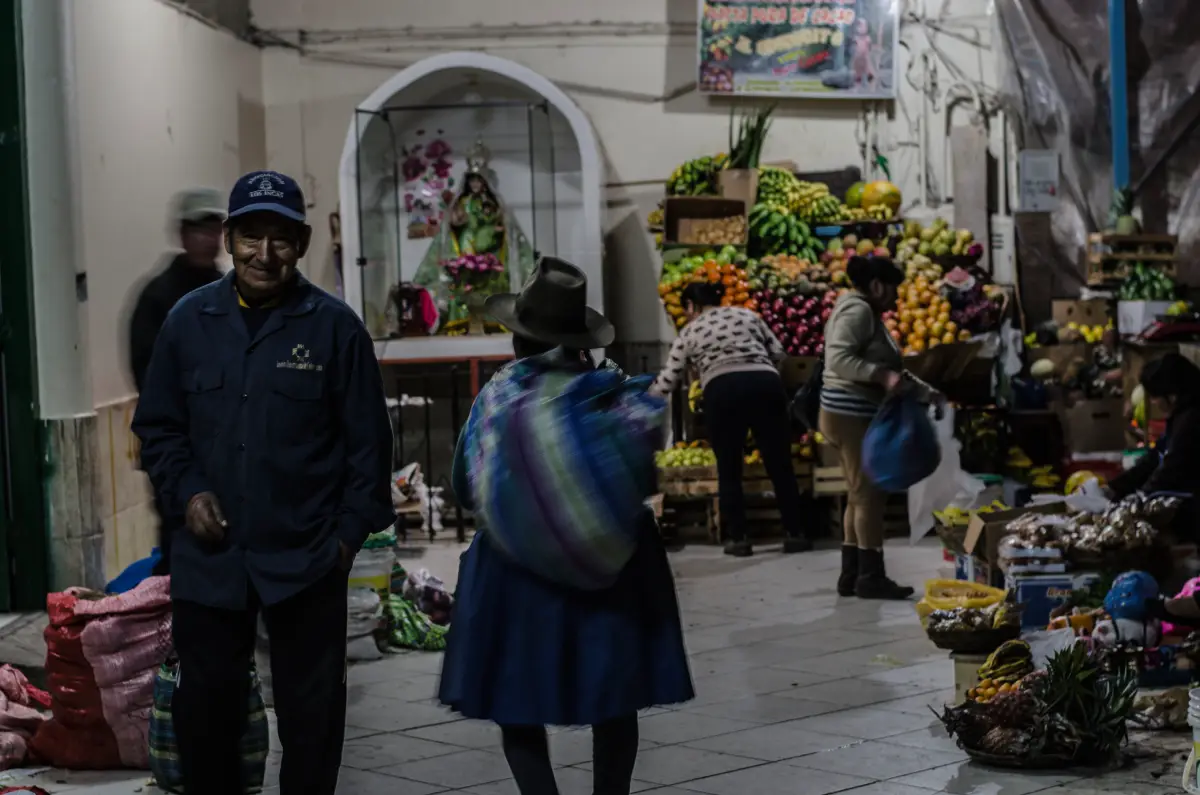
Daily scenes at Huancaro Market. Photo by: Kubrick200x
On Malecón Huancaro Avenue in Santiago, there is a market that shows Cusco’s agricultural abundance more directly than the tourist areas do. Huancaro Market is especially interesting for travelers who want to understand what local families buy, cook and produce.
Every Saturday, Huancaro Market welcomes vendors, urban shoppers and curious visitors looking to connect with local life on a deeper level. It is a meeting point for products from the provinces of Cusco, and a place where wheat, corn, vegetables, dairy products, herbs and local goods connect the countryside with the city.
A bit of history
This market is not only made up of vendors; it also includes people directly working the land around Cusco.
Founded on January 17, 2004, by organized farming families, it now benefits thousands of consumers who come each week for agricultural, livestock and agro-industrial products at better prices than many central shops.
What will you discover?
- Agricultural products: native potatoes, oca, mashua, grains, vegetables, cherimoya and cape gooseberry.
- Livestock and dairy products: meats, fresh milk and farm eggs.
- Agro-industrial products: cornmeal, kiwicha, honey, local breads and chicha de jora.
- Medicinal plants and natural products: muña, eucalyptus, essential oils and natural ointments.
The people behind these stalls often offer what they cultivate and eat themselves. If San Pedro is the easiest market for a first visitor, Huancaro is better for seeing the agricultural system that keeps Cusco fed.
Location on the map: where is it?
Practical Information:
- Best day: Saturday is usually the strongest market day.
- Exact location: Malecón Huancaro, Santiago district.
- Market specialty: Regional produce, agricultural goods, dairy products and local specialties.
- Carry in your pocket: Cash, small bills and a reusable bag.
- When bargaining: Always do so kindly.
Wanchaq Market: What Restores
This bread is generous.
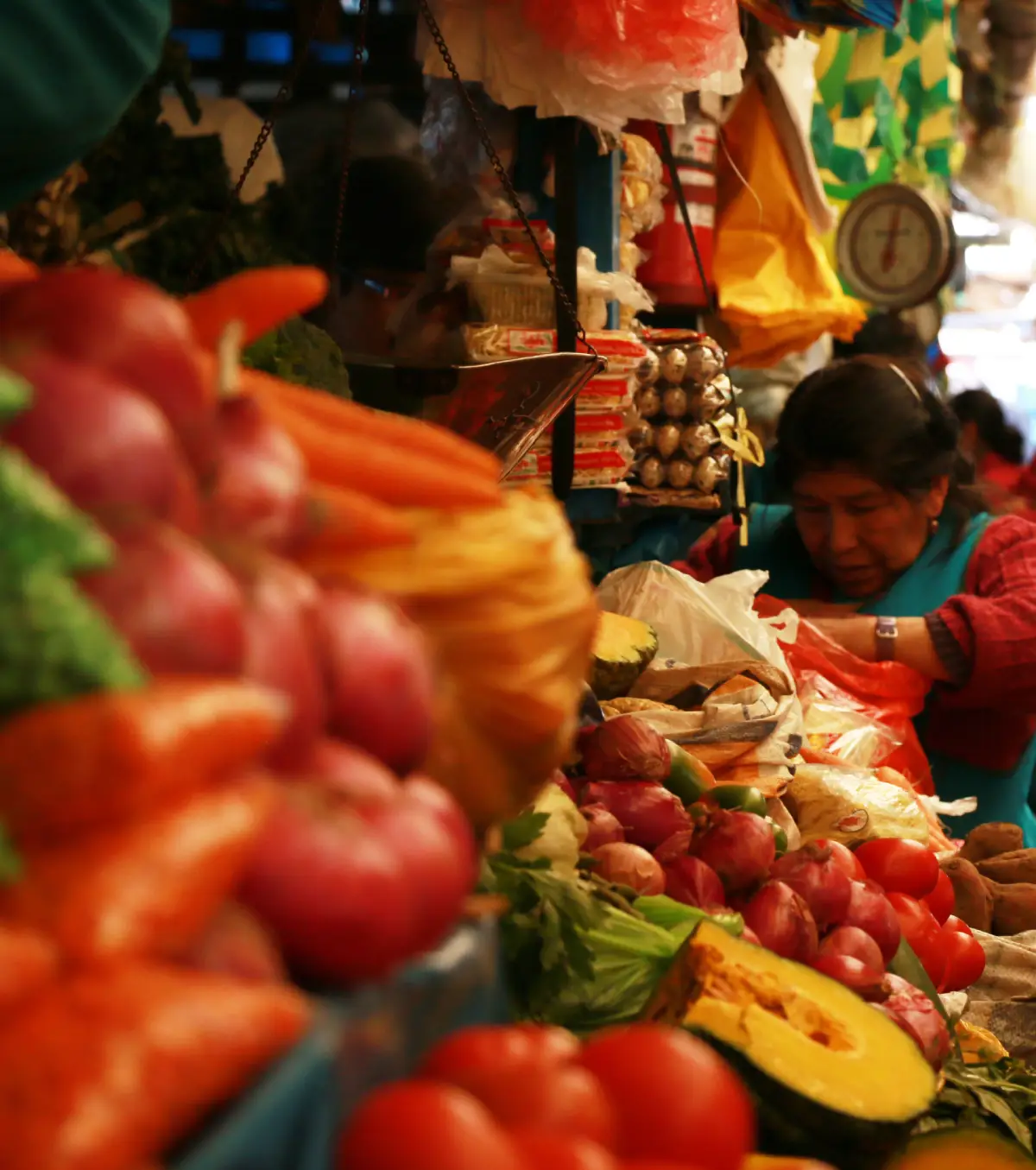
Spice and herb stall in one of Wanchaq Market’s aisles. Photo by: Diazeg
Located between Av. Huáscar and Av. Garcilaso, just minutes from Cusco’s main square, Wanchaq Market is a practical local market for food, herbs, juices, vegetables and simple meals.
From its start in 1970 to today, it has modernized its structure while preserving the atmosphere of a neighborhood market. It is common to see vendors wearing traditional clothing, colorful sweaters or aprons while serving regular customers.
Special smoothies?
With wide, organized aisles, the vendors here are known for suggesting fruit smoothies according to what customers ask for: energy, digestion, recovery or simply flavor.
Is simplicity really that simple?
The breakfasts, lunches and quick bites here rarely disappoint:
- Bread with avocado, larger than the hand holding it.
- Lamb soup to warm the body on a cold morning.
- Maicillos and Cusco ring-shaped pastries for something sweet.
The food here goes beyond keeping your body going. It restores, strengthens and belongs to the ordinary rhythm of the city.
Location on the map: where is it?
Practical Information:
- Hours: commonly around 6 a.m. – 6 p.m.
- Exact location: Wanchaq district, near Av. Huáscar and Av. Garcilaso.
- Market specialty: Juices, fruits, vegetables, soups, herbs and local meals.
- Carry in your pocket: Cash and a camera.
- When bargaining: Always do so kindly.
Pisac Market: The Rainbow That Stayed
How are you? Good morning.
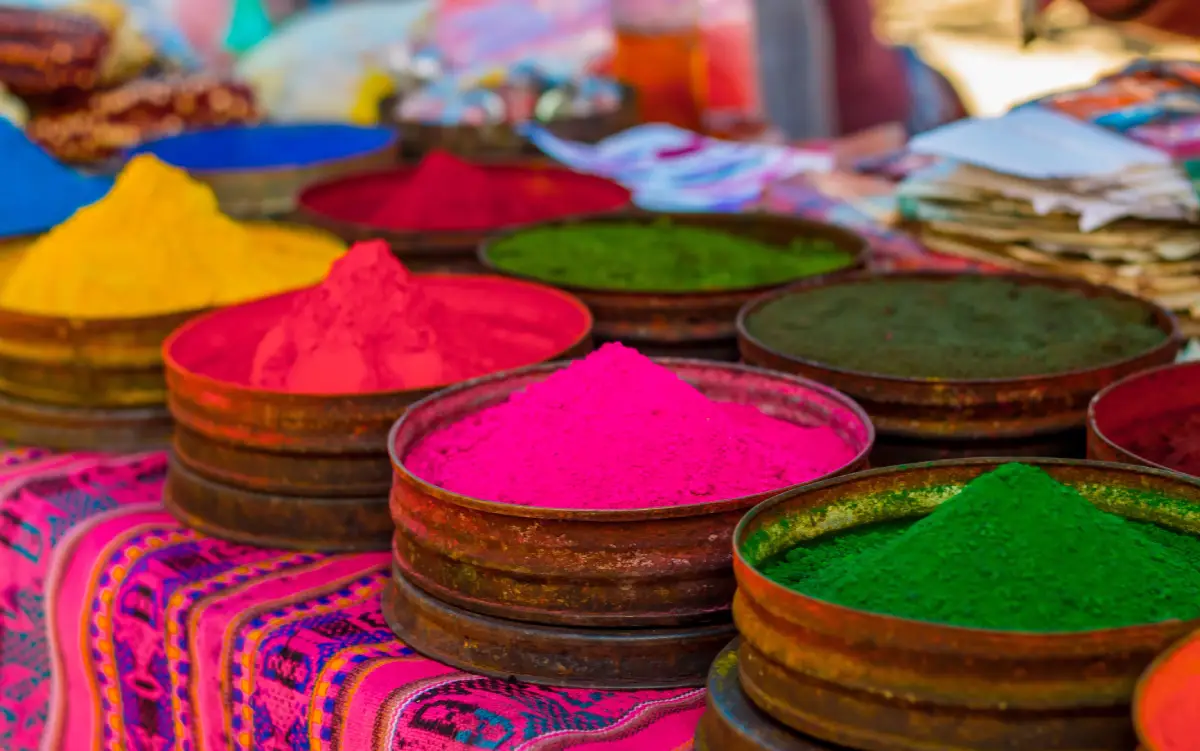
Natural dyes for textiles and wools. Source: Evelyn Acuña
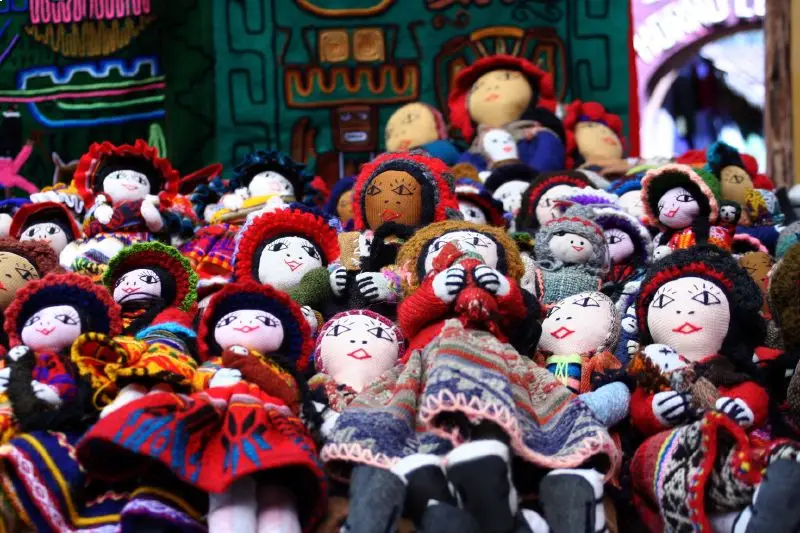
Andean artisan dolls. Photo by: Daniela Goulart
A harmony of colors best describes Pisac Market in the Sacred Valley of the Incas. It is one of the strongest market stops if your itinerary includes Pisac archaeological site, the Urubamba Valley or a wider Sacred Valley route.
How to get there from Cusco?
On Puputi Street, you can find buses, shared vans and taxis heading to Pisac. Fares vary by vehicle, but a shared van is often the easiest budget option. As a planning reference, local transport can cost around $1–3 USD (S/4–10), while a private taxi can cost much more depending on negotiation, route and waiting time.
What can you find at this market?
An array of traditional crafts:
- Ponchos and chullos hanging in many stalls.
- Textile art, alpaca garments and woven accessories.
- Silver, ceramic jewelry and handmade pieces by local artisans.
- Musical instruments such as charangos, quenas, pan flutes and cajones.
What makes it special?
From pre-Columbian times through the Inca period and Spanish colonization, Pisac has been a strategic point for trading agricultural goods, textiles and handicrafts. It is also surrounded by mountains, green slopes and the open rhythm of the Sacred Valley.
Wherever you look, this market preserves part of the Andean landscape and offers travelers from large cities a more tangible connection with local craft traditions.
Location on the map: where is it?
Practical Information:
- Hours: commonly around 8:30 or 9 a.m. – 4:30 or 5 p.m.; Sundays are often livelier.
- Exact location: Around the main square of Pisac, near the main road to Cusco.
- Market specialty: Chicha de jora, frutillada, textiles, ceramics and handicrafts.
- Carry in your pocket: Cash and a camera.
- When bargaining: Always do so kindly.
- Transport reference: Bus or shared van from Cusco can cost around $1–3 USD (S/4–10); taxi prices vary.
Other Markets and Craft Stops Near Cusco
These options are not always classic food markets, but they are useful if your trip includes Machu Picchu, Chinchero or a practical souvenir stop in the city.
Aguas Calientes Handicraft Market
Right next to the train station.

Andean bags, sweaters, and blankets. Photo by: Kent Peterson
Travelers come and go from the Ollantaytambo and Poroy train routes, some on their way to Machu Picchu and others returning to Cusco. Very close to the train station is the Aguas Calientes Handicraft Market, where you can browse alpaca-style textiles, bags, traditional jewelry, ceramics and small souvenirs before or after your visit.
Prices may be higher because of its tourist-focused location, but its convenience is hard to deny, especially if you did not buy souvenirs in Cusco or the Sacred Valley.
Practical Information:
- Hours: commonly around 8 a.m. – 6 p.m.
- Exact location: Right next to the train station in Aguas Calientes.
- Useful for: last-minute souvenirs after Machu Picchu.
- Carry in your pocket: Cash and a camera.
- When bargaining: Always do so kindly.
Chinchero Textile Centers
Different families walk about an hour and a half to get here.

Artisan working on an ancestral loom. Photo by: Kelly Cheng
In the Sacred Valley of the Incas, the community of Chinchero stands out as one of the main centers of Cusco’s textile artistry. Women weavers often explain and demonstrate the process of creating handmade textiles, from natural dyes to spinning, weaving and symbolic patterns.
There is laughter, energy and learning.
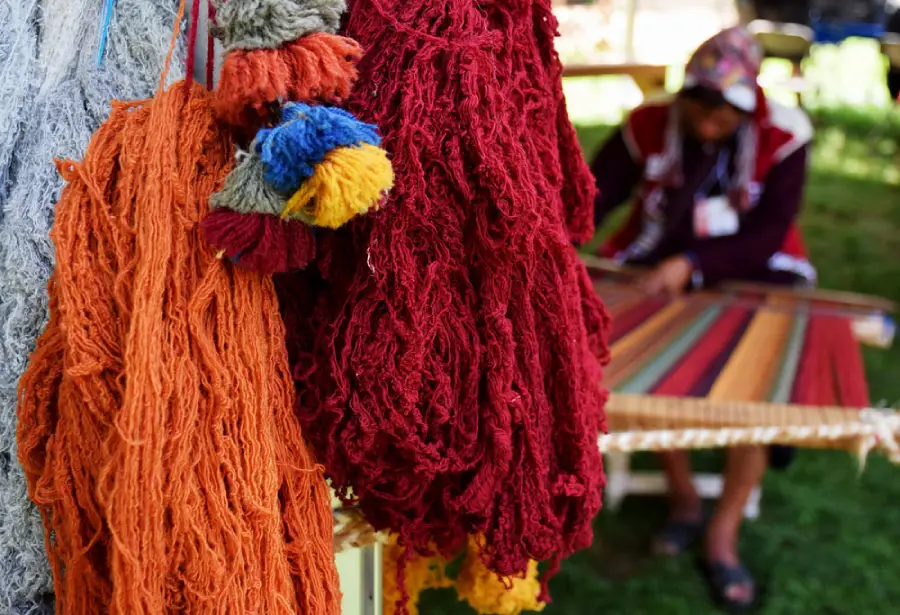
Every color, every pattern, a whisper of the Andes. Photo by: Mark Caicedo
These families have adapted their homes to share ancestral techniques that keep their worldview alive. If you are comparing places to buy textiles, Chinchero is useful because you can see how the pieces are made, not only how they are sold.
Practical Information:
- Hours: commonly around 7 a.m. – 5 p.m.
- Exact location: Chinchero town center, northwest of Cusco city.
- Useful for: textile demonstrations and handmade weaving.
- Carry in your pocket: Cash and a camera.
- When bargaining: Always do so kindly.
Cusco Handicraft Center
One sol, ma’am, just one sol.

A hallway inside the Cusco Handicraft Center. Photo by: Purple Cloud
Across from the Paccha de Pumaqchupan fountain, in the city of Cusco, stands the Cusco Handicraft Center. It is not as intimate as a neighborhood market, but it is practical if you want many souvenir options in one place.
Small Andean rainbow flags can be seen waving from some stalls, along with decorative garlands hung above the corridors. You can find accessories, paintings, wooden altarpieces, musical instruments and a modest dining area. Unlike many traditional markets, it remains open later, which is useful if your mornings are already full.
Practical Information:
- Hours: commonly around 9 a.m. – 9 p.m.
- Exact location: Av. El Sol and Tullumayo area.
- Useful for: souvenirs, paintings, instruments and practical shopping.
- Carry in your pocket: Cash and a camera.
- When bargaining: Always do so kindly.
How Much Money Should You Bring to Cusco Markets?
Prices vary by market, product quality, season and bargaining style. Use these amounts only as practical references.
| What you may buy | Approx. budget | Practical note |
| Juice, snack or simple breakfast | $1–4 USD (S/4–15) | San Pedro, San Blas and Wanchaq are good options. |
| Lunch or soup | $2–8 USD (S/8–30) | Prices depend on the dish and market. |
| Small souvenirs | $1–8 USD (S/5–30) | Keychains, bracelets, small textiles or simple gifts. |
| Textiles and larger keepsakes | $15–135 USD (S/50–500) | Quality varies widely. Ask about material, origin and technique. |
| Transport to Pisac | $1–14 USD (S/4–50) | Depends on bus, shared van or private taxi. |

How do we preserve sweetness?
What Makes Cusco’s Markets So Special?
Their people, their knowledge, their honesty. At Inkayni Peru Tours, we also believe it is their sense of familiarity. It does not matter how often you visit; at the markets in Cusco, you may still hear the affectionate language of “caserita” or “caserito,” the beloved regular customer.
Let’s understand Cusco’s markets as places where remembered history and living memory coexist. If you want to give new meaning to the everyday, the best markets in Cusco can become part of your travel memories, not just a place to buy something quickly.
Join a team of local guides committed to expanding your perspective on travel. We are a Cusco-based agency ready to support whatever sparks your curiosity most.
Frequently Asked Questions About the Best Markets in Cusco
What are the best markets to buy handicrafts in Cusco?
Which market is best to try traditional Cusco food?
Can I pay with card at Cusco markets, or is it cash only?
Which market is best for buying authentic textiles instead of imitations?
Is it safe to visit the markets in Cusco?
What is the cheapest market to buy souvenirs in Cusco?
Where can I find less touristy and more local markets in Cusco?
How much money do you need to shop at the markets in Cusco?
What are the best safety and bargaining tips for Cusco markets?
Is it better to shop at markets or tourist stores in Cusco?
Autor

Shared:



If you liked this article and the information you found, give us 5 stars!
 (2 votos, promedio: 5.00 de 5)
 Loading...