


Table of Contents
Quick Answer
The best time to visit Uyuni Salt Flats depends on the experience you seek. The mirror effect during the wet season or the vast white salt desert during the dry months.
- Wet season (Jan–Mar): a thin layer of water covers the salt flat, creating the famous mirror effect where the sky and earth merge into one.
- Dry season (May–Oct): the firm surface reveals hexagonal salt patterns, perfect for 4×4 exploration and creative perspective photography.
Each season unveils a different Salar de Uyuni, reflective and dreamlike in summer, endless and crystalline in winter. There isn’t one single best time, only the one that aligns with the journey you wish to live.
The Uyuni Salt Flats, located in the Bolivian Altiplano, is one of those places that seems to come from another planet. With more than 10,500 km² (4,054 mi²) of white salt, infinite skies, and landscapes that defy visual logic, this largest salt desert in the world attracts travelers seeking more than just a simple postcard: they seek amazement.
During the rainy season, the salt flats transform into a giant mirror that reflects the sky; in the dry season, it offers perfect solid terrain for exploring in 4×4 vehicles and playing with perspective in unique photographs. But… when is the best time to visit Uyuni salt flats? Keep reading to find out.
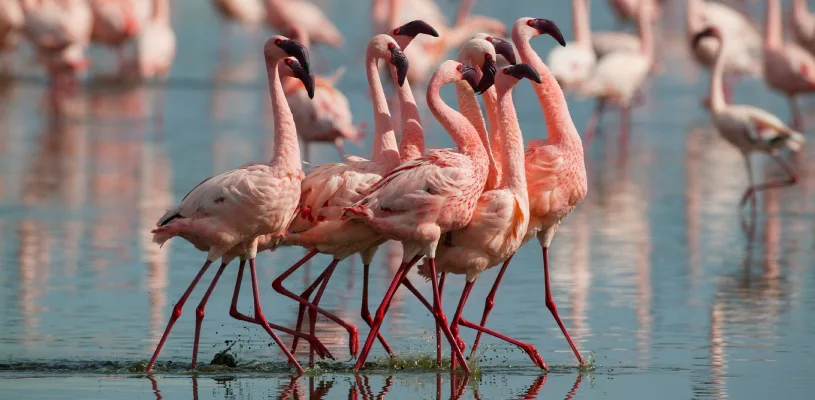
Pink Flamingos can be seen along the way to the Uyuni Salt Flats
What are the Uyuni Salt Flats?
The Uyuni Salt Flats, located in southwestern Bolivia, is the largest and highest salt desert in the world, covering an area of 10,582 km² (4,086 mi²) at an altitude of approximately 3,650 meters (11,995 feet). Formed by the evaporation of ancient prehistoric lakes, this vast white expanse is so flat that the altitude variation across its entire surface is less than one meter, making it an ideal site for calibrating satellite instruments.
In addition to its impressive geography, the salt flats contain approximately 10 billion tons of salt and hold one of the world’s largest lithium reserves, an essential mineral for manufacturing rechargeable batteries.
What is the best time to visit Uyuni Salt Flats?
The best time to visit Uyuni Salt Flats depends on what you want to see and experience.
- If you dream of capturing the mirror effect, where the sky merges with the earth and the horizon disappears, travel between January and March, during the rainy season. This is when the salt flat transforms into a gigantic natural mirror, perfect for photographers and lovers of the surreal. The rainfall is intermittent, days can be cloudy, and some areas of the salt flats become inaccessible due to flooding, but the visual reward is incomparable if you find clear skies after recent rain.
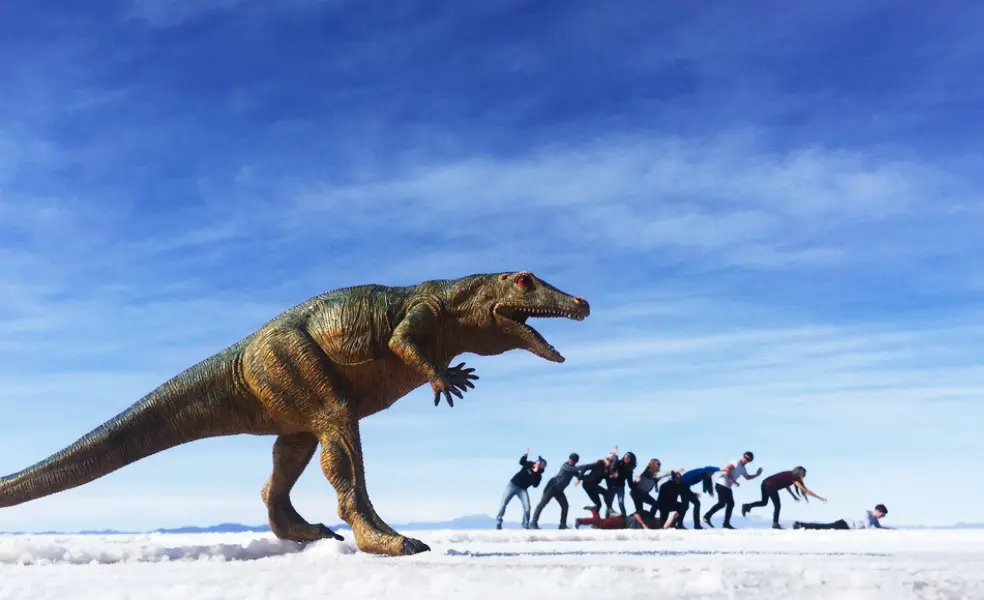
- If you prefer intense blue skies, dry salt formations, and complete access to iconic places like Incahuasi Island, the best time to visit Uyuni is between May and October, during the dry season. The terrain is firm and stable, ideal for exploring in 4×4 vehicles and capturing famous perspective photos using toys or objects. Weather conditions are more predictable, although nights can be extremely cold, with temperatures dropping to -15°C (5°F), especially between June and August.

Choose your thrill: mirror reflections or wild off-road adventure across Bolivia’s salt flat.
Expert Tip:
Both seasons reveal a different but equally extraordinary Uyuni Salt Flats. The best time to see Salar de Uyuni isn’t an exact date: it’s the one that connects with what you want to find in Uyuni: reflection, immensity, fun, or silence.
Which season suits you best according to your travel style?
| Type of traveler | Ideal season | Why? |
| 📸 Photographer or visual enthusiast | January – March (rainy season) | For the mirror effect: reflections, surrealistic landscapes, and skies merging with the earth. |
| 👨👩👧👦 Family or cautious travelers | May – October (dry season) | Better weather, accessible routes, solid terrain, and lower logistical risk. Ideal for traveling with children or older adults. |
| 🥶 Cold-sensitive people | March, April, or October | Milder temperatures without losing access to the salt flats. Avoid the Altiplano winter (June-August). |
| 🚙 Adventurers or perspective photographers | July – September | Dry ground ideal for shots with toys or objects, clear landscapes, and blue skies. |
What you should know about the Climate:
The Uyuni Salt Flats are located at an altitude of approximately 3,656 meters (11,984 feet) above sea level, making it one of the highest and most extreme destinations in South America. This elevation means that the climate is high-altitude desert, with particular characteristics that you should consider when planning your visit.
The Uyuni Salt Flats have two well-defined seasons:
- Rainy season (December to April): During these months, a thin layer of water covers the salt flats, creating a mirror effect that reflects the sky and transforms the landscape into a unique visual experience. This phenomenon is especially notable between January and March, which is considered the best time to visit Uyuni salt flats for mirror effect photography.
- Dry season (May to October): During this period, the salt flats are completely dry, revealing hexagonal salt formations on the surface. The hardened terrain allows for exploring the salt flats with greater freedom and visiting areas such as Incahuasi Island, an island in the middle of the salt flats with giant cacti and impressive panoramic views.

Pure geometry and silence, Uyuni’s infinite floor under an endless sky.
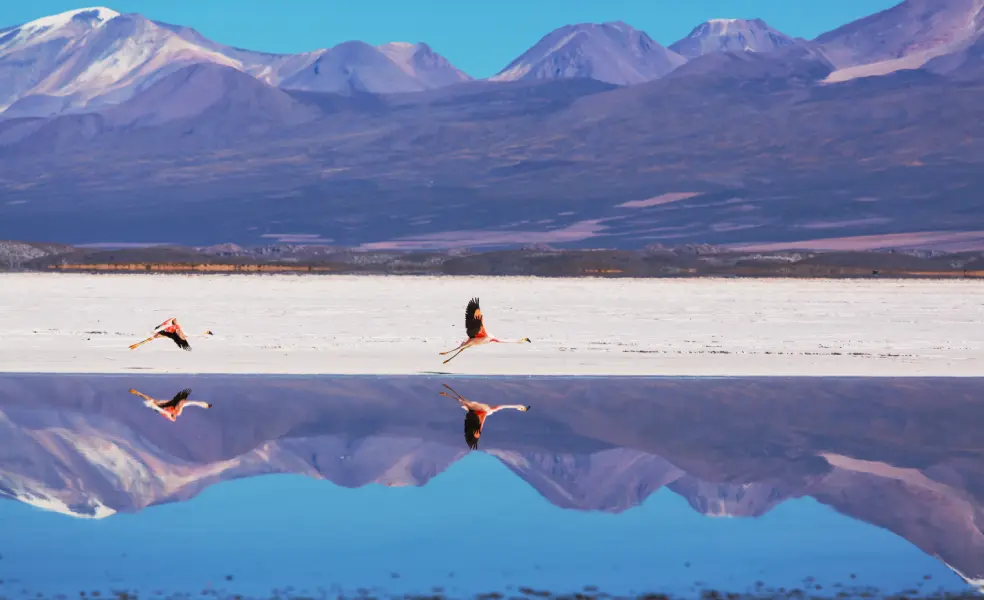
The sky beneath your feet, discover Uyuni when the rains transform it into glass.
Temperatures
Temperatures in the salt flats vary significantly between day and night:
- During the day: temperatures can range between 12°C and 21°C (54°F and 70°F), depending on the time of year.
- During the night: thermometers can drop to -15°C (5°F), especially in the winter months (June to August).
Precipitation
The Uyuni Salt Flats receive an average annual precipitation of 190 mm (7.5 inches), concentrated mainly between December and March, which corresponds to the rainy season. During this period, a thin layer of water covers the salt flats, creating the famous mirror effect that reflects the sky and offers spectacular views.
Winds
Winds in the region are frequent and can reach speeds above 90 km/h (56 mph), especially in the winter months. These winds contribute to the lower wind chill and can affect visibility, so it’s advisable to bring adequate protection against wind and dust.
Wikipedia, the free encyclopedia
Solar radiation
Due to the altitude and clarity of the sky, solar radiation in the salt flats is intense. It is essential to use high-factor sunscreen, sunglasses with UV protection, and clothing that covers most of the body to avoid sunburn.

Quick comparison between seasons
| Key characteristic | Rainy season (Dec – Apr) | Dry season (May – Oct) |
| 🌧️ Weather | Intermittent rain, cloudy days | Stable, blue sky, dry air |
| 📸 Photography | Mirror effect | Perspective photos (with toys) |
| 🚫 Access | Some routes closed | Complete access to the salt flats |
| ❄️ Night temperature | Less extreme | Very cold (down to -15°C/5°F) |
| 👀 Visibility | Variable, depends on weather | High visibility all day |
Altitude considerations
- The high altitude can cause altitude sickness or soroche, with symptoms including headache, nausea, dizziness, and fatigue. To minimize these effects:
- Acclimatize in lower-altitude cities before visiting the salt flats.
- Stay well-hydrated and avoid alcohol and heavy meals.
- Consider using natural remedies, such as coca tea, which can help alleviate symptoms.

The Uyuni Salt Flats are an endless horizon that allows photographers to play with perspective and depth of field. Let your imagination and creativity fly!lugares más inhóspitos y desolados de la tierra
How to deal with altitude sickness in Uyuni?
Altitude sickness occurs when you ascend too quickly to elevations above 2,500 meters (8,200 feet), where less oxygen is available. It is common for some people to experience it when arriving in Uyuni, which sits at 3,656 meters (11,995 feet). At that altitude, it’s frequent for some travelers to experience altitude sickness, especially if they arrive from lower areas. The most common symptoms include headache, nausea, dizziness, fatigue, difficulty sleeping, and loss of appetite, and they usually appear within the first 12 to 24 hours.

Fresh Coca leaves in the Andes
It’s usually not serious, but it can be uncomfortable if you’re not prepared. To minimize the effects: acclimatize at least one day before, stay well-hydrated, avoid alcohol and heavy meals, and rest on the first day. Coca tea or coca leaves are traditional natural remedies in the Andes, safe and effective for relieving symptoms.

Uyuni is a prehistoric lake that dried up and left a desert landscape of approximately 11,000 square kilometers of bright white salt, rock formations.
Whether reflected in the sky or on a white, dry ocean, the Uyuni Salt Flats offer completely different experiences depending on when you visit. There is no single best time to visit Uyuni Salt Flats; it all depends on what you’re looking for: an infinite mirror, clear skies, adventure on wheels, or mind-bending perspective photographs.
Prepare according to the experience you desire, consult with local experts, and organize your trip in advance. A good operator can make the difference between just another visit and an unforgettable memory. Uyuni can’t be explained: it must be experienced.
Frequently asked questions about the Uyuni Salt Flats
What exactly are the Uyuni Salt Flats?
The Uyuni Salt Flats are the largest and highest salt desert in the world, located in southwestern Bolivia, at an altitude of approximately 3,650 meters (11,995 feet) above sea level. They formed through the evaporation of ancient prehistoric lakes, leaving a vast white salt surface extending over more than 10,500 km² (4,054 mi²). Its flat, brilliant surface creates surreal landscapes, especially during the rainy season when it becomes a gigantic natural mirror.
What is the best time to visit Uyuni salt flats?
It depends on the experience you’re seeking:
Rainy season (January to March): The salt flats are covered with a thin layer of water, creating the famous mirror effect that reflects the sky and offers unique photographic opportunities.
Dry season (May to October): The surface is completely dry, revealing hexagonal salt formations. It’s ideal for exploring in 4×4 vehicles and taking creative photographs playing with perspective.
How can I get to the Uyuni Salt Flats?
The town of Uyuni is the gateway to the salt flats. You can arrive by plane from La Paz or Santa Cruz, or by bus from various Bolivian cities. From Uyuni, tours are organized that vary in duration and itinerary, including options from one-day to multi-day excursions that explore surrounding areas such as colored lagoons and geysers.
Is it necessary to hire a tour to visit the salt flats?
Although it’s possible to visit the salt flats on your own, it’s recommended to hire a tour with experienced local operators. They know the safe routes, provide vehicles suitable for the terrain, and offer valuable information about the places visited. Additionally, some tours include accommodation and meals, facilitating trip logistics.
What should I bring for my visit?
Warm clothing: Temperatures can be extreme, especially at night.
Sun protection: Sunglasses, hat, and sunscreen are essential due to the high solar radiation.
Appropriate footwear: Waterproof boots or comfortable shoes for walking on salt.
Water and snacks: Although some tours include meals, it’s advisable to bring additional water and snacks.
Camera: To capture the impressive landscapes.
Are there accommodation options in the area?
Yes, in Uyuni and its surroundings, there are various accommodation options, from economical hostels to hotels built with salt blocks. During the high season, it’s recommended to book in advance.
Is it safe to visit the Uyuni Salt Flats?
Yes, it’s a popular tourist destination and generally safe. However, due to the extreme environmental conditions, it’s important to follow guides’ recommendations and be prepared for sudden temperature changes and altitude.
What other places can I visit near the salt flats?
Besides the salt flats, the region offers attractions such as:
- Incahuasi Island: An island in the middle of the salt flats with giant cacti and panoramic views.
- Laguna Colorada and Laguna Verde: Lagoons of intense colors inhabited by flamingos.
- Sol de Mañana Geysers: Geothermal areas with volcanic activity.
- Train Cemetery: A historical site with abandoned antique locomotives.
Can I see flamingos in the salt flats?
Yes, especially during the rainy season, the salt flats and nearby lagoons are home to three species of South American flamingos: the Chilean flamingo, the Andean flamingo, and James’s flamingo. It’s an impressive natural spectacle for wildlife enthusiasts.
What precautions should I take regarding altitude sickness?
The Uyuni Salt Flats are at a high altitude, so some visitors may experience altitude sickness. To minimize symptoms:
- Acclimatization: Spend a few days at intermediate altitudes before reaching the salt flats.
- Hydration: Drink plenty of water and avoid alcohol.
- Light meals: Avoid heavy foods.
- Natural remedies: Coca tea is a traditional option to alleviate symptoms.
Autor

Shared:



If you liked this article and the information you found, give us 5 stars!
 (Ninguna valoración todavía)
 Loading...