


Table of Contents
Quick Answer:
La Raya Hot Springs are an ideal stop for travelers on the Cusco–Puno route (Route of the Sun) who want to add a moment of rest right along the way. Located near the Abra La Raya pass, these hot springs stand out for their open natural setting and hot water pools, with outdoor options and some covered areas, designed for relaxation, warming up, and recovering energy after a long journey or a day at high altitude.
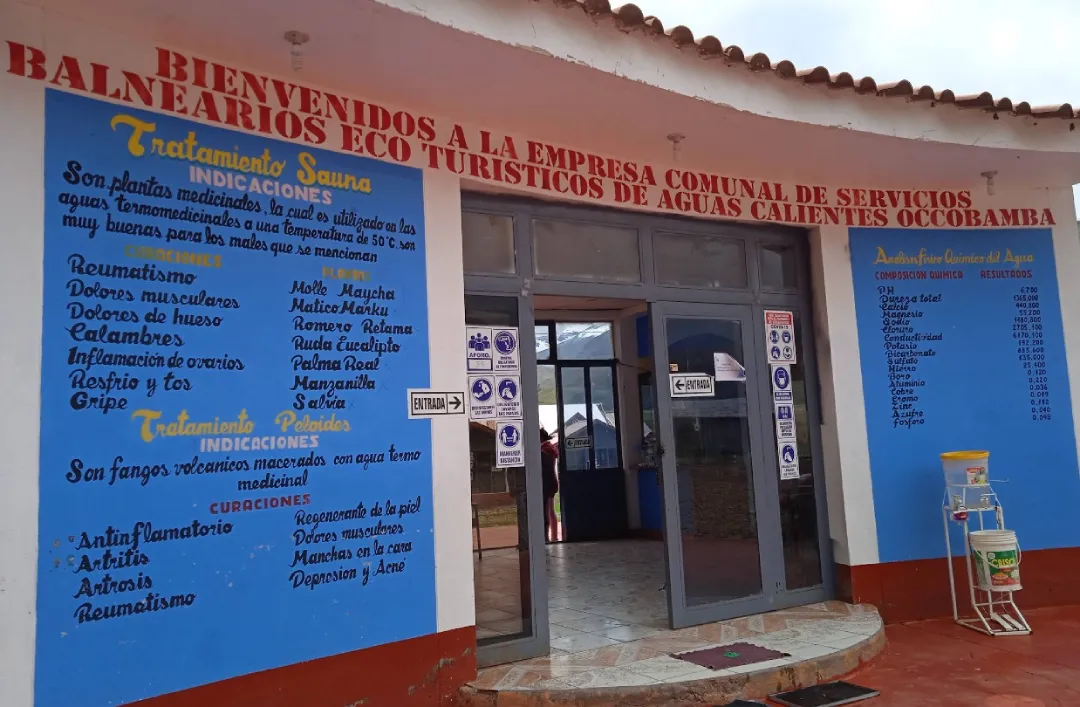
La Raya hot springs, also known as the Eco Tourism Complex of Inca Baths of Occobamba, are a perfect Andean stop if you’re seeking rest, nature, and healing properties for rheumatism. In this practical guide you’ll find what you need: hot springs, location, climate and best season, plus clear tips for visiting without setbacks.
What are La Raya Hot Springs and why are they special?
La Raya hot springs are naturally formed pools fed by geothermal underground waters that emerge in the heart of the Andean mountain range. Their appeal isn’t in luxury but in authenticity, offering a quiet setting with cold wind and the reward of hot water.
Additionally, it’s a local gathering spot. You’ll see people from the region enjoying the place, which adds a genuine cultural layer. For many travelers, this authenticity is precisely what makes La Raya special.

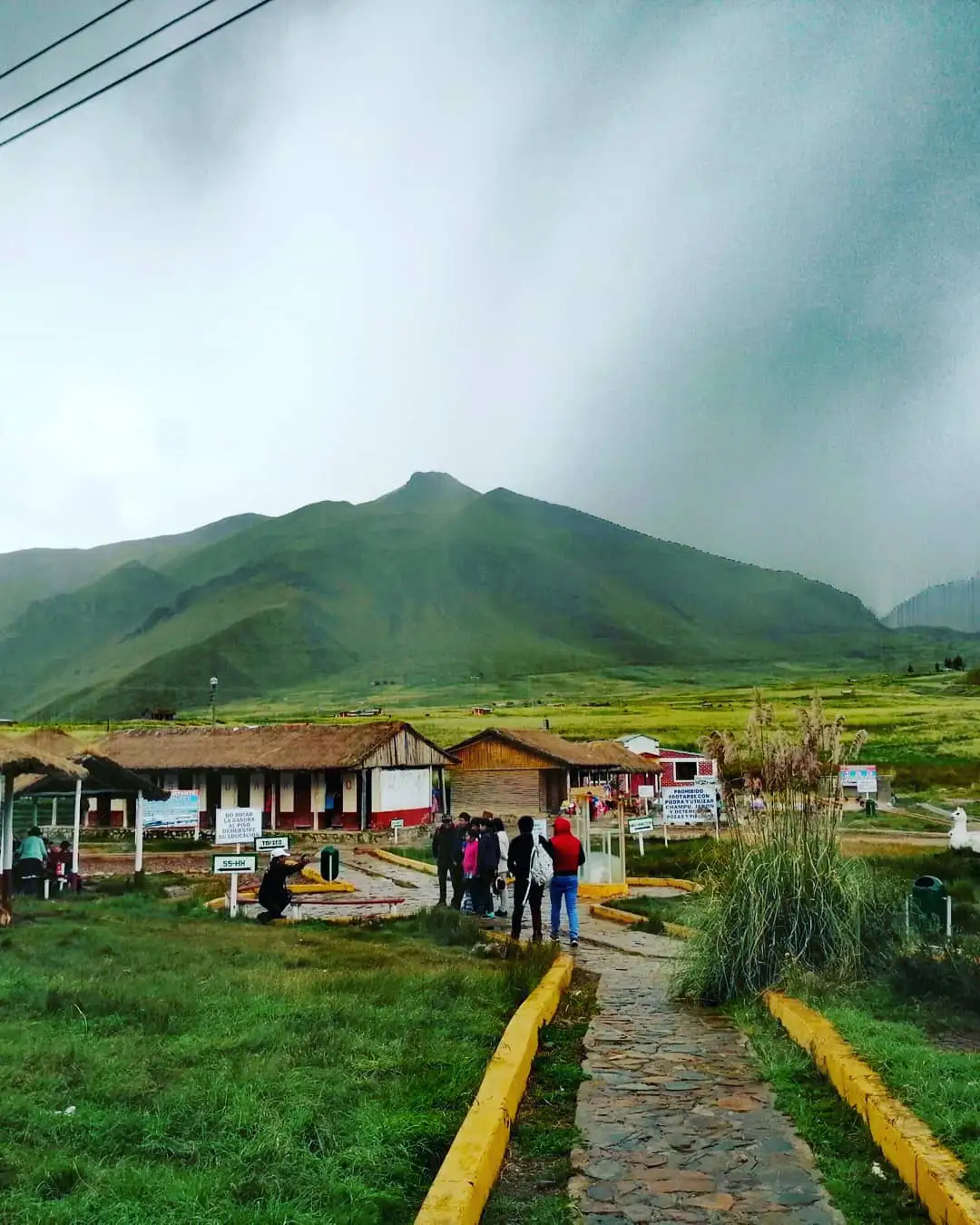
La Raya: Hot Springs entrance in Cusco Highlands
Location
The hot springs are near Abra La Raya, on the main route connecting Cusco with Puno. This makes them an ideal stop for those traveling by road.
How to reach La Raya step by step?
Reaching the La Raya hot springs requires basic planning, as there’s no direct public transportation to the pools. The key connection point is the city of Sicuani, located on the main route between Cusco and Puno.
1. From Cusco to Sicuani (first leg)
If you’re in Cusco, you need to take an interprovincial bus to Sicuani. These buses depart mainly from the Huayruropata street area and nearby zones, where several regional transport companies operate. Travel duration: approximately 4 hours Distance: about 84 miles (135 km) Cost: between 20 and 30 soles per person (approx. $5–$8 USD) Frequency: daily departures, from morning to early evening The route is completely paved and crosses high Andean landscapes, so it’s worth sitting by the window if you want to enjoy the scenery.
Practical tip: choose an early morning bus to arrive in Sicuani with enough time and avoid the most intense afternoon cold.
2. From Sicuani to La Raya Hot Springs (second leg)
Once in Sicuani, you’ll need to continue by taxi or local transport toward the La Raya hot springs, located in the direction of Abra La Raya, on the same Cusco–Puno route. Travel time: between 40 and 60 minutes Road type: paved highway Approximate taxi cost: variable depending on negotiation and season Recommendation: agree on the price before leaving and, if possible, ask the taxi to wait or coordinate the return time There’s no regular public transportation reaching the pools, so a taxi is the most direct and practical option.
Local tip: in Sicuani, clearly mention “La Raya hot springs” or “Abra La Raya thermal baths”; it’s a well known spot among drivers.
Climate: what to expect during the year?
The climate in La Raya is high mountain: the sun can feel strong during the day, but wind and cold appear quickly, especially in the afternoon. Temperatures drop markedly at night.
| Dry season (April to October) | Rainy season (November to March) |
|
|
Best season to visit
The most recommended time to visit the La Raya Hot Springs is the dry season (April to October), as it rains less and routes are usually in better condition, making the visit more comfortable. Even so, it’s also possible to go during the rainy season (November to March) if you take some precautions: there tend to be fewer people and you can enjoy the pleasant contrast between the hot water and the cool climate of the area.

Benefits and experience in the pools
Many travelers value the hot springs for their relaxing effect after hours on the road. Although they’re not presented as medical treatment, hot waters typically help relax muscles, improve sense of wellbeing, and relieve the cold.
According to the World Health Organization (WHO), controlled exposure to thermal waters can contribute to improving blood circulation, reducing muscle stiffness, and relieving joint pain, as long as they’re used responsibly and for moderate periods.
Important note:
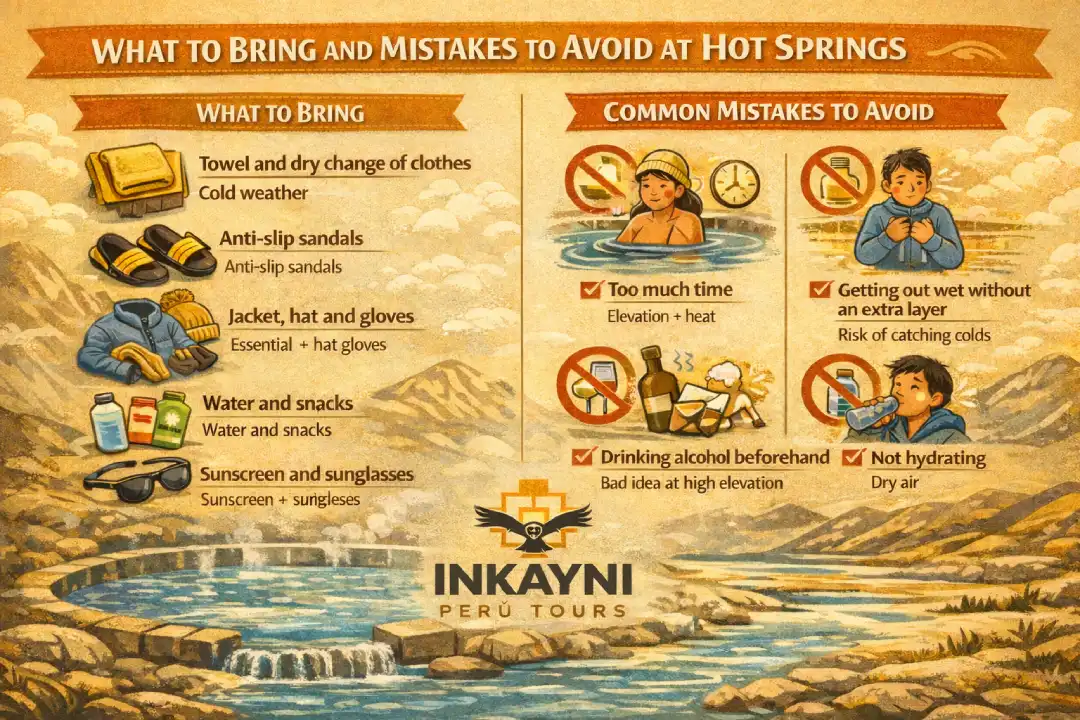
At altitude, it’s wise to use a simple rule: short, controlled sessions. The ideal is to enter for 15–20 minutes, get out, bundle up, and repeat only if you feel good.
Practical tips: what to bring? and common mistakes
Costs, services
La Raya hot springs is a simple experience. It’s not a spa or resort: you come for the setting and hot water, not for premium infrastructure.
- Approximate entrance: $1.30 (5 soles) per person.
- Services: basic pools, simple changing rooms.
- Food: limited; bring what you need.
If you want to include La Raya within a well organized itinerary, Inkayni Peru Tours can help you plan your visit safely and comfortably, integrating it with other cultural and natural destinations in Cusco.
Frequently asked questions about La Raya hot springs
Where are the La Raya Hot Springs located?
What’s the best season to visit?
What’s the climate like in La Raya?
At what altitude are the hot springs?
How much does entrance cost?
How long should I stay in the pools?
Is it suitable for families and beginners?
Do I need to book in advance?
What must I bring?
Can I visit as a stop between Cusco and Puno?
Autor

Shared:


If you liked this article and the information you found, give us 5 stars!
 (Ninguna valoración todavía)
 Loading...