


Table of Contents
Quick Answer:
Cusco adobo is a ceremonial and festive stew from Cusco, prepared with pork slowly cooked in fermented chicha de jora, ají panca, and spices, served with hominy and typical at celebrations like Corpus Christi and Inti Raymi, representing the Andean Spanish gastronomic fusion.
Its slow preparation and the use of chicha instead of vinegar give it a unique acidity and deep flavor, being traditionally consumed on Sunday mornings in markets like San Pedro and at family gatherings after the region’s religious or secular festivities.
This pork stew, slowly cooked in chicha de jora and local spices, has clear logic for travelers. In a city at 11,152 feet (3,399 meters) altitude, high calorie breakfasts serve a practical function. Adobo meets that need and, at the same time, offers an authentic experience without artifice.
Throughout this guide you’ll find what it is, why it’s important, how it’s prepared, where to try it, and practical tips for integrating it into your itinerary. The goal is simple: that you know exactly when, where, and how to enjoy adobo without wasting time or making common mistakes.

Cusco-style marinade the taste of Cusco in a breakfast
What is Cusco adobo?
Cusco adobo is a traditional pork stew marinated and slowly cooked in chicha de jora (fermented corn drink), ají panca, garlic, cumin, oregano, and onion. Unlike other Latin American “adobos,” here it isn’t baked or fried: it’s braised for hours until achieving tender meat and a deep broth.
It’s served hot, usually accompanied by country bread. The broth is a central part of the dish; it’s not a thick base but an intense soup that’s drunk and soaked up with bread. For travelers, this means a comforting and easy to eat dish, even if you’re still adapting to altitude.

Why is adobo important in Cusco?
Adobo is important for three key reasons: tradition, identity, and practical function. It’s not a dish “on the menu” for any hour; it’s an experience with schedule and context.
- Sunday tradition: it was prepared on Sundays, when families had more time to cook slowly. That ritual continues today.
- Local identity: each neighborhood defends its version. Proportions, times, and cuts change, but the base is respected.
- Practical function: it provides calories and fluids, ideal for cold mornings and life at high altitude.
The taste of Cusco in a breakfast: why is it eaten early?
For many Americans, eating braised pork at breakfast may seem unusual. In Cusco it makes sense due to climate, altitude, and custom: it’s cooked at dawn to be served fresh.
Best time frame to find adobo: between 7:00 and 10:30 AM. After that time it usually sells out.
How is adobo prepared?
Main ingredients
- Pork (ribs, belly, or leg)
- Chicha de jora
- Ají panca
- Garlic and onion
- Cumin and oregano
- Salt and pepper
Process (explained practically)
- Marinating: the meat rests several hours (sometimes overnight) in chicha and spices.
- Slow cooking: it’s cooked over low heat for 2–3 hours, until tenderizing the meat and concentrating the broth.
- Resting: the flavor usually improves if allowed to rest before serving.

Where to try adobo in Cusco?
San Pedro Market
Here adobo feels like part of the city’s real rhythm: early breakfast, constant movement, and stalls that rotate quickly.
- Location: Cascaparo Street (historic center, Plaza San Pedro area)
- Key tip: go early and with cash, and adjust the chili to your tolerance.

San Pedro Market location.
Restaurant “El Perol”
Good option if you prefer to sit more calmly, with table service and a less chaotic environment than a market.
- Location: Av. Micaela Bastidas 345, Wanchaq.
- Key tip: weekends can get crowded, consider arriving early.

Restaurant “El Perol” location.
Chicharronería “El Dorado”
Saylla is a typical outing for eating pork dishes and adobos; it’s a good alternative if you want to combine food with an outing outside downtown.
- Location: Av. Cusco T-3, Saylla (Cusco).
- Key tip: coordinate round trip transportation; confirm a specific time if going during high season.

Small warmth.
Chicharronería “El Dorado” location.
Expert tip:
Always ask “until what time is there adobo?” and avoid arriving after 11:00 AM
Best time to try it during your trip
- First days in Cusco: helps you get into local rhythm and understand the city through its food.
- Before gentle urban tours: it’s substantial, but usually sits well if eaten early.
- Avoid before long treks: it’s not ideal right before demanding hikes or intensive transfers.
The importance of adobo in Cusco
In Cusco, adobo isn’t understood as “just another dish”: it appears when the city rests, gathers, and starts the day again. That’s why it’s sought after so much at traditional breakfasts and special dates, and is better understood if you view it as social custom, not just as a recipe.
| Breakfast with identity | Andean urban flavor | Popular language | Living tradition |
|
|
|
|
Budget and approximate costs
- Markets: $3–$5 (10–15 soles)
- Picanterías: $5–$8 (10–20 soles)
- Tourist restaurants: $8–$12 (20–40 soles)
Usually includes bread; drinks are charged separately. It’s one of the meals with the best price experience ratio in Cusco.
Tips, mistakes, alternatives, and useful information
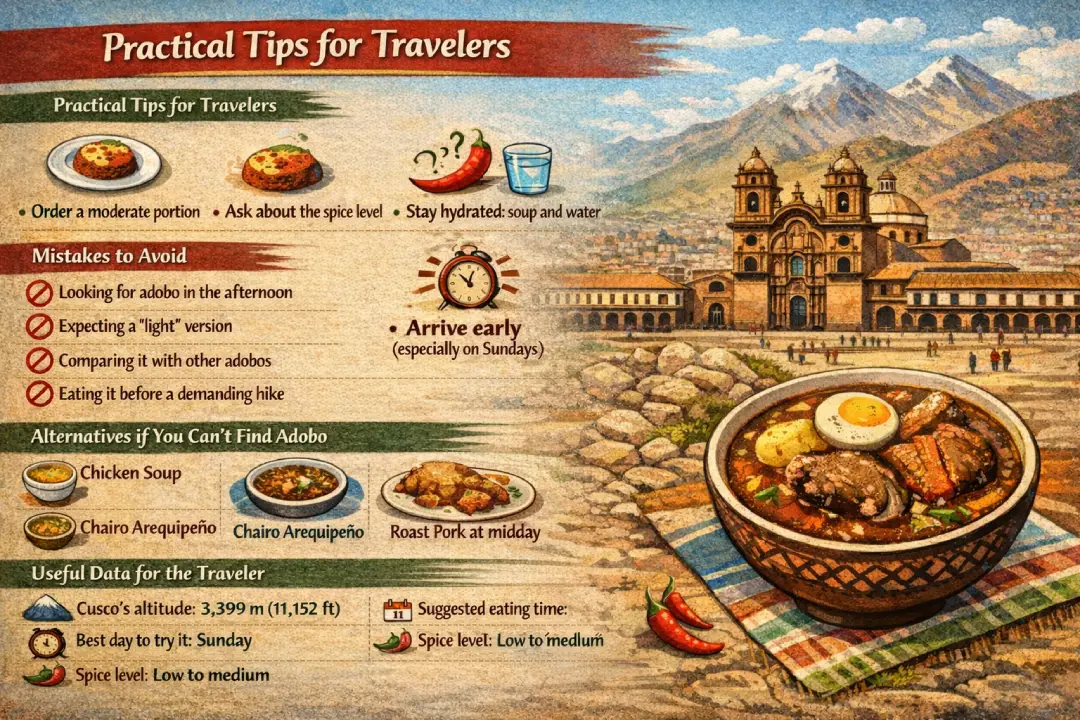
Cusco Adobo
A flavor that explains the city
Trying Cusco adobo is a direct way to understand Cusco’s daily life: waking up early, sitting at the table calmly, and sharing an intense, spiced, and steaming dish.
If you’re planning your trip, or you’re already in Cusco, and want to try it at the right places, with practical recommendations and well organized timing, at Inkayni Peru Tours we can help you combine gastronomy and urban tour without wasting the day.
Want to try Cusco adobo integrated into a historic center route or as a complete experience with markets and traditional neighborhoods? Write to us and discover the flavor that explains our city.
Frequently asked questions about Cusco Adobo
What is Cusco adobo?
What time is adobo eaten in Cusco?
Is adobo spicy?
How much does a plate of adobo cost in Cusco?
Is it recommended for tourists who just arrived in Cusco?
What’s the best day to try Cusco adobo?
Is Cusco adobo the same as other Latin American “adobos”?
Is it advisable to eat adobo before a trek or intense activity?
Autor

Shared:



If you liked this article and the information you found, give us 5 stars!
 (Ninguna valoración todavía)
 Loading...