


Table of Contents
Quick Answer:
Coca leaf reading is a traditional Andean practice of ritual and symbolic character in which coca leaves are interpreted to guide, advise, or reflect on personal, spiritual, or community aspects. Performed by an experienced reader, it forms part of Andean cosmovision and is based on observing the shape, arrangement, and state of the leaves, understood as a means of respectful communication with nature and spiritual forces.
In ancient times, coca leaf reading couldn’t be an inherited practice, as only chosen individuals could perform this activity on behalf of interested parties. But let’s learn about the reading process and what coca leaves are used for.

Dried Coca Leaves
What is the Coca Leaf?
The coca leaf is a plant native to South America with historical use in traditional, ceremonial, and cultural practices. For many indigenous peoples, it’s not just a plant but has symbolic value related to respect for nature, community coexistence, and reciprocity rituals. Its leaves typically appear in offerings, ceremonies, and social gatherings, where they can also accompany moments of exchange and connection between people.
What is Coca Leaf reading?
Coca leaf reading is an ancestral Andean ritual consisting of the symbolic interpretation of coca leaves as a tool for guidance and reflection. Through this ceremonial act, guided by a tradition expert, people seek to understand messages related to personal balance, important decisions, and the relationship between humans and Pachamama and the natural environment.
According to Andean people, “Mama Coca,” as they often call it, is the medium of communication between humans and the elemental forces of earth and sky (cosmos). Therefore, it’s an important element within Andean rituals.

Origin and history
The coca leaf has a deeply Andean origin, and its use dates back thousands of years before the European arrival. Archaeological evidence indicates that various pre Hispanic cultures used it in ritual and social contexts, and early traditions like the Chavín culture already granted it sacred character. During the Inca Empire, coca became central to spiritual and community life, appearing in offerings to Pachamama, in thanksgiving and reciprocity ceremonies, and also fulfilling a social role as a sign of respect between people and communities. Often its access was regulated and associated with authorities, agricultural festivities, and important collective decisions. With the Spanish conquest, its meaning was questioned for its link to indigenous beliefs, but use persisted and ended up being tolerated due to its importance in the Andes. To this day, coca maintains cultural and identity value in many Andean regions.

Who performs Coca Leaf reading?
Within Andean cosmovision, coca leaf reading is performed by those called Altomisayoq. These are people who, within the belief system, were struck by lightning or experienced some phenomenon, generally of a natural kind, and survived. For this reason they’re considered chosen ones; or as in Inca times, people who were born with some deformity, a fact by which they were considered special.
These Altomisayoq are the equivalent of shamans or healers. They have developed an intimate connection to the plant and therefore are capable of interpreting the shapes, sizes, and positions of the leaf. But understand that this gift wasn’t solely limited to reading but to many other abilities such as curing illnesses and casting or removing spells.

How Coca Leaf Divination Is Performed
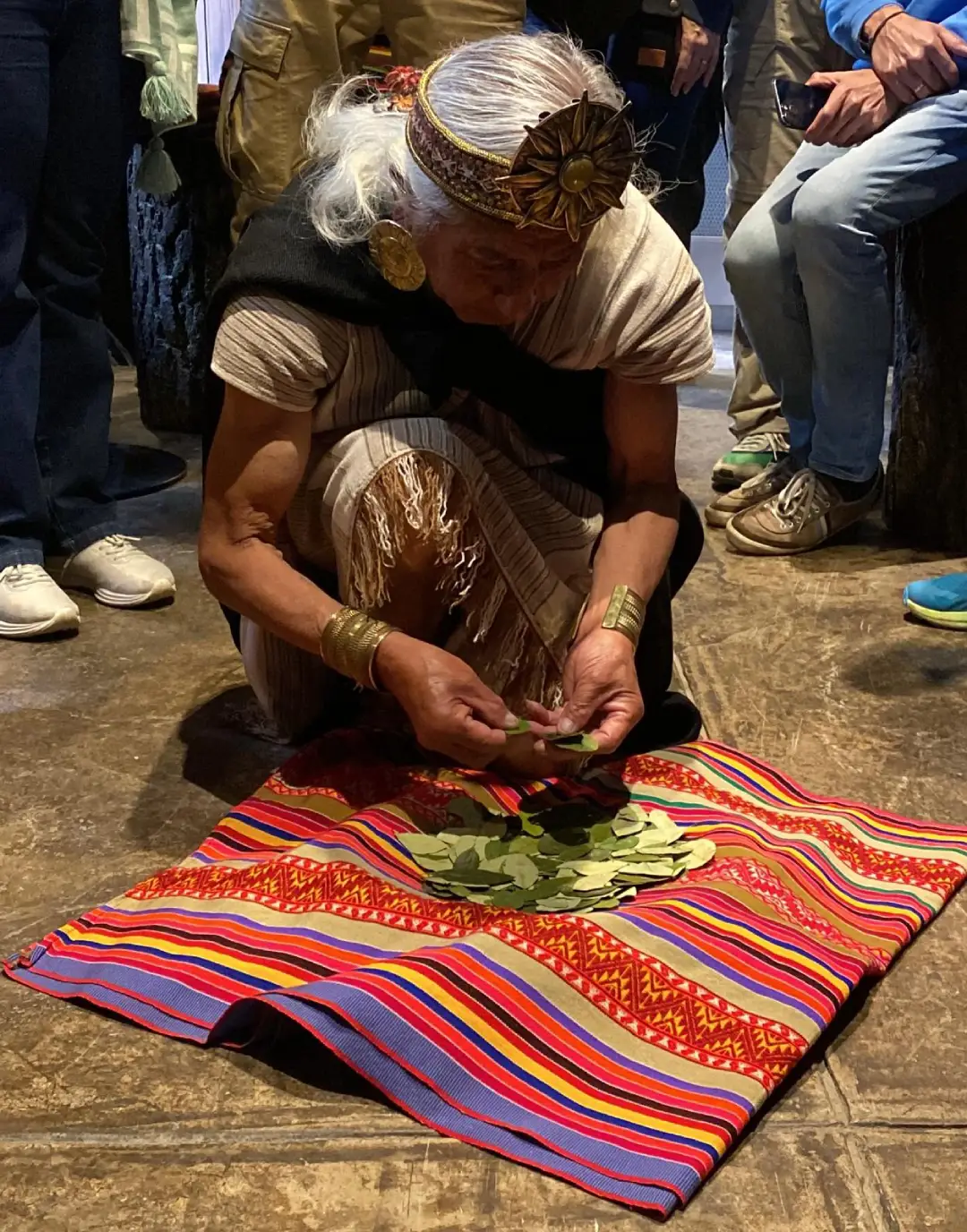
During the ceremony:
What to expect? and What is normal to feel?
It’s completely normal for the session to feel more like a deep conversation than a mystical or supernatural ritual. This is actually a positive sign of professionalism.
A good coca reader works this way
- Asks contextual questions to understand your situation but respects your privacy and never pressures you to share more than you feel comfortable revealing
- Maintains mutual respect
- Empowers you, doesn’t create dependence the reading should help you make your own decisions, not depend on future consultations
Warning signs you should recognize
- Stop and reconsider if the facilitator
- Promises you “guaranteed results” or specific predictions about dates, names, or concrete events
- Claims supernatural powers or affirms they can directly change your destiny
- Invades your privacy with invasive questions or makes you feel judged

Andean Sage Teaching Coca Leaf Traditions
Tips for doing it respectfully
- Ask permission before recording or photographing. Don’t assume it’s allowed.
- Come with honest questions. “Will I become a millionaire?” tends to close more than it opens. Better: “What should I strengthen to make a good career decision?”
- Avoid arriving rushed. The experience improves when you enter with calm.
- Choose your facilitator carefully. Prioritize clarity, boundaries, process explanation, and zero commercial pressure.
If you want to learn more about Andean magic and cosmovision, don’t hesitate to contact or subscribe to Inkayni Peru Tours. We organize your trip in the best possible way. We’re backed by hundreds of reviews on various virtual platforms like TripAdvisor, TourRadar, GetYourGuide, etc.
Frequently asked questions about coca leaves
Is it the same as “cocaine”?
Where can you do it in Cusco?
What exactly does a coca leaf reading involve?
How long does a session last?
Do I need to bring anything or prepare in any way?
What type of questions should I ask?
Is it an exact prediction of the future?
Can I do it if I’m a foreigner and don’t know the tradition?
How do I know if a facilitator is legitimate?
Can I record or take photos during the reading?
Autor

Shared:



If you liked this article and the information you found, give us 5 stars!
 (Ninguna valoración todavía)
 Loading...