


Table of Contents
Ollantaytambo is located in the Sacred Valley of the Incas, in the province of Urubamba (Cusco). It is located 2,792 meters above sea level, almost 60 kilometers from the city of Cusco. The town sits next to the Urubamba River.
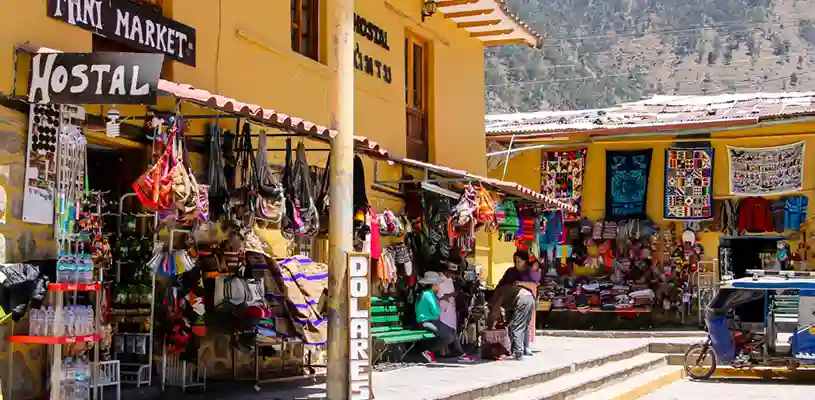
It is listed as a living Culture, and a Living Inca City since its inhabitants live according to customs inherited from their ancestors. The construction of Ollantaytambo began in the early 1400s, by order of Inca Pachacutec, who launched an expansion of his regional Cusco kingdom and thus commissioned the building of many control complexes. Ollantaytambo was one of them, intended to establish Inca rule over the valley. When the Spanish invaders conquered Cusco, Ollantaytambo became the last stronghold of the Incas in the Andes.
Nowadays, Ollantaytambo is a forced stop for everyone who is heading to Machu Picchu. We have prepared a list of 7 activities that you shouldn’t miss doing when you get to Ollantaytambo.
1.- Visit The archeological site of Ollantaytambo:
Archeological site of Ollantaytambo is a monumental work of Inca architecture. It was built on two mountains in a strategic location overlooking the entire valley. It was a military, religious, administrative and agricultural complex. The entrance is by a gate called Punku Punku.
Ollantaytambo fortress, located in the same town, was erected during the Tahuantinsuyo era and has outstanding buildings such as Templo del Sol (Temple of the Sun) and its monoliths, such as Mañaracay, Incahuatana and Baños de la Princesa (Bath of the Princess).

2.- Walking and hiking around the less popular sites:
You will be amazed to see narrow streets of stone, which have original water channels from the Inca era in which a large amount of water flows. In Ollantaytambo, you can find more about its magic and mystery doing the following hikings:
- Trekking to Temple of Pumamarca: You can reach the small but well-preserved Inca ruins of Pumamarca by a pretty trek along the banks of the Río Patacancha, which takes you through tiny villages. The walk from Ollantaytambo takes about 5 hours round-trip. To get there, take the road that leads north out of Ollanta along the Patacancha.
- Yanacocha Lagoon hike: Yanacocha Lagoon is located in the district of Huayllabamba in the province of Urubamba. It is at 3.951 m.a.s.l. The lagoon is 240 meters long and 14 meters deep. The hike will take an average of 04 hours.
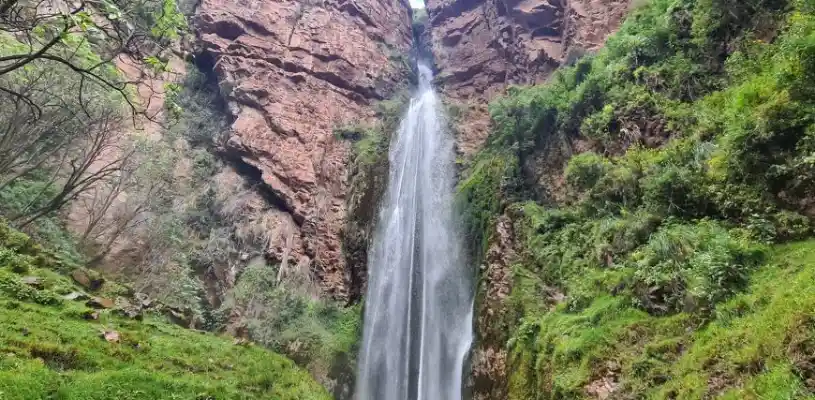
- Perolniyoc waterfall: Perolniyoc is one of the most impressive natural resources that can be seen in the Cusco region. This waterfall has a height of more than one hundred meters. The waterfalls, forming an unusual and fine veil that, together with the rays of the sun, seems to release flashes in the distance. Perolniyoc waterfall falls in an area with few stones and depth.
3.- Inti Punku or Sungate hike:
Inti Punku is located in the town of Ollantaytambo, exactly in the sector called Kachi Qhata (Salt Ridge), about 5 hours on foot from this town.
A very interesting activity since you will have the chance to appreciate the flora that this route possesses.
How to get there?
To reach this place, first, you have to go to the town of Ollantaytambo, located 1 hour and 40 minutes away from the city of Cusco. From there, crossing the Vilcanota River, the walk begins and will take 5 hours approximately.
The most recommendable thing would be to hire the services of an accredited and authorized travel agency. This will guarantee you a complete and satisfactory experience.
4.- Ñaupa Church:
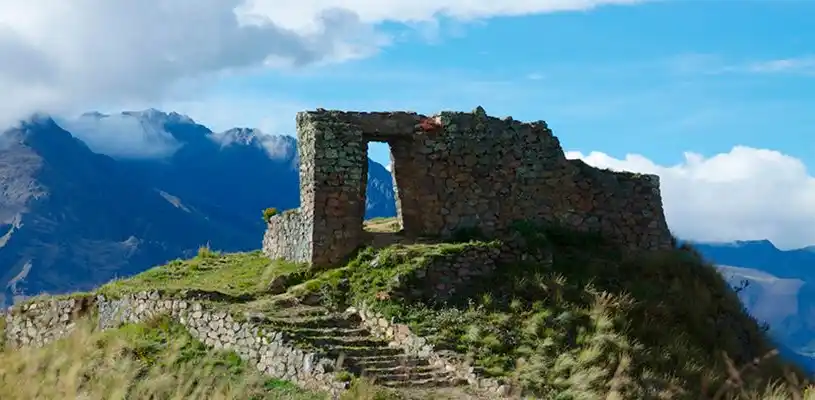
One of the most interesting and special of gem in Ollantaytambo is the impressive carved-stone temple known as Ñaupa Iglesia, whose name roughly translate to “old church” in a mixture of Quechua and Spanish.
The small, enigmatic site of Ñaupa Iglesia is generally considered to have been a “huaca,” the Quechua word for a place, person or object that is endowed with sacred significance. It was likely a node on the Inca ceque system, a series of ritual pathways radiating out from Cusco along which were placed huacas and other important shrines. Pilgrims and other travelers would have traveled along these lines while fulfilling certain ritual obligations. Though the exact way in which huacas were thought of and used by the people of the time is largely unknown, visiting a place like Ñaupa Iglesia gives visitors a small glimpse into the mysteries of the Inca worldview.

5.- Hike to Pinkuylluna storehouses (colcas):
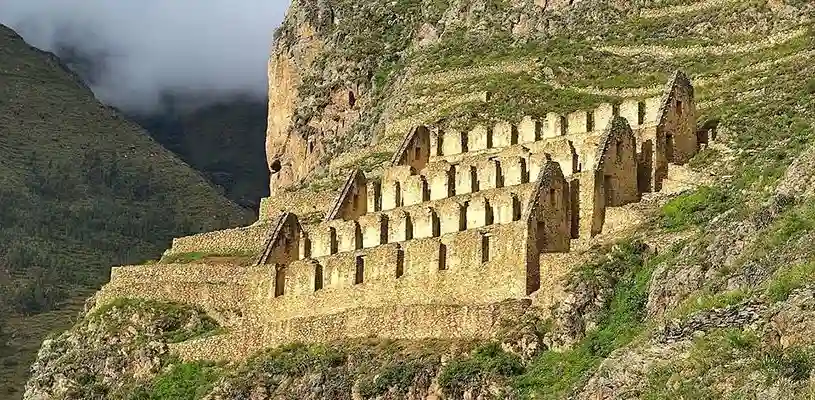
Pinkuylluna is located on the hill overlooking the North-East side of Ollantaytambo, the Living city. This short but steep climb takes between 30 minutes to an hour each way depending on your level of fitness.
The storehouses were built at high altitude to both preserve the food (more wind and cooler temperatures) and to protect their food stores in the case of attack. This hike is a nice way to spend a few hours and get a spectacular panoramic view of Ollantaytambo.
6.- Drink craft beer:
The Cerveceria del Valle Sagrado, or Sacred Valley Brewing Company is located in the town called Pachar, some minutes from Ollantaytambo. If you’re willing to travel like the locals do, you can take a crowded minibus (basically a passenger van) from Ollantaytambo to the brewery, which is located several miles out of town, for about 2 soles (under $1 USD). The brewery itself is relatively small, but had an impressive lineup of beers on tap. People working at the brewery are incredibly warm and inviting.

7.- Try the delicious Inca drink, CHICHA:
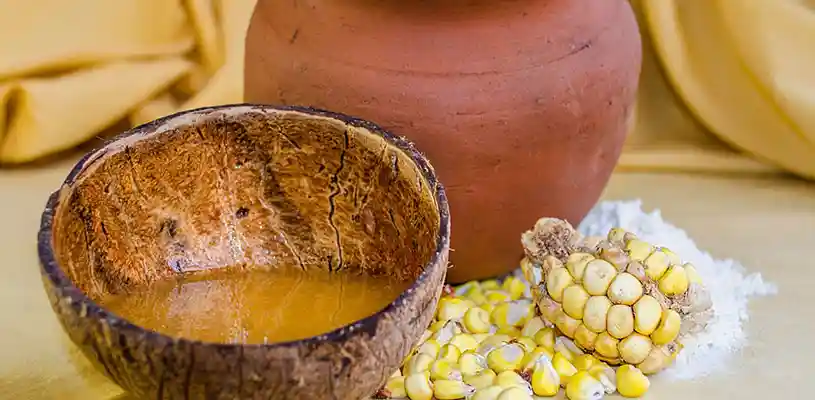
Chicha is made following a process very similar to making beer. The choclo corn is germinated, which prepares the malt sugars for fermentation, just like barley is malted to make beer. After the choclo is germinated it is ground using a large stone with the moraya and boiled in water to create a wort. After the boil is completed, the wort is filtered through a bed of straw into a large clay pot for fermentation where it stays for a minimum of three days.
We recommend trying Chicha if you find yourself wandering the streets of Ollantaytambo and come across a house with a red flag out front.
Inkayni tips to enjoy the trip:
- Don’t forget to pack warm clothes! Nights can be very cold. You can bring beanie, scarfs and gloves.
- If it rains a waterproof jacket or rain poncho will be useful.
- To hike safely, you can bring trekking poles.
- Wear a hat and sunscreen to prevent from sun damage.
- In order to avoid any inconvenience with the locals, keep the places you go clean.
- Have a camera with you.
- Bring your passport or any personal ID.
- Drink water to keep hydrated.
- Buy dried fruits.

“Stop being afraid of what could go wrong and think of what could go right.” – Anonymous
Shared:


If you liked this article and the information you found, give us 5 stars!
 (Ninguna valoración todavía)
 Loading...