
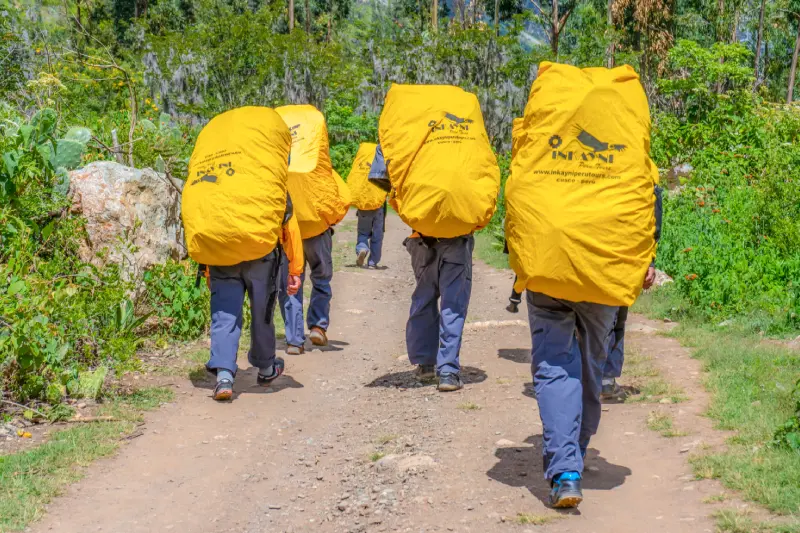
The team behind the trail
Our porters come from highland communities around Cusco and the Sacred Valley. Quechua is the main language for many members of the team, and agricultural work is an important part of life in their communities.
On the trail, porters carry camping equipment and supplies and help set up the kitchen, dining areas and camps. Together with the cooks and guides, they make the daily rhythm of the trek possible.
Looking after our porters
Respect for this work is part of Inkayni's responsibility. The commitments described below cover equipment, loads, food and payment.
Equipment for the trek
Our published commitments include trekking boots, sleeping bags, sleeping mats and carrying belts, together with appropriate nourishment before and during the trek.
Manageable loads
Inkayni's published porter policy sets a maximum carried load of 18 kg. Careful packing and the distribution of equipment are part of respecting the physical work involved.
Nutritious meals
The team needs sufficient, appropriate meals throughout the trek to support the physical demands of the work.
Payment on time
Our stated practice is to pay staff at the end of each trek through an office representative, allowing them to return to their communities without an additional trip to the Cusco office.
Ayni: a relationship of reciprocity
Inkayni describes its connection with the communities through Ayni, the principle of reciprocity. Supporting the cooks and porters also means recognizing their lives, families and work beyond the trail.
Our team deserves the same consideration as every other member of the expedition: respect for their time, their work and their contribution.
How travelers can show respect
- Keep personal baggage within the allowance confirmed for your trek.
- Ask before taking photographs of team members.
- Leave paths and work areas clear when the team is carrying equipment or setting up camp.
- Take care of the shared camping equipment and leave no personal litter behind.