Table of Contents
Cusco is considered one of the 50 most beautiful cities in the world according to Flight Network that set out to name the World’s Best Cities by asking the experts. Its history, architecture, artisans, people and gastronomy make Cusco a wonderful city.

Inkayni Peru Tours has prepared a list of the 10 best tours you can do in Cusco. Read below all these places you can visit while staying in this incredible city.
1.- City Tour:
City Tour in Cusco takes you around all the most important sites. Cusco is truly a fascinating place to visit; providing a blend of the two cultures (Inca and Spanish), the city has a look and feel about it that is completely different to the rest of Peru.
Cusco City Tour is a must-do when visiting Cusco and is usually one of the first ports of call for all visiting tourists.
Duration: 5 hours.
Places you will visit: Inkayni Peru Tours promises to enjoy the tour visiting the following places:
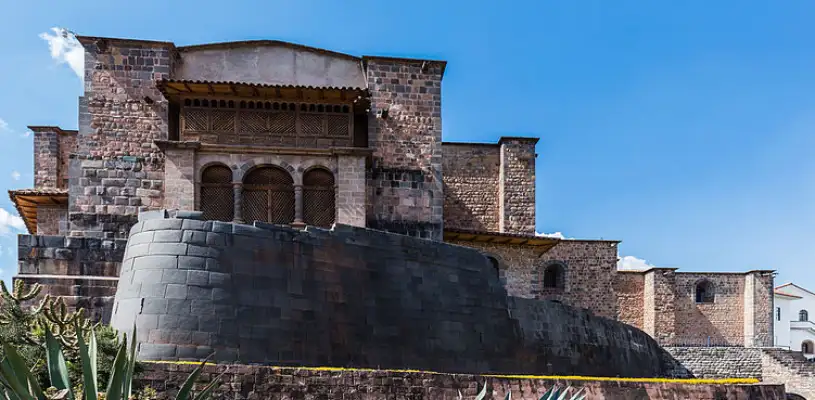
Santo Domingo church / Qoricancha:
After the Spanish invasion, Qoricancha was given to Juan Pizarro, the younger brother of the Spanish conquistador Francisco Pizarro . Upon his death in July of 1536, it was willed to the Dominicans, who still have ownership of the structure today. In the 16th century, orders to build the Priory were placed. By 1534 the Santo Domingo monastery was founded. Much of Qoricancha was taken apart for construction material which were then used to build the church of Santo Domingo. Over time, the Spanish construction has failed and collapsed several times, it has been rebuilt to its original structure, but the Inca wall structures have remained unchanged and unaffected by the seismic activity.
Sacsayhuaman:
Saqsayhuaman Fortress was the largest structure built by Pachacuteq (1438-1471 CE) and his successors. It was constructed on an elevated rocky promontory facing the northern marshy ground outside the Inca capital of Cuzco. Begun in the reign of the great Inca empire builder Pachacuteq Inca Yupanqui, or perhaps his son Thupa Inca Yupanqui in the mid-15th century CE. The first structures were made using only mud and clay. Subsequent rulers then replaced these with magnificent stonework which employed huge finely-cut polygonal blocks, many over 4 metres in height and weighing over 100 tons. To complete such a massive project 20,000 labourers were drafted in under the well-established Inca system of extracting both goods and labour from peoples they conquered. Working in a system of rotation 6,000 were given quarrying duties while the other 4,000 dug trenches and laid the foundations.

Qenqo:
Located 4 km northeast from Cusco. Although the original name of this sanctuary is not known, the Spanish conquerors decided to name it Qenqo, a Quechua word that means “labyrinth”.
It is one of the largest huacas (holy places) in the Cusco Region. Many huacas were based on naturally occurring rock formations. It was believed to be a place where sacrifices and mummification took place.

Tambomachay:
Tambomachay a splendid place where ceremony for the water took place.
Its precise function is unknown, but it may have served as a ceremonial site, an Inca spa, or a military outpost—or perhaps a mix of all three.

Puca Pucara:
It is located at the top of the road to Pisac, about 7 km from Cusco City. “Puca” in Quechua means “Red” and “Pucara” means “Fortress-Watchtower. Located at a strategic point along the road to the Antisuyo (the jungle part of the Inca empire), it also served as a checkpoint on the Inca road and was a military and administrative center.
The name which means Red Fortress is acquired based on the red color of the earth.

Costo Promedio:
- Servicio de Grupo: US$ 15 A US$20 por persona.
- Servicio Privado: US$ 60 a US$100 Según el número de persona por grupo
Tour rates:
- Group Service: US$ 15 to US$20 per person.
- Private Service: US$ 60 to US$100 based on group size
2.-Sacred Valley:
Sacred Valley of the Incas contains some of the best lands in the region and was not a part of the Empire but the property of the Emperor or Inca himself. It was Pachacutec who formed the Inca Empire of Tahuantinsuyo (Chinchaysuyo, Antisuyo, Contisuyo y Collasuyo) which would soon become the largest empire to ever reign in pre-Columbian America. During this period the Sacred Valley was a source of food for the Incas because of its incredible ecological floors at different altitudes. Its main crops were white corn, potatoes, coca, fruit, and vegetables, which continue being grown to date.
Duration: You need 10 hours to visit Sacred Valley Route.
Places you will visit:
Archeological site of Chinchero:
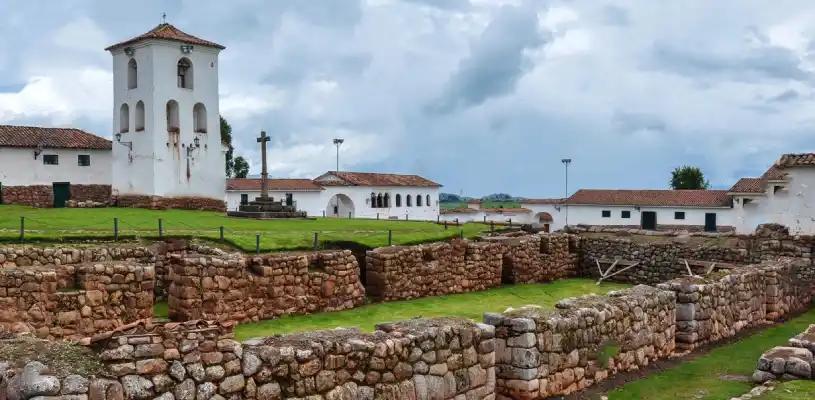
Chinchero
is also known as the city of the Rainbow and it is located 28 km. northwest of Cusco at an altitude of 3,762 m.a.s.l. It is surrounded by snow-capped mountains: Salkantay, Verónica and Soray. It is also close to lagoons: Piuray and Huaypo.
Textile Interpretation Center in Chinchero:
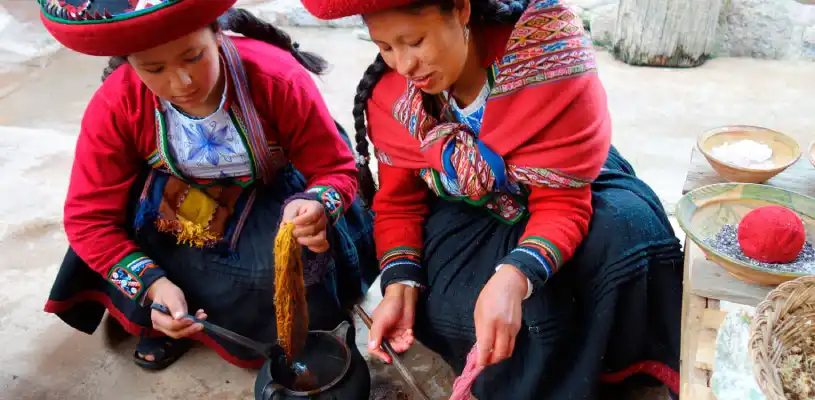
Textile Interpretation Center was founded in 1996 in Cusco. Its ,main goal is to contribute to the maintenance of the textile traditions for the local weavers of Chinchero. It serves as a great economic support.
Ollantaytambo:
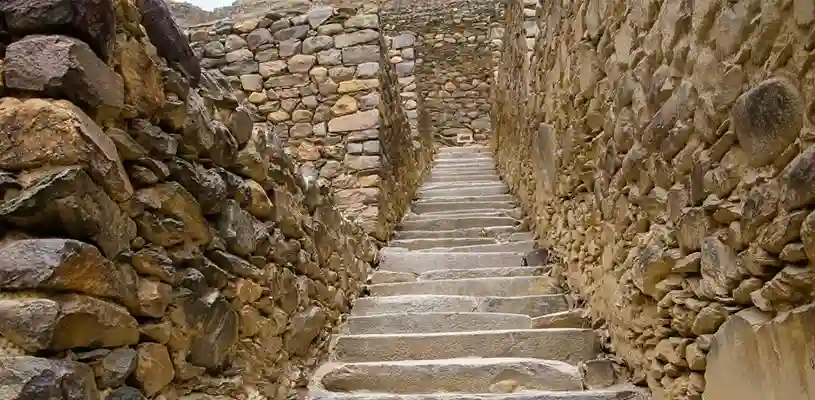
Ollantaytambo is also known as the Living City since its inhabitants live according to customs inherited from their ancestors. Their houses are built on Inca bases.
Located in the Sacred Valley of the Incas, in the province of Urubamba (Cusco). It is located 2,792 meters above sea level, almost 60 kilometers from the city of Cusco. The town sits next to the Urubamba River.
Pisac Market:
Beautiful Market, located in the Sacred Valley of the Incas at an altitude of 2972 m.a.s.l, is famous in the region for its colorful Sunday market when local communities come down from surrounding Andean villages to sell their wares including food, handwoven blankets, and shawls and other handicrafts.

Archeological site of Pisac:
Located 3.5km from the town of Pisac at an altitude of 3347 m.a.s.l. It takes up an entire mountain made up of different neighborhoods or squares, the main one being Intihuatana, which is admired for the architectural skill with which its constructions were built.

Tour Rates:
- Group Service: US$ 15 to US$25 per person.
- Private Service: US$ 85 to US$ 200 based on group service
3.-Maras Moray:
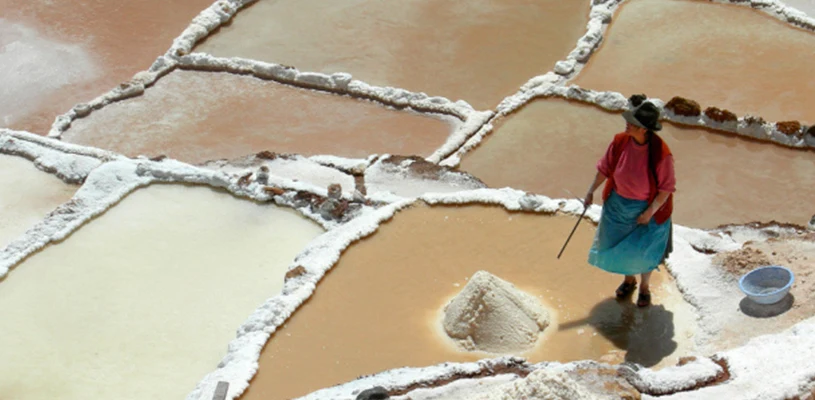
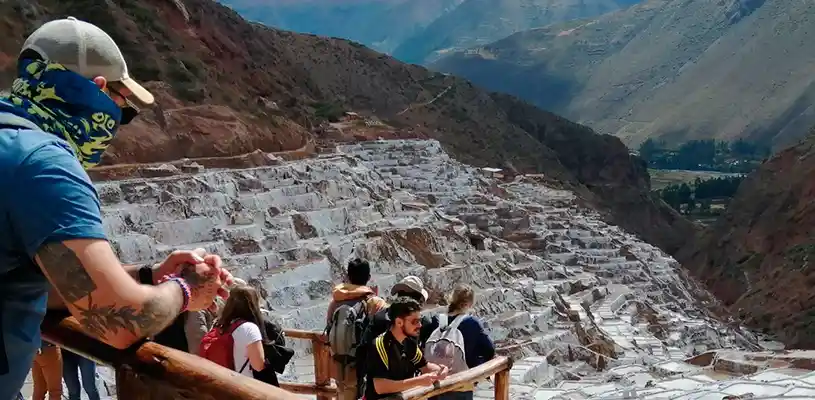
Maras is a town located in the Sacred Valley of the Incas, 40 kilometers north of Cusco. It is at an altitude of 3385 m.a.s.l. There is an ancient custom still practiced, the use of pre-Inca salt ponds.
Duration: 1 hour approximately.
What will you see?:
There are more than 3000 small pools, each owned by individual families. Every three days during the dry season, people will fill their pools up with salt water that flows from a natural spring. Once the water evaporates, the salt gradually solidifies.
These amazing constructions continue to provide the country and beyond with its pink salt which has been recommended by experts as a healthy option to flavor meals due to its curative properties.
Tour Rates:
- Group Service: US$ 15 to US$25 per person.
- Private Service: US$ 85 to US$ 200 based on group service
4.-Machu Picchu:
Machu Picchu is located about 80 km (50 miles) northwest of Cusco, Peru. In the heart of the Cordillera de Vilcabamba of the Andes Mountains. It is at an altitude of 2,430 m.a.s.l.
Duration: It will depend on the tour you choos. You can stay in the citadel for 4 hours.
Places you will visit:
Guardhouse or Caretaker’s Hut:
An important building for security and defense. The building sits on a terraced hill overlooking the Sacred Plaza and served as a strategic watchtower over two main entrances to Machu Picchu. It is near the Guardhouse that most tourists take the popular panoramic photo of Machu Picchu.

Sun Gate:
The sun gate (2,720 m / 8,924 ft), also known as Inti Punku in Quechua, is a viewpoint of Machu Picchu on one side of the Machu Picchu Mountain.
It used to be a control gate for people who entered and left the holy city of the Incas. Due to its rather remote location from the ruins, it is believed that Machu Picchu only welcomed people from the elite of the empire.
Inca Bridge:
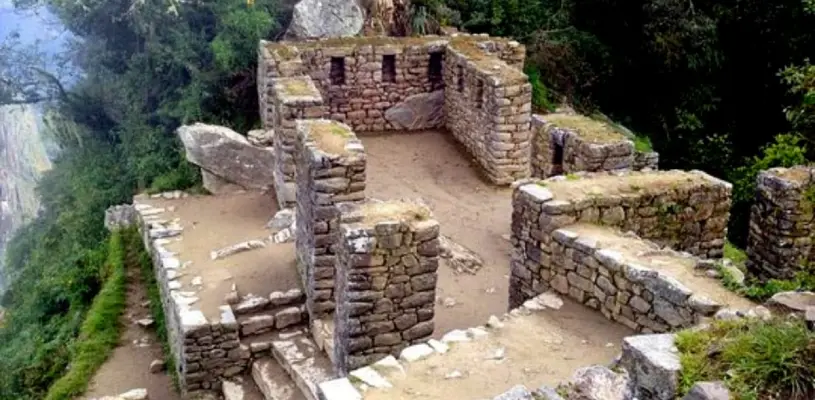
It is believed to be a secret entrance to Machu Picchu. Built into a spectacular path along a sheer mountainside, the simple plank bridge could quickly be removed to scupper the progress of any unwanted arrivals.

Intihuatana:
Incas had the sun (or Inti in Quechua) as one of their main gods. It was important for priests to observe the sun and understand it. So, they had an astronomic clock or calendar that indicated some significant celestial periods for them. This clock was called Intihuatana.

Principal Temple:
The Principal or Main Temple is located in the Sacred Plaza in the Urban Sector in Machu Picchu. It is an impressive rectangular-shaped building consisting of two lateral walls and one rear wall.

The Temple of the Three Windows
The Three Windows were thought by the Incas as the windows of the universe, they were the representation of their division of the cosmos: The underground (Uku-Pacha) the heaven (Hanan-Pacha) and the present or the actual time (Kay-Pacha).
Temple of the Condor:
A natural rock formation began to take shape millions of years ago and the Inca skillfully shaped the rock. The attention to detail is spectacular with the rock on the left not touching the ground, symbolizing the bird flying through the air.

Temple of the Sun:
The Temple of the Sun, or Templo Del Sol, was a sacred temple built by the Inca for ceremonies to pay tribute and give offerings to the sun. It sits on top of a large rocky mountain. Only priests and higher nobles were permitted to enter, with no commoners allowed inside.

Temple of the Moon:
The Temple of the Moon itself is a wall of doors and windows sculpted perfectly into the space created by a giant overhanging rock.
The Temple of the Moon is located below the top of the Huayna Picchu mountain. Located at 2,720 meters above sea level.

Tour Rate:
- Group Service: US$ 289 to US$325 per person.
- Private Service: US$ 345 to US$399 based on group size
5.-Rainbow Mountain
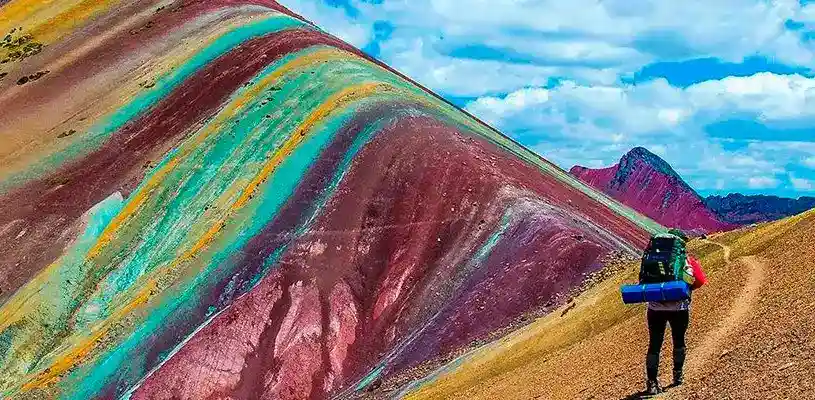
Famous Rainbow Mountain is located 3 hours away from Cusco. It is at an altitude of 5 200 m.a.s.l (17000 ft.). It is located on the road to the Ausangate mountain, in the Andes of Peru, in the Cusco Region, between the districts of Cusipata, province of Quispicanchi, Pitumarca, and the province of Canchis.
The mountain is famous for its natural, multi-colored beauty. This rainbow-like appearance is created by the sediment of minerals throughout the area giving the mountain the turquoise, lavender, gold, and other colors.
Duration: It takes 2 hours to get to the top of the Mountain.
What makes it different from Palcoyo Rainbow Mountain?:
- Hiking time: 1 and a half hour Round trip
- Mountains to be seen: 3
- Climate: Not as cold as Vinicunca since it is not close to Ausangate snow capped Mountain.
- Level Difficulty: Easy
- Additional Attractive site: Stone Forest
Tour rate:
- Group Service: US$ 40 to US$85 per person.
- Private Service: US$ 120 to US$200 based on group size
6.- Humantay Lagoon Tour:
Humantay Lagoon is located in Soroypampa, 25 km far from the District of Mollepata, Province of Anta, Cusco. It is at an altitude of 4200 m.a.s.l.
What is most outstanding is its water which has a special turquoise color that is mystifying.
Duration: It takes 1 hour and a half to get there from Soraypampa
What will you find?:
It is surrounded by impressive mountains that make you feel their power and energy when you stand to look out over the water.
The turquoise water set in front of you is just surreal. The feeling can not be compared to the one of seeing the most beautiful painting.

Credit: Photo by Luis Felipe Huerta Escalante
Tour Rate:
- Group Service: US$ 40 to US$85 per person.
- Private Service: US$ 120 to US$200 based on group size.
7.- Condor Viewpoint in Chonta Tour:
One of the luckiest things that can happen to you while traveling through the Andes is to see a condor. Chonta beautiful viewpoint is a favorite refuge for the birds, especially for the Andean Condor.
You’ll have the opportunity to enjoy the natural environment and see the soar of the Condors over the Apurimac canyon which is considered one of the deepest canyons in Peru and the most scenic.
Inkayni tips to watch the flight of the Condors:
If you want to enjoy the flight of the condor, you have to understand that since they are in their natural habitat you must remain quiet and silent.
Tour Rates:
The flight of the Condor tour is done in private service only. It costs from US$140 to US$200 per person.

8.-South Valley
You will visit a mix of Colonial, Inca, and Pre-Inca sites, it offers a snapshot into over 800 years of Cusco’s history.
Duration: 5 hours

Places you will visit:
- Colonial Temples
- Huaso
- Tipon: temple of the water
- Pikillacta: built by the Wari culture, culture before the Incas
- Andahuaylillas: known as the “Sistine Chapel of America”
Tour Rate:
- Group Service: US$ 15 to US$20 per person.
- Private Service: US$ 80 to US$100 based on group size
9.- Qeswachaca Inca Bridge:
Q´eswachaka Inca Bridge is located in a remote area of the province of Canas in the department of Cusco, over the Apurimac River at an altitude of 3,700 m.a.s.l. (12139 ft).It is the only remaining example of the Inca handwoven bridges once common in the Inca road system. As the Great Inka Road, or Qhapaq Ñan in Quechua, was constructed, many logistical problems arose. To solve the problem presented by steep canyons and gorges, the Inka pioneered suspension bridges that would allow soldiers, messengers, and officials to safely cross and further expand their civilization’s reign.
Quechua communities of Huinchiri, Chaupibanda, Choccayhua and Ccollana Quehue meet from the end of May to work and stretch the ropes, or q’eswas.

What is Q´eswachaka bridge made of?
The ropes or q’eswas are made from q’oya ichu, a type of straw from the Andean highlands that is rather resistant and is collected at an altitude of more than 3900 m.a.s.l. (13,000 feet) high. In Inca times, maintaining the bridges was part of an activity called ‘mita’, which was a form of community service, compulsory for every citizen of the empire.
Tour Rate:
- Group Service: US$ 60 to US$80 per person.
- Private Service: US$120 to US$200 based on group size
10.- Palcoyo Rainbow Mountain
Cusco is full of surprises. There are many beautiful sites that haven’t been discovered yet. Now Cusco surprises us with the Palcoyo Rainbow Mountain. It is located in the district of Checacupe, province of Canchis. Palcoyo Mountain consist of a group of three Rainbow Mountains! Likely Vinicunca, Palcoyo is becoming a popular destination.

What makes it different from Vinicunca Rainbow Mountain?
- Length of the Journey: 3 h. to 2 h. from Pitumarca and 1 h. from Cusipata
- Length of the hike: 45-60 min
- Number of mountains: Only 1 Mountain
- Climate: Vinicunca is colder than Palcoyo. This is because it is closer to Ausangate snow capped Mountain.
- Level Difficulty: Challenging

Tour rate:
- Group Service: US$ 60 to US$80 per person.
- Private Service: US$ 120 to US$200 based on group size

“There are no foreign lands. It is the traveler only who is foreign.” – Robert Louis Stevenson
Shared: